
Market Report · July 31, 2026

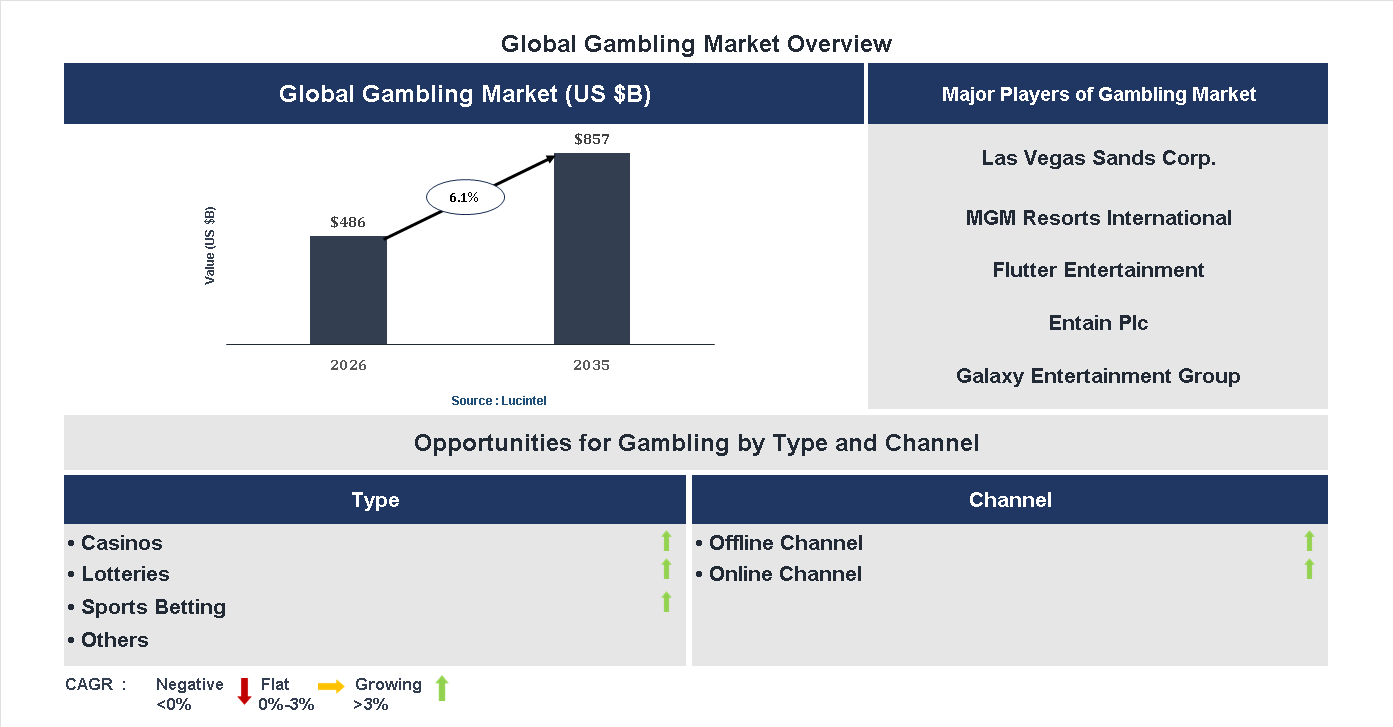
Key data points: The market size in 2035 = $857 billion, growth forecast = 6.1% annually for the next 8 years. Scroll below to get more insights. This market report covers trends, opportunities and forecasts in gambling market to 2035 by type (casinos, lotteries, sports betting, and others), channel (offline channel and online channel), and region (North America, Europe, Asia Pacific, and the Rest of the World)
We'll send your sample report shortly.
• Lucintel forecasts that, within the type category, casino is expected to witness the highest growth over the forecast period.
• Within the channel category, online channel is expected to witness higher growth.
• In terms of region, APAC is expected to witness the highest growth over the forecast period. Gain valuable insights for your business decisions with our comprehensive 150+ page report. Sample figures with some insights are shown below.
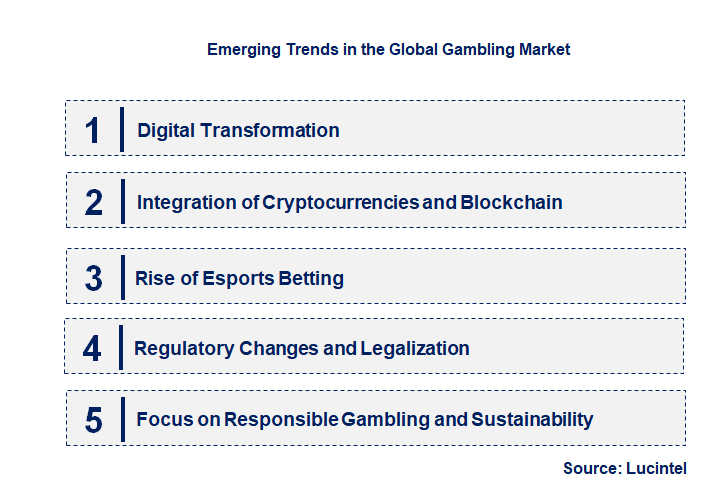
• Digital Transformation: The shift to online gambling platforms is accelerating, driven by increased internet penetration and smartphone usage. This trend allows operators to reach a broader audience, offer diverse gaming options, and provide seamless user experiences. Mobile gambling accounts for a significant share of revenue, making accessibility and app development critical. Digital transformation also enables data analytics for personalized marketing and responsible gambling measures, enhancing customer engagement and retention. As technology evolves, online gambling is expected to dominate the market, reducing reliance on traditional brick-and-mortar venues.
• Integration of Cryptocurrencies and Blockchain: Cryptocurrencies are increasingly being integrated into gambling platforms, offering benefits such as faster transactions, enhanced security, and anonymity. Blockchain technology ensures transparency and fairness in gaming outcomes, building trust among players. Several operators now accept cryptocurrencies as a payment method, appealing to a global audience seeking privacy and convenience. This trend also facilitates cross-border betting without currency exchange issues. As regulatory frameworks adapt, the adoption of blockchain and cryptocurrencies is poised to further disrupt traditional payment systems, making gambling more accessible and secure.
• Rise of Esports Betting: Esports has grown exponentially, attracting a young, tech-savvy demographic. Betting on esports matches and tournaments is becoming a significant segment within the gambling industry. This trend offers new revenue streams and expands market reach, especially among millennials and Generation Z. Esports betting platforms often incorporate live streaming, social features, and in-play betting, enhancing user engagement. The integration of esports into mainstream gambling requires regulatory clarity and responsible gambling measures. Overall, esports betting is reshaping the industry by blending entertainment, technology, and wagering in innovative ways.
• Regulatory Changes and Legalization: Governments worldwide are revising gambling laws to regulate online platforms and combat illegal betting. Legalization efforts are increasing, providing a safer environment for players and generating tax revenue for states. Regulatory frameworks now emphasize consumer protection, anti-money laundering measures, and responsible gambling initiatives. These changes create opportunities for licensed operators to expand their offerings and build trust with consumers. However, inconsistent regulations across regions pose challenges for operators seeking to operate globally. The evolving legal landscape is a key driver shaping the future of the gambling market.
• Focus on Responsible Gambling and Sustainability: As awareness of gambling-related issues grows, operators are adopting responsible gambling practices to promote safer play. This includes implementing self-exclusion tools, setting deposit limits, and providing educational resources. Sustainability initiatives also focus on reducing the environmental impact of operations, such as energy-efficient data centers and responsible marketing. These efforts aim to enhance industry reputation, ensure long-term viability, and address societal concerns. The emphasis on responsible gambling and sustainability reflects a broader shift towards ethical practices, influencing product development, corporate policies, and regulatory standards within the market. These emerging trends are fundamentally reshaping the gambling market by fostering innovation, increasing accessibility, and emphasizing responsible practices. The industry is becoming more digital, transparent, and consumer-centric, positioning itself for sustained growth amid evolving societal and technological landscapes.
• Digital Expansion: The rise of online gambling platforms has transformed the industry by providing accessible, convenient, and diverse betting options. Mobile gambling apps and live streaming services enhance user engagement, leading to increased revenue streams. This shift has also expanded market reach into previously untapped regions, fostering global growth. The digital expansion is attracting younger demographics and fostering innovation in payment solutions, such as cryptocurrencies, further boosting industry scalability.
• Regulatory Reforms: Governments worldwide are updating gambling laws to balance consumer protection with industry growth. Recent reforms include legalizing online betting in new jurisdictions and tightening licensing requirements. These changes improve market transparency, reduce illegal gambling, and foster investor confidence. Enhanced regulation also encourages responsible gambling practices, which can improve public perception. Overall, regulatory reforms are creating a more stable environment for sustainable industry development.
• Technological Innovations: Advanced technologies like artificial intelligence, blockchain, and virtual reality are revolutionizing gambling experiences. AI-driven personalization enhances user engagement, while blockchain ensures transparency and security in transactions. Virtual reality offers immersive gaming environments, attracting tech-savvy players. These innovations improve operational efficiency, reduce fraud, and create new entertainment formats. As technology continues to evolve, the industry is positioned to deliver more engaging, secure, and innovative gambling experiences.
• Market Diversification: The industry is expanding into new segments such as eSports betting, skill-based gaming, and social gambling. ESports betting attracts younger audiences, while skill-based games appeal to players seeking more control over outcomes. Social gambling platforms foster community engagement and viral growth. Diversification reduces dependence on traditional casino and sports betting revenues, providing resilience against market fluctuations. This expansion opens new revenue streams and broadens the industry’s appeal across diverse consumer groups.
• Consumer Engagement Strategies: Operators are adopting personalized marketing, loyalty programs, and responsible gambling initiatives to retain customers. Data analytics enable targeted promotions, increasing user retention and lifetime value. Gamification elements enhance user experience, encouraging longer play sessions. Responsible gambling measures build trust and ensure compliance with regulations. These strategies improve customer satisfaction, foster brand loyalty, and drive revenue growth, positioning operators for sustained success in a competitive market. These developments are significantly transforming the gambling market by fostering innovation, expanding legal frameworks, and diversifying offerings. Digital growth and technological advancements are enhancing user experiences, while regulatory reforms provide stability and trust. Market diversification and engagement strategies are attracting new demographics and increasing customer loyalty. Collectively, these trends are driving industry growth, attracting investments, and shaping a more dynamic, resilient gambling landscape.
• Online Gambling Platforms: The rise of online gambling platforms offers significant growth potential through mobile integration, live betting, and virtual casino experiences. Enhanced user interfaces, secure payment options, and personalized gaming experiences attract a broader audience. Expanding into emerging markets with favorable regulations and leveraging data analytics for targeted marketing can further boost revenue streams and customer engagement.
• Sports Betting Expansion: The increasing popularity of sports betting, especially via mobile apps, presents lucrative opportunities. Innovations like in-play betting, real-time odds updates, and integration with social media enhance user engagement. Collaborations with sports leagues and events, along with regulatory approvals in new regions, can significantly increase market penetration and revenue from this segment.
• Casino Gaming Innovation: Traditional casino gaming is evolving with the integration of virtual reality (VR), augmented reality (AR), and live dealer options. These technologies create immersive experiences that attract tech-savvy players. Developing diverse game portfolios, including slots, poker, and blackjack, and expanding into new jurisdictions can drive growth and customer retention in this competitive segment.
• E-Sports Betting Growth: The burgeoning e-sports industry offers a new avenue for gambling operators to target younger demographics. Offering specialized betting options on popular e-sports tournaments, integrating with streaming platforms, and providing real-time analytics can enhance user engagement. Regulatory clarity and strategic partnerships with e-sports organizations are essential for capturing this expanding market.
• Regulatory and Legal Framework Development: Evolving regulations across regions create opportunities for market expansion and compliance-driven growth. Establishing responsible gambling practices, obtaining licenses, and adapting to legal requirements can open new markets and build consumer trust. Proactive engagement with policymakers ensures sustainable growth and mitigates legal risks, fostering long-term industry stability. These strategic growth opportunities are poised to significantly influence the gambling market by expanding consumer bases, enhancing technological integration, and navigating regulatory landscapes. Capitalizing on these areas will enable industry players to achieve sustained growth, diversify revenue streams, and strengthen their competitive positioning in a dynamic environment.
• Technological Innovation: The advent of online gambling platforms, mobile betting apps, and live streaming has revolutionized user experience, making gambling more accessible and convenient. These innovations reduce geographical barriers, attract a broader demographic, and enable real-time betting, thereby significantly expanding market reach and revenue streams. Continuous technological development also enhances security measures, fostering consumer trust and compliance with regulatory standards. As technology evolves, the market is poised for sustained growth driven by increased digital engagement and innovative product offerings.
• Increasing Smartphone Penetration: The widespread adoption of smartphones globally has been a key driver, enabling users to access gambling platforms anytime and anywhere. Mobile compatibility and user-friendly interfaces have boosted participation, especially among younger demographics. This shift has led to higher engagement rates and revenue generation for operators, while also encouraging the development of mobile-specific gambling products. The convenience and portability of smartphones continue to propel market expansion, making gambling more integrated into daily life.
• Regulatory Liberalization: Many regions are relaxing gambling laws to stimulate economic growth and generate tax revenue. Regulatory reforms have opened new markets and created opportunities for licensed operators to expand their services legally. This liberalization encourages innovation, investment, and competition, which benefits consumers through diverse offerings and better service quality. However, it also requires operators to adapt to varying legal standards, ensuring compliance while leveraging new market access. The evolving regulatory landscape is a critical factor shaping market growth trajectories.
• Economic Growth and Tourism: Economic stability and growth directly influence disposable income levels, impacting consumer spending on gambling activities. Tourism also plays a vital role, as tourists often participate in gambling during travel, boosting revenues in casino hubs and entertainment districts. Regions with strong economic fundamentals and vibrant tourism sectors tend to experience higher gambling activity, attracting investments in infrastructure and entertainment facilities. This synergy between economic health and tourism sustains and accelerates market expansion, especially in popular gambling destinations.
• Innovation in Game Offerings: Continuous development of new and engaging games, including live dealer options, virtual sports, and eSports betting, attracts diverse customer segments. Innovation enhances user engagement, retention, and spending, while also differentiating operators in a competitive landscape. The integration of advanced graphics, immersive experiences, and personalized content further elevates the gambling experience. As consumer preferences evolve, innovation remains a key driver for market growth, encouraging operators to invest in cutting-edge offerings to capture market share. The challenges facing the gambling market include:
• Regulatory Uncertainty: The gambling industry faces fluctuating legal frameworks across different jurisdictions, creating compliance complexities. Sudden policy changes, licensing restrictions, and varying standards hinder market expansion and operational stability. Operators must navigate a patchwork of regulations, which can delay product launches and increase legal costs. Uncertainty also deters investment and innovation, as companies seek stable environments to maximize returns. Managing regulatory risks is crucial for sustainable growth in this dynamic landscape.
• Responsible Gambling and Social Concerns: Increasing awareness of gambling addiction and social impacts poses challenges for the industry. Regulatory bodies and advocacy groups push for stricter controls, such as deposit limits and self-exclusion programs, to mitigate harm. These measures can restrict consumer spending and operational flexibility, impacting revenue. Additionally, negative publicity related to problem gambling can damage brand reputation and consumer trust. Balancing profitability with social responsibility is a persistent challenge for operators aiming to maintain sustainable growth.
• Cybersecurity Threats: As the industry shifts towards digital platforms, it becomes more vulnerable to cyberattacks, data breaches, and fraud. Protecting sensitive customer information and financial transactions is paramount, requiring significant investment in cybersecurity infrastructure. A breach can lead to legal penalties, loss of customer trust, and financial liabilities. The evolving nature of cyber threats demands continuous vigilance and technological upgrades, making cybersecurity a critical challenge for maintaining operational integrity and consumer confidence. The gambling market is driven by technological innovation, increased smartphone penetration, regulatory liberalization, economic growth, and product innovation. However, it faces significant challenges such as regulatory uncertainty, social concerns, and cybersecurity threats. These drivers foster growth by expanding accessibility and offerings, while challenges necessitate strategic adaptation and responsible practices. Overall, the markets future depends on balancing innovation with regulation and social responsibility, ensuring sustainable development amid evolving technological and societal landscapes.
• Las Vegas Sands Corp.
• MGM Resorts International
• Flutter Entertainment
• Entain Plc
• Galaxy Entertainment Group
• Wynn Resorts Ltd
• SJM Holdings LTS
• Kindred Group
• Bet 365
• 888 Holdings Plc
• Casinos
• Lotteries
• Sports Betting
• Others
• Offline Channel
• Online Channel
• North America
• Europe
• Asia Pacific
• The Rest of the World
• United States: The US gambling market has seen rapid growth, especially in online sports betting and casino gaming, following the legalization of sports betting in multiple states. Major operators are investing heavily in digital platforms, and technological innovations such as live dealer games are gaining popularity. Regulatory frameworks are becoming more sophisticated, focusing on responsible gambling and consumer protection. The market is also witnessing increased mergers and acquisitions, consolidating industry players. Additionally, the use of data analytics and AI is improving personalized experiences and operational efficiency, making the US a leading force in the global gambling industry.
• China: Chinas gambling industry remains largely restricted to the Macau Special Administrative Region, which continues to dominate the Asian market with its extensive casino resorts. The government maintains strict control over online gambling, limiting its growth domestically. However, there is a rising trend in sports betting and lottery sales within legal boundaries. Technological advancements such as mobile betting apps are gaining traction, although they operate under tight regulation. Macaus integrated resorts are expanding their offerings, incorporating entertainment and hospitality to attract high rollers. The industry faces challenges from regulatory crackdowns and anti-money laundering measures, but remains a significant player regionally.
• Germany: Germanys gambling market has experienced regulatory reforms aimed at creating a more transparent and fair environment. The new Interstate Treaty on Gambling, implemented in 2021, legalizes online casino, poker, and sports betting, with strict licensing requirements. This has led to increased market competition and innovation, including the adoption of responsible gambling measures. The industry is also embracing technological advancements such as live streaming and mobile betting platforms. The government emphasizes consumer protection and anti-money laundering efforts, fostering a safer gambling environment. Overall, Germanys market is evolving into a regulated, mature industry with significant growth potential.
• India: The Indian gambling market is rapidly expanding, driven by increasing internet penetration and smartphone usage. While betting on sports remains largely illegal at the federal level, several states have begun to legalize and regulate online betting and lotteries, creating a burgeoning market. The rise of fantasy sports platforms and online rummy has contributed to the growth, attracting a young demographic. The industry is also seeing investments in technology and infrastructure to enhance user experience. However, regulatory uncertainty persists, with ongoing debates about legalization and restrictions. Despite this, India is emerging as a key growth market for online gambling and betting services.
• Japan: Japans gambling industry is primarily centered around pachinko, a popular form of gaming, with recent efforts to expand legal online betting options. The government is exploring regulations to legalize integrated resorts, including casinos, to boost tourism and economic growth. Several large-scale casino projects are underway, with strict licensing and regulatory oversight. Technological innovations such as cashless payments and digital gaming are being integrated into existing operations. The industry is also focusing on responsible gambling initiatives to address social concerns. Overall, Japan is poised for significant growth in its gambling sector, balancing regulation with market expansion opportunities.


• Las Vegas Sands Corp.
• MGM Resorts International
• Flutter Entertainment
• Entain Plc
• Galaxy Entertainment Group
• Wynn Resorts Ltd
• SJM Holdings LTS
• Kindred Group
• Bet 365
• 888 Holdings Plc Q6. Which gambling market segment will be the largest in future? Answer: Lucintel forecasts that, within the type category, casino is expected to witness the highest growth over the forecast period. Q7. In gambling market, which region is expected to be the largest in next 5 years? Answer: In terms of region, APAC is expected to witness the highest growth over the forecast period. Q8. Do we receive customization in this report? Answer: Yes, Lucintel provides 10% customization without any additional cost.


Choose a license that fits your team. Instant PDF delivery.
Prices exclude taxes. Instant delivery. Custom licensing available on request.
Market Report · July 31, 2026
Market Report · July 31, 2026
Market Report · July 31, 2026
Trusted partner for strategic intelligence and business growth


Receive a complimentary market analysis tailored to your industry. Our analysts will identify key growth opportunities and competitive dynamics specific to your business.

Market size, growth rate, and key trend analysis for your specific sector.

Top competitor positioning and market share analysis.

Strategic recommendations backed by data-driven insights.
Get curated market intelligence and competitive moves straight to your inbox.
By subscribing, you agree to receive our monthly insights. Unsubscribe anytime.
Receive a complimentary market analysis tailored to your industry. Our analysts will identify key growth opportunities and competitive dynamics specific to your business.
Market size, growth rate, and key trend analysis for your specific sector.
Top competitor positioning and market share analysis.
Strategic recommendations backed by data-driven insights.
Get curated market intelligence, emerging trends, and competitive moves straight to your inbox each month.
By subscribing, you agree to receive our monthly insights. Unsubscribe anytime.
We'll send your sample report shortly.