
Market Report · July 16, 2026

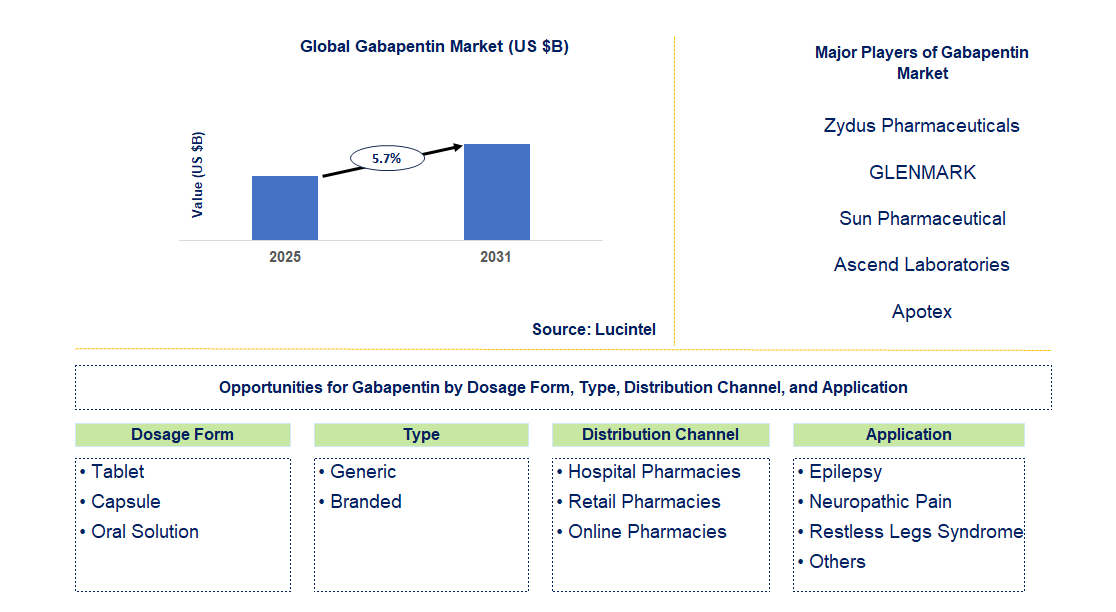
Key data points: The growth forecast = 5.7% annually for the next 7 years. Scroll below to get more insights. This market report covers Trends, opportunities and forecasts in gabapentin market to 2031 by dosage form (tablet, capsule, and oral solution), type (generic and branded), distribution channel (hospital pharmacies, retail pharmacies, and online pharmacies), application (epilepsy, neuropathic pain, restless legs syndrome, and others), and region (North America, Europe, Asia Pacific, and the Rest of the World)
We'll send your sample report shortly.
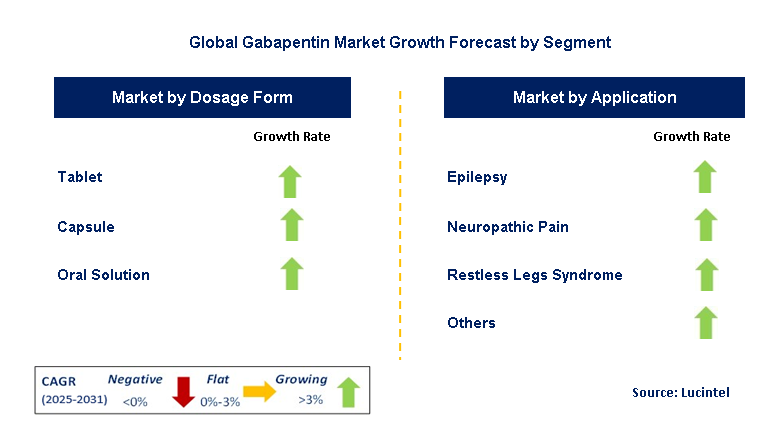
• Lucintel forecasts that, within the dosage form category, capsule is expected to witness the highest growth over the forecast period.
• Within the application category, epilepsy is expected to witness the highest growth.
• In terms of region, North America is expected to witness the highest growth over the forecast period.
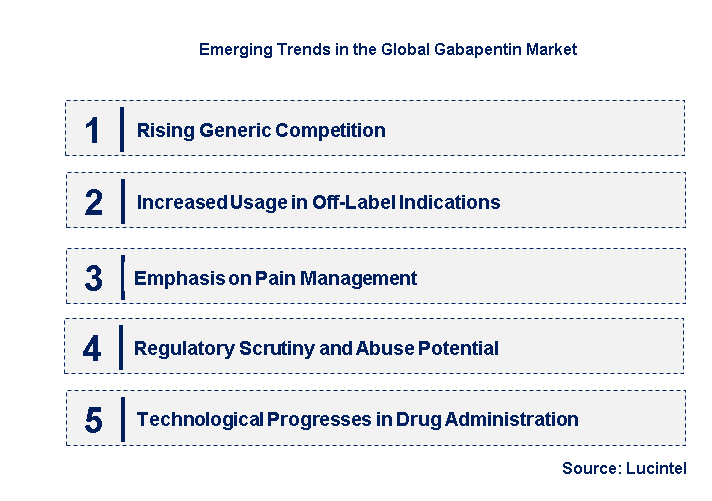
• Rising Generic Competition: As the patent on Neurontin (the name of Gabapentin when it was under patent) expired, generic equivalents of the drug gained wider acceptance, fueling market growth. The generics have ensured that Gabapentin is more widely available and affordable to patients globally, particularly in countries such as India and China. Generic competition also tends to exert downward pressure on prices, rendering the drug more financially acceptable for chronic disease patients. The trend is likely to sustain as more generics become available and increase the patient pool for Gabapentin.
• Increased Usage in Off-Label Indications: Off-label usage is increasingly being observed for Gabapentin in conditions like anxiety, fibromyalgia, and insomnia. The off-label usage significantly boosts the market growth of the drug, as it is a cost-effective substitute compared to the costlier treatment. Since the healthcare professionals experiment with Gabapentin's promise for many more conditions, demand for it should increase in other areas of therapeutics outside of its original uses. But this off-label application also brings in questions about no formal clinical proof for some uses, which would create regulatory challenges in the future.
• Emphasis on Pain Management: Gabapentin remains an essential in neuropathic pain management and other chronic pain disorders. In light of the current opioid crisis, prescribers are increasingly using Gabapentin as a safer pain management option. This change in treatment regimens has propelled demand for Gabapentin in the United States and other markets. The increasing incidence of chronic pain syndromes, coupled with pressure to decrease opioid prescriptions, guarantees that Gabapentin's place in pain treatment will continue to be central in the coming years.
• Regulatory Scrutiny and Abuse Potential: Gabapentin's abuse potential, especially when used in combination with opioids or other drugs, has prompted more regulatory scrutiny. Various regions, such as the United States, have imposed limitations on its prescription to limit misuse. Attention on reducing Gabapentin abuse will translate to the changes in practice and new regulatory barriers for prescription. As this is the bane for the market, this is what encourages the pursuit for developing the next line of alternative drugs that carry a less tendency to abuse.
• Technological Progresses in Drug Administration: Advances in drug delivery systems are improving the efficacy of Gabapentin. Changing-release forms and newer delivery systems are being created to increase patient compliance, decrease side effects, and give more prolonged therapeutic effects. These advances are predicted to increase the market potential of Gabapentin, particularly in those with diseases needing pain control over an extended period. Moreover, advances in personalized medicine might bring about more focused treatment with Gabapentin, maximizing its therapeutic effectiveness. These new trends are transforming the gabapentin market by compelling innovation in formulation of drugs, broadening its scope of disorders it addresses, and enhancing availability through generics. As the market keeps changing, these trends will be instrumental in determining the direction of Gabapentin in the world's pharma industry in the future.
• Patent Expiry and Generic Launches: The patent for Neurontin (Gabapentin) has expired, and numerous generic versions are now available in the market. This has decreased the cost of Gabapentin substantially, and it is now more affordable for patients, leading to an increased usage for many conditions like neuropathic pain and epilepsy. The generic competition has also stimulated market growth, especially in cost-conscious markets such as India and China.
• Increased Use in Pain Management: The rising opioid epidemic has prompted healthcare practitioners to find alternative, safer ways of managing pain. Gabapentin's function in the treatment of neuropathic pain has grown in accordance with this requirement. The medication is increasingly utilized to wean patients off opioids for chronic pain disorders, thus fueling its growth in such markets as the United States. This is set to continue with doctors opting for non-opioid interventions in pain.
• Extended-Release Formulations' Approval: The approval of extended-release Gabapentin formulations has improved its efficacy in chronic pain management and other diseases demanding long-term control. Extended-release formulations have longer-lasting therapeutic benefits, which have improved compliance rates among patients and minimized the number of dosing's. This breakthrough has provided Gabapentin with new avenues of growth, especially in managing chronic pain diseases.
• Changes in Regulations and Control Measures: Gabapentin has been subjected to more regulatory oversight because of its abuse potential, especially when taken in conjunction with opioids. Some U.S. states have placed Gabapentin on the list of controlled substances, limiting its dispensation and prescription. Such changes in regulations are remodeling how Gabapentin is prescribed, with practitioners exercising more prudence in using it. While this presents difficulties, it also compels the development of alternative treatments with lower abuse potential.
• Increasing Popularity in Off-Label Uses: Gabapentin is being used off-label more and more for anxiety, fibromyalgia, and sleep disorders. Although these uses are not formally approved, the drug's effectiveness in treating these conditions has created increased demand. This off-label use is propelling the Gabapentin market, especially in areas where patients look for cheaper substitutes for more costly drugs. These recent updates prove the fluid nature of the gabapentin market. The expiration of patents, regulatory environments, and growth in pain treatment and off-label uses are spurring the increasing market growth. Though challenges as a result of abuse potential as well as in relation to regulators remain, the status of Gabapentin as an important treatment choice for pain and neurological disorders is assured.
• Neuropathic Pain Management: Gabapentin's proven position in treating neuropathic pain is a significant growth potential area. As the world population ages and chronic pain conditions become more prevalent, the market for Gabapentin as the first-line treatment for neuropathic pain will increase. The fact that Gabapentin is effective in offering pain relief with comparatively fewer side effects positions it favorably in the pain relief market.
• Epilepsy Treatment: Gabapentin is commonly employed in the management of epilepsy, especially in patients that are not responsive to other anticonvulsants. The increasing diagnosis of epilepsy globally, coupled with growing awareness of the disease, is fueling demand for effective medications such as Gabapentin. This trend is a major growth opportunity in developed and emerging economies, where awareness of epilepsy is on the rise.
• Off-Label Uses: The off-label expansion of Gabapentin for use in anxiety, fibromyalgia, and sleep disorders creates a new market opportunity. As healthcare providers increasingly seek to explore its applications in these conditions, the market for Gabapentin is likely to grow. This development also creates opportunities for additional clinical trials and formulation of targeted products for off-label uses.
• Extended-Release Formulations: Approvals and releases of extended-release versions of Gabapentin give a chance for improved patient compliance and therapeutic performance. Extended-release versions enable steadier drug discharge, which especially suits patients having chronic diseases where long-term maintenance is needed. Further development and use of extended-release Gabapentin will provide support for growth in the market, especially pain management and treating epilepsy.
• Global Growth in Emerging Regions: Growth opportunities in emerging markets, particularly in Asia and Latin America, are tremendous for Gabapentin. The growing incidence of chronic pain and neurological disorders in these markets, along with the rising availability of generics, make Gabapentin a prime treatment choice. Enhanced market access and development of healthcare infrastructure in these markets will propel Gabapentin adoption and enhance its market share. The gabapentin market is set to grow further, led by its increasing application in the management of neuropathic pain, treatment of epilepsy, and off-label use. Strategic emphasis on emerging markets, extended-release products, and additional research into new indications for Gabapentin will drive its growth, ensuring its sustained presence in the global pharmaceutical market.
• Zydus Pharmaceuticals
• GLENMARK PHARMACEUTICALS
• Sun Pharmaceutical Industries
• Ascend Laboratories
• Apotex
• Teva Pharmaceutical Industries
• Aurobindo Pharma
• Amneal Pharmaceuticals
• Cipla
• B.P. Pharma
• Tablet
• Capsule
• Oral Solution
• Generic
• Branded
• North America
• Europe
• Asia Pacific
• The Rest of the World
• United States: The United States Gabapentin market has also witnessed significant growth with the widespread incidence of illnesses such as epilepsy and neuropathic pain. As the patent expired for the brand name Gabapentin (Neurontin), generic medications became readily accessible, and savings in cost ensued along with added accessibility to the patient. With the opioid crisis, more healthcare providers and patients have been gravitated toward using Gabapentin as a way to manage pain. Nevertheless, concerns over how the drug has the potential for abuse, specifically when used concurrently with opioids, have precipitated regulatory action, and control tightened. In spite of all these issues, the U.S. market for Gabapentin is still growing.
• China: In China, the market for Gabapentin is developing very rapidly because there is growing awareness about neurological disorders and the healthcare infrastructure is becoming better. The growth in prevalence of chronic pain, neuropathic conditions, and epilepsy is stimulating the demand for Gabapentin. While the Chinese government remains committed to increasing access to healthcare, Gabapentin has been increasingly made available through public health programs. Nonetheless, the market remains challenged in terms of regulatory approval processes for new products and competition from cheap generics. Regardless, Gabapentin is being increasingly accepted as a primary treatment for chronic pain and neurological disorders in the country.
• Germany: Germany's Gabapentin market is supported by a highly developed healthcare system and high patient access to treatments for neurological conditions. Consequently, Gabapentin is still a first-line treatment for neuropathic pain and epilepsy. The German market has been steadily growing, mainly because of the low cost of generic versions after the Neurontin patent expired. Yet, regulatory barriers for the approval of novel formulations or combination drugs can deter market growth. Over the past few years, demand has also been on the rise for substitutes, like new biologic drugs, which would be a threat to the Gabapentin market in Germany.
• India: India's market for Gabapentin is growing fast because of the rising incidence of chronic pain and neurological disorders. The generic versions of Gabapentin have been affordable, and this has contributed to market access growth in the country. With increasing healthcare access, patients are increasingly being diagnosed with illnesses such as epilepsy, neuropathic pain, and anxiety disorders, further propelling the demand for Gabapentin. The large population base and cost-conscious market of India also provide room for increased expansion of Gabapentin-based therapy. But regulatory inefficiencies and disparate health infrastructure hinder universal access, especially to rural regions.
• Japan: Gabapentin is largely prescribed in Japan for the treatment of conditions like neuropathic pain and epilepsy. Japan's market is marked by an advanced level of healthcare access coupled with an increasing number of patients with chronic pain and neurological diseases. Although Gabapentin has become well established in Japan, the market is being increasingly threatened by more recently introduced medications and other types of therapies. Moreover, the nation's highly regulated environment will slow down the launch of new forms of Gabapentin. Even with these challenges, the overall demand for Gabapentin itself continues to be high, and its use as a pain and neurological treatment is projected to continue to expand.


• Zydus Pharmaceuticals
• GLENMARK PHARMACEUTICALS
• Sun Pharmaceutical Industries
• Ascend Laboratories
• Apotex
• Teva Pharmaceutical Industries
• Aurobindo Pharma
• Amneal Pharmaceuticals
• Cipla
• B.P. Pharma Q5. Which gabapentin market segment will be the largest in future? Answer: Lucintel forecasts that, within the dosage form category, capsule is expected to witness the highest growth over the forecast period. Q6. In gabapentin market, which region is expected to be the largest in next 5 years? Answer: In terms of region, North America is expected to witness the highest growth over the forecast period. Q7. Do we receive customization in this report? Answer: Yes, Lucintel provides 10% customization without any additional cost.


Choose a license that fits your team. Instant PDF delivery.
Prices exclude taxes. Instant delivery. Custom licensing available on request.
Market Report · July 16, 2026
Market Report · July 15, 2026
Market Report · July 15, 2026
Trusted partner for strategic intelligence and business growth


Receive a complimentary market analysis tailored to your industry. Our analysts will identify key growth opportunities and competitive dynamics specific to your business.

Market size, growth rate, and key trend analysis for your specific sector.

Top competitor positioning and market share analysis.

Strategic recommendations backed by data-driven insights.
Get curated market intelligence and competitive moves straight to your inbox.
By subscribing, you agree to receive our monthly insights. Unsubscribe anytime.
Receive a complimentary market analysis tailored to your industry. Our analysts will identify key growth opportunities and competitive dynamics specific to your business.
Market size, growth rate, and key trend analysis for your specific sector.
Top competitor positioning and market share analysis.
Strategic recommendations backed by data-driven insights.
Get curated market intelligence, emerging trends, and competitive moves straight to your inbox each month.
By subscribing, you agree to receive our monthly insights. Unsubscribe anytime.
We'll send your sample report shortly.