
Market Report · July 20, 2026

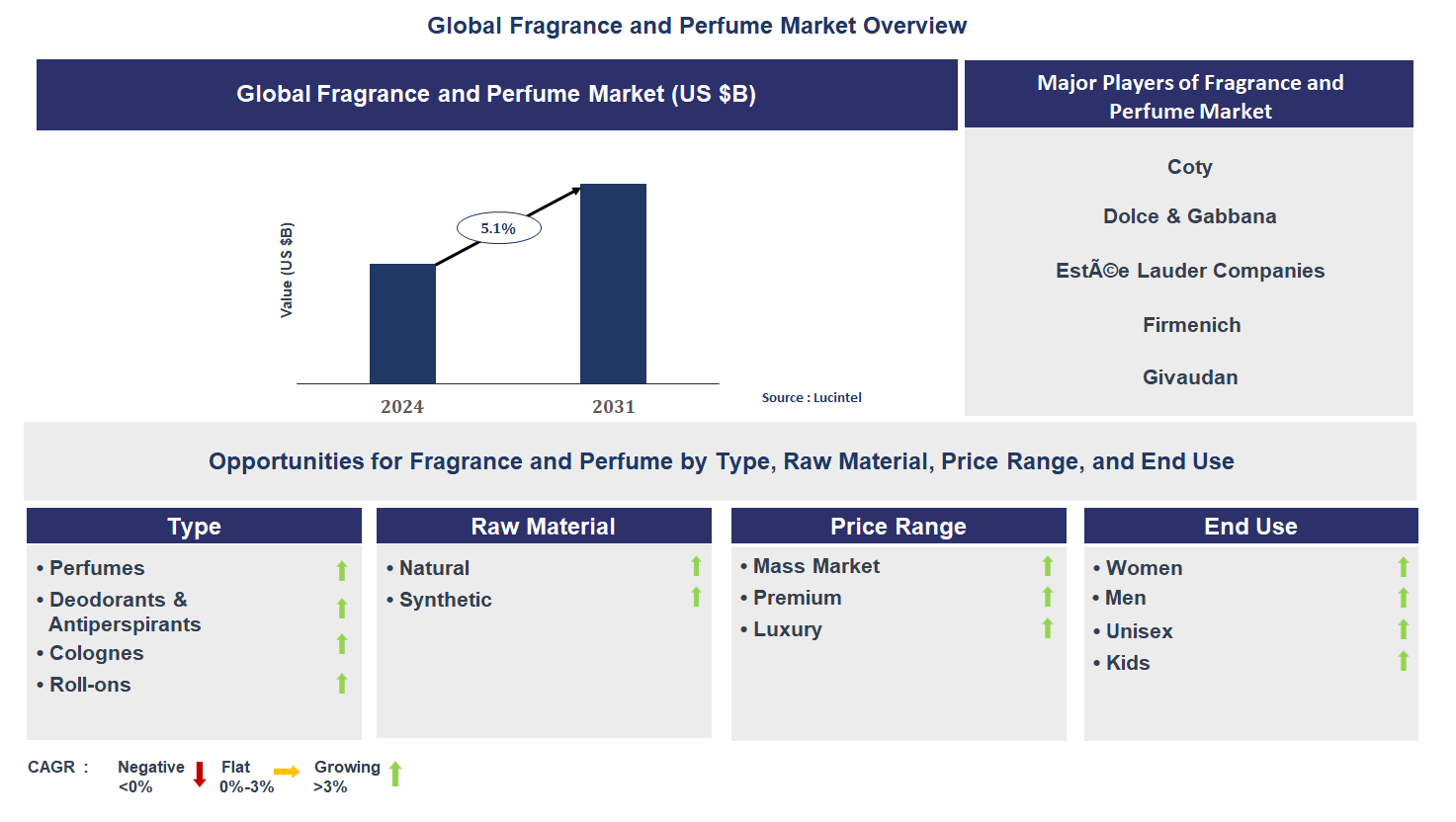
Key data points: The growth forecast = 5.1% annually for the next 7 years. Scroll below to get more insights. This market report covers trends, opportunities and forecasts in fragrance and perfume market to 2031 by type (perfumes, deodorants & antiperspirants, colognes, and roll-ons), raw material (natural and synthetic), price range (mass market, premium, and luxury), end use (women, men, unisex, and kids), and region (North America, Europe, Asia Pacific, and the Rest of the World)
We'll send your sample report shortly.
• Lucintel forecasts that, within the type category, deodorant & antiperspirant is expected to witness the highest growth over the forecast period.
• Within the raw material category, natural is expected to witness the highest growth.
• In terms of region, APAC is expected to witness the highest growth over the forecast period. Gain valuable insights for your business decisions with our comprehensive 150+ page report. Sample figures with some insights are shown below.
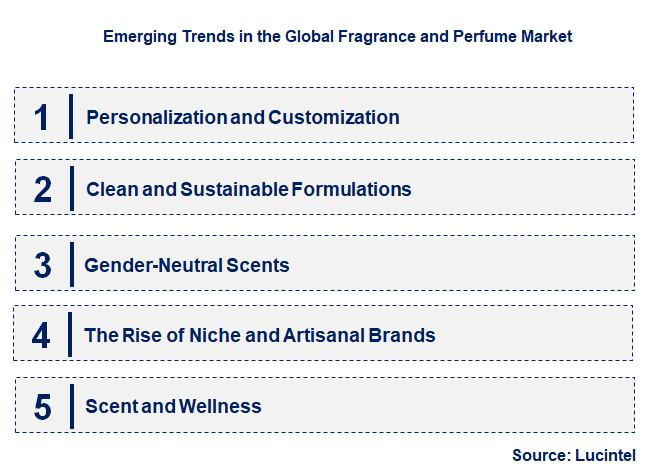
• Personalization and Customization: A major trend is the shift towards personalized and customizable fragrances. Consumers are looking for unique scents that reflect their individual identity, moving away from mass-market options. This has led to the proliferation of bespoke perfumery services and AI-driven online quizzes that recommend a scent based on personal preferences, creating a more intimate and tailored consumer experience.
• Clean and Sustainable Formulations: There is a significant trend towards "clean beauty," with consumers seeking fragrances free from harmful chemicals like parabens and phthalates. This is leading to a demand for natural, ethically sourced ingredients and eco-friendly practices, including refillable bottles and recyclable packaging. This trend is a response to growing health and environmental concerns, pushing the industry towards greater transparency and responsibility.
• Gender-Neutral Scents: The market is witnessing a rise in gender-neutral or unisex fragrances. This trend is driven by a younger generation that rejects traditional gender binaries and values inclusivity and self-expression. Brands are launching collections with scents that blur the lines between traditionally masculine and feminine notes, appealing to a broader audience and making fragrance a tool for individual identity rather than social conformity.
• The Rise of Niche and Artisanal Brands: An emerging trend is the growing popularity of niche and artisanal fragrance brands. These brands often focus on unique, high-quality ingredients, compelling brand stories, and limited distribution, creating a sense of exclusivity. This trend appeals to consumers who are looking for a distinctive product and a deeper connection with a brands creative vision, challenging the dominance of mainstream luxury brands.
• Scent and Wellness: A significant trend is the fusion of fragrance with wellness. Consumers are seeking scents that not only smell good but also have a mood-boosting or therapeutic effect. This has led to the introduction of fragrances infused with aromatherapy benefits, such as those with calming lavender or energizing citrus notes. This trend positions fragrance as a form of self-care, enhancing mental and emotional well-being. These trends are collectively reshaping the fragrance and perfume market by transforming a traditional luxury into a sophisticated, health-conscious, and highly expressive product. The focus on personalization, sustainability, and wellness is making the market more dynamic and responsive to consumer values. This evolution ensures the market remains relevant and aligned with modern beauty and lifestyle standards.
• Growth of E-commerce and Digital Retail: A major development is the widespread adoption of e-commerce and digital retail. Brands are building sophisticated online stores with virtual try-on tools and AI-driven fragrance finders to help consumers navigate scents without a physical tester. This development has democratized access to niche and international brands, allowing consumers to explore a wider range of fragrances from the comfort of their homes.
• Focus on Clean and Natural Formulations: There has been a significant development in the shift towards "clean" and natural formulations. Brands are actively reformulating products to be free from parabens, phthalates, and other common allergens. This move is a direct response to consumer demand for greater transparency and safer ingredients, positioning brands as trustworthy and aligning them with the broader health and wellness trend in the beauty industry.
• Innovation in Sustainable Packaging: A recent development is the increased focus on sustainable packaging solutions. Brands are using refillable bottles, recyclable materials, and minimalist designs to reduce their environmental footprint. This innovation caters to the growing segment of eco-conscious consumers and helps brands build a positive image of corporate social responsibility, which is becoming a crucial factor in purchasing decisions.
• Strategic Partnerships and Collaborations: A key development is the formation of strategic partnerships between fragrance houses, celebrities, and fashion designers. These collaborations result in limited-edition and exclusive collections that generate significant buzz and appeal to a specific consumer base. This development helps brands create unique narratives, leverage the influence of public figures, and drive high-value sales through exclusive product launches.
• Rise of Direct-to-Consumer Models: The growth of direct-to-consumer (DTC) models is a significant development. Brands are bypassing traditional retail channels and selling directly to consumers through their own websites. This allows them to have a closer relationship with their customers, collect valuable data, and offer personalized services like subscription boxes, creating a more tailored and engaging brand experience that fosters loyalty. These recent developments are significantly impacting the fragrance market by enhancing product accessibility, effectiveness, and consumer experience. The focus on digital innovation and sustainable practices is modernizing the industry, while the growth of DTC models and strategic partnerships is transforming how brands connect with their customers, making the market more dynamic and responsive to evolving consumer preferences.
• Personal Care Products as an Application: A primary growth opportunity lies in expanding fragrances into personal care products. This includes infusing fragrances into lotions, body washes, shampoos, and even deodorants. This application allows brands to create a holistic sensory experience for consumers and provides a lower-cost entry point into a brand. It also encourages repeat purchases and fosters a deeper connection with the brands scent identity.
• Home and Aromatherapy Applications: There is a significant opportunity to extend fragrances into the home and aromatherapy markets. This includes developing scented candles, reed diffusers, and essential oil blends that are marketed for their mood-enhancing benefits. This application targets consumers who view fragrance as a way to create a specific ambiance and improve their well-being, opening up a new and lucrative segment of the market.
• Targeting Gender-Neutral and Unisex Scents: A key strategic opportunity is to focus on developing gender-neutral and unisex fragrance collections. This application caters to a growing consumer segment that rejects traditional gender binaries in favor of personal expression. By creating versatile scents that appeal to a broad audience, brands can increase their market reach and align with modern values of inclusivity, fostering a more diverse and loyal consumer base.
• Digital and E-commerce Exclusive Products: An emerging opportunity is to create digital-exclusive products and collections for e-commerce. This can include limited-edition drops, virtual fragrance consultation services, and personalized scent kits. This application allows brands to create a sense of exclusivity and urgency, drive online traffic, and leverage the power of social media to generate buzz and appeal to a tech-savvy consumer base.
• Customization and Bespoke Services: The demand for personalization presents a major growth opportunity. Brands can offer bespoke fragrance services, where consumers work with a perfumer to create a unique, one-of-a-kind scent. This application targets the high-end luxury market and appeals to consumers who are looking for a distinctive and exclusive product that tells a personal story, justifying a premium price point. These strategic opportunities are reshaping the fragrance market by encouraging greater specialization and innovation. By focusing on multi-faceted applications, expanding digital reach, and targeting niche segments, brands can create a more comprehensive and resilient business model. This multi-faceted approach will drive market growth and establish a stronger, more direct connection with diverse consumer groups.
• Coty
• Dolce & Gabbana
• Estée Lauder Companies
• Firmenich
• Givaudan
• Giorgio Armani
• Gucci
• Hermès International
• IFF
• Interparfums
• Perfumes
• Deodorants & Antiperspirants
• Colognes
• Roll-ons
• Natural
• Synthetic
• Mass Market
• Premium
• Luxury
• Women
• Men
• Unisex
• Kids
• North America
• Europe
• Asia Pacific
• The Rest of the World
• United States: The U.S. market is a leader in the premium and niche fragrance segments. Consumers are seeking unique, gender-neutral scents and clean formulations free from harmful chemicals. E-commerce and direct-to-consumer models are thriving, with brands using AI and digital tools to offer virtual fragrance consultations and personalized recommendations, driving a more intimate and modern shopping experience.
• China: China’s fragrance market is experiencing explosive growth, fueled by a rising middle class and strong e-commerce penetration. Consumers are increasingly favoring luxury and personalized fragrances, viewing them as a symbol of status and self-expression. Local brands are gaining a strong foothold by offering products tailored to Chinese tastes, while international brands are leveraging social media to build strong brand narratives and engage with a young, digitally native audience.
• Germany: The German market is characterized by a strong consumer preference for high-quality, long-lasting, and transparent products. There is a significant demand for natural and eco-friendly ingredients, and sustainable packaging. German consumers are drawn to authentic and scientifically-backed brands, positioning perfume as a thoughtful, long-term investment in personal well-being, rather than a fleeting trend.
• India: The fragrance market in India is expanding rapidly, driven by urbanization and a growing focus on personal grooming. The market is witnessing a surge in both affordable mass-market deodorants and premium perfumes, with a growing consumer base willing to experiment with different scents. E-commerce platforms are making a wider variety of both international and local brands accessible to a large and diverse consumer base.
• Japan: Japans market is defined by a demand for subtle, sophisticated, and highly functional products. Japanese consumers favor light, clean, and elegant scents that can be worn in a variety of social situations without being overpowering. The focus is on quality ingredients and a minimalist aesthetic, reflecting a cultural preference for understated elegance and a seamless integration into daily life.


• Coty
• Dolce & Gabbana
• Estée Lauder Companies
• Firmenich
• Givaudan
• Giorgio Armani
• Gucci
• Hermès International
• IFF
• Interparfums Q5. Which fragrance and perfume market segment will be the largest in future? Answer: Lucintel forecasts that, within the type category, deodorant & antiperspirant is expected to witness the highest growth over the forecast period. Q6. In fragrance and perfume market, which region is expected to be the largest in next 5 years? Answer: In terms of region, APAC is expected to witness the highest growth over the forecast period. Q7. Do we receive customization in this report? Answer: Yes, Lucintel provides 10% customization without any additional cost.


Choose a license that fits your team. Instant PDF delivery.
Prices exclude taxes. Instant delivery. Custom licensing available on request.
Market Report · July 20, 2026
Market Report · July 15, 2026
Market Report · July 15, 2026
Trusted partner for strategic intelligence and business growth


Receive a complimentary market analysis tailored to your industry. Our analysts will identify key growth opportunities and competitive dynamics specific to your business.

Market size, growth rate, and key trend analysis for your specific sector.

Top competitor positioning and market share analysis.

Strategic recommendations backed by data-driven insights.
Get curated market intelligence and competitive moves straight to your inbox.
By subscribing, you agree to receive our monthly insights. Unsubscribe anytime.
Receive a complimentary market analysis tailored to your industry. Our analysts will identify key growth opportunities and competitive dynamics specific to your business.
Market size, growth rate, and key trend analysis for your specific sector.
Top competitor positioning and market share analysis.
Strategic recommendations backed by data-driven insights.
Get curated market intelligence, emerging trends, and competitive moves straight to your inbox each month.
By subscribing, you agree to receive our monthly insights. Unsubscribe anytime.
We'll send your sample report shortly.