
Report Feature
Foot Care Product Market Trends and Forecast
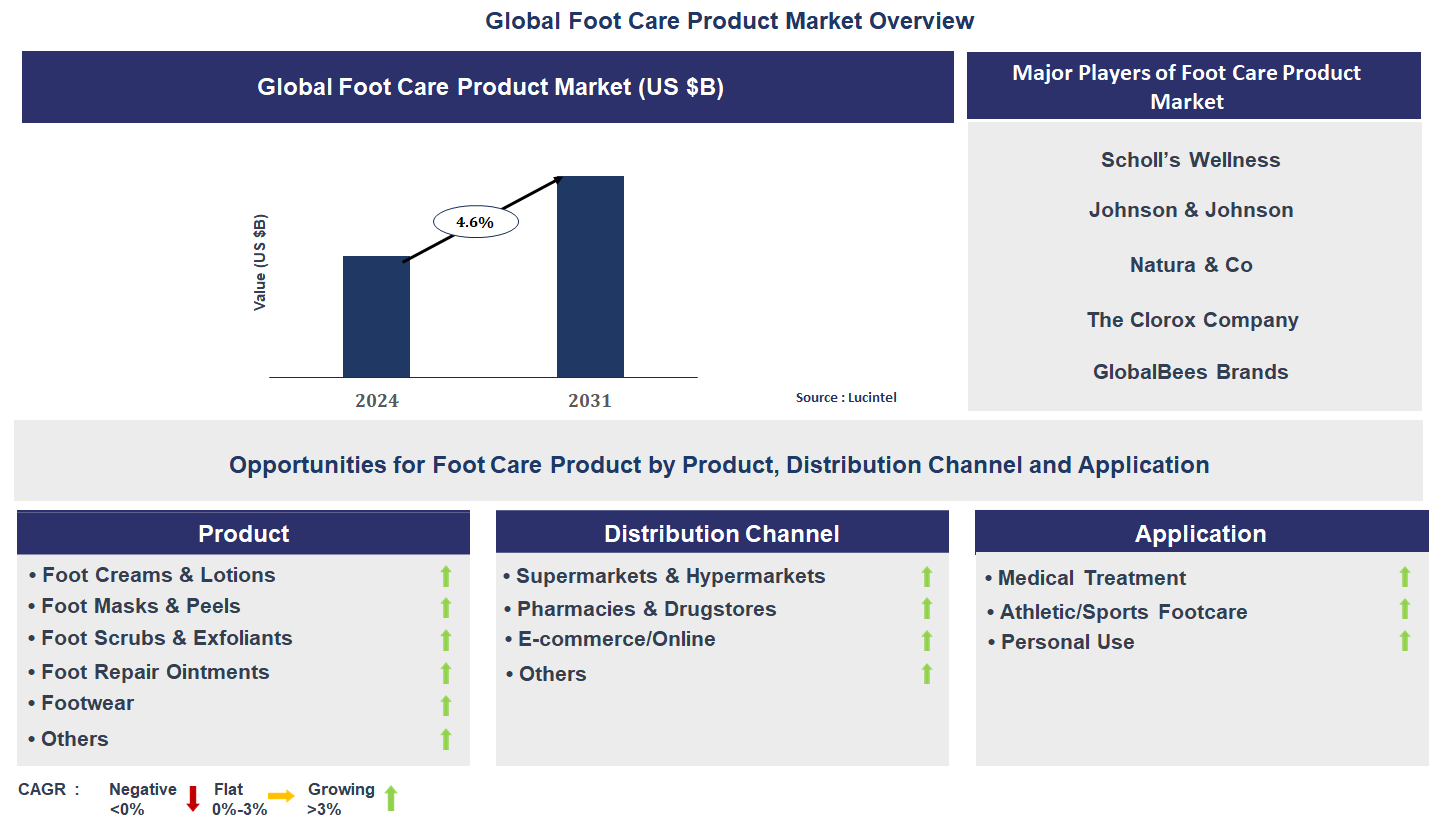
The future of the global foot care product market looks promising with opportunities in the supermarkets & hypermarket, pharmacies & drugstore, and E-commerce/online markets. The global foot care product market is expected to grow with a CAGR of 4.6% from 2025 to 2031. The major drivers for this market are the increasing awareness of foot health, the rising demand for comfort-focused products, and the growing preference for natural foot care.• Lucintel forecasts that, within the product category, foot cream & lotion is expected to witness the highest growth over the forecast period.
• Within the application category, E-commerce/online is expected to witness the highest growth.
• In terms of region, APAC is expected to witness the highest growth over the forecast period. Gain valuable insights for your business decisions with our comprehensive 150+ page report. Sample figures with some insights are shown below.
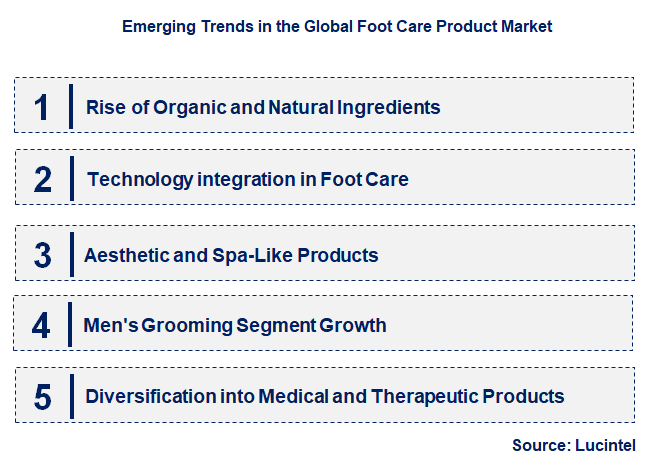
Emerging Trends in the Foot Care Product Market
The market for foot care product is changing dramatically with the force of a new group of emerging trends, reshaping the market’s composition. These trends are taking the industry from a basic, medicinal product to a more specialized, sustainable, and consumer-oriented business model. They are also mirroring a broader global trend in consumer attitudes, as a focus on wellness and health is fueling new consumer choices. The following are five key trends that are shaping the future of this market.• Rise of Organic and Natural Ingredients: A major trend is the widespread move toward organic and natural ingredients. Consumers are increasingly scrutinizing product labels and seeking formulations free from synthetic chemicals. This has led to a demand for foot care products that use ingredients like shea butter, tea tree oil, and essential oils. This is making brands re-formulate their products to address the needs of an increasingly health-aware consumers and enabling new, mission-based brands to appear.
• Technology integration in Foot Care: The market is witnessing a robust trend of technology integration into foot care products. That includes creating intelligent insoles with sensors that can monitor gait and pressure points. Products with cutting-edge features such as electronic foot massagers and UV light-based foot sanitizers are also becoming popular. The trend is particularly attracting technology-conscious consumers and athletes looking for data-driven information to enhance their performance and avoid injuries.
• Aesthetic and Spa-Like Products: A fast-growing trend is emphasizing aesthetic and spa-like products. Foot care is no longer merely a matter of treating medical conditions; today it is a part of a self-care and beauty regimen. This has created a demand for products such as exfoliating foot masks and indulgent foot soaks that can be experienced for relaxation and beautification. This trend enables brands to charge more and tap into a new, younger demographic.
• Men’s Grooming Segment Growth: The market is seeing a high growth trend of the men’s grooming segment. With male consumers increasingly becoming aware of personal hygiene and grooming, there is a growing demand for foot care products that are particularly designed for them. Such products tend to address concerns such as foot odor and athletes foot and are branded with a masculine look.
• Diversification into Medical and Therapeutic Products: There is a new trend of medical and therapeutic product specialization. This involves product development for individuals who have chronic conditions such as diabetes or arthritis. The products are clinically tested and provide solutions for issues such as foot ulcers and pain caused by nerves. This trend emphasizes the significance of foot care within the overall health context and is building a new, very specialized segment of the market with high growth prospects. These new trends are all working collectively to redefine the foot care product market by making it more sensitive to consumer values and needs. The emphasis on technology and organic ingredients is building a new segment of value-driven, premium products. The emergence of new business models and expansion in the aesthetic and men’s grooming categories are providing new opportunities for market growth and top-line expansion.
Recent Development in the Foot Care Product Market
The foot care product market has undergone a chain of quick and powerful changes in recent years, prompted primarily by increased consumer concern with wellness and self-care. The changes are shifting the market from a straightforward, problem-based category to a more complex, consumer-driven business. The emphasis is now on such aspects as sustainability, therapeutic effectiveness, and a better holistic perspective of foot health. The next five most important developments summarize how the market is transforming.• Launching of Organic and Clean Formulations: One of the significant developments is the large-scale launch of organic and clean formulation products. In a way to respond to consumer pressure for natural ingredients, companies are substituting plant-based options such as essential oils and botanical extracts for synthetic chemicals. This trend is radically altering product formulation and a brand’s public image, setting a new standard for ethical and health-oriented manufacturing.
• Development of Therapeutic and Medicated Products: Development in therapeutic and medicated foot care products has seen a significant upsurge. Firms are even launching new products with sophisticated ingredients such as urea, salicylic acid, and anti-fungal substances to address certain conditions. Such is the development of clinically proven products to address concerns such as diabetic foot care and serious athletes foot. These developments are making foot care products more efficient and are propelling their further use in medical and personal environments.
• Expansion of the E-commerce and Direct-to-Consumer Model: One major development is the emergence and popularity of the e-commerce and direct-to-consumer model. This model presents consumers with a convenient option to shop for a vast range of foot care products from the comfort of their homes. This model offers a steady stream of revenue for firms and enables them to establish a direct relationship with clients. It also facilitates the entry of new brands into the market and compels established giants to compete with them.
• Increased Products for Cosmetic and Aesthetic Use: One of the developments is expanding the market into products for cosmetic and aesthetic use. Brands today are launching a vast array of foot peels, masks, and exfoliating scrubs intended to enhance the look and feel of the feet. This trend mirrors a worldwide consumer shift in which consumers are valuing self-care and at-home beauty treatments. It is a very lucrative segment driving enormous innovation in ingredients and formulae.
• Integration of Tech-Enabled Solutions: The integration of tech-enabled solutions in foot care is another signification trend. This involves the creation of smart insoles that can be paired with smartphone apps to monitor foot health and give instant feedback. Electronic foot massagers and smart shoe inserts are other trending products. This innovation is attractive to tech-conscious consumers and sportspeople and is one way the industry continues to develop its products. These new trends are coming together to collectively influence the foot care product market towards a more specialized, therapeutic, and consumer-oriented future. The move towards organic and the evolution of new formulations are fulfilling health and environmental requirements. Foraying into cosmetic and technology-enabled segments is establishing fresh avenues for growth and brand differentiation.
Strategic Growth Opportunities in the Foot Care Product Market
The foot care product marketplace presents a range of strategic growth opportunities across major applications, fueled by the intersection of changing consumer values and a trend toward increased specialization. In order to take advantage of these opportunities, firms will need to transcend the old one-size-fits-all mentality and emphasize innovation and segment-specific marketing. Through the identification of and response to certain needs across various market segments, brands are able to innovate new revenue streams and build a strong competitive position. The following describes five important growth opportunities in the market.• Addressing the Medical and Therapeutic Segment: One of the biggest growth opportunities is in the medical and therapeutic segment. This involves creating specialty products for individuals with chronic conditions such as diabetes or arthritis. Brands can look for strategic alliances with podiatrists and health professionals to supply clinically proven and approved products. This brings a stable, high-value income stream and a platform for brand credibility because consumers in this segment tend to be influenced by a desire for effective and safe products.
• Leverage the Athletic and Sports Segment: There is a tremendous opportunity for growth in the athletic and sports segment. This involves creating products for solving problems such as blisters, athletes foot, and foot odor that plague active individuals. Companies can come up with products such as performance-designed insoles, anti-fungal sprays, and foot creams that are designed for performance and recovery. This market has a high-value consumer base that is willing to spend on products that assist them in staying healthy and performing optimally.
• Venturing into the Cosmetic and Aesthetic Market: One of the most significant growth prospects is venturing into the cosmetic and aesthetic industry. Brands can launch a premium line of products featuring luxurious foot peels, moisturizing foot masks, and fragrance-infused foot soaks. This approach addresses the emerging segment of consumers looking for self-care and home beauty solutions. It enables a brand to establish a reputation based on lifestyle and bring on board new consumers seeking a spa-like experience.
• Utilizing E-commerce and Direct-to-Consumer Models: The direct-to-consumer and e-commerce model is a significant growth potential. Through a direct-to-consumer service, brands can minimize distribution expenditure and create a direct connection with their customers. Subscription ensures a stable and repeating revenue stream. Businesses may also utilize online sale data to gain a better understanding of the habits and likes of the consumers, which helps guide future product development and marketing efforts.
• Penetrating Emerging Markets with an Affordable, Quality Line: There exists a strategic growth potential in penetrating emerging markets. With increasing disposable incomes and urbanization, there will be an increasing need for affordable, effective foot care products. By providing a variety of well-produced but competitively positioned goods, from simple creams to more complex ones, companies can gain ground in these markets ahead of time, enjoying a first-mover advantage and loyal consumer base. These strategic growth drivers are all working together to take the foot care product market towards a more specialized and consumer-oriented future. By targeting niche segments such as athletes and specific uses, the companies are broadening the market scope. The stress on beauty and innovative business models is introducing new premium, value-based categories of products. Strategic penetration into new markets also guarantees that the industry will keep changing and aligning to global consumer needs.
Foot Care Product Market Driver and Challenges
The market for foot care product is influenced by an intricate dynamic of its key drivers and challenges that are both shaping its growth and direction. The growth of the market is largely driven by increased worldwide concern for personal health and cleanliness, as well as a growing population needing specialized care. And yet, the industry also has serious challenges, such as low consumer awareness in certain markets, intense competition, and a premium product price. The factors responsible for driving the foot care product market include: 1. Increasing Geriatric Population: An overarching driver for the market is the increasing global geriatric population. With advancing age, individuals are increasingly prone to foot problems such as arthritis, foot ulcers, and bunions. This is bringing about a stable and rising demand for foot-care products that are comfortable and give relief. Such a consumer base is a priority target for clinically tested products developed according to their requirements, driving innovation in the therapeutic segment. 2. Growing Incidence of Chronic Diseases: The growing incidence of chronic diseases, especially diabetes, is one of the chief drivers of the market. Diabetic patients are more likely to develop foot-related problems, such as nerve damage and infections. This is generating a targeted and high-demand niche for medicated foot care products. The demand for specialized products for this segment is an important driver of market growth and is resulting in the creation of extremely effective and safe formulations. 3. Increased Awareness of Foot Health: There is a major driver in increased awareness of foot health among consumers. When individuals become more aware of their general well-being, they are taking their self-care rituals to their feet. This consciousness is being fueled by social media, health influencers, and public health campaigns. This is resulting in increased demand for products not just for treatment but also for preventive care and day-to-day maintenance. 4. Increase in the Sports and Fitness Industry: The worldwide expansion of the sports and fitness industry is one of the key drivers of the market. As a greater number of individuals participate in sports, they are suffering from foot-related conditions such as blisters, strains, and athletes foot. This is developing a steady and increasing demand for products that assist them in preventing injuries and recovering from physical activity. This is contributing to the creation of specialized products for athletes and represents a significant source of market growth. 5. Social Media and E-commerce Impact: The impact of social media and e-commerce is a strong driver. Social media and e-commerce are facilitating the connection between brands and a large audience, as well as between consumers and a diverse variety of products. Beauty bloggers and social media influencers are becoming important facilitators in informing consumers about the advantages of foot care products and are building a new user base. Challenges in the foot care product market are: 1. Limited Consumer Knowledge in Certain Areas: One of the biggest challenges is limited consumer knowledge of foot care products in certain areas, especially in developing economies. Most individuals in such areas do not consider foot care a necessity and tend to use conventional home remedies. This is a big challenge for brands and forces them to spend heavily on extensive educational campaigns in order to propel demand and alter consumer behavior. 2. Premium Price Point for Specialized Products: The industry is confronted with the premium price point of specialized and premium products. Most consumers do not want to pay a premium for foot care products, particularly when they are utilized for basic maintenance. This hinders brands from competing at a mass market level and also achieving a dominant market share. The challenge is how to substantiate the higher price point on superior quality and documented efficacy. 3. Tough Competition from Other Remedies: The market is threatened by a great variety of alternative and homemade remedies. Several individuals across developing countries use traditional methods such as dipping their feet in warm water or applying natural oils to treat their foot problems. This directly challenges the commercial market and forces brands to emphasize the distinctive advantages and established efficacy of products to be competitive. The collective effect of these drivers and challenges is a market in a state of ongoing transformation. The drivers, particularly the growing emphasis on health, aging, and sports, are compelling the industry towards innovation and diversification. Brands are reacting by developing high-tech, specialist, and organic offerings. Yet the challenges, especially low consumer awareness and intense competition, are compelling companies to be more responsible and strategic.List of Foot Care Product Companies
Companies in the market compete on the basis of product quality offered. Major players in this market focus on expanding their manufacturing facilities, R&D investments, infrastructural development, and leverage integration opportunities across the value chain. With these strategies foot care product companies cater increasing demand, ensure competitive effectiveness, develop innovative products & technologies, reduce production costs, and expand their customer base. Some of the foot care product companies profiled in this report include-• Scholl’s Wellness
• Johnson & Johnson
• Natura & Co
• The Clorox Company
• GlobalBees Brands
• Revlon
• Sanofi Consumer Healthcare
• O’Keeffe’s Company
• L’Oréal
• Baby Foot
Foot Care Product Market by Segment
The study includes a forecast for the global foot care product market by product, distribution channel, application, and region.Foot Care Product Market by Product [Value from 2019 to 2031]:
• Foot Creams & Lotions
• Foot Masks & Peels
• Foot Scrubs & Exfoliants
• Foot Repair Ointments
• Footwear
• Others
Foot Care Product Market by Distribution Channel [Value from 2019 to 2031]:
• Supermarkets & Hypermarkets
• Pharmacies & Drugstores
• E-commerce/Online
• Others
Foot Care Product Market by Application [Value from 2019 to 2031]:
• Medical Treatment
• Athletic/Sports Footcare
• Personal Use
Foot Care Product Market by Region [Value from 2019 to 2031]:
• North America
• Europe
• Asia Pacific
• The Rest of the World
Country Wise Outlook for the Foot Care Product Market
The world foot care product market is experiencing a profound change, shifting from being a niche medical category to a more generic personal care segment. This change is prompted by increased consumer consciousness towards foot health, greater focus on self-care, and technological advancements. While the market has long been established for treating certain illnesses, the latest developments are focused on product innovation, a shift towards organic ingredients, and a more diversified base of applications.• United States: The United States foot care products market is fueled by intense consumer interest in self-care and increasing demand for premium, specialty products. The demand is high for solutions to common problems such as dryness, cracked heels, and foot pain, especially in athletes and the elderly. The market is also witnessing an increase in products featuring natural and organic ingredients, indicating a wider trend in clean beauty from consumers. Direct-to-consumer brands and e-commerce platforms are all playing an important part, providing easy access to a vast assortment of products with novel formulations for consumers.
• China: Chinas middle class and expanding urban population are driving rapid growth in Chinas foot care product market. With increasing personal grooming norms, consumers are getting increasingly conscious about foot care. The market is witnessing a huge demand for products that promise both therapeutic and cosmetic benefits, including moisturizing creams and foot exfoliating peels. Online platforms and social media are also acting as key marketing and selling channels, with products reaching a large consumer base across the nation.
• Germany: The German foot care market is dominated by a consumer focus on product quality, effectiveness, and high safety standards. Due to a large elderly population and a high prevalence of diabetes, the demand for therapeutic and medical-grade products is high. German consumers are also very sensitive to environmentally friendly initiatives, resulting in the rising consumption of products with sustainable packaging and ingredients. Innovation in Germany is focused on the production of high-performance products that are clinically approved and effective, with a primary focus on foot-related diseases.
• India: The foot care product market in India is growing very fast due to increasing disposable incomes, urbanization, and increased awareness of personal hygiene. Although the market remains dominated by low-cost, generic treatments, there is a definite move toward higher-priced, multi-benefit products. Demand is rising for products treating causes such as foot odor and dryness. The extensive availability of products via traditional retail and a rapidly expanding e-commerce market is a major driver of growth.
• Japan: The Japanese market for foot care products is mature and renowned for its emphasis on cutting-edge technology and high precision. Japanese customers require products that are not just effective but also mild and luxurious. This has resulted in the production of products with distinctive characteristics, like specialized exfoliating foot peels and technologically advanced foot massagers. Products targeting pain in the feet and comfort for the elderly population are also large markets. Japanese brands are market leaders as they produce products that provide a premium, spa-like experience.

Features of the Global Foot Care Product Market
Market Size Estimates: Foot care product market size estimation in terms of value ($B). Trend and Forecast Analysis: Market trends (2019 to 2024) and forecast (2025 to 2031) by various segments and regions. Segmentation Analysis: Foot care product market size by product, distribution channel, application, and region in terms of value ($B). Regional Analysis: Foot care product market breakdown by North America, Europe, Asia Pacific, and Rest of the World. Growth Opportunities: Analysis of growth opportunities in different product, distribution channel, application, and regions for the foot care product market. Strategic Analysis: This includes M&A, new product development, and competitive landscape of the foot care product market. Analysis of competitive intensity of the industry based on Porter’s Five Forces model.
FAQ
Q1. What is the growth forecast for foot care product market? Answer: The global foot care product market is expected to grow with a CAGR of 4.6% from 2025 to 2031. Q2. What are the major drivers influencing the growth of the foot care product market? Answer: The major drivers for this market are the increasing awareness of foot health, the rising demand for comfort-focused products, and the growing preference for natural foot care. Q3. What are the major segments for foot care product market? Answer: The future of the foot care product market looks promising with opportunities in the supermarkets & hypermarket, pharmacies & drugstore, and E-commerce/online markets. Q4. Who are the key foot care product market companies? Answer: Some of the key foot care product companies are as follows:• Scholl’s Wellness
• Johnson & Johnson
• Natura & Co
• The Clorox Company
• GlobalBees Brands
• Revlon
• Sanofi Consumer Healthcare
• O’Keeffe’s Company
• L’Oréal
• Baby Foot Q5. Which foot care product market segment will be the largest in future? Answer: Lucintel forecasts that, within the product category, foot cream & lotion is expected to witness the highest growth over the forecast period. Q6. In foot care product market, which region is expected to be the largest in next 5 years? Answer: In terms of region, APAC is expected to witness the highest growth over the forecast period. Q7. Do we receive customization in this report? Answer: Yes, Lucintel provides 10% customization without any additional cost.
Table of Contents
List of Figures
List of Tables
Methodology
- In-depth interviews of the major players in this market
- Detailed secondary research from competitors’ financial statements and published data
- Extensive searches of published works, market, and database information pertaining to industry news, company press releases, and customer intentions
- A compilation of the experiences, judgments, and insights of Lucintel’s professionals, who have analyzed and tracked this market over the years.


Buy Now
Choose a license that fits your team. Instant PDF delivery.
Prices exclude taxes. Instant delivery. Custom licensing available on request.
Key Questions
- • What are some of the most promising, high-growth opportunities for the foot care product market by product (foot creams & lotions, foot masks & peels, foot scrubs & exfoliants, foot repair ointments, footwear, and others), distribution channel (supermarkets & hypermarkets, pharmacies & drugstores, E-commerce/online, and others), application (medical treatment, athletic/sports footcare, and personal use), and region (North America, Europe, Asia Pacific, and the Rest of the World)?
- • Which segments will grow at a faster pace and why?
- • Which region will grow at a faster pace and why?
- • What are the key factors affecting market dynamics? What are the key challenges and business risks in this market?
- • What are the business risks and competitive threats in this market?
- • What are the emerging trends in this market and the reasons behind them?
- • What are some of the changing demands of customers in the market?
- • What are the new developments in the market? Which companies are leading these developments?
- • Who are the major players in this market? What strategic initiatives are key players pursuing for business growth?
- • What are some of the competing products in this market and how big of a threat do they pose for loss of market share by material or product substitution?
- • What M&A activity has occurred in the last 5 years and what has its impact been on the industry? For any questions related to Foot Care Product Market, Foot Care Product Market Size, Foot Care Product Market Growth, Foot Care Product Market Analysis, Foot Care Product Market Report, Foot Care Product Market Share, Foot Care Product Market Trends, Foot Care Product Market Forecast, Foot Care Product Companies, write Lucintel analyst at email: helpdesk@lucintel.com. We will be glad to get back to you soon.


