
Report Feature
Food Grade Phosphoric Acid Market Trends and Forecast
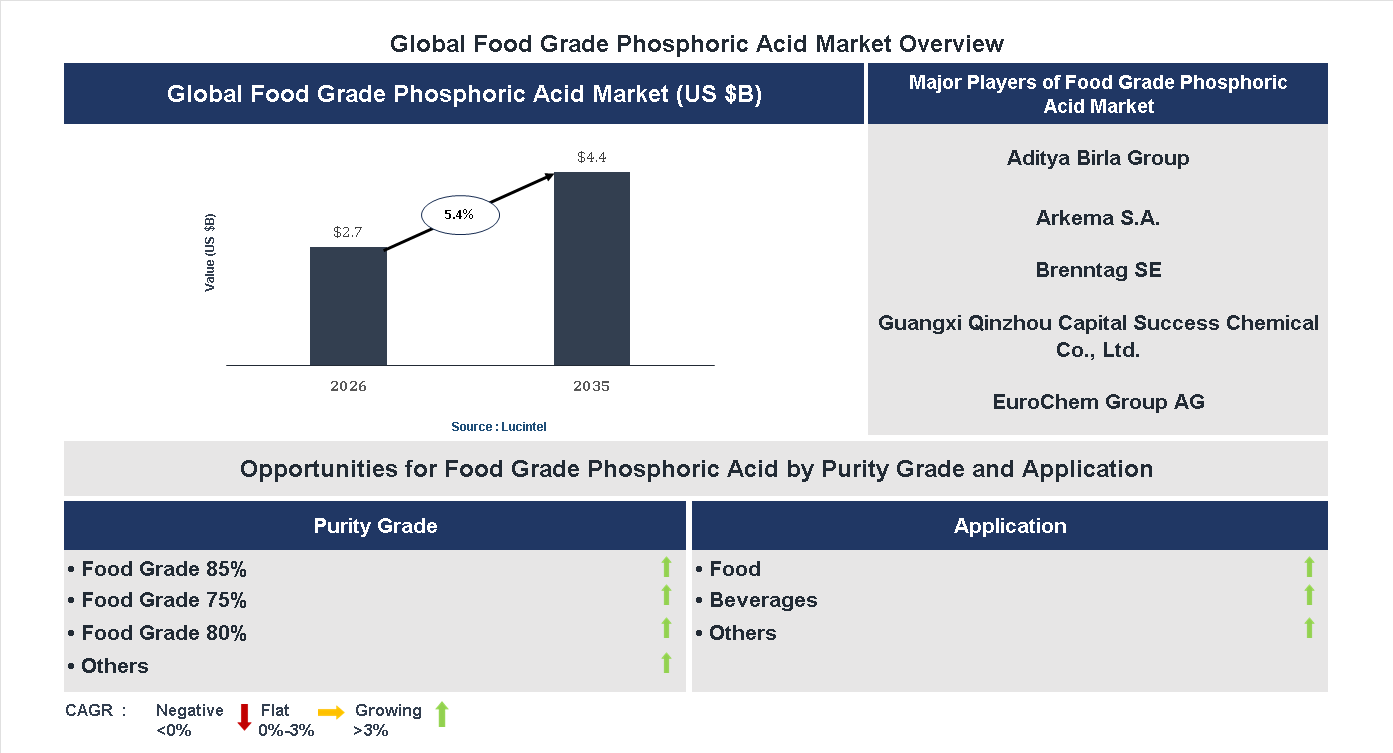
The future of the global food grade phosphoric acid market looks promising with opportunities in the food and beverage markets. The global food grade phosphoric acid market is expected to reach an estimated $4.4 billion by 2035 with a CAGR of 5.4% from 2026 to 2035. The major drivers for this market are the increasing use in food processing applications, the rising demand for acidulants in beverages, and the growing adoption in packaged food products.• Lucintel forecasts that, within the purity grade category, food grade 85% is expected to witness the highest growth over the forecast period.
• Within the application category, beverage is expected to witness higher growth.
• In terms of region, North America is expected to witness the highest growth over the forecast period. Gain valuable insights for your business decisions with our comprehensive 150+ page report. Sample figures with some insights are shown below.
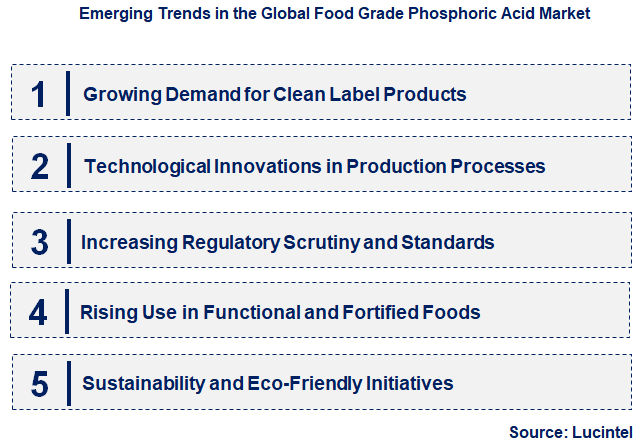
Emerging Trends in the Food Grade Phosphoric Acid Market
The food grade phosphoric acid market is experiencing rapid evolution driven by increasing demand for processed foods, health-conscious consumers, and technological advancements. As the food industry seeks safer, more sustainable, and versatile ingredients, several emerging trends are shaping the future of this market. These developments are not only influencing product formulations but also impacting supply chains, regulatory standards, and consumer preferences. Understanding these key trends is essential for stakeholders aiming to capitalize on growth opportunities and navigate the competitive landscape effectively.• Growing Demand for Clean Label Products: Increasing consumer awareness about food ingredients is driving demand for clean label products. Food manufacturers are shifting towards natural, minimally processed ingredients, which encourages the use of food-grade phosphoric acid as a safer, recognizable additive. This trend enhances transparency and trust, prompting companies to reformulate products to meet consumer expectations for health and safety. As a result, phosphoric acids role is expanding in clean-label beverages, dairy, and snack foods, aligning with the broader movement toward natural and transparent ingredients.
• Technological Innovations in Production Processes: Advances in manufacturing technologies are improving the purity, efficiency, and sustainability of phosphoric acid production. Innovations such as membrane electrolysis and bio-based synthesis methods reduce environmental impact and energy consumption. These technological developments enable producers to meet stricter regulatory standards while lowering costs. Enhanced production processes also improve product quality, making phosphoric acid more suitable for sensitive food applications. This trend supports the markets growth by ensuring a reliable supply of high-quality, eco-friendly phosphoric acid.
• Increasing Regulatory Scrutiny and Standards: Governments and international bodies are implementing stricter regulations concerning food additives, including phosphoric acid. These regulations focus on safety, labeling, and permissible usage levels, influencing market dynamics. Companies must adapt to compliance requirements, which may involve reformulating products or investing in safer production methods. Enhanced regulatory oversight fosters consumer confidence and encourages innovation in safer alternatives. This trend underscores the importance of transparency and safety in the market, shaping product development and marketing strategies.
• Rising Use in Functional and Fortified Foods: The trend toward functional foods and dietary supplements is boosting demand for phosphoric acid as a pH regulator and acidity modifier. It helps improve taste, stability, and shelf life of fortified products, including sports drinks, health supplements, and dairy products. As consumers seek health benefits and convenience, manufacturers incorporate phosphoric acid to enhance product performance. This trend expands the application scope of phosphoric acid beyond traditional uses, contributing to market growth and diversification.
• Sustainability and Eco-Friendly Initiatives: Environmental concerns are prompting companies to adopt sustainable practices in sourcing and manufacturing phosphoric acid. Emphasis on reducing carbon footprint, waste, and water usage is leading to eco-friendly production methods. Additionally, the development of bio-based and recycled raw materials aligns with sustainability goals. These initiatives appeal to environmentally conscious consumers and comply with evolving regulations. The focus on sustainability is reshaping the market by encouraging innovation, reducing environmental impact, and fostering brand loyalty among eco-aware consumers. These emerging trends are collectively transforming the food grade phosphoric acid market by emphasizing safety, innovation, sustainability, and consumer transparency. They are driving product development, influencing regulatory landscapes, and expanding application areas, ultimately reshaping the competitive dynamics and growth prospects of the industry.
Recent Development in the Food Grade Phosphoric Acid Market
The food grade phosphoric acid market is experiencing rapid growth driven by increasing demand for food safety, health-conscious consumers, and technological advancements. As the food industry evolves, the need for high-quality, safe additives becomes critical. Innovations in production processes and expanding applications across various food segments are further fueling market expansion. Regulatory support and rising awareness about food preservation are also contributing to this positive outlook. These developments are shaping a dynamic landscape with significant opportunities for industry players.• Growing Demand for Food Safety: Increasing consumer awareness and stricter regulations are driving the need for safe food additives like phosphoric acid, ensuring product quality and safety standards are met, which boosts market growth.
• Expansion in Beverage Industry: The rising popularity of soft drinks and processed beverages utilizing phosphoric acid for acidity regulation and preservation is significantly expanding market opportunities.
• Technological Advancements in Production: Innovations in manufacturing processes improve purity and reduce costs, making food-grade phosphoric acid more accessible and appealing to manufacturers.
• Regulatory Support and Standards: Governments and industry bodies are establishing clearer guidelines and standards, fostering confidence among consumers and producers, thereby encouraging market expansion.
• Diversification of Applications: Beyond beverages, phosphoric acid is increasingly used in dairy, bakery, and snack foods, broadening its application scope and driving overall market growth. The recent developments in safety standards, technological improvements, and application diversification are positively impacting the food grade phosphoric acid market. These factors are fostering increased demand, expanding market reach, and encouraging innovation, which collectively contribute to a robust growth trajectory. As the market adapts to evolving consumer preferences and regulatory frameworks, it is poised for sustained expansion and increased competitiveness.
Strategic Growth Opportunities in the Food Grade Phosphoric Acid Market
The food grade phosphoric acid market is experiencing significant growth driven by increasing demand for processed foods, beverages, and dairy products worldwide. Rising consumer awareness about food safety and the need for acidity regulators and flavor enhancers are fueling market expansion. Technological advancements and regulatory support further contribute to this growth. Companies are focusing on innovation, sustainable sourcing, and expanding regional presence to capitalize on emerging opportunities. This evolving landscape presents numerous avenues for strategic development and market penetration.• Expanding Use in Beverages to Drive Market Growth: The increasing incorporation of phosphoric acid in soft drinks, energy drinks, and flavored waters as an acidity regulator and flavor enhancer is a key growth driver. Consumer preference for carbonated beverages and functional drinks boosts demand. Manufacturers are innovating with formulations to meet health and taste expectations, expanding the market scope. Regulatory approvals and quality standards support safe usage, encouraging wider adoption across beverage segments, thus fueling overall market expansion.
• Rising Demand from the Dairy and Food Processing Industries: Phosphoric acid is increasingly used in dairy products, processed foods, and condiments to improve texture, pH stability, and shelf life. The growing processed food industry, driven by urbanization and changing lifestyles, enhances demand. Food manufacturers seek high-quality, food-grade phosphoric acid to meet safety standards and product consistency. This trend is expected to continue, with innovations in food processing techniques further expanding application opportunities and market size.
• Technological Innovations Enhancing Production and Quality: Advances in manufacturing processes, such as eco-friendly synthesis methods and purification techniques, are improving product quality and reducing costs. These innovations enable suppliers to meet stringent food safety standards and increase production efficiency. Enhanced quality control and sustainable sourcing practices attract health-conscious consumers and regulatory compliance, fostering market confidence. Continuous R&D efforts are expected to lead to new formulations and applications, further broadening market potential.
• Growing Focus on Sustainable and Organic Sourcing: Consumers and regulators are emphasizing sustainability and organic ingredients, prompting companies to adopt eco-friendly sourcing of phosphoric acid. Use of renewable raw materials and environmentally responsible manufacturing processes is gaining importance. This shift supports market differentiation and meets consumer demand for clean-label products. Companies investing in sustainable practices are likely to gain a competitive advantage, expand their customer base, and open new regional markets aligned with eco-conscious trends.
• Increasing Regional Market Penetration in Emerging Economies: Rapid urbanization, rising disposable incomes, and expanding food processing sectors in regions like Asia-Pacific and Latin America present substantial growth opportunities. Local manufacturers are adopting global standards, and international players are entering these markets through strategic partnerships. Infrastructure development and supportive government policies further facilitate market entry. This regional expansion is expected to significantly boost overall market size, diversify supply chains, and foster innovation tailored to local consumer preferences. These strategic growth opportunities are poised to significantly influence the food grade phosphoric acid market by expanding applications, improving product quality, and entering new regional markets. Embracing technological advancements, sustainability, and regional expansion will enable industry players to capitalize on emerging trends. Overall, these opportunities will drive market growth, enhance competitiveness, and meet evolving consumer demands in the global food industry.
Food Grade Phosphoric Acid Market Driver and Challenges
The food grade phosphoric acid market is influenced by a variety of technological, economic, and regulatory factors that shape its growth and development. Advances in manufacturing processes and quality standards drive innovation, while economic conditions such as raw material costs and global demand impact profitability. Regulatory frameworks concerning food safety and environmental sustainability also play a crucial role in shaping market dynamics. Additionally, consumer preferences for healthier and preservative-free products influence product formulations and marketing strategies. Navigating these complex factors requires industry players to adapt continuously, ensuring compliance and competitiveness in a rapidly evolving landscape. The factors responsible for driving the food grade phosphoric acid market include:• Increasing Demand for Food Preservation and Flavor Enhancement: The rising global population and changing consumer lifestyles have led to increased consumption of processed foods, which require preservatives and flavor enhancers. Phosphoric acid is widely used in soft drinks, dairy products, and processed foods to improve taste, acidity, and shelf life. Growing awareness of food safety standards and the need for longer shelf stability are fueling demand. Moreover, the expansion of the food and beverage industry in emerging economies presents significant growth opportunities. This trend is supported by technological advancements that enable the production of high-quality, food-grade phosphoric acid, ensuring safety and consistency.
• Growth in the Beverage Industry, Especially Soft Drinks: The beverage sector, particularly carbonated soft drinks, is a major consumer of food-grade phosphoric acid. The acid provides a tangy flavor and acts as a preservative, extending product shelf life. The global soft drink market is expanding due to urbanization, changing lifestyles, and increasing disposable incomes. Manufacturers are innovating with new flavors and healthier options, which often incorporate phosphoric acid for acidity regulation. Additionally, the rise of functional beverages and energy drinks further boosts demand. Technological improvements in extraction and purification processes ensure the acid meets stringent quality standards, supporting market growth.
• Technological Advancements in Production Processes: Innovations in manufacturing technologies have enhanced the efficiency, purity, and safety of food-grade phosphoric acid. Modern production methods, such as electrolysis and improved filtration techniques, reduce impurities and environmental impact. These advancements enable manufacturers to meet strict regulatory standards and reduce costs, making the product more accessible. Enhanced quality control measures also ensure consistent product specifications, which are critical for food applications. As research continues, new methods are emerging to produce phosphoric acid with higher purity and lower environmental footprint, further driving market expansion and consumer confidence.
• Increasing Focus on Food Safety and Regulatory Compliance: Governments and international organizations are implementing stringent food safety regulations to protect consumers. Compliance with standards such as FDA regulations and EFSA guidelines is essential for market players. This focus on safety drives the adoption of high-quality, food-grade phosphoric acid that meets purity and safety criteria. Companies are investing in quality assurance, traceability, and sustainable sourcing to maintain compliance. Regulatory pressures also encourage innovation in production processes to reduce contaminants and environmental impact. This environment fosters trust among consumers and retailers, supporting market stability and growth.
• Rising Awareness of Health and Wellness Trends: Consumers are increasingly seeking healthier food options with natural ingredients and minimal additives. While phosphoric acid is a synthetic additive, its role in enhancing flavor and shelf life remains vital. Market players are responding by developing cleaner labels and exploring alternative formulations that align with health trends. Additionally, the demand for organic and non-GMO products influences the sourcing and production of food-grade phosphoric acid. Companies are investing in research to improve product safety and reduce potential health concerns, which helps maintain consumer confidence and expands market opportunities. The challenges facing the food grade phosphoric acid market include:
• Fluctuating Raw Material Prices and Supply Chain Disruptions: The primary raw materials for phosphoric acid production, such as phosphate rock and sulfuric acid, are subject to price volatility due to geopolitical tensions, environmental regulations, and supply-demand imbalances. These fluctuations impact production costs and profit margins. Additionally, disruptions in the supply chain caused by natural disasters, transportation issues, or global crises can lead to shortages and delays. Manufacturers must develop strategies for sourcing and inventory management to mitigate risks. The volatility also affects pricing strategies and long-term planning, posing a significant challenge to market stability.
• Stringent Regulatory and Environmental Standards: Increasingly strict regulations related to environmental protection, waste management, and food safety impose compliance costs on manufacturers. Regulations governing emissions, effluent treatment, and sustainable sourcing require significant investments in technology and infrastructure. Non-compliance can result in hefty fines, product recalls, and reputational damage. Navigating diverse regulatory landscapes across regions adds complexity, especially for companies operating internationally. Balancing regulatory compliance with cost efficiency remains a key challenge, potentially hindering market growth and innovation.
• Environmental Concerns and Sustainability Issues: The production of phosphoric acid involves environmental challenges such as phosphate minings ecological impact and waste disposal. Growing awareness and activism around sustainability pressure companies to adopt eco-friendly practices, which can increase operational costs. Water usage, energy consumption, and waste management are critical concerns that need addressing to meet sustainability goals. Failure to implement environmentally responsible practices can lead to consumer backlash and regulatory penalties. The industry must innovate to develop greener production methods and promote sustainable sourcing to ensure long-term viability and market acceptance. The food grade phosphoric acid market is driven by increasing demand from the food and beverage industry, technological innovations, regulatory compliance, and health-conscious consumer trends. However, it faces challenges related to raw material price volatility, stringent regulations, and environmental sustainability. These factors collectively influence market dynamics, requiring industry players to adapt strategically. While growth prospects remain promising, success will depend on balancing innovation, compliance, and sustainability to meet evolving consumer and regulatory expectations.
List of Food Grade Phosphoric Acid Companies
Companies in the market compete on the basis of product quality offered. Major players in this market focus on expanding their manufacturing facilities, R&D investments, infrastructural development, and leverage integration opportunities across the value chain. With these strategies food grade phosphoric acid companies cater increasing demand, ensure competitive effectiveness, develop innovative products & technologies, reduce production costs, and expand their customer base. Some of the food grade phosphoric acid companies profiled in this report include-• Aditya Birla Group
• Arkema S.A.
• Brenntag SE
• Guangxi Qinzhou Capital Success Chemical Co., Ltd.
• EuroChem Group AG
• Guizhou U-Share Materials Co. Ltd.
• ICL Group Ltd.
• Innophos Holdings Inc.
• Israel Chemicals Ltd.
• Jordan Phosphate Mines Co.
Food Grade Phosphoric Acid Market by Segment
The study includes a forecast for the global food grade phosphoric acid market by purity grade, application, and region.Food Grade Phosphoric Acid Market by Purity Grade [Value from 2019 to 2035]:
• Food Grade 85%
• Food Grade 75%
• Food Grade 80%
• Others
Food Grade Phosphoric Acid Market by Application [Value from 2019 to 2035]:
• Food
• Beverages
• Others
Food Grade Phosphoric Acid Market by Region [Value from 2019 to 2035]:
• North America
• Europe
• Asia Pacific
• The Rest of the World
Country Wise Outlook for the Food Grade Phosphoric Acid Market
The food grade phosphoric acid market has experienced significant shifts driven by technological advancements, regulatory changes, and evolving consumer preferences. As health consciousness rises and food safety standards tighten globally, key markets are adopting innovative production methods and expanding applications. The United States, China, Germany, India, and Japan are at the forefront of these developments, each contributing uniquely to the markets growth and transformation. These countries are focusing on sustainable practices, product quality, and expanding usage in various food and beverage sectors, reflecting a dynamic and competitive landscape.• United States: The US market has seen increased demand for organic and non-GMO phosphoric acid products, driven by consumer health concerns. Regulatory agencies have implemented stricter safety standards, prompting manufacturers to adopt cleaner production processes. Innovation in food preservation and flavor enhancement applications is also expanding, with a focus on reducing environmental impact through sustainable sourcing and manufacturing practices.
• China: China remains the largest producer and consumer of phosphoric acid, with recent developments emphasizing capacity expansion and technological upgrades. The government has introduced policies to improve product quality and reduce environmental pollution from manufacturing plants. Additionally, the country is investing in research to develop more eco-friendly production methods and diversify applications in the food industry, including dairy and beverage sectors.
• Germany: Germanys market is characterized by high-quality standards and stringent regulations, leading to increased adoption of advanced purification techniques. The focus is on producing food-grade phosphoric acid with minimal impurities, catering to premium food and beverage manufacturers. Germany is also investing in sustainable production practices and exploring innovative uses such as functional foods and health supplements.
• India: The Indian market is witnessing rapid growth due to expanding food processing industries and increasing urbanization. Recent developments include the adoption of modern manufacturing technologies and stricter quality controls to meet international standards. The government’s initiatives to promote food safety and export growth are encouraging local producers to enhance product quality and diversify applications, especially in beverages and processed foods.
• Japan: Japans market emphasizes high purity and safety standards, with ongoing advancements in purification and quality assurance processes. The country is focusing on reducing reliance on imports by boosting domestic production and adopting environmentally friendly manufacturing methods. Innovations in functional foods and health-oriented products are also driving demand for high-grade phosphoric acid in Japan’s health-conscious consumer market.

Features of the Global Food Grade Phosphoric Acid Market
Market Size Estimates: Food grade phosphoric acid market size estimation in terms of value ($B). Trend and Forecast Analysis: Market trends (2019 to 2025) and forecast (2026 to 2035) by various segments and regions. Segmentation Analysis: Food grade phosphoric acid market size by purity grade, application, and region in terms of value ($B). Regional Analysis: Food grade phosphoric acid market breakdown by North America, Europe, Asia Pacific, and Rest of the World. Growth Opportunities: Analysis of growth opportunities in different purity grades, applications, and regions for the food grade phosphoric acid market. Strategic Analysis: This includes M&A, new product development, and competitive landscape of the food grade phosphoric acid market. Analysis of competitive intensity of the industry based on Porter’s Five Forces model.
FAQ
Q1. What is the food grade phosphoric acid market size? Answer: The global food grade phosphoric acid market is expected to reach an estimated $4.4 billion by 2035. Q2. What is the growth forecast for food grade phosphoric acid market? Answer: The global food grade phosphoric acid market is expected to grow with a CAGR of 5.4% from 2026 to 2035. Q3. What are the major drivers influencing the growth of the food grade phosphoric acid market? Answer: The major drivers for this market are the increasing use in food processing applications, the rising demand for acidulants in beverages, and the growing adoption in packaged food products. Q4. What are the major segments for food grade phosphoric acid market? Answer: The future of the food grade phosphoric acid market looks promising with opportunities in the food and beverage markets. Q5. Who are the key food grade phosphoric acid market companies? Answer: Some of the key food grade phosphoric acid companies are as follows:• Aditya Birla Group
• Arkema S.A.
• Brenntag SE
• Guangxi Qinzhou Capital Success Chemical Co., Ltd.
• EuroChem Group AG
• Guizhou U-Share Materials Co. Ltd.
• ICL Group Ltd.
• Innophos Holdings Inc.
• Israel Chemicals Ltd.
• Jordan Phosphate Mines Co. Q6. Which food grade phosphoric acid market segment will be the largest in future? Answer: Lucintel forecasts that, within the purity grade category, food grade 85% is expected to witness the highest growth over the forecast period. Q7. In food grade phosphoric acid market, which region is expected to be the largest in next 5 years? Answer: In terms of region, North America is expected to witness the highest growth over the forecast period. Q8. Do we receive customization in this report? Answer: Yes, Lucintel provides 10% customization without any additional cost.
Table of Contents
List of Figures
List of Tables
Methodology
- In-depth interviews of the major players in this market
- Detailed secondary research from competitors’ financial statements and published data
- Extensive searches of published works, market, and database information pertaining to industry news, company press releases, and customer intentions
- A compilation of the experiences, judgments, and insights of Lucintel’s professionals, who have analyzed and tracked this market over the years.


Buy Now
Choose a license that fits your team. Instant PDF delivery.
Prices exclude taxes. Instant delivery. Custom licensing available on request.
Key Questions
- • What are some of the most promising, high-growth opportunities for the food grade phosphoric acid market by purity grade (food grade 85%, food grade 75%, food grade 80%, and others), application (food, beverages, and others), and region (North America, Europe, Asia Pacific, and the Rest of the World)?
- • Which segments will grow at a faster pace and why?
- • Which region will grow at a faster pace and why?
- • What are the key factors affecting market dynamics? What are the key challenges and business risks in this market?
- • What are the business risks and competitive threats in this market?
- • What are the emerging trends in this market and the reasons behind them?
- • What are some of the changing demands of customers in the market?
- • What are the new developments in the market? Which companies are leading these developments?
- • Who are the major players in this market? What strategic initiatives are key players pursuing for business growth?
- • What are some of the competing products in this market and how big of a threat do they pose for loss of market share by material or product substitution?
- • What M&A activity has occurred in the last 7 years and what has its impact been on the industry? For any questions related to Food Grade Phosphoric Acid Market, Food Grade Phosphoric Acid Market Size, Food Grade Phosphoric Acid Market Growth, Food Grade Phosphoric Acid Market Analysis, Food Grade Phosphoric Acid Market Report, Food Grade Phosphoric Acid Market Share, Food Grade Phosphoric Acid Market Trends, Food Grade Phosphoric Acid Market Forecast, Food Grade Phosphoric Acid Companies, write Lucintel analyst at email: helpdesk@lucintel.com. We will be glad to get back to you soon.


