
Market Report · July 29, 2026

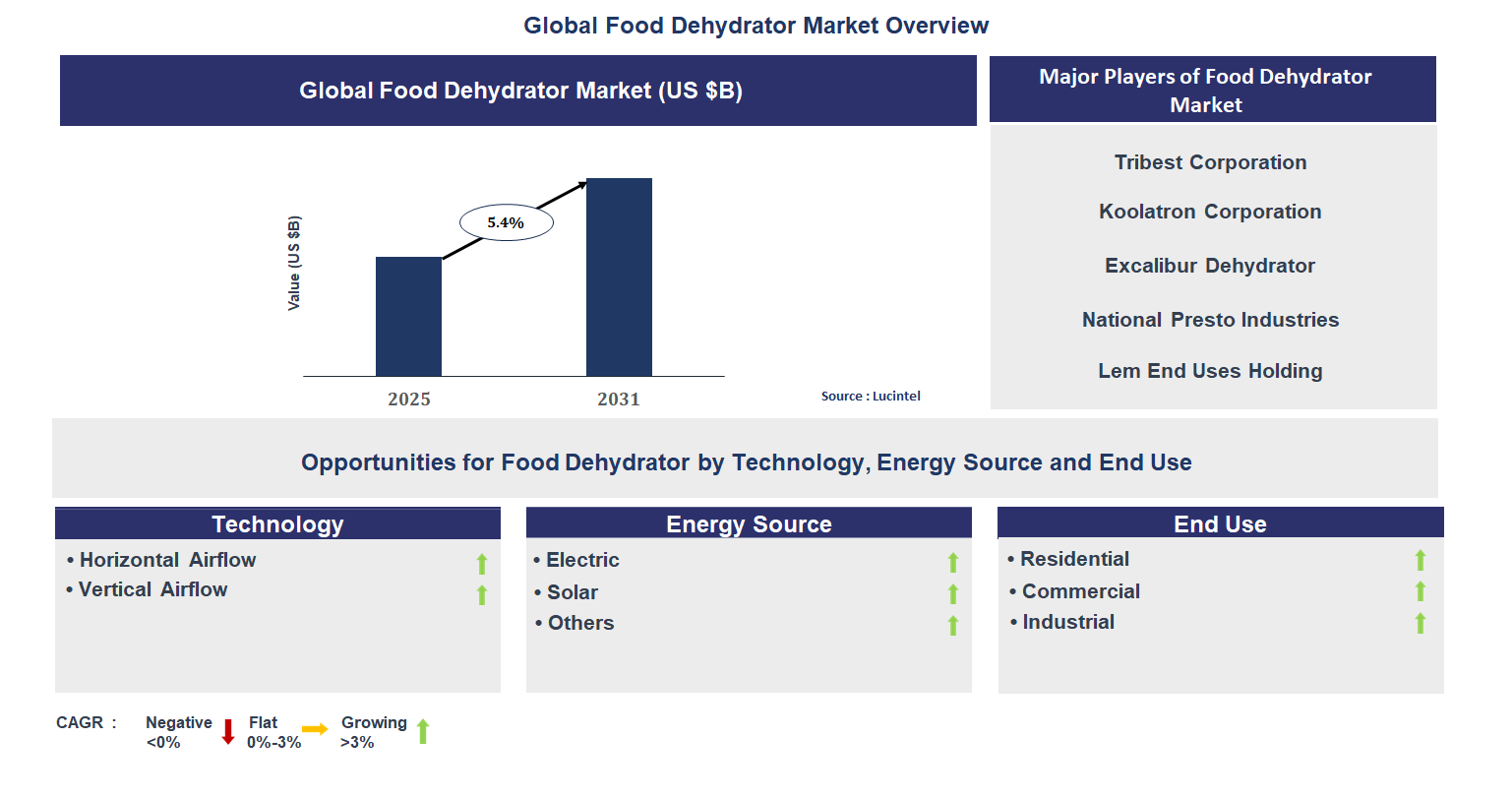
Key data points: The growth forecast = 5.4% annually for the next 7 years. Scroll below to get more insights. This market report covers trends, opportunities and forecasts in food dehydrator market to 2031 by technology (horizontal airflow and vertical airflow), energy source (electric, solar, and others), end use (residential, commercial, and industrial), and region (North America, Europe, Asia Pacific, and the Rest of the World)
We'll send your sample report shortly.
• Lucintel forecasts that, within the technology category, horizontal airflow is expected to witness higher growth over the forecast period.
• Within the end use category, residential is expected to witness the highest growth.
• In terms of region, APAC is expected to witness the highest growth over the forecast period. Gain valuable insights for your business decisions with our comprehensive 150+ page report. Sample figures with some insights are shown below.
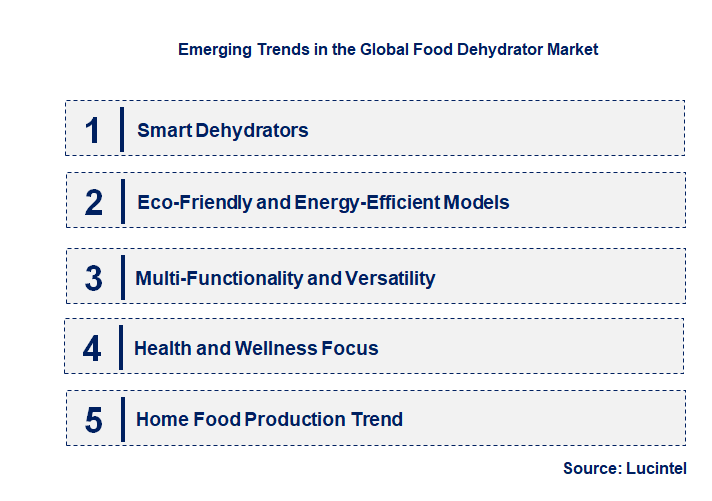
• Smart Dehydrators: Consumers are increasingly drawn to food dehydrators with smart capabilities, such as app control and Wi-Fi connectivity. These devices enable users to monitor the drying process remotely, improving convenience and precision. The integration of IoT technology into food dehydrators has made these appliances more efficient and user-friendly, catering to a tech-savvy demographic.
• Eco-Friendly and Energy-Efficient Models: Growing environmental concerns have spurred the development of energy-efficient food dehydrators, with many manufacturers focusing on minimizing energy consumption while maximizing output. These eco-friendly models cater to environmentally-conscious consumers looking to reduce their carbon footprint, providing sustainable alternatives to traditional methods of food preservation.
• Multi-Functionality and Versatility: Modern food dehydrators are becoming increasingly versatile, offering multi-functional capabilities such as yogurt making, jerky preparation, and fermenting. Consumers are opting for appliances that can handle various tasks, saving both space and money. This trend aligns with the demand for more efficient and cost-effective kitchen appliances.
• Health and Wellness Focus: A growing emphasis on healthy eating has driven the demand for food dehydrators that enable consumers to preserve fruits, vegetables, and herbs in their purest forms. This trend is reinforced by an increasing desire for organic and natural food preservation methods, allowing consumers to maintain the nutritional value of their foods without artificial additives.
• Home Food Production Trend: The desire for self-sufficiency in food production is on the rise, especially among eco-conscious consumers and those interested in sustainability. Food dehydrators have become key appliances for home-based food preservation, with individuals drying their homegrown produce to reduce waste and extend shelf life. This trend highlights a shift towards more sustainable living practices. The emerging trends in the food dehydrator market point toward smarter, more eco-friendly, and versatile appliances. These trends are reshaping consumer preferences and driving innovation in food preservation technologies, with a particular emphasis on sustainability, health, and convenience. As these trends continue to evolve, they will likely lead to further advancements in the market.
• Smart Features Integration: The integration of smart features into food dehydrators has been one of the key market developments. Manufacturers are embedding sensors, remote control apps, and Wi-Fi capabilities into their products, offering consumers more control and flexibility. These smart dehydrators allow for real-time monitoring, which improves the drying process and enhances the overall user experience.
• Focus on Energy Efficiency: Energy-efficient food dehydrators are becoming a major focus, as manufacturers seek to meet rising consumer demands for environmentally conscious products. These dehydrators use less power while ensuring optimal drying results. The energy-saving trend is expected to drive growth in the market, especially as concerns over electricity consumption and sustainability continue to grow.
• Introduction of Multi-Functional Models: Multi-functional dehydrators are gaining popularity, offering added features such as yogurt-making, jerky drying, and even fermenting. These versatile models appeal to consumers who seek all-in-one kitchen appliances, enhancing convenience and reducing the need for multiple gadgets. This development has expanded the target market to include users with varying food preservation needs.
• Improved Material Quality: Advances in materials used for food dehydrators have contributed to improved product quality and durability. Manufacturers are using food-grade stainless steel and BPA-free plastics in the construction of dehydrators, ensuring both safety and longevity. This development is responding to the growing consumer focus on healthier and more reliable kitchen appliances.
• Expansion into Developing Markets: The food dehydrator market is seeing increased penetration in developing countries, especially in Asia-Pacific and Latin America. Manufacturers are targeting price-sensitive consumers by offering affordable, efficient models. As consumer awareness about the benefits of food preservation rises, the market is expected to expand significantly in these regions. Recent developments in the food dehydrator market have been driven by technological advancements, sustainability efforts, and an increasing focus on consumer needs. These developments are shaping the future of the market, driving innovation and expanding the range of products available. As these trends evolve, we can expect further improvements in convenience, efficiency, and versatility.
• Home-Based Food Preservation: The growing trend of home-based food production and preservation presents a significant opportunity for food dehydrator manufacturers. As more consumers seek to reduce food waste and preserve fresh produce, home dehydrators are becoming essential tools for creating dried fruits, vegetables, and snacks. This application is expected to see continued growth as sustainability trends rise.
• Health-Conscious Consumers: Health-conscious consumers are increasingly looking for ways to preserve fruits, vegetables, and meats without added preservatives or chemicals. Dehydrators offer an ideal solution, and companies can tap into this growing market by emphasizing the health benefits of dried foods. Focus on organic, natural, and sugar-free dehydrated products will further fuel this trend.
• Small and Compact Models: The demand for smaller, more compact dehydrators is on the rise, particularly in urban areas where kitchen space is limited. Manufacturers are capitalizing on this trend by designing products that are space-efficient and cater to smaller households. These compact models appeal to consumers who seek convenience without compromising on performance.
• Food Processing and Commercial Applications: There is significant potential for growth in the commercial food processing sector, where dehydrators are used to preserve large quantities of fruits, vegetables, and herbs. Manufacturers can explore this opportunity by developing high-capacity, industrial-grade dehydrators that offer enhanced efficiency and scalability for food processors looking to extend product shelf life.
• Sustainability and Eco-Friendly Products: As sustainability becomes a key concern, there is a growing demand for eco-friendly dehydrators that minimize energy usage and feature recyclable materials. Companies focusing on green technologies and environmentally responsible practices will find substantial growth opportunities, particularly in regions with strong eco-conscious consumer bases, such as Europe and North America. The food dehydrator market presents several strategic growth opportunities across diverse applications. By capitalizing on trends such as home food preservation, health-conscious consumption, and sustainability, manufacturers can expand their reach and meet evolving consumer demands. As these growth areas continue to unfold, the market will see increased innovation and product diversification.
• Tribest Corporation
• Koolatron Corporation
• Excalibur Dehydrator
• National Presto Industries
• Lem End Uses Holding
• Hamilton Beach Brands
• The Sausage Maker
• Aroma Housewares Company
• JBT Corporation
• STX International
• Horizontal Airflow
• Vertical Airflow
• Electric
• Solar
• Others
• Residential
• Commercial
• Industrial
• North America
• Europe
• Asia Pacific
• The Rest of the World
• United States: The U.S. food dehydrator market has experienced strong growth driven by health-conscious consumers and a demand for homemade snacks. Advanced features like digital controls, smart functionality, and faster drying processes are increasingly popular. The demand for food preservation, particularly in organic and sustainable food sectors, continues to push innovation, with increased adoption of eco-friendly materials.
• China: Chinas food dehydrator market is expanding rapidly, fueled by a growing middle class and rising awareness of healthy eating habits. The shift toward convenience and the demand for long shelf-life products are key drivers. There is a growing preference for multi-functional appliances, while the government’s support for innovation in food preservation technologies is fostering further growth in the market.
• Germany: Germany is experiencing steady growth in the food dehydrator market, driven by the increasing focus on organic, raw, and health-conscious diets. As part of the broader European trend toward sustainable food preservation, German consumers are looking for energy-efficient and versatile dehydrators. Additionally, there is a growing interest in home-based food production, including drying fruits and vegetables for personal use.
• India: The Indian market for food dehydrators is growing due to rising health awareness and an increasing number of small households with a need for compact kitchen appliances. The demand for dehydrators in the food processing industry, especially for traditional snacks like dried fruits, is on the rise. However, price sensitivity remains a significant factor limiting widespread adoption.
• Japan: Japan has a strong preference for compact, high-performance food dehydrators, with consumers seeking convenience and functionality. The market benefits from the increasing trend of home-based food processing and preservation, driven by health-conscious consumers. Japanese manufacturers are introducing dehydrators with advanced features like automated drying cycles and multi-tier racks, tailored to both small and large-scale food preservation needs.


• Tribest Corporation
• Koolatron Corporation
• Excalibur Dehydrator
• National Presto Industries
• Lem End Uses Holding
• Hamilton Beach Brands
• The Sausage Maker
• Aroma Housewares Company
• JBT Corporation
• STX International Q5. Which food dehydrator market segment will be the largest in future? Answer: Lucintel forecasts that, within the technology category, horizontal airflow is expected to witness higher growth over the forecast period. Q6. In food dehydrator market, which region is expected to be the largest in next 5 years? Answer: In terms of region, APAC is expected to witness the highest growth over the forecast period. Q7. Do we receive customization in this report? Answer: Yes, Lucintel provides 10% customization without any additional cost.


Choose a license that fits your team. Instant PDF delivery.
Prices exclude taxes. Instant delivery. Custom licensing available on request.
Market Report · July 29, 2026
Market Report · July 15, 2026
Market Report · July 13, 2026
Trusted partner for strategic intelligence and business growth


Receive a complimentary market analysis tailored to your industry. Our analysts will identify key growth opportunities and competitive dynamics specific to your business.

Market size, growth rate, and key trend analysis for your specific sector.

Top competitor positioning and market share analysis.

Strategic recommendations backed by data-driven insights.
Get curated market intelligence and competitive moves straight to your inbox.
By subscribing, you agree to receive our monthly insights. Unsubscribe anytime.
Receive a complimentary market analysis tailored to your industry. Our analysts will identify key growth opportunities and competitive dynamics specific to your business.
Market size, growth rate, and key trend analysis for your specific sector.
Top competitor positioning and market share analysis.
Strategic recommendations backed by data-driven insights.
Get curated market intelligence, emerging trends, and competitive moves straight to your inbox each month.
By subscribing, you agree to receive our monthly insights. Unsubscribe anytime.
We'll send your sample report shortly.