
Market Report · July 16, 2026

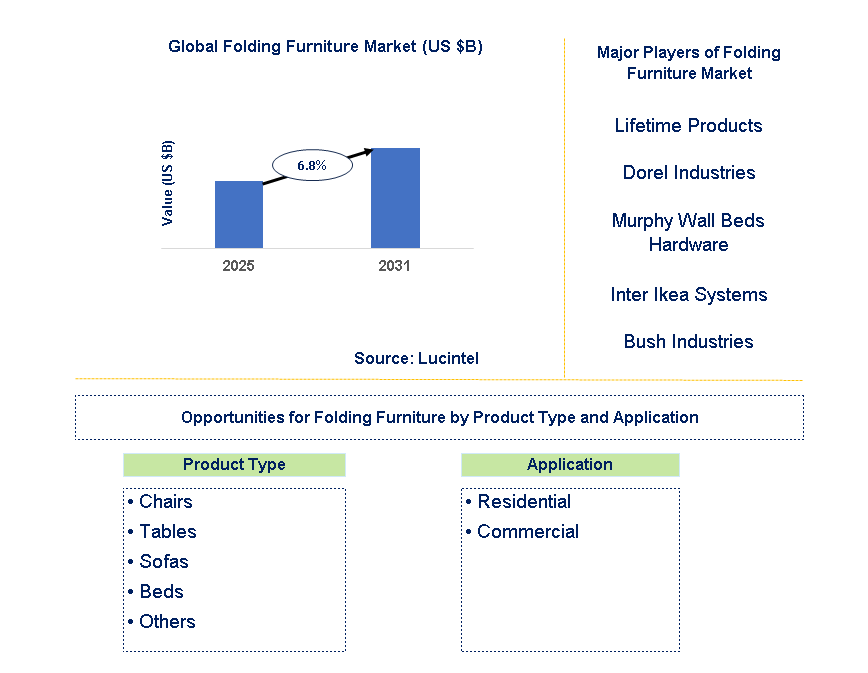
Key data points: The growth forecast = 6.8% annually for the next 7 years. Scroll below to get more insights. This market report covers trends, opportunities and forecasts in folding furniture market to 2031 by product type (chairs, tables, sofas, beds, and others), application (residential and commercial), and region (North America, Europe, Asia Pacific, and the Rest of the World)
We'll send your sample report shortly.
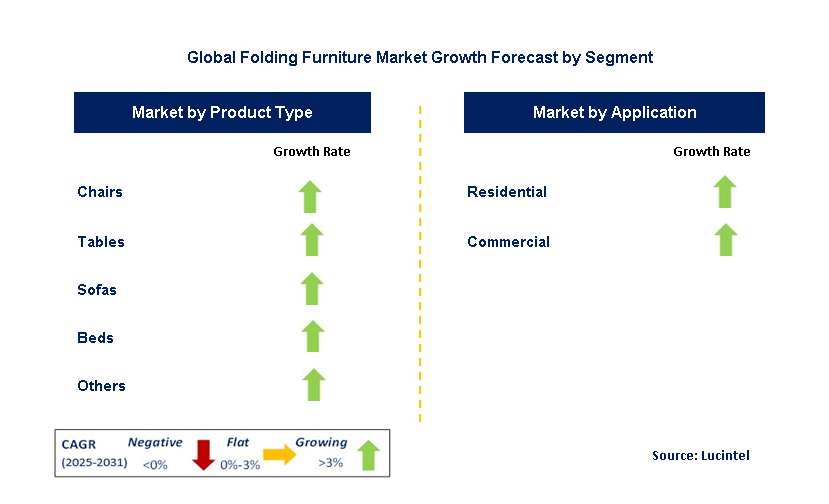
• Lucintel forecasts that, within the product type category, chair is expected to witness the highest growth over the forecast period.
• Within the application category, residential is expected to witness higher growth.
• In terms of region, North America is expected to witness the highest growth over the forecast period. Gain valuable insights for your business decisions with our comprehensive 150+ page report. Sample figures with some insights are shown below.
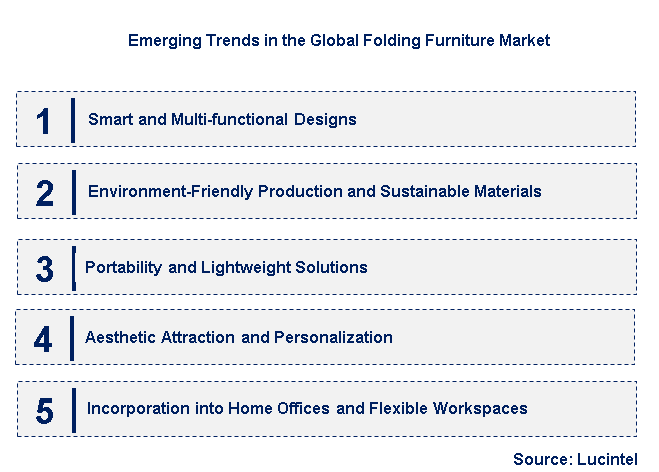
• Smart and Multi-functional Designs: This trend entails the incorporation of technology and multi-functionality in folding furniture. Beyond mere fold-away functionality, products are increasingly designed to perform multiple functions, like sofa beds that open as workstations or dining tables that unfold from a modest console. Smart functionality may involve built-in charging stations, adjustable lamps, or even self-folding mechanisms. This appeals to consumers residing in smaller dwellings who require furniture to transform for multiple purposes, extracting maximum utility from minimal square footages.
• Environment-Friendly Production and Sustainable Materials: Increasing environmental awareness among buyers is fueling demand for folding furniture constructed from sustainable, recycled, or sustainably sourced materials. Companies are switching increasingly to bamboo, reclaimed wood, recycled plastics, and metals. This extends beyond material to include green manufacturing processes, lower carbon footprints, and packaging. Buyers are prepared to pay higher prices for products that are aligned with their values, driving innovation in green manufacturing and material science in the furniture sector.
• Portability and Lightweight Solutions: The growing mobility of contemporary lifestyles, such as regular relocations and the popularity of outdoor recreation, is driving demand for genuinely portable and light folding furniture. It highlights effortless assembly and disassembly, making furniture easy to relocate, store, and ship. Developments in lightweight yet strong materials such as aluminum alloys and high-performance plastics play a key role here. This is for people who need furniture that is easily reconfigured for various situations or easily transportable for trips.
• Aesthetic Attraction and Personalization: Folding furniture is no longer just about functionality; it is more and more about design and personalization. People are seeking furniture with attractive designs that are aligned with their interior design. This trend includes a broader palette of finishes, colors, and modern designs that raise folding furniture beyond a functional requirement to a design statement. Options for customization, including modular pieces that can be shaped to meet specific needs and spaces, are also becoming more popular, enabling consumers to customize furniture to precise requirements.
• Incorporation into Home Offices and Flexible Workspaces: The long-term influence of distant and blended work patterns has brought about an enormous need for folding furniture solutions suitable for home office arrangements. This movement is centered on ergonomic folding desks, seats, and storage items that are simple to install while working and then conveniently folded out of sight to restore living space. It also responds to the demand for specialized, comfortable, and productive workplaces in household settings, obliterating the distinctions between space used for living and space used for work and prioritizing flexible solutions. These new trends are indeed revolutionizing the folding furniture industry by broadening it from a niche market into a vibrant and creative sector. The focus on intelligent, multi-purpose, environmentally friendly, mobile, and visually attractive designs is widening the consumer audience and developing market value. With a focus on meeting the changing requirements of city residents and lifestyles, these trends are causing product diversification, promoting technological innovation, and prompting manufacturers to become more sustainable and consumer-oriented. The market is progressively sophisticated and provides solutions that harmoniously integrate utility with modern living.
• Evolution of Folding Mechanisms and Hardware: Recent innovations involve a major upgrade in the engineering of folding mechanisms to make furniture simpler to use, more stable and longer-lasting. Progresses like hydraulic systems, sophisticated hinge designs, and lightweight locking mechanisms enable secure and effortless folding and unfolding. This innovation overcame previous issues of the durability and build strength of folding furniture, making users more confident and widening the scope of use for more complex items such as wall beds and expanding tables.
• Material diversification for added aesthetics and durability: Manufacturers are testing with more varieties of materials outside of the classic wood and metal. Examples include the use of high-strength plastics, engineered wood products, and composite materials that provide combinations of lightweight characteristics, strength, and design appeal. Integration with renewable materials such as bamboo and recycled plastics is also an interesting trend, appealing to green consumers and enabling greater diversity in designs and finishes that appeal to contemporary tastes.
• Expansion in Online Retail and Direct-to-Consumer Models: The rise of e-commerce platforms has significantly impacted the distribution of folding furniture. Consumers can now access a vast selection of designs and brands from around the world, compare prices, and read reviews, making purchasing more convenient. Many manufacturers are also adopting direct-to-consumer models, enabling them to offer competitive pricing and better customer service. This development has democratized access to folding furniture and fostered greater market competition and innovation.
• Greater Emphasis on Space Optimization in the Home: As city centers get more crowded and living space becomes smaller, there is an increased emphasis on folding furniture specifically tailored for space optimization in the home. These pieces include multi-functional items such as sofas that can be folded into beds, coffee tables that double as dining tables, and small desks for home workspaces. This trend addresses the critical need for furniture that maximizes utility within limited square footage, allowing residents to adapt their living environments to various activities throughout the day.
• Expansion into Commercial and Hospitality Applications: Aside from domestic use, the application of folding furniture in business and hospitality industries has seen considerable recent growth. Hotels, conference halls, co-working offices, and schools are using folding tables, chairs, and dividers more and more for their convenience of storage, flexibility, and speed in rearranging space. The trend is fueled by the need for functional and economical solutions to host different events, conferences, and changing work environments, demonstrating the usability of folding furniture. These advances are combined affecting the folding furniture industry by fueling innovation, widening its scope of application, and greatly increasing its popularity with a wider client base. Advances in design, materials, and functionality are eradicating existing constraints, rendering folding furniture a more desirable and practical choice for residential and commercial end-users alike. Greater accessibility via the Internet continues to drive its uptake, effectively realigning market forces and promoting ongoing expansion and diversification.
• Residential Living Spaces (Apartments and Small Homes): This application offers the biggest growth opportunity. With growing urbanization, especially in Asia Pacific, the need for space-efficient living spaces is on the rise. Strategic potential exists to design strongly modular and multi-functional items, e.g., wall beds combining desks or shelves, extendable dining tables, and sofa beds with smart storage. Marketing campaigns should highlight space-saving advantages, modern style, and functionality for city residents who want to optimize their precious square footage without sacrificing comfort and elegance.
• Home Office and Remote Working Arrangements: The long-term trend of remote and hybrid work structures presents a huge growth opportunity. There exists a strategic possibility of creating folding furniture exclusively for home office use, like folding ergonomic desks, space-saving office chairs, and portable storage cabinets. Products have to be functional, comfortable, and foldable for discreet storage when not used. Players can market to professionals and students who require designated working areas without committing a dedicated room, providing solutions that support productivity in adaptive home spaces.
• Event and Hospitality Management: Hospitality industry, such as hotels, banquet halls, and restaurants, and event management organizations provide strong opportunities for growth. Strategic development needs to emphasize long-lasting, easy-to-clean, and good-looking folding tables, chairs, and partitions that are easily installable and storable. The most important aspect is offering flexible solutions that support effective use of space and quick reconfigurations for different types of events, conferences, and dining situations to suit the operational demands of companies that need to accommodate flexible layouts.
• Outdoor and Recreational Use: The rising popularity of outdoor recreation like camping, picnicking, and backyard entertaining offers a solid growth prospect for specialized folding furniture. Development should target light, portable, and weather-resistant products, such as folding chairs, tables, and loungers constructed from tough and low-maintenance materials. Promoting convenience, ease of transport, and the potential to take outdoor experiences to the next level, targeting consumers who prioritize comfort and practicality in their recreational activities.
• Educational and Institutional Facilities: Educational facilities, such as schools, universities, and training centers, and other institutional buildings such as community centers, are an expanding application sector. Strategic initiatives include creating strong, easily adaptable folding desks, chairs, and modular seating configurations that enable flexible learning spaces and multi-functional areas. The emphasis should be on strength, safety, and storage efficiency, addressing the dynamic nature of educational and institutional spaces that demand versatile furniture for multiple purposes, ranging from classrooms to auditoriums. These growth opportunities are deeply influencing the market for folding furniture through innovation and diversification of product categories. Manufacturers are increasing their market coverage and generating new revenue sources by fulfilling the distinct needs of residential, home office, hospitality, outdoor, and educational uses. This emphasis on application-based solutions is not only driving the size of the market but also enhancing the perceived value and flexibility of folding furniture, so that it becomes an absolute solution for contemporary, flexible living and working spaces.
• Lifetime Products
• Dorel Industries
• Murphy Wall Beds Hardware
• Inter Ikea Systems
• Bush Industries
• Sauder Woodworking Company
• Expand Furniture
• Haworth
• Resource Furniture
• Meco Corporation
• Chairs
• Tables
• Sofas
• Beds
• Others
• Residential
• Commercial
• North America
• Europe
• Asia Pacific
• The Rest of the World
• United States: In America, the market for foldable furniture is experiencing a boom because of changing urban lifestyles and a desire for flexible solutions. The rise in first-time homebuyers and a burgeoning real estate market are boosting demand. Consumers are looking for innovative and functional designs that complement living spaces, with an interest in furniture that fulfills multiple functions. The market is also experiencing an increased demand for beautiful and sturdy folding furniture, as firms launch products replicating the appearance of conventional products utilizing emerging materials.
• China: China, one of the leading manufacturing bases for folding furniture, is witnessing tremendous growth spurred by fast-paced urbanization and the rising numbers of small living quarters in its populous cities. The nation‘s rising middle-class consumer base and growing disposable incomes are fueling a higher demand for value-priced yet functional home furnishings. Chinese industry is emphasizing mass production of value-priced folding furniture that targets both domestic consumption and sizable export markets, notably in Asia Pacific.
• Germany: Germany‘s market for foldable furniture is also marked by a high concern for quality, longevity, and ergonomic functionality. German consumers tend to value long-lasting and well-designed products. Innovative trends include the upgrade of folding mechanisms with greater stability and user-friendliness. The trend towards sustainable and environmentally friendly material usage also aligns with Germany‘s nationwide ecological awareness. The market is reacting to demands for adaptable solutions in residential and commercial environments, such as home offices.
• India: India‘s market for folding furniture is booming as a result of urbanization, shifting lifestyles, and the common phenomenon of small apartments in urban pockets. The growing ratio of nuclear families and the demand for rental accommodation are major drivers. Indian buyers are gravitating increasingly toward functional, space-saving, and affordable furniture that complements their urban and fast-paced lifestyles. Manufacturers are launching an increasingly broad array of products, ranging from folding tables and chairs to sofa-beds, that increasingly favor lightweight, easily transportable designs.
• Japan: The market for folding furniture in Japan is very much determined by the nation‘s cramped living conditions and cultural preference for simple and functional design. New trends center on extremely compact and creative folding solutions that easily blend into small apartments. Japanese consumers expect functionality without sacrificing aesthetics or quality. The market is experiencing developments in smart and modular furniture, enabling furniture to change with different requirements and spatial limitations, indicative of the demand for clever space use.


• Lifetime Products
• Dorel Industries
• Murphy Wall Beds Hardware
• Inter Ikea Systems
• Bush Industries
• Sauder Woodworking Company
• Expand Furniture
• Haworth
• Resource Furniture
• Meco Corporation Q5. Which folding furniture market segment will be the largest in future? Answer: Lucintel forecasts that, within the product type category, chair is expected to witness the highest growth over the forecast period. Q6. In folding furniture market, which region is expected to be the largest in next 5 years? Answer: In terms of region, North America is expected to witness the highest growth over the forecast period. Q7. Do we receive customization in this report? Answer: Yes, Lucintel provides 10% customization without any additional cost.


Choose a license that fits your team. Instant PDF delivery.
Prices exclude taxes. Instant delivery. Custom licensing available on request.
Market Report · July 16, 2026
Market Report · July 15, 2026
Market Report · July 10, 2026
Trusted partner for strategic intelligence and business growth


Receive a complimentary market analysis tailored to your industry. Our analysts will identify key growth opportunities and competitive dynamics specific to your business.

Market size, growth rate, and key trend analysis for your specific sector.

Top competitor positioning and market share analysis.

Strategic recommendations backed by data-driven insights.
Get curated market intelligence and competitive moves straight to your inbox.
By subscribing, you agree to receive our monthly insights. Unsubscribe anytime.
Receive a complimentary market analysis tailored to your industry. Our analysts will identify key growth opportunities and competitive dynamics specific to your business.
Market size, growth rate, and key trend analysis for your specific sector.
Top competitor positioning and market share analysis.
Strategic recommendations backed by data-driven insights.
Get curated market intelligence, emerging trends, and competitive moves straight to your inbox each month.
By subscribing, you agree to receive our monthly insights. Unsubscribe anytime.
We'll send your sample report shortly.