
Market Report · July 22, 2026

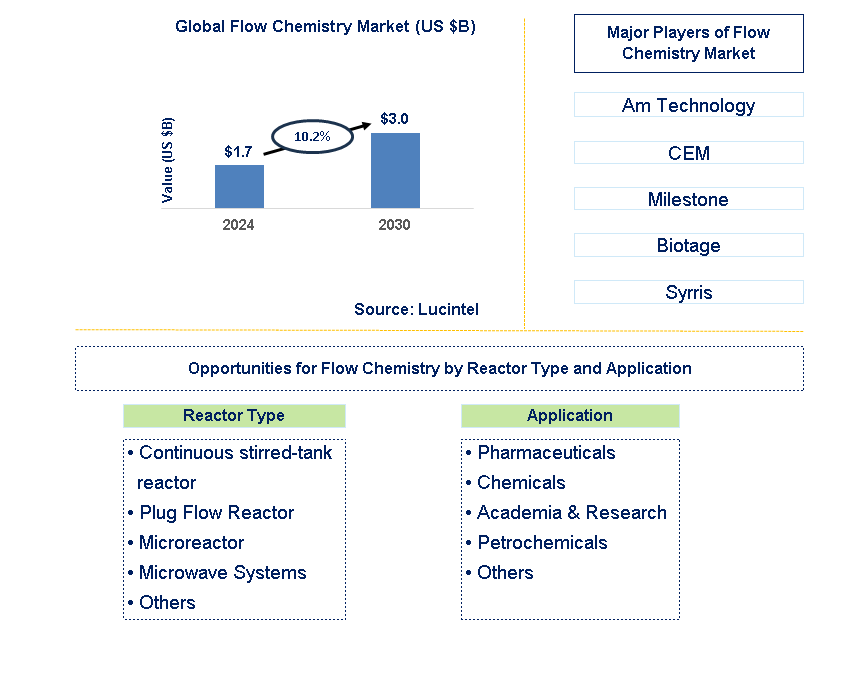
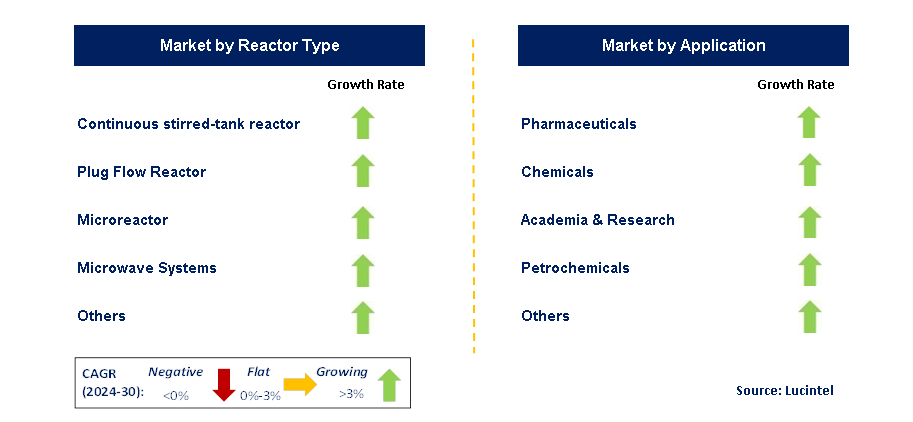
Key data points: The market size in 2030 = $3.0 billion, growth forecast = 10.2% annually for the next 6 years. Scroll below to get more insights. This market report covers trends, opportunities, and forecasts in the global flow chemistry market to 2030 by reactor type (continuous stirred-tank reactor, plug flow reactor, microreactor, microwave systems, and others), application (pharmaceuticals, chemicals, academia & research, petrochemicals, and others), and region (North America, Europe, Asia Pacific, and the Rest of the World)
We'll send your sample report shortly.
• Lucintel forecasts that, within the reactor type category, continuous stirred-tank reactor will remain the largest segment over the forecast period due to high adoption, easy construction, efficient temperature control, low cost, and flexibility to run in two phases.
• In terms of regions, North America will remain the largest region over the forecast period due to increased chemical and pharmaceutical output, as well as increased investments in flow chemistry research and development, particularly in continuous processes. Gain valuable insights for your business decisions with our comprehensive 150+ page report.
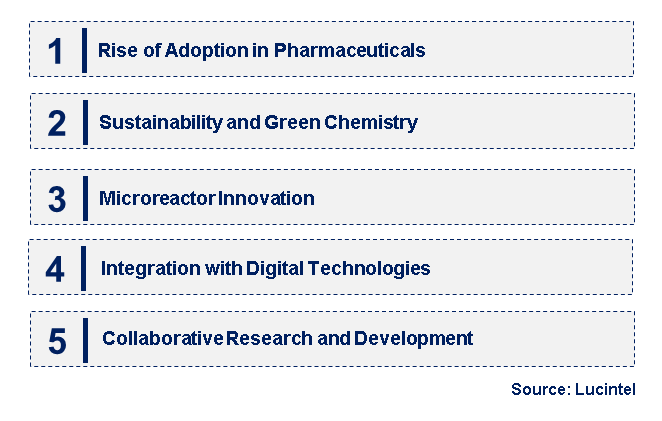
• Rise of Adoption in Pharmaceuticals: The pharmaceutical industry is rapidly increasing its use of flow chemistry for synthesizing drugs. This shift is driven by the need for safer and more sustainable processes, with greater efficiency and precision in chemical reactions.
• Sustainability and Green Chemistry: Sustainability is fast becoming the buzzword of the chemical manufacturing industry, and chemical flow capacity is at the nucleus of this issue. Manufacturers are increasingly driven toward greener processes that generate less waste and consume less energy. Flow chemistry enables the use of renewable resources and safer solvents, supporting global sustainability goals.
• Microreactor Innovation: New designs in microreactors are improving the capabilities of flow chemistry. Compact systems enable tighter control over reaction conditions, resulting in greater efficiency and safety. The ability to scale up processes from lab to production with the help of microreactors is driving their adoption across various industries.
• Integration with Digital Technologies: The integration of digital technologies, such as artificial intelligence and automation, is transforming flow chemistry processes. Data analytics, along with online monitoring, enhances process optimization and control by predicting outcomes and dynamically adjusting parameters, which increases overall efficiency.
• Collaborative Research and Development: Collaboration between industry and academia has accelerated the development of flow chemistry. Research institutions are working directly with manufacturers to innovate new technologies and methodologies. This collaboration enhances innovation, accelerates knowledge transfer, and bridges the gap between theoretical research and practical application. These trends are changing flow chemistry, creating new ways to innovate, furthering the sustainability agenda, and reducing costs across a wide range of applications. Competitors who understand and adapt to these trends will gain an edge in the future of flow chemistry.
• Increased Regulatory Support for Green Technologies: The growing regulatory support for green technologies is accelerating the trend of integrating flow chemistry into more widespread use. Governments worldwide are promoting green technologies, facilitating innovations in flow chemistry. This regulatory aspect is creating investment opportunities and making the commercialization of eco-friendly processes easier.
• Entry of Start-ups: Flow chemistry technology-based startups are transforming the current market landscape. Agile companies are introducing innovative technologies and advancing conventional chemical manufacturing through new approaches. Interaction among these startups fosters competition, reactor designs, and optimization processes in this context.
• Industry-Academia Partnerships: New breakthroughs through industry-academic collaborations are improving processes and introducing new applications through research projects, which enriches developments in modern technology. These collaborations are critical for accelerating innovation within the sector.
• Increased Investment in R&D: This trend is fueling the flow chemistry market's upward trajectory, driven by intensified investments in research and development. Companies are investing to discover new applications and upgrade current technologies. Beyond spurring innovation, this trend helps manufacturers remain competitive in an industry characterized by rapid change.
• Investment in Emerging Markets: Flow chemistry is expanding into emerging markets due to rapid industrialization and growth in manufacturing. Significant growth opportunities lie in countries such as India and China, where demand for flow technologies is increasing in pharmaceutical and specialty chemical applications. These developments are significantly impacting the flow chemistry market, promoting innovation, sustainability, and efficiency across various application domains. Stakeholders who are attuned to these shifts will be better positioned for success.
• Pharmaceutical Manufacturing: Pharmaceutical companies have significant room for growth in the flow chemistry sector. Flow technologies help improve efficiency and reduce waste, enabling pharmaceutical industries to streamline drug synthesis and ensure high yields. By targeting this application, manufacturers can align with industry needs and stringent regulatory demands.
• Production of Fine Chemicals: Flow chemistry innovation is essential in meeting the growing demands for fine chemicals across various industries. Manufacturers can develop specialized flow processes for fine chemicals, ensuring scalability and quality as the demand for sustainable solutions increases in the market.
• Agrochemical Development: The agrochemical industry is increasingly embracing flow chemistry in pesticide and herbicide formulations. The optimized production processes result in faster reactions and better product performance, presenting considerable growth opportunities for innovative flow solutions.
• Energy Storage Solutions: Recently, the area of energy storage has emerged, with flow chemistry applicable in battery and fuel cell technology. Developing flow-based technologies for energy storage systems encourages innovation in efforts to create more efficient, sustainable, cost-effective, and environmentally friendly energy sources, allowing manufacturers to lead in this market.
• Waste Management and Recycling: Flow chemistry has significant potential applications in waste management and recycling, enabling manufacturers to develop flow-based systems that convert waste materials into valuable products, achieve sustainability goals, and create innovative solutions for waste-to-product processes. The strategic growth opportunities within the flow chemistry market indicate significant potential for growth. Companies aggressively pursuing these avenues will be well-positioned to capitalize on emerging trends and meet rising industry demands.
• Technological Innovations: Advancements in flow chemistry technologies spur market growth. New reactor designs, improved reaction control methods, and enhanced materials support more efficient processes. Manufacturers that adopt these developments can optimize production, reduce costs, and improve product quality.
• Regulatory Support for Sustainable Practices: Increasing regulatory support for green manufacturing practices drives the deployment of flow chemistry. Countries worldwide encourage green technologies, prompting companies to invest in flow solutions that minimize environmental impact while maintaining safety standards.
• Growing Demand for Productive Manufacturing: The main driving force behind flow chemistry is its ability to enhance efficiency. Continuous processing offers many benefits, including reduced reaction times, improved yields, and lower production costs. Companies that leverage flow technologies can enhance their competitiveness across various fields. Challenges in the flow chemistry market include:
• High Front-End Costs: Adopting flow chemistry often requires significant upfront capital investment in equipment and technology. Smaller manufacturers may lack the funds to undertake such transitions, limiting their ability to adopt flow solutions and remain competitive.
• Complex Process Development: Developing a flow chemistry process can be demanding, requiring extensive research and optimization. This complexity may hinder manufacturers from scaling up from laboratory to production, necessitating skilled personnel and resources.
• Limited Consumer Awareness: Despite its advantages, consumer awareness of flow chemistry remains limited. Educating the market about the benefits and potential applications of flow technology is imperative for driving adoption and dispelling misconceptions about conventional manufacturing methods. The flow chemistry market is dynamic, shaped by various drivers and challenges that influence both innovation and growth. Stakeholders who adeptly navigate available opportunities while mitigating potential challenges will be better positioned for success in this changing environment.
• Am Technology
• CEM
• Milestone
• Biotage
• Syrris
• Vapourtec
• ThalesNano
• Hel
• Uniqsis
• Chemtrix
• Continuous stirred-tank reactor
• Plug Flow Reactor
• Microreactor
• Microwave Systems
• Others
• Pharmaceuticals
• Chemicals
• Academia & Research
• Petrochemicals
• Others
• North America
• Europe
• Asia Pacific
• The Rest of the World
• United States: Flow chemistry is emerging in the U.S. as demand grows for efficient, environmentally sustainable methods of manufacturing large volumes of chemicals. Leading pharmaceutical companies are embracing flow technology for synthesizing drugs, gaining better control over reactions and minimizing waste. Academic research and innovations in microreactor design are significantly enhancing scalability and increasing reaction efficiencies. Industry-academia collaborations and the emergence of startups are further promoting the commercialization of flow chemistry technologies for various applications.
• China: Flow chemistry is a key investment area for China as it seeks to enhance its chemical manufacturing capabilities. The government supports improving efficiency while minimizing environmental impacts. Some research centers specialize in flow chemistry technologies, while others engage in international collaborations. Chinese companies increasingly adopt flow processes for fine chemicals and pharmaceuticals to achieve global productivity and quality standards, contributing to the country's sustainability goals.
• Germany: Germany is at the forefront of flow chemistry innovations, focusing on sustainability and resource efficiency. The German chemical industry is integrating flow chemistry into its production processes, particularly in pharmaceuticals and specialty chemicals. Research institutions collaborate with manufacturers to design new reactors and optimize processes. Germany is also training its workforce in flow technology, ensuring that more companies can effectively utilize these advanced manufacturing techniques.
• India: Flow chemistry is gaining traction in India as a method to enhance chemical manufacturing practices. The pharmaceutical sector is particularly interested in adopting flow technologies to improve efficiency and minimize waste. Local investments in research and development are fostering innovations in reactor design through collaboration between academic institutions and industry. This collaboration accelerates knowledge transfer, enabling Indian manufacturers to leverage the full potential of flow chemistry for productive output and adherence to international quality standards.
• Japan: Japan is leveraging innovation and sustainability to advance flow chemistry in its chemical industry. Multinational companies are investing in flow technology to ensure efficient chemical production, particularly in pharmaceuticals and agrochemicals. Research institutes are developing new reactors and catalyst materials to enhance reaction efficiency. Japan's regulatory framework is integrating support for flow chemistry, encouraging its use to minimize environmental impacts and enhance safety in chemical manufacturing.


• Am Technology
• CEM
• Milestone
• Biotage
• Syrris
• Vapourtec
• ThalesNano
• Hel
• Uniqsis
• Chemtrix Q6. Which flow chemistry market segment will be the largest in future? Answer: Lucintel forecasts that, within the reactor type category, continuous stirred-tank reactor will remain the largest segment over the forecast period due to high adoption, easy construction, efficient temperature control, low cost, and flexibility to run in two phases. Q7. In flow chemistry market, which region is expected to be the largest in next 5 years? Answer: In terms of regions, North America will remain the largest region over the forecast period due to increased chemical and pharmaceutical output, as well as increased investments in flow chemistry research and development, particularly in continuous processes. Q.8 Do we receive customization in this report? Answer: Yes, Lucintel provides 10% customization without any additional cost.


Choose a license that fits your team. Instant PDF delivery.
Prices exclude taxes. Instant delivery. Custom licensing available on request.
Market Report · July 22, 2026
Market Report · July 22, 2026
Market Report · July 22, 2026
Trusted partner for strategic intelligence and business growth


Receive a complimentary market analysis tailored to your industry. Our analysts will identify key growth opportunities and competitive dynamics specific to your business.

Market size, growth rate, and key trend analysis for your specific sector.

Top competitor positioning and market share analysis.

Strategic recommendations backed by data-driven insights.
Get curated market intelligence and competitive moves straight to your inbox.
By subscribing, you agree to receive our monthly insights. Unsubscribe anytime.
Receive a complimentary market analysis tailored to your industry. Our analysts will identify key growth opportunities and competitive dynamics specific to your business.
Market size, growth rate, and key trend analysis for your specific sector.
Top competitor positioning and market share analysis.
Strategic recommendations backed by data-driven insights.
Get curated market intelligence, emerging trends, and competitive moves straight to your inbox each month.
By subscribing, you agree to receive our monthly insights. Unsubscribe anytime.
We'll send your sample report shortly.