
Report Feature
Flip Flop Market Trends and Forecast
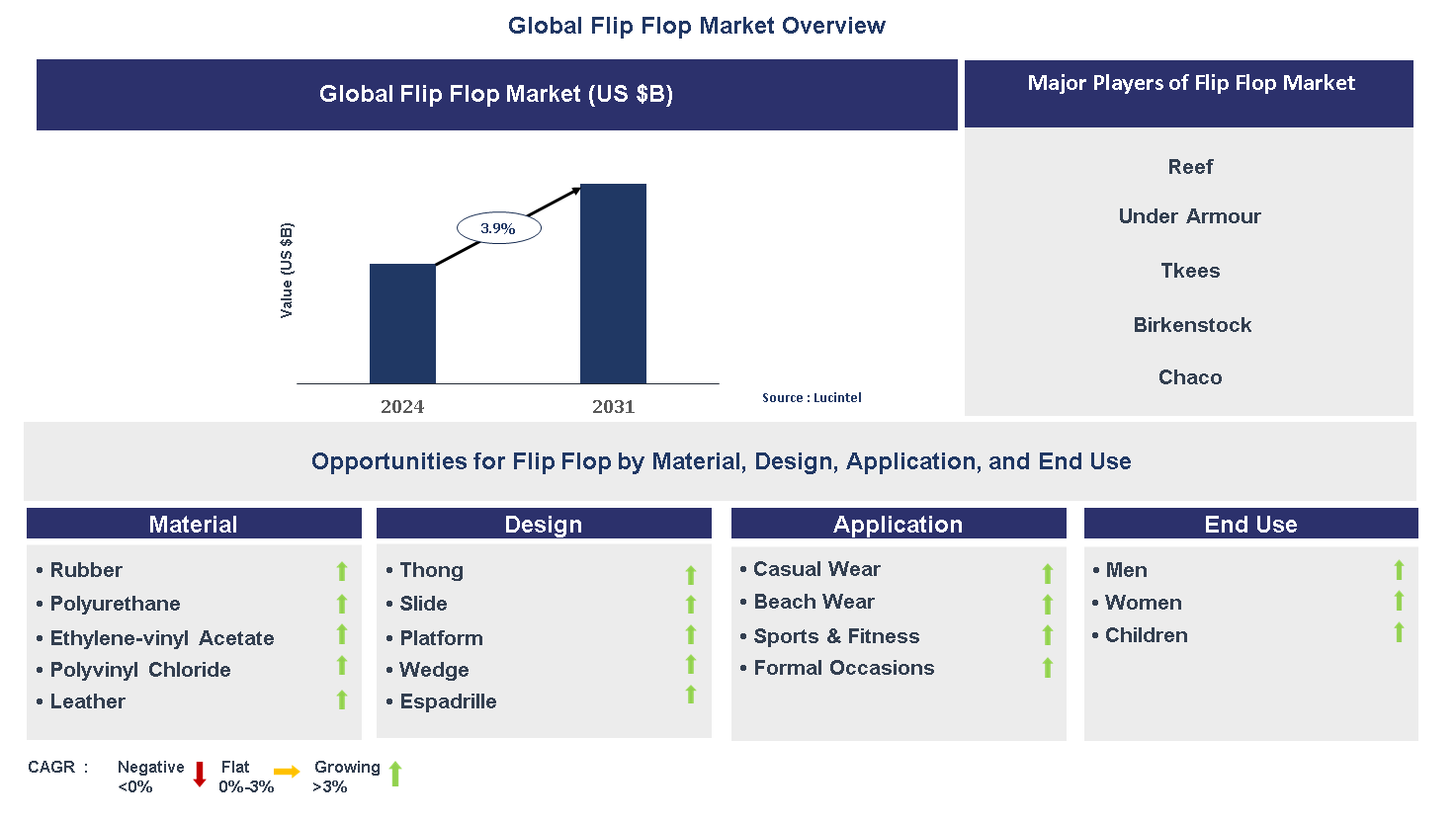
The future of the global flip flop market looks promising with opportunities in the rubber, polyurethane, ethylene-vinyl acetate, polyvinyl chloride, and leather markets. The global flip flop market is expected to grow with a CAGR of 3.9% from 2025 to 2031. The major drivers for this market are the increasing demand for fashionable summer footwear, the rising popularity of casual comfortable footwear options, and the growing preference for eco-friendly sustainable materials.• Lucintel forecasts that, within the application category, casual wear is expected to witness the highest growth over the forecast period.
• Within the material category, ethylene-vinyl acetate is expected to witness the highest growth.
• In terms of region, APAC is expected to witness the highest growth over the forecast period. Gain valuable insights for your business decisions with our comprehensive 150+ page report. Sample figures with some insights are shown below.
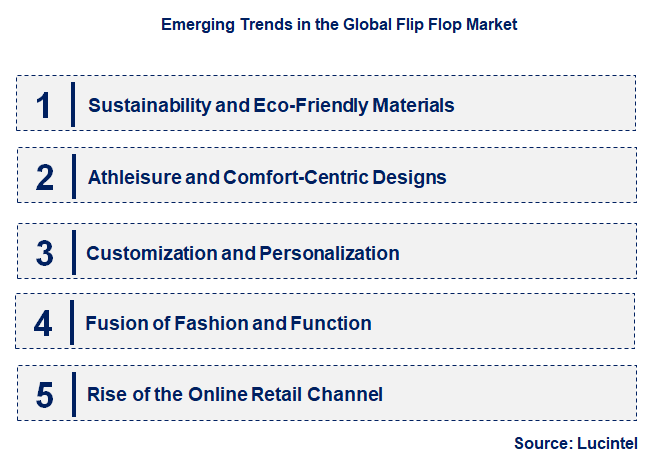
Emerging Trends in the Flip Flop Market
The flip flop market is undergoing a significant transformation, moving beyond its traditional role as simple beachwear. These emerging trends reflect a convergence of consumer preferences for sustainable living, personalized experiences, and the integration of technology, all of which are reshaping product development and marketing strategies across the globe.• Sustainability and Eco-Friendly Materials: This trend is driven by growing environmental consciousness among consumers who are actively seeking products with a smaller carbon footprint. Manufacturers are responding by using recycled plastics, natural rubber, cork, and other plant-based materials. This shift is creating new market segments and enhancing brand loyalty among eco-conscious buyers.
• Athleisure and Comfort-Centric Designs: Flip flops are evolving to provide more than just basic comfort. The athleisure trend has led to the development of styles with enhanced arch support, cushioned soles, and ergonomic designs. This focus on performance and comfort is expanding the market beyond casual wear into activities like post-workout recovery and long-distance travel.
• Customization and Personalization: Brands are offering consumers the ability to customize their flip flops with unique designs, colors, and even personalized logos. This trend taps into the desire for individuality and self-expression, allowing consumers to create a unique product. It also helps brands build stronger customer relationships and command higher price points.
• Fusion of Fashion and Function: Flip flops are no longer a basic, utilitarian item. High-end designers and fashion brands are incorporating them into their collections, using premium materials like leather and suede. This trend is elevating the status of flip flops to a fashion-forward accessory, attracting a new segment of style-conscious consumers.
• Rise of the Online Retail Channel: The shift to e-commerce has been a major trend, offering convenience and a wider product selection to consumers. Online platforms have become a primary channel for discovery and purchase. Brands are leveraging digital marketing, social media influencers, and virtual try-on experiences to engage with tech-savvy customers and drive sales. These emerging trends are collectively reshaping the flip flop market by expanding its applications, enhancing its fashion appeal, and aligning it with modern consumer values. The focus on sustainability, comfort, and personalization is pushing brands to innovate, creating a more dynamic and diverse product landscape.
Recent Development in the Flip Flop Market
The flip flop market is experiencing significant evolution, driven by shifts in consumer lifestyles, technological advancements, and a growing emphasis on ethical consumption. These recent developments are transforming a once-simple product category into a diverse and innovative segment of the global footwear industry, impacting everything from product design to distribution strategies.• Material Innovation for Comfort and Durability: This development focuses on improving the core functionality of flip flops. Brands are investing in research and development to create new materials like memory foam and advanced EVA (Ethylene-Vinyl Acetate) that offer superior cushioning, shock absorption, and long-term durability. This innovation addresses the long-standing challenge of foot health and discomfort associated with traditional designs, attracting a broader customer base.
• Sustainable and Ethical Sourcing: Growing consumer awareness of environmental and social issues has pushed brands to adopt sustainable practices. This includes using materials such as recycled plastics from ocean waste, natural rubber from responsibly managed plantations, and other biodegradable components. This development not only reduces the industrys environmental footprint but also builds a positive brand image and resonates with a new generation of eco-conscious consumers.
• Expansion into Athleisure and Active Lifestyles: Flip flops are now being designed for specific performance-oriented applications beyond casual wear. This development includes creating styles with enhanced traction, moisture-wicking properties, and specialized arch support for post-workout recovery or outdoor activities. By positioning themselves as functional footwear, brands are tapping into the booming athleisure market and diversifying their product offerings.
• High-Fashion Collaborations and Limited Editions: A key development is the collaboration between flip flop brands and high-end designers or celebrities. These partnerships result in limited-edition collections that elevate flip flops from a basic item to a luxury accessory. This strategy generates significant media buzz, creates a sense of exclusivity, and attracts fashion-forward consumers willing to pay a premium for unique styles.
• Integration of Digital and Online Retail: The proliferation of e-commerce has revolutionized how flip flops are sold. This development involves brands creating seamless online shopping experiences, leveraging social media for marketing, and utilizing data analytics to understand consumer behavior. Online channels provide a global reach, allowing brands to bypass traditional retail limitations and connect directly with their target audience. These developments are collectively impacting the flip flop market by expanding its potential applications and consumer segments. By focusing on innovation in materials, sustainability, and distribution, brands are successfully transforming the product from a simple commodity into a dynamic and highly differentiated footwear category.
Strategic Growth Opportunities in the Flip Flop Market
The flip flop market, once defined by simplicity, now presents significant strategic growth opportunities driven by evolving consumer lifestyles and technological integration. These opportunities extend beyond traditional applications, allowing companies to innovate and capture new market segments by focusing on specific consumer needs and behaviors.• Performance and Recovery Footwear: The growing trend of health and wellness presents a key opportunity to position flip flops as performance-oriented recovery footwear. By designing products with advanced ergonomics, superior cushioning, and foot-health-focused features, brands can target athletes and fitness enthusiasts. This strategy moves beyond casual wear and taps into a premium, functional segment of the market with higher profit margins.
• Eco-Conscious and Sustainable Fashion: With rising consumer demand for ethical products, a significant growth opportunity lies in developing a fully sustainable product line. This involves using recycled, biodegradable, and ethically sourced materials. Brands that transparently communicate their sustainability efforts can build strong brand loyalty and attract a rapidly growing segment of environmentally conscious consumers, differentiating themselves from competitors.
• Personalization and Customization Services: Offering a platform for consumers to personalize their own flip flops is a major opportunity. This can range from choosing colors and materials to adding custom prints or monograms. This strategy not only enhances the customer experience and boosts brand engagement but also allows for a direct-to-consumer model that reduces inventory risk and provides valuable data on consumer preferences.
• Expansion into All-Weather and All-Season Styles: The seasonal nature of flip flops is a key challenge, but it also presents an opportunity to innovate. Brands can develop all-weather styles with waterproof materials, enhanced grip, and thermal properties to extend their usability beyond summer. This expands the markets reach into new climates and seasons, creating a more consistent revenue stream.
• High-End and Luxury Collaborations: A strategic opportunity exists in elevating the flip flop to a luxury item through collaborations with renowned designers or high-end brands. These partnerships create limited-edition, exclusive products that can be sold at a premium. This strategy not only generates significant media attention and brand prestige but also appeals to a more affluent consumer base. These strategic growth opportunities are impacting the flip flop market by encouraging diversification and innovation. By moving beyond a single-use product, companies can build more robust and resilient business models that cater to a wider range of consumer needs and market conditions, leading to sustainable long-term growth.
Flip Flop Market Driver and Challenges
The global flip flop market is a dynamic industry shaped by a combination of major drivers and challenges that influence its growth trajectory. The major drivers include various technological and economic factors, such as the rising demand for casual and comfortable footwear and the expansion of e-commerce. Conversely, key challenges such as seasonality and competition can hinder market growth. Understanding these forces is crucial for navigating the market effectively. The factors responsible for driving the flip flop market include: 1. Rising Consumer Preference for Comfort: A primary driver is the global shift towards casual lifestyles and dress codes. Consumers are increasingly prioritizing comfort and convenience in their footwear choices, making lightweight and easy-to-wear flip flops a popular option for everyday use. This trend is expanding the market beyond traditional beach and resort wear, influencing product design and marketing strategies. 2. E-commerce and Digital Marketing: The rapid growth of online retail channels has significantly driven market expansion. E-commerce platforms offer a vast array of products, competitive pricing, and convenience, making it easier for consumers to purchase flip flops. Brands are leveraging digital marketing and social media to reach a global audience, directly influencing consumer trends and purchasing decisions. 3. Affordability and Accessibility: Compared to other footwear categories, flip flops are generally more affordable, making them accessible to a wide consumer base across different income levels. This affordability, combined with their widespread availability in various retail formats, from street vendors to hypermarkets, makes them a staple in many regions and drives consistent sales volume. 4. Product Innovation and Diversification: Brands are continually innovating with new materials, designs, and features to enhance comfort, durability, and style. The introduction of ergonomic designs, memory foam insoles, and eco-friendly materials is attracting new consumers. This diversification is transforming the product from a basic item into a versatile and fashionable accessory for various occasions. 5. Growing Athleisure Trend: The athleisure movement, which blurs the line between athletic wear and casual fashion, is a significant driver. Flip flops are being adopted as a comfortable and practical footwear choice for post-workout recovery or casual outings. Brands are capitalizing on this trend by creating sporty, performance-oriented designs that appeal to an active consumer base. Challenges in the flip flop market are: 1. High Market Competition: The flip flop market is highly fragmented with numerous local and international players, leading to intense competition. This saturation makes it difficult for new entrants to gain a foothold and for established brands to maintain market share. Intense rivalry often leads to price wars, which can compress profit margins and challenge business sustainability. 2. Seasonal Demand Fluctuations: Flip flops are strongly associated with warm weather, leading to a highly seasonal sales cycle. Demand peaks during the summer months and drops significantly in colder seasons, posing a major challenge for inventory management and cash flow. Companies must manage this seasonality through strategic planning, product diversification, and targeted marketing campaigns. 3. Perception of Low Durability: A significant challenge is the perception that flip flops are low-quality, disposable footwear with poor durability. This can limit their appeal to consumers seeking long-lasting, supportive footwear for everyday use. Brands must invest in quality materials and communicate their products durability and comfort to overcome this perception and compete with other footwear types. The flip flop markets growth is propelled by powerful drivers like consumer comfort preferences and the rise of e-commerce, which are expanding its market appeal and accessibility. However, it must contend with significant challenges, including intense competition and inherent seasonality. Navigating these forces requires strategic innovation in product development and marketing to ensure sustained growth and market relevance.List of Flip Flop Companies
Companies in the market compete on the basis of product quality offered. Major players in this market focus on expanding their manufacturing facilities, R&D investments, infrastructural development, and leverage integration opportunities across the value chain. With these strategies flip flop companies cater increasing demand, ensure competitive effectiveness, develop innovative products & technologies, reduce production costs, and expand their customer base. Some of the flip flop companies profiled in this report include-• Reef
• Under Armour
• Tkees
• Birkenstock
• Chaco
• Arizona
• Crocs
• Havaianas
• Rider
• Teva
Flip Flop Market by Segment
The study includes a forecast for the global flip flop market by material, design, application, end use, and region.Flip Flop Market by Material [Value from 2019 to 2031]:
• Rubber
• Polyurethane
• Ethylene-vinyl Acetate
• Polyvinyl Chloride
• Leather
Flip Flop Market by Design [Value from 2019 to 2031]:
• Thong
• Slide
• Platform
• Wedge
• Espadrille
Flip Flop Market by Application [Value from 2019 to 2031]:
• Casual Wear
• Beach Wear
• Sports & Fitness
• Formal Occasions
Flip Flop Market by End Use [Value from 2019 to 2031]:
• Men
• Women
• Children
Flip Flop Market by Region [Value from 2019 to 2031]:
• North America
• Europe
• Asia Pacific
• The Rest of the World
Country Wise Outlook for the Flip Flop Market
Recent developments in the global flip flop market are driven by consumer demand for comfort, style, and sustainability. The market is evolving from simple, seasonal footwear to a year-round fashion statement. Innovations in materials, designs, and distribution channels are reshaping the industry, with a strong focus on eco-friendly products and personalized experiences. This shift is impacting key markets worldwide.• United States: The U.S. market is driven by the casualization of footwear and a strong emphasis on comfort. Theres a notable rise in demand for "athleisure" flip flops and styles that offer enhanced arch support and cushioning. Online retail channels are experiencing significant growth, and brands are increasingly focused on collaborations and limited-edition drops to attract fashion-conscious consumers.
• China: China’s market is characterized by its robust manufacturing and a large domestic consumer base with rising disposable incomes. The market is seeing a surge in demand for fashionable and diverse flip flop designs. E-commerce is a dominant force, and local brands are competing with international players by leveraging efficient supply chains and catering to regional style preferences.
• Germany: In Germany, the flip flop market is influenced by a growing preference for sustainable and high-quality products. Consumers are increasingly seeking eco-friendly materials like natural rubber and recycled plastics. The market sees a mix of both functional, comfort-oriented flip flops and designer styles, with online platforms and specialized stores playing a key role in distribution.
• India: Indias flip flop market is driven by affordability and a tropical climate. The market is highly competitive, with a strong presence of both unbranded and branded products. Recent developments include a greater focus on product innovation to improve durability and comfort. The expanding urban population and increased e-commerce penetration are fueling market growth.
• Japan: Japans market is showing strong growth, with a rising interest in both traditional and modern flip flop designs. The country is the fastest-growing market in the Asia-Pacific region. There is an increasing demand for stylish, comfortable, and versatile flip flops that can be worn for various occasions, blurring the lines between casual and more dressed-up footwear.

Features of the Global Flip Flop Market
Market Size Estimates: Flip flop market size estimation in terms of value ($B). Trend and Forecast Analysis: Market trends (2019 to 2024) and forecast (2025 to 2031) by various segments and regions. Segmentation Analysis: Flip flop market size by various segments, such as by material, design, application, end use, and region in terms of value ($B). Regional Analysis: Flip flop market breakdown by North America, Europe, Asia Pacific, and Rest of the World. Growth Opportunities: Analysis of growth opportunities in different materials, designs, applications, end uses, and regions for the flip flop market. Strategic Analysis: This includes M&A, new product development, and competitive landscape of the flip flop market. Analysis of competitive intensity of the industry based on Porter’s Five Forces model.
FAQ
Q1. What is the growth forecast for flip flop market? Answer: The global flip flop market is expected to grow with a CAGR of 3.9% from 2025 to 2031. Q2. What are the major drivers influencing the growth of the flip flop market? Answer: The major drivers for this market are the increasing demand for fashionable summer footwear, the rising popularity of casual comfortable footwear options, and the growing preference for eco-friendly sustainable materials. Q3. What are the major segments for flip flop market? Answer: The future of the flip flop market looks promising with opportunities in the rubber, polyurethane, ethylene-vinyl acetate, polyvinyl chloride, and leather markets. Q4. Who are the key flip flop market companies? Answer: Some of the key flip flop companies are as follows:• Reef
• Under Armour
• Tkees
• Birkenstock
• Chaco
• Arizona
• Crocs
• Havaianas
• Rider
• Teva Q5. Which flip flop market segment will be the largest in future? Answer: Lucintel forecasts that, within the application category, casual wear is expected to witness the highest growth over the forecast period. Q6. In flip flop market, which region is expected to be the largest in next 5 years? Answer: In terms of region, APAC is expected to witness the highest growth over the forecast period. Q7. Do we receive customization in this report? Answer: Yes, Lucintel provides 10% customization without any additional cost.
Table of Contents
List of Figures
List of Tables
Methodology
- In-depth interviews of the major players in this market
- Detailed secondary research from competitors’ financial statements and published data
- Extensive searches of published works, market, and database information pertaining to industry news, company press releases, and customer intentions
- A compilation of the experiences, judgments, and insights of Lucintel’s professionals, who have analyzed and tracked this market over the years.


Buy Now
Choose a license that fits your team. Instant PDF delivery.
Prices exclude taxes. Instant delivery. Custom licensing available on request.
Key Questions
- • What are some of the most promising, high-growth opportunities for the flip flop market by material (rubber, polyurethane, ethylene-vinyl acetate, polyvinyl chloride, and leather), design (thong, slide, platform, wedge, and espadrille), application (casual wear, beach wear, sports & fitness, and formal occasions), end use (men, women, and children), and region (North America, Europe, Asia Pacific, and the Rest of the World)?
- • Which segments will grow at a faster pace and why?
- • Which region will grow at a faster pace and why?
- • What are the key factors affecting market dynamics? What are the key challenges and business risks in this market?
- • What are the business risks and competitive threats in this market?
- • What are the emerging trends in this market and the reasons behind them?
- • What are some of the changing demands of customers in the market?
- • What are the new developments in the market? Which companies are leading these developments?
- • Who are the major players in this market? What strategic initiatives are key players pursuing for business growth?
- • What are some of the competing products in this market and how big of a threat do they pose for loss of market share by material or product substitution?
- • What M&A activity has occurred in the last 5 years and what has its impact been on the industry? For any questions related to Flip Flop Market, Flip Flop Market Size, Flip Flop Market Growth, Flip Flop Market Analysis, Flip Flop Market Report, Flip Flop Market Share, Flip Flop Market Trends, Flip Flop Market Forecast, Flip Flop Companies, write Lucintel analyst at email: helpdesk@lucintel.com. We will be glad to get back to you soon.


