
Market Report · May 18, 2026

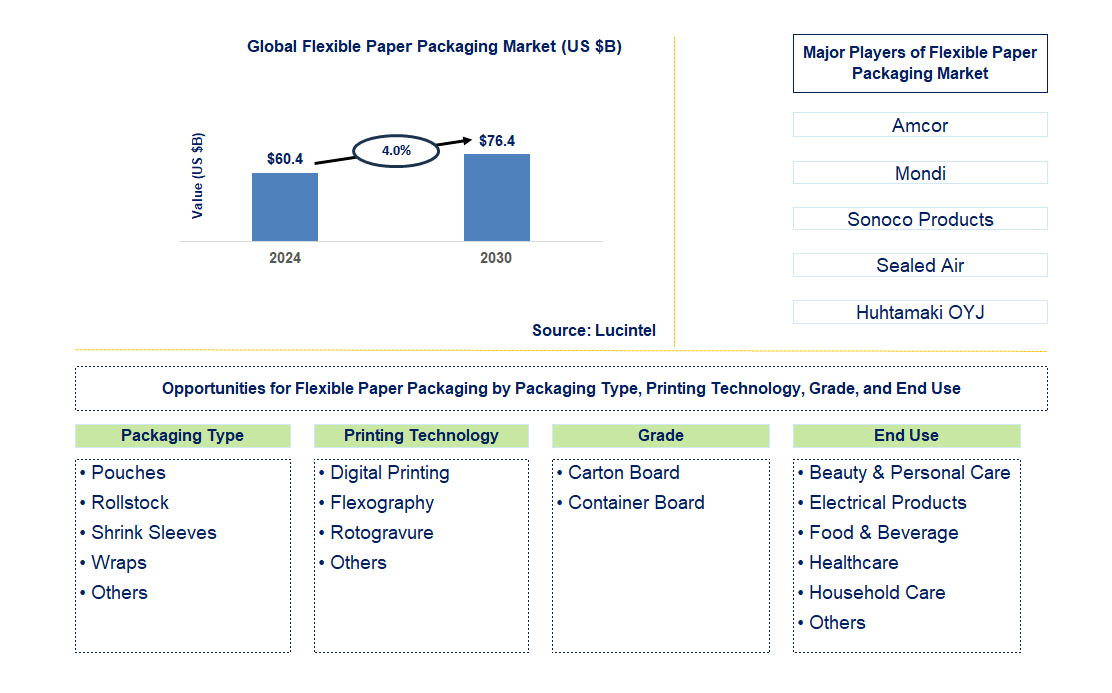
Key data points: The market size in 2030 = $76.4 billion, growth forecast = 4.0% annually for the next 6 years. Scroll below to get more insights. This market report covers trends, opportunities, and forecasts in the global flexible paper packaging market to 2030 by packaging type (pouches, rollstock, shrink sleeves, wraps, and others), printing technology (digital printing, flexography, rotogravure, and others), grade (carton board and container board), end use (beauty & personal care, electrical products, food & beverage, healthcare, household care, and others), and region (North America, Europe, Asia Pacific, and the Rest of the World)
We'll send your sample report shortly.
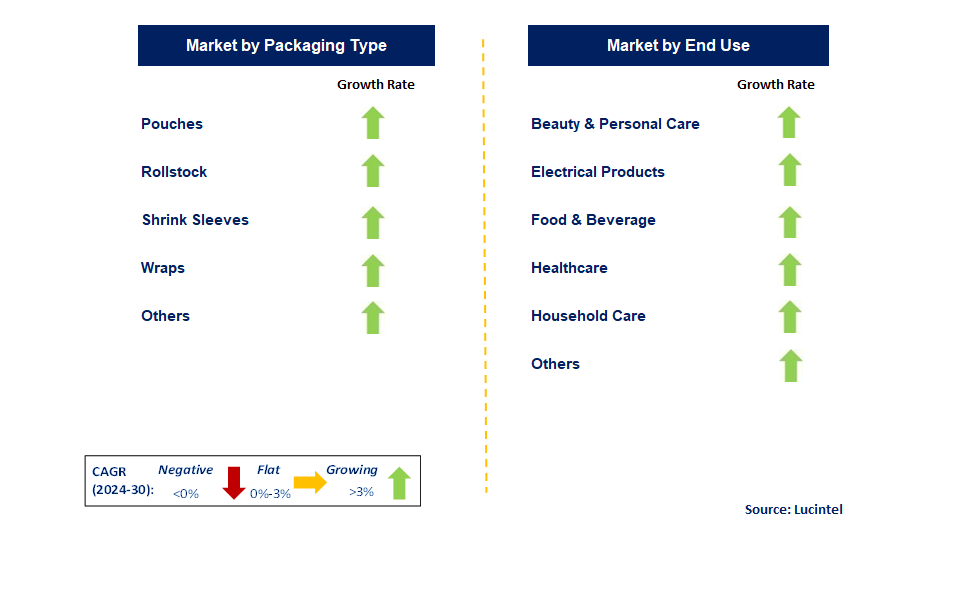
• Lucintel forecasts that, within the type category, pouch will remain the largest segment over the forecast period due to its increasing demand from the food packaging and e-commerce industries given to its lightweight, adaptable, and convenient to transport.
• Within the end use category, food & beverage will remain the largest segment due to increasing demand for flexible paper packaging in this sector to reduce food loss and increase shelf-life of food products.
• In terms of regions, APAC will remain the largest region over the forecast period due to continual population growth, rapid economic development, and rising population's disposable income in the region. Gain valuable insights for your business decisions with our comprehensive 150+ page report.
• Sustainable Materials: The move toward sustainable materials is one of these trends, involving recycled papers, compostable options, and reduced plastics, among others. This trend is driven by consumers who want environmentally friendly products and legislation on ecologically hazardous goods. Sustainable materials are crucial for minimizing the ecological footprint and achieving circular economy targets.
• Advanced Barrier Technologies: Developments in barrier technologies have increased the performance level of flexible paper packaging materials. Through high-barrier coatings and laminates, it becomes possible to enhance product protection while keeping recyclability intact. These advancements extend shelf life and preserve product quality, rendering paper packages suitable for diverse applications.
• Digital Printing and Customization: The adoption of digital printing technology has revolutionized the flexible paper packaging sector. With digital printing, brands can get customized artwork printed with high quality, even for small production runs. This allows brands to provide personalized packages that correspond to fast fashion demand patterns, highlighting their needs at any time.
• Smart Packaging Solutions: There is an increasing trend of incorporating smart technologies such as QR codes and NFC into packaging. Consequently, these solutions result in increased consumer engagement through the provision of supplementary product knowledge, tracking abilities, and advertising materials. Smart packaging also facilitates product traceability and supply chain management.
• Regulatory Compliance and Waste Reduction: Compliance with strict environmental regulations has led to the development of flexible paper packaging innovations. Companies are focusing on concepts that reduce material consumption and waste generation. Observing such laws guarantees product safety while aligning with sustainability objectives. These factors are altering the shape of the flexible paper packaging market by adding value to functionality, sustainability, and consumer involvement. While technological advancement and compliance drive innovation, market growth has been impacted by customer preferences for green products and customization.
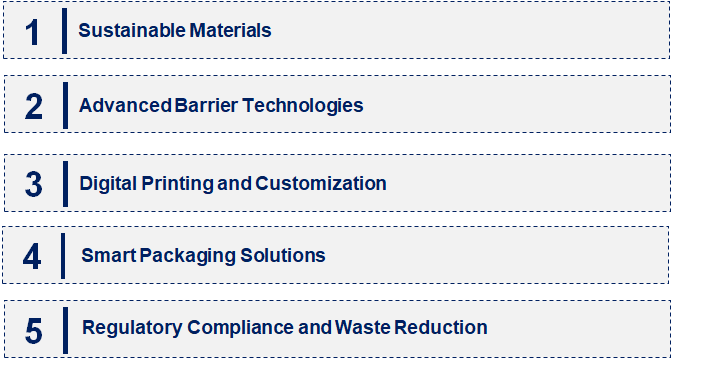
• Sustainable Materials: More companies in this industry are using sustainable materials like recycled papers and compostable fibers. This change is fueled by demand for eco-friendly packaging among consumers and regulatory pressures. These materials help reduce environmental damage and support circular economy principles.
• Advanced Barrier Technologies: High-barrier coatings, laminates, and other innovations in barrier technology have improved the performance of flexible paper packaging. As a result, these technologies offer better protection for products while maintaining recyclability, enhancing shelf life, and preserving quality.
• Digital Printing and Customization: The emergence of digital printing technologies has allowed brands to produce high-quality customizable packaging solutions. With customized designs from shorter runs, manufacturers can increase customer interactions, making them more responsive to market variables.
• Smart Packaging Solutions: QR codes and NFC, among other smart technologies, are now being used, leading to transformative flexible paper solutions that improve interactive customer experiences, such as supply chain management and product traceability, which add value to packaging and reinforce customer loyalty.
• Regulatory Compliance and Waste Reduction: The designs are targeted at complying with environmental legislation and minimizing waste. Notably, such developments have reduced the amount of materials used for packaging and support recycling efforts by businesses to meet regulatory requirements and cater to consumer interests. This has resulted in increased functionality, sustainability, and consumer engagement, making flexible paper packaging a competitive choice in the market. Flexible paper packaging innovations are broadening material options, expanding applications, and improving performance, thereby creating competition among those who also want to be explored.
• Food and Beverage Industry: The food industry offers numerous prospects that can be exploited using flexible paper packaging. These include innovations in barrier technologies and sustainable material options that align with eco-friendly preferences among consumers and enhance product shelf life.
• Healthcare and Pharmaceuticals: In healthcare and pharmaceuticals, flexible paper packaging provides opportunities for enhanced product protection and regulatory compliance. Advanced barrier technologies and customization aid in guaranteeing conformity to industry standards while enhancing safety measures for these products.
• Personal Care and Cosmetics: The personal care industry is embracing flexible paper packaging due to its sustainability features and aesthetic appeal. Some opportunities include developing high-quality printed packages using sustainable materials that adhere to customer tastes.
• E-Commerce and Retail: As e-commerce grows, there has been a demand for more durable, customized flexible packaging. It should provide a good transit package that also serves as a branding tool during shipping.
• Industrial and Logistics: Due to its cost-effectiveness and versatility, flexible paper packaging is becoming more popular in the industrial and logistics sector. Opportunities exist for creating new packaging solutions that improve supply chain management while reducing waste. These growth opportunities foster innovation and market expansion in the flexible paper packaging sector. By addressing industry needs and leveraging technological improvements and sustainability, firms can enter new markets and enhance their products.
• Technological Advancements: Market growth is driven by innovations in materials and technologies such as high barrier coatings and digital printing, which improve packaging performance, sustainability, and customization to meet changing consumer demands.
• Sustainability: A significant driver is the move toward environmentally friendly packaging solutions. Companies are using sustainable materials and practices to minimize environmental impact while aligning with customer preferences for green products.
• Regulatory Compliance: Complying with strict standards regarding environmental issues and product safety is critical. Compliance stimulates innovation and ensures that packages meet sustainable safety standards.
• Consumer Demand for Customization: The trend toward personalized or customized packages continues to grow. Brands can utilize digital printing and smart technologies to provide unique solutions through their packaging, thereby improving the customer experience.
• E-Commerce Growth: The increase in e-commerce has driven demand for resilient, functional packaging, especially regarding flexible paper-based packs that offer brand protection opportunities. Challenges in the flexible paper packaging market include:
• Regulatory Complexity: Navigating different regulations across regions can be complex and expensive. Companies must comply with both local regulations and international standards, requiring significant resource investments.
• Production Costs: Integrating advanced technologies and sustainable materials into production can sometimes be costly. Maintaining affordability and quality while balancing production expenses can be challenging for manufacturers.
• Consumer Perceptions: Clear communication and education are needed to overcome misunderstandings about the efficiency and sustainability of flexible paper packaging. Companies must address consumer concerns and outline the advantages of advanced packaging solutions. The nature of these drivers and challenges shapes the development of the flexible paper packaging market. Technological advancements, sustainability trends, regulatory compliance, regulatory complexity, production costs, and consumer perceptions influence innovation, while ongoing challenges need to be addressed for market success.
• Amcor
• Mondi
• Sonoco Products
• Sealed Air
• Huhtamaki OYJ
• Sappi Global
• DS Smith
• Coveris Holding
• Sabert
• Wihuri
• Pouches
• Rollstock
• Shrink Sleeves
• Wraps
• Others
• Digital Printing
• Flexography
• Rotogravure
• Others
• Carton Board
• Container Board
• Beauty & Personal Care
• Electrical Products
• Food & Beverage
• Healthcare
• Household Care
• Others
• North America
• Europe
• Asia Pacific
• The Rest of the World
• United States: In the U.S., flexible paper packaging is gaining popularity due to its eco-friendly advantages. Key developments include barrier coatings that enhance product life without compromising recyclability. Companies are also incorporating digital printing technologies to provide customized, high-quality packages. Many firms are adopting environmentally friendly measures such as using recycled papers and reducing plastic.
• China: China’s market for flexible paper packaging is undergoing major transformations due to regulatory adjustments and consumer demand for sustainability. Recent developments include innovations in compostable and biodegradable materials. Moreover, there is a shift toward smart packaging technologies, such as QR codes and NFC, to boost product traceability and consumer engagement. The Chinese market has also seen increased investments in high-efficiency manufacturing processes to meet growing demand.
• Germany: Germany leads in sustainable solutions in packaging, especially for flexible paper packaging. Notable developments include the use of high-barrier paper laminates, which offer better protection while remaining recyclable. The German market is also moving away from invasive designs that reduce packing materials. Additionally, strict European Union regulations on environmental impact and product safety have made this country very particular about compliance.
• India: In India, flexible paper packaging is preferred due to its affordability and eco-friendliness. This includes the introduction of paper pouches and wraps instead of plastics. Advanced adhesive technology and improved barrier properties further enhance the performance of flexible paper packages. The adoption of green materials addresses ecological concerns and aligns with government directives.
• Japan: Japan is leading in innovation in flexible paper packaging through the use of advanced material technologies alongside aesthetics. Examples include the application of paper coatings that ensure increased durability and moisture resistance. Japan is also working on innovative designs that combine traditional aesthetics with modern functionality. Additionally, packaging solutions that support recycling programs while minimizing environmental damage are increasingly being sought.


• Amcor
• Mondi
• Sonoco Products
• Sealed Air
• Huhtamaki OYJ
• Sappi Global
• DS Smith
• Coveris Holding
• Sabert
• Wihuri Q6. Which flexible paper packaging market segment will be the largest in future? Answer: Lucintel forecasts that pouch will remain the largest segment over the forecast period due to its increasing demand from the food packaging and e-commerce industries given to its lightweight, adaptable, and convenient to transport. Q7. In flexible paper packaging market, which region is expected to be the largest in next 5 years? Answer: APAC will remain the largest region over the forecast period due to continual population growth, rapid economic development, and rising population's disposable income in the region. Q.8 Do we receive customization in this report? Answer: Yes, Lucintel provides 10% customization without any additional cost.


Choose a license that fits your team. Instant PDF delivery.
Prices exclude taxes. Instant delivery. Custom licensing available on request.
Market Report · May 18, 2026
Market Report · May 18, 2026
Market Report · May 18, 2026
Trusted partner for strategic intelligence and business growth


Receive a complimentary market analysis tailored to your industry. Our analysts will identify key growth opportunities and competitive dynamics specific to your business.

Market size, growth rate, and key trend analysis for your specific sector.

Top competitor positioning and market share analysis.

Strategic recommendations backed by data-driven insights.
Get curated market intelligence and competitive moves straight to your inbox.
By subscribing, you agree to receive our monthly insights. Unsubscribe anytime.
Receive a complimentary market analysis tailored to your industry. Our analysts will identify key growth opportunities and competitive dynamics specific to your business.
Market size, growth rate, and key trend analysis for your specific sector.
Top competitor positioning and market share analysis.
Strategic recommendations backed by data-driven insights.
Get curated market intelligence, emerging trends, and competitive moves straight to your inbox each month.
By subscribing, you agree to receive our monthly insights. Unsubscribe anytime.
We'll send your sample report shortly.