
Report Feature
Flavored Veterinary Medication Market Trends and Forecast
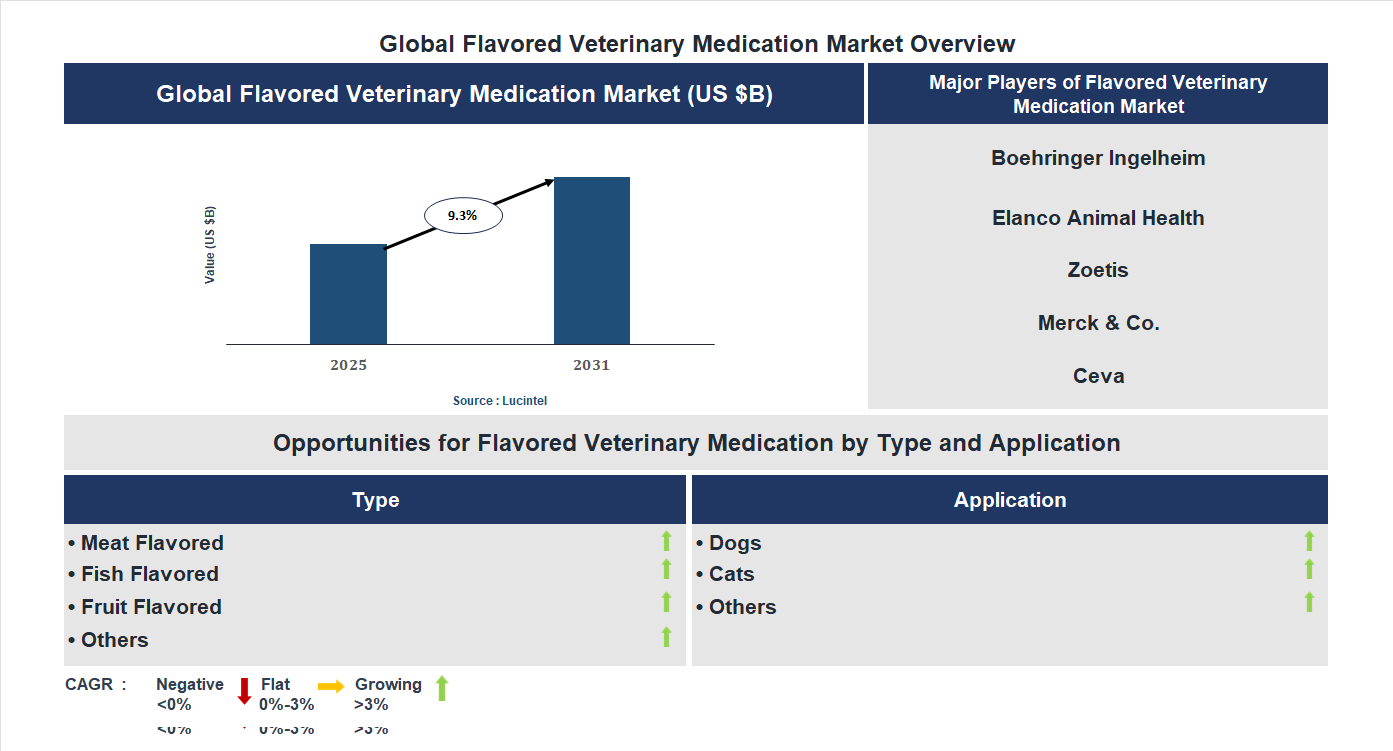
The future of the global flavored veterinary medication market looks promising with opportunities in the meat flavored, fish flavored, and fruit flavored markets. The global flavored veterinary medication market is expected to grow with a CAGR of 9.3% from 2025 to 2031. The major drivers for this market are the increasing demand for palatable pet medications, the rising pet ownership driving healthcare needs, and the growing focus on animal health compliance.• Lucintel forecasts that, within the application category, dog is expected to witness higher growth over the forecast period.
• Within the type category, meat flavored is expected to witness the highest growth.
• In terms of region, APAC is expected to witness the highest growth over the forecast period. Gain valuable insights for your business decisions with our comprehensive 150+ page report. Sample figures with some insights are shown below.
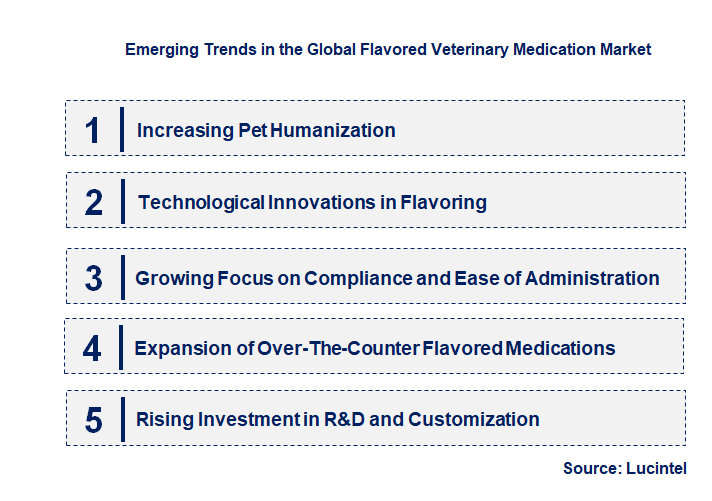
Emerging Trends in the Flavored Veterinary Medication Market
The flavored veterinary medication market is experiencing rapid growth driven by advancements in pharmaceutical formulations and increasing awareness among pet owners. As pet healthcare becomes more sophisticated, manufacturers are focusing on improving medication compliance through innovative flavoring techniques. This market is also influenced by rising pet ownership, humanization of pets, and technological innovations that enhance drug delivery. These developments are transforming how veterinary medicines are developed, marketed, and administered, ultimately improving health outcomes for animals. The following key trends highlight the dynamic nature of this evolving market and its potential for future growth.• Increasing Pet Humanization: The trend of pet owners treating pets as family members is driving demand for more palatable medications. Pet owners prefer flavored medicines that are easier to administer, reducing stress for animals and improving compliance. This shift encourages pharmaceutical companies to develop products with flavors that appeal to pets, such as beef, chicken, or fish. As a result, there is a significant focus on creating formulations that meet both efficacy and palatability, which enhances overall treatment success and customer satisfaction.
• Technological Innovations in Flavoring: Advances in flavoring technologies are enabling the development of more effective and long-lasting flavors in veterinary medications. Techniques such as microencapsulation and nanotechnology help mask unpleasant tastes and improve drug stability. These innovations allow for a broader range of flavors and delivery formats, including chewables, liquids, and treats. The impact is a more diverse product portfolio that caters to different pet preferences and administration methods, ultimately increasing medication adherence and market growth.
• Growing Focus on Compliance and Ease of Administration: Ease of administration is a critical factor influencing pet medication compliance. Flavored medications are designed to be more appealing, making it easier for pet owners to administer treatments without stress or resistance from animals. This trend is prompting pharmaceutical companies to innovate with palatable formulations that can be mixed with food or given directly. Improved compliance leads to better health outcomes, reduces treatment failures, and boosts consumer confidence, thereby expanding the market.
• Expansion of Over-the-Counter (OTC) Flavored Medications: The availability of flavored veterinary medicines over the counter is increasing, driven by demand for convenient and accessible pet healthcare options. OTC products with appealing flavors are gaining popularity among pet owners who prefer to manage minor ailments at home. This trend reduces the need for veterinary visits for simple treatments, lowering costs and increasing market penetration. It also encourages companies to develop user-friendly, flavored formulations that meet regulatory standards for OTC products.
• Rising Investment in R&D and Customization: Pharmaceutical companies are investing heavily in research and development to create customized, flavor-enhanced medications tailored to specific pet species and breeds. This trend involves developing targeted formulations that consider taste preferences and dietary restrictions. The focus on R&D leads to innovative products that improve compliance and therapeutic outcomes. Customization also allows companies to differentiate their offerings in a competitive market, fostering innovation and expanding the scope of flavored veterinary medications. In summary, these trends are collectively reshaping the flavored veterinary medication market by emphasizing pet-centric formulations, technological advancements, and increased accessibility. They are driving higher compliance, expanding product offerings, and fostering innovation, which ultimately enhances pet health and satisfaction while opening new growth avenues for industry stakeholders.
Recent Development in the Flavored Veterinary Medication Market
The flavored veterinary medication market has experienced significant growth driven by advancements in veterinary care, increasing pet ownership, and the demand for more palatable medication options for animals. As pet owners seek better compliance and treatment outcomes, manufacturers are innovating with flavoring techniques to improve medication acceptance among animals. This market is also influenced by regulatory changes, technological innovations, and the rising prevalence of chronic diseases in animals. These developments are shaping the future landscape of veterinary pharmaceuticals, making treatments more effective and accessible. The following are five key recent developments that are transforming this market.• Introduction of Natural Flavors: The adoption of natural flavors such as chicken, beef, and fish has increased, making medications more appealing to animals. This shift enhances compliance, especially in long-term treatments, reducing stress for both pets and owners. It also aligns with consumer preferences for natural and organic products, boosting market growth.
• Technological Innovations in Flavor Delivery: Advanced delivery systems like microencapsulation and sustained-release formulations have been developed to improve flavor stability and release. These innovations ensure consistent taste and efficacy over time, leading to better adherence to medication regimens and improved health outcomes in animals.
• Regulatory Approvals and Standards: Governments and regulatory bodies have introduced guidelines for flavoring agents used in veterinary medicines. These standards ensure safety and efficacy, fostering consumer confidence. Compliance with such regulations encourages manufacturers to invest in safer, more effective flavored medications.
• Expansion of Over-the-Counter (OTC) Flavored Medications: There is a rising trend in OTC flavored veterinary drugs, making treatments more accessible for pet owners. This development reduces the need for veterinary visits for minor ailments, saving costs and increasing medication adherence among pet owners.
• Growing Focus on Chronic Disease Management: The increasing prevalence of chronic conditions like arthritis and heart disease in pets has driven demand for flavored medications that improve compliance. Tailored flavor profiles help ensure consistent medication intake, leading to better disease management and improved quality of life for animals. In summary, these developments are significantly impacting the flavored veterinary medication market by enhancing medication palatability, ensuring safety, expanding accessibility, and addressing chronic health issues. As a result, the market is experiencing accelerated growth, improved treatment adherence, and increased consumer confidence, ultimately benefiting animal health and welfare.
Strategic Growth Opportunities in the Flavored Veterinary Medication Market
The flavored veterinary medication market is experiencing rapid growth driven by increasing pet ownership, advancements in veterinary care, and a focus on improving medication compliance among animals. As pet owners seek more effective and stress-free treatment options, manufacturers are innovating with flavoring techniques to enhance palatability. This evolving landscape presents several strategic growth opportunities across key applications, each contributing to market expansion and improved animal health outcomes. These opportunities not only address current challenges but also open new avenues for innovation and market penetration, shaping the future of veterinary pharmaceuticals.• Pet Clinics and Hospitals: Pet clinics and hospitals are adopting flavored medications to improve compliance and treatment success rates. Veterinarians prefer palatable formulations to ensure animals take their medication willingly, reducing stress and treatment failures. This trend enhances patient outcomes and increases demand for specialized flavoring solutions, driving market growth in clinical settings.
• Companion Animal Care: The need for species-specific flavoring solutions is rising in companion animal care. Dogs, cats, and small mammals have distinct taste preferences, prompting manufacturers to develop tailored flavors. This customization improves medication adherence, fosters better health management, and boosts market share within the companion animal segment.
• Livestock and Large Animal Applications: In livestock and large animals, flavoring is crucial for oral medications administered via feed or water. Enhancing palatability reduces medication rejection and ensures proper dosage, which is vital for disease control and productivity. This opportunity supports sustainable farming practices and expands market reach in agricultural sectors.
• Over-the-Counter (OTC) Veterinary Products: The OTC segment benefits from flavored formulations that appeal directly to pet owners seeking easy-to-administer medications. Consumer preferences for natural and tasty options are encouraging companies to develop innovative flavors, increasing product accessibility and market penetration in retail outlets.
• E-prescription and Digital Platforms: The rise of digital platforms allows for personalized flavoring options and streamlined distribution channels. Veterinarians and pet owners can select preferred flavors, improving compliance and satisfaction. This technological integration fosters market expansion and enhances customer engagement. In summary, these growth opportunities are significantly impacting the flavored veterinary medication market by improving medication adherence, expanding application scopes, and fostering innovation. They are driving market growth, enhancing animal health outcomes, and creating new revenue streams for industry players. As these trends continue, the market is poised for sustained expansion and increased competitiveness.
Flavored Veterinary Medication Market Driver and Challenges
The flavored veterinary medication market is influenced by a variety of technological, economic, and regulatory factors that shape its growth and development. Advances in pharmaceutical formulations and delivery methods have made medications more palatable for animals, encouraging compliance and improving health outcomes. Economic factors such as rising pet ownership and increased spending on pet healthcare drive demand, while regulatory standards ensure safety and efficacy. Additionally, technological innovations in drug development and flavoring agents enhance product appeal. However, the market also faces challenges related to regulatory hurdles, high R&D costs, and consumer awareness. These drivers and challenges collectively impact the markets trajectory, influencing innovation, accessibility, and overall growth. The factors responsible for driving the flavored veterinary medication market include:• Technological Innovations: The development of advanced flavoring agents and drug delivery systems has significantly improved medication palatability for animals. Innovations such as microencapsulation and sustained-release formulations make medications easier to administer, increasing compliance among pet owners and veterinarians. These technological advancements reduce stress for animals and improve therapeutic outcomes, thereby expanding market opportunities. As research continues, new flavoring techniques are expected to further enhance product appeal, fostering market growth and encouraging pharmaceutical companies to invest in innovative solutions.
• Rising Pet Ownership and Expenditure: The increasing number of pet owners worldwide, coupled with higher disposable incomes, has led to greater spending on pet healthcare. Consumers are now more willing to invest in specialized medications, including flavored formulations that ensure better adherence. This trend is particularly prominent in developed regions where pet owners seek premium healthcare products. The growing awareness of animal health and wellness further propels demand for effective, palatable medications, creating a lucrative environment for market players to expand their product portfolios and capture new customer segments.
• Regulatory Approvals and Standards: Stringent regulatory frameworks governing veterinary pharmaceuticals ensure the safety, efficacy, and quality of medications. Regulatory agencies such as the FDA and EMA impose strict guidelines on ingredient safety, labeling, and manufacturing practices. While these standards safeguard animal health, they also pose challenges for market players in terms of compliance costs and lengthy approval processes. Nonetheless, adherence to regulatory standards enhances consumer trust and facilitates market entry, encouraging companies to innovate within the regulatory landscape to develop compliant, flavored medications that meet safety requirements.
• Technological Advancements in Drug Delivery: The evolution of drug delivery systems, including oral suspensions, chewables, and transdermal patches, has revolutionized medication administration. These systems often incorporate flavoring agents to improve acceptance among animals. Enhanced delivery technologies reduce dosing errors, improve bioavailability, and simplify administration, which benefits both veterinarians and pet owners. As these technologies become more sophisticated, they open new avenues for flavored medications, enabling targeted therapies and personalized treatment plans, thereby driving market expansion and innovation.
• Growing Focus on Animal Welfare and Compliance: Increasing awareness about animal welfare and the importance of medication adherence has driven demand for palatable veterinary drugs. Flavored medications reduce stress during administration and improve compliance, leading to better health outcomes. Veterinarians and pet owners prefer formulations that are easy to administer, especially for chronic conditions requiring long-term treatment. This focus on humane and effective treatment options encourages pharmaceutical companies to develop innovative flavored products, fostering market growth while addressing the needs of both animals and their owners. The challenges facing this flavored veterinary medication market include:
• Regulatory Hurdles and Approval Delays: Navigating complex regulatory landscapes remains a significant challenge for market players. Approval processes for new flavored formulations can be lengthy and costly, involving extensive safety and efficacy testing. Variations in regulations across regions further complicate market entry and expansion strategies. These hurdles can delay product launches, increase R&D expenses, and limit innovation. Companies must invest heavily in compliance and regulatory affairs to ensure timely approvals, which can impact overall profitability and slow market growth.
• High Research and Development Costs: Developing effective, safe, and palatable veterinary medications requires substantial investment in research and development. Formulation development, flavor testing, stability studies, and clinical trials contribute to high costs. Smaller companies may struggle to compete with larger firms that have more resources, potentially limiting innovation and product diversity. These financial barriers can hinder the introduction of novel flavored medications, restricting market growth and limiting options for veterinarians and pet owners.
• Consumer Awareness and Acceptance: Despite the benefits of flavored medications, some pet owners remain unaware of these options or skeptical about their efficacy. Lack of awareness about new formulations and misconceptions about medication safety can impede adoption. Additionally, cultural preferences and regional differences influence acceptance levels. Overcoming these barriers requires extensive marketing, education, and trust-building efforts, which can be resource-intensive. Without widespread consumer acceptance, market growth may be constrained, affecting overall industry expansion. In summary, the flavored veterinary medication market is driven by technological innovations, rising pet healthcare expenditure, regulatory standards, advanced drug delivery systems, and a focus on animal welfare. However, regulatory challenges, high R&D costs, and consumer awareness issues pose significant hurdles. These factors collectively influence the pace of market growth, innovation, and product adoption. While expansion opportunities are substantial, addressing these challenges is crucial for sustained development. Overall, the markets future depends on balancing technological progress with regulatory compliance and consumer education to meet the evolving needs of animals and pet owners.
List of Flavored Veterinary Medication Companies
Companies in the market compete on the basis of product quality offered. Major players in this market focus on expanding their manufacturing facilities, R&D investments, infrastructural development, and leverage integration opportunities across the value chain. With these strategies flavored veterinary medication companies cater increasing demand, ensure competitive effectiveness, develop innovative products & technologies, reduce production costs, and expand their customer base. Some of the flavored veterinary medication companies profiled in this report include-• Boehringer Ingelheim
• Elanco Animal Health
• Zoetis
• Merck & Co.
• Ceva
• Vetoquinol
• Wedgewood Pharmacy
• Virbac
• BOVA
• Lee Silsby Compounding Pharmacy
Flavored Veterinary Medication Market by Segment
The study includes a forecast for the global flavored veterinary medication market by type, application, and region.Flavored Veterinary Medication Market by Type [Value from 2019 to 2031]:
• Meat Flavored
• Fish Flavored
• Fruit Flavored
• Others
Flavored Veterinary Medication Market by Application [Value from 2019 to 2031]:
• Dogs
• Cats
• Others
Flavored Veterinary Medication Market by Region [Value from 2019 to 2031]:
• North America
• Europe
• Asia Pacific
• The Rest of the World
Country Wise Outlook for the Flavored Veterinary Medication Market
The flavored veterinary medication market has experienced significant growth driven by increasing pet ownership, advancements in pharmaceutical formulations, and a focus on improving medication compliance among animals. As consumers demand more palatable options for their pets, companies are innovating with new flavors and delivery methods. Regulatory changes and technological innovations are also shaping the landscape, making medications more accessible and effective. This evolving market reflects broader trends in pet healthcare, emphasizing convenience, safety, and efficacy. The following summaries highlight recent developments in the United States, China, Germany, India, and Japan, illustrating how each region is contributing to this dynamic industry.• United States: The US market has seen a surge in flavored veterinary medications, driven by rising pet ownership and a focus on improving medication adherence. Companies are investing in research to develop natural and appealing flavors, such as chicken and beef, to enhance compliance. Regulatory agencies are also encouraging innovation, leading to new product launches and formulations. Telemedicine and digital platforms are increasingly used for veterinary consultations, influencing medication distribution and acceptance. The market is expected to continue expanding as pet owners prioritize health and wellness.
• China: In China, the flavored veterinary medication market is rapidly growing due to increasing awareness of pet health and a rising middle class willing to invest in premium pet products. Local companies are adopting innovative flavoring techniques to cater to domestic preferences, including traditional Chinese flavors. The government’s support for animal health initiatives and expanding veterinary infrastructure are further boosting market growth. E-commerce platforms are playing a crucial role in distribution, making these medications more accessible to urban pet owners. The trend indicates a shift toward more sophisticated and palatable veterinary solutions.
• Germany: Germany’s market is characterized by stringent regulations and a focus on quality and safety. Recent developments include the introduction of organic and natural flavor options, aligning with consumer preferences for sustainable products. Veterinary practices are increasingly adopting flavored medications to improve compliance, especially in companion animals. The country’s emphasis on research and development has led to innovative delivery systems, such as flavored chewables and liquids. Collaboration between pharmaceutical companies and veterinary clinics is enhancing product development, ensuring high standards and efficacy.
• India: The Indian market is witnessing rapid growth due to increasing pet ownership and awareness of animal health. Local manufacturers are developing affordable flavored medications tailored to regional tastes, including spice and herbal flavors. The expansion of veterinary clinics and pet care services is facilitating wider adoption of these products. Government initiatives promoting animal health and welfare are also contributing to market expansion. E-commerce and online pharmacies are making flavored veterinary medications more accessible, especially in urban areas. The trend reflects a broader shift toward professional and consumer-driven pet healthcare solutions.
• Japan: Japan’s market is driven by a high level of pet ownership and a focus on innovative, high-quality veterinary products. Recent developments include the integration of advanced flavoring technologies to improve palatability for cats and dogs. The country’s strict regulatory environment ensures safety and efficacy, encouraging the development of premium products. There is a growing trend toward functional medications that combine flavor with health benefits, such as joint support or digestive health. Collaboration between pharmaceutical companies and veterinary institutions is fostering innovation, with a focus on personalized and convenient medication options for pet owners.

Features of the Global Flavored Veterinary Medication Market
Market Size Estimates: Flavored veterinary medication market size estimation in terms of value ($B). Trend and Forecast Analysis: Market trends (2019 to 2024) and forecast (2025 to 2031) by various segments and regions. Segmentation Analysis: Flavored veterinary medication market size by type, application, and region in terms of value ($B). Regional Analysis: Flavored veterinary medication market breakdown by North America, Europe, Asia Pacific, and Rest of the World. Growth Opportunities: Analysis of growth opportunities in different type, application, and regions for the flavored veterinary medication market. Strategic Analysis: This includes M&A, new product development, and competitive landscape of the flavored veterinary medication market. Analysis of competitive intensity of the industry based on Porter’s Five Forces model.
FAQ
Q1. What is the growth forecast for flavored veterinary medication market? Answer: The global flavored veterinary medication market is expected to grow with a CAGR of 9.3% from 2025 to 2031. Q2. What are the major drivers influencing the growth of the flavored veterinary medication market? Answer: The major drivers for this market are the increasing demand for palatable pet medications, the rising pet ownership driving healthcare needs, and the growing focus on animal health compliance. Q3. What are the major segments for flavored veterinary medication market? Answer: The future of the flavored veterinary medication market looks promising with opportunities in the meat flavored, fish flavored, and fruit flavored markets. Q4. Who are the key flavored veterinary medication market companies? Answer: Some of the key flavored veterinary medication companies are as follows:• Boehringer Ingelheim
• Elanco Animal Health
• Zoetis
• Merck & Co.
• Ceva
• Vetoquinol
• Wedgewood Pharmacy
• Virbac
• BOVA
• Lee Silsby Compounding Pharmacy Q5. Which flavored veterinary medication market segment will be the largest in future? Answer: Lucintel forecasts that, within the application category, dog is expected to witness higher growth over the forecast period. Q6. In flavored veterinary medication market, which region is expected to be the largest in next 5 years? Answer: In terms of region, APAC is expected to witness the highest growth over the forecast period. Q7. Do we receive customization in this report? Answer: Yes, Lucintel provides 10% customization without any additional cost.
Table of Contents
List of Figures
List of Tables
Methodology
- In-depth interviews of the major players in this market
- Detailed secondary research from competitors’ financial statements and published data
- Extensive searches of published works, market, and database information pertaining to industry news, company press releases, and customer intentions
- A compilation of the experiences, judgments, and insights of Lucintel’s professionals, who have analyzed and tracked this market over the years.


Buy Now
Choose a license that fits your team. Instant PDF delivery.
Prices exclude taxes. Instant delivery. Custom licensing available on request.
Key Questions
- • What are some of the most promising, high-growth opportunities for the flavored veterinary medication market by type (meat flavored, fish flavored, fruit flavored, and others), application (dogs, cats, and others), and region (North America, Europe, Asia Pacific, and the Rest of the World)?
- • Which segments will grow at a faster pace and why?
- • Which region will grow at a faster pace and why?
- • What are the key factors affecting market dynamics? What are the key challenges and business risks in this market?
- • What are the business risks and competitive threats in this market?
- • What are the emerging trends in this market and the reasons behind them?
- • What are some of the changing demands of customers in the market?
- • What are the new developments in the market? Which companies are leading these developments?
- • Who are the major players in this market? What strategic initiatives are key players pursuing for business growth?
- • What are some of the competing products in this market and how big of a threat do they pose for loss of market share by material or product substitution?
- • What M&A activity has occurred in the last 5 years and what has its impact been on the industry? For any questions related to Flavored Veterinary Medication Market, Flavored Veterinary Medication Market Size, Flavored Veterinary Medication Market Growth, Flavored Veterinary Medication Market Analysis, Flavored Veterinary Medication Market Report, Flavored Veterinary Medication Market Share, Flavored Veterinary Medication Market Trends, Flavored Veterinary Medication Market Forecast, Flavored Veterinary Medication Companies, write Lucintel analyst at email: helpdesk@lucintel.com. We will be glad to get back to you soon.


