
Market Report · July 24, 2026

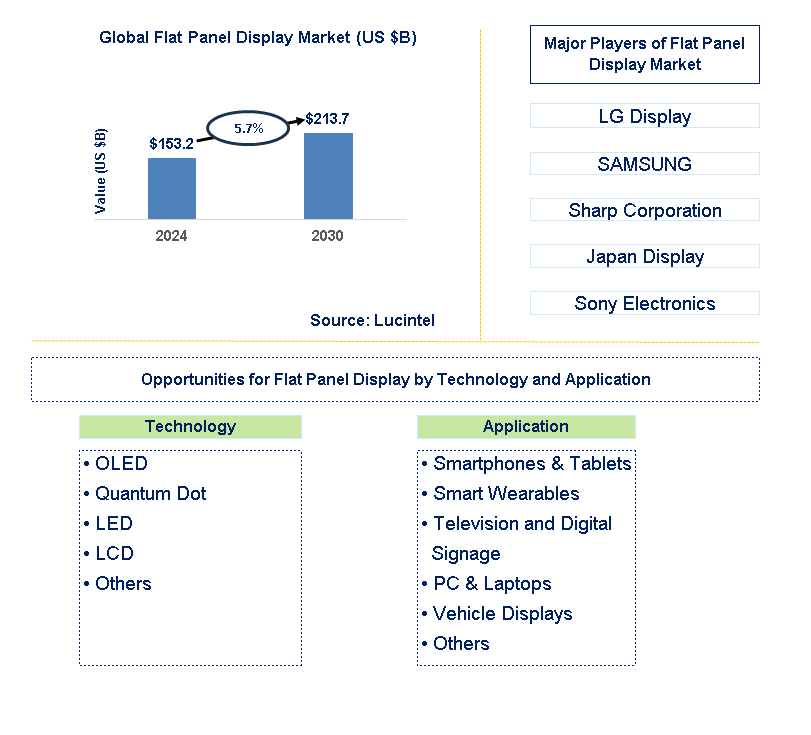
Key data points: The market size in 2030 = $213.7 billion, growth forecast = 5.7% annually next 6 years. Scroll below to get more insights. This market report covers trends, opportunities, and forecast in the global flat panel display market to 2030 by technology (OLED, quantum dot, LED, LCD, and others), application (smartphones & tablets, smart wearables, television and digital signage, PC & laptops, vehicle displays, and others), and region (North America, Europe, Asia Pacific, and the Rest of the World)
We'll send your sample report shortly.
• Lucintel forecasts that, within the technology category, OLED will remain the largest segment over the forecast period because it has many benefits over traditional display technologies, including its flexible and lightweight design.
• In terms of region, North America will remain the largest region over the forecast period due to the growing adoption of cutting-edge technologies and an increase in flat panel display sales in the business sector. A more than 150-page report is developed to help in your business decisions.
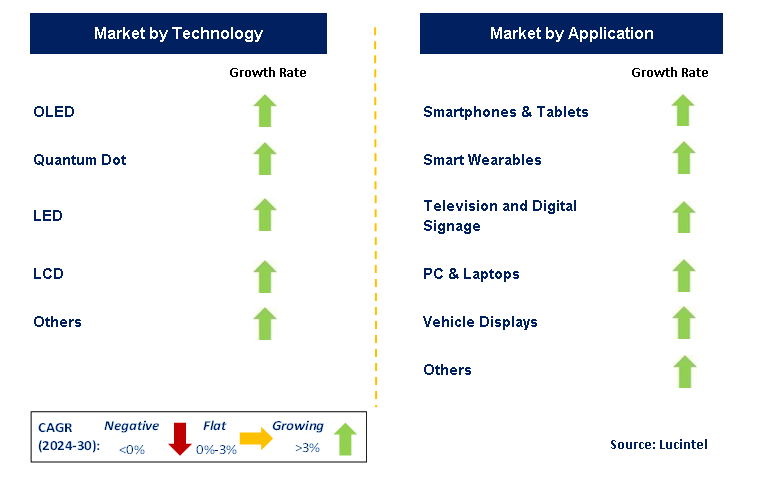
• Organic Light Emitting Diodes Growth: OLED technology is rapidly being adopted due to its enhanced color performance, contrast ratios, and flexibility. The expansion of these displays into other areas such as smartphones, TVs, PCs, and wearables is driven by decreased production costs and high demand for quality displays.
• Trends in Mini-LED and Micro-LED Breakthroughs: Mini-LED and Micro-LED technologies are becoming popular due to their high brightness, better color contrast, and energy efficiency. These technologies enhance display performance and are being incorporated into premium monitors and TVs, overtaking regular LCD monitors.
• Flexible and Foldable OLED Displays and Screens: The introduction of flexible and foldable displays is breaking new ground in the consumer electronics market, particularly for phones and tablets. This trend results from progressive improvements in science, which have changed the way products are made, leading to new products and innovative ways of using them.
• High Resolution and 8K Displays: The trend toward higher resolution displays, particularly 8K, is becoming more noticeable in premium televisions and professional monitors. This trend is driven by the increasing amount of 8K content and the availability of better display technologies, enhancing the viewing experience for customers.
• Sustainable Manufacturing Practices: Sustainability is increasingly becoming a focus in the display manufacturing environment, with companies going green in production processes. This shift is driven by industry regulations and consumer demand for "green" products, prompting research into new technologies for recycling and low-energy production. These emerging trends are strengthening the performance of flat-panel displays, expanding their range of applications, and making the industry more environmentally friendly. Some of these trends will contribute to the development of the industry as further technological advancements are achieved.

• OLED Technology Improvement: There have been notable advances in OLED technology, including longer lifespans, increased brightness, and better color reproduction. There has been a decrease in production costs, as well as the adoption of advanced manufacturing methods, widening its application in consumer electronics and high-end displays.
• Growth of Mini-LED and Micro-LED Displays: Mini-LED and Micro-LED technologies are seen as alternatives to LCDs, offering advantages like higher brightness, better contrast, and lower power consumption. These technologies are being introduced in high-end televisions and monitors, providing consumers with better display performance.
• Flexible Displays Market: Flexible display technology is improving, with new designs like foldable smartphones and bendable displays. This growth is fueled by new materials and production methods, offering better and more flexible display options.
• Growing Interest in 8K Resolution: A trend favoring 8K resolution displays, especially in the upscale television market, is emerging in the flat-panel display market. Developments in panel technology, along with an increase in 8K content, are enhancing the viewing experience.
• Sustainability and Green Manufacturing: An increasing trend in the flat-panel display industry involves eco-friendly practices, such as using green materials and energy-saving technologies. This shift is driven by regulations and the market demand for greener products. These changes highlight how the flat-panel display market continues to evolve through technology and consumer behavior. The emphasis on OLED, Mini-LED, flexible displays, 8K, and sustainability will determine the industry's future and create both opportunities and challenges.
• Consumer Electronics: The demand for high-quality resolution displays in consumer electronics such as mobile phones and televisions continues to rise. Opportunities exist for developing better display technologies like 8K and OLED, as well as offering improved experiences like flexible displays.
• Automotive Applications: There is growing interest in advanced displays for automotive applications, including dashboards and entertainment and information control systems. Opportunities driven by performance requirements for better images and interactivity are creating significant growth potential, especially with developments in OLED and touch screens.
• Wearable Technology: High-resolution and flexible screens for wearable smart devices, such as smartwatches and fitness monitors, are improving. This sector is growing due to market demands for better screen functionality and device properties, leading to new possibilities for developing bendable display technologies.
• Industrial and Medical Applications: The industrial and medical sectors have adopted cutting-edge display technologies. Examples include better resolution and more durable displays for medical imaging systems and industrial control systems that require high precision and accuracy.
• Augmented and Virtual Reality: Augmented reality and virtual reality are creating a need for better display systems. The growth of these areas also opens up opportunities for developing displays with better resolution, faster refresh rates, and wider viewing angles, improving the user experience. These strategic growth opportunities reflect the diverse applications and market segments in the flat-panel display industry. By utilizing the latest trends in display technology and focusing on new demands, businesses can capitalize on opportunities and promote growth across various industries.
• Technological Advancements: Advancements in display technology, such as OLED, Mini-LED, and Micro-LED, are key drivers of market growth. These developments enhance display performance in terms of brightness, color quality, and energy efficiency, addressing consumer demand for better displays.
• Increasing Consumer Demand: Increased demand for high-resolution, large display screens in televisions, smartphones, and monitors is driving market growth. The market is benefiting from trends like 4K and 8K resolutions, as well as flexible and foldable displays.
• Adoption of New Technologies in Emerging Markets: India and Southeast Asia, among other emerging markets, are seeing increasing adoption of consumer electronics. Rising income levels and the growth of urban centers in these regions are driving demand for new display technologies and other market opportunities.
• Trends in Manufacturing Technologies: The introduction of innovative manufacturing processes, such as improvements in panel production systems and cost reductions, is increasing scalability and lowering costs for advanced display technologies. This enables wider market outreach and penetration.
• Growing Adherence to Eco-friendly Standards: As illegal manufacturing practices are phased out, green technologies and materials are being rapidly embraced. Demand is also increasing due to regulations on environmental impacts and customer preferences for green products. Challenges in the flat-panel display market include:
• High Cost of Production: The high cost of production remains a barrier to the adoption of advanced display technologies, particularly OLED and Micro-LED. The cost of raw materials and production processes affects profitability and, in turn, growth.
• Intellectual Property Issues: Intellectual property disputes and patent wars within the display industry can lead to stagnation in innovation and market contraction. Securing capital is challenging, especially due to the dynamic nature of patents.
• Supply Chain Disruptions: Production schedules and costs may be affected by disruptions in the supply chain, such as shortages of core components and raw materials. These factors are likely to be exacerbated by global events and geopolitical issues, which impact the broader supply chain. The flat-panel display market is influenced by a range of factors that impact its evolution and growth. Key drivers include technological improvements, consumer demand, new markets, and sustainability. Key challenges include the high cost of production, intellectual property concerns, and supply chain disruptions. These factors are critical in shaping strategies to navigate the market and seize relevant opportunities.
• LG Display
• SAMSUNG
• Sharp Corporation
• Japan Display
• Sony Electronics
• NEC Display Solutions
• Panasonic Corporation
• AU Optronics
• Crystal Display Systems
• Innolux Corporation
• OLED
• Quantum Dot
• LED
• LCD
• Others
• Smartphones & Tablets
• Smart Wearables
• Television and Digital Signage
• PC & Laptops
• Vehicle Displays
• Others
• North America
• Europe
• Asia Pacific
• The Rest of the World
• United States: The US has recently seen an increase in the adoption of OLED displays, which offer better color rendition and energy efficiency. Several large companies are investing heavily in R&D to improve OLED technology and reduce production costs. Additionally, the implementation of 8K resolution displays is gaining popularity, especially in the high-end TV market. The US market is also seeing growth in flexible display applications, such as foldable smartphones.
• China: China remains the world leader in flat-panel display manufacturing, with significant potential in Mini-LED and Micro-LED technology. The country is investing in new production lines to meet domestic demand and develop export markets. Chinese companies are also focusing on improving R&D management to develop next-generation display technologies. Government support for technological advancement and sustainable manufacturing is further influencing market growth.
• Germany: German flat-panel display market is seeing deeper penetration of high-resolution displays and increasing use of OLED displays in industrial and automotive applications. The country is focusing on improving display systems and their durability in line with the European Union's green policies. German manufacturers are partnering with technology companies to incorporate advanced displays in areas such as augmented and virtual reality.
• India: In India, the flat-panel display market is expanding rapidly, thanks to increasing demand for consumer electronics and the government's efforts to promote local manufacturing. People are purchasing more advanced, larger displays due to urbanization and rising income levels. Indian companies are also setting up new manufacturing plants to cater to both domestic and international markets, benefiting from the Make in India initiative.
• Japan: Japan remains a leader in display technology innovation, particularly with OLED and Quantum Dot displays. Japanese companies are investing in future technologies to enhance display functionality, energy use, and other qualities. There is also growing interest in designing displays for automotive and wearable applications. The Japanese market is exploring new manufacturing technologies to reduce costs and improve yield rates.


• LG Display
• SAMSUNG
• Sharp Corporation
• Japan Display
• Sony Electronics
• NEC Display Solutions
• Panasonic Corporation
• AU Optronics
• Crystal Display Systems
• Innolux Corporation Q6. Which flat panel display market segment will be the largest in the future? Answer: Lucintel forecasts that OLED will remain the largest segment over the forecast period because it has many benefits over traditional display technologies, including its flexible and lightweight design. Q7. In the flat panel display market, which region is expected to be the largest in the next 5 years? Answer: North America will remain the largest region over the forecast period due to the growing adoption of cutting-edge technologies and an increase in flat panel display sales in the business sector. Q.8 Do we receive customization in this report? Answer: Yes, Lucintel provides 10% customization without any additional cost.


Choose a license that fits your team. Instant PDF delivery.
Prices exclude taxes. Instant delivery. Custom licensing available on request.
Market Report · July 24, 2026
Market Report · July 20, 2026
Market Report · July 20, 2026
Trusted partner for strategic intelligence and business growth


Receive a complimentary market analysis tailored to your industry. Our analysts will identify key growth opportunities and competitive dynamics specific to your business.

Market size, growth rate, and key trend analysis for your specific sector.

Top competitor positioning and market share analysis.

Strategic recommendations backed by data-driven insights.
Get curated market intelligence and competitive moves straight to your inbox.
By subscribing, you agree to receive our monthly insights. Unsubscribe anytime.
Receive a complimentary market analysis tailored to your industry. Our analysts will identify key growth opportunities and competitive dynamics specific to your business.
Market size, growth rate, and key trend analysis for your specific sector.
Top competitor positioning and market share analysis.
Strategic recommendations backed by data-driven insights.
Get curated market intelligence, emerging trends, and competitive moves straight to your inbox each month.
By subscribing, you agree to receive our monthly insights. Unsubscribe anytime.
We'll send your sample report shortly.