
Market Report · July 29, 2026

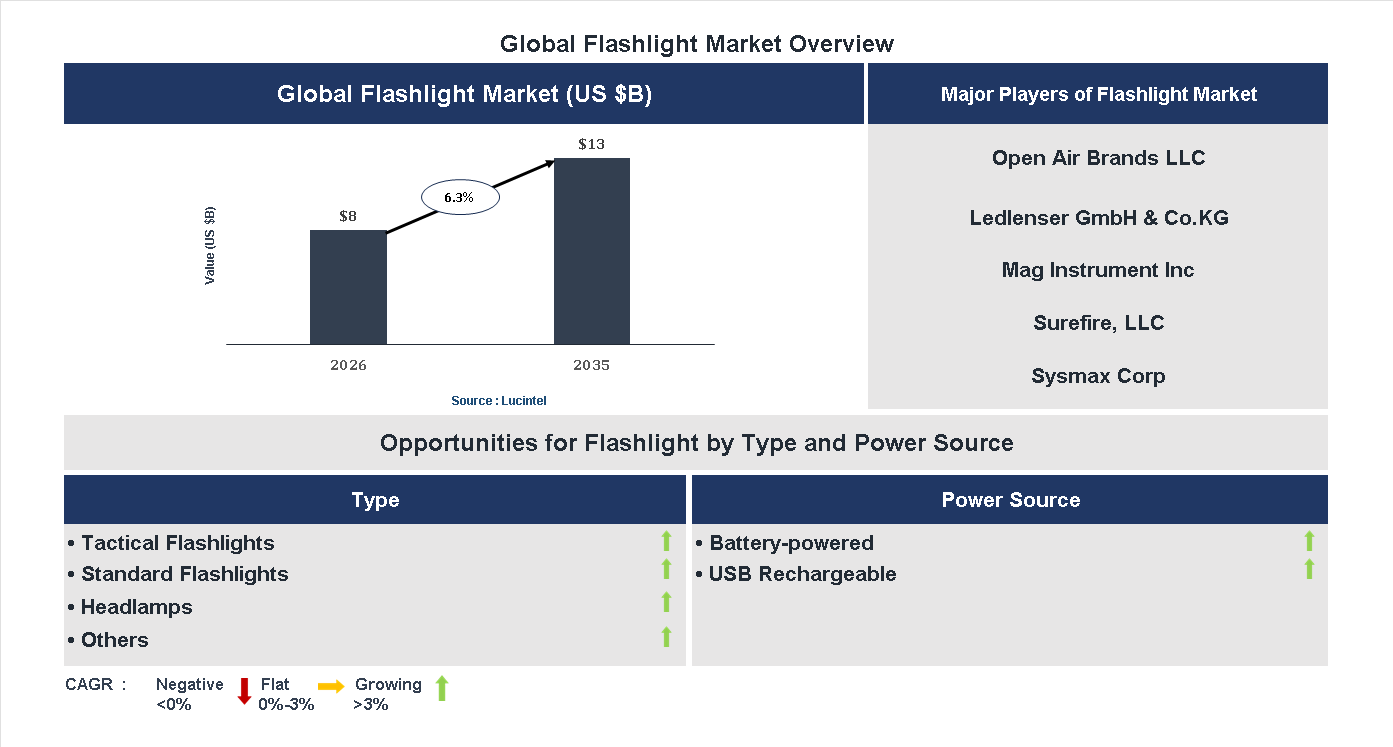
Key data points: The market size in 2035 = $13 billion, growth forecast = 6.3% annually for the next 8 years. Scroll below to get more insights. This market report covers trends, opportunities and forecasts in flashlight market to 2035 by type (tactical flashlights, standard flashlights, headlamps, and others), power source (battery-powered and USB rechargeable), end use (residential and commercial), and region (North America, Europe, Asia Pacific, and the Rest of the World)
We'll send your sample report shortly.
• Lucintel forecasts that, within the type category, headlamp is expected to witness the highest growth over the forecast period.
• Within the end use category, residential is expected to witness higher growth.
• In terms of region, North America is expected to witness the highest growth over the forecast period. Gain valuable insights for your business decisions with our comprehensive 150+ page report. Sample figures with some insights are shown below.
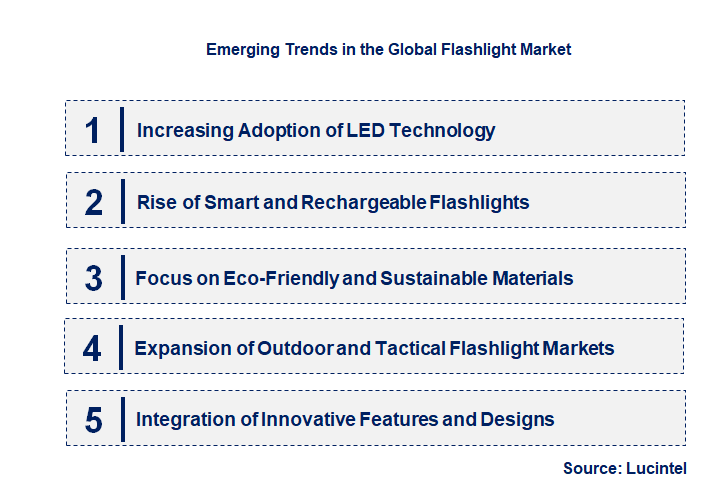
• Increasing adoption of LED technology: LED flashlights are becoming the standard due to their energy efficiency, longer lifespan, and brighter illumination. This trend reduces power consumption and enhances durability, making LED flashlights more appealing for outdoor, emergency, and everyday use. Manufacturers are investing heavily in LED innovations to improve brightness, battery life, and compactness, which significantly impacts market growth and product differentiation.
• Rise of smart and rechargeable flashlights: Smart flashlights equipped with features like Bluetooth connectivity, adjustable brightness, and power indicators are gaining popularity. Rechargeable models with USB ports are replacing traditional battery-powered options, offering convenience and sustainability. This trend caters to tech-savvy consumers and environmentally conscious users, leading to increased demand for multifunctional and eco-friendly lighting solutions.
• Focus on eco-friendly and sustainable materials: Consumers are increasingly concerned about environmental impact, prompting manufacturers to adopt sustainable materials such as recycled plastics and biodegradable components. This shift not only appeals to eco-conscious buyers but also aligns with regulatory standards. The use of renewable materials and energy-efficient manufacturing processes is reshaping product development and positioning brands as responsible market leaders.
• Expansion of outdoor and tactical flashlight markets: The growing popularity of outdoor activities like camping, hiking, and adventure sports is driving demand for durable, high-performance flashlights. Tactical flashlights designed for law enforcement, military, and security applications are also expanding, emphasizing ruggedness, high lumens, and reliability. This trend broadens market scope and encourages innovation in ruggedness, waterproofing, and beam distance.
• Integration of innovative features and designs: Modern flashlights are incorporating features such as adjustable focus, multiple lighting modes, and compact, ergonomic designs. Some models include additional functionalities like power banks or emergency SOS signals. These innovations enhance user experience, safety, and versatility, making flashlights more than just simple illumination devices. The market is shifting towards multifunctionality and user-centric designs to meet diverse consumer needs. These trends are collectively reshaping the flashlight market by emphasizing technological innovation, sustainability, and multifunctionality. They are expanding product offerings, improving user experience, and aligning with environmental and safety standards. As a result, the market is becoming more dynamic, competitive, and responsive to evolving consumer demands, paving the way for continued growth and innovation.
• Technological Innovations in LED and Battery Efficiency: The adoption of advanced LED technology and high-capacity batteries has improved flashlight performance, durability, and energy efficiency. These innovations enable longer usage times, brighter illumination, and compact designs, appealing to outdoor enthusiasts, security personnel, and industrial users. As a result, manufacturers are investing in R&D to develop smarter, more reliable products, which are expected to drive market growth and expand application scopes.
• Integration of Smart and IoT Features: The incorporation of smart technology and IoT connectivity into flashlights has revolutionized user experience. Features like remote control, app integration, and adaptive lighting are now common, providing enhanced convenience and customization. This development caters to professional users and tech-savvy consumers, opening new revenue streams. The market benefits from increased product differentiation, higher consumer engagement, and the potential for data-driven improvements, fostering overall industry expansion.
• Growing Demand in Outdoor and Emergency Sectors: The outdoor recreation, camping, hiking, and emergency preparedness sectors are fueling demand for durable, high-performance flashlights. Innovations such as waterproofing, shock resistance, and multi-functionality have made products more suitable for rugged environments. This trend has expanded market reach, especially in regions with high outdoor activity levels, and has prompted manufacturers to develop specialized models, boosting sales and market penetration.
• Expansion in Security and Industrial Applications: The security and industrial sectors are increasingly adopting advanced flashlights for surveillance, inspection, and safety purposes. Features like hands-free operation, high lumens, and rugged construction are critical for these applications. This growth is driven by stringent safety regulations and the need for reliable illumination in challenging environments. As a result, the market is witnessing a surge in demand for specialized industrial-grade flashlights, contributing to overall market diversification and expansion.
• Focus on Eco-Friendly and Sustainable Products: Environmental concerns are prompting manufacturers to develop eco-friendly flashlights using recyclable materials and energy-efficient components. Solar-powered and rechargeable models are gaining popularity among consumers and organizations committed to sustainability. This shift not only reduces environmental impact but also appeals to a broader customer base, encouraging market players to innovate sustainably. The trend is expected to foster long-term growth and align the market with global sustainability goals. The recent developments in LED technology, smart features, application expansion, and sustainability are collectively transforming the flashlight market. These innovations are driving growth, diversifying product offerings, and opening new market segments. As a result, the industry is poised for continued expansion, with increased competitiveness and enhanced consumer satisfaction shaping its future trajectory.
• Increasing Adoption of LED Flashlights: LED technology offers higher energy efficiency, longer lifespan, and brighter illumination, making it the preferred choice for consumers and industries. The shift from traditional incandescent bulbs to LED-based flashlights is accelerating market growth, especially in outdoor, tactical, and emergency applications. Sub-segments like rechargeable LED flashlights and compact pocket-sized models are gaining popularity, further expanding market reach and consumer adoption.
• Growing Demand in Outdoor and Adventure Activities: The rising popularity of camping, hiking, and outdoor sports is fueling demand for durable, high-performance flashlights. Consumers seek weather-resistant, lightweight, and long-lasting lighting solutions for safety and convenience. Manufacturers are developing specialized products such as headlamps, waterproof models, and multi-functional flashlights to cater to this segment, creating new revenue streams and market opportunities.
• Expansion of Security and Safety Applications: The increasing need for security and surveillance in residential, commercial, and industrial sectors is boosting flashlight demand. Portable lighting devices are essential for emergency response, security patrols, and disaster management. Innovations like smart flashlights with integrated sensors and connectivity features are enhancing safety protocols, thereby expanding the application scope and market size.
• Technological Innovations in Smart Flashlights: Integration of IoT, Bluetooth, and voice control in flashlights is transforming user experience. Smart flashlights offer features like remote control, customizable brightness, and battery status monitoring, appealing to tech-savvy consumers and professionals. These innovations open avenues for premium product segments and strategic collaborations, driving market growth through enhanced functionality and connectivity.
• Rising Industrial and Commercial Use Cases: Industries such as manufacturing, construction, and logistics require reliable portable lighting for safety and operational efficiency. The demand for rugged, high-lumen flashlights capable of withstanding harsh environments is increasing. Sub-segments like explosion-proof flashlights and hands-free headlamps are gaining traction, supporting industrial growth and creating opportunities for specialized product development. The flashlight market is poised for robust growth driven by technological advancements, expanding application areas, and evolving consumer preferences. Opportunities in LED innovation, outdoor activities, security, smart features, and industrial use are expected to significantly enhance market size and competitiveness. Companies investing strategically in these segments will be well-positioned to capitalize on emerging trends and meet the increasing global demand for versatile, efficient lighting solutions.
• Technological Innovation: The advent of LED technology has revolutionized the flashlight industry by providing brighter, more energy-efficient, and longer-lasting lighting solutions. Continuous R&D efforts have led to compact, durable, and versatile flashlights suitable for various applications, from outdoor activities to emergency use. These innovations reduce power consumption and extend battery life, making products more appealing to consumers. As technology advances, manufacturers can introduce smart features, such as rechargeable batteries and connectivity options, further enhancing user experience and market growth.
• Increasing Demand for Portable Lighting: The rising need for portable lighting solutions across sectors such as outdoor recreation, security, and emergency response is a significant driver. Consumers seek reliable, lightweight, and easy-to-carry flashlights for activities like camping, hiking, and home safety. The growth of outdoor sports and adventure tourism fuels demand, while urbanization increases the need for portable lighting in urban infrastructure and maintenance. This trend encourages manufacturers to develop innovative, user-friendly products that meet diverse consumer needs, thereby expanding market reach.
• Growing Adoption in Commercial and Industrial Sectors: The industrial sectors demand for durable, high-performance flashlights for tasks such as inspection, maintenance, and construction is a key growth factor. Commercial applications, including security personnel and facility management, require reliable lighting tools. The increasing focus on workplace safety standards and the need for efficient inspection tools drive the adoption of specialized flashlights. This sectors growth encourages technological enhancements, such as waterproofing and impact resistance, which in turn expand the market scope and product offerings.
• Environmental and Energy Efficiency Regulations: Governments worldwide are implementing strict regulations to promote energy-efficient lighting solutions, impacting the flashlight market positively. These policies encourage the adoption of LED technology and rechargeable batteries, reducing environmental impact. Manufacturers are compelled to innovate and comply with standards that favor sustainable products, which can lead to increased R&D investments and product differentiation. Such regulations also influence pricing strategies and market entry barriers, shaping the competitive landscape and fostering eco-friendly product development.
• Expansion of E-commerce and Retail Channels: The proliferation of online shopping platforms has significantly increased market accessibility and consumer reach. E-commerce enables manufacturers to showcase a wide range of products, offer competitive pricing, and gather customer feedback for continuous improvement. Retail expansion, including specialty stores and big-box outlets, enhances product visibility and availability. This omnichannel approach facilitates faster adoption of new technologies and product variants, driving sales growth. Additionally, digital marketing strategies help target specific consumer segments, further fueling market expansion and innovation. The challenges facing the flashlight market include:
• Intense Competition and Price Wars: The market is highly competitive, with numerous local and international players vying for market share. This leads to price wars, which can erode profit margins and hinder innovation investments. Smaller manufacturers often struggle to compete with established brands that benefit from economies of scale. The commoditization of basic flashlight models further intensifies competition, forcing companies to differentiate through features, branding, and quality, which can increase costs and complicate market positioning.
• Rapid Technological Obsolescence: The fast-paced nature of technological advancements poses a challenge for manufacturers to keep up with evolving consumer preferences and innovations. Products can quickly become outdated, leading to increased R&D costs and inventory write-offs. Companies must continuously innovate to stay relevant, which requires significant investment and strategic planning. Failure to adapt swiftly can result in loss of market share and reduced competitiveness, especially as smart and connected lighting solutions gain popularity.
• Regulatory and Safety Compliance Costs: Stringent safety standards and energy regulations impose additional costs on manufacturers. Compliance involves rigorous testing, certification, and documentation, which can delay product launches and increase expenses. Small and medium-sized enterprises may find it difficult to meet these requirements, limiting their market participation. Moreover, evolving regulations necessitate ongoing adjustments in product design and manufacturing processes, adding complexity and financial burdens that can hinder market growth and innovation. The flashlight market is shaped by technological advancements, increasing demand across various sectors, and regulatory support for energy efficiency. However, it faces challenges such as intense competition, rapid technological changes, and compliance costs. These drivers and challenges collectively influence market dynamics, pushing companies toward innovation and strategic adaptation. While opportunities for growth are substantial, stakeholders must navigate competitive pressures and regulatory complexities to sustain success. Overall, the markets future depends on balancing innovation with cost management and regulatory compliance to meet evolving consumer and industrial needs.
• Open Air Brands LLC
• Ledlenser GmbH & Co.KG
• Mag Instrument Inc
• Surefire, LLC
• Sysmax Corp
• Olight Technology Co., Ltd.
• Acebeam
• ThruNite
• Streamlight Inc
• Energizer Holdings, Inc
• Tactical Flashlights
• Standard Flashlights
• Headlamps
• Others
• Battery-powered
• USB rechargeable
• Residential
• Commercial
• North America
• Europe
• Asia Pacific
• The Rest of the World
• United States: The US market has seen a surge in smart flashlight innovations, integrating Bluetooth and IoT features for enhanced user control. There is a growing preference for rechargeable, eco-friendly models, driven by sustainability initiatives. Major brands are expanding product lines to include tactical and outdoor flashlights, catering to outdoor enthusiasts and security sectors. The adoption of LED technology continues to improve brightness and battery life, while government and military contracts boost demand. Retail channels are increasingly online, facilitating rapid product launches and consumer access. Overall, the US market remains highly competitive with a focus on technological integration and eco-conscious products.
• China: China remains a dominant player in the flashlight market, with rapid manufacturing and innovation. The focus is on affordable, high-performance LED flashlights for domestic consumption and export. Smart flashlight features, such as motion sensors and rechargeable batteries, are gaining popularity. The market benefits from strong e-commerce growth, with platforms like Alibaba and JD.com expanding reach. Local brands are investing in R&D to develop durable, water-resistant, and multifunctional flashlights. Government policies supporting technological innovation and export expansion further bolster the industry. The Chinese market is characterized by high volume sales and competitive pricing strategies.
• Germany: The German flashlight market emphasizes quality, durability, and energy efficiency, aligning with European standards. There is a notable shift towards eco-friendly materials and rechargeable LED flashlights. Innovations include compact, lightweight designs suitable for professional and outdoor use. The market is driven by demand from outdoor sports, security, and industrial sectors. German companies focus on integrating smart features, such as adjustable brightness and long-lasting batteries. Sustainability and compliance with strict environmental regulations are key drivers. Retailers and consumers prioritize reliability and eco-consciousness, fostering a market that values innovation and quality.
• India: The Indian flashlight market is expanding rapidly, fueled by increasing rural electrification and urbanization. Affordable, durable, and rechargeable LED flashlights are in high demand, especially in remote areas. The market is witnessing a rise in local manufacturing, with companies offering cost-effective products tailored to local needs. Innovations include solar-powered and hand-crank flashlights, addressing energy access issues. E-commerce platforms are playing a vital role in distribution. Government initiatives promoting solar and renewable energy solutions are also influencing product development. The market is characterized by affordability, accessibility, and a growing consumer base seeking reliable lighting options.
• Japan: Japans flashlight market is characterized by high technological standards and innovation. There is a focus on compact, lightweight, and energy-efficient LED flashlights suitable for both professional and personal use. Smart features, such as adjustable brightness and rechargeable batteries, are increasingly common. The market emphasizes durability, water resistance, and eco-friendliness, aligning with environmental policies. Japanese consumers favor high-quality, reliable products, often with advanced safety features. The industry benefits from strong R&D investments, leading to innovative designs and functionalities. Overall, Japans market is driven by technological excellence and a preference for sustainable, high-performance lighting solutions.


• Open Air Brands LLC
• Ledlenser GmbH & Co.KG
• Mag Instrument Inc
• Surefire, LLC
• Sysmax Corp
• Olight Technology Co., Ltd.
• Acebeam
• ThruNite
• Streamlight Inc
• Energizer Holdings, Inc Q6. Which flashlight market segment will be the largest in future? Answer: Lucintel forecasts that, within the type category, headlamp is expected to witness the highest growth over the forecast period. Q7. In flashlight market, which region is expected to be the largest in next 5 years? Answer: In terms of region, North America is expected to witness the highest growth over the forecast period. Q8. Do we receive customization in this report? Answer: Yes, Lucintel provides 10% customization without any additional cost.


Choose a license that fits your team. Instant PDF delivery.
Prices exclude taxes. Instant delivery. Custom licensing available on request.
Market Report · July 29, 2026
Market Report · July 15, 2026
Market Report · July 13, 2026
Trusted partner for strategic intelligence and business growth


Receive a complimentary market analysis tailored to your industry. Our analysts will identify key growth opportunities and competitive dynamics specific to your business.

Market size, growth rate, and key trend analysis for your specific sector.

Top competitor positioning and market share analysis.

Strategic recommendations backed by data-driven insights.
Get curated market intelligence and competitive moves straight to your inbox.
By subscribing, you agree to receive our monthly insights. Unsubscribe anytime.
Receive a complimentary market analysis tailored to your industry. Our analysts will identify key growth opportunities and competitive dynamics specific to your business.
Market size, growth rate, and key trend analysis for your specific sector.
Top competitor positioning and market share analysis.
Strategic recommendations backed by data-driven insights.
Get curated market intelligence, emerging trends, and competitive moves straight to your inbox each month.
By subscribing, you agree to receive our monthly insights. Unsubscribe anytime.
We'll send your sample report shortly.