
Market Report · July 29, 2026

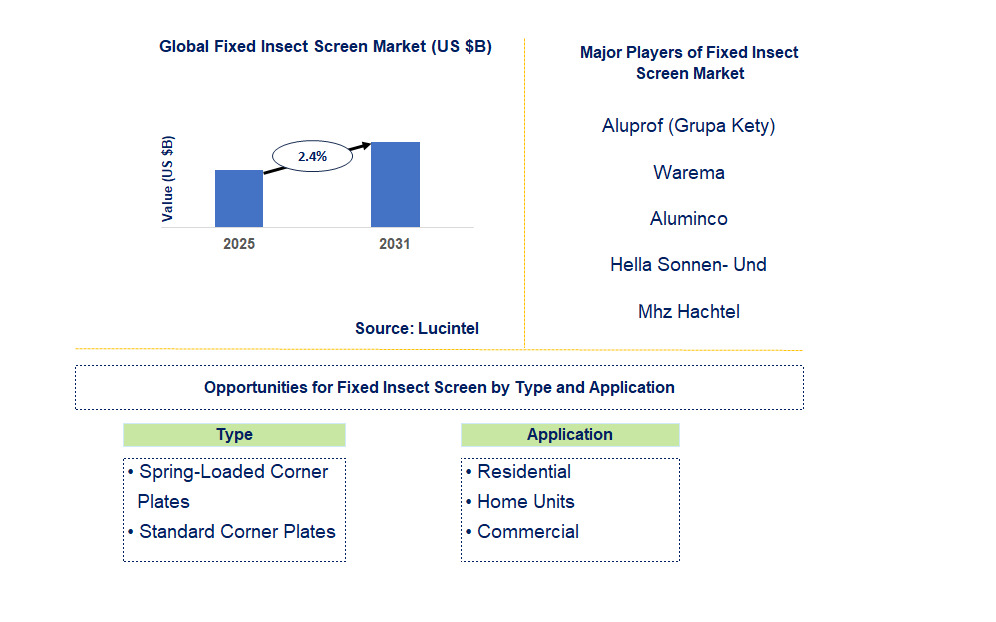
Key data points: The growth forecast = 2.4% annually for the next 7 years. Scroll below to get more insights. This market report covers Trends, opportunity and forecast in fixed insect screen market to 2031 by type (spring-loaded corner plates and standard corner plates), application (residential, home units, and commercial), and region (North America, Europe, Asia Pacific, and the Rest of the World)
We'll send your sample report shortly.
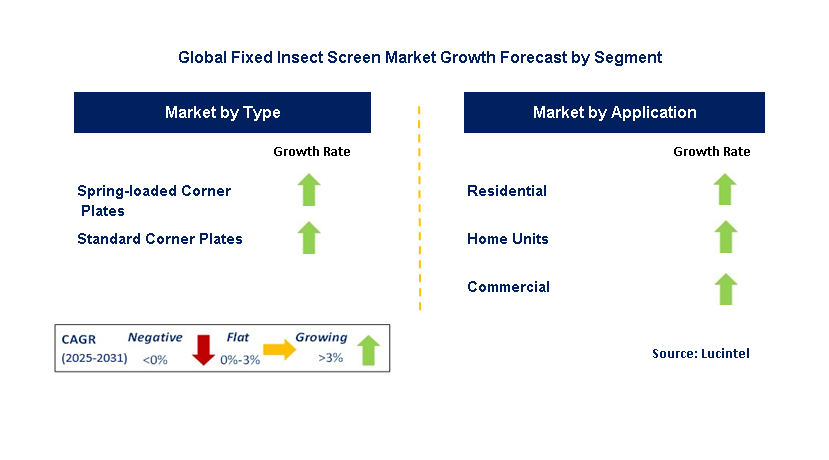
• Lucintel forecasts that, within the type category, dust extraction will remain larger segment over the forecast period.
• Within the application category, commercial will remain the larger segment.
• In terms of region, APAC is expected to witness the highest growth over the forecast period due to rapid urbanization and increasing awareness of health and hygiene. Gain valuable insights for your business decisions with our comprehensive 150+ page report. Sample figures with some insights are shown below.
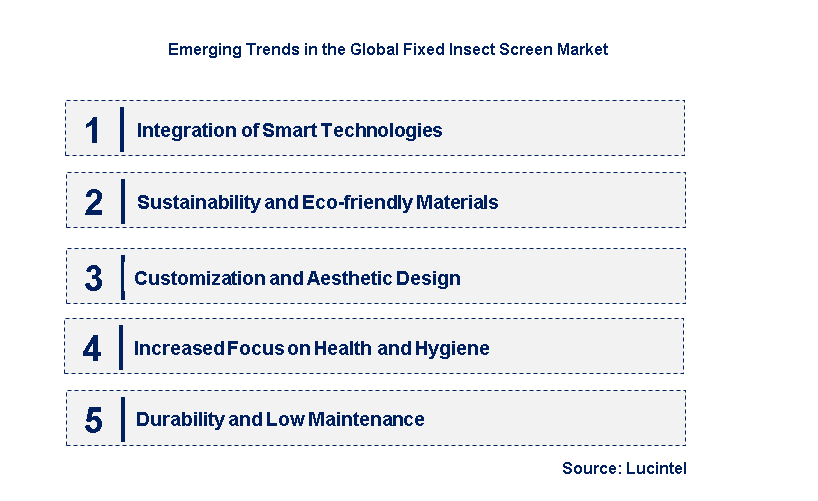
• Integration of Smart Technologies: Consumers are increasingly seeking smart home solutions, and insect screens are no exception. Companies are integrating sensors and automation into insect screens, allowing them to open and close automatically based on environmental factors such as temperature, humidity, and the presence of insects. These smart features add convenience and efficiency, making them highly attractive to tech-savvy consumers.
• Sustainability and Eco-friendly Materials: With the increase in global consciousness towards sustainability, eco-friendly materials for insect screens are becoming popular. Manufacturers are looking at recyclable and biodegradable materials like natural fibers and recycled plastics to sell to the sustainable-conscious consumer. This is where the market has been transformed, and consumers are seeking products that can be effective while also being environmentally friendly.
• Customization and Aesthetic Design: There is an increasing demand for customized and aesthetically pleasing insect screens. Consumers are looking for products that complement the interior and exterior designs of their homes. As a result, manufacturers are focusing on offering a wide range of colors, patterns, and sizes, as well as screens that can be tailored to fit specific window and door frames. This trend enables consumers to enhance both functionality and beauty in their homes.
• Increased Focus on Health and Hygiene: With rising concerns over the spread of diseases carried by insects, consumers are more aware of the health benefits of using insect screens. Products that prevent the entry of mosquitoes, flies, and other harmful insects are in high demand, especially in regions affected by diseases such as malaria and dengue fever. As a result, health-conscious consumers are increasingly turning to fixed insect screens as a preventive measure.
• Durability and Low Maintenance: Consumers are looking for insect screens that offer long-term durability and require minimal maintenance. Advances in materials and manufacturing techniques have resulted in screens that are more resistant to wear and tear, harsh weather conditions, and UV exposure. This trend is leading to the development of insect screens that are not only functional but also long-lasting, reducing the need for frequent replacements. The emerging trends in the global fixed insect screen market reflect a growing consumer demand for convenience, sustainability, and enhanced functionality. These trends are reshaping the market by pushing manufacturers to innovate and offer more advanced, eco-friendly, and customizable products. As the market continues to evolve, these trends will likely play a significant role in driving future growth.
• More Sustainability Materials: Using sustainable materials is one of the most widely sought features in the fixed insect screen market. Manufacturers are now opting for recyclable and biodegradable materials to fulfill the rising needs of green and eco-friendly products. This factor is not only the choice of consumers, but it is also forced to adopt the product because of stricter environmental regulations that encourage using green materials.
• Technological Innovations of Insect Screens: Technology is improving the manufacturing of insect screens and equipping them with additional functionality, such as automatic opening and closing mechanisms. These technological innovations permit users to manipulate their insect screens from a remote location, offering greater convenience and thus enhancing the overall user experience. Additionally, there are self-cleaning screens on the market that limit the need for regular maintenance.
• Customization and Aesthetic Design: Consumers are increasingly seeking insect screens that blend seamlessly with their home’s aesthetic. As a result, there has been a rise in demand for customizable screens in various colors, sizes, and patterns. Manufacturers are responding by offering a wide range of options, allowing consumers to choose products that suit their style and home decor preferences.
• Focus on Health and Hygiene: The global awareness of health and hygiene has increased the demand for insect screens, particularly in regions where insect-borne diseases are prevalent. Fixed insect screens are being promoted as a preventive measure against diseases such as malaria and dengue fever. As a result, manufacturers are prioritizing the creation of screens that can effectively block the entry of harmful insects, contributing to improved public health.
• Durability and Longevity: This is the key driver in the market to produce insect screens that are more durable and require less after-sales maintenance. The evolution of materials and manufacturing techniques has led to products that are much more resistant to wear and tear, UV degradation, and extreme climatic conditions. These long-lasting screens give the consumer better value for money, thus reducing replacement. The market is changing the dynamics of fixed insect screen with recent trends towards sustainability, innovation, and consumer-centric design. This is creating an industry in which consumers want durable, functional, and more environmentally friendly products. Continued growth and innovation will be influenced by these advances as the market evolves.
• Residential Applications: The residential sector represents a major growth opportunity, driven by rising disposable incomes, homeownership, and a growing awareness of health and hygiene. In particular, urbanization and the increasing popularity of smart home technology are fueling demand for high-quality, customizable insect screens that offer convenience and improved living conditions.
• Commercial Applications: In commercial spaces such as hotels, offices, and restaurants, the demand for fixed insect screens is increasing due to a heightened focus on cleanliness and hygiene. Businesses are investing in insect screens to protect against pests and ensure a healthy environment for employees and customers. This sector offers substantial growth potential for manufacturers looking to provide large-scale solutions.
• Industrial Applications: Industries such as food processing, pharmaceuticals, and agriculture require high standards of cleanliness and hygiene, creating a demand for fixed insect screens. These applications benefit from screens that can provide protection against pests while maintaining a sterile environment. Manufacturers that offer specialized insect screens designed for these industries are well-positioned to tap into a growing market.
• Agricultural Uses: In the agricultural industry, there are a lot of opportunities for fixed insect screens. Greenhouses and farms are areas that use these screens to prevent pests that destroy crops and cause diseases from entering. With increased demand for organic farming and pest-free crops, manufacturers are filling this gap with quality insect screens made to meet the agricultural sector's requirements.
• Healthcare Applications: In the healthcare sector, fixed insect screens are increasingly being used to prevent the entry of insects into medical facilities. This is particularly relevant in regions affected by insect-borne diseases. Hospitals and clinics are investing in high-performance insect screens to protect patients, especially in areas where diseases such as malaria are prevalent. The global fixed insect screen market offers numerous growth opportunities across various applications, from residential to industrial and healthcare sectors. By focusing on these applications, manufacturers can drive market growth and capture new business in untapped sectors. As consumer demand for insect protection increases, these applications will continue to shape the future of the industry.
• Aluprof (Grupa Kety)
• Warema
• Aluminco
• Hella Sonnen- Und Wetterschutztechnik
• Mhz Hachtel
• Servis Climax
• Isotra
• Roletarstvo Medle
• Beck+Heun
• Tehrol
• Spring-Loaded Corner Plates
• Standard Corner Plates
• Residential
• Home Units
• Commercial
• North America
• Europe
• Asia Pacific
• The Rest of the World
• United States: The U.S. fixed insect screen market has recently witnessed significant advancements, driven by a rising focus on home improvement, eco-friendly living, and health consciousness. In response to these factors, companies have been innovating with custom-designed, easy-to-install insect screens. These products are becoming increasingly popular among homeowners, especially in areas prone to high insect populations. Furthermore, growing environmental awareness has led to a rise in demand for screens made from sustainable materials, such as recycled plastics and natural fibers. As a result, the U.S. market is expected to continue its expansion in the coming years.
• China: The Chinese fixed insect screen market is rapidly expanding due to a burgeoning middle class and a heightened awareness of health and hygiene. Urbanization and the increasing demand for modern homes are also contributing to the market’s growth. In particular, cities with high pollution levels are seeing increased sales of insect screens as consumers look to improve indoor air quality. As a result, manufacturers are focusing on creating more durable, high-quality, and affordable insect screens to meet the demands of both residential and commercial sectors in China.
• Germany: The German fixed insect screen market has been influenced by rising environmental consciousness and an increasing focus on sustainable living. Consumers are prioritizing eco-friendly and long-lasting products, and this trend has led to the demand for insect screens made from recyclable materials. The German market is also characterized by advanced manufacturing technologies, allowing for the creation of custom-fit screens that cater to specific consumer needs. Additionally, the market has seen a surge in demand for high-tech insect screens equipped with self-cleaning properties, adding a layer of convenience and innovation to the market.
• India: The fixed insect screen market is growing significantly. Increased awareness of insect-borne diseases is driving demand, especially in rural and semi-urban areas. The demand for quality insect screens is soaring as the real estate sector expands in India, with improved disposable incomes. Additionally, increasing disposable incomes means more people are investing in home improvement products, such as insect screens. Manufacturers in India are looking at affordable yet durable options to cater to a price-sensitive market while maintaining high standards of quality.
• Japan: The Japanese fixed insect screen market has grown steadily, supported by technological advancements and the increasing emphasis on health and hygiene. Japanese consumers are discerning, looking for products that offer functionality and aesthetic appeal. Market is characterized by slim, light weight insect screens which are harmonized with modern houses' designs. Additionally, with Japan's increasing population of old-aged people, this has caused increased demand for low-maintenance, easy-to-use products, leading to fixed insect screens gaining the market.


• Aluprof (Grupa Kety)
• Warema
• Aluminco
• Hella Sonnen- Und Wetterschutztechnik
• Mhz Hachtel
• Servis Climax
• Isotra
• Roletarstvo Medle
• Beck+Heun
• Tehrol Q5. Which fixed insect screen market segment will be the largest in future? Answer: Lucintel forecasts that dust extraction will remain larger segment over the forecast period. Q6. In fixed insect screen market, which region is expected to be the largest in next 5 years? Answer: APAC is expected to witness the highest growth over the forecast period due to rapid urbanization and increasing awareness of health and hygiene. Q7. Do we receive customization in this report? Answer: Yes, Lucintel provides 10% customization without any additional cost.


Choose a license that fits your team. Instant PDF delivery.
Prices exclude taxes. Instant delivery. Custom licensing available on request.
Market Report · July 29, 2026
Market Report · July 15, 2026
Market Report · July 13, 2026
Trusted partner for strategic intelligence and business growth


Receive a complimentary market analysis tailored to your industry. Our analysts will identify key growth opportunities and competitive dynamics specific to your business.

Market size, growth rate, and key trend analysis for your specific sector.

Top competitor positioning and market share analysis.

Strategic recommendations backed by data-driven insights.
Get curated market intelligence and competitive moves straight to your inbox.
By subscribing, you agree to receive our monthly insights. Unsubscribe anytime.
Receive a complimentary market analysis tailored to your industry. Our analysts will identify key growth opportunities and competitive dynamics specific to your business.
Market size, growth rate, and key trend analysis for your specific sector.
Top competitor positioning and market share analysis.
Strategic recommendations backed by data-driven insights.
Get curated market intelligence, emerging trends, and competitive moves straight to your inbox each month.
By subscribing, you agree to receive our monthly insights. Unsubscribe anytime.
We'll send your sample report shortly.