
Market Report · July 24, 2026

Key data points: The market size in 2035 = $38,568 million, growth forecast = 4.2% annually for the next 8 years. Scroll below to get more insights. This market report covers trends, opportunities and forecasts in fire suppression market to 2035 by product type (chemical, gaseous, water, and foam), application (industrial, commercial, transportation, and others), and region (North America, Europe, Asia Pacific, and the Rest of the World)
We'll send your sample report shortly.
• Lucintel forecasts that, within the product type category, water is expected to witness the highest growth over the forecast period.
• Within the application category, industrial is expected to witness the highest growth.
• In terms of region, APAC is expected to witness the highest growth over the forecast period.
Gain valuable insights for your business decisions with our comprehensive 150+ page report. Sample figures with some insights are shown below.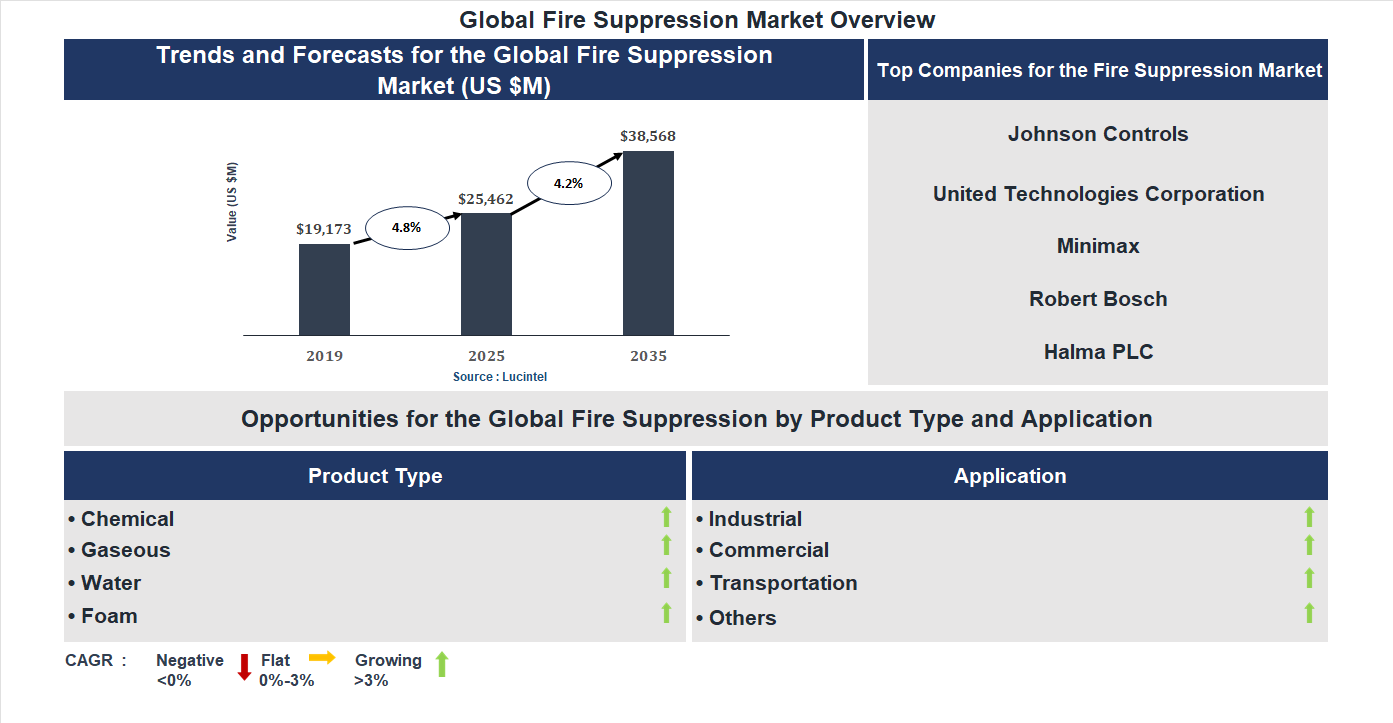
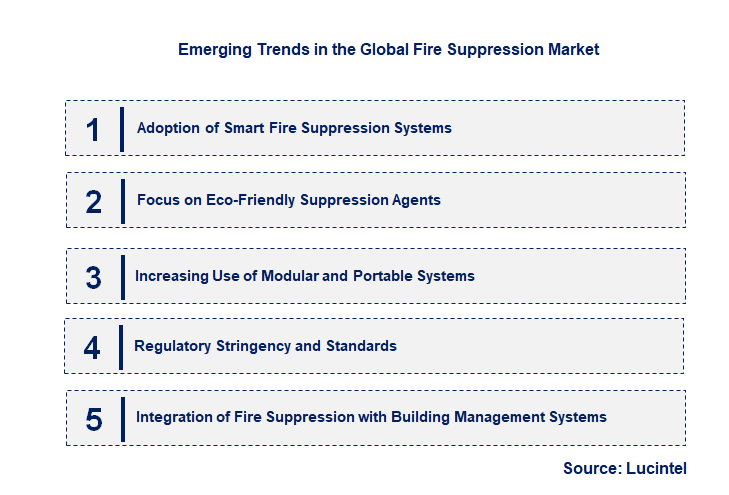
• Adoption of Smart Fire Suppression Systems: Integration of IoT and AI technologies is enabling real-time monitoring and automated response. These systems can detect fire hazards early, analyze risk levels, and activate suppression mechanisms without human intervention. This trend improves response times, reduces property damage, and enhances safety. The use of smart sensors and connected devices allows for predictive maintenance and system optimization, making fire suppression more reliable and efficient across various sectors, including industrial, commercial, and residential.
• Focus on Eco-Friendly Suppression Agents: There is a significant shift towards environmentally sustainable fire suppression agents, such as clean agents and water mist systems. These alternatives reduce the environmental impact compared to traditional chemicals like halons and foam agents. The adoption of eco-friendly agents aligns with global regulations aimed at reducing ozone depletion and pollution. This trend not only supports corporate sustainability goals but also broadens market opportunities for companies offering green solutions, ensuring compliance and safety without compromising environmental integrity.
• Increasing Use of Modular and Portable Systems: The demand for flexible, easy-to-install fire suppression systems is rising, especially in temporary or rapidly changing environments. Modular and portable systems allow for quick deployment and scalability, making them ideal for construction sites, data centers, and event venues. These systems provide cost-effective, customizable solutions that can be easily maintained and relocated. Their growing popularity reflects a need for adaptable safety measures that can be tailored to specific risks and operational requirements, enhancing overall fire safety management.
• Regulatory Stringency and Standards: Governments and industry bodies are implementing stricter fire safety regulations and standards, driving market growth. Compliance with these regulations necessitates the adoption of advanced suppression systems and regular maintenance. This trend encourages innovation and investment in new technologies to meet evolving safety requirements. Companies that proactively adapt to these standards gain competitive advantages, while non-compliance can result in penalties and increased liability. The regulatory landscape is thus a key driver shaping product development and market strategies.
• Integration of Fire Suppression with Building Management Systems: The convergence of fire suppression with building automation and management systems is creating smarter, more coordinated safety solutions. This integration allows for centralized control, real-time data analysis, and seamless response to fire incidents. It enhances overall building safety, reduces false alarms, and optimizes resource allocation during emergencies. As buildings become more complex and connected, this trend is crucial for ensuring comprehensive safety coverage, especially in high-rise, industrial, and smart city developments.
• Growth in Smart Fire Suppression Systems: The integration of IoT and AI technologies is revolutionizing fire safety. Smart systems enable real-time monitoring, automatic detection, and immediate response, reducing damage and saving lives. This innovation enhances reliability and efficiency, attracting sectors like commercial, industrial, and residential markets. As adoption increases, manufacturers are investing heavily in R&D to develop more sophisticated, user-friendly solutions, thereby expanding market reach and driving revenue growth.
• Rising Demand for Eco-Friendly Suppression Agents: Environmental concerns are prompting a shift towards sustainable fire suppression agents such as clean agents and water mist systems. These alternatives offer effective fire control with minimal environmental impact, aligning with global regulations. The demand is particularly high in sensitive areas like data centers and museums. Companies investing in eco-friendly solutions are gaining competitive advantages, fostering market expansion and encouraging regulatory compliance across regions.
• Increasing Adoption of Wireless and Portable Systems: Wireless fire suppression systems provide flexible, easy-to-install solutions suitable for various building types. Portable systems are gaining popularity for their convenience and rapid deployment in temporary or emergency scenarios. These innovations improve safety protocols and reduce installation costs, appealing to a broad customer base. As awareness grows, manufacturers are focusing on enhancing connectivity, battery life, and ease of use, which boosts market penetration and customer satisfaction.
• Expansion of Fire Suppression in Emerging Markets: Rapid urbanization and industrialization in developing regions are fueling demand for advanced fire safety solutions. Governments are implementing stricter safety standards, encouraging infrastructure investments. Local manufacturers are entering the market, often through partnerships with global players, to meet regional needs. This expansion offers significant growth opportunities, although it also presents challenges related to infrastructure, awareness, and affordability, which companies are actively addressing to capture market share.
• Technological Innovations in Fire Detection and Prevention: Advances in sensor technology, machine learning, and data analytics are improving early fire detection and prevention capabilities. These innovations enable predictive maintenance and risk assessment, reducing false alarms and enhancing safety. Integration with building management systems allows for comprehensive safety solutions. As these technologies become more affordable and accessible, they are transforming fire safety protocols, leading to increased adoption across various sectors and significantly impacting market growth.
• Adoption of Smart Fire Suppression Systems with IoT Integration: The integration of IoT technology into fire suppression systems offers real-time monitoring, predictive maintenance, and automated responses, significantly improving safety and efficiency. These smart systems enable early detection of fire hazards, reduce false alarms, and optimize resource deployment. As industries seek more reliable and connected safety solutions, the adoption of IoT-enabled fire suppression systems is expected to accelerate, opening new avenues for growth and innovation in the market.
• Expansion of Fire Suppression Solutions in Emerging Markets: Rapid urbanization, industrialization, and increasing safety awareness in emerging economies are driving demand for advanced fire suppression systems. Governments and private sectors are investing heavily in infrastructure, commercial spaces, and industrial facilities, creating a substantial market opportunity. Local manufacturing, cost-effective solutions, and tailored systems for regional needs will be crucial for capturing market share, making emerging markets a key growth frontier for industry players.
• Development of Environmentally Friendly and Sustainable Suppression Agents: Growing environmental concerns and stricter regulations are pushing the industry toward eco-friendly fire suppression agents. Innovations include the use of clean agents, water mist, and biodegradable chemicals that minimize environmental impact while maintaining high efficacy. The shift toward sustainable solutions not only aligns with global environmental goals but also enhances corporate responsibility, creating a competitive advantage for companies investing in green technologies within the fire suppression market.
• Integration of Fire Suppression with Building Automation Systems: The convergence of fire safety with building management systems offers enhanced safety, energy efficiency, and operational control. Automated fire detection, suppression, and evacuation protocols integrated into building automation improve response times and reduce damage. This integration is particularly valuable in smart buildings, data centers, and high-rise structures, providing a comprehensive safety ecosystem. As building automation becomes more prevalent, the demand for integrated fire suppression solutions is expected to grow significantly.
• Increasing Focus on Portable and Handheld Fire Suppression Devices: The demand for portable fire suppression equipment is rising across industries such as manufacturing, transportation, and military applications. Compact, lightweight, and easy-to-use devices enable quick response in emergencies, especially in hard-to-reach areas. Innovations in aerosol, foam, and powder-based portable systems are expanding their effectiveness and safety. This trend supports rapid deployment and personal safety, creating a lucrative niche within the broader fire suppression market and encouraging product development.
• Technological Innovation: The development of advanced fire suppression systems, such as clean agent and water mist technologies, enhances safety and efficiency. These innovations meet stricter safety standards and reduce environmental impact, encouraging adoption across industries like aerospace, data centers, and healthcare. As technology evolves, costs decrease, making these systems more accessible and boosting market growth.
• Increasing Safety Regulations: Governments and industry bodies are implementing stringent fire safety standards to protect lives and property. These regulations mandate the installation of advanced suppression systems in commercial, industrial, and residential buildings. Compliance drives demand for innovative solutions, fostering market expansion and encouraging manufacturers to develop compliant products.
• Growing Industrial and Commercial Infrastructure: Rapid urbanization and industrialization worldwide increase the need for reliable fire suppression systems. New constructions, especially in high-risk sectors like oil & gas, manufacturing, and data centers, require sophisticated fire protection measures. This infrastructure growth directly fuels market demand and encourages technological advancements.
• Rising Awareness and Safety Concerns: Increased awareness about fire hazards and safety protocols among businesses and consumers promotes the adoption of fire suppression systems. Educational campaigns and insurance incentives further motivate organizations to invest in advanced fire protection, expanding market reach and adoption rates.
• High Implementation and Maintenance Costs: Advanced fire suppression systems often involve significant initial investment and ongoing maintenance expenses. These costs can be prohibitive for small and medium-sized enterprises, limiting market penetration in certain regions. Additionally, the need for specialized personnel and regular system testing adds to the financial burden.
• Regulatory Complexity and Compliance: Navigating diverse and evolving fire safety regulations across different regions can be challenging. Manufacturers must ensure their products meet varying standards, which can delay product launches and increase costs. Non-compliance risks include legal penalties and reputational damage, complicating market expansion.
• Environmental and Sustainability Concerns: The environmental impact of certain suppression agents, such as halons and other chemicals, poses regulatory and public relations challenges. The push for eco-friendly solutions requires continuous innovation, which can be costly and time-consuming. Balancing effective fire suppression with environmental sustainability remains a key challenge for market players.
• Johnson Controls
• United Technologies Corporation
• Minimax
• Robert Bosch
• Halma PLC
• Siemens
• Hochiki
• Firefly AB
• Honeywell
• S&S Fire Suppression
• Chemical
• Gaseous
• Water
• Foam
• Industrial
• Commercial
• Transportation
• Others
• North America
• Europe
• Asia Pacific
• The Rest of the World
• United States: The U.S. fire suppression market has seen rapid growth due to stringent safety regulations and technological innovations. There is increased adoption of intelligent fire detection systems integrated with IoT for real-time monitoring. The demand for eco-friendly suppression agents, such as clean agents and water mist systems, is rising. Major players are investing in R&D to develop more efficient, sustainable solutions. The commercial and industrial sectors are the primary drivers, with a focus on upgrading existing infrastructure to meet new safety standards. Government initiatives and insurance incentives further support market expansion.
• China: China’s fire suppression market is expanding quickly, driven by urbanization and industrial growth. The government has implemented stricter fire safety regulations, encouraging the adoption of advanced suppression systems. There is a significant shift toward automated and intelligent fire detection and suppression solutions, especially in high-rise buildings and manufacturing plants. Local manufacturers are increasing their R&D efforts to develop cost-effective, eco-friendly products. The construction boom in Tier 1 and Tier 2 cities is a key factor fueling demand. Additionally, rising awareness about fire safety is prompting increased investment in comprehensive fire protection systems.
• Germany: Germany’s market is characterized by high technological standards and a focus on sustainability. The adoption of innovative fire suppression systems, such as foam and gas-based solutions, is on the rise, especially in the chemical and automotive sectors. Strict EU regulations on environmental impact are pushing companies toward eco-friendly agents and systems. Germany is also investing in smart fire detection technologies that integrate with building management systems for enhanced safety. The emphasis on energy efficiency and environmental compliance is shaping product development and market growth. Collaboration between industry and research institutions is fostering innovation in fire safety solutions.
• India: The Indian fire suppression market is witnessing rapid growth due to increasing industrialization, urbanization, and rising safety awareness. The government’s focus on improving fire safety standards in commercial and residential buildings is a key driver. There is a growing demand for affordable, reliable fire suppression systems, including sprinklers and portable extinguishers. Local manufacturers are expanding their product portfolios to meet the needs of diverse sectors. Additionally, international companies are entering the market through partnerships and joint ventures. The emphasis on training and awareness programs is also contributing to market expansion, with a focus on developing comprehensive fire safety infrastructure.
• Japan: Japan’s fire suppression market is driven by advanced technology adoption and stringent safety regulations. The country is investing heavily in smart fire detection systems that utilize AI and IoT for early warning and precise response. Eco-friendly suppression agents are gaining popularity due to environmental regulations. Japan’s focus on disaster preparedness, especially for earthquakes and tsunamis, influences fire safety strategies, leading to innovative solutions tailored for such scenarios. The market also benefits from government initiatives promoting fire safety in public spaces and high-rise buildings. Continuous R&D efforts are fostering the development of highly efficient, sustainable fire suppression technologies.


• Johnson Controls
• United Technologies Corporation
• Minimax
• Robert Bosch
• Halma PLC
• Siemens
• Hochiki
• Firefly AB
• Honeywell
• S&S Fire Suppression
Q6. Which fire suppression market segment will be the largest in future?

Choose a license that fits your team. Instant PDF delivery.
Prices exclude taxes. Instant delivery. Custom licensing available on request.
Market Report · July 24, 2026
Market Report · July 20, 2026
Market Report · July 20, 2026
Trusted partner for strategic intelligence and business growth


Receive a complimentary market analysis tailored to your industry. Our analysts will identify key growth opportunities and competitive dynamics specific to your business.

Market size, growth rate, and key trend analysis for your specific sector.

Top competitor positioning and market share analysis.

Strategic recommendations backed by data-driven insights.
Get curated market intelligence and competitive moves straight to your inbox.
By subscribing, you agree to receive our monthly insights. Unsubscribe anytime.
Receive a complimentary market analysis tailored to your industry. Our analysts will identify key growth opportunities and competitive dynamics specific to your business.
Market size, growth rate, and key trend analysis for your specific sector.
Top competitor positioning and market share analysis.
Strategic recommendations backed by data-driven insights.
Get curated market intelligence, emerging trends, and competitive moves straight to your inbox each month.
By subscribing, you agree to receive our monthly insights. Unsubscribe anytime.
We'll send your sample report shortly.