
Market Report · July 22, 2026

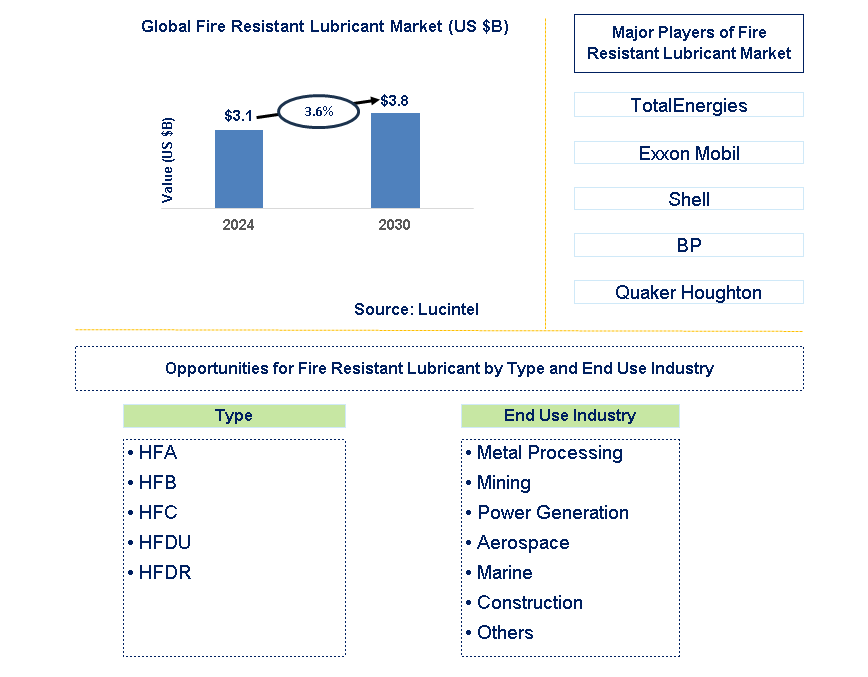
Key data points: The market size in 2030 = $3.8 billion, growth forecast = 3.6% annually for the next 6 years. Scroll below to get more insights. This market report covers trends, opportunities, and forecasts in the global fire resistant lubricant market to 2030 by type(HFA, HFB, HFC, HFDU, and HFDR), end use industry (metal processing, mining, power generation, aerospace, marine, construction, and others), and region (North America, Europe, Asia Pacific, and the Rest of the World)
We'll send your sample report shortly.
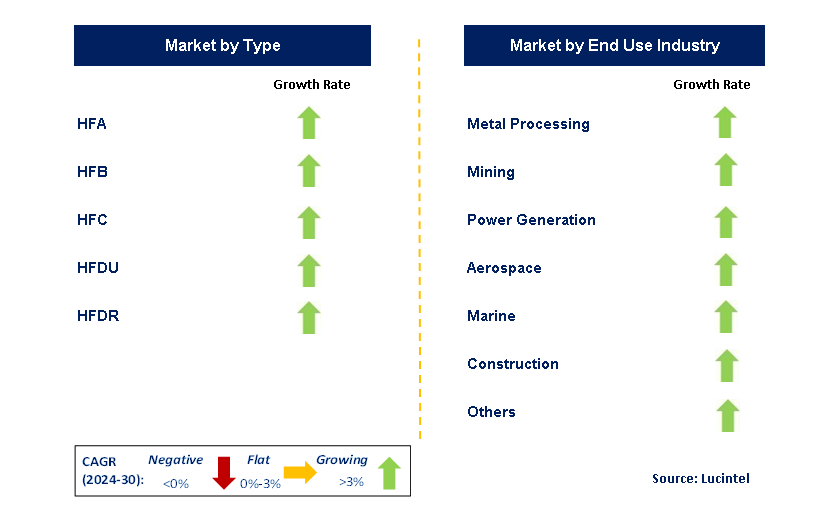
• Lucintel forecasts that, within the type category, covering flat plate collector is expected to witness highest growth over the forecast period.
• Within the application category, residential is expected to witness highest growth over the forecast period.
• In terms of regions, APAC is expected to witness highest growth over the forecast period. Gain valuable insights for your business decisions with our comprehensive 150+ page report.
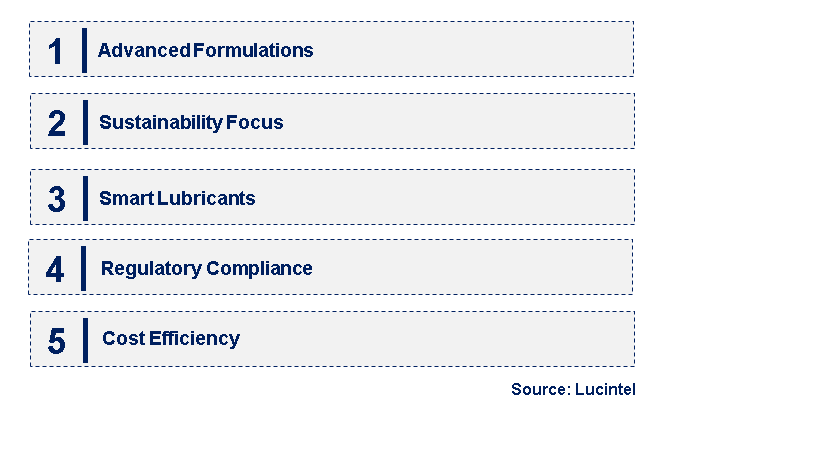
• Advanced Formulations: New FRL formulations incorporate advanced additives and chemicals to enhance fire resistance and performance. These innovations improve lubricant stability under extreme conditions, extend the service life and safety of industrial equipment, and address the increasing demand for high-performance lubricants in various industries.
• Sustainability Focus: There is a growing emphasis on sustainability in the FRL market. Manufacturers are developing eco-friendly lubricants with reduced environmental impact, using renewable resources and minimizing hazardous chemicals. This trend aligns with global environmental regulations and the demand for greener industrial solutions.
• Smart Lubricants: The development of smart lubricants that incorporate sensors and real-time monitoring technology is gaining traction. These lubricants provide data on their performance and condition, allowing for better maintenance practices, reducing downtime, and improving overall safety and efficiency.
• Regulatory Compliance: Increasing regulatory requirements are driving the adoption of FRLs that meet stringent safety and environmental standards. Compliance with new regulations leads to the development of FRLs that offer enhanced fire resistance and are free from harmful substances, ensuring safety in various industrial applications.
• Cost Efficiency: Manufacturers focus on cost-efficient FRL solutions without compromising performance. Innovations in production processes and materials help lower costs, making high-quality fire-resistant lubricants more accessible to a broader range of industries and applications. Emerging trends such as advanced formulations, a focus on sustainability, smart lubricants, regulatory compliance, and cost efficiency reshape the FRL market. These trends drive innovation, improve safety, and make FRLs more effective and accessible across various industries.
• Advanced Additives: The introduction of advanced additives in FRLs improves their fire resistance and performance. Innovations include new chemical compounds that enhance thermal stability and reduce flammability, providing better protection for industrial equipment and increasing operational safety.
• Enhanced Sustainability: Manufacturers focus on developing environmentally friendly FRLs. New formulations use sustainable raw materials and reduce the environmental impact of lubricants. This shift toward greener solutions aligns with global environmental regulations and the increasing demand for sustainable industrial practices.
• Technological Integration: The integration of new technologies, such as sensors and real-time monitoring, into FRLs advances the market. Smart lubricants that provide performance data and diagnostics improve maintenance practices, reduce operational costs, and enhance overall safety in industrial settings.
• Regulatory Adaptation: Adapting to stricter regulatory standards is a key development in the FRL market. Manufacturers reformulate products to meet new safety and environmental requirements, ensuring compliance and expanding market opportunities in regulated industries.
• Market Expansion: The FRL market expands into emerging economies where industrial growth drives demand for fire-resistant solutions. Increased industrial activity in countries like India and China leads to higher adoption of FRLs, contributing to global market growth. Recent developments in advanced additives, sustainability, technological integration, regulatory adaptation, and market expansion impact the FRL market. These advancements drive growth, improve product performance, and increase the adoption of FRLs across various industries.
• High-Tech Applications: Opportunities in high-tech applications, such as aerospace and advanced manufacturing, are growing. FRLs that meet the demanding performance and safety requirements of these industries are in high demand, driving innovation and market growth.
• Green Technology: The shift toward green technology presents significant growth opportunities. Developing eco-friendly FRLs that meet environmental regulations and sustainability goals can capture market share in industries prioritizing environmental responsibility.
• Smart Lubricants: The integration of smart technology into FRLs offers growth potential. Smart lubricants with real-time monitoring and data analytics enhance maintenance practices and operational efficiency, appealing to industries seeking advanced solutions.
• Emerging Markets: Expanding into emerging markets, particularly in regions with rapid industrial growth, provides opportunities for market expansion. Countries like India and China are increasing their adoption of FRLs due to growing industrial activity and safety regulations.
• Regulatory Compliance: Developing FRLs that comply with evolving regulatory standards creates opportunities for market growth. Adapting to new safety and environmental regulations can open new market segments and enhance competitiveness. Strategic growth opportunities in high-tech applications, green technology, smart lubricants, emerging markets, and regulatory compliance shape the FRL market. These opportunities drive innovation, expand market reach, and increase the adoption of FRLs across various industries.
• Technological Advancements: Advances in FRL technology, including improved formulations and additives, drive market growth. Innovations that enhance fire resistance and performance make FRLs more effective and appealing to various industries, increasing their adoption.
• Regulatory Requirements: Stricter regulatory requirements for fire safety and environmental standards drive demand for compliant FRLs. Regulations push manufacturers to develop high-performance lubricants that meet safety and environmental criteria, expanding market opportunities.
• Industrial Growth: Increased industrial activity, especially in sectors such as mining, manufacturing, and aerospace, fuels demand for FRLs. Growing industries require reliable fire-resistant solutions to ensure safety and operational efficiency, driving market expansion.
• Focus on Safety: A heightened focus on safety and risk management in industrial operations drives the adoption of FRLs. Companies invest in fire-resistant lubricants to mitigate risks and ensure compliance with safety standards.
• Sustainability Trends: The growing emphasis on sustainability and environmental responsibility influences the FRL market. Manufacturers develop eco-friendly FRLs that align with global sustainability goals, capturing market share in environmentally conscious industries. Challenges in the fire resistant lubricant market include:
• High Costs: The high costs associated with developing and producing FRLs can be a barrier. High-quality formulations and advanced technologies contribute to elevated prices, which can limit market accessibility and adoption.
• Performance Limitations: Despite advancements, FRLs may still face performance limitations, such as reduced effectiveness under extreme conditions. Addressing these limitations is crucial for meeting industry demands and maintaining market competitiveness.
• Regulatory Compliance: Navigating complex and evolving regulatory requirements poses challenges. Compliance with diverse and stringent regulations across different regions can be difficult and costly for manufacturers, impacting market dynamics. Major drivers of the FRL market include technological advancements, regulatory requirements, industrial growth, safety focus, and sustainability trends. Key challenges include high costs, performance limitations, and regulatory compliance. Addressing these drivers and challenges is essential for market growth and the successful adoption of FRLs.
• TotalEnergies
• Exxon Mobil
• Shell
• BP
• Quaker Houghton
• Sinopec
• Phillips 66
• HFA
• HFB
• HFC
• HFDU
• HFDR
• Metal Processing
• Mining
• Power Generation
• Aerospace
• Marine
• Construction
• Others
• North America
• Europe
• Asia Pacific
• The Rest of the World
• United States: In the U.S., advancements in fire-resistant lubricants focus on enhancing performance and safety. The development of high-quality, environmentally friendly FRLs is driven by stringent OSHA regulations and industry standards. Innovations include improved formulations that offer superior fire resistance and longer service life, catering to industries such as aviation, manufacturing, and mining.
• India: The Indian FRL market is expanding rapidly due to increased industrial activities and stricter fire safety regulations. The country is witnessing growth in the adoption of advanced FRL formulations that comply with new safety standards. Indian manufacturers invest in research and development to produce cost-effective and high-performance fire-resistant lubricants.
• Germany: Germany is a leader in the development of high-performance FRLs, driven by its advanced industrial sector and rigorous safety regulations. Recent developments include the introduction of FRLs with enhanced thermal stability and fire resistance. German companies also focus on sustainability, producing eco-friendly FRLs that meet both safety and environmental standards.
• Japan: Japan has seen advancements in FRL technology with a focus on high-tech applications and safety. The country invests in research to develop FRLs that offer superior fire resistance and compatibility with advanced machinery. Japan’s emphasis on innovation and high safety standards drives the adoption of next-generation fire-resistant lubricants.


• TotalEnergies
• Exxon Mobil
• Shell
• BP
• Quaker Houghton
• Sinopec
• Phillips 66 Q6. Which fire resistant lubricant market segment will be the largest in future? Answer: Lucintel forecasts that HFC is expected to witness highest growth over the forecast period due to their easy availability and affordability. Q7. In fire resistant lubricant market, which region is expected to be the largest in next 5 years? Answer: APAC is expected to witness highest growth over the forecast period. Q.8 Do we receive customization in this report? Answer: Yes, Lucintel provides 10% customization without any additional cost.


Choose a license that fits your team. Instant PDF delivery.
Prices exclude taxes. Instant delivery. Custom licensing available on request.
Market Report · July 22, 2026
Market Report · July 22, 2026
Market Report · July 22, 2026
Trusted partner for strategic intelligence and business growth


Receive a complimentary market analysis tailored to your industry. Our analysts will identify key growth opportunities and competitive dynamics specific to your business.

Market size, growth rate, and key trend analysis for your specific sector.

Top competitor positioning and market share analysis.

Strategic recommendations backed by data-driven insights.
Get curated market intelligence and competitive moves straight to your inbox.
By subscribing, you agree to receive our monthly insights. Unsubscribe anytime.
Receive a complimentary market analysis tailored to your industry. Our analysts will identify key growth opportunities and competitive dynamics specific to your business.
Market size, growth rate, and key trend analysis for your specific sector.
Top competitor positioning and market share analysis.
Strategic recommendations backed by data-driven insights.
Get curated market intelligence, emerging trends, and competitive moves straight to your inbox each month.
By subscribing, you agree to receive our monthly insights. Unsubscribe anytime.
We'll send your sample report shortly.