
Market Report · July 22, 2026

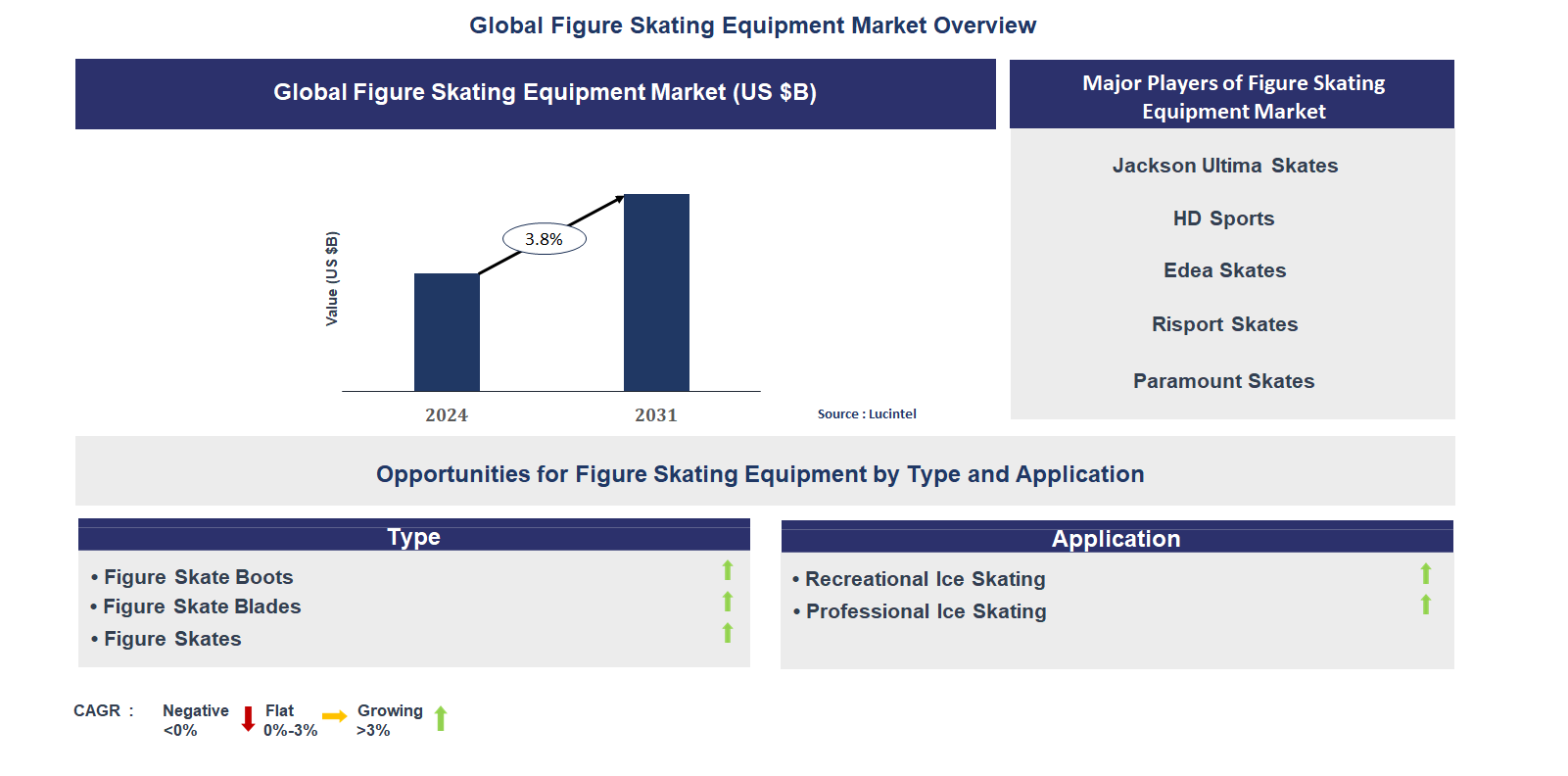
Key data points: The growth forecast = 3.8% annually for the next 7 years. Scroll below to get more insights. This market report covers trends, opportunities and forecasts in figure skating equipment market to 2031 by type (figure skate boots, figure skate blades, and figure skates), application (recreational ice skating and professional ice skating), and region (North America, Europe, Asia Pacific, and the Rest of the World)
We'll send your sample report shortly.
• Lucintel forecasts that, within the type category, figure skate boot is expected to witness the highest growth over the forecast period.
• Within the application category, recreational ice skating is expected to witness higher growth.
• In terms of region, APAC is expected to witness the highest growth over the forecast period. Gain valuable insights for your business decisions with our comprehensive 150+ page report. Sample figures with some insights are shown below.
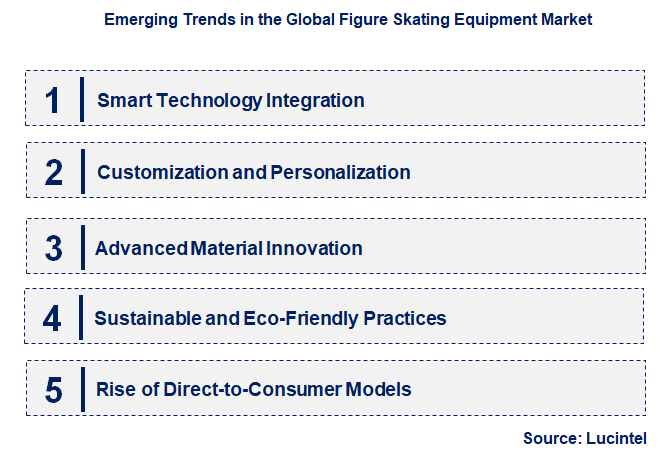
• Smart Technology Integration: The market is seeing a rise in smart equipment with embedded sensors. These innovations provide real-time data on performance, including speed, jumps, and pressure distribution. This trend allows coaches and skaters to analyze and improve technique with unprecedented precision, enhancing training effectiveness and a skaters overall performance.
• Customization and Personalization: Skaters are increasingly seeking equipment tailored to their individual needs. This trend includes custom-molded boots for a perfect fit and personalized apparel that reflects individual style. Customization enhances comfort and support, which is critical for preventing injuries and optimizing performance for skaters of all skill levels.
• Advanced Material Innovation: Manufacturers are adopting advanced materials like carbon fiber and aerospace-grade polymers. These materials create lighter, more durable, and responsive equipment. This trend is crucial for high-level skaters, as it allows for greater speed and agility while providing superior support and protection, ultimately pushing the boundaries of what is possible on the ice.
• Sustainable and Eco-Friendly Practices: There is a growing consumer demand for environmentally conscious products. This trend involves using recycled materials, reducing waste in manufacturing, and creating products with a longer lifespan. Adopting sustainable practices not only appeals to a new generation of eco-aware consumers but also positions brands as responsible leaders in the industry.
• Rise of Direct-to-Consumer Models: The growth of e-commerce has led to more brands selling directly to consumers. This model bypasses traditional retail, offering a wider product range, personalized advice, and a more direct relationship with the customer. This trend provides greater accessibility for consumers and allows brands to gather valuable insights and feedback. The combination of these trends is fundamentally reshaping the figure skating equipment market. Smart technology and advanced materials are enhancing performance, while customization and sustainability are catering to modern consumer values. The shift to direct-to-consumer sales is changing how products are bought and sold, creating a more responsive and consumer-centric market.
• Rise of Synthetic Ice and Equipment: The development of high-quality synthetic ice has created a new market for year-round training. This development has led to the creation of specialized blades and skates designed for these surfaces. The impact is significant, as it removes the dependency on traditional ice rinks, allowing skaters to practice more frequently and in a wider range of locations.
• Integration of Smart Sensors and Analytics: A key development is the integration of smart sensors into skates and blades. These devices track metrics like jump height, rotation speed, and edge pressure. This technology is revolutionizing training by providing skaters and coaches with quantifiable, data-driven feedback, allowing for more targeted and efficient performance improvement and injury prevention.
• Advancements in Blade Technology: Blade technology has evolved with new materials and designs. Hollow-core blades and blades with variable rocker profiles are now more common. These developments enhance performance by providing better glide, faster spins, and improved control, giving competitive skaters a crucial advantage and improving the experience for all levels of skaters.
• Focus on Ergonomics and Comfort: There is a growing focus on the ergonomic design of boots and protective gear. Manufacturers are using heat-moldable materials and customizable lacing systems to create a perfect, personalized fit. This development significantly improves comfort and support, reduces the risk of common skating injuries, and encourages longer, more enjoyable practice sessions.
• Expansion of Online and Direct-to-Consumer Channels: The shift to online retail and direct-to-consumer sales is a major development. Brands are now reaching a global audience and providing comprehensive product information and fitting guides online. This trend is making high-quality equipment more accessible to skaters in regions with limited specialty stores, driving market growth. These recent developments are collectively transforming the figure skating equipment market. The introduction of synthetic ice has expanded the sports reach, while smart technology and advanced blade design are elevating performance standards. Simultaneously, a focus on comfort and the growth of online retail are making the sport more accessible and user-friendly, catering to a broader audience.
• Professional and Competitive Skating: The professional and competitive segment represents a key growth area. Opportunities lie in developing and marketing high-performance, precision-engineered equipment. This includes custom-molded boots and specialized blades with advanced materials like carbon fiber. The impact is significant as these products command premium prices and are essential for elite athletes, driving innovation and brand prestige.
• Recreational and Hobby Skating: The recreational market is expanding rapidly, offering a substantial growth opportunity. This segment requires durable, comfortable, and affordable equipment. Strategic growth involves creating versatile, user-friendly skates and accessories. The impact is widespread, as this market segment is much larger than the professional one, driving volume sales and introducing new consumers to the sport.
• Figure Skating for Children: The youth segment is a critical area for market expansion. Growth opportunities include designing adjustable skates that accommodate growing feet and creating fun, appealing designs. Focusing on this application helps build brand loyalty early on, and providing safe and comfortable equipment ensures a positive introduction to the sport.
• Skating for Fitness and Health: As people increasingly adopt figure skating for fitness, there is a growth opportunity in developing equipment specifically for this purpose. This includes lightweight skates and supportive apparel. The impact is a broader market reach beyond traditional skaters, attracting health-conscious consumers and positioning the sport as a fun and effective workout.
• Training and Coaching Applications: The market for training equipment, such as skate guards, blade sharpeners, and off-ice training aids, is a promising area. Opportunities involve creating innovative, high-quality products that assist coaches and skaters in practice. The impact is a steady, consistent revenue stream driven by the continuous need for these essential training tools throughout a skaters journey. These strategic growth opportunities are reshaping the figure skating equipment market by diversifying product portfolios and targeting specific consumer applications. By catering to the distinct needs of professional athletes, recreational skaters, children, fitness enthusiasts, and coaches, companies can achieve sustainable growth, increase market share, and foster a more inclusive and dynamic skating community.
• Jackson Ultima Skates
• HD Sports
• Edea Skates
• Risport Skates
• Paramount Skates
• SP-Teri
• GRAF SKATES
• Riedell Skates
• Roces
• American Athletic
• Figure Skate Boots
• Figure Skate Blades
• Figure Skates
• Recreational Ice Skating
• Professional Ice Skating
• North America
• Europe
• Asia Pacific
• The Rest of the World
• United States: The U.S. market is a leader in technological advancements. There is a strong emphasis on customizable and high-performance equipment, particularly for competitive skaters. Key developments include the use of lightweight carbon fiber in skates and the integration of smart sensors to provide real-time performance data.
• China: Driven by a surge in winter sports popularity, the Chinese market is experiencing rapid growth. There is a high demand for entry-level and intermediate equipment as more individuals take up the sport. Local manufacturers are expanding, and international brands are heavily investing in this market to capitalize on the growing consumer base.
• Germany: Germanys market is characterized by a strong focus on quality and precision engineering. Developments center on durable, high-end equipment that prioritizes safety and longevity. German brands are known for their traditional craftsmanship, now combined with modern materials and ergonomic designs to appeal to both professional and recreational skaters.
• India: The figure skating equipment market in India is emerging, fueled by increasing interest in winter sports and rising disposable incomes. The demand is primarily for recreational and beginner-level equipment. The market is witnessing the entry of new brands and the expansion of online retail channels to improve accessibility for a growing consumer base.
• Japan: Japan is a mature market with a strong figure skating culture. Developments are focused on high-quality, professional-grade equipment and aesthetically-pleasing apparel. Japanese consumers prioritize meticulous design and a perfect fit, driving innovation in custom-molded boots and specialized blades tailored for intricate routines and performances.


• Jackson Ultima Skates
• HD Sports
• Edea Skates
• Risport Skates
• Paramount Skates
• SP-Teri
• GRAF SKATES
• Riedell Skates
• Roces
• American Athletic Q5. Which figure skating equipment market segment will be the largest in future? Answer: Lucintel forecasts that, within the type category, figure skate boot is expected to witness the highest growth over the forecast period. Q6. In figure skating equipment market, which region is expected to be the largest in next 5 years? Answer: In terms of region, APAC is expected to witness the highest growth over the forecast period. Q7. Do we receive customization in this report? Answer: Yes, Lucintel provides 10% customization without any additional cost.


Choose a license that fits your team. Instant PDF delivery.
Prices exclude taxes. Instant delivery. Custom licensing available on request.
Market Report · July 22, 2026
Market Report · July 16, 2026
Market Report · May 18, 2026
Trusted partner for strategic intelligence and business growth


Receive a complimentary market analysis tailored to your industry. Our analysts will identify key growth opportunities and competitive dynamics specific to your business.

Market size, growth rate, and key trend analysis for your specific sector.

Top competitor positioning and market share analysis.

Strategic recommendations backed by data-driven insights.
Get curated market intelligence and competitive moves straight to your inbox.
By subscribing, you agree to receive our monthly insights. Unsubscribe anytime.
Receive a complimentary market analysis tailored to your industry. Our analysts will identify key growth opportunities and competitive dynamics specific to your business.
Market size, growth rate, and key trend analysis for your specific sector.
Top competitor positioning and market share analysis.
Strategic recommendations backed by data-driven insights.
Get curated market intelligence, emerging trends, and competitive moves straight to your inbox each month.
By subscribing, you agree to receive our monthly insights. Unsubscribe anytime.
We'll send your sample report shortly.