
Market Report · July 15, 2026

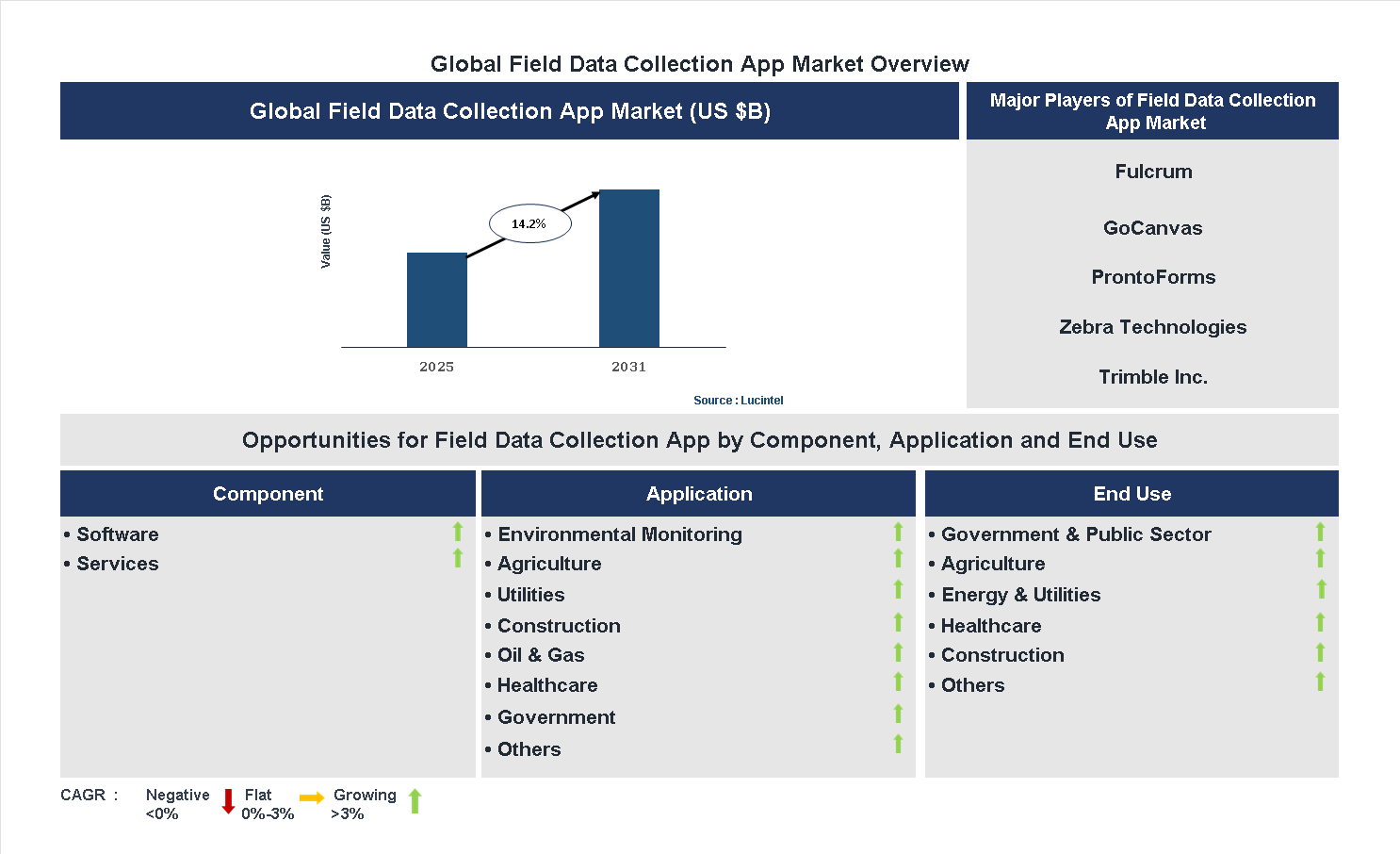
Key data points: The growth forecast = 14.2% annually for the next 7 years. Scroll below to get more insights. This market report covers trends, opportunities and forecasts in field data collection app market to 2031 by component (software and services), application (environmental monitoring, agriculture, utilities, construction, oil & gas, healthcare, government, and others), end use (government & public sector, agriculture, energy & utilities, healthcare, construction, and others), and region (North America, Europe, Asia Pacific, and the Rest of the World)
We'll send your sample report shortly.
• Lucintel forecasts that, within the component category, software is expected to witness higher growth over the forecast period.
• Within the end use category, government & public sector is expected to witness the highest growth.
• In terms of region, North America is expected to witness the highest growth over the forecast period. Gain valuable insights for your business decisions with our comprehensive 150+ page report. Sample figures with some insights are shown below.
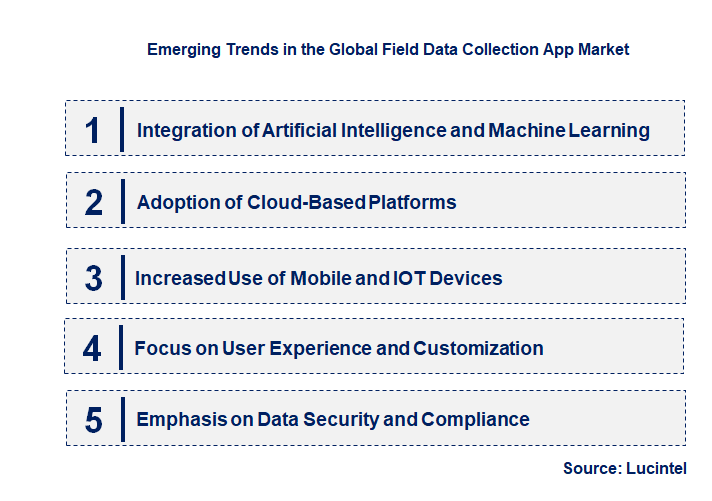
• Integration of Artificial Intelligence (AI) and Machine Learning (ML): AI and ML are increasingly embedded in data collection apps to automate data analysis, identify patterns, and predict outcomes. This reduces manual effort, enhances accuracy, and accelerates decision-making processes. AI-driven features such as image recognition and predictive analytics enable users to process large datasets efficiently, making field operations smarter and more responsive to real-time conditions. As AI becomes more sophisticated, its integration will further personalize and optimize data collection workflows, leading to higher productivity and better insights.
• Adoption of Cloud-Based Platforms: Cloud technology allows seamless data storage, sharing, and collaboration across teams and locations. Cloud-based field data collection apps offer scalability, real-time synchronization, and remote access, which are crucial for dynamic field environments. This trend reduces reliance on physical infrastructure, lowers costs, and enhances data security. As organizations increasingly adopt cloud solutions, they benefit from improved data management, faster deployment, and enhanced integration with other enterprise systems, ultimately enabling more agile and flexible operations.
• Increased Use of Mobile and IoT Devices: The proliferation of smartphones, tablets, and IoT sensors is expanding the capabilities of data collection apps. Mobile devices provide on-the-go access, while IoT sensors enable continuous, automated data gathering from environmental or equipment sources. This integration enhances data accuracy, timeliness, and comprehensiveness. The use of mobile and IoT devices allows for real-time monitoring, reduces manual entry errors, and supports remote operations, making field data collection more efficient and reliable across diverse applications.
• Focus on User Experience and Customization: Developers are prioritizing intuitive interfaces, ease of use, and customizable features to cater to diverse industry needs. User-centric design reduces training time and increases adoption rates. Customization options allow organizations to tailor apps to specific workflows, data types, and reporting requirements. This focus on user experience ensures higher engagement, better data quality, and more effective utilization of collected data, ultimately driving greater value from field data collection solutions.
• Emphasis on Data Security and Compliance: As data collection expands, ensuring security and regulatory compliance becomes critical. Market players are integrating advanced encryption, access controls, and audit trails to protect sensitive information. Compliance with industry standards such as GDPR, HIPAA, and local regulations is increasingly prioritized. Robust security measures build trust with users and stakeholders, mitigate risks of data breaches, and ensure legal adherence. This trend underscores the importance of secure, compliant data management practices in maintaining market growth and credibility. In summary, these emerging trends are fundamentally reshaping the field data collection app market by making solutions more intelligent, accessible, secure, and user-friendly. They enable organizations to operate more efficiently, make data-driven decisions faster, and adapt to evolving industry demands, thereby driving sustained market growth and innovation.
• Adoption of AI and Machine Learning: AI-powered features are enabling automated data validation, predictive analytics, and intelligent insights, improving data accuracy and decision-making efficiency in the field.
• Integration with IoT Devices: The incorporation of IoT sensors and devices allows real-time data collection from remote or inaccessible locations, enhancing data richness and timeliness.
• Cloud-Based Platforms: Cloud integration facilitates seamless data storage, sharing, and collaboration across teams, increasing operational flexibility and reducing infrastructure costs.
• Mobile Device Enhancements: Advances in mobile technology, including improved GPS accuracy and offline data collection capabilities, are enabling more reliable and versatile field data gathering.
• Focus on Data Security and Privacy: As data collection expands, vendors are prioritizing robust security measures and compliance with privacy regulations to protect sensitive information and build user trust. These developments are collectively transforming the field data collection app market by increasing efficiency, accuracy, and security. They are enabling organizations to make faster, data-driven decisions, expand operational capabilities, and reduce costs, thereby fostering market growth and innovation.
• Enhanced precision Farming : Field data collection apps enable farmers to monitor crop health, soil conditions, and weather patterns in real-time, leading to increased yields and resource efficiency. This improves productivity and reduces environmental impact, fostering sustainable agriculture practices.
• Project Management Optimization: These apps facilitate real-time tracking of site progress, resource allocation, and safety compliance. They streamline communication among teams, reduce delays, and improve overall project efficiency, leading to cost savings and timely project completion.
• Real-time Data for Conservation : Applications designed for environmental data collection help monitor pollution levels, wildlife habitats, and climate changes. This supports proactive conservation efforts, policy formulation, and compliance with environmental regulations.
• Infrastructure Maintenance and Management: Utility companies use data collection apps for asset management, outage detection, and maintenance scheduling. This enhances operational efficiency, reduces downtime, and improves service reliability for consumers.
• Remote Patient Monitoring and Data Collection: Field data apps assist in collecting health metrics, patient data, and environmental factors in remote or underserved areas. This improves healthcare delivery, enables timely interventions, and supports public health initiatives. In summary, these growth opportunities across key applications are significantly impacting the field data collection app market by driving innovation, increasing adoption, and expanding market reach. They enable industries to operate more efficiently, make data-driven decisions, and adapt to evolving regulatory and environmental demands, ultimately fostering sustainable growth and technological advancement.
• Technological Advancements: The rapid evolution of mobile devices, cloud infrastructure, and data analytics tools has revolutionized data collection processes. These innovations enable real-time data capture, improved accuracy, and seamless integration with other enterprise systems. As technology becomes more accessible and affordable, organizations across various sectors are increasingly adopting field data collection apps to enhance operational efficiency. The proliferation of smartphones and tablets with advanced sensors further supports this trend, making data collection more efficient and less labor-intensive. Consequently, technological progress continues to be a primary driver, fostering innovation and expanding market opportunities.
• Growing Adoption of IoT and AI: The integration of Internet of Things (IoT) devices and Artificial Intelligence (AI) into field data collection solutions is transforming how data is gathered and analyzed. IoT sensors enable automated, continuous data collection in remote or hazardous environments, reducing manual effort and increasing data accuracy. AI algorithms facilitate advanced data analysis, pattern recognition, and predictive insights, empowering organizations to make data-driven decisions swiftly. This synergy enhances the value proposition of field data collection apps, encouraging broader adoption across industries such as agriculture, construction, and environmental monitoring, thereby fueling market growth.
• Increasing Regulatory and Compliance Requirements: Governments and regulatory bodies are imposing stricter standards related to data privacy, security, and environmental compliance. Organizations are compelled to adopt robust data collection tools that ensure accurate, auditable, and compliant data management. These regulations drive demand for sophisticated field data collection apps equipped with encryption, access controls, and audit trails. Companies investing in compliance are motivated to upgrade their data collection processes, which in turn propels market expansion. Navigating these regulatory landscapes also encourages innovation in app features to meet evolving legal standards.
• Rising Investment in Digital Transformation: Businesses across sectors are prioritizing digital transformation to improve efficiency, reduce costs, and gain competitive advantages. Field data collection apps are integral to these initiatives, enabling real-time data capture and analysis that streamline workflows. Increased funding from private and public sectors for digital projects accelerates the deployment of advanced data collection solutions. This investment trend not only boosts market demand but also encourages the development of more sophisticated, user-friendly, and scalable applications tailored to diverse industry needs.
• Expansion in Emerging Markets: Rapid urbanization, infrastructure development, and increased focus on environmental sustainability in emerging economies are driving demand for field data collection solutions. These markets often lack mature data infrastructure, creating opportunities for innovative app deployment to support agriculture, construction, and resource management. Local governments and organizations are investing in digital tools to improve project monitoring, compliance, and resource allocation. The expansion into these regions offers significant growth potential for market players, fostering global market diversification and increased revenue streams. The challenges facing this field data collection app market include:
• Data Privacy and Security Concerns: As data collection becomes more pervasive, concerns over data privacy and security intensify. Organizations must implement stringent measures to protect sensitive information from breaches and unauthorized access, which can be costly and complex. Regulatory compliance adds further complexity, requiring continuous updates to security protocols. Failure to adequately safeguard data can lead to legal penalties, loss of customer trust, and reputational damage. These concerns may slow adoption rates or necessitate additional investments in security infrastructure, impacting overall market growth.
• Integration with Legacy Systems: Many organizations still rely on outdated legacy systems that are incompatible with modern data collection apps. Integrating new solutions with existing infrastructure poses technical challenges, including data migration, system interoperability, and workflow disruptions. Overcoming these hurdles requires significant time, expertise, and financial resources, which can deter smaller organizations from adopting advanced apps. This integration challenge hampers seamless data flow and limits the full potential of digital transformation initiatives, constraining market expansion.
• High Implementation and Maintenance Costs: Deploying sophisticated field data collection apps often involves substantial initial investment in hardware, software, and training. Ongoing maintenance, updates, and technical support add to operational expenses. For small and medium-sized enterprises, these costs can be prohibitive, restricting market penetration. Additionally, rapid technological changes necessitate continuous upgrades, further increasing expenses. These financial barriers can slow down adoption, especially in price-sensitive markets, thereby impeding overall market growth. In summary, the field data collection app market is driven by rapid technological innovations, increasing regulatory demands, and expanding digital transformation efforts, especially in emerging markets. However, concerns over data security, integration challenges, and high costs pose significant hurdles. These factors collectively influence market dynamics, requiring stakeholders to innovate continuously and address challenges proactively. The overall impact is a market poised for growth, provided that technological solutions evolve to overcome barriers and meet regulatory standards, ensuring sustainable development and broader adoption across industries.
• Fulcrum
• GoCanvas
• ProntoForms
• Zebra Technologies
• Trimble Inc.
• Esri
• Magpi
• Form.com
• Device Magic
• SurveyCTO
• Software
• Services
• Environmental Monitoring
• Agriculture
• Utilities
• Construction
• Oil & Gas
• Healthcare
• Government
• Others
• Government & Public Sector
• Agriculture
• Energy & Utilities
• Healthcare
• Construction
• Others
• North America
• Europe
• Asia Pacific
• The Rest of the World
• United States: The US market has seen rapid adoption of AI-powered data collection apps, with major tech firms launching integrated solutions for industries like construction, agriculture, and utilities. Cloud-based platforms are gaining popularity, enabling seamless data sharing and collaboration. Regulatory frameworks supporting data security and privacy are strengthening, encouraging enterprise adoption. Additionally, the US government is investing in smart city projects that utilize field data apps for urban planning and infrastructure management. Startups and established players are forming strategic alliances to enhance app functionalities, focusing on automation and real-time analytics to improve operational efficiency.
• China: China’s market is characterized by aggressive adoption of IoT-enabled data collection apps, driven by government initiatives to digitize industries and improve urban management. Local companies are developing cost-effective, scalable solutions tailored for manufacturing, agriculture, and transportation sectors. The integration of AI and big data analytics is enhancing predictive maintenance and resource management. The government’s focus on smart city projects and digital infrastructure expansion is fueling demand. Moreover, Chinese firms are investing in R&D to develop innovative features like drone-based data collection and autonomous field operations, positioning China as a leader in innovative field data solutions.
• Germany: Germany’s market emphasizes precision and compliance, with a strong focus on industries such as automotive, engineering, and environmental monitoring. Companies are adopting advanced GIS-enabled apps that support detailed spatial data collection and analysis. The country’s strict data privacy laws influence app development, ensuring secure and compliant solutions. There is a growing trend toward integrating field data apps with enterprise resource planning (ERP) systems for streamlined workflows. Germany’s emphasis on sustainability and environmental monitoring is driving innovations in eco-friendly data collection tools. Collaborations between tech firms and research institutions are fostering the development of high-accuracy, reliable applications suited for complex industrial environments.
• India: The Indian market is witnessing rapid growth due to increasing government initiatives for digital transformation and infrastructure development. Affordable, mobile-friendly data collection apps are being widely adopted across rural and urban areas for agriculture, healthcare, and urban planning. Local startups are innovating with AI and machine learning to improve data accuracy and predictive insights. The government’s Smart Cities Mission and Digital India initiatives are boosting demand for field data apps to support urban management and resource allocation. Additionally, the proliferation of affordable smartphones and internet connectivity is expanding the user base, making field data collection more accessible and efficient across diverse regions.
• Japan: Japan’s market is characterized by high technological adoption and focus on quality and reliability. Companies are integrating advanced sensors and IoT devices with data collection apps to enhance precision in manufacturing, disaster management, and environmental monitoring. The emphasis on automation and robotics is leading to the development of intelligent field data solutions that support autonomous operations. Japan’s strict standards for data security and privacy influence app design, ensuring compliance with regulations. The government’s initiatives for smart infrastructure and disaster preparedness are driving demand for sophisticated data collection tools. Collaborations between tech firms and research institutions are fostering innovations in AI-driven analytics and real-time data processing.


• Fulcrum
• GoCanvas
• ProntoForms
• Zebra Technologies
• Trimble Inc.
• Esri
• Magpi
• Form.com
• Device Magic
• SurveyCTO Q5. Which field data collection app market segment will be the largest in future? Answer: Lucintel forecasts that, within the component category, software is expected to witness higher growth over the forecast period. Q6. In field data collection app market, which region is expected to be the largest in next 5 years? Answer: In terms of region, North America is expected to witness the highest growth over the forecast period. Q7. Do we receive customization in this report? Answer: Yes, Lucintel provides 10% customization without any additional cost.


Choose a license that fits your team. Instant PDF delivery.
Prices exclude taxes. Instant delivery. Custom licensing available on request.
Market Report · July 15, 2026
Market Report · June 26, 2026
Market Report · June 24, 2026
Trusted partner for strategic intelligence and business growth


Receive a complimentary market analysis tailored to your industry. Our analysts will identify key growth opportunities and competitive dynamics specific to your business.

Market size, growth rate, and key trend analysis for your specific sector.

Top competitor positioning and market share analysis.

Strategic recommendations backed by data-driven insights.
Get curated market intelligence and competitive moves straight to your inbox.
By subscribing, you agree to receive our monthly insights. Unsubscribe anytime.
Receive a complimentary market analysis tailored to your industry. Our analysts will identify key growth opportunities and competitive dynamics specific to your business.
Market size, growth rate, and key trend analysis for your specific sector.
Top competitor positioning and market share analysis.
Strategic recommendations backed by data-driven insights.
Get curated market intelligence, emerging trends, and competitive moves straight to your inbox each month.
By subscribing, you agree to receive our monthly insights. Unsubscribe anytime.
We'll send your sample report shortly.