
Market Report · July 22, 2026

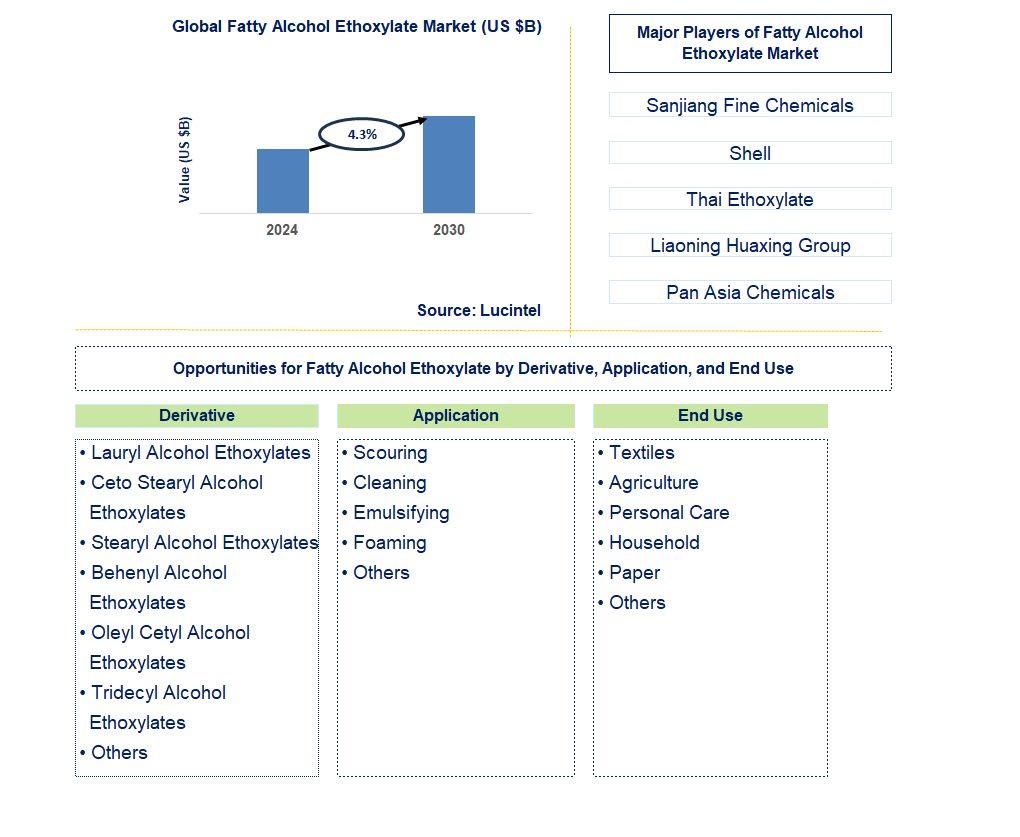
Key data points: The growth forecast = 4.3% annually next 6 years. Scroll below to get more insights. This market report covers trends, opportunities, and forecasts in the global fatty alcohol ethoxylate market to 2030 by derivative (lauryl alcohol ethoxylates, cetostearyl alcohol ethoxylates, stearyl alcohol ethoxylates, behenyl alcohol ethoxylates, oleyl cetyl alcohol ethoxylates, tridecyl alcohol ethoxylates, and others), application (scouring, cleaning, emulsifying, foaming, and others), end use (textiles, agriculture, personal care, household, paper, and others), and region (North America, Europe, Asia Pacific, and the Rest of the World)
We'll send your sample report shortly.
• APAC will remain the largest region over the forecast period. Gain valuable insight for your business decisions with our comprehensive 150+ page report
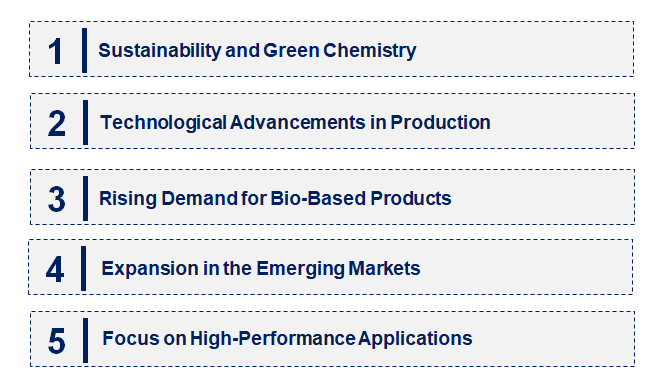
• Sustainability and Green Chemistry: Another trend that should not be missed regarding the fatty alcohol ethoxylate market is sustainable manufacturing technologies together with green chemical options available within this industry space. Many industries have begun using environmentally friendly production methods and raw materials from renewable sources to reduce environmental impacts associated with making their goods. The consumer preference for eco-friendly products, coupled with growing strictness over emissions control laws, has triggered this tendency. Producers invest in cleaner processes, resulting in greener, more sustainable fatty alcohol ethoxylates through waste minimization procedures or energy-saving techniques. This change meets not only regulatory requirements but also enhances marketability and improves brand implications.
• Technological Advancements in Production: Technological innovations are responsible for the changeover in the production of fatty alcohol ethoxylates. For instance, the efficiency of these processes has been improved due to advances in catalysis systems, reaction conditions, and technological advancements used during production. Companies have incorporated new technologies like advanced catalysts and sophisticated process optimization approaches to enhance yields as well as performance. Manufacturers can now produce effective and more flexible fatty alcohol ethoxylates, given that some of their applications are changing over time. Better product formulas, coupled with efficient manufacturing practices, will be realized as technology advances.
• Rising Demand for Bio-Based Products: The use of bio-based fatty alcohol ethoxylates is fast-growing since individuals or companies want sustainable or environmentally friendly options. Such products, made from renewable sources, have lower carbon imprints compared to traditional petroleum-based ones. Consequently, there have been increased concerns about environmental issues, leading to a rise in policy incentives for utilizing bio-based materials. Such trends have pushed manufacturers to produce biodegradable fatty alcohol ethoxylates, thus creating room for differentiation among their customer base. This shift towards bio-based solutions is expected to drive growth and innovation in the sector.
• Expansion into Emerging Markets: The fatty alcohol ethoxylate industry has been focusing on expanding into emerging markets due to rapid industrialization and growing consumer demand, especially in Asia Pacific, Latin America, and Africa. As a result, these regions have become interesting to investors who are seeking to take advantage of the increased need for personal care products, household cleaners, as well as industrial applications. Manufacturers of such products can serve their markets better and exploit more business opportunities by establishing local production plants and entering into strategic partnerships. Development into emerging economies promises high ROI and helps aim for diversity in income sources.
• Focus on High-Performance Applications: There is a growing emphasis on creating fatty alcohol ethoxylates that are suitable for high-performance applications. Industries such as automotive, electronics, and pharmaceuticals require specialized surfactants with specific properties. Fatty alcohol ethoxylates developed in this manner will be relied upon to meet stringent performance criteria associated with these applications, hence explaining why companies are investing heavily in R&D. Advanced formulations having enhanced performance and reliability are opportunistic trends that necessitate development at the expense of conventional designs. By focusing on high-performance areas, manufacturers can access niche segments for their goods, advancing market share growth while sustaining profitability. The fatty alcohol ethoxylate industry is currently being reshaped by some emergent developments, which include sustainability, technological innovations, rising demand for bio-based products, expansion into emerging markets, and a focus on high-performance applications, among others. These trends represent broader shifts related to changes in consumer preferences, regulatory requirements, and technological innovations that affect the market generally. In this light, it would be wise for any company willing to adopt these changes, which form the basis of adapting to new technologies or even market dynamics, so as not to lose its ground within the evolving fatty alcohol ethoxylate industry.
• Introduction of Advanced Catalytic Technologies: The use of advanced catalytic technologies has transformed how fatty alcohol ethoxylates are made. New catalysts and optimized reaction conditions minimize production time, improving product quality while lowering costs. Using single-site catalysts and optimizing the process helps manufacturers increase yields and control specifications better. As a result, companies can reduce their environmental footprints more efficiently and economically, ensuring availability for ever-growing markets.
• Shift Towards Sustainable Production Practices: The fatty alcohol ethoxylate market has witnessed an observable change towards more sustainable ways of producing its products. Green technology investment, adopting renewable raw materials, and waste minimization programs have been key areas where firms have focused on reducing their ecological imprints. Environmental consciousness among consumers is behind the shift, coupled with stricter legal protection measures against pollution imposed by governments on industries across different sectors. Therefore, manufacturers’ eco-footprint may be improved by having environmentally sound practices, thereby meeting statutory requirements while enhancing brand image, which would eventually translate into long-term benefits within that particular industry at large.
• Expansion of Production Capacities: The rise in production capacities is significant in the market for fatty alcohol ethoxylate. Major manufacturers are investing in new facilities or improving existing ones to cope with the heightened demand across diverse applications. The Asia Pacific area, one of the regions with high industrial growth, shows the greatest effect this expansion has on. To better serve growing markets, reduce lead times, and achieve economies of scale that contribute to overall market growth and competitiveness, companies need to increase their production capabilities.
• Development of Bio-Based Fatty Alcohol Ethoxylates: The trend towards the development of bio-based fatty alcohol ethoxylates is driven by increasing consumer preference for sustainable goods. They may have a smaller carbon footprint than traditional options because they are obtained from renewable resources through bio-based processes. Research and development investment has been made into creating bio-based alternatives that meet performance and sustainability criteria by organizations operating within this industry. This reflects global trends towards sustainability and enables manufacturers to enter new market segments focused on eco-friendly solutions.
• Increased Regulatory Compliance and Safety Standards: Factors such as increased regulatory compliance and safety standards shape the fatty alcohol ethoxylate market globally. Governments and regulatory bodies are introducing stricter guidelines around chemical safety, environmental impact, and product quality improvement. Manufacturers are changing their ways by implementing improved safety protocols, revising their product formulations, or ensuring that they conform to new legislation. Keeping up with these regulations will help firms avoid legal issues, keep their markets open, and meet the growing demand for products that are not only safe but also of good quality. The key developments in the fatty alcohol ethoxylate industry, such as advances in catalytic technologies, shifts toward sustainability, expansion of production capacities, development of bio-based products, and heightened regulatory compliance, have had a significant impact on it. These developments reflect broader trends in the marketplace, creating opportunities and challenges for producers. Manufacturers who are up to date and adapt to these changes will be better positioned to succeed in the ever-changing market and exploit the emerging opportunities within it.
• Personal Care and Cosmetics: There are significant growth prospects for fatty alcohol ethoxylates within the personal care and cosmetics industry. A wide range of products, including hair shampoos, lotions, and cleansers, contain surfactants such as fatty alcohol ethoxylates. With consumer preferences shifting towards high-quality, eco-friendly, and effective personal care products, there is an increasing demand for advanced fatty alcohol ethoxylates. To take advantage of this, manufacturers should embrace innovative formulations that satisfy consumer needs while also meeting regulatory requirements, thereby improving their positions in the marketplace at large while expanding customer bases.
• Household Cleaning Products: Household cleaning products are currently experiencing a remarkable boost as a result of increased consumerism in relation to hygiene and cleanliness. Fatty alcohol ethoxylates find application across cleaning agents, detergents, and disinfectants. The market can therefore be tapped by manufacturers who intend to develop newer formulations that have better performance and sustainability to meet the increasing demand for effective yet environmentally friendly cleaning solutions. By focusing on this growing segment, companies can tap into expanding markets and capitalize on trends towards cleaner and safer household products.
• Industrial Applications: Fatty alcohol ethoxylates are widely used in many industrial applications like emulsifiers, wetting agents, and lubricants. Growth within the sector stems from industrialization and technological advancement. Specialized fatty alcohol ethoxylates developed for specific industrial processes can enable companies to expand their product lines. Enhanced marketing strategies through customization of products that address issues affecting clients will help manufacturers gain significant market share among industrial consumers.
• Agricultural Chemicals: Another booming area where fatty alcohol ethoxylates are being utilized is agricultural chemicals. These surfactants aid in improving the efficacy and application of pesticide formulations, herbicides, and fertilizers used in the agricultural industry. The rise in demand for sustainable agricultural solutions has created an opportunity for companies to develop innovative fatty alcohol ethoxylates that cater to modern-day agricultural challenges. By focusing on this segment, companies can address the evolving requirements of the agricultural industry and expand their market reach.
• Regional Expansion: Regional expansion offers huge opportunities for growth within the fatty alcohol ethoxylate market space. Rapid industrialization in Asia-Pacific countries, Latin America, and Africa, together with rising end-consumer demand for personal care products such as shampoos, soaps, household cleaners, and industrial goods, act as major factors driving growth in these markets. Thus, opening production facilities, forming strategic alliances, and adapting to local requirements can help companies utilize these growth prospects. In this way, they will increase their revenues and global market shares. Strategic growth opportunities in the fatty alcohol ethoxylate market are driven by expanding applications, regional growth, and advancements in product formulations. By focusing on key areas like personal care, household cleaning, industrial applications, and agricultural chemicals while taking advantage of regional expansion strategies, firms position themselves for success in the changing market. Manufacturers who take advantage of these growth areas will be able to capture new opportunities, gain a competitive edge, and maintain a sustainable business environment.
• Sanjiang Fine Chemicals
• Shell
• Thai Ethoxylate
• Liaoning Huaxing Group
• Pan Asia Chemicals
• Clariant
• Petronas Chemicals Derivative
• Lauryl Alcohol Ethoxylates
• Ceto Stearyl Alcohol Ethoxylates
• Stearyl Alcohol Ethoxylates
• Behenyl Alcohol Ethoxylates
• Oleyl Cetyl Alcohol Ethoxylates
• Tridecyl Alcohol Ethoxylates
• Others
• Scouring
• Cleaning
• Emulsifying
• Foaming
• Others
• Textiles
• Agriculture
• Personal Care
• Household
• Paper
• Others
• North America
• Europe
• Asia Pacific
• The Rest of the World
• United States: In the United States, there has been more scrutiny by regulators on this issue, resulting in an uptick in businesses that prioritize sustainable products. The Environmental Protection Agency has imposed stricter safety guidelines and environmental standards, thereby stimulating manufacturers to develop innovative, environmentally friendly products. Due to increasing corporate sustainability goals, consumers’ preference for greener products has led to growing demand for bio-based fatty alcohol ethoxylates. Additionally, technological improvements reduce costs and enhance efficiency. This development program highlights how notable U.S.-based suppliers are investing in research aimed at improving product performance while aligning with current regulatory demands.
• China: Industrial growth coupled with an expanding consumer base explains why China’s fatty alcohol ethoxylate market is booming. An extensive manufacturing base allows China to operate at high capacities, while its middle class drives demand for personal and household products. Companies are striving towards modernizing production facilities and adopting advanced technologies to boost quality and enhance productivity. Furthermore, China is making significant efforts towards cleaner production methods and better raw materials to reduce its adverse effects on the environment. Market dynamics related to industrial upgrades and environmental initiatives are greatly influenced by the government, allowing both local and global players to benefit.
• Germany: Leading with innovation and sustainability in the fatty alcohol ethoxylate market, Germany is taking progressive steps towards developing more sustainable production practices as part of the strict environmental regulations of the European Union. The overall aim is to reduce the carbon footprint while focusing on using renewable raw materials. Due to the high emphasis placed on research and development, companies in Germany have been investing in advanced technologies that lead to improved product formulations and performance. Additionally, German manufacturers are adopting eco-friendly products, positioning them as global leaders in sustainable fatty alcohol ethoxylates because of their emphasis on quality standards and regulatory compliance.
• India: Over time, industrialization coupled with urbanization has led to rapid growth in India’s fatty alcohol ethoxylate market. The growing demand for personal care items, household cleaning solutions, and industrial applications has contributed to this expansion. Indian firms are increasing their capacities while allocating significant resources for technological advancement to meet both local and internationally accepted standards. Greater focus is now being placed on more sustainable methods of producing these surfactants at minimal costs. Additionally, favorable government efforts aimed at promoting the chemical industry and supporting industrial growth have created an environment conducive to market emergence. This implies domestic growth coupled with export opportunities, projecting a positive business outlook for Indian manufacturers.
• Japan: In Japan, the market for fatty alcohol ethoxylates is characterized by a strong orientation towards innovation and stringent quality standards. Consequently, Japanese manufacturers are working hard to develop pioneering formulas and streamline production processes. In terms of sustainability, there is a significant movement towards adopting practices that utilize biodegradable materials and minimize environmental impact. Additionally, the country has high product safety and performance requirements, creating demand for premium fatty alcohol ethoxylates. Moreover, Japan has developed consumer goods and manufacturing industries that provide stable markets for these products, where companies are exploring new uses and broadening their range of offerings to match changing market trends.


• Sanjiang Fine Chemicals
• Shell
• Thai Ethoxylate
• Liaoning Huaxing Group
• Pan Asia Chemicals
• Clariant
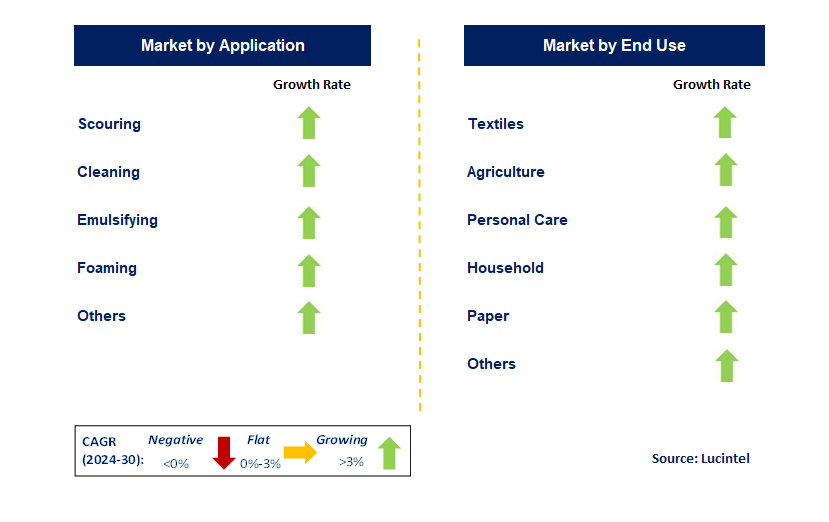
• Petronas Chemicals Derivative Q5. Which fatty alcohol ethoxylate market segment will be the largest in future? Answer: Lucintel forecasts that scouring is expected to witness the highest growth over the forecast period. Q6. In fatty alcohol ethoxylate market, which region is expected to be the largest in next 5 years? Answer:
• APAC will remain the largest region over the forecast period. Q7. Do we receive customization in this report? Answer: Yes, Lucintel provides 10% customization without any additional cost.


Choose a license that fits your team. Instant PDF delivery.
Prices exclude taxes. Instant delivery. Custom licensing available on request.
Market Report · July 22, 2026
Market Report · July 22, 2026
Market Report · July 22, 2026
Trusted partner for strategic intelligence and business growth


Receive a complimentary market analysis tailored to your industry. Our analysts will identify key growth opportunities and competitive dynamics specific to your business.

Market size, growth rate, and key trend analysis for your specific sector.

Top competitor positioning and market share analysis.

Strategic recommendations backed by data-driven insights.
Get curated market intelligence and competitive moves straight to your inbox.
By subscribing, you agree to receive our monthly insights. Unsubscribe anytime.
Receive a complimentary market analysis tailored to your industry. Our analysts will identify key growth opportunities and competitive dynamics specific to your business.
Market size, growth rate, and key trend analysis for your specific sector.
Top competitor positioning and market share analysis.
Strategic recommendations backed by data-driven insights.
Get curated market intelligence, emerging trends, and competitive moves straight to your inbox each month.
By subscribing, you agree to receive our monthly insights. Unsubscribe anytime.
We'll send your sample report shortly.