
Report Feature
Fast Food Market Trends and Forecast
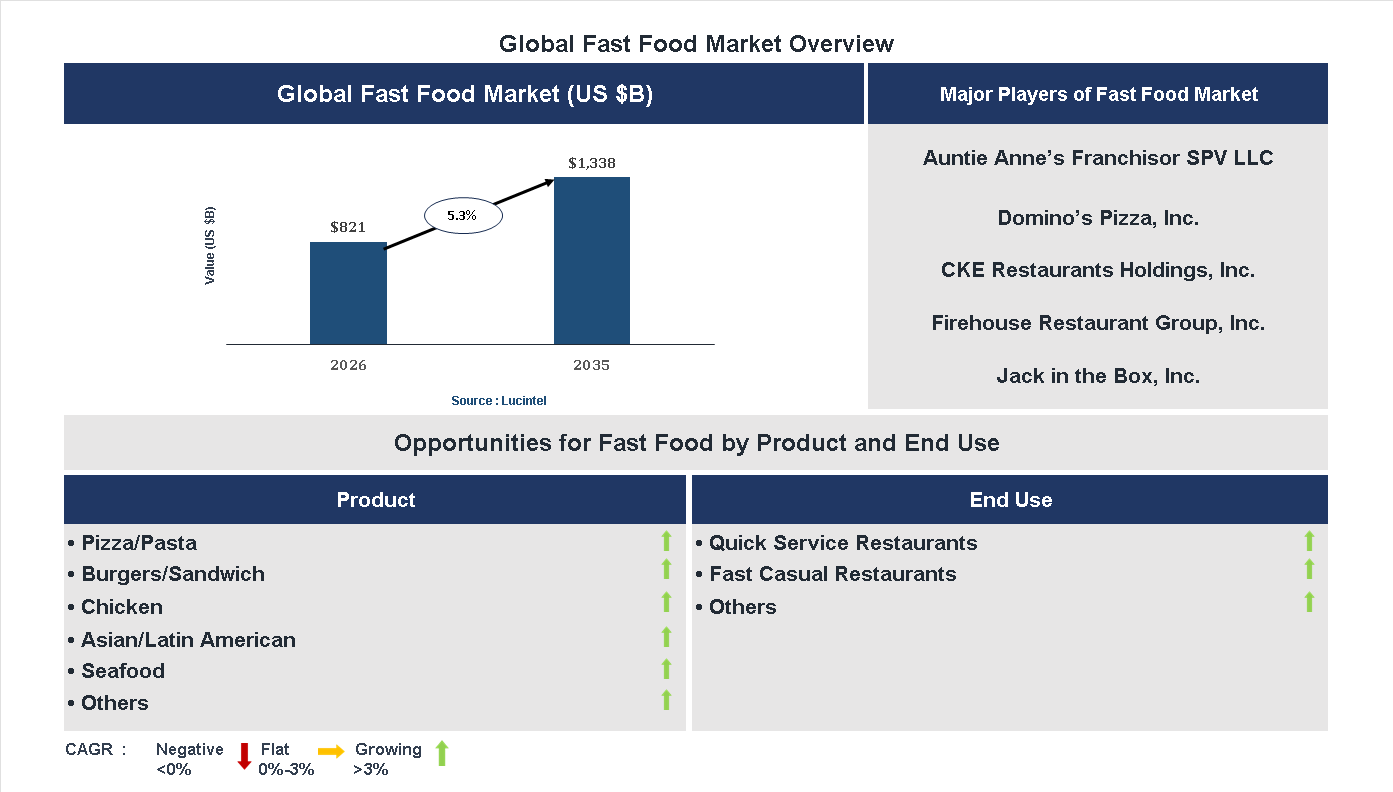
The future of the global fast food market looks promising with opportunities in the quick service restaurant and fast casual restaurant markets. The global fast food market is expected to reach an estimated $1,338 billion by 2035 with a CAGR of 5.3% from 2026 to 2035. The major drivers for this market are the increasing demand for convenience foods, the rising popularity of quick-service restaurants, and the growing trend of on-the-go lifestyles.• Lucintel forecasts that, within the product category, pizza/pasta is expected to witness the highest growth over the forecast period.
• Within the end use category, quick service restaurant is expected to witness higher growth.
• In terms of region, North America is expected to witness the highest growth over the forecast period. Gain valuable insights for your business decisions with our comprehensive 150+ page report. Sample figures with some insights are shown below.
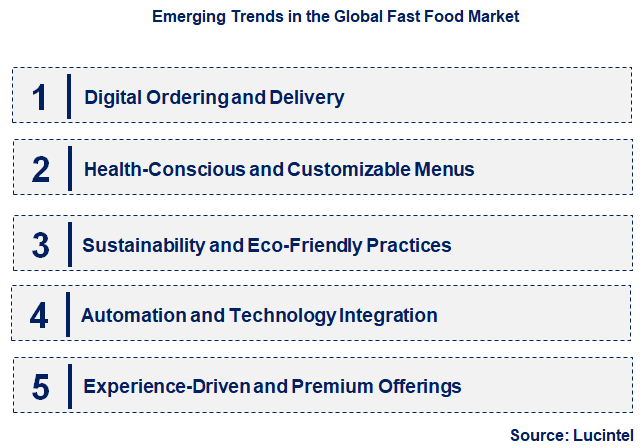
Emerging Trends in the Fast Food Market
The fast food market is experiencing rapid transformation driven by technological advancements, changing consumer preferences, and evolving health trends. As consumers seek convenience, healthier options, and personalized experiences, industry players are adapting to stay competitive. Innovations in delivery services, menu customization, and sustainability are also shaping the landscape. These developments are not only influencing how fast food is produced and consumed but are also redefining the markets future growth trajectory. Understanding these key trends is essential for stakeholders aiming to capitalize on emerging opportunities and navigate potential challenges in this dynamic environment.• Digital Ordering and Delivery: The rise of mobile apps and online platforms has revolutionized how consumers access fast food. Companies are investing heavily in user-friendly interfaces, contactless payments, and efficient delivery logistics. This trend enhances convenience, expands reach, and caters to the on-demand lifestyle. It also allows for data collection to personalize marketing and menu offerings. As a result, digital channels are becoming the primary sales avenue, significantly boosting sales volume and customer engagement while reducing reliance on traditional dine-in models.
• Health-Conscious and Customizable Menus: Consumers are increasingly prioritizing health and wellness, prompting fast food brands to introduce healthier options such as salads, plant-based items, and low-calorie meals. Customization options allow customers to tailor their orders to specific dietary needs, fostering a more personalized experience. This trend broadens the market appeal, attracts health-conscious demographics, and helps brands differentiate themselves. It also encourages innovation in menu development, aligning fast food offerings with contemporary nutritional standards and consumer preferences.
• Sustainability and Eco-Friendly Practices: Environmental concerns are prompting fast food companies to adopt sustainable sourcing, reduce waste, and implement eco-friendly packaging. Initiatives include using biodegradable materials, minimizing plastic use, and sourcing ingredients responsibly. These practices appeal to environmentally conscious consumers and enhance brand reputation. Sustainability efforts are also driven by regulatory pressures and the desire to reduce operational costs. This trend is reshaping supply chain management and prompting industry-wide shifts toward greener operations, ultimately influencing consumer loyalty and market competitiveness.
• Automation and Technology Integration: The adoption of automation in kitchens, order processing, and delivery is transforming operational efficiency. Robots and AI-powered systems streamline food preparation, reduce labor costs, and improve consistency. Self-service kiosks and automated checkout systems enhance customer experience by reducing wait times. This technological integration allows fast food brands to operate more efficiently, scale rapidly, and adapt to labor shortages. It also opens avenues for innovative service models, such as drone deliveries and smart kitchen appliances, shaping the future of fast food service.
• Experience-Driven and Premium Offerings: Fast food brands are shifting towards providing unique, immersive experiences and premium menu options to attract a broader customer base. This includes themed outlets, limited-time offers, and gourmet-style menu items. The focus on experience and quality elevates the brand image and encourages repeat visits. It also caters to consumers seeking value beyond just convenience, blending fast food with a more upscale dining experience. This trend is driving market segmentation and allowing brands to tap into new customer segments, ultimately expanding market share and fostering brand loyalty. In summary, these emerging trends are fundamentally reshaping the fast food market by emphasizing convenience, health, sustainability, technological innovation, and enhanced customer experiences. As these developments continue to evolve, they are creating new opportunities for growth, differentiation, and competitive advantage in a highly dynamic industry.
Recent Development in the Fast Food Market
The fast food market has experienced rapid evolution driven by changing consumer preferences, technological advancements, and global expansion. Innovations in menu offerings, delivery services, and sustainability practices are shaping its future. Companies are focusing on health-conscious options and digital engagement to attract diverse demographics. These developments are creating new growth opportunities and competitive dynamics, influencing market size and consumer behavior worldwide. Understanding these key trends is essential for stakeholders aiming to capitalize on emerging prospects and navigate the evolving landscape effectively.• Digital Ordering and Delivery Platforms: Expanding convenience and reach: The rise of online ordering and delivery apps has transformed the fast food industry by making meals more accessible and convenient. Companies investing in app development and partnerships with delivery services are increasing their customer base and sales volume. This shift has also enabled real-time tracking and personalized marketing, boosting customer satisfaction. As digital adoption grows, market players are gaining competitive advantages, leading to increased revenue streams and market share expansion globally.
• Health-Conscious Menu Innovations: Catering to wellness trends: Consumers are increasingly seeking healthier fast food options, prompting companies to innovate menus with low-calorie, plant-based, and allergen-free items. This trend has expanded the customer base to include health-conscious individuals and those with dietary restrictions. Fast food brands adopting nutritious offerings are experiencing higher patronage and brand loyalty. These innovations are also aligning with regulatory pressures for transparency and healthier eating, positioning companies favorably in a competitive landscape and driving overall market growth.
• Sustainability and Eco-Friendly Practices: Reducing environmental impact: Sustainability initiatives such as eco-friendly packaging, waste reduction, and sourcing responsibly are gaining prominence. Companies adopting green practices are enhancing their brand image and appealing to environmentally conscious consumers. These efforts help reduce operational costs and comply with regulations, fostering long-term viability. As sustainability becomes a key differentiator, the market is witnessing increased investments in green technologies and practices, which are shaping industry standards and influencing consumer purchasing decisions.
• Global Market Expansion: Tapping into emerging economies: Fast food brands are increasingly entering emerging markets to capitalize on rising urbanization and disposable incomes. This expansion offers significant growth opportunities due to less saturated markets and evolving consumer preferences. Local adaptation of menus and marketing strategies is crucial for success. Market entry through franchising and joint ventures is common, enabling rapid growth. These efforts are diversifying revenue streams and strengthening global presence, ultimately contributing to the overall expansion and resilience of the fast food industry.
• Technological Integration in Operations: Enhancing efficiency and customer experience: Advanced technologies such as AI, automation, and data analytics are streamlining operations and personalizing customer interactions. Automated kitchens and self-service kiosks reduce wait times and labor costs, while data insights optimize inventory and marketing strategies. These innovations improve service quality and operational efficiency, leading to increased customer satisfaction and loyalty. As technology becomes integral, companies are gaining competitive advantages, driving innovation, and supporting sustainable growth in the fast food market. The overall impact of these developments is a more dynamic, efficient, and consumer-focused fast food market. Companies are better positioned to meet evolving demands, expand globally, and adopt sustainable practices, which collectively enhance competitiveness and market resilience. These opportunities are fostering innovation, increasing revenue streams, and shaping the future landscape of the industry.
Strategic Growth Opportunities in the Fast Food Market
The fast food market is experiencing rapid expansion driven by changing consumer lifestyles, urbanization, and technological advancements. As demand for quick, convenient meals increases globally, companies are exploring innovative strategies to capture new customer segments and enhance operational efficiency. The evolving competitive landscape presents numerous growth opportunities across various applications, from delivery services to healthier menu options. Stakeholders must identify and leverage these opportunities to sustain growth and meet shifting consumer preferences effectively.• Expansion into Healthier and Customizable Menus: The rising health consciousness among consumers is prompting fast food chains to develop healthier, customizable options. This includes plant-based, low-calorie, and allergen-free meals, catering to diverse dietary needs. By innovating menu offerings, brands can attract health-conscious customers, differentiate themselves from competitors, and increase market share. This shift also encourages repeat business and enhances brand reputation for promoting wellness.
• Growth of Digital Ordering and Delivery Platforms: The proliferation of mobile apps and online platforms has revolutionized how consumers order fast food. Companies investing in seamless digital interfaces, contactless payments, and efficient delivery logistics can significantly boost sales. This opportunity allows brands to reach wider audiences, improve customer engagement, and gather valuable data for targeted marketing. Emphasizing convenience and speed through digital channels is crucial for capturing the evolving consumer demand.
• Penetration into Emerging Markets: Rapid urbanization and rising disposable incomes in developing regions present substantial growth prospects. Fast food brands expanding into these markets can tap into a large, underserved customer base seeking affordable, quick meal options. Localizing menus to suit regional tastes and establishing strategic outlets can foster brand loyalty. This expansion not only increases revenue streams but also enhances global brand presence and competitiveness.
• Innovation in Packaging and Sustainability: Consumers are increasingly concerned about environmental impact, prompting fast food companies to adopt sustainable practices. Developing eco-friendly packaging, reducing plastic use, and implementing waste management initiatives can improve brand image. Innovation in packaging also enhances convenience and freshness preservation. Emphasizing sustainability can attract environmentally conscious customers, meet regulatory requirements, and differentiate brands in a competitive market.
• Adoption of Automation and Technology in Operations: Implementing automation in kitchens, order processing, and supply chain management can significantly improve efficiency and reduce costs. Technologies such as robotics, AI-driven inventory management, and self-service kiosks streamline operations and enhance customer experience. This opportunity allows fast food chains to handle higher volumes, minimize errors, and optimize resource utilization. Embracing technological advancements is vital for maintaining competitiveness and adapting to future market demands. The overall impact of these growth opportunities will likely lead to increased market size, enhanced customer engagement, and improved operational efficiencies, positioning the fast food industry for sustained expansion and innovation in a dynamic global landscape.
Fast Food Market Driver and Challenges
The fast food market is influenced by a variety of technological, economic, and regulatory factors that shape its growth and sustainability. Technological advancements such as digital ordering platforms and automation have revolutionized service delivery, enhancing customer experience and operational efficiency. Economic factors like rising disposable incomes and urbanization drive demand, while regulatory policies concerning health standards and food safety impact operational practices. Additionally, changing consumer preferences towards healthier options and sustainability initiatives are reshaping the market landscape. These drivers and challenges collectively determine the markets trajectory, requiring stakeholders to adapt swiftly to maintain competitiveness and meet evolving consumer expectations. The factors responsible for driving the fast food market include:• Technological Innovation: Digital platforms, mobile apps, and automation tools streamline ordering, payment, and delivery processes. These innovations improve customer convenience, reduce wait times, and enable personalized marketing. Automation in kitchens enhances efficiency and consistency, lowering operational costs. As technology continues to evolve, fast food chains can expand their reach and improve service quality, attracting a broader customer base and increasing sales.
• Urbanization and Changing Lifestyles: Rapid urban growth leads to busier lifestyles, increasing demand for quick, convenient meal options. Urban consumers seek fast, affordable, and accessible food services that fit into their hectic schedules. This trend encourages fast food outlets to expand in urban centers and develop innovative offerings tailored to on-the-go consumption, thereby boosting market growth and customer engagement.
• Economic Growth and Rising Disposable Income: Economic development in emerging markets results in higher disposable incomes, enabling consumers to spend more on dining out. Increased affordability encourages frequent visits to fast food outlets, expanding customer bases. Moreover, economic stability allows brands to invest in marketing, infrastructure, and menu diversification, further fueling market expansion.
• Health and Wellness Trends: Growing awareness about health and nutrition influences consumer choices, prompting fast food companies to introduce healthier menu options, such as salads, low-calorie meals, and plant-based products. Incorporating health-conscious offerings helps brands attract a broader demographic, including health-conscious consumers, and adapt to regulatory pressures related to food labeling and nutritional standards.
• Sustainability and Ethical Practices: Consumers increasingly prefer brands committed to sustainability, ethical sourcing, and environmentally friendly practices. Fast food companies adopting eco-friendly packaging, waste reduction, and responsible sourcing can enhance brand loyalty and meet regulatory requirements. These initiatives also open new market segments and improve corporate reputation, contributing to long-term growth. The challenges facing the fast food market include:
• Regulatory Compliance and Food Safety Standards: Stringent regulations regarding food safety, labeling, and hygiene practices pose operational challenges. Compliance requires significant investment in quality control, staff training, and infrastructure upgrades. Non-compliance can lead to legal penalties, reputational damage, and loss of consumer trust, making regulatory adherence a critical concern for market players.
• Health Concerns and Changing Consumer Preferences: Increasing awareness of obesity, diabetes, and other health issues leads consumers to seek healthier alternatives. Fast food companies face pressure to reformulate menus, which can involve higher costs and operational adjustments. Failure to adapt to these preferences risks losing market share to healthier competitors and facing regulatory restrictions.
• Intense Competition and Market Saturation: The fast food industry is highly competitive, with numerous global and local brands vying for market share. Market saturation in key regions limits growth opportunities and intensifies price wars, impacting profit margins. Companies must innovate continuously and differentiate their offerings to maintain relevance and profitability in a crowded marketplace. In summary, the fast food market is driven by technological advancements, urbanization, economic growth, health trends, and sustainability initiatives, which collectively foster expansion and innovation. However, regulatory challenges, health concerns, and intense competition pose significant hurdles that require strategic adaptation. The interplay of these drivers and challenges shapes the markets future, demanding agility and innovation from industry players to sustain growth and meet evolving consumer demands.
List of Fast Food Companies
Companies in the market compete on the basis of product quality offered. Major players in this market focus on expanding their manufacturing facilities, R&D investments, infrastructural development, and leverage integration opportunities across the value chain. With these strategies fast food companies cater increasing demand, ensure competitive effectiveness, develop innovative products & technologies, reduce production costs, and expand their customer base. Some of the fast food companies profiled in this report include-• Auntie Anne’s Franchisor SPV LLC
• Domino’s Pizza, Inc.
• CKE Restaurants Holdings, Inc.
• Firehouse Restaurant Group, Inc.
• Jack in the Box, Inc.
• McDonald’s
• Restaurant Brands International, Inc.
• Yum Brands Inc.
• Inspire Brands, Inc.
• Doctors Associates, Inc.
Fast Food Market by Segment
The study includes a forecast for the global fast food market by product, end use, and region.Fast Food Market by Product [Value from 2019 to 2035]:
• Pizza/Pasta
• Burgers/Sandwich
• Chicken
• Asian/Latin American
• Seafood
• Others
Fast Food Market by End Use [Value from 2019 to 2035]:
• Quick Service Restaurants
• Fast Casual Restaurants
• Others
Fast Food Market by Region [Value from 2019 to 2035]:
• North America
• Europe
• Asia Pacific
• The Rest of the World
Country Wise Outlook for the Fast Food Market
The fast food market has experienced significant shifts globally, driven by changing consumer preferences, technological advancements, and economic factors. In recent years, countries have seen innovations in menu offerings, digital ordering, and sustainability initiatives. The COVID-19 pandemic accelerated the adoption of delivery services and contactless payments, reshaping the industry landscape. Regulatory changes and health consciousness also influence market strategies. As markets evolve, companies focus on customization, healthier options, and eco-friendly practices to attract diverse customer bases. These developments reflect broader trends toward convenience, technology integration, and sustainability in the fast food sector across major economies.• United States: The US fast food market has seen a surge in plant-based menu options and digital ordering platforms. Major chains are investing in delivery services and mobile apps to enhance customer experience. There is a growing emphasis on health-conscious and sustainable ingredients, alongside efforts to reduce environmental impact through packaging innovations. The industry is also experimenting with ghost kitchens to meet rising demand for delivery. Additionally, loyalty programs and personalized marketing are becoming key strategies to retain customers in a competitive landscape.
• China: Chinas fast food market is rapidly expanding, driven by urbanization and rising disposable incomes. Local brands are gaining prominence alongside international giants, offering innovative flavors and healthier options. Digital payment integration and app-based ordering are widespread, facilitating seamless customer experiences. The market is also witnessing a focus on sustainability, with some companies adopting eco-friendly packaging. Moreover, there is a trend toward localization of menus to cater to regional tastes, and investments in delivery infrastructure continue to grow to meet consumer demand for convenience.
• Germany: The German fast food industry is increasingly emphasizing organic and locally sourced ingredients. There is a notable shift toward healthier menu options, including vegetarian and vegan choices. Digitalization is prominent, with many outlets offering online ordering and contactless payments. Sustainability initiatives, such as eco-friendly packaging and waste reduction, are gaining importance. The market also sees a rise in gourmet fast food concepts, blending quality with convenience. Consumer preferences for transparency and ethical sourcing are influencing menu development and marketing strategies.
• India: The Indian fast food market is experiencing rapid growth, fueled by a young population and a rising urban middle class. International brands are localizing menus to suit Indian tastes, incorporating regional flavors and vegetarian options. Digital ordering and delivery services are expanding swiftly, supported by widespread smartphone use. There is a focus on affordability and value for money, with many brands offering combo deals. Health-conscious trends are emerging, prompting some companies to introduce healthier and low-calorie options. Sustainability practices are gradually being adopted, including eco-friendly packaging and waste management.
• Japan: Japans fast food market is characterized by a blend of traditional and modern influences. There is a rising demand for healthier and portion-controlled options, reflecting health trends. Innovative menu items, including fusion cuisine, are popular among consumers. Digital ordering systems and contactless payments are widely used, enhancing convenience. Sustainability efforts include eco-friendly packaging and waste reduction initiatives. The market also sees a growth in premium fast food offerings, catering to consumers seeking quality and unique experiences. Local brands are innovating to maintain relevance amid global competition, emphasizing freshness and authenticity.

Features of the Global Fast Food Market
Market Size Estimates: Fast food market size estimation in terms of value ($B). Trend and Forecast Analysis: Market trends (2019 to 2025) and forecast (2026 to 2035) by various segments and regions. Segmentation Analysis: Fast food market size by product, end use, and region in terms of value ($B). Regional Analysis: Fast food market breakdown by North America, Europe, Asia Pacific, and Rest of the World. Growth Opportunities: Analysis of growth opportunities in different products, end uses, and regions for the fast food market. Strategic Analysis: This includes M&A, new product development, and competitive landscape of the fast food market. Analysis of competitive intensity of the industry based on Porter’s Five Forces model.
FAQ
Q1. What is the fast food market size? Answer: The global fast food market is expected to reach an estimated $1,338 billion by 2035. Q2. What is the growth forecast for fast food market? Answer: The global fast food market is expected to grow with a CAGR of 5.3% from 2026 to 2035. Q3. What are the major drivers influencing the growth of the fast food market? Answer: The major drivers for this market are the increasing demand for convenience foods, the rising popularity of quick-service restaurants, and the growing trend of on-the-go lifestyles. Q4. What are the major segments for fast food market? Answer: The future of the fast food market looks promising with opportunities in the quick service restaurant and fast casual restaurant markets. Q5. Who are the key fast food market companies? Answer: Some of the key fast food companies are as follows:• Auntie Anne’s Franchisor SPV LLC
• Domino’s Pizza, Inc.
• CKE Restaurants Holdings, Inc.
• Firehouse Restaurant Group, Inc.
• Jack in the Box, Inc.
• McDonald’s
• Restaurant Brands International, Inc.
• Yum Brands Inc.
• Inspire Brands, Inc.
• Doctors Associates, Inc. Q6. Which fast food market segment will be the largest in future? Answer: Lucintel forecasts that, within the product category, pizza/pasta is expected to witness the highest growth over the forecast period. Q7. In fast food market, which region is expected to be the largest in next 5 years? Answer: In terms of region, North America is expected to witness the highest growth over the forecast period. Q8. Do we receive customization in this report? Answer: Yes, Lucintel provides 10% customization without any additional cost.
Table of Contents
List of Figures
List of Tables
Methodology
- In-depth interviews of the major players in this market
- Detailed secondary research from competitors’ financial statements and published data
- Extensive searches of published works, market, and database information pertaining to industry news, company press releases, and customer intentions
- A compilation of the experiences, judgments, and insights of Lucintel’s professionals, who have analyzed and tracked this market over the years.


Buy Now
Choose a license that fits your team. Instant PDF delivery.
Prices exclude taxes. Instant delivery. Custom licensing available on request.
Key Questions
- • What are some of the most promising, high-growth opportunities for the fast food market by product (pizza/pasta, burgers/sandwich, chicken, asian/latin american, seafood, and others), end use (quick service restaurants, fast casual restaurants, and others), and region (North America, Europe, Asia Pacific, and the Rest of the World)?
- • Which segments will grow at a faster pace and why?
- • Which region will grow at a faster pace and why?
- • What are the key factors affecting market dynamics? What are the key challenges and business risks in this market?
- • What are the business risks and competitive threats in this market?
- • What are the emerging trends in this market and the reasons behind them?
- • What are some of the changing demands of customers in the market?
- • What are the new developments in the market? Which companies are leading these developments?
- • Who are the major players in this market? What strategic initiatives are key players pursuing for business growth?
- • What are some of the competing products in this market and how big of a threat do they pose for loss of market share by material or product substitution?
- • What M&A activity has occurred in the last 7 years and what has its impact been on the industry? For any questions related to Fast Food Market, Fast Food Market Size, Fast Food Market Growth, Fast Food Market Analysis, Fast Food Market Report, Fast Food Market Share, Fast Food Market Trends, Fast Food Market Forecast, Fast Food Companies, write Lucintel analyst at email: helpdesk@lucintel.com. We will be glad to get back to you soon.


