
Market Report · July 22, 2026

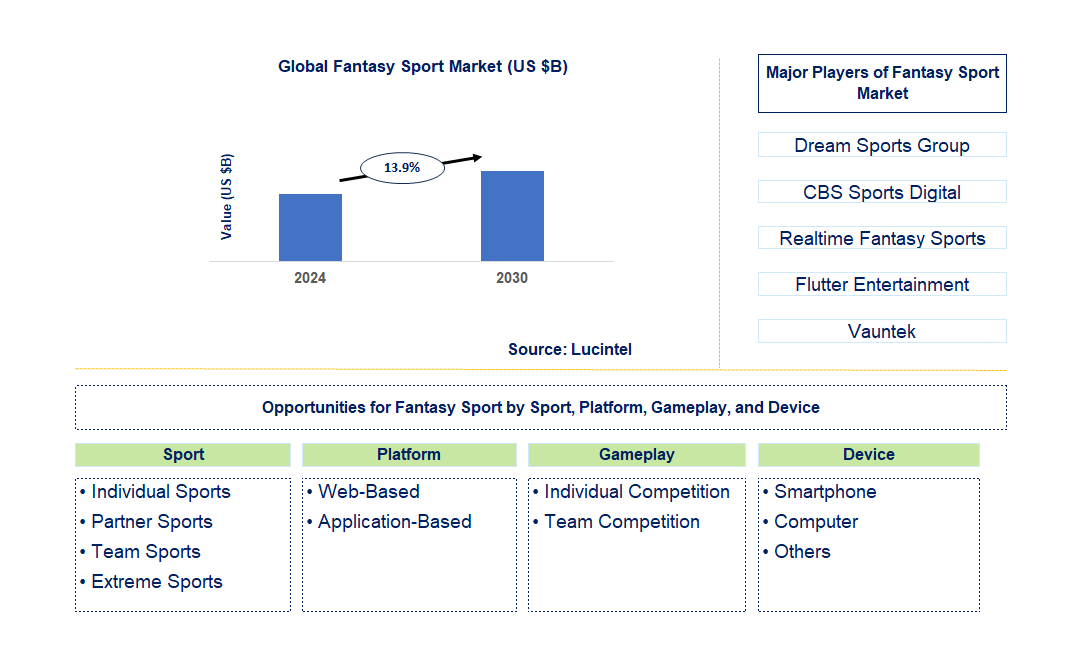
Key data points: The growth forecast = 13.9% annually for the next 6 years. Scroll below to get more insights. This market report covers trends, opportunities, and forecasts in the global fantasy sport market to 2030 by sport (individual sports, partner sports, team sports, and extreme sports), platform (web-based and application-based), gameplay (individual competition and team competition), device (smartphone, computer, and others), and region (North America, Europe, Asia Pacific, and the Rest of the World)
We'll send your sample report shortly.
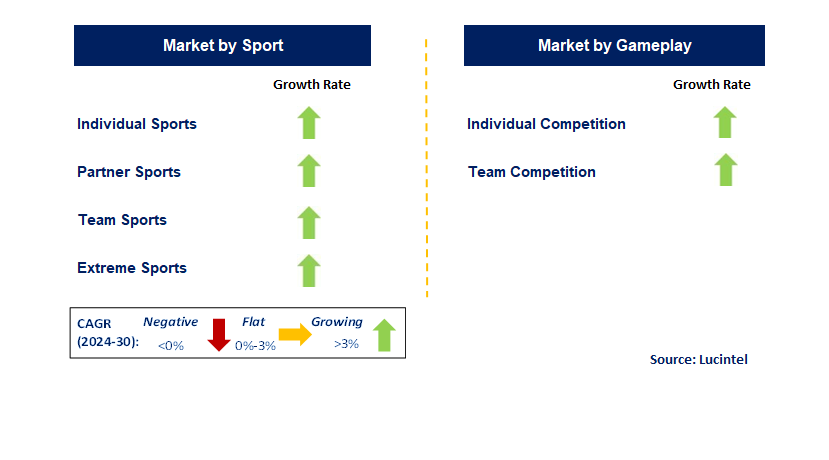
• Lucintel forecasts that, within the sport category, team sport is expected to witness the highest growth over the forecast period because individuals from several teams can be combined to create a virtual team, team sports have a higher possibility of success.
• Within the gameplay category, team competition is expected to witness higher growth because team events have a league system that lets participants maximize their winnings by placing bets or creating teams numerous times.
• In terms of regions, North America is expected to witness the highest growth over the forecast period due to the extensive array of sports options available. A more than 150-page report is developed to help in your business decisions.
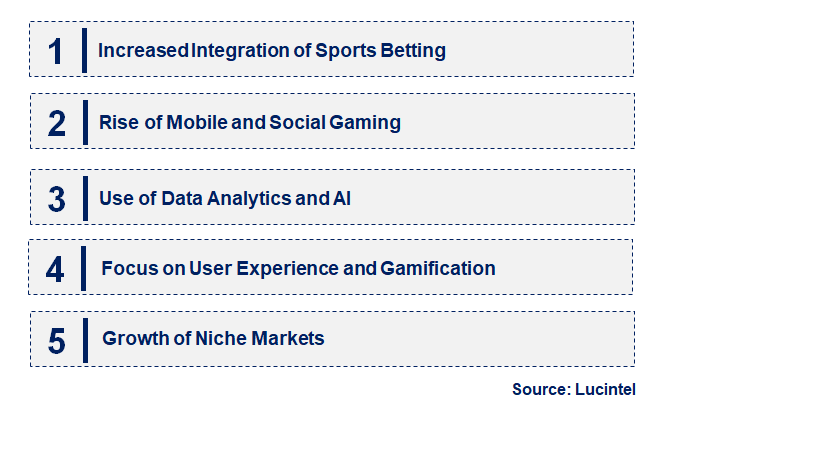
• Increased Integration of Sports Betting: Many fantasy sports platforms are incorporating sports betting functionalities, allowing users to engage in both fantasy leagues and real-time betting. This integration creates a more holistic sports engagement experience, attracting a broader audience. As states in the U.S. continue to legalize sports betting, platforms that offer both options stand to benefit significantly. This trend is also seen in other countries, driving growth in user participation and overall revenue for fantasy sports companies.
• Rise of Mobile and Social Gaming: Mobile applications have become the primary access point for fantasy sports, with users preferring the convenience of managing their teams on-the-go. Additionally, social gaming features, such as leagues with friends and community interactions, enhance user engagement. The shift toward mobile and social platforms is expected to drive higher retention rates and attract new users, particularly among younger demographics who value social interaction in gaming.
• Use of Data Analytics and AI: Advanced data analytics and artificial intelligence are being leveraged to enhance user experiences in fantasy sports. These technologies provide players with real-time insights, personalized recommendations, and predictive analytics, helping them make informed decisions. Platforms utilizing AI to analyze player performance and injury risks can significantly improve user engagement and satisfaction, as players gain access to deeper insights and strategic advantages.
• Focus on User Experience and Gamification: The emphasis on user experience is driving fantasy sports platforms to incorporate gamification elements, such as challenges, rewards, and achievement systems. These features not only enhance user engagement but also encourage healthy competition among participants. By making fantasy sports more interactive and rewarding, platforms can attract a broader audience and foster community engagement, which is crucial for long-term success.
• Growth of Niche Markets: As the fantasy sports market matures, niche markets are emerging, focusing on less mainstream sports or specific demographics. For example, fantasy leagues centered around esports or women’s sports are gaining traction. This trend reflects a diversification of user interests and presents opportunities for platforms to cater to underrepresented markets. By offering tailored experiences and content, companies can tap into new audiences and drive market expansion. The fantasy sports market is poised for continued growth, driven by a combination of emerging trends that enhance user engagement and broaden participation. By staying attuned to these developments, stakeholders can strategically position themselves to capitalize on new opportunities and navigate the evolving landscape effectively.
• Integration with Sports Betting: Many fantasy sports platforms are now integrating sports betting features, creating a seamless experience for users who wish to engage in both fantasy leagues and real-time wagering. This development is particularly prominent in the U.S., where several states have legalized sports betting. By offering combined services, companies like DraftKings and FanDuel are attracting a broader audience, enhancing user engagement, and increasing revenue streams. This integration also positions these platforms as one-stop shops for sports enthusiasts, driving further innovation and competition in the market.
• Enhanced Mobile Accessibility: The growing popularity of mobile applications has transformed how users engage with fantasy sports. Platforms are investing in user-friendly mobile experiences, allowing players to manage their teams, access real-time statistics, and interact with others on-the-go. This shift is especially appealing to younger demographics who prefer mobile over desktop. As a result, fantasy sports companies are prioritizing app development and optimization, leading to increased user retention and a rise in active participants. Enhanced mobile features, including push notifications and live updates, further enrich the user experience.
• Use of Advanced Data Analytics: The implementation of advanced data analytics is revolutionizing the fantasy sports landscape. Platforms are using sophisticated algorithms to analyze player performance, injury reports, and historical data, providing users with personalized insights and strategic recommendations. This technology empowers players to make informed decisions when drafting teams or managing lineups. As predictive analytics becomes more mainstream, users can gain a competitive edge, enhancing their overall experience. The use of AI-driven analytics not only improves user engagement but also fosters a sense of community among players who share strategies and insights.
• Emergence of Niche Fantasy Leagues: As the fantasy sports market matures, there is a noticeable shift toward niche leagues that cater to specific interests or demographics. For instance, fantasy leagues focused on esports, women’s sports, or less mainstream activities are gaining traction. This diversification reflects changing consumer preferences and presents opportunities for platforms to engage underrepresented audiences. By offering tailored experiences and specialized content, companies can attract new users and expand their market share. Niche leagues also foster community-building, as participants share a common interest, enhancing user loyalty and satisfaction.
• Regulatory Developments and Compliance: The regulatory environment surrounding fantasy sports is evolving, with governments worldwide establishing clearer guidelines for operation. In the U.S., recent rulings have clarified the legal status of fantasy sports and sports betting, leading to increased legitimacy for operators. Companies are prioritizing compliance with these regulations, ensuring transparency and fairness in their operations. This development not only helps build trust with users but also encourages further investment in the industry. As regulations become more standardized, the fantasy sports market is likely to experience enhanced growth and stability. The recent developments in the fantasy sports market illustrate a dynamic and rapidly evolving landscape. From integration with sports betting to the rise of niche leagues, these trends reflect changing consumer preferences and technological advancements. By staying attuned to these shifts, companies can capitalize on emerging opportunities and enhance user engagement, positioning themselves for future success.
• Mobile App Development: The rise of mobile usage has transformed how users engage with fantasy sports. Developing intuitive and feature-rich mobile applications allows companies to reach a broader audience and enhance user retention. With capabilities like real-time updates, push notifications, and easy team management, mobile apps provide users with seamless experiences. Companies can also incorporate gamification elements, such as rewards and challenges, to increase engagement. As mobile devices become the primary platform for gaming and sports interaction, focusing on app development is crucial for sustained growth.
• Integration of Sports Betting: As more regions legalize sports betting, integrating these features into fantasy sports platforms presents a significant growth opportunity. By offering users the option to bet on live games alongside managing their fantasy teams, companies can attract a broader audience looking for a comprehensive sports experience. This dual offering not only increases user engagement but also creates additional revenue streams through betting fees. Establishing partnerships with betting companies can further enhance credibility and market reach, positioning fantasy platforms as essential destinations for sports enthusiasts.
• Expansion into Niche Markets: Focusing on niche markets within the fantasy sports landscape can provide substantial growth opportunities. For instance, creating platforms dedicated to esports, women’s sports, or regional leagues can attract underserved audiences and cultivate dedicated communities. By tailoring experiences to specific interests, companies can enhance user engagement and loyalty. Additionally, niche leagues often foster more passionate player bases, which can lead to increased participation and word-of-mouth marketing. This strategy allows businesses to differentiate themselves in a crowded market and tap into unique revenue opportunities.
• Advanced Data Analytics: Utilizing advanced data analytics to enhance user experiences is another promising growth avenue. By providing users with personalized insights, predictive analytics, and performance tracking, companies can empower players to make informed decisions. This level of customization enhances user engagement and encourages longer participation in leagues. Additionally, offering tools that analyze player statistics and trends can differentiate a platform from competitors. As users seek competitive advantages in their gameplay, the integration of sophisticated analytics can drive both user satisfaction and retention.
• Partnerships with Sports Organizations: Forming strategic partnerships with sports leagues, teams, and media companies can significantly boost visibility and credibility for fantasy sports platforms. Collaborating with these entities allows for co-branded marketing campaigns, exclusive content, and access to a larger audience. Such partnerships can also facilitate data sharing, enriching user experiences with official statistics and insights. By aligning with reputable sports organizations, fantasy platforms can enhance their brand image and attract new users, capitalizing on the loyal fan bases of established teams and leagues. The fantasy sports market offers numerous strategic growth opportunities that companies can leverage to expand their reach and enhance user engagement. By focusing on mobile development, integrating sports betting, exploring niche markets, utilizing data analytics, and forming partnerships, businesses can position themselves for long-term success in this dynamic landscape.
• Technological Advancements: The rise of mobile technology and digital platforms has significantly enhanced user engagement in fantasy sports. Improved apps and websites provide real-time updates, seamless gameplay, and intuitive user interfaces. Features like live scoring, analytics, and player statistics enable users to make informed decisions quickly. Additionally, advancements in data analytics and machine learning allow platforms to offer personalized recommendations, creating a more tailored experience for players. This technological evolution not only attracts new users but also increases retention rates, driving market growth.
• Growing Popularity of Sports: The increasing global interest in sports, particularly among millennials and Gen Z, has contributed to the expansion of the fantasy sports market. Major leagues such as the NFL, NBA, and Premier League have cultivated vast fan bases, and fantasy sports offer fans a way to engage more deeply with their favorite teams and players. This emotional connection encourages participation in fantasy leagues, making it a popular pastime. As viewership and participation in sports continue to rise, the demand for fantasy sports platforms will likely grow correspondingly.
• Legalization of Sports Betting: The legalization of sports betting in various jurisdictions has created a favorable environment for the fantasy sports market. As more states and countries adopt regulations that permit sports wagering, companies can integrate betting features into their fantasy platforms. This convergence not only attracts a broader audience seeking diverse sports experiences but also opens additional revenue streams. The ability to place bets alongside fantasy play enhances user engagement and provides a competitive edge in an increasingly crowded market.
• Increased Investment and Sponsorship: Growing interest from investors and sponsorship deals with major sports brands have bolstered the fantasy sports market. Venture capital funding has increased significantly, allowing startups and established companies to innovate and expand their offerings. Sponsorships with sports teams and leagues further enhance brand visibility and credibility, attracting more users. This influx of investment enables platforms to develop new features, enhance user experience, and expand marketing efforts, contributing to overall market growth.
• Social Interaction and Community Building: The social aspect of fantasy sports plays a crucial role in driving engagement. Platforms that facilitate interactions among users—such as leagues, forums, and social media integration—create a sense of community. This camaraderie not only enhances user experience but also encourages long-term participation. Users are more likely to return when they feel part of a community, sharing strategies and celebrating victories with friends. As social connections become increasingly vital, platforms that foster these relationships can differentiate themselves and capture larger market shares. Challenges in the fantasy sports market include:
• Regulatory Uncertainties: The fantasy sports market faces ongoing regulatory challenges as different jurisdictions adopt varying rules governing its operation. Legal ambiguities can hinder growth and limit the expansion of fantasy platforms, as businesses must navigate complex and often inconsistent regulations. Moreover, emerging laws surrounding sports betting can further complicate compliance. Companies need to invest in legal expertise to ensure adherence to regulations, which can divert resources away from product development and marketing.
• Market Saturation: The fantasy sports market has witnessed significant growth, leading to increased competition and potential saturation. With numerous platforms offering similar services, it becomes challenging for companies to differentiate themselves and retain users. A saturated market can lead to reduced profit margins and intense pricing competition, making it essential for companies to innovate continually and provide unique value propositions. Failure to stand out in a crowded marketplace can jeopardize long-term success.
• Competition from Traditional Gambling: The rise of legalized sports betting presents both an opportunity and a challenge for the fantasy sports market. Traditional gambling platforms are increasingly attracting users who may prefer the simplicity of betting over managing fantasy teams. As these platforms offer live betting and instant gratification, they pose a threat to fantasy sports participation. Companies in the fantasy space must continuously enhance their offerings and user experiences to compete effectively against the allure of traditional gambling options. The fantasy sports market is shaped by various drivers, including technological advancements, sports popularity, and the legalization of betting, all of which create significant growth opportunities. However, regulatory uncertainties, market saturation, and competition from traditional gambling platforms pose formidable challenges. Stakeholders must navigate these dynamics to ensure sustainable growth and capture the interest of a diverse and engaged audience.
• Dream Sports Group
• CBS Sports Digital
• Realtime Fantasy Sports
• Flutter Entertainment
• Vauntek
• DraftKings
• Pure Win
• FanDuel
• FantasyPros.com
• MY11Circle
• Individual Sports
• Partner Sports
• Team Sports
• Extreme Sports
• Web-Based
• Application-Based
• Individual Competition
• Team Competition
• Smartphone
• Computer
• Others
• North America
• Europe
• Asia Pacific
• The Rest of the World
• United States: In the United States, the fantasy sports market has seen substantial growth, particularly following the legalization of sports betting in several states. Major platforms like DraftKings and FanDuel have expanded their offerings, integrating sports betting features with fantasy sports. Additionally, partnerships with professional sports leagues have enhanced visibility and engagement. The use of data analytics for player performance and injury updates has become more sophisticated, attracting both casual and serious players. Mobile accessibility continues to be a focus, with apps providing real-time updates and personalized experiences, contributing to increased participation and revenue.
• China: China's fantasy sports market is rapidly evolving, primarily driven by the country's massive sports fan base and increasing internet penetration. Platforms such as 500.com have introduced fantasy sports offerings, aligning with popular sports like basketball and soccer. The government’s regulatory stance is becoming more defined, with emerging guidelines that could support the growth of legal fantasy sports. The incorporation of social gaming elements is gaining traction, allowing users to engage with friends and communities, enhancing user retention. As local companies invest in technology, the market is poised for further expansion, particularly among younger demographics.
• Germany: Germany's fantasy sports market has experienced growth, particularly within soccer. Companies like KICKBASE and Fantasy Bundesliga have made significant strides, tapping into the passion of German football fans. Legal frameworks are becoming clearer, with regulations supporting fantasy sports as a form of entertainment. Innovations in user experience, such as interactive features and gamification elements, are attracting more participants. Additionally, local and international partnerships are fostering competitive platforms, contributing to market dynamism. The emphasis on community and social interaction is becoming a cornerstone of user engagement strategies, enhancing overall satisfaction.
• India: India's fantasy sports market is witnessing explosive growth, driven by the popularity of cricket and increasing smartphone usage. Platforms like Dream11 and MyTeam11 have capitalized on this trend, offering users the chance to create teams and compete based on real-world performance. Regulatory clarity surrounding online gaming is improving, encouraging further investment. The incorporation of localized content and regional languages is attracting a diverse user base. Additionally, innovative marketing strategies, including celebrity endorsements, are enhancing brand visibility and user acquisition. With a young population eager for engagement, the potential for continued growth is substantial.
• Japan: In Japan, the fantasy sports market is still in its nascent stages but is gradually gaining traction, particularly with baseball and soccer. Local platforms are emerging, although they face regulatory challenges. Recent collaborations with professional sports teams aim to boost visibility and attract fans to fantasy sports. The focus is on enhancing user experience through mobile applications and real-time statistics. As the cultural acceptance of fantasy sports grows, especially among younger audiences, there is potential for expansion. Innovative marketing campaigns and partnerships will be crucial for driving user engagement and participation.


• Dream Sports Group
• CBS Sports Digital
• Realtime Fantasy Sports
• Flutter Entertainment
• Vauntek
• DraftKings
• Pure Win
• FanDuel
• FantasyPros.com
• MY11Circle Q5. Which fantasy sport market segment will be the largest in future? Answer: Lucintel forecasts that team sport is expected to witness the highest growth over the forecast period because individuals from several teams can be combined to create a virtual team, team sports have a higher possibility of success. Q6. In fantasy sport market, which region is expected to be the largest in next 5 years? Answer: North America is expected to witness highest growth over the forecast period due to extensive array of sports options available. Q.7 Do we receive customization in this report? Answer: Yes, Lucintel provides 10% customization without any additional cost.


Choose a license that fits your team. Instant PDF delivery.
Prices exclude taxes. Instant delivery. Custom licensing available on request.
Market Report · July 22, 2026
Market Report · July 16, 2026
Market Report · May 18, 2026
Trusted partner for strategic intelligence and business growth


Receive a complimentary market analysis tailored to your industry. Our analysts will identify key growth opportunities and competitive dynamics specific to your business.

Market size, growth rate, and key trend analysis for your specific sector.

Top competitor positioning and market share analysis.

Strategic recommendations backed by data-driven insights.
Get curated market intelligence and competitive moves straight to your inbox.
By subscribing, you agree to receive our monthly insights. Unsubscribe anytime.
Receive a complimentary market analysis tailored to your industry. Our analysts will identify key growth opportunities and competitive dynamics specific to your business.
Market size, growth rate, and key trend analysis for your specific sector.
Top competitor positioning and market share analysis.
Strategic recommendations backed by data-driven insights.
Get curated market intelligence, emerging trends, and competitive moves straight to your inbox each month.
By subscribing, you agree to receive our monthly insights. Unsubscribe anytime.
We'll send your sample report shortly.