
Report Feature
Family Medicine Service Market Trends and Forecast
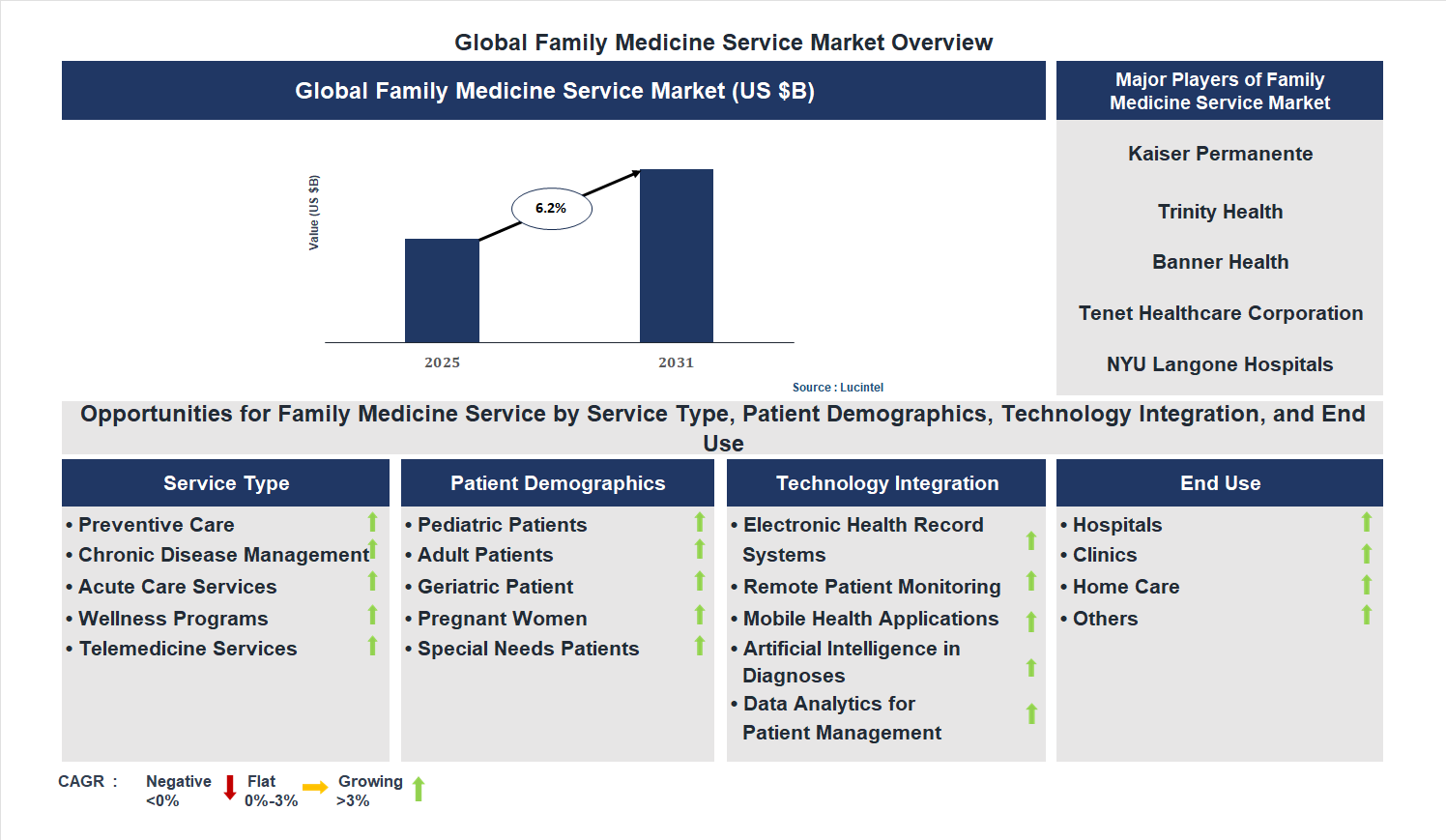
The future of the global family medicine service market looks promising with opportunities in the hospital, clinic, and home care markets. The global family medicine service market is expected to grow with a CAGR of 6.2% from 2025 to 2031. The major drivers for this market are the increasing focus on preventive healthcare services, the rising demand for primary care physicians, and the growing awareness of chronic disease management.• Lucintel forecasts that, within the service type category, preventive care is expected to witness the highest growth over the forecast period.
• Within the end use category, home care is expected to witness the highest growth.
• In terms of region, APAC is expected to witness the highest growth over the forecast period. Gain valuable insights for your business decisions with our comprehensive 150+ page report. Sample figures with some insights are shown below.
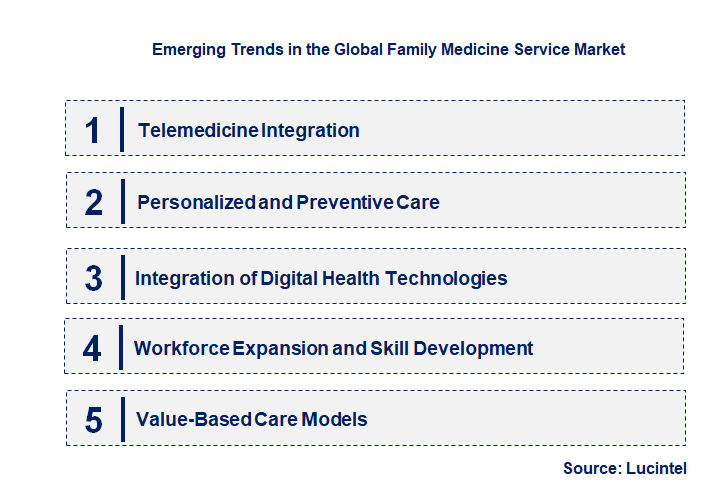
Emerging Trends in the Family Medicine Service Market
The family medicine service market is experiencing rapid evolution driven by technological advancements, changing patient expectations, and healthcare policy reforms. As healthcare systems aim to improve accessibility, quality, and cost-efficiency, providers are adopting innovative approaches to meet these demands. Emerging trends are shaping the future landscape of family medicine, influencing service delivery models, patient engagement, and operational efficiencies. These developments are not only expanding the scope of family medicine but also enhancing patient outcomes and satisfaction. Understanding these key trends is essential for stakeholders to navigate the market effectively and capitalize on new opportunities.• Telemedicine Integration: Telemedicine is increasingly integrated into family medicine services, allowing patients to consult healthcare providers remotely via video or phone. This trend enhances accessibility, especially for rural or underserved populations, reduces wait times, and offers greater flexibility for patients and providers. It also supports chronic disease management and preventive care by enabling regular monitoring without the need for in-person visits. The COVID-19 pandemic accelerated telehealth adoption, and its continued growth is transforming traditional care models, making healthcare more patient-centered and efficient.
• Personalized and Preventive Care: Family medicine providers are emphasizing personalized and preventive care strategies to improve health outcomes. This involves utilizing patient data, genetic information, and lifestyle factors to develop customized treatment plans. Preventive care initiatives, such as screenings and health education, are prioritized to reduce the incidence of chronic diseases and hospitalizations. This trend shifts the focus from reactive treatment to proactive health management, fostering long-term patient engagement and reducing healthcare costs. It also aligns with broader healthcare goals of improving quality and patient satisfaction.
• Integration of Digital Health Technologies: Digital health tools, including electronic health records (EHRs), mobile health apps, and wearable devices, are increasingly integrated into family medicine practices. These technologies streamline clinical workflows, improve data accuracy, and facilitate real-time patient monitoring. They enable better coordination among healthcare providers and empower patients to participate actively in their health management. The adoption of AI and data analytics further enhances diagnostic accuracy and personalized treatment. This digital transformation is making family medicine more efficient, data-driven, and responsive to patient needs.
• Workforce Expansion and Skill Development: The growing demand for family medicine services is prompting efforts to expand the workforce and enhance provider skills. This includes increasing training programs, encouraging interdisciplinary teams, and incorporating nurse practitioners and physician assistants into primary care roles. Continuous professional development ensures providers stay updated with the latest medical practices and technologies. Addressing workforce shortages is critical to maintaining access and quality of care, especially in rural and underserved areas. This trend supports a more flexible, skilled, and resilient primary care workforce capable of meeting evolving healthcare demands.
• Value-Based Care Models: The shift from fee-for-service to value-based care models is a significant trend in family medicine. These models incentivize providers to focus on patient outcomes, quality of care, and cost-efficiency. This approach encourages preventive care, care coordination, and patient engagement, ultimately reducing unnecessary hospitalizations and procedures. Value-based care aligns financial incentives with health outcomes, fostering a more sustainable healthcare system. It also promotes accountability and continuous improvement in service delivery, ensuring that family medicine remains patient-centered and outcome-oriented. In summary, these emerging trends are fundamentally reshaping the family medicine service market by making care more accessible, personalized, efficient, and outcome-driven. They are fostering a more patient-centered approach, leveraging technology, and addressing workforce challenges, which collectively enhance the quality and sustainability of primary healthcare services.
Recent Development in the Family Medicine Service Market
The family medicine service market has experienced significant growth and transformation driven by evolving healthcare needs, technological advancements, and policy changes. As populations age and healthcare demands increase, providers are focusing on comprehensive, accessible, and patient-centered care. Innovations in telemedicine, data analytics, and integrated health services are reshaping the landscape. Additionally, government initiatives and insurance reforms are influencing market dynamics. These developments are fostering a more efficient, cost-effective, and personalized approach to family medicine, ultimately improving patient outcomes and expanding market opportunities. The following are five key recent developments shaping this market.• Expansion of Telemedicine Services: The adoption of telemedicine has surged, enabling family physicians to provide remote consultations. This development improves access for rural and underserved populations, reduces healthcare costs, and enhances patient convenience. Telehealth platforms are integrating with electronic health records, facilitating seamless care delivery. The growth is driven by technological advancements, patient demand for virtual care, and supportive policies. As a result, telemedicine is becoming a core component of family medicine, broadening service reach and operational efficiency.
• Integration of Artificial Intelligence (AI) and Data Analytics: AI-powered tools and data analytics are increasingly used to support clinical decision-making, predict patient risks, and personalize treatment plans. These technologies enhance diagnostic accuracy, streamline workflows, and improve patient outcomes. Family practices are adopting AI-driven scheduling, billing, and patient engagement systems, leading to increased efficiency. The impact includes better resource management and more targeted care, positioning AI as a vital driver of innovation within the market.
• Focus on Preventive and Chronic Disease Management: There is a growing emphasis on preventive care and managing chronic conditions such as diabetes and hypertension. Family medicine providers are adopting comprehensive screening programs, lifestyle counseling, and patient education initiatives. This shift aims to reduce hospitalizations and long-term healthcare costs while improving quality of life. The market is witnessing increased investment in wellness programs and integrated care models, which are transforming traditional reactive care into proactive health management.
• Policy and Reimbursement Reforms: Governments and insurers are implementing policies that incentivize primary care services, including value-based reimbursement models. These reforms promote quality over quantity, encouraging family physicians to deliver comprehensive, patient-centered care. Enhanced reimbursement for preventive services and care coordination is driving practice transformation. This development supports sustainable growth of the market by aligning financial incentives with improved health outcomes and fostering innovation.
• Rise of Multidisciplinary and Collaborative Care Models: Family medicine practices are increasingly adopting multidisciplinary teams, including specialists, pharmacists, and mental health professionals. This collaborative approach enhances care coordination, addresses complex health needs, and improves patient satisfaction. Integrated care models facilitate holistic treatment plans and reduce fragmentation. The trend is driven by recognition of the benefits of team-based care and policy support for integrated health services, significantly impacting service delivery and market expansion. In summary, these developments are collectively transforming the family medicine service market by enhancing accessibility, efficiency, and quality of care. The integration of technology, policy reforms, and innovative care models are driving growth, improving patient outcomes, and creating new opportunities for providers and stakeholders in this evolving landscape.
Strategic Growth Opportunities in the Family Medicine Service Market
The family medicine service market is experiencing rapid evolution driven by changing healthcare needs, technological advancements, and a focus on preventive care. As populations grow and healthcare systems adapt, key applications within this market are presenting significant growth opportunities. These developments are shaping the future landscape of family medicine, emphasizing personalized care, telemedicine, and integrated health services. Stakeholders are increasingly recognizing the importance of expanding services across various applications to improve patient outcomes and reduce healthcare costs. This dynamic environment offers numerous avenues for growth, innovation, and improved healthcare delivery, making it essential for providers and investors to identify and capitalize on these opportunities.• Telemedicine and Virtual Care: Expanding telemedicine services enhances access to family medicine, especially in remote areas, leading to increased patient engagement and convenience. This growth reduces healthcare costs and improves chronic disease management, making healthcare more accessible and efficient.
• Preventive Care and Wellness Programs: Emphasizing preventive services helps reduce long-term healthcare costs by catching health issues early. Growth in wellness programs within family medicine promotes healthier lifestyles and reduces the burden of chronic diseases.
• Integration of Digital Health Technologies: Incorporating electronic health records, mobile health apps, and wearable devices streamlines patient management and improves diagnostic accuracy. This integration enhances personalized care and facilitates real-time health monitoring.
• Focus on Chronic Disease Management: Developing specialized programs for managing chronic conditions like diabetes and hypertension improves patient outcomes. This focus reduces hospitalizations and healthcare costs while increasing patient satisfaction.
• Expansion of Pediatric and Geriatric Services: Tailoring family medicine services to meet the needs of pediatric and elderly populations addresses demographic shifts. This expansion ensures comprehensive care for vulnerable groups, fostering long-term patient loyalty. In summary, these growth opportunities are significantly impacting the family medicine service market by driving innovation, improving patient outcomes, and expanding service reach. They enable providers to meet evolving healthcare demands effectively, fostering sustainable growth and enhanced healthcare delivery across diverse populations.
Family Medicine Service Market Driver and Challenges
The family medicine service market is influenced by a variety of technological, economic, and regulatory factors that shape its growth and development. Advances in healthcare technology, changing patient demographics, evolving regulatory frameworks, and economic shifts all play crucial roles in determining market dynamics. These factors create opportunities for expansion while also presenting challenges that need to be navigated carefully. Understanding these drivers and challenges is essential for stakeholders aiming to optimize service delivery, improve patient outcomes, and ensure sustainable growth within the market. The factors responsible for driving the family medicine service market include:• Technological Advancements: The integration of telemedicine, electronic health records, and diagnostic tools enhances service efficiency and accessibility. These innovations enable family physicians to provide comprehensive care remotely, improve patient engagement, and streamline workflows. As technology becomes more affordable and widespread, it encourages the adoption of family medicine services, especially in underserved areas. This technological evolution not only improves quality of care but also reduces operational costs, making family medicine more sustainable and appealing to healthcare providers and patients alike.
• Growing Chronic Disease Prevalence: The rising incidence of chronic conditions such as diabetes, hypertension, and obesity increases demand for continuous, primary care services. Family physicians are often the first point of contact for managing these long-term health issues, emphasizing the importance of accessible, ongoing care. This trend drives market growth by expanding patient base and encouraging healthcare systems to invest more in family medicine infrastructure and workforce development. The need for preventive care and early intervention further amplifies this demand, positioning family medicine as a critical component of healthcare delivery.
• Aging Population: An increasing elderly population worldwide necessitates more comprehensive and frequent primary care services. Older adults typically have multiple health issues requiring coordinated management, which family physicians are well-positioned to provide. This demographic shift results in higher patient volumes and a greater need for specialized family medicine services tailored to age-related health concerns. Consequently, healthcare providers are expanding family medicine offerings to cater to this demographic, fostering market growth and emphasizing the importance of accessible, continuous care for aging populations.
• Regulatory and Policy Support: Governments and health authorities are implementing policies that promote primary care and family medicine. Incentives such as funding, training programs, and accreditation standards encourage healthcare providers to expand family medicine services. These regulatory frameworks aim to improve healthcare access, reduce hospital admissions, and enhance overall health outcomes. Supportive policies also facilitate integration of family medicine into broader healthcare systems, fostering innovation and quality improvement initiatives that drive market expansion.
• Increasing Healthcare Expenditure: Rising healthcare spending globally, driven by economic growth and increased health awareness, boosts demand for comprehensive primary care services. Investment in family medicine infrastructure, workforce, and technology is expanding as stakeholders recognize its role in cost-effective healthcare delivery. Higher expenditure also enables the adoption of advanced diagnostic and treatment tools, improving service quality. This financial commitment supports market growth by ensuring the availability of resources necessary for expanding family medicine services and meeting increasing patient needs. The challenges facing the family medicine service market include:
• Regulatory Complexity: Navigating diverse and evolving healthcare regulations can be challenging for providers. Variations across regions in licensing, reimbursement policies, and data privacy laws create compliance burdens that may hinder service expansion. Regulatory uncertainty can delay investments and innovation, impacting the overall growth trajectory of the family medicine market. Providers must continuously adapt to changing legal frameworks, which can increase operational costs and complicate strategic planning.
• Workforce Shortages: A significant challenge is the shortage of trained family physicians and healthcare professionals. This scarcity limits service capacity, especially in rural and underserved areas, leading to longer wait times and reduced access to care. Addressing workforce shortages requires substantial investment in training and retention programs, which may be constrained by financial and policy limitations. The imbalance between supply and demand threatens to impede market growth and compromise quality of care.
• Technological Disparities: While technological advancements drive growth, disparities in access to digital health tools pose challenges. Limited infrastructure, especially in low-resource settings, hampers the adoption of telemedicine and electronic health records. These disparities can exacerbate healthcare inequalities and restrict the reach of family medicine services. Ensuring equitable access to technology remains a critical hurdle for sustainable market development. In summary, the family medicine service market is shaped by significant technological innovations, demographic shifts, and supportive policies that foster growth. However, challenges such as regulatory complexities, workforce shortages, and technological disparities must be addressed to realize its full potential. The interplay of these drivers and challenges will determine the future landscape, emphasizing the need for strategic planning, investment, and policy support to ensure accessible, high-quality primary care for diverse populations.
List of Family Medicine Service Companies
Companies in the market compete on the basis of product quality offered. Major players in this market focus on expanding their manufacturing facilities, R&D investments, infrastructural development, and leverage integration opportunities across the value chain. With these strategies family medicine service companies cater increasing demand, ensure competitive effectiveness, develop innovative products & technologies, reduce production costs, and expand their customer base. Some of the family medicine service companies profiled in this report include-• Kaiser Permanente
• Trinity Health
• Banner Health
• Tenet Healthcare Corporation
• NYU Langone Hospitals
• Intermountain Health Care
• Baylor Scott & White Health
• Geisinger Clinic
• Ascension Health
• Michigan Health Corp
Family Medicine Service Market by Segment
The study includes a forecast for the global family medicine service market by service type, patient demographics, technology integration, end use, and region.Family Medicine Service Market by Service Type [Value from 2019 to 2031]:
• Preventive Care
• Chronic Disease Management
• Acute Care Services
• Wellness Programs
• Telemedicine Services
Family Medicine Service Market by Patient Demographics [Value from 2019 to 2031]:
• Pediatric Patients
• Adult Patients
• Geriatric Patient
• Pregnant Women
• Special Needs Patients
Family Medicine Service Market by Technology Integration [Value from 2019 to 2031]:
• Electronic Health Record Systems
• Remote Patient Monitoring
• Mobile Health Applications
• Artificial Intelligence in Diagnoses
• Data Analytics for Patient Management
Family Medicine Service Market by End Use [Value from 2019 to 2031]:
• Hospitals
• Clinics
• Home Care
• Others
Family Medicine Service Market by Region [Value from 2019 to 2031]:
• North America
• Europe
• Asia Pacific
• The Rest of the World
Country Wise Outlook for the Family Medicine Service Market
The family medicine service market has experienced significant shifts driven by technological advancements, evolving healthcare policies, and changing patient needs across the globe. Countries are increasingly focusing on expanding primary care services, integrating digital health solutions, and addressing workforce shortages to improve healthcare outcomes. These developments reflect a broader trend toward accessible, efficient, and patient-centered family medicine practices. Each country’s unique healthcare infrastructure and policy environment influence their specific strategies and innovations in this market.• United States: The US has seen a surge in telemedicine adoption within family medicine, driven by the COVID-19 pandemic, leading to increased access and convenience for patients. There is a growing emphasis on value-based care models, incentivizing quality over quantity. Additionally, efforts to address primary care physician shortages include expanded training programs and incentives for rural practice. Integration of electronic health records (EHRs) continues to improve care coordination. Policy reforms aim to enhance reimbursement rates for family physicians, encouraging workforce retention and growth.
• China: China is rapidly expanding its primary care infrastructure, with government initiatives promoting family medicine services to reduce hospital burdens. Digital health platforms are increasingly integrated into family practice, facilitating remote consultations and health monitoring. The country is also investing in training programs to boost the number of qualified family physicians. Policy reforms aim to improve service quality and accessibility, especially in rural areas. The use of artificial intelligence (AI) and big data analytics is emerging to support diagnosis and personalized care.
• Germany: Germany’s family medicine market is characterized by a strong primary care foundation, with ongoing efforts to improve patient-centered approaches. Digital health solutions, including teleconsultations and electronic prescriptions, are becoming more prevalent. The government is incentivizing general practitioners to work in underserved regions through financial benefits and support programs. There is a focus on integrating preventive care and chronic disease management into family medicine practices. Workforce development initiatives aim to address demographic shifts and physician shortages.
• India: India is witnessing rapid growth in family medicine services, driven by increasing healthcare demand and government initiatives like Ayushman Bharat. The adoption of telemedicine is expanding, especially in rural and semi-urban areas, to improve access. Private sector involvement is significant, with many clinics adopting digital health tools. Efforts are underway to standardize training and certification for family physicians. The focus is on providing affordable, comprehensive primary care to a large, diverse population, with innovations in mobile health (mHealth) and community-based services.
• Japan: Japan’s family medicine market is evolving with a focus on aging population needs, emphasizing chronic disease management and palliative care. Digital health technologies, including remote monitoring and electronic health records, are increasingly integrated into practice. The government promotes primary care reforms to improve efficiency and patient satisfaction. There is a push to enhance training programs for family physicians to meet demographic challenges. Efforts are also underway to improve collaboration between specialists and primary care providers, ensuring holistic patient management.

Features of the Global Family Medicine Service Market
Market Size Estimates: Family medicine service market size estimation in terms of value ($B). Trend and Forecast Analysis: Market trends (2019 to 2024) and forecast (2025 to 2031) by various segments and regions. Segmentation Analysis: Family medicine service market size by various segments, such as by service type, patient demographics, technology integration, end use, and region in terms of value ($B). Regional Analysis: Family medicine service market breakdown by North America, Europe, Asia Pacific, and Rest of the World. Growth Opportunities: Analysis of growth opportunities in different service types, patient demographics, technology integration, end uses, and regions for the family medicine service market. Strategic Analysis: This includes M&A, new product development, and competitive landscape of the family medicine service market. Analysis of competitive intensity of the industry based on Porter’s Five Forces model.
FAQ
Q1. What is the growth forecast for family medicine service market? Answer: The global family medicine service market is expected to grow with a CAGR of 6.2% from 2025 to 2031. Q2. What are the major drivers influencing the growth of the family medicine service market? Answer: The major drivers for this market are the increasing focus on preventive healthcare services, the rising demand for primary care physicians, and the growing awareness of chronic disease management. Q3. What are the major segments for family medicine service market? Answer: The future of the family medicine service market looks promising with opportunities in the hospital, clinic, and home care markets. Q4. Who are the key family medicine service market companies? Answer: Some of the key family medicine service companies are as follows:• Kaiser Permanente
• Trinity Health
• Banner Health
• Tenet Healthcare Corporation
• NYU Langone Hospitals
• Intermountain Health Care
• Baylor Scott & White Health
• Geisinger Clinic
• Ascension Health
• Michigan Health Corp Q5. Which family medicine service market segment will be the largest in future? Answer: Lucintel forecasts that, within the service type category, preventive care is expected to witness the highest growth over the forecast period. Q6. In family medicine service market, which region is expected to be the largest in next 5 years? Answer: In terms of region, APAC is expected to witness the highest growth over the forecast period. Q7. Do we receive customization in this report? Answer: Yes, Lucintel provides 10% customization without any additional cost.
Table of Contents
List of Figures
List of Tables
Methodology
- In-depth interviews of the major players in this market
- Detailed secondary research from competitors’ financial statements and published data
- Extensive searches of published works, market, and database information pertaining to industry news, company press releases, and customer intentions
- A compilation of the experiences, judgments, and insights of Lucintel’s professionals, who have analyzed and tracked this market over the years.


Buy Now
Choose a license that fits your team. Instant PDF delivery.
Prices exclude taxes. Instant delivery. Custom licensing available on request.
Key Questions
- • What are some of the most promising, high-growth opportunities for the family medicine service market by service type (preventive care, chronic disease management, acute care services, wellness programs, and telemedicine services), patient demographics (pediatric patients, adult patients, geriatric patient, pregnant women, and special needs patients), technology integration (electronic health record systems, remote patient monitoring, mobile health applications, artificial intelligence in diagnoses, and data analytics for patient management), end use (hospitals, clinics, home care, and others), and region (North America, Europe, Asia Pacific, and the Rest of the World)?
- • Which segments will grow at a faster pace and why?
- • Which region will grow at a faster pace and why?
- • What are the key factors affecting market dynamics? What are the key challenges and business risks in this market?
- • What are the business risks and competitive threats in this market?
- • What are the emerging trends in this market and the reasons behind them?
- • What are some of the changing demands of customers in the market?
- • What are the new developments in the market? Which companies are leading these developments?
- • Who are the major players in this market? What strategic initiatives are key players pursuing for business growth?
- • What are some of the competing products in this market and how big of a threat do they pose for loss of market share by material or product substitution?
- • What M&A activity has occurred in the last 5 years and what has its impact been on the industry? For any questions related to Family Medicine Service Market, Family Medicine Service Market Size, Family Medicine Service Market Growth, Family Medicine Service Market Analysis, Family Medicine Service Market Report, Family Medicine Service Market Share, Family Medicine Service Market Trends, Family Medicine Service Market Forecast, Family Medicine Service Companies, write Lucintel analyst at email: helpdesk@lucintel.com. We will be glad to get back to you soon.


