
Report Feature
Face Wash Market Trends and Forecast
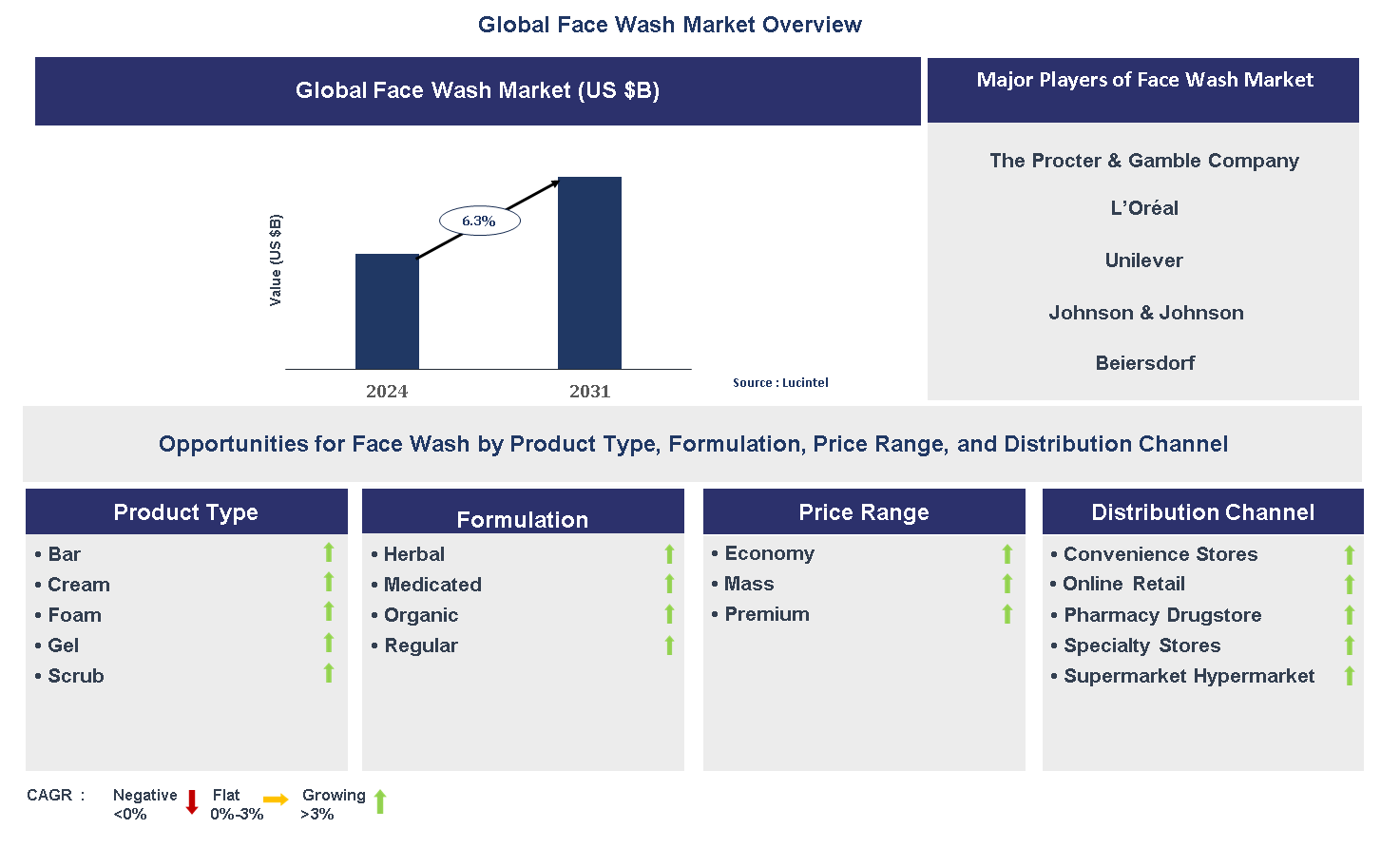
The future of the global face wash market looks promising with opportunities in the convenience store, online retail, pharmacy drugstore, specialty store, and supermarket hypermarket markets. The global face wash market is expected to grow with a CAGR of 6.3% from 2025 to 2031. The major drivers for this market are the increasing awareness about skin care routines, the rising demand for natural face wash, and the growing popularity of anti-pollution products.• Lucintel forecasts that, within the product type category, gel is expected to witness the highest growth over the forecast period.
• Within the distribution channel category, online retail is expected to witness the highest growth.
• In terms of region, APAC is expected to witness the highest growth over the forecast period. Gain valuable insights for your business decisions with our comprehensive 150+ page report. Sample figures with some insights are shown below.
Emerging Trends in the Face Wash Market
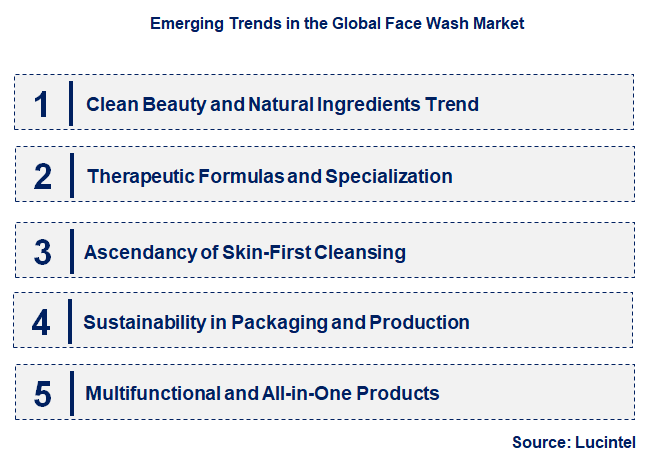
The face wash segment is being redefined by a number of new trends that represent a greater understanding of skin health and contemporary consumer values. The era of simple, broad-spectrum products is gone. Consumers are now looking for specialty, science-formulated solutions that also reflect wider issues around sustainability and natural lifestyles. These trends are impacting everything from product development to marketing, building a more specialized and consumer-driven industry with a focus on both safety and performance.• Clean Beauty and Natural Ingredients Trend: One of the key trends is the increasing popularity of products that have a "clean label," i.e., without toxic chemicals such as sulfates, parabens, phthalates, and artificial perfumes. Buyers are going out of their way to find products that contain natural, plant-based, and organic ingredients such as chamomile, aloe vera, and green tea. This is influenced by the need to minimize exposure to potentially irritating or toxic ingredients. The effect is a market shift in which brands are reformulating products and promoting ingredient transparency to gain consumer trust.
• Therapeutic Formulas and Specialization: The market is shifting from generic products towards specialized formulas addressing specific skin issues. There is growing demand for products formulated to target concerns such as acne, dryness, hyperpigmentation, or sensitivity. These products typically include active, medicated ingredients or calming botanicals. This trend is driving a new category of therapeutic face washes and is backed up by professional endorsements from dermatologists. It enables brands to address niche consumer concerns and provide more effective, problem-solving products.
• Ascendancy of Skin-First Cleansing: One of the most significant trends is the integrated perspective of cleansing as the inaugural step in a complete skincare regimen. Consumers are understanding that a face wash is not simply used to cleanse the skin but also to care for the skin. This is creating products that are pH-balanced, hypoallergenic, and developed to shield the skin barrier. The effect is that brands are now concentrating on building gentle, non-irritating products that are as good for the skin barrier as they are for cleaning. This phenomenon is because of a better understanding of dermatological wellness.
• Sustainability in Packaging and Production: The industry is witnessing a growing trend towards sustainability. They are pushed to lower their environmental impact, and the result is the usage of sustainable and biodegradable packaging and refill packs. Consumers are more open to patronizing companies that have sustainability and fair sourcing as priorities. The result is a market that is seeing sustainability and environmental accountability as a differentiating factor. This fashion is a draw for a new generation of consumers who are more eco-friendly and would like to make responsible buying choices.
• Multifunctional and All-in-One Products: Convenience is a trend that is fueled by the emergence of multifunctional products. Consumers are increasingly going for all-in-one products which serve multiple purposes such as cleansing and exfoliating or cleansing and moisturizing or cleansing and makeup removal. This makes the skincare routine easier and lessens the number of bottles. The trend has a market segment that appreciates efficiency and minimalism. The trend is especially popular among time-starved consumers who are looking for convenient solutions without taking a hit on product effectiveness. These emerging trends are essentially changing the face wash market from within by making it consumer-focused, specialized, and ethically driven. The emphasis on clean labels and therapeutic formulations is propelling the bar in terms of product safety and effectiveness. Simultaneously, the march toward a "skin-first" mentality and sustainable principles is bringing the industry in harmony with contemporary consumers’ values. Together, these trends are pushing the market toward a future in which face wash is a more considered, holistic, and responsible aspect of a self-care regimen.
Recent Development in the Face Wash Market
The face wash industry is being driven by several of the most important recent trends that are shaping its growth and competition. These trends are not independent phenomena but are interlinked, representing a larger change in consumer values and technological ability. The industry is becoming increasingly sophisticated as it is driven by scientific progress, concern for efficacy and safety, and new means of addressing consumers.• Introduction of Specialized and Therapeutic Formulas: One of the major developments is the market-wide availability of specialized and therapeutic face wash formulas. From mere cleansers, brands are evolving to develop solutions for particular problems such as acne, redness, or sensitivity. It satisfies an age-old requirement for targeted skincare products. The effect is a more diversified marketplace serving a broader variety of customer needs and thus enhancing customer satisfaction and loyalty.
• Greater Supply of Organic and Natural Brands: One of the significant developments is the expansion of organic and natural facial wash brands. Spurred by consumer worry over synthetic chemicals, they are made with plant-based ingredients and are paraben-free, sulfate-free, and artificial fragrance-free. The effect is a broadening of the market’s "clean beauty" segment by a major margin. This trend is compelling traditional brands to re-formulate to stay competitive and creating a new market for premium, green products.
• Direct-to-Consumer and Online Channels Rise: The move to direct-to-consumer (D2C) models and online shopping is an important trend. Brands are increasingly using e-commerce sites and their own websites to target a broader range of consumers without the limitations of conventional retail. The result is a very competitive market with more choices for consumers. This evolution also enables brands to own their brand message, speak directly to customers, and gain invaluable feedback in order to guide future product development.
• Dermatologist and Influencer Collaborations: One recent trend is the collaboration between brands, medical professionals, and social media influencers. Several companies now include dermatologist endorsements on packages and in marketing campaigns. This trend is an answer to the demand of consumers for clinically proven and relied-upon products. The effect is a very high boost in consumer confidence and trust in the brand. This approach also enables brands to differentiate themselves in a crowded marketplace and charge a premium price.
• Sustainable Packaging Innovations: The market is witnessing a remarkable trend in sustainable packaging. Brands are launching products in recycled, recyclable, and biodegradable packaging. Others are also providing refill pouches and bigger, more economic sizes to minimize plastic waste. This innovation is a reaction to consumer pressure toward environmental responsibility. The effect is a more ethical and sustainable business that shares the values of contemporary consumers and thus promotes brand image and long-term loyalty. These latest advancements are all contributing to the face wash market as a whole, driving it toward a more specialized, ethical, and consumer-focused model. The concentration on therapeutic ingredients and partnering with medical specialists is increasing product effectiveness and credibility. At the same time, the movement toward online shopping and green packaging is updating the market’s distribution and ethical practices to allow for long-term growth and appeal to a new generation of consumers.
Strategic Growth Opportunities in the Face Wash Market
The face wash industry offers a number of strategic areas for growth among its main applications. As consumer culture changes and concern for health and safety becomes more pronounced, firms can capitalize on these areas to innovate and gain new market share. Such areas are not limited to product formulation innovation but can also encompass innovation in marketing, distribution, and specialization of products. Having identified and tapped into such strategic areas for growth, firms will be able to ensure long-term success in the dynamic industry.• Premium and Medicated Segment Opportunity: With significant opportunity for growth in the premium and medicated product segment, there is an increase in willingness to spend on high-quality products providing specific therapeutic benefits as consumer income and awareness grow. Companies can take advantage of this by creating specialized, clinically proven products for acne or rosacea. This approach enables brands to charge premium prices, establish a reputation for knowledge, and attract a specialty consumer base that values health and effectiveness over affordability.
• E-commerce and Direct-to-Consumer Channel Opportunity: The growth of e-commerce presents a significant growth opportunity. By having a solid online presence and tapping into direct-to-consumer (D2C) frameworks, brands can cut through traditional retail constraints and engage more listeners. This approach enables organizations to manage their brand story, interact directly with consumers using social media and content marketing, and provide personalized product suggestions. It also enables a data-driven strategy, gaining rich insights into consumer behavior and preferences to inform future product creation.
• Opportunity in Eco-Friendly and Sustainable Products: The increased consumer requirement for sustainable products is an immense opportunity. Businesses may distinguish themselves by emphasizing green ingredients, production methods, and packaging. These involve utilizing recycled or bioplastic packaging, providing refillable alternatives, and sourcing all parts humanely. This approach not only addresses a developing consumer base of environmentally aware shoppers but also creates a positive brand identity and encourages long-term loyalty by being in line with their values.
• Male Grooming and Skincare Opportunity: One of the main growth opportunities is in creating products expressly for the male grooming and skincare market. Men’s skincare products, such as face washes, are increasingly being demanded as men become more aware of their looks and the health of their skin. Businesses can produce formulations and marketing strategies that address the special needs of men’s skin. This approach targets an underpenetrated market and offers a new growth platform.
• Potential in Personalization and Customization: The opportunity for growth exists in personalization. Businesses have the ability to build platforms that enable customers to build customized formulas around their individual skin requirements. This could mean an online quiz that suggests a customized product or even a subscription service that sends personalized solutions. This approach offers a differentiated proposition and creates a robust, long-term connection with the customer. It shifts the market from mass production to a more consumer-focused and individualized pattern. These growth opportunities through strategy are set to propel the face wash market into the future. Through specialization in premium, specialized offerings and the use of direct-to-consumer platforms, companies can widen their base and generate new sources of revenue. Creating products that are sustainable and male grooming-oriented also appeals to contemporary values, and the potential for customization heralds a future where not only is the market larger but more innovative and more specialized to address each individual’s unique requirements.
Face Wash Market Driver and Challenges
The market for face wash is impacted by an ever-changing dynamic relationship of key drivers and challenges that are determining its course. The major drivers are predominantly focused on demographics, growing concerns regarding health and safety, and technology. Yet, the market also experiences serious challenges such as price sensitivity, absence of awareness in certain areas, and the high level of competition from a myriad of products. The factors responsible for driving the face wash market include: 1. Growing Skincare and Personal Grooming Awareness: One of the main drivers is growing awareness among consumers regarding skincare and personal grooming. Today’s consumers are better equipped with information on the possible dangers of pollution and chemicals and are actively searching for mild, safe products. This is translating into increased demand for specialized, dermatologist-prescribed, and hypoallergenic formulas. This driver is powered by the ubiquitous presence of information on the web and on social media, which is revolutionizing consumption behavior. 2. Increasing Disposable Income and Buying Power: One of the key drivers is the world increase in disposable income, especially in emerging markets. With growing financial abilities of people, they are inclined to spend on high-quality and premium face wash products. This economic shift is enabling brands to increase their reach in new markets as well as build high-value products that resonate with more prosperous consumer bases, thus increasing market growth and profitability. 3. Growth of E-commerce and Online Retail: Growth of e-commerce platforms is a major force. Online shopping has brought face wash products to a wider global audience. The driver has decreased barriers to entry for new companies and has provided consumers with greater choice. Convenience of online shopping and comparative product assessment, alongside product reviews, are key drivers influencing the purchase decision. This movement is also facilitating brands to practice more targeted advertising. 4. Male Grooming Segment Growth: The increasing demand from the male grooming segment is a major push factor. More and more men are embracing a daily skin care regime and are specifically looking for face wash products designed for their skin type. This demographic change is building a new, high-growth segment for the market. It is pushing brands to innovate and launch products that address this segment’s distinct demands and needs. 5. Social Media and Influencer Influence: Social media and the emergence of beauty influencers play a significant role. Instagram and TikTok have aided brands in directly reaching consumers. Influencers’ sharing of skin care routines and product advice has instilled strong digital culture that fuels face wash product demand. This driver is an effective vehicle for establishing brand awareness and confidence with a new generation of consumers. Challenges in the face wash market are: 1. Price Sensitivity in Developing Markets: One of the major challenges is the price sensitivity in most developing markets. Even as there is an increasing number of consumers ready to pay a premium for superior products, most of the population finds them out of their reach. This restricts market penetration and compels brands to create less expensive solutions, which sacrifice on cutting-edge features and premium ingredients. 2. Excessive Competition and Market Saturation: The industry is competitive and in certain markets, saturated with numerous brands ranging from multinational companies to local brands. This excessive competition precludes new players from entering the market and existing brands from retaining their market share. The task necessitates brands to spend a lot on marketing, product development, and brand creation so that they can differentiate themselves. 3. Regulatory Barriers and Misleading Statements: The absence of a unified regulatory environment in certain areas is a major challenge. The market is exposed to unsubstantiated products and deceptive statements, and such practices have the potential to destroy consumer trust. Exaggerated claims by companies about the efficacy or safety of their products can undermine the credibility of the entire sector. This issue requires more stringent regulations and attention to scientific verification to promote consumer safety and establish long-term trust. The face wash market is driven by robust drivers such as increasing incomes, a concern for skin wellness, and the influence of e-commerce. These trends are driving a pleasant scene for growth and innovation. Nevertheless, the future of the market also lies in addressing the key issues. The exorbitant price of products, tough competition, and regulatory challenges are important barriers that need to be addressed. Companies’ capacity to innovate responsibly, provide safe products, and gain consumers’ trust will prove to be most important for the long-term viability and success of the market.List of Face Wash Companies
Companies in the market compete on the basis of product quality offered. Major players in this market focus on expanding their manufacturing facilities, R&D investments, infrastructural development, and leverage integration opportunities across the value chain. With these strategies face wash companies cater increasing demand, ensure competitive effectiveness, develop innovative products & technologies, reduce production costs, and expand their customer base. Some of the face wash companies profiled in this report include-• The Procter & Gamble Company
• L’Oréal
• Unilever
• Johnson & Johnson
• Beiersdorf
• Shiseido Company
• Kao Corporation
• Amorepacific Corporation
• Estée Lauder Companies
• Natura &Co Holding
Face Wash Market by Segment
The study includes a forecast for the global face wash market by product type, formulation, price range, distribution channel, and region.Face Wash Market by Product Type [Value from 2019 to 2031]:
• Bar
• Cream
• Foam
• Gel
• Scrub
Face Wash Market by Formulation [Value from 2019 to 2031]:
• Herbal
• Medicated
• Organic
• Regular
Face Wash Market by Price Range [Value from 2019 to 2031]:
• Economy
• Mass
• Premium
Face Wash Market by Distribution Channel [Value from 2019 to 2031]:
• Convenience Stores
• Online Retail
• Pharmacy Drugstore
• Specialty Stores
• Supermarket Hypermarket
Face Wash Market by Region [Value from 2019 to 2031]:
• North America
• Europe
• Asia Pacific
• The Rest of the World
Country Wise Outlook for the Face Wash Market
The global face wash market is presently undergoing a drastic change, with growing consumer interest in health, sustainability, and targeted skincare leading the way. Contemporary consumers are departing from one-size-fits-all products and are looking for solutions that address individual skin issues, are chemical-free, and are eco-friendly. This market change is also driven by the growth of e-commerce, which is opening up access to more types of products and promoting a more competitive and innovative environment worldwide.• United States: In the United States, the market for face wash is mature but extremely dynamic, with high consumer demand for "clean beauty" and active ingredients. The latest trend is the emergence of transparent brands providing cleansers with no sulfates, parabens, and phthalates. Product launches are also on the rise with the use of ingredients such as hyaluronic acid, niacinamide, and salicylic acid to deal with specific concerns like hydration, brightening, or acne. The role of dermatologists and social media personalities is high, with numerous consumers looking for products that have the stamp of approval of professional specialists as well as going viral.
• China: The face wash market in China is growing strongly, driven by a huge and fast-growing population with rising disposable income. One of the developments is the growing demand for premium, imported brands, which are typically associated with being safer and better quality. But homegrown "C-beauty" brands are innovating aggressively as well, with a focus on ingredients derived from traditional Chinese medicine and leveraging digital marketing, especially live-streaming and social media, to establish trust and market share. The market is extremely competitive, with high focus on product safety certifications and consumer reviews.
• Germany: The German market for face wash is marked by very high focus on the quality, safety, and scientific of products. German consumers are very discerning and like products with clear ingredient lists and few additives. A developing trend is increased use of "derma-cosmetics," which are products designed to treat particular skin problems. There is also a clear preference for eco-certified products and sustainable packaging.
• India: India’s face wash industry is at a stage of high growth, led by an increasing middle class and improving awareness of personal care. A positive trend is the advent of indigenous brands with an emphasis on Ayurvedic and herbal ingredients that appeal to traditional consumer values. Parallelly, global brands are also spreading their wings, commonly using e-commerce routes, with a larger portfolio of products. The market is also moving towards a more evolved consumer base that will pay for premium products with specific benefits beyond basic cleansing.
• Japan: Japan’s face wash market is extremely sophisticated and driven by a culture of fastidious care and a desire for high-quality, gentle skin care. Trends in recent times have seen intense concentration on hypoallergenic and pH-balanced products that care for the skin’s sensitive barrier. The market also prefers subtle, natural scents and understated, simple packaging. Brands are getting creative to make products that not only are safe to use, but also offer a good sensory experience, focusing on the ritual of skincare.

Features of the Global Face Wash Market
Market Size Estimates: Face wash market size estimation in terms of value ($B). Trend and Forecast Analysis: Market trends (2019 to 2024) and forecast (2025 to 2031) by various segments and regions. Segmentation Analysis: Face wash market size by various segments, such as by product type, formulation, price range, distribution channel, and region in terms of value ($B). Regional Analysis: Face wash market breakdown by North America, Europe, Asia Pacific, and Rest of the World. Growth Opportunities: Analysis of growth opportunities in different product types, formulations, price ranges, distribution channels, and regions for the face wash market. Strategic Analysis: This includes M&A, new product development, and competitive landscape of the face wash market. Analysis of competitive intensity of the industry based on Porter’s Five Forces model.
FAQ
Q1. What is the growth forecast for face wash market? Answer: The global face wash market is expected to grow with a CAGR of 6.3% from 2025 to 2031. Q2. What are the major drivers influencing the growth of the face wash market? Answer: The major drivers for this market are the increasing awareness about skin care routines, the rising demand for natural face wash, and the growing popularity of anti-pollution products. Q3. What are the major segments for face wash market? Answer: The future of the face wash market looks promising with opportunities in the convenience store, online retail, pharmacy drugstore, specialty store, and supermarket hypermarket markets. Q4. Who are the key face wash market companies? Answer: Some of the key face wash companies are as follows:• The Procter & Gamble Company
• L’Oréal
• Unilever
• Johnson & Johnson
• Beiersdorf
• Shiseido Company
• Kao Corporation
• Amorepacific Corporation
• Estée Lauder Companies
• Natura &Co Holding Q5. Which face wash market segment will be the largest in future? Answer: Lucintel forecasts that, within the product type category, gel is expected to witness the highest growth over the forecast period. Q6. In face wash market, which region is expected to be the largest in next 5 years? Answer: In terms of region, APAC is expected to witness the highest growth over the forecast period. Q7. Do we receive customization in this report? Answer: Yes, Lucintel provides 10% customization without any additional cost.
Table of Contents
List of Figures
List of Tables
Methodology
- In-depth interviews of the major players in this market
- Detailed secondary research from competitors’ financial statements and published data
- Extensive searches of published works, market, and database information pertaining to industry news, company press releases, and customer intentions
- A compilation of the experiences, judgments, and insights of Lucintel’s professionals, who have analyzed and tracked this market over the years.


Buy Now
Choose a license that fits your team. Instant PDF delivery.
Prices exclude taxes. Instant delivery. Custom licensing available on request.
Key Questions
- • What are some of the most promising, high-growth opportunities for the face wash market by product type (bar, cream, foam, gel, and scrub), formulation (herbal, medicated, organic, and regular), price range (economy, mass, and premium), distribution channel (convenience stores, online retail, pharmacy drugstore, specialty stores, and supermarket hypermarket), and region (North America, Europe, Asia Pacific, and the Rest of the World)?
- • Which segments will grow at a faster pace and why?
- • Which region will grow at a faster pace and why?
- • What are the key factors affecting market dynamics? What are the key challenges and business risks in this market?
- • What are the business risks and competitive threats in this market?
- • What are the emerging trends in this market and the reasons behind them?
- • What are some of the changing demands of customers in the market?
- • What are the new developments in the market? Which companies are leading these developments?
- • Who are the major players in this market? What strategic initiatives are key players pursuing for business growth?
- • What are some of the competing products in this market and how big of a threat do they pose for loss of market share by material or product substitution?
- • What M&A activity has occurred in the last 5 years and what has its impact been on the industry? For any questions related to Face Wash Market, Face Wash Market Size, Face Wash Market Growth, Face Wash Market Analysis, Face Wash Market Report, Face Wash Market Share, Face Wash Market Trends, Face Wash Market Forecast, Face Wash Companies, write Lucintel analyst at email: helpdesk@lucintel.com. We will be glad to get back to you soon.


