
Market Report · May 18, 2026

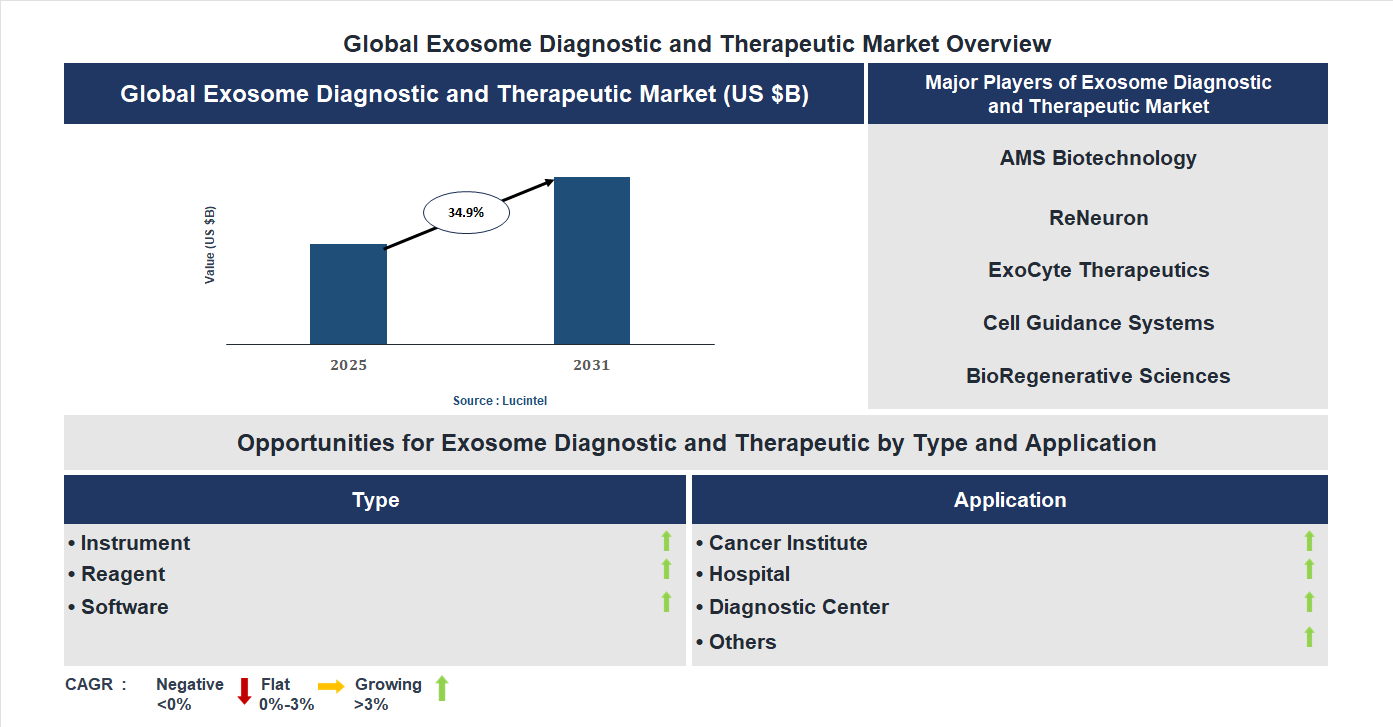
Key data points: The growth forecast = 34.9% annually for the next 7 years. Scroll below to get more insights. This market report covers trends, opportunities and forecasts in exosome diagnostic and therapeutic market to 2031 by type (instrument, reagent, and software), application (cancer institute, hospital, diagnostic center, and others), and region (North America, Europe, Asia Pacific, and the Rest of the World)
We'll send your sample report shortly.
• Lucintel forecasts that, within the type category, instrument is expected to witness the highest growth over the forecast period.
• Within the application category, diagnostic center is expected to witness the highest growth.
• In terms of region, APAC is expected to witness the highest growth over the forecast period. Gain valuable insights for your business decisions with our comprehensive 150+ page report. Sample figures with some insights are shown below.
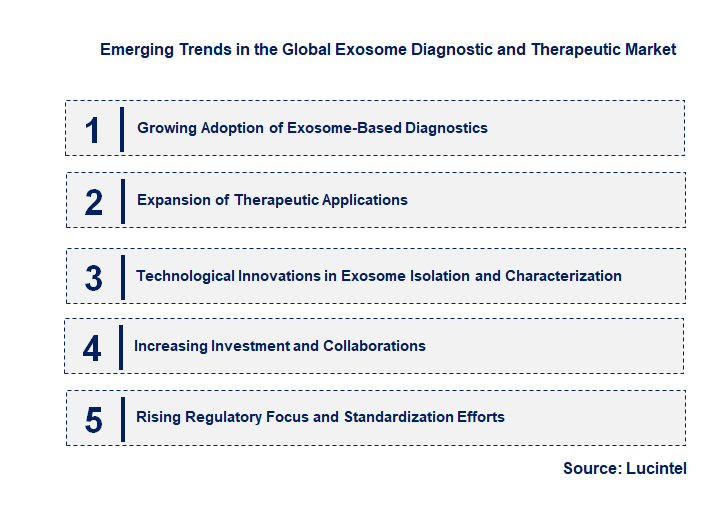
• Growing Adoption of Exosome-Based Diagnostics: The demand for non-invasive, highly sensitive diagnostic tools is fueling the adoption of exosome-based tests. These diagnostics leverage exosomes ability to carry disease-specific biomarkers, enabling early detection of conditions such as cancer, neurodegenerative diseases, and infectious diseases. The trend is supported by technological advancements that improve exosome isolation and analysis, making these tests more reliable and accessible. As a result, healthcare providers can diagnose diseases earlier, leading to better treatment outcomes and personalized care strategies.
• Expansion of Therapeutic Applications: Exosomes are increasingly recognized as promising vehicles for drug delivery and regenerative medicine. Their natural ability to transfer proteins, lipids, and nucleic acids makes them ideal for targeted therapy, reducing side effects associated with traditional treatments. Companies are investing in developing exosome-based therapeutics for cancer, autoimmune diseases, and tissue regeneration. This expansion is driven by ongoing research demonstrating exosomes safety and efficacy, paving the way for novel treatments that are more precise and less invasive, ultimately broadening the therapeutic landscape.
• Technological Innovations in Exosome Isolation and Characterization: Advances in microfluidics, nanotechnology, and molecular analysis are revolutionizing how exosomes are isolated and characterized. These innovations improve purity, yield, and reproducibility, which are critical for clinical applications. Enhanced techniques enable high-throughput screening and detailed molecular profiling, facilitating better understanding of exosome biology. This progress accelerates research and development, reduces costs, and enhances the reliability of diagnostic and therapeutic products, making exosome-based solutions more viable for widespread clinical use.
• Increasing Investment and Collaborations: The market is witnessing a surge in investments from venture capitalists, pharmaceutical companies, and research institutions. Strategic collaborations are forming to accelerate product development, clinical trials, and commercialization. Funding supports innovation in exosome isolation, biomarker discovery, and therapeutic delivery systems. These partnerships foster knowledge exchange, reduce R&D costs, and expedite regulatory approvals. The influx of capital and collaboration is vital for overcoming technical challenges and scaling up manufacturing, ultimately driving market growth and expanding the availability of exosome-based solutions.
• Rising Regulatory Focus and Standardization Efforts: As the market matures, regulatory agencies are developing guidelines for exosome-based diagnostics and therapeutics. Standardization of isolation methods, characterization techniques, and quality control measures is gaining importance to ensure safety and efficacy. Regulatory clarity will facilitate market entry, build consumer confidence, and promote global adoption. Industry stakeholders are actively engaging with regulators to establish frameworks that support innovation while maintaining high safety standards. This trend is crucial for fostering sustainable growth and ensuring that exosome-based products meet rigorous clinical and safety requirements. In summary, these trends are collectively reshaping the exosome diagnostic and therapeutic market by enhancing technological capabilities, expanding application scope, attracting investments, and establishing regulatory frameworks. This evolution is driving the development of more precise, effective, and accessible solutions, ultimately transforming disease diagnosis and treatment paradigms and paving the way for a new era of personalized medicine.
• Technological Advancements: Enhanced isolation and characterization techniques have improved exosome purity and yield, enabling more accurate diagnostics and effective therapeutics. These innovations reduce processing time and costs, making exosome-based solutions more commercially viable and scalable for clinical use.
• Regulatory Approvals: Several exosome-based diagnostic kits and therapeutic products have received regulatory clearance from agencies like the FDA and EMA. These approvals boost market confidence, facilitate commercialization, and encourage further investment in research and development.
• Expanding Therapeutic Applications: Researchers are exploring exosomes for targeted drug delivery, gene therapy, and immunotherapy. This broadening scope increases the therapeutic potential of exosomes, attracting pharmaceutical companies and accelerating clinical trials.
• Growing Investment and Collaborations: Increased funding from venture capitalists, biotech firms, and academic institutions is fueling innovation. Strategic collaborations are fostering the development of novel exosome-based products, expanding market reach, and accelerating commercialization.
• Rising Awareness and Adoption: Healthcare providers and patients are becoming more aware of exosome-based diagnostics and therapies. This awareness drives adoption in clinical settings, supports reimbursement policies, and promotes integration into standard care protocols. In summary, these developments are significantly impacting the exosome diagnostic and therapeutic market by enhancing technological capabilities, ensuring regulatory support, broadening therapeutic applications, attracting investments, and increasing adoption. Collectively, they are propelling the market toward greater innovation, commercialization, and clinical integration, ultimately improving patient care and outcomes.
• Cancer Diagnostics and Therapeutics: Exosomes enable early detection and targeted treatment of cancers, improving prognosis and reducing side effects. Their ability to carry tumor-specific biomarkers makes them invaluable for non-invasive liquid biopsies, leading to more personalized and effective cancer management strategies.
• Neurological Disease Management: Exosomes facilitate the delivery of therapeutic agents across the blood-brain barrier, offering new avenues for treating neurodegenerative diseases like Alzheimer’s and Parkinson’s. This application could revolutionize treatment approaches and improve patient quality of life.
• Infectious Disease Monitoring: Exosomes can carry pathogen-specific molecules, aiding in rapid diagnosis and monitoring of infectious diseases such as COVID-19. This enhances disease surveillance, enabling timely interventions and containment strategies.
• Regenerative Medicine: Exosomes derived from stem cells promote tissue repair and regeneration, presenting opportunities for treating injuries and degenerative conditions. Their use could reduce reliance on traditional stem cell therapies, minimizing associated risks.
• Personalized Medicine: Exosomes serve as carriers of personalized biomarkers, enabling tailored treatment plans based on individual molecular profiles. This approach enhances treatment efficacy and minimizes adverse effects, transforming patient care paradigms. In summary, these strategic growth opportunities are significantly impacting the exosome market by expanding its application scope, improving diagnostic accuracy, and enabling targeted therapies. As these developments continue, the market is poised for substantial growth, driven by technological innovations and increasing healthcare demands for precision medicine.
• Technological Advancements: The rapid development of nanotechnology, molecular biology, and bioinformatics has significantly enhanced the ability to isolate, analyze, and utilize exosomes. These innovations enable more accurate diagnostics and targeted therapies, improving patient outcomes. As technology continues to evolve, the efficiency and affordability of exosome-based solutions are expected to improve, fostering broader adoption across healthcare settings. This progress also facilitates personalized medicine approaches, making exosome applications more viable and attractive for clinicians and researchers alike.
• Rising Prevalence of Chronic Diseases: The increasing incidence of cancer, neurodegenerative disorders, cardiovascular diseases, and infectious diseases globally is a major driver. Exosomes offer non-invasive diagnostic options and targeted therapeutic potential, which are highly desirable in managing these conditions. The growing patient population and the need for early detection and personalized treatment strategies are fueling market demand. This trend underscores the importance of exosome-based solutions in addressing unmet medical needs and improving disease management.
• Increasing Investment and Funding: Governments, private investors, and pharmaceutical companies are investing heavily in exosome research and development. Funding initiatives support innovation, clinical trials, and commercialization efforts, accelerating market growth. This influx of capital helps overcome technical challenges, develop scalable manufacturing processes, and obtain regulatory approvals. The increasing financial support reflects confidence in the market’s potential to revolutionize diagnostics and therapeutics, encouraging further research and commercialization activities.
• Regulatory Developments: Evolving regulatory frameworks are gradually accommodating exosome-based diagnostics and therapeutics. Clear guidelines and standards are being established to ensure safety, efficacy, and quality, which facilitate market entry. Regulatory approval processes, although complex, are becoming more streamlined, encouraging innovation and commercialization. These developments help build trust among healthcare providers and patients, fostering wider adoption of exosome-based solutions and supporting market expansion.
• Growing Awareness and Acceptance: Increasing awareness among healthcare professionals and patients about the benefits of exosome-based diagnostics and therapies is driving market growth. Educational initiatives, clinical research, and successful case studies demonstrate the potential of exosomes, leading to greater acceptance. As confidence in these technologies grows, adoption in clinical practice is expected to rise, further expanding the market. This trend also encourages collaborations between academia, industry, and healthcare providers, accelerating innovation and deployment. The challenges facing this exosome diagnostic and therapeutic market include:
• Standardization and Quality Control Issues: Lack of standardized protocols for exosome isolation, characterization, and quantification hampers reproducibility and comparability of results. Variability in methods affects product quality and clinical reliability, posing significant hurdles for regulatory approval and commercialization. Establishing universally accepted standards is critical to ensure consistent performance, safety, and efficacy of exosome-based products, but progress remains slow due to technical complexities and diverse methodologies.
• Manufacturing and Scalability Challenges: Producing exosomes at a commercial scale while maintaining quality and purity is complex and costly. Current isolation techniques are often labor-intensive and low-yield, limiting large-scale production. Developing scalable, cost-effective manufacturing processes is essential to meet market demand and reduce prices. Overcoming these technical barriers is vital for widespread clinical adoption and commercialization of exosome-based diagnostics and therapeutics.
• Ethical and Regulatory Concerns: Ethical issues related to the sourcing of exosomes, especially those derived from human tissues, raise concerns about consent, privacy, and potential misuse. Regulatory uncertainties and lack of comprehensive guidelines further complicate product development and approval. Addressing these ethical and regulatory challenges is crucial to ensure public trust, compliance, and smooth market entry, but navigating these issues requires coordinated efforts among stakeholders and policymakers.
• AMS Biotechnology
• ReNeuron
• ExoCyte Therapeutics
• Cell Guidance Systems
• BioRegenerative Sciences
• Instrument
• Reagent
• Software
• Cancer Institute
• Hospital
• Diagnostic Center
• Others
• North America
• Europe
• Asia Pacific
• The Rest of the World
• United States: The US leads in exosome research, with major biotech companies investing heavily in developing diagnostic and therapeutic applications. Recent FDA approvals for exosome-based tests have accelerated market growth. Innovations in nanotechnology and bioengineering are enhancing exosome isolation and analysis techniques. The government’s increased funding for biomedical research further supports advancements. Several startups and established firms are collaborating with academic institutions to commercialize exosome-based products, making the US a hub for innovation and clinical translation in this field.
• China: China has rapidly expanded its exosome research capabilities, driven by government initiatives and substantial funding. The country focuses on developing cost-effective diagnostic tools and therapeutic solutions tailored to its large population. Several domestic companies are emerging as key players, investing in research and clinical trials. Regulatory pathways are being streamlined to facilitate faster approval processes. China’s emphasis on integrating exosome technology into traditional medicine practices is also notable, aiming to create comprehensive healthcare solutions and boost local industry growth.
• Germany: Germany is recognized for its strong biomedical research infrastructure and focus on precision medicine. Recent developments include advancements in exosome isolation techniques and biomarker discovery for cancer and neurodegenerative diseases. The country’s regulatory environment supports innovation, with clear pathways for clinical validation. Collaborations between academia and industry are fostering the development of novel exosome-based diagnostics and therapeutics. Germany’s emphasis on quality and safety standards ensures high market credibility, positioning it as a leader in European exosome research and commercialization.
• India: India is witnessing a surge in exosome research, supported by government initiatives like the Make in India campaign and increased funding for biotech startups. The focus is on developing affordable diagnostic tools for infectious diseases and cancer, addressing the country’s healthcare challenges. Several startups are working on innovative exosome isolation and analysis methods. The regulatory landscape is evolving to accommodate new technologies, encouraging local manufacturing and clinical trials. India’s large patient population and growing healthcare infrastructure present significant opportunities for market expansion and global collaboration.
• Japan: Japan’s advanced healthcare system and technological expertise have propelled exosome research forward. Recent developments include the integration of exosome diagnostics into personalized medicine approaches for cancer and cardiovascular diseases. The country emphasizes rigorous clinical validation and regulatory compliance to ensure safety and efficacy. Japanese companies are investing in innovative exosome-based drug delivery systems and regenerative medicine applications. Government support through funding and policy initiatives fosters innovation. Japan’s focus on aging populations and chronic disease management positions it as a key player in the global exosome market.


• AMS Biotechnology
• ReNeuron
• ExoCyte Therapeutics
• Cell Guidance Systems
• BioRegenerative Sciences Q5. Which exosome diagnostic and therapeutic market segment will be the largest in future? Answer: Lucintel forecasts that, within the type category, instrument is expected to witness the highest growth over the forecast period. Q6. In exosome diagnostic and therapeutic market, which region is expected to be the largest in next 5 years? Answer: In terms of region, APAC is expected to witness the highest growth over the forecast period. Q7. Do we receive customization in this report? Answer: Yes, Lucintel provides 10% customization without any additional cost.


Choose a license that fits your team. Instant PDF delivery.
Prices exclude taxes. Instant delivery. Custom licensing available on request.
Market Report · May 18, 2026
Market Report · May 18, 2026
Market Report · May 18, 2026
Trusted partner for strategic intelligence and business growth


Receive a complimentary market analysis tailored to your industry. Our analysts will identify key growth opportunities and competitive dynamics specific to your business.

Market size, growth rate, and key trend analysis for your specific sector.

Top competitor positioning and market share analysis.

Strategic recommendations backed by data-driven insights.
Get curated market intelligence and competitive moves straight to your inbox.
By subscribing, you agree to receive our monthly insights. Unsubscribe anytime.
Receive a complimentary market analysis tailored to your industry. Our analysts will identify key growth opportunities and competitive dynamics specific to your business.
Market size, growth rate, and key trend analysis for your specific sector.
Top competitor positioning and market share analysis.
Strategic recommendations backed by data-driven insights.
Get curated market intelligence, emerging trends, and competitive moves straight to your inbox each month.
By subscribing, you agree to receive our monthly insights. Unsubscribe anytime.
We'll send your sample report shortly.