
Market Report · July 31, 2026

We'll send your sample report shortly.
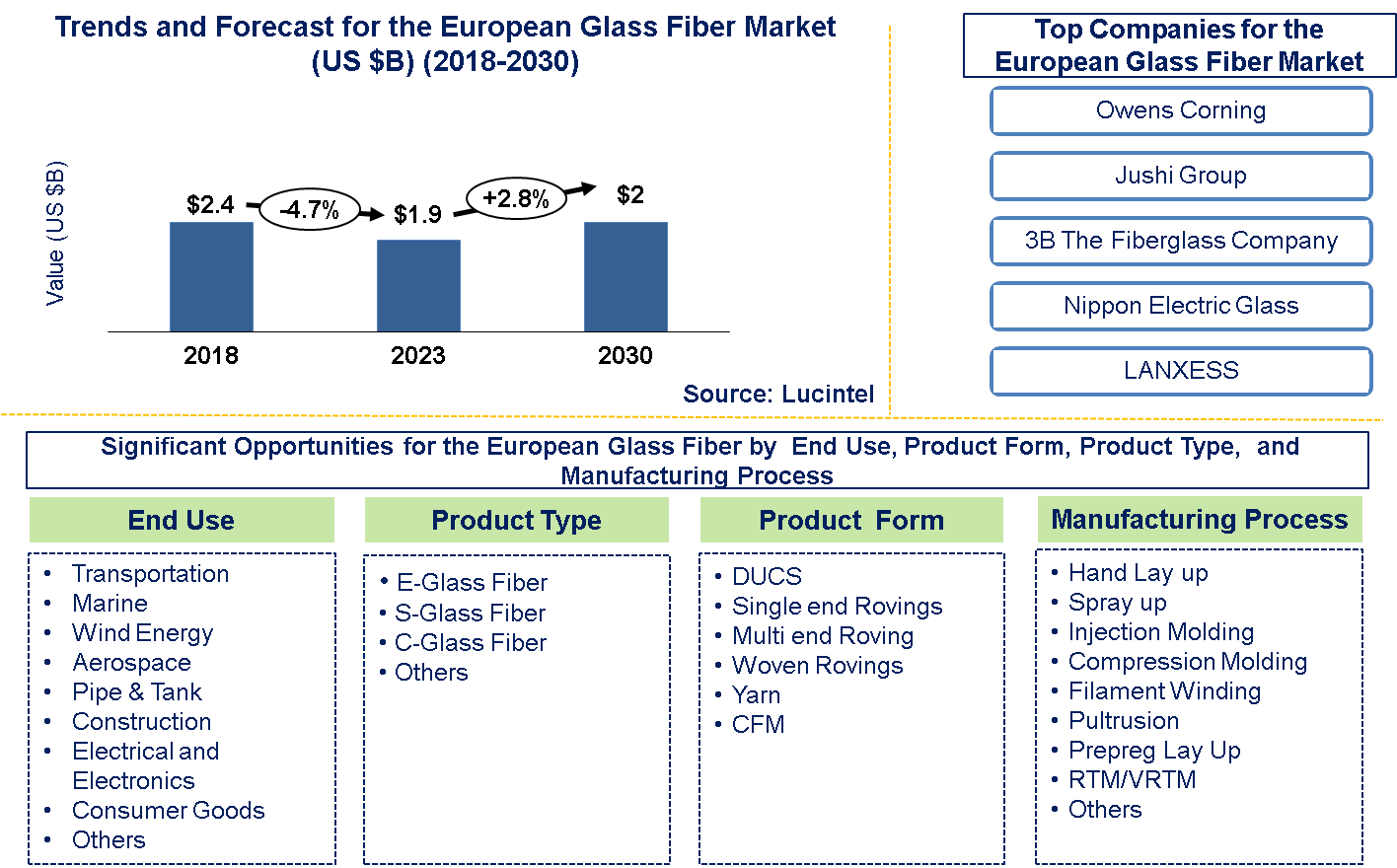
• Lucintel forecasts that, transportation is the largest end use industry of European Glass Fiber. Aerospace is expected to witness the highest growth over the forecast period
• Single end roving will remain the largest product form by volume over the forecast period.
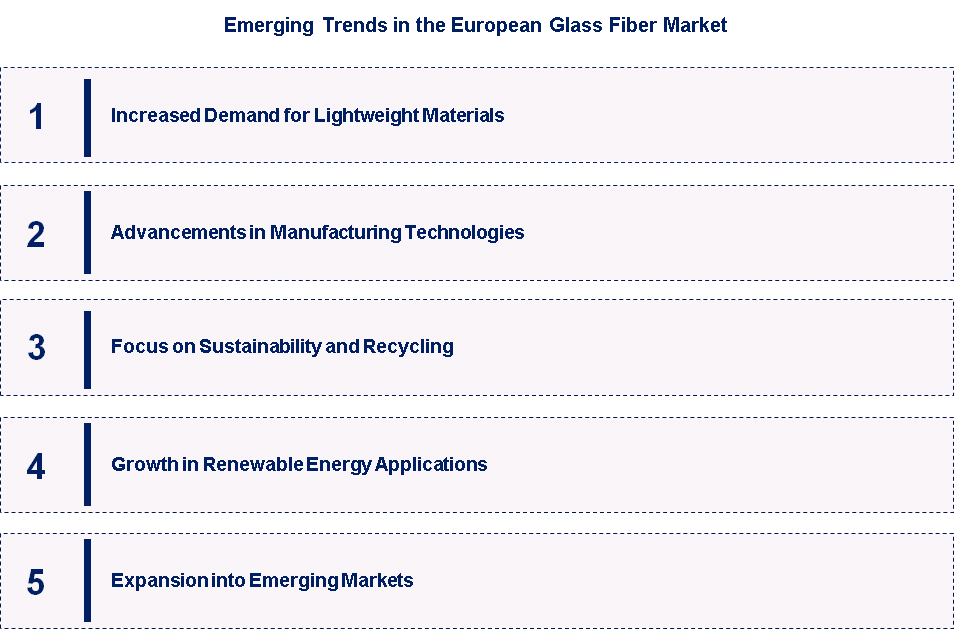
• Increased Demand for Lightweight Materials: The automotive and aerospace sectors are increasingly adopting glass fiber due to its lightweight properties, which enhance fuel efficiency and reduce emissions. This trend is driven by stringent regulations aimed at lowering carbon footprints, prompting manufacturers to seek innovative materials that meet performance and sustainability standards.
• Advancements in Manufacturing Technologies: Innovations in manufacturing processes, such as automated production and advanced composite techniques, are improving the efficiency and quality of glass fiber products. These advancements enable manufacturers to produce complex shapes and structures, expanding the application range of glass fiber in various industries, including construction and wind energy.
• Focus on Sustainability and Recycling: The glass fiber industry is witnessing a shift towards sustainable practices, including the development of recyclable glass fibers and eco-friendly production methods. This trend is driven by increasing environmental awareness and regulatory pressures, encouraging companies to adopt circular economy principles and reduce waste in their operations.
• Growth in Renewable Energy Applications: The demand for glass fiber is surging in the renewable energy sector, particularly in wind turbine manufacturing. Glass fiber composites are essential for producing lightweight and durable turbine blades, contributing to the efficiency and longevity of wind energy systems. This trend aligns with Europe’s commitment to increasing renewable energy capacity and reducing reliance on fossil fuels.
• Expansion into Emerging Markets: European glass fiber manufacturers are exploring opportunities in emerging markets, driven by rising industrialization and infrastructure development. Countries in Eastern Europe and Asia are becoming key markets for glass fiber products, as they seek advanced materials for construction, automotive, and other applications. This expansion is fostering global competition and innovation within the industry.
• Increased Production Capacity: Major manufacturers have expanded their production facilities to meet the rising demand for glass fiber, resulting in improved supply chain efficiency and reduced lead times for customers.
• Advancements in Manufacturing Technology: The introduction of advanced manufacturing techniques, such as automated processes and improved melting technologies, has led to higher quality glass fibers with enhanced properties, catering to specialized applications.
• Focus on Sustainability: Companies are increasingly adopting eco-friendly practices, including the use of recycled materials and energy-efficient production methods, to minimize their carbon footprint and appeal to environmentally conscious consumers.
• Growth in End-Use Industries: The automotive and aerospace sectors are increasingly utilizing glass fiber composites for their lightweight and high-strength properties, driving demand and fostering innovation in product development.
• Strategic Collaborations and Mergers: Industry players are forming strategic partnerships and engaging in mergers to leverage synergies, enhance product offerings, and expand their market presence, leading to a more competitive landscape.
• Construction: The construction sector is increasingly adopting glass fiber reinforced concrete (GFRC) for its strength and lightweight properties, leading to reduced material costs and improved structural integrity.
• Automotive: The automotive industry is leveraging glass fiber composites to reduce vehicle weight, enhance fuel efficiency, and meet stringent emissions regulations, driving demand for innovative materials.
• Aerospace: In aerospace applications, glass fiber is being utilized for its high strength-to-weight ratio, contributing to the development of lighter aircraft and improved fuel efficiency, thus enhancing overall performance.
• Wind Energy: The wind energy sector is witnessing a surge in the use of glass fiber in turbine blades, as it offers excellent durability and resistance to environmental factors, supporting the growth of renewable energy sources.
• Consumer Goods: The consumer goods market is increasingly incorporating glass fiber in products such as sporting equipment and electronics, where lightweight and durable materials are essential for performance and longevity.
• Technological Advancements: Continuous innovations in glass fiber manufacturing processes enhance product quality and reduce costs, making glass fiber more competitive against alternative materials. These advancements also lead to the development of specialized glass fibers tailored for specific applications, expanding market opportunities.
• Growing Demand in End-Use Industries: The increasing demand for lightweight and high-strength materials in sectors like automotive, aerospace, and construction drives the glass fiber market. As industries focus on improving fuel efficiency and reducing emissions, glass fiber‘s properties align well with these goals, leading to higher adoption rates.
• Sustainability Trends: The push for sustainable materials is a significant driver, as glass fiber is recyclable and can contribute to reducing the carbon footprint of products. Manufacturers are increasingly focusing on eco-friendly production methods, which enhances the appeal of glass fiber in environmentally conscious markets.
• Expansion of Wind Energy Sector: The growth of the renewable energy sector, particularly wind energy, is a major driver for glass fiber demand. Glass fiber is essential in the production of wind turbine blades, and as countries invest in renewable energy infrastructure, the need for glass fiber will continue to rise.
• Increased Investment in Infrastructure: Government initiatives and investments in infrastructure development across Europe are boosting the demand for glass fiber in construction applications. The material‘s strength and durability make it ideal for reinforcing structures, leading to a robust market outlook.
• Fluctuating Raw Material Prices: The volatility in the prices of raw materials used in glass fiber production can significantly impact profit margins for manufacturers. This unpredictability can lead to increased production costs, making it challenging for companies to maintain competitive pricing.
• Stringent Regulatory Frameworks: Compliance with environmental regulations and safety standards can pose challenges for glass fiber manufacturers. Adhering to these regulations often requires additional investments in technology and processes, which can strain resources and affect profitability.
• Competition from Alternative Materials: The glass fiber market faces stiff competition from alternative materials such as carbon fiber and natural fibers. These alternatives may offer similar or superior properties, leading to potential market share loss for glass fiber products if they are not able to innovate and adapt.
• Praana Group (Owens Corning)
• Jushi Group
• Nippon Electric Glass Co., Ltd.
• Lanxess
• Johns Manville Corporation
• Saint Gobain (Vetrotex)
• Krosglass SA
• Transportation
• Construction
• Electrical and Electronics
• Pipe & Tank
• Wind Energy
• Consumer Goods
• Marine
• Aerospace
• Other End Use Industries
• Hand Lay Up
• Spray Up
• Injection Molding
• Compression Molding
• Filament Molding
• Pultrusion
• Prepreg Lay Up
• RTM/ VARTM
• Other Manufacturing Processes
• Single End Roving
• Multi End Roving
• DUCS
• Yarn
• CFM
• Germany
• France
• Italy
• Spain
• UK
• Others

• Market size estimates: European glass fiber market size estimation in terms of value ($B) and volume (Million Pounds) shipment.
• Trend and forecast analysis: Market trend (2019-2025) and forecast (2026-2035) by end use industry, manufacturing process, product, and country.
• Segmentation analysis: European glass fiber market size by various end use industry, manufacturing process, product, and country.
• Growth opportunities: Analysis on growth opportunities in different applications and regions of glass fiber in the European glass fiber market.
• Strategic analysis: This includes M&A, new product development, and competitive landscape of glass fiber in the European glass fiber market.
• Analysis of competitive intensity of the industry based on Porter’s Five Forces model.
If you are looking to expand your business in European glass fiber market or adjacent markets, then contact us. We have done hundreds of strategic consulting projects in market entry, opportunity screening, due diligence, supply chain analysis, M & A, and more.
• Praana Group (Owens Corning)
• Jushi Group
• Nippon Electric Glass Co., Ltd.
• Lanxess
• Johns Manville Corporation
• Saint Gobain (Vetrotex)
• Krosglass SA
Q7. Do we receive customization in this report?

Choose a license that fits your team. Instant PDF delivery.
Prices exclude taxes. Instant delivery. Custom licensing available on request.
Market Report · July 31, 2026
Market Report · May 18, 2026
Market Report · May 16, 2026
Trusted partner for strategic intelligence and business growth


Receive a complimentary market analysis tailored to your industry. Our analysts will identify key growth opportunities and competitive dynamics specific to your business.

Market size, growth rate, and key trend analysis for your specific sector.

Top competitor positioning and market share analysis.

Strategic recommendations backed by data-driven insights.
Get curated market intelligence and competitive moves straight to your inbox.
By subscribing, you agree to receive our monthly insights. Unsubscribe anytime.
Receive a complimentary market analysis tailored to your industry. Our analysts will identify key growth opportunities and competitive dynamics specific to your business.
Market size, growth rate, and key trend analysis for your specific sector.
Top competitor positioning and market share analysis.
Strategic recommendations backed by data-driven insights.
Get curated market intelligence, emerging trends, and competitive moves straight to your inbox each month.
By subscribing, you agree to receive our monthly insights. Unsubscribe anytime.
We'll send your sample report shortly.