
Market Report · July 16, 2026

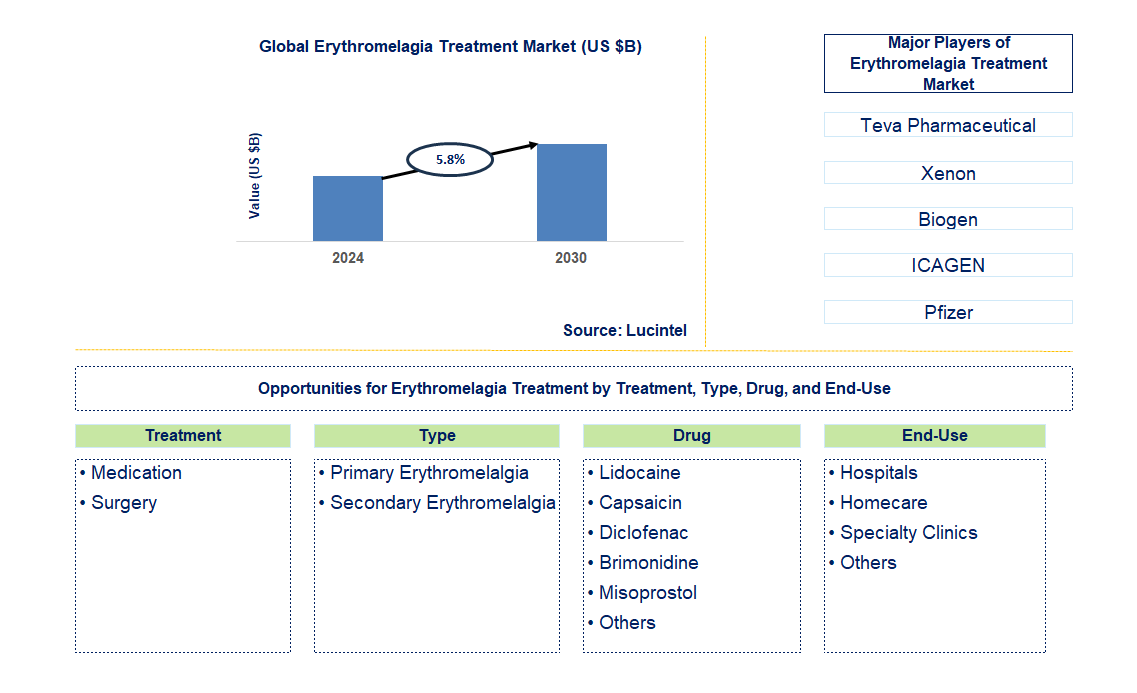
Key data points: The growth forecast = 5.8% annually for the next 6 years. Scroll below to get more insights. This market report covers trends, opportunities, and forecasts in the global erythromelagia treatment market to 2030 by treatment (medication and surgery), type (primary erythromelalgia and secondary erythromelalgia), drug (lidocaine, capsaicin, diclofenac, brimonidine, misoprostol, and others), end-use (hospitals, homecare, specialty clinics, and others), and region (North America, Europe, Asia Pacific, and the Rest of the World)
We'll send your sample report shortly.
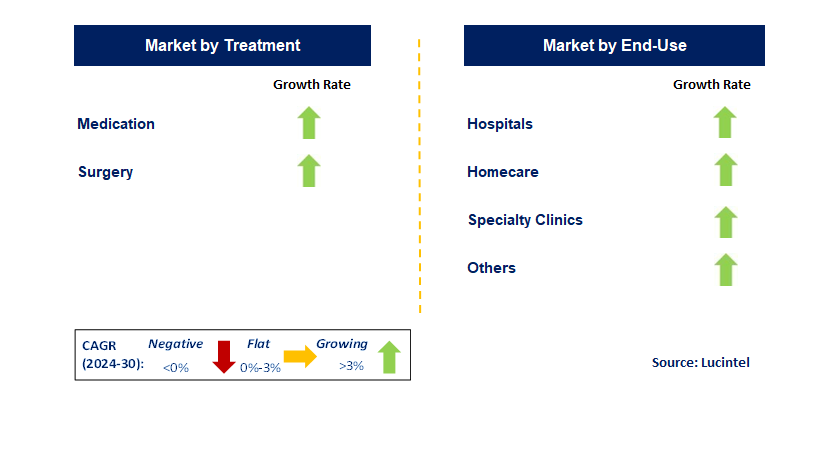
• Lucintel forecasts that, within the treatment category, medication will remain a larger segment over the forecast period due to availablilty of medications, which are effective in managing the symptoms of the disease.
• Within the end use category, hospital will remain the largest segment due to growing need of infrastructure and expertise to provide comprehensive care for patients with erythromelalgia.
• In terms of region, North America will remain the largest region over the forecast period due to rising number of research universities, medical schools, and pharmaceutical firms in the region. Gain valuable insights for your business decisions with our comprehensive 150+ page report.
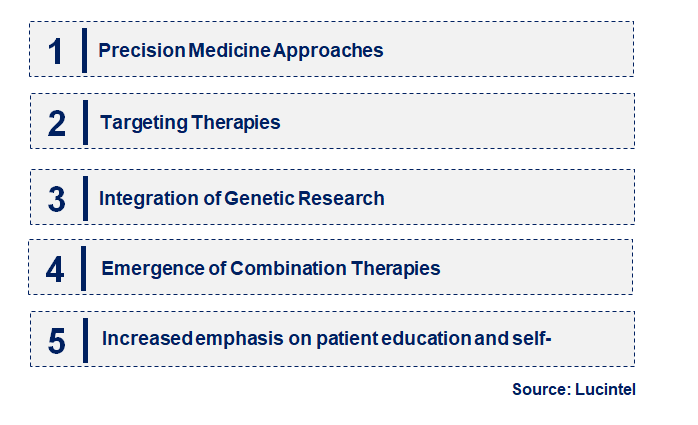
• Precision medicine approaches: Precision medicine is increasingly being adopted to tailor treatments based on individual genetic profiles. This trend allows for more effective and personalized management of erythromelalgia symptoms.
• Targeting therapies: New drugs in development are making targeted therapies possible that act on specific molecular pathways involved in erythromelalgia, offering new hope for effective treatment.
• Integration of genetic research: Genetic research is playing a crucial role in understanding the underlying causes of erythromelalgia. This integration is leading to new diagnostic tools and treatment strategies based on genetic insights.
• Emergence of combination therapies: A combination of therapeutic approaches, including medication, lifestyle changes, and physical therapy, is a common strategy to manage erythromelalgia more effectively.
• Increased emphasis on patient education and self-management: There is a growing focus on patient education and self-management strategies. The better the information and resources provided to patients, the better they can manage the condition. These trends are revolutionizing the erythromelalgia treatment market with a more personalized, genetically integrated approach and new therapeutic combinations. Innovations in targeted therapies and patient education will continue to shape this market and improve treatment outcomes.
• Introduction of New Drug Candidates: Recent research has identified several new molecules that target the root cause mechanisms of erythromelagia, offering potential new options for the treatment of the disease.
• Unveiling the Causes of Erythromelagia: Advances in genetic research are providing new insights into the causes of erythromelagia, allowing for more accurate diagnostics and the possibility of targeted genetic therapies.
• Combination Therapies: A combination of different treatment modalities, including new medications and lifestyle interventions, holds promise for better patient outcomes and improved symptom management.
• Improved Diagnostic Tools: The development of advanced diagnostic tools is enhancing the accuracy of erythromelagia diagnoses, allowing for earlier intervention and more personalized treatment plans.
• Expansion of Clinical Trials: Growing investments in clinical trials are driving innovation in erythromelagia treatments. These trials involve new forms of therapy and their potential effectiveness across a wide variety of patient groups. The aforementioned developments mark the evolving dimensions of the erythromelagia treatment market. New drug candidates, ongoing genetic research, combination therapies, improved diagnostics, and expanded clinical trials have all contributed to better management and treatment of the disease.
• Growth opportunity in personalized medicine: A significant growth opportunity exists in personalized medicine, where treatment plans can be based on genetic and clinical data. Tailored therapies can enhance efficacy and patient satisfaction.
• Expansion of research and development: Investments in research and development aimed at finding new targets for therapy and improving existing treatments can drive innovation and market growth. These efforts may include both pharmaceutical and non-pharmaceutical approaches.
• Emerging market growth: Emerging markets represent a growing demand for healthcare and thus offer substantial growth opportunities. To capture these market segments and extend global reach, treatments must be adapted to the local population.
• Integration of digital health solutions: The integration of digital health solutions, mobile applications, and telemedicine will enhance patient management and monitoring, providing new opportunities for market development and patient interaction.
• Academic collaboration: Collaborating with academic institutions can facilitate research and development by providing greater access to a vast pool of academic expertise and resources. Other strategic growth opportunities identified in the erythromelalgia treatment market include advances in personalized medicine, investments in research and development, emerging markets, integration of digital health solutions, and academic collaborations. These opportunities will drive innovation and expansion within the market.
• New technological advancements: Continuous development of new drugs in pharmacology studies, genetic research, and diagnostic aids contributes to improved treatment options, reduces symptoms, and generally enhances the quality of life for people living with the disorder.
• Increased awareness: Awareness of erythromelagia among healthcare personnel and the general public is rising. Consequently, more cases are being diagnosed and treated, leading to market expansion due to this increased awareness.
• Increasing research investment: Increased investment in research on erythromelagia has helped develop new therapies and improved treatment options, thereby supporting market growth.
• Clinical trials: The growth of clinical trials enhances understanding of erythromelagia and helps discover new therapeutic options that foster innovation in the market.
• Improved patient education: Improved education of patients and self-management strategies make them more aware of their condition, thereby increasing their demand for effective treatments. Challenges in the erythromelagia treatment market include:
• High cost of treatments: High costs associated with developing new therapies, along with access to them, may remain beyond the reach of some patients. This confines the market reach of such therapies and makes them less affordable.
• Regulatory challenges: Complex regulatory requirements related to new treatments contribute to delays in product approvals and affect market entry. This is one of the major challenges the industry faces.
• Limited awareness and research: Even today, erythromelagia is a relatively rare disease, and the lack of research may impede market growth and the development of targeted therapies. The major drivers and challenges in the erythromelagia treatment market provide an overview of a dynamic market landscape. Technological advancements, increasing awareness, investments in research, and growing clinical trials are the drivers, while high costs of treatments, regulatory challenges, and a lack of research are challenges that need to be overcome to realize better market potential.
• Teva Pharmaceutical Industries
• Xenon
• Biogen
• ICAGEN
• Pfizer
• Zydus Cadila
• ANI Pharmaceuticals
• Medication
• Surgery
• Primary Erythromelalgia
• Secondary Erythromelalgia
• Lidocaine
• Capsaicin
• Diclofenac
• Brimonidine
• Misoprostol
• Others
• Hospitals
• Homecare
• Specialty Clinics
• Others
• North America
• Europe
• Asia Pacific
• The Rest of the World
• United States: The U.S. has seen a rise in clinical trials exploring novel therapies for erythromelalgia, including targeted medications and genetic treatments. There is also increased awareness and support for personalized treatment approaches.
• China: China is rapidly becoming a key player in the research on erythromelalgia. Several studies have investigated the application of traditional Chinese medicine in conjunction with state-of-the-art treatment methods. A local company is developing new therapeutic options and diagnostic tools to create a broader market.
• Germany: Current diagnosis and management strategies for erythromelalgia are continuously being improved in Germany. New drug trials and treatment regimens are being considered, along with an increased application of genetic research in treatment decisions.
• India: Erythromelalgia research has been gradually growing in India. Most research efforts are focused on finding inexpensive therapies and raising awareness. Collaborative projects between various Indian institutions and international participants are also emerging.
• Japan: Japan is also ramping up research and development efforts to find new medications and personalized treatments for erythromelalgia. Research at Japanese institutions into novel therapies and diagnostic techniques is helping to improve the quality of treatment for patients.


• Teva Pharmaceutical Industries
• Xenon
• Biogen
• ICAGEN
• Pfizer
• Zydus Cadila
• ANI Pharmaceuticals Q5. Which erythromelagia treatment market segment will be the largest in future? Answer: Lucintel forecasts that medication will remain the larger segment over the forecast period due to availablilty of medications, which are effective in managing the symptoms of the disease. Q6. In erythromelagia treatment market, which region is expected to be the largest in next 5 years? Answer: North America will remain the largest region over the forecast period due to rising number of research universities, medical schools, and pharmaceutical firms in the region. Q.7 Do we receive customization in this report? Answer: Yes, Lucintel provides 10% customization without any additional cost.


Choose a license that fits your team. Instant PDF delivery.
Prices exclude taxes. Instant delivery. Custom licensing available on request.
Market Report · July 16, 2026
Market Report · July 15, 2026
Market Report · July 15, 2026
Trusted partner for strategic intelligence and business growth


Receive a complimentary market analysis tailored to your industry. Our analysts will identify key growth opportunities and competitive dynamics specific to your business.

Market size, growth rate, and key trend analysis for your specific sector.

Top competitor positioning and market share analysis.

Strategic recommendations backed by data-driven insights.
Get curated market intelligence and competitive moves straight to your inbox.
By subscribing, you agree to receive our monthly insights. Unsubscribe anytime.
Receive a complimentary market analysis tailored to your industry. Our analysts will identify key growth opportunities and competitive dynamics specific to your business.
Market size, growth rate, and key trend analysis for your specific sector.
Top competitor positioning and market share analysis.
Strategic recommendations backed by data-driven insights.
Get curated market intelligence, emerging trends, and competitive moves straight to your inbox each month.
By subscribing, you agree to receive our monthly insights. Unsubscribe anytime.
We'll send your sample report shortly.