
Market Report · July 16, 2026

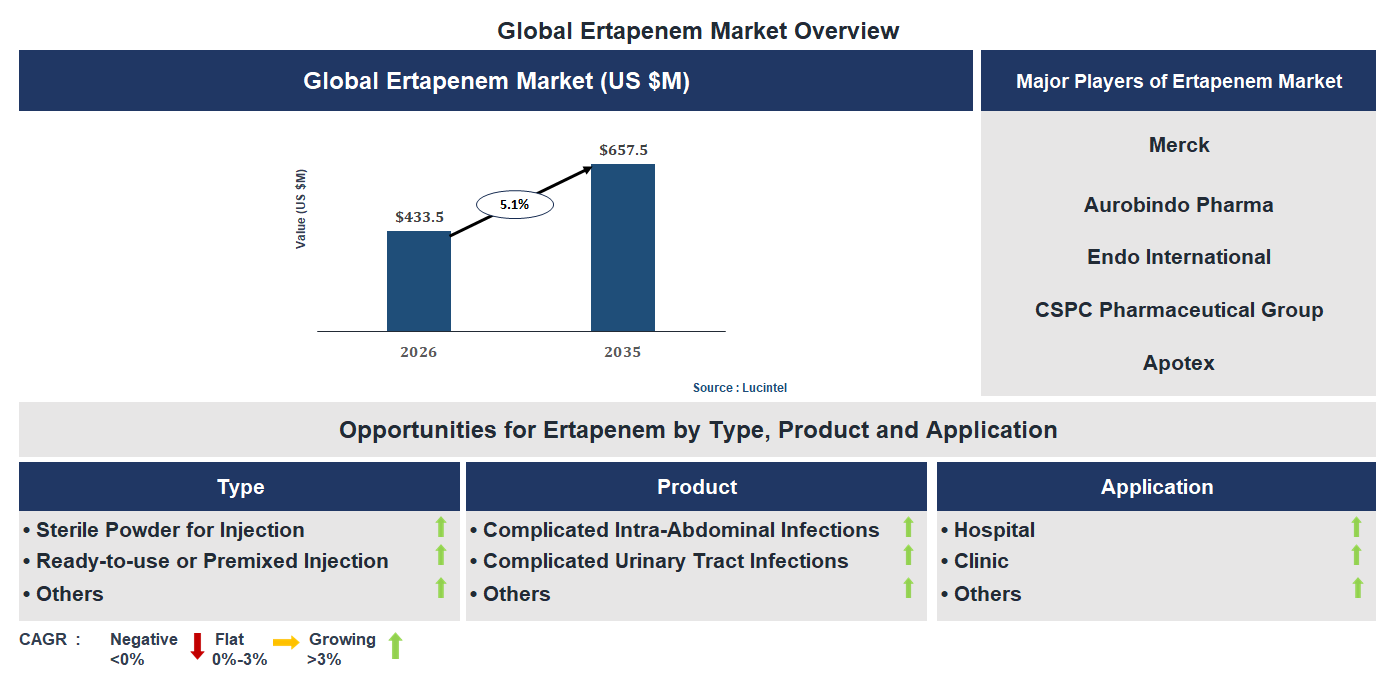
Key data points: The market size in 2035 = $657.5 million, growth forecast = 5% annually for the next 8 years. Scroll below to get more insights. This market report covers trends, opportunities and forecasts in ertapenem market to 2035 by type (sterile powder for injection, ready-to-use or premixed injection, and others), product (complicated intra-abdominal infections, complicated urinary tract infections, and others), application (hospital, clinic, and others), and region (North America, Europe, Asia Pacific, and the Rest of the World)
We'll send your sample report shortly.
• Lucintel forecasts that, within the type category, ready-to-use or premixed injection is expected to witness higher growth over the forecast period.
• Within the application category, hospital is expected to witness the highest growth.
• In terms of region, APAC is expected to witness the highest growth over the forecast period. Gain valuable insights for your business decisions with our comprehensive 150+ page report. Sample figures with some insights are shown below.
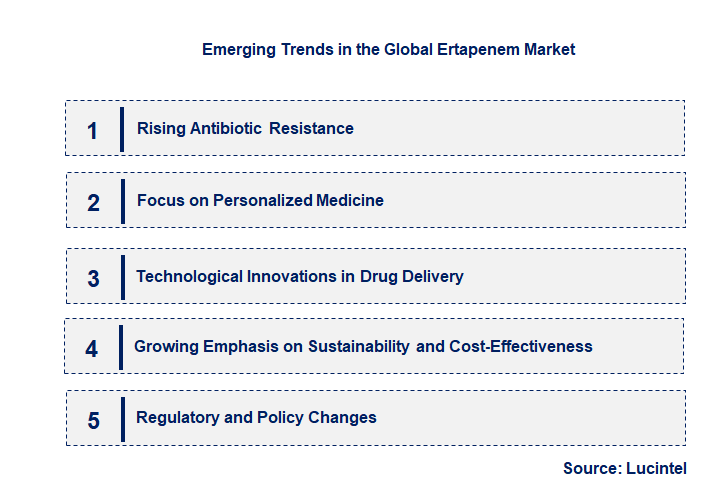
• Rising Antibiotic Resistance: The increasing prevalence of antibiotic-resistant bacteria is driving demand for potent broad-spectrum antibiotics like Ertapenem. This trend compels pharmaceutical companies to develop formulations that can effectively combat resistant strains, ensuring better patient outcomes. It also prompts regulatory agencies to tighten approval standards, encouraging innovation in antibiotic development. The market is thus shifting towards more effective, resistant-proof formulations, which could lead to higher R&D investments and new product launches.
• Focus on Personalized Medicine: The trend toward personalized healthcare is influencing the ertapenem market by promoting tailored treatment regimens based on genetic and microbial profiles. This approach enhances efficacy and reduces adverse effects, leading to better patient compliance. Companies are investing in diagnostic tools that identify specific pathogens, enabling targeted Ertapenem therapy. This shift is fostering the development of combination therapies and precision dosing, ultimately improving treatment success rates and expanding market opportunities.
• Technological Innovations in Drug Delivery: Advances in drug delivery systems, such as liposomal formulations and sustained-release injectables, are transforming how Ertapenem is administered. These innovations aim to improve bioavailability, reduce dosing frequency, and enhance patient convenience. As a result, healthcare providers can offer more effective and patient-friendly treatment options, which may lead to increased adoption and market growth. Additionally, improved delivery methods can reduce side effects and hospital stays, further boosting market competitiveness.
• Growing Emphasis on Sustainability and Cost-Effectiveness: The market is witnessing a shift toward sustainable manufacturing practices and cost-effective formulations. Pharmaceutical companies are exploring eco-friendly production methods and generic alternatives to reduce costs and improve accessibility. This trend is driven by increasing healthcare costs and the need for affordable antibiotics, especially in emerging markets. As a result, the market is becoming more competitive, with a focus on balancing efficacy, affordability, and environmental impact, ultimately broadening Ertapenems global reach.
• Regulatory and Policy Changes: Evolving regulatory landscapes and policies aimed at antimicrobial stewardship are significantly impacting the ertapenem market. Stricter approval processes, post-market surveillance, and guidelines to prevent overuse are shaping product development and marketing strategies. Companies are investing in compliance and transparency to meet these standards, which may slow down some approvals but ultimately ensure safer, more effective products. These regulatory changes are fostering innovation while emphasizing responsible antibiotic use, influencing market dynamics, and long-term sustainability. In summary, these emerging trends are reshaping the ertapenem market by fostering innovation, improving treatment personalization, enhancing delivery methods, promoting sustainability, and ensuring regulatory compliance. Collectively, they are driving growth, expanding market opportunities, and addressing global health challenges related to antibiotic resistance and healthcare affordability.
• Growing Antibiotic Resistance: The rise in resistant bacterial strains is boosting demand for Ertapenem, a broad-spectrum carbapenem antibiotic, as it offers effective treatment options. This trend encourages pharmaceutical companies to develop new formulations and expand production capacity, ultimately improving patient outcomes. The increased resistance also prompts healthcare providers to adopt Ertapenem as a preferred therapy, driving market growth and encouraging innovation in antimicrobial agents.
• Expansion of Healthcare Infrastructure: Improved healthcare facilities, especially in emerging economies, are facilitating better diagnosis and treatment of bacterial infections. This expansion increases access to advanced antibiotics like Ertapenem, supporting market growth. Investments in hospitals, clinics, and diagnostic labs enable the timely administration of effective therapies, which enhances patient recovery rates. The infrastructure development also attracts pharmaceutical companies to invest in local markets, further boosting sales and market penetration.
• Rising Prevalence of Bacterial Infections: The global increase in bacterial infections such as pneumonia, urinary tract infections, and intra-abdominal infections is elevating demand for potent antibiotics like Ertapenem. The aging population and rising chronic diseases contribute to higher infection rates, necessitating effective treatments. This growing prevalence encourages research into new indications and formulations, expanding the market. It also prompts healthcare systems to prioritize antimicrobial therapies, ensuring better management of infectious diseases.
• Advances in Pharmaceutical Research and Development: Innovations in drug formulation and delivery systems are enhancing Ertapenems efficacy and safety profile. R&D efforts focus on developing combination therapies and extended-release formulations, which improve patient compliance and treatment outcomes. These advancements attract investments and facilitate regulatory approvals, expanding market opportunities. Continuous research also helps address resistance issues, ensuring Ertapenem remains a vital option in antimicrobial therapy.
• Government Initiatives and Regulatory Support: Governments worldwide are implementing policies to combat antimicrobial resistance, including funding for R&D and stricter regulations on antibiotic use. These initiatives promote the development and approval of new Ertapenem formulations and encourage responsible prescribing practices. Regulatory support accelerates market entry of innovative products, while public health campaigns raise awareness about appropriate antibiotic use. Such measures collectively foster a conducive environment for market growth and sustainable development. The overall impact of these developments is a robust expansion of the Ertapenem market, driven by increased demand for effective antibiotics, improved healthcare infrastructure, and supportive regulatory frameworks. These factors are fostering innovation, expanding access, and addressing critical healthcare challenges, ultimately enhancing treatment options and patient outcomes globally.
• Expanding Use in Hospital-Acquired Infections: The rising incidence of hospital-acquired infections (HAIs) such as pneumonia, urinary tract infections, and surgical site infections is fueling demand for Ertapenem. Its broad-spectrum activity and efficacy against resistant bacteria make it a preferred choice among healthcare providers. Increased adoption in intensive care units and surgical settings is expected to drive sales, supported by growing awareness of antimicrobial stewardship programs aimed at combating resistance.
• Growing Demand in Developing Countries: Developing nations are witnessing a surge in bacterial infections due to urbanization, poor sanitation, and limited healthcare infrastructure. The increasing affordability of Ertapenem, coupled with expanding healthcare access, is boosting its adoption. Governments and NGOs are investing in healthcare improvements, creating a favorable environment for market growth. Local manufacturing and strategic partnerships are further facilitating availability and distribution in these regions.
• Advancements in Formulation and Delivery Methods: Innovations in drug formulation, such as fixed-dose combinations and improved delivery systems, are enhancing Ertapenem’s clinical utility. These advancements aim to increase patient compliance, reduce dosing frequency, and minimize side effects. Research into novel delivery methods like liposomal encapsulation or sustained-release formulations is ongoing, promising to expand therapeutic options and improve treatment outcomes, thereby supporting market expansion.
• Increasing Focus on Antibiotic Stewardship and Resistance Management: The global emphasis on antimicrobial stewardship programs is influencing Ertapenem utilization. Efforts to optimize antibiotic use and prevent resistance are encouraging the development of targeted therapies and diagnostic tools. Market players are investing in research to develop more precise indications and reduce unnecessary prescriptions, which could sustain demand while addressing resistance concerns and ensuring long-term market viability.
• Strategic Collaborations and Market Expansion Initiatives: Companies are forming alliances with research institutions, healthcare providers, and regional distributors to expand Ertapenem’s reach. These collaborations facilitate product development, clinical trials, and market penetration in untapped regions. Additionally, strategic acquisitions and licensing agreements are enabling faster entry into emerging markets, boosting sales and strengthening competitive positioning amid evolving regulatory landscapes. In conclusion, these growth opportunities are poised to significantly influence the Ertapenem market by expanding its application scope, improving formulations, and addressing resistance challenges. Strategic initiatives and regional expansion will further enhance market dynamics, making Ertapenem a critical component in combating bacterial infections globally. The overall market outlook remains optimistic, driven by innovation and increasing healthcare needs.
• Technological Advancements: The development of novel drug formulations and delivery systems enhances the efficacy and safety profile of ertapenem. Innovations such as improved infusion techniques and combination therapies have expanded its clinical applications. These technological improvements facilitate better patient compliance and reduce adverse effects, thereby increasing market adoption. Ongoing research into resistance mechanisms also informs the development of next-generation antibiotics, ensuring the relevance of ertapenem in combating resistant infections. As a result, technological progress sustains market growth by meeting the evolving needs of healthcare providers and patients.
• Rising Prevalence of Infectious Diseases: The increasing incidence of bacterial infections such as pneumonia, urinary tract infections, and intra-abdominal infections globally is a significant driver. Factors like urbanization, population growth, and compromised immune systems contribute to this trend. The demand for effective antibiotics like ertapenem rises in response to these health challenges, especially in hospital settings. The growing burden of infectious diseases in both developed and developing countries fuels the need for broad-spectrum antibiotics, thereby expanding the market.
• Increasing Healthcare Expenditure: Rising healthcare spending worldwide enables better access to advanced treatments, including antibiotics like ertapenem. Governments and the private sector investing in healthcare infrastructure and antimicrobial stewardship programs promote the use of effective antibiotics. This financial support facilitates research, development, and distribution of ertapenem, especially in emerging markets. As healthcare budgets grow, the market benefits from increased procurement and utilization of this antibiotic, supporting overall market expansion.
• Regulatory Approvals and Support: Stringent regulatory frameworks ensure the safety and efficacy of antibiotics, which boosts confidence among healthcare providers and patients. Approval from agencies such as the FDA and EMA facilitates market entry and expansion. Regulatory support for new formulations or combination therapies involving ertapenem further enhances its clinical utility. Additionally, government initiatives promoting antimicrobial stewardship and infection control policies indirectly support the market by encouraging appropriate antibiotic use, thereby fostering growth.
• Strategic Collaborations and Partnerships: Collaborations between pharmaceutical companies, research institutions, and healthcare providers accelerate the development and commercialization of ertapenem. Licensing agreements, joint ventures, and research alliances facilitate access to new markets and innovative formulations. These strategic partnerships also enable the sharing of expertise and resources, reducing R&D costs and time-to-market. Such collaborations are crucial for maintaining competitive advantage and expanding the global footprint of ertapenem. The challenges facing this ertapenem market include:
• Antimicrobial Resistance: The rise of resistant bacterial strains diminishes the effectiveness of ertapenem, posing a significant threat to its clinical utility. Resistance mechanisms such as carbapenemase production can render the antibiotic ineffective, leading to treatment failures. This challenge necessitates continuous research for new antibiotics and combination therapies, increasing R&D costs. Resistance also prompts stricter regulatory scrutiny and impacts market demand, requiring stakeholders to adapt strategies to sustain growth.
• Stringent Regulatory Environment: While regulations ensure safety, they also pose hurdles for market entry and product approval. Lengthy approval processes, high compliance costs, and evolving standards can delay the launch of new formulations or indications. Navigating diverse regulatory landscapes across countries adds complexity, especially for generic manufacturers. These factors can limit market expansion and increase operational costs, impacting profitability and innovation.
• Pricing and Reimbursement Challenges: The high cost of ertapenem and limited reimbursement policies in certain regions restrict patient access and market penetration. Healthcare providers and payers are increasingly focused on cost-effectiveness, pressuring manufacturers to justify pricing. Budget constraints and reimbursement restrictions can reduce sales volume, especially in price-sensitive markets. Addressing these economic barriers is essential for sustainable growth, but remains a persistent challenge. In summary, the ertapenem market is driven by technological innovations, rising infectious disease prevalence, increased healthcare spending, regulatory support, and strategic collaborations. However, it faces significant challenges from antimicrobial resistance, regulatory complexities, and pricing pressures. These factors collectively influence market dynamics, requiring stakeholders to innovate and adapt strategies to sustain growth. The overall impact is a complex balance of opportunities and hurdles that will shape the future landscape of ertapenem utilization and development.
• Merck
• Aurobindo Pharma
• Endo International
• CSPC Pharmaceutical Group
• Apotex
• Fresenius
• Dr Reddys Laboratories
• Sterile Powder for Injection
• Ready-to-use or Premixed Injection
• Others
• Complicated Intra-Abdominal Infections
• Complicated Urinary Tract Infections
• Others
• Hospital
• Clinic
• Others
• North America
• Europe
• Asia Pacific
• The Rest of the World
• United States: The US market for Ertapenem has seen increased adoption due to rising cases of healthcare-associated infections and antibiotic resistance. Regulatory agencies have approved new formulations and combination therapies, expanding treatment options. Investment in antimicrobial stewardship programs has also driven demand for effective antibiotics like Ertapenem. Additionally, ongoing clinical trials aim to evaluate its efficacy against emerging resistant strains, further strengthening its market position.
• China: China has experienced rapid growth in the ertapenem market, fueled by expanding healthcare infrastructure and a rising burden of infectious diseases. Government initiatives to combat antimicrobial resistance have led to increased regulation and approval of new antibiotics. Local pharmaceutical companies are investing in research to develop cost-effective formulations, making Ertapenem more accessible. The increasing prevalence of hospital-acquired infections has also contributed to higher demand for broad-spectrum antibiotics.
• Germany: In Germany, the ertapenem market is characterized by a focus on antimicrobial stewardship and responsible antibiotic use. Regulatory bodies have implemented strict guidelines to prevent resistance, influencing prescribing practices. The market benefits from advanced healthcare infrastructure and a high prevalence of multidrug-resistant infections, prompting clinicians to prefer Ertapenem for severe infections. Ongoing research into combination therapies and new delivery methods is expected to further enhance its utilization.
• India: The Indian ertapenem market is expanding rapidly due to a growing population and increasing incidence of infectious diseases. Rising healthcare awareness and improved hospital facilities have contributed to higher antibiotic consumption. Local manufacturers are focusing on producing affordable formulations to meet demand. Government programs aimed at controlling antimicrobial resistance are encouraging the rational use of antibiotics, which positively impacts the ertapenem market.
• Japan: Japans ertapenem market is driven by an aging population and a high prevalence of healthcare-associated infections. Strict regulatory standards and emphasis on antimicrobial stewardship influence prescribing patterns. The country invests in research to develop novel formulations and combination therapies to combat resistant bacteria. Market growth is also supported by technological advancements in drug delivery systems and increased clinical use of Ertapenem for severe infections.


• Merck
• Aurobindo Pharma
• Endo International
• CSPC Pharmaceutical Group
• Apotex
• Fresenius
• Dr Reddys Laboratories Q5. Which ertapenem market segment will be the largest in future? Answer: Lucintel forecasts that, within the type category, ready-to-use or premixed injection is expected to witness higher growth over the forecast period. Q6. In ertapenem market, which region is expected to be the largest in next 5 years? Answer: In terms of region, APAC is expected to witness the highest growth over the forecast period. Q7. Do we receive customization in this report? Answer: Yes, Lucintel provides 10% customization without any additional cost.


Choose a license that fits your team. Instant PDF delivery.
Prices exclude taxes. Instant delivery. Custom licensing available on request.
Market Report · July 16, 2026
Market Report · July 15, 2026
Market Report · July 15, 2026
Trusted partner for strategic intelligence and business growth


Receive a complimentary market analysis tailored to your industry. Our analysts will identify key growth opportunities and competitive dynamics specific to your business.

Market size, growth rate, and key trend analysis for your specific sector.

Top competitor positioning and market share analysis.

Strategic recommendations backed by data-driven insights.
Get curated market intelligence and competitive moves straight to your inbox.
By subscribing, you agree to receive our monthly insights. Unsubscribe anytime.
Receive a complimentary market analysis tailored to your industry. Our analysts will identify key growth opportunities and competitive dynamics specific to your business.
Market size, growth rate, and key trend analysis for your specific sector.
Top competitor positioning and market share analysis.
Strategic recommendations backed by data-driven insights.
Get curated market intelligence, emerging trends, and competitive moves straight to your inbox each month.
By subscribing, you agree to receive our monthly insights. Unsubscribe anytime.
We'll send your sample report shortly.