
Market Report · July 29, 2026

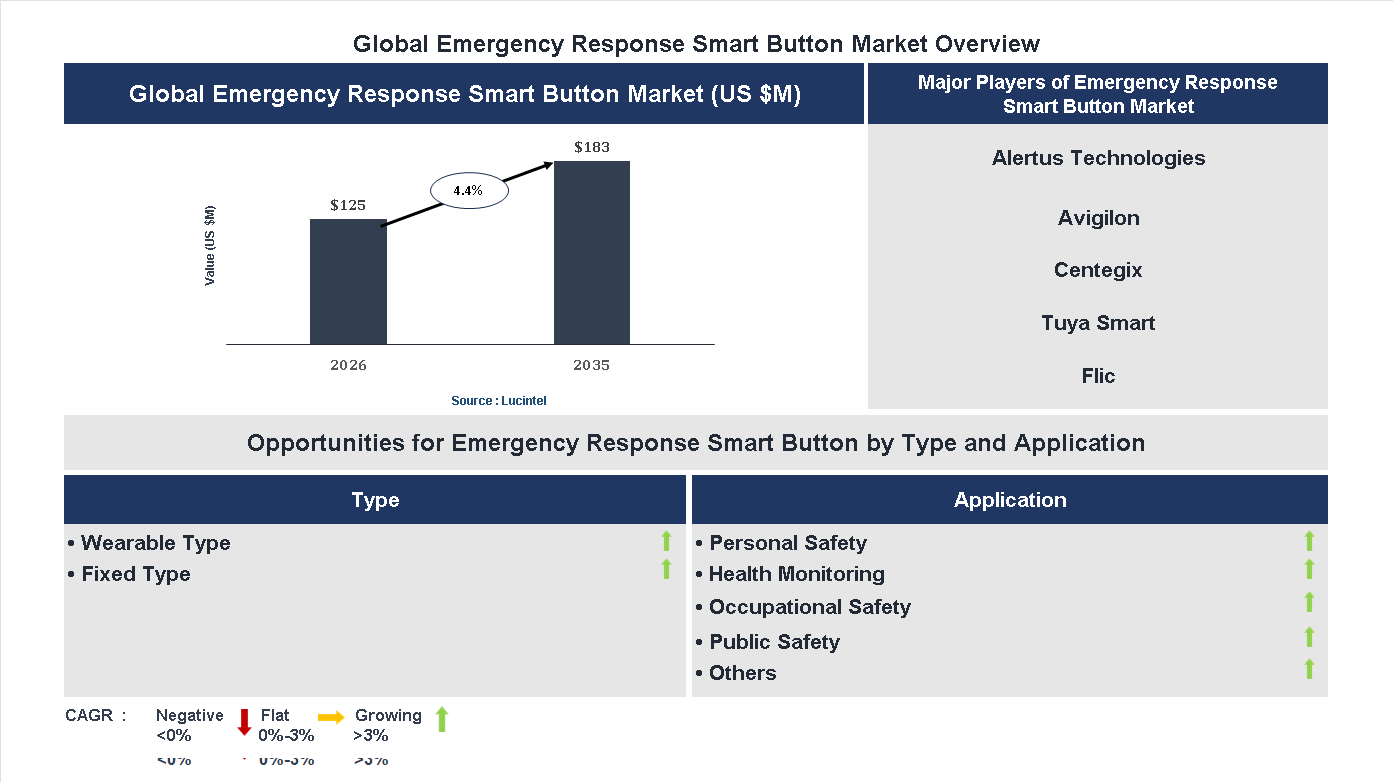
Key data points: The market size in 2035 = $178 million, growth forecast = 4.4% annually for the next 8 years. Scroll below to get more insights. This market report covers trends, opportunities and forecasts in emergency response smart button market to 2035 by type (wearable type and fixed type), application (personal safety, health monitoring, occupational safety, public safety, and others), and region (North America, Europe, Asia Pacific, and the Rest of the World)
We'll send your sample report shortly.
• Lucintel forecasts that, within the type category, wearable type is expected to witness higher growth over the forecast period.
• Within the application category, personal safety is expected to witness the highest growth.
• In terms of region, APAC is expected to witness the highest growth over the forecast period. Gain valuable insights for your business decisions with our comprehensive 150+ page report. Sample figures with some insights are shown below.
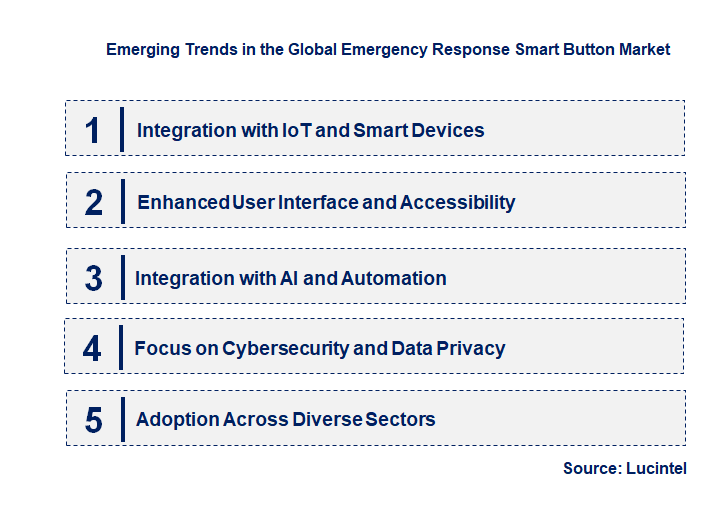
• Integration with IoT and smart devices: The market is increasingly adopting Internet of Things (IoT) technology, enabling smart buttons to connect seamlessly with other devices and systems. This integration allows for real-time data sharing, automated alerts, and remote monitoring, significantly enhancing response times and coordination during emergencies. IoT-enabled smart buttons can be customized for various environments, from industrial sites to healthcare facilities, providing tailored safety solutions. The connectivity also facilitates analytics and reporting, helping organizations improve safety protocols and prevent future incidents. This trend is making emergency response more proactive and data-driven.
• Enhanced user interface and accessibility: Manufacturers are focusing on designing intuitive, user-friendly interfaces for smart buttons to ensure quick and easy activation during emergencies. Features such as large, tactile buttons, voice activation, and visual indicators improve accessibility for users with disabilities or in high-stress situations. This trend aims to reduce response time and minimize user error, especially in critical moments. Additionally, multilingual support and customizable alerts cater to diverse user needs, broadening the market’s reach. Improved accessibility ensures that emergency response tools are effective for all users, regardless of physical or cognitive limitations.
• Integration with AI and automation: Artificial Intelligence (AI) is increasingly being incorporated into emergency response systems, enabling smart buttons to trigger automated actions based on specific conditions. For example, pressing a button could automatically alert emergency services, activate safety protocols, or notify designated personnel. AI algorithms can analyze data to predict potential hazards and suggest preventive measures. Automation reduces reliance on manual intervention, speeds up response times, and enhances overall safety management. This trend is transforming emergency response from reactive to proactive, making systems smarter and more efficient.
• Focus on cybersecurity and data privacy: As smart buttons become more connected, ensuring cybersecurity and protecting user data are critical concerns. Market players are investing in robust encryption, secure communication protocols, and regular security updates to prevent hacking and unauthorized access. Data privacy regulations are also influencing product development, requiring transparent data handling practices. This focus on security builds user trust and ensures compliance with legal standards. As cyber threats evolve, continuous improvements in cybersecurity measures are essential to safeguard sensitive information and maintain the integrity of emergency response systems.
• Adoption across diverse sectors: The deployment of emergency response smart buttons is expanding beyond traditional settings to include sectors such as healthcare, manufacturing, transportation, and public safety. In healthcare, they enable quick access to emergency assistance for patients and staff. In manufacturing, they serve as safety triggers for hazardous situations. Transportation hubs utilize them for passenger safety, while public safety agencies deploy them for community alerts. This sector diversification broadens market opportunities and drives innovation tailored to specific industry needs. The widespread adoption underscores the versatility and importance of smart emergency response solutions in enhancing safety across various environments. These emerging trends are reshaping the emergency response smart button market by making systems more connected, accessible, intelligent, secure, and versatile. They are driving innovation, improving response efficiency, and expanding application areas, ultimately leading to safer environments and more resilient safety infrastructures worldwide.
• Growing Adoption of IoT Devices: The integration of smart buttons with IoT technology enhances connectivity and real-time data sharing, improving emergency response efficiency. This development allows for seamless communication between devices and emergency services, leading to faster assistance. The increasing adoption across residential, commercial, and industrial sectors is expanding market reach. Sub-segments like healthcare, hospitality, and manufacturing are benefiting from tailored solutions, boosting overall market growth and innovation.
• Rising Demand for Personal Safety Devices: Consumers are increasingly prioritizing personal safety, driving demand for portable emergency response solutions. Smart buttons offer immediate help at the press of a button, appealing to vulnerable populations such as seniors and women. The market is witnessing a surge in sales of wearable and portable devices, with features like GPS tracking and two-way communication. This trend is fostering product diversification and expanding the customer base, ultimately strengthening the market position of key players.
• Government Regulations and Safety Initiatives: Governments worldwide are implementing safety regulations and promoting emergency preparedness programs, which boost the adoption of smart emergency response devices. Funding and incentives for safety infrastructure projects are encouraging organizations to deploy smart button solutions. These initiatives are also raising awareness about personal and public safety, leading to increased market penetration. The regulatory environment is fostering innovation and standardization, further propelling market growth.
• Integration with Smart Home and Building Automation: The convergence of emergency response systems with smart home and building automation enhances safety management. Smart buttons integrated into these systems enable quick alerts for fire, intrusion, or medical emergencies. This integration improves response times and operational efficiency, especially in commercial and residential complexes. The development of centralized control platforms and AI-driven analytics is creating new opportunities for market expansion and technological innovation.
• Advancements in Battery Life and Connectivity: Innovations in battery technology and wireless connectivity are improving the reliability and usability of smart buttons. Longer battery life reduces maintenance needs, while enhanced connectivity ensures consistent performance. These advancements are making devices more appealing for long-term deployment in various settings. As a result, market players are able to offer more durable, efficient, and user-friendly products, which are critical for widespread adoption and market growth. The recent developments in IoT integration, personal safety demand, regulatory support, system integration, and technological innovations are significantly transforming the emergency response smart button market. These advancements are driving increased adoption across multiple sectors, improving safety outcomes, and fostering innovation. As a result, the market is poised for sustained growth, with opportunities for new product development and expanded applications, ultimately enhancing emergency preparedness and response capabilities worldwide.
• Integration of IoT and AI for Enhanced Emergency Response: The adoption of IoT-enabled smart buttons combined with AI algorithms allows for real-time data collection and analysis, improving response times and accuracy. These integrations enable predictive maintenance, location tracking, and personalized alerts, making emergency responses more efficient. Industries such as healthcare, manufacturing, and public safety benefit from these advancements, leading to increased market penetration and the development of smarter, more reliable emergency systems.
• Expansion into Healthcare and Personal Safety Markets: The healthcare sector is increasingly adopting smart emergency buttons for patient safety, especially in elderly care and remote monitoring. Personal safety applications are expanding in urban and rural areas, providing individuals with immediate access to emergency services. Wearable devices and home-based systems are key sub-segments, offering discreet, easy-to-use solutions that improve safety and peace of mind, thereby fueling market growth in these segments.
• Growing Adoption in Industrial and Workplace Safety: Industrial environments require rapid response systems to prevent accidents and ensure worker safety. Smart emergency buttons integrated into industrial machinery and safety protocols enable quick alerts to control centers, reducing downtime and injury severity. Sub-segments include manufacturing plants, construction sites, and chemical facilities. The increasing focus on occupational health and safety standards is driving demand for reliable, connected emergency response solutions in workplaces.
• Development of Wireless and Battery-Powered Emergency Buttons: Wireless, battery-operated smart buttons offer flexibility and ease of installation, especially in hard-to-reach or temporary locations. These devices eliminate the need for extensive wiring, reducing costs and installation time. Sub-segments include portable personal devices and fixed emergency stations. The trend toward wireless solutions supports rapid deployment in various environments, expanding market reach and enabling scalable emergency response networks.
• Implementation of Smart City Infrastructure for Emergency Management: Smart city initiatives incorporate emergency response systems to improve urban safety and disaster management. Connected smart buttons integrated with city infrastructure enable citizens to report incidents instantly, facilitating faster response from authorities. Sub-segments include public transportation, municipal services, and residential complexes. The integration of these systems enhances overall urban resilience, creating significant growth opportunities for market players involved in smart city development. The overall market growth is driven by technological innovations, expanding application areas, and increasing safety awareness, positioning the emergency response smart button market for substantial expansion and diversification across multiple sectors.
• Technological Advancements: The integration of IoT, AI, and wireless communication technologies has significantly improved the functionality, reliability, and ease of use of emergency response smart buttons. These innovations enable real-time location tracking, instant alerts, and automated responses, which are critical during emergencies. As technology continues to evolve, manufacturers can develop more sophisticated devices that cater to diverse needs, thereby expanding market applications across healthcare, transportation, and public safety sectors. The increasing adoption of smart home and wearable devices also fuels demand, making technology a key driver for market expansion.
• Growing Public Safety Concerns: Rising awareness about personal safety and the need for rapid emergency response solutions are driving demand for smart buttons. Governments and organizations are investing in safety infrastructure to protect citizens and employees, especially in high-risk environments like industrial sites, public transportation, and healthcare facilities. The proliferation of smart city initiatives further emphasizes the importance of integrated safety systems, including emergency response buttons, to ensure quick assistance and reduce response times. This heightened focus on safety directly contributes to market growth.
• Increasing Adoption in Healthcare: The healthcare sector is increasingly adopting emergency response smart buttons to improve patient safety and staff efficiency. These devices facilitate immediate assistance in hospitals, elderly care homes, and home healthcare settings, enabling prompt medical intervention during emergencies. The integration with electronic health records and monitoring systems enhances their utility, making them indispensable in critical care environments. The rising geriatric population and the need for remote health monitoring are expected to further accelerate adoption, positioning healthcare as a major growth driver for the market.
• Regulatory Support and Government Initiatives: Governments worldwide are implementing policies and standards to enhance emergency response capabilities. Funding programs, safety regulations, and public awareness campaigns promote the deployment of smart emergency response solutions. For instance, mandates for workplace safety and public safety infrastructure investments encourage organizations to adopt smart buttons. Such regulatory support not only accelerates market penetration but also encourages innovation and standardization, creating a conducive environment for market growth. The challenges facing the emergency response smart button market include:
• Technological Integration and Compatibility Issues: Despite technological advancements, integrating smart emergency response buttons with existing safety and communication systems remains complex. Compatibility issues between different devices, platforms, and networks can hinder seamless operation. This fragmentation increases deployment costs and complicates maintenance, especially in large-scale or legacy infrastructure environments. Overcoming these technical barriers requires significant R&D investment and standardization efforts, which can slow down market adoption and limit growth potential.
• High Deployment and Maintenance Costs: The initial costs of deploying smart emergency response systems, including devices, infrastructure, and integration, can be substantial. Small and medium-sized organizations may find these expenses prohibitive, restricting market penetration. Additionally, ongoing maintenance, software updates, and system upgrades add to operational costs. These financial barriers can deter widespread adoption, particularly in regions with limited budgets or economic constraints, thereby impeding overall market expansion.
• Data Security and Privacy Concerns: As these smart buttons collect and transmit sensitive personal and location data, concerns over data security and privacy are prominent. Cybersecurity threats, data breaches, and unauthorized access can compromise user safety and erode trust in the technology. Regulatory compliance with data protection laws adds further complexity. Addressing these issues requires robust security protocols and transparent data management practices, which can increase costs and delay deployment, posing significant challenges to market growth. The emergency response smart button market is driven by technological innovations, safety concerns, healthcare adoption, and supportive regulations. However, challenges such as integration issues, high costs, and data security concerns pose hurdles to widespread adoption. The overall market outlook remains positive, with growth opportunities driven by ongoing technological progress and increasing safety awareness. Overcoming these challenges through standardization, cost reduction, and enhanced security measures will be crucial for sustained expansion and competitive advantage in this evolving landscape.
• Alertus Technologies
• Avigilon
• Centegix
• Tuya Smart
• Flic
• Minew
• MOKOSmart
• Motorola Solutions
• Pelco
• Response Technologies
• Wearable Type
• Fixed Type
• Personal Safety
• Health Monitoring
• Occupational Safety
• Public Safety
• Others
• North America
• Europe
• Asia Pacific
• The Rest of the World
• United States: The US market has seen rapid adoption of smart emergency response buttons, especially in healthcare, corporate, and public safety sectors. Major tech companies are developing integrated solutions with AI capabilities to predict emergencies and automate responses. Government initiatives are promoting smart city projects that incorporate emergency buttons for enhanced urban safety. The focus is on improving connectivity and real-time data sharing to reduce response times and save lives.
• China: China is witnessing aggressive growth in the emergency response smart button market, driven by government policies aimed at urban safety and smart city development. Local manufacturers are innovating with AI-powered devices that offer enhanced security features. The integration of 5G technology is enabling faster communication and real-time monitoring. The market is also expanding into rural areas, improving emergency access in less developed regions.
• Germany: Germany emphasizes high-quality, reliable emergency response solutions, with a focus on integrating smart buttons into existing safety infrastructure. The country is investing in R&D to develop more durable and secure devices, especially for industrial and transportation sectors. Regulatory standards are strict, ensuring that products meet safety and privacy requirements. The market is also benefiting from EU-funded projects aimed at smart city safety enhancements.
• India: The Indian market is rapidly evolving, with increasing demand for affordable and scalable emergency response solutions. Government initiatives like Smart Cities Mission are promoting the deployment of smart safety devices, including emergency buttons, in urban areas. Local startups are innovating with cost-effective IoT-enabled devices tailored for diverse environments. The focus is on improving emergency access in densely populated and underserved regions, with a growing emphasis on mobile integration.
• Japan: Japan is advancing in the development of sophisticated emergency response systems, integrating smart buttons with IoT and AI for disaster management and public safety. The country’s focus on aging populations has led to specialized solutions for elderly care and emergency alerts. Japan is also investing in resilient infrastructure to withstand natural disasters, with smart emergency buttons playing a crucial role in early warning systems and rapid response efforts.


• Alertus Technologies
• Avigilon
• Centegix
• Tuya Smart
• Flic
• Minew
• MOKOSmart
• Motorola Solutions
• Pelco
• Response Technologies Q6. Which emergency response smart button market segment will be the largest in future? Answer: Lucintel forecasts that, within the type category, wearable type is expected to witness higher growth over the forecast period. Q7. In emergency response smart button market, which region is expected to be the largest in next 5 years? Answer: In terms of region, APAC is expected to witness the highest growth over the forecast period. Q8. Do we receive customization in this report? Answer: Yes, Lucintel provides 10% customization without any additional cost.


Choose a license that fits your team. Instant PDF delivery.
Prices exclude taxes. Instant delivery. Custom licensing available on request.
Market Report · July 29, 2026
Market Report · July 15, 2026
Market Report · July 13, 2026
Trusted partner for strategic intelligence and business growth


Receive a complimentary market analysis tailored to your industry. Our analysts will identify key growth opportunities and competitive dynamics specific to your business.

Market size, growth rate, and key trend analysis for your specific sector.

Top competitor positioning and market share analysis.

Strategic recommendations backed by data-driven insights.
Get curated market intelligence and competitive moves straight to your inbox.
By subscribing, you agree to receive our monthly insights. Unsubscribe anytime.
Receive a complimentary market analysis tailored to your industry. Our analysts will identify key growth opportunities and competitive dynamics specific to your business.
Market size, growth rate, and key trend analysis for your specific sector.
Top competitor positioning and market share analysis.
Strategic recommendations backed by data-driven insights.
Get curated market intelligence, emerging trends, and competitive moves straight to your inbox each month.
By subscribing, you agree to receive our monthly insights. Unsubscribe anytime.
We'll send your sample report shortly.