
Market Report · July 29, 2026

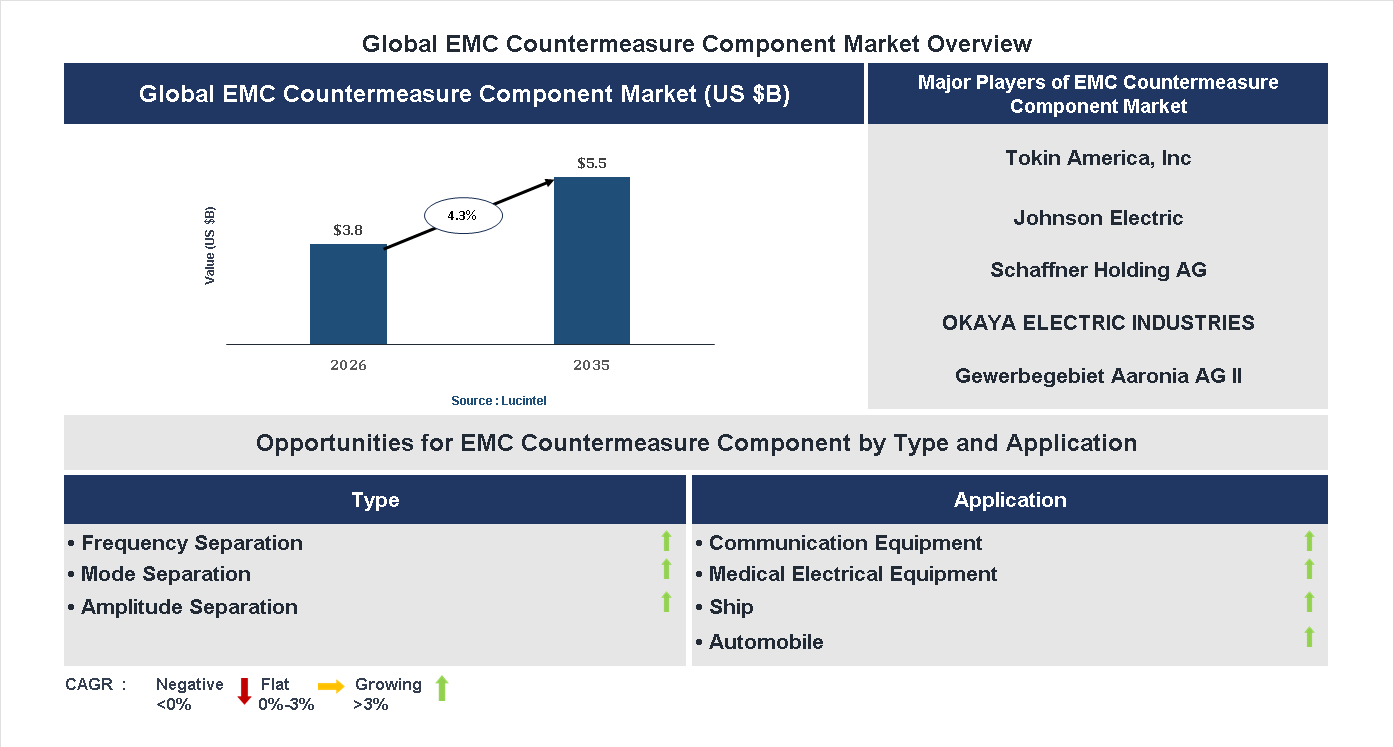
Key data points: The market size in 2035 = $5.5 billion, growth forecast = 4.3% annually for the next 8 years. Scroll below to get more insights. This market report covers trends, opportunities and forecasts in EMC countermeasure component market to 2035 by type (frequency separation, mode separation, and amplitude separation), application (communication equipment, medical electrical equipment, ship, and automobile), and region (North America, Europe, Asia Pacific, and the Rest of the World)
We'll send your sample report shortly.
• Lucintel forecasts that, within the type category, frequency separation is expected to witness the highest growth over the forecast period.
• Within the application category, communication equipment is expected to witness the highest growth.
• In terms of region, APAC is expected to witness the highest growth over the forecast period. Gain valuable insights for your business decisions with our comprehensive 150+ page report. Sample figures with some insights are shown below.
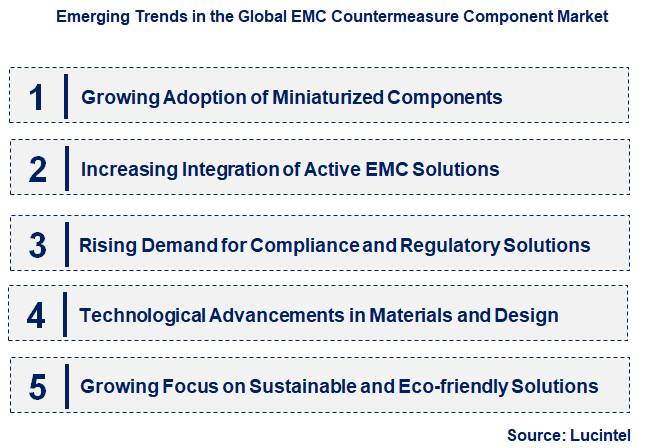
• Growing Adoption of Miniaturized Components: As electronic devices become smaller and more portable, there is a rising demand for compact EMC countermeasure components. This trend is driven by the need to maintain high performance while reducing size, especially in consumer electronics, wearables, and IoT devices. Manufacturers are investing in innovative materials and design techniques to develop miniaturized solutions that do not compromise effectiveness. The impact is a broader application scope, enabling more integrated and space-efficient electronic systems, which in turn fuels market growth and diversification.
• Increasing Integration of Active EMC Solutions: The market is witnessing a shift from passive to active EMC countermeasures, such as adaptive filters and smart shielding. These solutions dynamically respond to electromagnetic interference (EMI), offering enhanced performance in complex environments. The integration of active components into existing systems improves EMI mitigation without adding significant bulk or weight. This trend is particularly influential in aerospace, automotive, and telecommunications sectors, where high performance and reliability are critical. The adoption of active solutions is expected to drive innovation and expand the market’s technological capabilities.
• Rising Demand for Compliance and Regulatory Solutions: Stringent EMC standards and regulations across industries are compelling manufacturers to adopt advanced countermeasure components. Companies are investing in compliance testing and certification to avoid penalties and ensure product reliability. This trend encourages the development of more effective and compliant EMC solutions, fostering innovation in testing equipment and components. The impact is a more competitive market landscape where compliance becomes a key differentiator, prompting continuous improvement and higher standards in EMC countermeasure components.
• Technological Advancements in Materials and Design: Innovations in materials such as nanomaterials, conductive polymers, and advanced composites are enhancing the performance of EMC countermeasure components. Improved design techniques, including simulation and modeling, enable more precise and effective solutions. These advancements lead to components that offer better EMI suppression, durability, and environmental resistance. The impact is a significant boost in product performance, enabling solutions to meet the demands of increasingly complex electronic systems, and opening new avenues for application in harsh environments and high-frequency applications.
• Growing Focus on Sustainable and Eco-friendly Solutions: Environmental concerns are prompting the development of sustainable EMC countermeasure components. Manufacturers are exploring eco-friendly materials, reducing hazardous substances, and designing energy-efficient solutions. This trend aligns with global sustainability initiatives and regulatory pressures to minimize environmental impact. The impact is a market shift towards greener products that meet environmental standards while maintaining high performance. This focus on sustainability not only enhances brand reputation but also opens new market opportunities in eco-conscious sectors, shaping the future landscape of the EMC countermeasure component industry. In summary, these emerging trends are collectively transforming the EMC countermeasure component market by fostering innovation, enhancing performance, and emphasizing sustainability. They are enabling the industry to meet the evolving demands of increasingly complex electronic systems while adhering to stricter regulatory standards. As a result, the market is becoming more dynamic, competitive, and aligned with technological and environmental advancements, ensuring its continued growth and relevance in the digital age.
• Growing Demand for Miniaturized Components: The need for compact electronic devices is fueling the development of smaller EMC countermeasure components. This trend allows manufacturers to integrate effective interference mitigation solutions without increasing device size, supporting the proliferation of portable and wearable technology. Miniaturization also reduces weight and cost, making products more accessible and versatile. As consumer electronics and IoT devices expand, the demand for space-efficient EMC solutions continues to rise, driving innovation in material science and design.
• Increasing Stringency of Regulatory Standards: Governments and industry bodies are implementing stricter electromagnetic compatibility regulations to ensure device safety and performance. This regulatory environment compels manufacturers to adopt advanced countermeasure components that meet compliance standards. The market benefits from this push as it accelerates research and development of more effective solutions. Companies investing in compliance-ready products gain a competitive advantage, fostering innovation and ensuring market growth while safeguarding against potential legal and financial penalties.
• Technological Advancements in Materials: New materials with superior electromagnetic shielding and absorption properties are transforming the EMC countermeasure landscape. Innovations such as nanomaterials and conductive polymers enhance performance while reducing size and weight. These materials enable the creation of more efficient, durable, and cost-effective components. The adoption of advanced materials supports the development of next-generation EMC solutions capable of addressing complex interference challenges in high-frequency and high-speed electronic environments.
• Integration of AI and IoT for Smart Countermeasures: The integration of artificial intelligence and IoT technologies is enabling smarter, adaptive EMC solutions. These systems can dynamically detect and mitigate interference in real-time, improving device reliability and performance. AI-driven components optimize countermeasure deployment, reducing energy consumption and maintenance costs. IoT connectivity allows centralized monitoring and control, facilitating proactive interference management across networks. This technological synergy is revolutionizing EMC strategies, making them more efficient, responsive, and scalable.
• Rising Adoption in Automotive and Aerospace Sectors: The automotive and aerospace industries are increasingly adopting EMC countermeasure components to ensure safety and compliance in complex electronic systems. As vehicles and aircraft incorporate more electronic control units and sensors, the risk of electromagnetic interference grows. Advanced countermeasures are essential to prevent malfunctions and ensure operational integrity. This sector-specific demand drives innovation, leading to specialized, high-performance solutions that meet rigorous industry standards, ultimately expanding the market and fostering cross-sector technological advancements. The overall impact of these developments is a more robust, innovative, and compliant EMC countermeasure component market. Enhanced miniaturization, regulatory adherence, material science, technological integration, and sector-specific solutions are collectively driving growth. These advancements improve device performance, safety, and reliability, fostering increased adoption across industries. As a result, the market is poised for sustained expansion, offering new opportunities for stakeholders and contributing to the development of more resilient electronic systems worldwide.
• Growing Adoption of EMC Countermeasures in Automotive Industry: The automotive sector's shift towards electric and autonomous vehicles necessitates robust electromagnetic interference protection. Increasing electronic content in vehicles demands advanced EMC components to ensure safety, compliance, and performance. This trend opens opportunities for specialized countermeasure solutions tailored for automotive applications, including shielding, filters, and transient suppression devices, fostering innovation and market growth.
• Rising Demand for Miniaturized and Integrated EMC Components: As electronic devices become more compact and complex, there is a critical need for miniaturized EMC countermeasure components that do not compromise performance. Integration of multiple functions into single modules reduces space and cost, appealing to consumer electronics, IoT devices, and aerospace sectors. This demand drives research into new materials and manufacturing techniques, creating opportunities for companies to develop innovative, space-saving solutions.
• Increasing Stringency of Regulatory Standards Promoting Market Growth: Governments and industry bodies worldwide are implementing stricter electromagnetic compatibility regulations to ensure device safety and interoperability. Compliance requires advanced countermeasure components, encouraging manufacturers to innovate and expand their product portfolios. This regulatory environment acts as a catalyst for market growth, prompting investments in R&D and fostering competitive differentiation among players.
• Expansion of EMC Solutions in Aerospace and Defense Sectors: The aerospace and defense industries require high-reliability EMC components to prevent interference in sensitive systems. Growing defense budgets and increased aerospace activities boost demand for specialized shielding, filters, and transient suppressors. The need for lightweight, durable, and high-performance solutions presents opportunities for market players to develop tailored products, strengthening their presence in these critical sectors.
• Integration of IoT and Smart Technologies Driving Market Opportunities: The proliferation of IoT devices and smart systems increases electromagnetic interference challenges, necessitating advanced countermeasure components. The demand for seamless, reliable operation in interconnected environments fuels innovation in adaptive and intelligent EMC solutions. Companies investing in these areas can capitalize on the expanding IoT ecosystem, offering customized, scalable, and efficient countermeasures to meet diverse application needs. The overall market outlook remains highly promising, with these opportunities fostering innovation, expanding application scopes, and driving revenue growth. As industries evolve and regulatory landscapes tighten, the EMC countermeasure component market is poised for sustained expansion, benefiting stakeholders through technological advancements and strategic investments.
• Technological Advancements: Rapid innovations in electronic and communication technologies necessitate advanced EMC countermeasure components. As devices become more complex and miniaturized, the need for effective interference mitigation solutions increases. Developments in materials such as ferrite and composite materials, along with improved design techniques, enhance the performance and reliability of countermeasure components. These technological improvements enable manufacturers to produce more compact, efficient, and cost-effective solutions, thereby expanding market opportunities across sectors like aerospace, defense, and consumer electronics.
• Growing Defense and Aerospace Investments: Increased defense budgets and aerospace sector investments worldwide are significant drivers for the EMC countermeasure market. Military and aerospace applications require robust electromagnetic interference mitigation to ensure operational security and safety. The rising deployment of sophisticated communication and radar systems necessitates advanced countermeasure components. Governments and private entities are investing heavily in developing and deploying these solutions, which directly boosts market demand and encourages innovation in countermeasure technologies.
• Stringent Regulatory Standards: Governments and international bodies have established strict EMC compliance standards to ensure electromagnetic compatibility and prevent interference issues. These regulations compel manufacturers to develop high-quality countermeasure components that meet specific performance criteria. Compliance not only ensures market access but also enhances product credibility and safety. As regulatory frameworks become more comprehensive and globally harmonized, the demand for compliant EMC countermeasure solutions increases, fostering market growth and encouraging continuous technological improvements.
• Increasing Adoption in Consumer Electronics: The proliferation of consumer electronic devices, including smartphones, tablets, and IoT gadgets, drives the need for effective electromagnetic interference mitigation. As these devices become more integrated and operate at higher frequencies, the risk of interference rises, necessitating advanced countermeasure components. Manufacturers are investing in innovative solutions to ensure device performance and regulatory compliance, which in turn fuels market expansion. The growing consumer demand for reliable, interference-free devices further propels the adoption of EMC countermeasure components across the electronics industry.
• Rising Focus on 5G and IoT Technologies: The deployment of 5G networks and the expansion of IoT ecosystems significantly impact the EMC countermeasure market. These technologies operate at higher frequencies and involve dense networks of interconnected devices, increasing electromagnetic interference risks. To ensure seamless connectivity and device performance, advanced countermeasure components are essential. The need for interference mitigation in 5G infrastructure and IoT devices stimulates research and development, fostering market growth. This trend underscores the importance of innovative EMC solutions to support next-generation communication and connectivity technologies. The challenges facing the EMC countermeasure component market include:-
• High R&D and Manufacturing Costs: Developing advanced EMC countermeasure components involves significant research and development expenses, including testing, prototyping, and compliance certification. Manufacturing these specialized components often requires sophisticated facilities and materials, which increase production costs. These high costs can limit market entry for smaller players and slow down innovation. Additionally, the need for continuous R&D to keep pace with technological advancements adds financial pressure on manufacturers, potentially impacting pricing strategies and profit margins, thereby constraining overall market growth.
• Stringent Regulatory Compliance and Certification: While regulations drive demand for high-quality solutions, they also pose challenges for manufacturers. Achieving compliance with diverse and evolving standards across different regions requires extensive testing, documentation, and certification processes, which can be time-consuming and costly. Non-compliance risks include legal penalties, market restrictions, and reputational damage. Navigating complex regulatory landscapes demands significant expertise and resources, which can delay product launches and increase operational costs, hindering market expansion.
• Rapid Technological Obsolescence: The fast-paced nature of technological innovation in electronics and communication sectors leads to the quick obsolescence of existing EMC countermeasure components. Manufacturers face pressure to continuously update and improve their products to meet new standards and device requirements. This rapid evolution can result in excess inventory, increased R&D expenditure, and shortened product life cycles. Companies must balance innovation with cost management, and failure to keep pace can lead to loss of market share and reduced profitability, posing a significant challenge to sustained growth. In summary, the EMC countermeasure component market is driven by technological progress, increased defense and aerospace investments, regulatory standards, consumer electronics adoption, and the expansion of 5G and IoT. However, high development costs, regulatory complexities, and rapid technological changes present notable challenges. These factors collectively influence the market's trajectory, requiring stakeholders to innovate continuously and adapt to evolving standards and technologies. Overall, the market's growth potential remains strong, provided companies effectively navigate these drivers and challenges.
• Tokin America, Inc
• Johnson Electric
• Schaffner Holding AG
• OKAYA ELECTRIC INDUSTRIES
• Gewerbegebiet Aaronia AG II
• E-SONG EMC
• COSEL
• Sumida Group
• NORITAKE ITRON CORP.
• TDK Corporation
• Frequency Separation
• Mode Separation
• Amplitude Separation
• Communication Equipment
• Medical Electrical Equipment
• Ship
• Automobile
• North America
• Europe
• Asia Pacific
• The Rest of the World
• United States: The US market has seen rapid innovation with a focus on miniaturization and integration of EMC components. Leading tech firms and automotive manufacturers are investing in advanced shielding and filtering solutions to meet stringent FCC and industry standards. The government’s regulatory agencies are promoting stricter compliance and encouraging R&D investments. Additionally, the US is witnessing increased adoption of IoT devices, which necessitate robust EMC solutions to prevent interference, further boosting market growth.
• China: China’s EMC countermeasure component market is expanding swiftly due to the booming electronics manufacturing sector and government initiatives supporting technological innovation. Major Chinese firms are developing cost-effective, high-performance EMC solutions to cater to domestic and export markets. The government’s "Made in China 2025" plan emphasizes advanced electronic components, including EMC solutions, fostering local R&D. The rapid growth of 5G infrastructure and consumer electronics has also driven demand for improved electromagnetic interference mitigation.
• Germany: Germany remains a key player in the European EMC market, driven by its strong automotive and industrial sectors. The country emphasizes high-quality, reliable EMC components to meet EU standards and automotive safety regulations. German companies are investing in sustainable and environmentally friendly solutions, aligning with EU directives. The focus on electric vehicles and automation has increased the need for sophisticated EMC countermeasures, positioning Germany as a leader in innovative, high-performance solutions.
• India: The Indian EMC countermeasure component market is experiencing rapid growth due to expanding electronics manufacturing and increasing adoption of digital technologies. Government initiatives like "Make in India" are encouraging local production and innovation. Indian companies are focusing on developing affordable, scalable EMC solutions to serve domestic markets and export. The rise of smart cities, IoT, and telecommunications infrastructure has further propelled demand for effective electromagnetic interference mitigation solutions.
• Japan: Japan’s market is characterized by advanced technological development and high standards for electromagnetic compatibility. Japanese firms are pioneering innovative materials and compact EMC components suitable for consumer electronics, automotive, and aerospace applications. The country’s emphasis on quality and reliability aligns with strict international standards. Japan is also investing in research to develop eco-friendly EMC solutions, supporting sustainable growth and maintaining its leadership in high-tech industries.


• Tokin America, Inc
• Johnson Electric
• Schaffner Holding AG
• OKAYA ELECTRIC INDUSTRIES
• Gewerbegebiet Aaronia AG II
• E-SONG EMC
• COSEL
• Sumida Group
• NORITAKE ITRON CORP.
• TDK Corporation Q6. Which EMC countermeasure component market segment will be the largest in future? Answer: Lucintel forecasts that, within the type category, frequency separation is expected to witness the highest growth over the forecast period. Q7. In EMC countermeasure component market, which region is expected to be the largest in next 5 years? Answer: In terms of region, APAC is expected to witness the highest growth over the forecast period. Q8. Do we receive customization in this report? Answer: Yes, Lucintel provides 10% customization without any additional cost.


Choose a license that fits your team. Instant PDF delivery.
Prices exclude taxes. Instant delivery. Custom licensing available on request.
Market Report · July 29, 2026
Market Report · July 20, 2026
Market Report · July 20, 2026
Trusted partner for strategic intelligence and business growth


Receive a complimentary market analysis tailored to your industry. Our analysts will identify key growth opportunities and competitive dynamics specific to your business.

Market size, growth rate, and key trend analysis for your specific sector.

Top competitor positioning and market share analysis.

Strategic recommendations backed by data-driven insights.
Get curated market intelligence and competitive moves straight to your inbox.
By subscribing, you agree to receive our monthly insights. Unsubscribe anytime.
Receive a complimentary market analysis tailored to your industry. Our analysts will identify key growth opportunities and competitive dynamics specific to your business.
Market size, growth rate, and key trend analysis for your specific sector.
Top competitor positioning and market share analysis.
Strategic recommendations backed by data-driven insights.
Get curated market intelligence, emerging trends, and competitive moves straight to your inbox each month.
By subscribing, you agree to receive our monthly insights. Unsubscribe anytime.
We'll send your sample report shortly.