Close Lucintel Chat
Didn't Find What You're Looking for?
Call us at +1972 636 5056 or write at helpdesk@Lucintel.com
Ask an Expert Provide Custom Requirements Download Sample Report Search Available Reports
  • helpdesk@Lucintel.com
  • |
  • Call Lucintel +1 972 636 5056
  • |
  • Login
  • |
  • Register
  • |
  • Search
  • |
'
...

The Impact of COVID-19 is included in Technology Landscape, Trends and in Embedded Die Packaging Market. Buy it today to get an advantage.

Request the impact of COVID-19 on your product or industry


Embedded Die Packaging Market by Technology

The technologies in the embedded die packaging market have undergone dramatic changes over the past few years, with a shift from traditional wire-bonding technology to advanced flip-chip and fan-out wafer-level packaging (FOWLP) technologies. This shift is driven by the need for miniaturization, improved performance, and higher reliability in various applications, including medical devices, wearable technologies, and consumer electronics. The adoption of these advanced packaging techniques enables better thermal management, reduced form factors, and more functionality, allowing manufacturers to meet growing demands for smaller, more powerful, and energy-efficient electronic devices.
Embedded Die Packaging Market by Technology

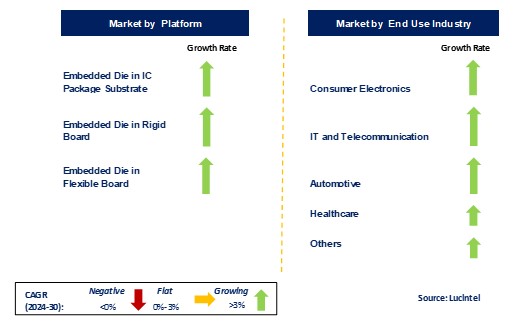
Embedded Die Packaging Market  by End Use Industry

Emerging Trends in the Embedded Die Packaging Market

The embedded die packaging market is undergoing various transformative trends that are shaping the industry landscape. Five key emerging trends are:

• Miniaturization of Devices: With rising consumer demand for compact, high-performance devices, there is a growing focus on reducing the size of embedded die packages without sacrificing performance. This reduces package size, allowing more functionality within space-constrained devices, such as wearable gadgets and medical implants, driving innovation in packaging technologies.
• Integration of Advanced Technologies: Advanced technologies, such as 5G, AI, and IoT, are rapidly leading to the use of sophisticated package solutions in embedded systems. Packaging for such systems must now enable high data rates, low latency, and enhanced processing ability, which are driving innovations in packaging design.
• FOWLP (fan-out wafer-level packaging): FOWLP is another growing trend in the area of embedded die packaging, mainly due to its superior thermal performance, miniaturized form factor, and better electrical performance. In sectors such as automotive and healthcare, it has the added advantage of providing smaller components with more efficient usage.
• 3D Packaging: This technology uses 3D die stacking and packaging to improve the density and performance of embedded devices. This technology enables the integration of multi-functional chips into compact devices, which are highly suited for consumer electronics, medical devices, and industrial sensors.
• Sustainable and Eco-Friendly Packaging Solutions: Sustainability is becoming a pressing concern across industries, leading to the use of green materials and energy-efficient fabrication processes for embedded die packaging. It is driven by regulations imposed by governments, consumer acceptance of greener products, and industry attention toward reducing environmental impact.

These trends are contributing to the evolution of the embedded die packaging market by driving technological innovation, improving device performance, and addressing the growing demand for more compact, reliable, and environmentally sustainable electronic products.
Embedded Die Packaging  Heat Map

Embedded Die Packaging Market : Industry Potential, Technological Development, and Compliance Considerations

EDP is the term for the direct integration of semiconductor chips into substrates, like printed circuit boards (PCBs), through advanced packaging techniques. The need for smaller, more efficient, and powerful electronic devices has resulted in this technology gaining tremendous traction. EDP facilitates improved electrical performance, smaller size, and reduced costs that are critical for applications in consumer electronics, automotive, and industrial sectors.

• Technology Potential: Embedded die packaging has enormous potential for miniaturization and improved performance, making it a key enabler for next-generation electronics. It provides for higher integration of components and improved heat dissipation, which are very important for power-efficient devices. The potential lies in further innovations in materials and processes that could enhance the speed, functionality, and environmental sustainability of devices.

• Degree of Disruption: EDP is very disruptive because it competes with the traditional packaging method, offering a compact, high-performance alternative. As industries move toward more complex and multifunctional devices, EDP will revolutionize device design and manufacturing, especially in the mobile, IoT, and automotive sectors.

• Technology Maturity: The technology is at a semi-mature stage. Several companies are actively advancing and refining embedded packaging methods. Challenges remain in standardization and scaling.

• Regulatory Compliance: EDP technology must comply with environmental and safety regulations, including RoHS and WEEE so that the packaging materials adhere to sustainability and safety standards.

Recent Technological development in Embedded Die Packaging Market by Key Players

Key players in the embedded die packaging market have made significant strides in enhancing packaging technologies, with several notable developments reshaping the sector.

• Amkor Technology is investing in advanced packaging solutions. This includes fan-out wafer-level packaging (FOWLP) and 3D packaging. Their innovation leads to better performance in, for instance, automotive and mobile device segments, where very high-performance, compactly packed products are critical.
• TDK Corporation has been emphasizing the integration of the embedded die packaging solution in its sensor systems. With automotive sensor and industrial applications developments, TDK is enhancing performance and reliability, especially for automotive sensor products applied to autonomous driving technologies.
• Microsemi has been a forerunner in high-reliability, embedded die packaging solutions, especially focusing on aerospace and defense areas. Innovations in thermal management and robust packaging are the foundation of the demanding environment seen in these sectors.
• ASE Group has consolidated its position by developing advanced packaging technologies for high-density interconnects, especially in mobile and consumer electronics. The company’s investment in 5G-ready packaging solutions is poised to meet the growing demand for next-generation communication devices.
• AT&S has been working on FOWLP for mobile and automotive. The company’s packages enable high-density interconnects to meet the performance needs of compact electronic devices.
• General Electric has been integrating embedded die packaging into its industrial sensing products, enhancing sensor reliability and efficiency in applications involving energy generation and healthcare.
• Taiwan Semiconductor has spearheaded the implementation of embedded die technologies in its semiconductor fabrication, especially for car and cellular applications. Its novel packaging helps reduce the size factors and is more heat-conductive in nature.
• Infineon Technologies has been designing advanced embedded die packaging solutions designed for cars and industrial power electronics applications. The developments by the company on power devices deal with the efficiency and thermal design of packages.
• Schweizer Electronic developed embedded die packaging solutions for the enhancement of devices used in industrial automation, automotive, and telecommunications sectors into higher reliability and miniaturized devices.
• Fujikura has been focusing its efforts on embedding die technology for telecommunications applications, especially those in high-speed data transmission products. The company develops packaging solutions for next-generation 5G devices. These devices require compact and high-performance components.

These developments by key players are pushing the embedded die packaging market toward more advanced, reliable, and miniaturized solutions that can cater to the needs of multiple end-use industries, including automotive, healthcare, and consumer electronics.

Embedded Die Packaging Market Driver and Challenges

The embedded die packaging market is influenced by several drivers and challenges, which are shaping its growth and development.

The factors responsible for driving the embedded die packaging market include:
• Higher Demand for Miniaturization: As electronic devices become smaller yet more powerful, there is an increased demand for embedded die packaging solutions that allow for miniaturization without sacrificing performance. This trend is especially pronounced in areas such as medical devices and wearable technology where the critical factor is space.
• Rise in 5G and IoT Applications: The growth of 5G and IoT is demanding high-performance packaging solutions. Rapid data transmission rates, along with low latency, require efficient, compact packaging, urging the use of advanced embedded die packaging technologies to fulfill these needs.
• Automotive Electronics Advances: As the automotive industry advances with the use of electronics for applications in autonomous vehicles and other advanced driver-assistance systems (ADAS), the demand for high-performance, compact, and reliable embedded die packaging is on the rise.
• Demand for High-Performance Medical Devices: The medical industry is demanding more efficient, smaller, and more reliable devices. These enable improvements in the functionality and durability of medical implants, wearables, and sensors to support better outcomes for patients.

Challenges in the embedded die packaging market include:
• High Manufacturing Cost: Advanced packaging technologies may be expensive to develop, making it difficult for them to gain mass adoption, especially by small manufacturers. The processes used in advanced packaging techniques like 3D stacking and FOWLP are complicated and, hence expensive to produce.
• Integration Complexity: The integration of new packaging technologies with existing manufacturing processes is complex. Companies need to invest in new equipment and skills to support advanced packaging techniques, which can slow down adoption and innovation in the market.
• Material and Process Limitations: The existing materials in the embedded die packaging solutions do not meet the performance requirements of next-generation applications, including 5G or autonomous vehicles. Developing new materials with improved thermal management, durability, and performance is a significant challenge for the industry.

Thus, these drivers and challenges will influence the embedded die packaging market by inducing technological advancement as well as posing barriers to broad acceptance. Here, innovation and cost-effectiveness are two aspects on which this market is focusing to satisfy the requirements of diversified end-use industries.

List of Embedded Die Packaging Companies

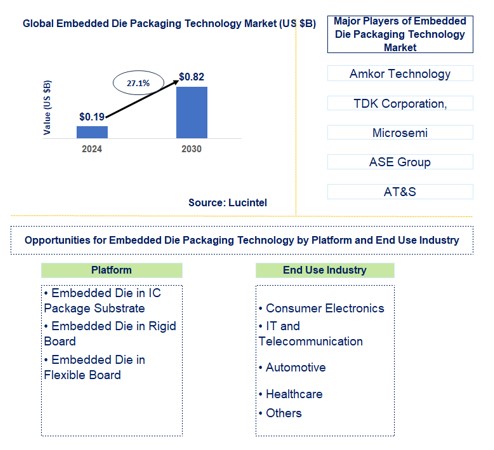
Companies in the market compete based on product quality offered. Major players in this market focus on expanding their manufacturing facilities, R&D investments, infrastructural development, and leverage integration opportunities across the value chain. With these strategies embedded die packaging companies cater to increasing demand, ensure competitive effectiveness, develop innovative products & technologies, reduce production costs, and expand their customer base. Some of the embedded die packaging companies profiled in this report include.
• Amkor Technology
• TDK Corporation
• Microsemi
• Ase Group
• AT&S
• General Electric

Embedded Die Packaging Market by Technology

• Technology Readiness and Competitive Level for Different Technologies in Embedded Die Packaging Market: The technology readiness for embedded die packaging varies across sectors, with medical wearable devices and implants leading in sophistication due to their advanced sensor requirements and stringent regulatory standards. These devices necessitate cutting-edge packaging techniques to ensure miniaturization, reliability, and performance in critical health applications. Sports/fitness devices are relatively mature with a competitive edge in terms of affordability and user-friendly design but face less intense regulatory scrutiny. Industrial sensing technologies, while highly advanced in terms of functionality, demand packaging solutions that can withstand extreme conditions. Other emerging technologies, such as IoT-based devices, also show high technology readiness but still need to catch up in regulatory compliance. Competitive levels are high in all sectors with innovation, driving rapid advancement and meeting specific application needs, particularly for high-performance, low-power embedded die packaging.

• Competitive Intensity and Regulatory Compliance in Embedded Die Packaging Market: Competitive intensity in the embedded die packaging market is high due to rapid innovation and growing demand in sectors such as healthcare, fitness, and industrial automation. Medical wearable devices and implants have stringent regulatory compliance in terms of FDA approval for safety and efficacy. Sports/fitness devices are less regulated but still need to pass quality standards for consumer safety. Industrial sensing technologies face lower regulatory hurdles but demand high reliability and durability in harsh environments. The competitive landscape includes global tech firms, specialized packaging manufacturers, and component suppliers, each vying for market share by offering more efficient, compact, and cost-effective solutions. Regulatory compliance varies by industry, with medical devices being the most heavily regulated, while fitness and industrial products are less restrictive.

• Disruption Potential of Different Technologies for Embedded Die Packaging Market: The embedded die packaging market is expected to be significantly disrupted by technologies such as medical wearable devices, medical implants, sports/fitness devices, industrial sensing, and others due to their increasing demand for miniaturization, connectivity, and real-time data processing. Medical wearable devices and implants drive growth through the need for compact, reliable sensors for continuous health monitoring and diagnostics. About accuracy in tracking and enhancement of experience, sports, and fitness equipment rely on embedded packaging. As industrial sensing technologies look to employ rugged, high-performance embedded solutions in automation and IoT applications, they have a high demand for advanced packaging solutions for integration, power consumption, and durability while transforming the usage of sectors in terms of embedded die packaging. Thus, these areas are being modified based on how the market evolves due to increased demand for seamless, high-performance components.

Embedded Die Packaging Market Trend and Forecast by Technology [Value from 2019 to 2031]:


• Medical Wearable Devices
• Medical implants
• Sports/Fitness Devices
• Industrial Sensing
• Others

Embedded Die Packaging Market Trend and Forecast by End Use Industry [Value from 2019 to 2031]:


• Consumer Electronics
• IT and Telecommunication
• Automotive
• Healthcare
• Others

Embedded Die Packaging Market by Region [Value from 2019 to 2031]:


• North America
• Europe
• Asia Pacific
• The Rest of the World

• Latest Developments and Innovations in the Embedded Die Packaging Technologies
• Companies / Ecosystems
• Strategic Opportunities by Technology Type


Features of the Global Embedded Die Packaging Market

Market Size Estimates: Embedded die packaging market size estimation in terms of ($B).
Trend and Forecast Analysis: Market trends (2019 to 2024) and forecast (2025 to 2031) by various segments and regions.
Segmentation Analysis: Technology trends in the global embedded die packaging market size by various segments, such as end use industry and technology in terms of value and volume shipments.
Regional Analysis: Technology trends in the global embedded die packaging market breakdown by North America, Europe, Asia Pacific, and the Rest of the World.
Growth Opportunities: Analysis of growth opportunities in different end use industries, technologies, and regions for technology trends in the global embedded die packaging market.
Strategic Analysis: This includes M&A, new product development, and competitive landscape for technology trends in the global embedded die packaging market.
Analysis of competitive intensity of the industry based on Porter’s Five Forces model.

This report answers following 11 key questions

Q.1. What are some of the most promising potential, high-growth opportunities for the technology trends in the global embedded die packaging market by technology (medical wearable devices, medical implants, sports/fitness devices, industrial sensing, and others), end use industry (consumer electronics, it and telecommunication, automotive, healthcare, and others), and region (North America, Europe, Asia Pacific, and the Rest of the World)?
Q.2. Which technology segments will grow at a faster pace and why?
Q.3. Which regions will grow at a faster pace and why?
Q.4. What are the key factors affecting the dynamics of different technologies? What are the drivers and challenges of these technologies in the global embedded die packaging market?
Q.5. What are the business risks and threats to the technology trends in the global embedded die packaging market?
Q.6. What are the emerging trends in these technologies in the global embedded die packaging market and the reasons behind them?
Q.7. Which technologies have potential of disruption in this market?
Q.8. What are the new developments in the technology trends in the global embedded die packaging market? Which companies are leading these developments?
Q.9. Who are the major players in technology trends in the global embedded die packaging market? What strategic initiatives are being implemented by key players for business growth?
Q.10. What are strategic growth opportunities in this embedded die packaging technology space?
Q.11. What M & A activities did take place in the last five years in technology trends in the global embedded die packaging market?

                                                            Table of Contents

            1. Executive Summary

            2. Technology Landscape
                        2.1: Technology Background and Evolution
                        2.2: Technology and Application Mapping
                        2.3: Supply Chain

            3. Technology Readiness
                        3.1. Technology Commercialization and Readiness
                        3.2. Drivers and Challenges in Embedded Die Packaging Technology

            4. Technology Trends and Opportunities
                        4.1: Embedded Die Packaging Market Opportunity
                        4.2: Technology Trends and Growth Forecast
                        4.3: Technology Opportunities by Technology
                                    4.3.1: Medical Wearable Devices
                                    4.3.2: Medical Implants
                                    4.3.3: Sports/Fitness Devices
                                    4.3.4: Industrial Sensing
                                    4.3.5: Others

            4.4: Technology Opportunities by End Use Industry
                                    4.4.1: Consumer Electronics
                                    4.4.2: IT and Telecommunication
                                    4.4.3: Automotive
                                    4.4.4: Healthcare
                                    4.4.5: Others

            5. Technology Opportunities by Region

            5.1: Global Embedded Die Packaging Market by Region

            5.2: North American Embedded Die Packaging Market
                                    5.2.1: Canadian Embedded Die Packaging Market
                                    5.2.2: Mexican Embedded Die Packaging Market
                                    5.2.3: United States Embedded Die Packaging Market

            5.3: European Embedded Die Packaging Market
                                    5.3.1: German Embedded Die Packaging Market
                                    5.3.2: French Embedded Die Packaging Market
                                    5.3.3: The United Kingdom Embedded Die Packaging Market

            5.4: APAC Embedded Die Packaging Market
                                    5.4.1: Chinese Embedded Die Packaging Market
                                    5.4.2: Japanese Embedded Die Packaging Market
                                    5.4.3: Indian Embedded Die Packaging Market
                                    5.4.4: South Korean Embedded Die Packaging Market

            5.5: ROW Embedded Die Packaging Market
                                    5.5.1: Brazilian Embedded Die Packaging Market
                                   

            6. Latest Developments and Innovations in the Embedded Die Packaging Technologies

            7. Competitor Analysis
                                    7.1: Product Portfolio Analysis
                                    7.2: Geographical Reach
                                    7.3: Porter’s Five Forces Analysis

            8. Strategic Implications
                                    8.1: Implications
                                    8.2: Growth Opportunity Analysis
                                            8.2.1: Growth Opportunities for the Global Embedded Die Packaging Market by Technology
                                            8.2.2: Growth Opportunities for the Global Embedded Die Packaging Market by End Use Industry
                                            8.2.3: Growth Opportunities for the Global Embedded Die Packaging Market by Region
                                    8.3: Emerging Trends in the Global Embedded Die Packaging Market
                                    8.4: Strategic Analysis
                                            8.4.1: New Product Development
                                            8.4.2: Capacity Expansion of the Global Embedded Die Packaging Market
                                            8.4.3: Mergers, Acquisitions, and Joint Ventures in the Global Embedded Die Packaging Market
                                            8.4.4: Certification and Licensing
                                            8.4.5: Technology Development

            9. Company Profiles of Leading Players
                                    9.1: Amkor Technology
                                    9.2: TDK Corporation
                                    9.3: Microsemi
                                    9.4: ASE Group
                                    9.5: AT&S
                                    9.6: General Electric
                                    9.7: Taiwan Semiconductor
                                    9.8: Infenion Technologies
                                    9.9: Schweizer Electronic
                                    9.10: Fujikura
.

Buy full report or by chapter as follows

Limited Time Offer

Price by License Type:
[-] Hide Chapter Details
[Chapter Number] [Chapter Name] [Chapter Number Of Pages] [Chapter Price]
Title/Chapter Name Pages Price
Full Report: Technology Landscape, Trends and Opportunities in Embedded Die Packaging Market Full Report $ 2,990
150 - page report
Lucintel has been in the business of market research and management consulting since 2000 and has published over 1000 market intelligence reports in various markets / applications and served over 1,000 clients worldwide. This study is a culmination of four months of full-time effort performed by Lucintel's analyst team. The analysts used the following sources for the creation and completion of this valuable report:
  • In-depth interviews of the major players in this market
  • Detailed secondary research from competitors’ financial statements and published data 
  • Extensive searches of published works, market, and database information pertaining to industry news, company press releases, and customer intentions
  • A compilation of the experiences, judgments, and insights of Lucintel’s professionals, who have analyzed and tracked this market over the years.
Extensive research and interviews are conducted across the supply chain of this market to estimate market share, market size, trends, drivers, challenges, and forecasts. Below is a brief summary of the primary interviews that were conducted by job function for this report.
 
Thus, Lucintel compiles vast amounts of data from numerous sources, validates the integrity of that data, and performs a comprehensive analysis. Lucintel then organizes the data, its findings, and insights into a concise report designed to support the strategic decision-making process. The figure below is a graphical representation of Lucintel’s research process. 
 

Please sign in below to get report brochure - Technology Landscape, Trends and Opportunities in Embedded Die Packaging Market.

At Lucintel, we respect your privacy and maintain the confidentiality of information / data provided by you
(Please enter your corporate email. * These fields are mandatory )

Follow us on