
Market Report · July 17, 2026

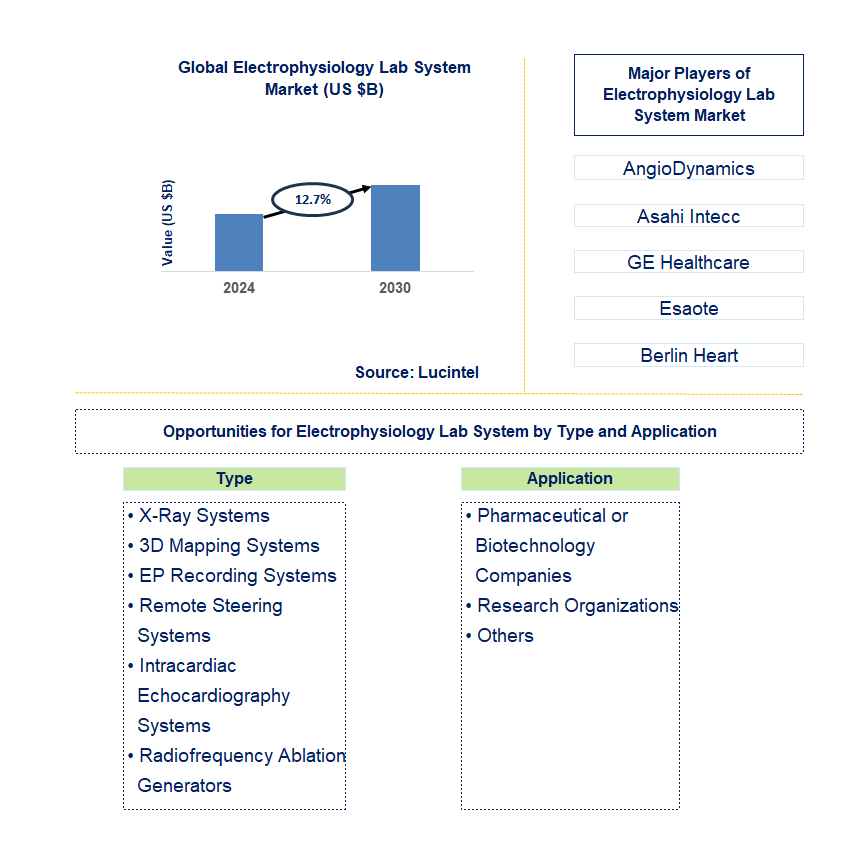
Key data points: The growth forecast = 12.7% annually next 6 years. Scroll below to get more insights. This market report covers trends, opportunities, and forecast in the global electrophysiology lab system market to 2030 by type (X-ray systems, 3D mapping systems, EP recording systems, remote steering systems, intracardiac echocardiography systems, and radiofrequency ablation generators), application (pharmaceutical or biotechnology companies, research organizations, and others), and region (North America, Europe, Asia Pacific, and the Rest of the World)
We'll send your sample report shortly.
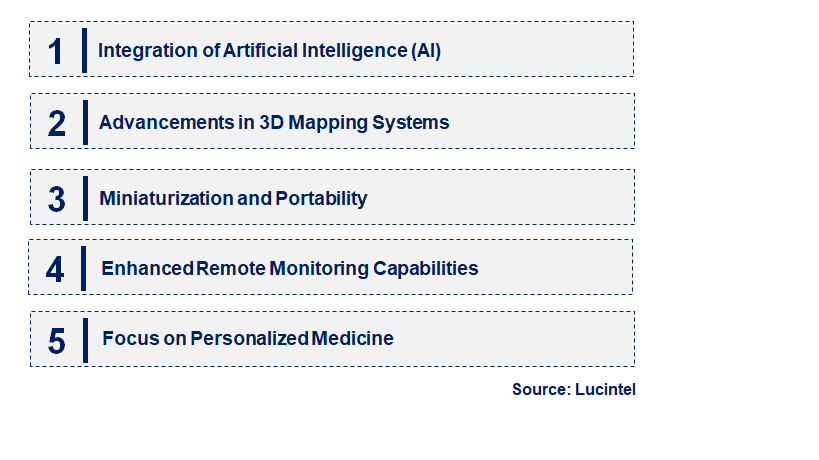
• Integration of Artificial Intelligence (AI): AI algorithms are being integrated into mapping and imaging systems to assist in analyzing complex data and providing real-time insights. This technology improves decision-making by identifying patterns and anomalies that may be missed by human operators. AI-driven systems also facilitate predictive analytics, which can guide treatment strategies and personalize patient care. By leveraging AI, electrophysiology labs can achieve higher precision, reduce procedural errors, and optimize patient outcomes.
• Advancements in 3D Mapping Systems: 3D mapping systems are advancing rapidly, offering more detailed and accurate representations of cardiac anatomy. Recent developments include enhanced resolution and real-time mapping capabilities that improve the precision of electrophysiology procedures. These systems provide detailed visualizations of the heart's electrical activity, enabling more accurate diagnosis and targeted treatment of arrhythmias. The integration of 3D mapping with other imaging technologies, such as MRI and CT, further enhances the ability to guide complex procedures and improve overall procedural success rates.
• Miniaturization and Portability: There is a growing trend towards miniaturizing and increasing the portability of electrophysiology lab systems. Compact and portable systems are being developed to address the need for flexibility and accessibility in various healthcare settings. These systems offer the same advanced features as larger, stationary units but in a more adaptable format. Miniaturization allows for easier integration into smaller clinical spaces and facilitates mobile cardiac care units. This trend improves the availability of electrophysiology technology, especially in underserved or remote areas, and enhances the overall efficiency of cardiac care delivery.
• Enhanced Remote Monitoring Capabilities: Remote monitoring technologies are increasingly integrated into electrophysiology lab systems, offering continuous patient management. Innovations in remote monitoring enable healthcare providers to track patient data and outcomes in real-time, even after the initial procedure. This includes remote ECG monitoring, telemetry, and data analytics. These capabilities enhance post-procedural care, enable early detection of complications, and facilitate long-term management of arrhythmias. By incorporating remote monitoring, electrophysiology labs can provide more comprehensive care and improve patient engagement and adherence to treatment plans.
• Focus on Personalized Medicine: Personalized medicine is gaining traction in electrophysiology, aiming to tailor treatments to individual patient needs. Advances in genetic and molecular diagnostics are being integrated into electrophysiology systems to better understand and treat arrhythmias. Personalized medicine approaches involve customizing treatment plans based on individual patient profiles, including genetic predispositions and specific arrhythmia types. This trend enhances the effectiveness of interventions and reduces the risk of adverse outcomes. By focusing on personalized medicine, electrophysiology labs can deliver more targeted and effective care, improving overall patient outcomes and satisfaction. The electrophysiology lab system market is influenced by several key trends, including the integration of AI, advancements in 3D mapping, miniaturization, remote monitoring, and personalized medicine. These developments are driving innovation and improving the precision and effectiveness of cardiac care. As the market continues to evolve, stakeholders must adapt to these trends to stay competitive and meet the growing demands for advanced electrophysiology solutions. Understanding and leveraging these trends will be crucial for enhancing patient outcomes and advancing the field of cardiac care.
• Integration of Advanced Mapping Systems: Advanced mapping systems are increasingly being integrated into electrophysiology labs, improving procedural accuracy. Modern mapping systems provide high-resolution, real-time visualizations of cardiac electrical activity, allowing for more precise localization of arrhythmias. This enhances the effectiveness of catheter ablation procedures and reduces the risk of complications. The improved accuracy and detail help clinicians target problem areas more effectively, leading to better patient outcomes and shorter procedure times.
• Adoption of Artificial Intelligence (AI) Tools: AI tools are being adopted to enhance diagnostic and treatment capabilities in EP labs. AI algorithms assist in analyzing complex electrophysiological data, identifying patterns, and predicting arrhythmia occurrences. These tools facilitate more accurate diagnosis and treatment planning, helping clinicians make informed decisions. AI also aids in automating routine tasks, increasing efficiency, and reducing the risk of human error, ultimately improving procedural outcomes and patient safety.
• Expansion of Remote Monitoring Technologies: Remote monitoring technologies are becoming more prevalent in electrophysiology. Remote monitoring systems enable continuous tracking of patient data post-procedure, including ECGs and arrhythmia episodes. This technology allows for timely intervention and better management of chronic conditions. It enhances patient engagement and compliance by providing real-time feedback and facilitating remote consultations, leading to improved long-term management of cardiac health.
• Miniaturization of Electrophysiology Equipment: Miniaturization of electrophysiology equipment is a notable trend. Compact and portable EP systems are being developed to address space constraints and provide flexibility in various clinical settings. These smaller devices retain advanced functionalities while being easier to integrate into different environments, including smaller hospitals and outpatient centers. Miniaturization also facilitates mobile cardiac care units, expanding access to advanced electrophysiology services.
• Enhanced Imaging Techniques: Advances in imaging techniques are significantly impacting electrophysiology labs. Improved imaging modalities, such as high-resolution MRI and CT integration, provide detailed anatomical and functional views of the heart. These advancements aid in precise pre-procedural planning and real-time guidance during interventions. Enhanced imaging techniques contribute to better treatment outcomes by offering clearer visualization of cardiac structures and arrhythmia sources. Recent developments in the electrophysiology lab system market—such as advanced mapping systems, AI integration, remote monitoring, miniaturization, and enhanced imaging techniques—are transforming cardiac care. These innovations are improving procedural accuracy, patient outcomes, and access to advanced treatments. As technology continues to evolve, electrophysiology labs will benefit from increased efficiency, precision, and patient engagement, ultimately advancing the field of cardiac care and meeting the growing demand for effective arrhythmia management.
• Expansion of AI-Driven Diagnostic Tools: AI-driven diagnostic tools offer significant growth potential. Integrating AI into EP systems enhances data analysis, arrhythmia detection, and treatment planning. AI algorithms can improve diagnostic accuracy and procedural outcomes by analyzing complex data patterns and predicting arrhythmia occurrences. This growth opportunity involves developing and implementing AI solutions that provide real-time insights and support clinicians in making informed decisions, ultimately improving patient care and system efficiency.
• Development of Portable EP Systems: Portable and miniaturized EP systems present a valuable growth opportunity. The demand for compact, portable devices is increasing due to the need for flexibility and space constraints in various healthcare settings. Developing portable EP systems enables the delivery of advanced cardiac care in smaller hospitals, outpatient centers, and mobile units. This opportunity includes creating devices that maintain high functionality while being easier to transport and deploy, expanding access to electrophysiology services.
• Integration of Remote Monitoring Solutions: Remote monitoring solutions are becoming increasingly important in cardiac care. Implementing remote monitoring technologies allows for continuous tracking of patients' cardiac health, including post-procedural data and arrhythmia episodes. This growth opportunity involves developing systems that provide real-time feedback and facilitate remote consultations. Enhancing remote monitoring capabilities can improve patient engagement, adherence to treatment plans, and long-term management of chronic conditions.
• Adoption of Advanced Imaging Modalities: Advanced imaging modalities present opportunities for growth in the EP market. Integrating high-resolution imaging techniques, such as advanced MRI and CT, with EP systems enhances procedural accuracy and planning. This growth area involves developing imaging solutions that offer detailed views of cardiac anatomy and arrhythmia sources, improving pre-procedural assessment and real-time guidance. Advanced imaging contributes to better treatment outcomes and supports the demand for precise cardiac interventions.
• Focus on Personalized Medicine: Personalized medicine is a growing trend in electrophysiology. The shift towards personalized medicine involves tailoring treatments based on individual patient profiles, including genetic and molecular information. Developing EP systems that support personalized approaches can improve treatment efficacy and reduce adverse outcomes. This opportunity includes incorporating genetic testing and patient-specific data into treatment planning, enhancing the effectiveness of interventions and patient satisfaction. Strategic growth opportunities in the electrophysiology lab system market include AI-driven diagnostics, portable systems, remote monitoring, advanced imaging, and personalized medicine. By capitalizing on these areas, stakeholders can drive innovation, meet evolving healthcare demands, and enhance patient outcomes. Embracing these growth opportunities will enable companies to stay competitive, improve cardiac care, and address the diverse needs of healthcare providers and patients.
• AngioDynamics
• Asahi Intecc
• GE Healthcare
• Esaote
• Berlin Heart
• Alere
• Nihon Kohden
• Deltex Medical Group
• Boston Scientific
• Koninklijke Philips
• X-Ray Systems
• 3D Mapping Systems
• EP Recording Systems
• Remote Steering Systems
• Intracardiac Echocardiography Systems
• Radiofrequency Ablation Generators
• Pharmaceutical or Biotechnology Companies
• Research Organizations
• Others
• North America
• Europe
• Asia Pacific
• The Rest of the World
• United States: In the United States, the electrophysiology lab system market is seeing substantial growth due to technological advancements and a rising incidence of cardiovascular diseases. Key developments include the adoption of advanced 3D mapping systems and the integration of artificial intelligence (AI) to improve diagnostic accuracy and treatment outcomes. Companies are also focusing on developing more compact and user-friendly systems that enhance procedural efficiency and patient safety. Additionally, there is a growing trend towards the adoption of remote monitoring technologies, enabling continuous patient management and post-procedural care.
• China: China is rapidly expanding its electrophysiology lab system market as part of its broader investment in healthcare infrastructure. Recent developments include increased government funding for advanced cardiac care technologies and a growing emphasis on the integration of real-time imaging and mapping systems. Chinese hospitals are adopting sophisticated EP systems that offer enhanced diagnostic capabilities and improved workflow efficiencies. Additionally, there is a focus on developing cost-effective solutions to make advanced electrophysiology technology more accessible across various healthcare settings, including rural and underserved areas.
• Germany: Germany is leading in the electrophysiology lab system market with a strong emphasis on precision medicine and advanced technological integration. Recent advancements include the adoption of high-resolution mapping systems and advanced ablation technologies that enhance the treatment of complex arrhythmias. German healthcare providers are also integrating AI-driven analytics and machine learning to support decision-making processes and improve patient outcomes. The country's focus on research and development is driving innovations in EP systems, supporting both clinical and academic applications, and contributing to Germany's reputation as a leader in medical technology.
• India: In India, the electrophysiology lab system market is evolving with increased investment in healthcare infrastructure and technological advancements. Recent developments include the introduction of cost-effective EP systems that cater to the growing demand for cardiac care across various healthcare settings. There is a notable rise in the adoption of advanced mapping and imaging technologies, which are improving diagnostic and treatment capabilities. Additionally, efforts are being made to enhance training and education for healthcare professionals to ensure effective use of new technologies and improve patient care outcomes.
• Japan: Japan is witnessing significant advancements in the electrophysiology lab system market, driven by its focus on innovation and precision medicine. Recent developments include the implementation of cutting-edge mapping systems and advanced ablation techniques that offer high accuracy and improved patient safety. Japanese hospitals are also exploring the integration of robotics and AI to enhance procedural outcomes and reduce operational complexity. Additionally, there is a strong emphasis on developing compact and efficient systems to address the needs of both urban and rural healthcare facilities, ensuring broad access to advanced cardiac care.


• AngioDynamics
• Asahi Intecc
• GE Healthcare
• Esaote
• Berlin Heart
• Alere
• Nihon Kohden
• Deltex Medical Group
• Boston Scientific
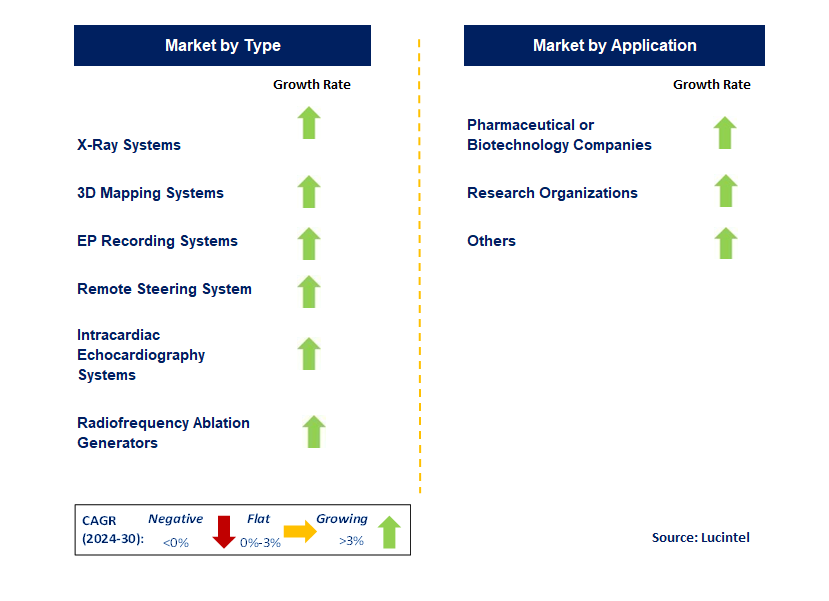
• Koninklijke Philips Q5. Which electrophysiology lab system market segment will be the largest in future? Answer: Lucintel forecasts that X-ray system is expected to witness the highest growth over the forecast period. Q6. In electrophysiology lab system market, which region is expected to be the largest in next 5 years? Answer: APAC is expected to witness the highest growth over the forecast period. Q.7 Do we receive customization in this report? Answer: Yes, Lucintel provides 10% customization without any additional cost.


Choose a license that fits your team. Instant PDF delivery.
Prices exclude taxes. Instant delivery. Custom licensing available on request.
Market Report · July 17, 2026
Market Report · July 16, 2026
Market Report · July 10, 2026
Trusted partner for strategic intelligence and business growth


Receive a complimentary market analysis tailored to your industry. Our analysts will identify key growth opportunities and competitive dynamics specific to your business.

Market size, growth rate, and key trend analysis for your specific sector.

Top competitor positioning and market share analysis.

Strategic recommendations backed by data-driven insights.
Get curated market intelligence and competitive moves straight to your inbox.
By subscribing, you agree to receive our monthly insights. Unsubscribe anytime.
Receive a complimentary market analysis tailored to your industry. Our analysts will identify key growth opportunities and competitive dynamics specific to your business.
Market size, growth rate, and key trend analysis for your specific sector.
Top competitor positioning and market share analysis.
Strategic recommendations backed by data-driven insights.
Get curated market intelligence, emerging trends, and competitive moves straight to your inbox each month.
By subscribing, you agree to receive our monthly insights. Unsubscribe anytime.
We'll send your sample report shortly.