
Market Report · July 31, 2026

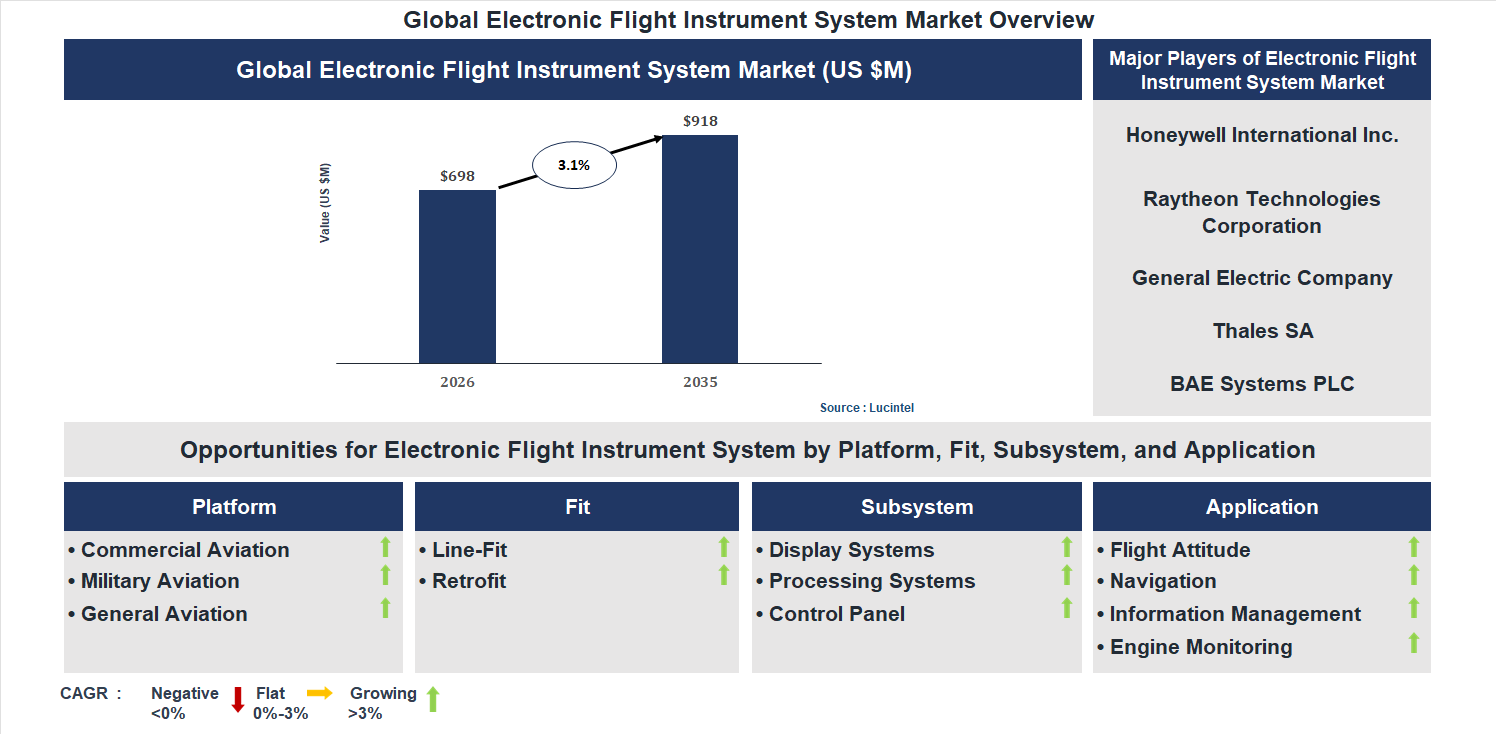
Key data points: The market size in 2035 = $918 million, growth forecast = 3.1% annually for the next 8 years. Scroll below to get more insights. This market report covers trends, opportunities and forecasts in electronic flight instrument system market to 2035 by platform (commercial aviation, military aviation, and general aviation), fit (line-fit and retrofit), subsystem (display systems, processing systems, and control panel), application (flight attitude, navigation, information management, and engine monitoring), and region (North America, Europe, Asia Pacific, and the Rest of the World)
We'll send your sample report shortly.
• Lucintel forecasts that, within the platform category, commercial aviation is expected to witness the highest growth over the forecast period.
• Within the application category, navigation is expected to witness the highest growth.
• In terms of region, APAC is expected to witness the highest growth over the forecast period. Gain valuable insights for your business decisions with our comprehensive 150+ page report. Sample figures with some insights are shown below.
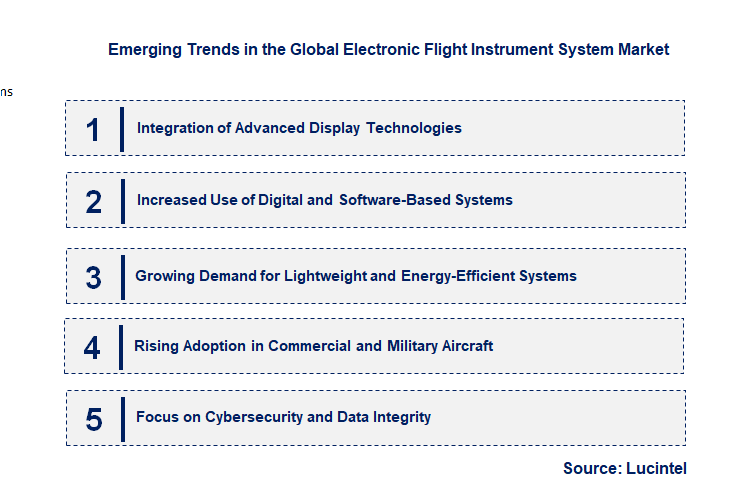
• Integration of Advanced Display Technologies: The adoption of high-resolution, multi-functional displays such as OLED and LCD screens is revolutionizing EFIS. These displays offer clearer visuals, better contrast, and more detailed information, improving pilot situational awareness. Integration with augmented reality (AR) and heads-up displays (HUDs) further enhances safety by providing critical data directly in the pilot’s line of sight. This trend is driven by the need for more intuitive interfaces and real-time data visualization, ultimately reducing pilot workload and increasing operational safety.
• Increased Use of Digital and Software-Based Systems: The shift from traditional analog instruments to digital, software-driven EFIS solutions is a significant trend. Digital systems offer greater flexibility, easier updates, and enhanced data integration capabilities. They enable real-time data processing, predictive analytics, and seamless connectivity with other aircraft systems. This transition improves reliability, reduces maintenance costs, and allows for customization based on specific aircraft or mission requirements. As digital technology advances, the market is moving toward fully integrated, software-centric EFIS solutions that support future innovations.
• Growing Demand for Lightweight and Energy-Efficient Systems: With the push for fuel efficiency and reduced aircraft weight, manufacturers are developing lightweight EFIS components using advanced materials and compact designs. These systems help airlines and military operators meet environmental regulations and operational cost targets. Energy-efficient EFIS also reduces power consumption, which is critical for electric and hybrid aircraft. This trend is shaping the market by encouraging innovation in materials and design, leading to more sustainable and cost-effective cockpit solutions that do not compromise performance or safety.
• Rising Adoption in Commercial and Military Aircraft: The increasing deployment of EFIS in both commercial and military sectors is a key trend. Airlines are upgrading older cockpits with modern EFIS to improve safety and operational efficiency, while military aircraft benefit from advanced situational awareness and combat readiness features. The integration of EFIS with other avionics systems enhances overall aircraft performance. This widespread adoption is driven by regulatory mandates, technological advancements, and the need for enhanced safety features, expanding the market scope and driving growth across multiple segments.
• Focus on Cybersecurity and Data Integrity: As EFIS systems become more connected and reliant on digital data, cybersecurity concerns are rising. Protecting sensitive flight data from cyber threats is critical to ensure safety and operational integrity. Manufacturers are investing in robust encryption, secure communication protocols, and cybersecurity frameworks to safeguard systems against hacking and data breaches. This trend underscores the importance of developing resilient EFIS architectures that can withstand cyber-attacks, ensuring trust and safety in increasingly digital cockpits. These trends are collectively reshaping the Electronic Flight Instrument System market by fostering innovation, enhancing safety, and improving operational efficiency. The integration of advanced display technologies, digital systems, lightweight designs, broader adoption, and cybersecurity measures are driving the industry toward smarter, safer, and more sustainable aviation solutions. These developments are not only transforming cockpit environments but also setting new standards for future aircraft design and operation.
• Growing Adoption of Glass Cockpits: The shift from traditional analog instruments to digital EFIS enhances pilot situational awareness, reduces workload, and improves safety. Airlines are increasingly replacing older systems with modern EFIS solutions, driving market growth. This transition supports more efficient aircraft operations and maintenance, attracting manufacturers to innovate and expand their product portfolios. The demand for lightweight, reliable, and customizable systems is fueling technological advancements and market competitiveness.
• Technological Advancements in Display Systems: Innovations such as high-resolution displays, touchscreens, and augmented reality are revolutionizing EFIS. These improvements provide clearer, more detailed information, aiding pilots in decision-making and situational awareness. Enhanced display technology reduces errors and increases safety margins. Manufacturers are investing in R&D to develop more durable, energy-efficient, and user-friendly systems, which are increasingly being adopted by commercial and military aircraft, expanding market opportunities.
• Integration of Automation and AI: The incorporation of automation and artificial intelligence in EFIS systems is streamlining cockpit operations. These systems assist pilots with navigation, system monitoring, and decision support, reducing workload and human error. AI-driven analytics enable predictive maintenance and real-time system diagnostics. This integration enhances safety, operational efficiency, and reduces training costs. As automation becomes more sophisticated, market players are focusing on developing intelligent EFIS solutions to meet evolving industry demands.
• Increasing Focus on Safety and Regulatory Compliance: Stringent safety standards and regulatory requirements are prompting airlines and manufacturers to upgrade EFIS systems. Enhanced safety features such as fail-safe mechanisms, redundancy, and real-time monitoring are becoming standard. Compliance with international aviation regulations ensures market access and competitiveness. This focus on safety drives innovation, with companies investing in robust, compliant systems that meet or exceed regulatory standards, thereby expanding market share and fostering industry trust.
• Rising Demand for Retrofit and Upgrade Solutions: Many existing aircraft are being retrofitted with modern EFIS to meet current safety and efficiency standards. This retrofit market offers significant growth opportunities, especially for older fleets needing modernization. Upgrading systems reduces maintenance costs and improves aircraft performance. The demand is driven by airlines seeking cost-effective solutions without purchasing new aircraft. Manufacturers are developing modular, easy-to-install EFIS options to capitalize on this trend, expanding their market reach and revenue streams. The overall impact of these developments is a dynamic, expanding EFIS market characterized by technological innovation, increased safety, and operational efficiency. The industry is witnessing a shift towards smarter, more integrated cockpit systems, which are transforming aviation safety standards and reducing costs. These opportunities are attracting new entrants and encouraging existing players to innovate, ensuring sustained growth and competitiveness in the evolving aerospace landscape.
• Integration of Advanced Avionics for Enhanced Safety and Efficiency: The adoption of sophisticated EFIS solutions enables pilots to access real-time data, improve situational awareness, and reduce workload. This integration supports automation, enhances navigation accuracy, and complies with stringent safety standards, driving demand across commercial and military aircraft. As airlines seek to optimize operations and ensure safety, manufacturers are focusing on developing more reliable, user-friendly, and customizable EFIS platforms, fostering market growth.
• Growing Adoption of Glass Cockpit Technologies in Commercial Aviation: The shift from traditional analog instruments to digital glass cockpits is accelerating, driven by airline modernization initiatives. These systems offer improved display clarity, easier data interpretation, and integration with other aircraft systems. The trend is supported by regulatory mandates and passenger safety concerns, prompting airlines to upgrade fleets with advanced EFIS solutions, thereby expanding market opportunities for manufacturers.
• Increasing Demand for Lightweight and Fuel-Efficient Flight Instruments: As fuel efficiency remains a priority, the industry is focusing on developing lightweight EFIS components that reduce aircraft weight and improve performance. Innovations in materials and miniaturization are enabling more compact, energy-efficient systems. This demand is particularly prominent in regional and business aircraft, where weight savings directly impact operating costs, creating a lucrative market for lightweight EFIS solutions.
• Rising Investment in Military and Defense Aviation for Enhanced Mission Capabilities: Military aircraft require robust, high-performance EFIS for navigation, targeting, and mission management. Governments are investing in advanced avionics to improve combat readiness and operational effectiveness. The development of rugged, reliable, and multifunctional EFIS systems tailored for defense applications is expected to drive significant growth, with defense budgets supporting innovation and procurement of cutting-edge flight instruments.
• Expansion of Aftermarket Services and Upgrades for Existing Aircraft Fleets: The aging fleet of commercial and military aircraft presents opportunities for retrofitting and upgrading with modern EFIS systems. Aftermarket services include system replacement, calibration, and maintenance, which generate recurring revenue streams. As operators seek to extend aircraft lifespan and comply with evolving safety standards, the demand for retrofit solutions is expected to rise, fueling growth in the aftermarket segment. The overall market for Electronic Flight Instrument Systems is poised for substantial expansion, driven by technological innovation, safety enhancements, and modernization efforts across aviation sectors. These opportunities will enable manufacturers to capitalize on emerging demands, improve operational efficiencies, and meet evolving regulatory standards, ultimately shaping the future landscape of aviation avionics.
• Technological Innovation: The rapid development of advanced display technologies, such as high-resolution LCDs and OLEDs, enhances pilot situational awareness and safety. Integration of artificial intelligence and automation features further improves aircraft performance and operational efficiency. These innovations enable manufacturers to offer more reliable, lightweight, and energy-efficient systems, meeting the increasing demand for modern avionics solutions. As aircraft become more sophisticated, the need for cutting-edge EFIS technology grows, fueling market expansion and encouraging continuous R&D investments.
• Increasing Air Traffic and Fleet Modernization: The global rise in air travel has led to increased demand for new aircraft equipped with advanced avionics systems. Airlines are modernizing their fleets to improve safety, fuel efficiency, and passenger experience, which directly boosts EFIS adoption. Governments and regulatory agencies also mandate upgraded safety systems, prompting airlines to invest in state-of-the-art EFIS solutions. This trend supports sustained market growth, especially in emerging economies where fleet expansion is rapid and modernization efforts are ongoing.
• Regulatory and Safety Standards: Stringent aviation safety regulations by authorities such as the FAA and EASA require the integration of reliable, certified electronic flight systems. Compliance with these standards ensures safety and operational efficiency, making EFIS a critical component in modern aircraft. Regulatory frameworks also promote the adoption of standardized systems, encouraging manufacturers to develop compliant products. As safety remains a top priority, these regulations act as both a driver and a catalyst for technological advancements within the EFIS market.
• Growing Demand for Lightweight and Fuel-Efficient Aircraft: The aviation industry’s focus on reducing fuel consumption and emissions has led to a preference for lightweight, energy-efficient avionics systems. EFIS solutions contribute to weight reduction and improved aerodynamics, aligning with environmental regulations and cost-saving initiatives. This demand incentivizes manufacturers to develop compact, low-power systems that do not compromise performance, thereby expanding the market for innovative EFIS products tailored to modern aircraft design.
• Strategic Collaborations and Mergers: Partnerships between avionics manufacturers, aircraft OEMs, and technology firms foster innovation and accelerate product development. Collaborations enable sharing of expertise, resources, and technological advancements, leading to more integrated and advanced EFIS solutions. Mergers and acquisitions also consolidate market players, enhancing their R&D capabilities and market reach. These strategic moves support the growth of the EFIS market by driving innovation, reducing costs, and expanding application scopes across various aircraft types. The challenges facing this electronic flight instrument system market include:
• High Development and Certification Costs: Developing advanced EFIS solutions involves significant investment in research, testing, and certification processes. Achieving compliance with strict aviation safety standards is costly and time-consuming, often delaying product launches and increasing overall expenses. These financial barriers can limit entry for smaller players and slow down innovation, impacting the competitive landscape and market growth potential.
• Technological Integration and Compatibility Issues: Integrating EFIS with existing aircraft systems and ensuring compatibility across different platforms pose substantial challenges. Variations in aircraft architectures and legacy systems require customized solutions, increasing complexity and costs. Additionally, ensuring seamless interoperability and cybersecurity within interconnected avionics systems is critical, as any vulnerabilities could compromise safety and operational efficiency.
• Regulatory and Certification Delays: The lengthy and complex certification process for new avionics systems can hinder market expansion. Regulatory agencies often require extensive testing and documentation, which can delay product deployment and increase costs. These delays impact manufacturers’ ability to respond swiftly to market demands and technological advancements, potentially leading to missed opportunities and reduced competitiveness. The EFIS Market is driven by technological advancements, increasing aircraft modernization, stringent safety standards, environmental considerations, and strategic collaborations. However, high development costs, integration challenges, and regulatory delays pose significant hurdles. These factors collectively influence the pace and direction of market growth, requiring stakeholders to innovate efficiently while navigating complex regulatory landscapes. Overall, the market’s future depends on balancing technological progress with effective management of these challenges to capitalize on emerging opportunities.
• Honeywell International Inc.
• Raytheon Technologies Corporation
• General Electric Company
• Thales SA
• BAE Systems PLC
• Commercial Aviation
• Military Aviation
• General Aviation
• Line-Fit
• Retrofit
• Display Systems
• Processing Systems
• Control Panel
• Flight Attitude
• Navigation
• Information Management
• Engine Monitoring
• North America
• Europe
• Asia Pacific
• The Rest of the World
• United States: The US market for EFIS has seen rapid adoption of next-generation digital cockpit systems, driven by major airlines and defense sectors investing in advanced avionics. Innovations include integrated display systems with enhanced situational awareness features and increased automation. Regulatory agencies like the FAA are promoting the adoption of modern EFIS to improve safety standards. Additionally, US-based companies are leading in R&D, developing lightweight, energy-efficient systems that meet stringent safety and performance criteria. The market is also witnessing increased integration of artificial intelligence and data analytics for predictive maintenance and operational efficiency.
• China: China’s EFIS market is expanding swiftly, fueled by government initiatives to modernize its civil and military aviation sectors. The country is investing heavily in indigenous avionics technology, aiming for self-reliance and technological independence. Chinese manufacturers are developing cost-effective, high-performance EFIS solutions tailored to domestic airlines and military aircraft. The government’s focus on expanding its fleet and upgrading existing aircraft has accelerated market growth. Strategic partnerships with international firms are also facilitating technology transfer and innovation. Overall, China aims to become a significant player in the global EFIS market through aggressive development and adoption strategies.
• Germany: Germany’s EFIS market is characterized by a focus on high-precision, reliable systems for both commercial and military aircraft. The country’s strong aerospace industry, led by companies like Airbus and Lufthansa Technik, is driving innovation in digital cockpit solutions. Recent developments include the integration of augmented reality features and enhanced data security measures. Germany emphasizes compliance with European aviation standards, ensuring safety and interoperability. The market benefits from a skilled workforce and advanced manufacturing capabilities, enabling the development of customized, high-quality EFIS solutions. The country also invests in research collaborations to push the boundaries of cockpit display technology.
• India: India’s EFIS market is witnessing rapid growth due to increasing domestic airline operations and modernization efforts in military aviation. The government’s Make in India initiative encourages local manufacturing and technology development, leading to a rise in indigenous EFIS solutions. The market is driven by the need for cost-effective, reliable systems suitable for regional and commercial aircraft. Recent advancements include the adoption of digital cockpit displays and integration with other avionics systems. Military modernization programs are also boosting demand for advanced EFIS. The focus remains on affordability, scalability, and compliance with international safety standards to support India’s expanding aviation sector.
• Japan: Japan’s EFIS market is characterized by a focus on high-tech, innovative cockpit solutions, driven by both commercial and defense sectors. The country’s aerospace industry emphasizes precision, safety, and integration of cutting-edge technologies such as augmented reality and AI. Recent developments include the deployment of lightweight, energy-efficient EFIS systems that enhance pilot situational awareness. Japan collaborates with global aerospace firms to incorporate the latest advancements in digital avionics. The government supports research and development initiatives aimed at improving cockpit safety and efficiency. The market is also influenced by Japan’s commitment to sustainable aviation, integrating eco-friendly systems into EFIS designs.


• Honeywell International Inc.
• Raytheon Technologies Corporation
• General Electric Company
• Thales SA
• BAE Systems PLC Q6. Which electronic flight instrument system market segment will be the largest in future? Answer: Lucintel forecasts that, within the platform category, commercial aviation is expected to witness the highest growth over the forecast period. Q7. In electronic flight instrument system market, which region is expected to be the largest in next 8 years? Answer: In terms of region, APAC is expected to witness the highest growth over the forecast period. Q8. Do we receive customization in this report? Answer: Yes, Lucintel provides 10% customization without any additional cost.


Choose a license that fits your team. Instant PDF delivery.
Prices exclude taxes. Instant delivery. Custom licensing available on request.
Market Report · July 31, 2026
Market Report · July 31, 2026
Market Report · July 31, 2026
Trusted partner for strategic intelligence and business growth


Receive a complimentary market analysis tailored to your industry. Our analysts will identify key growth opportunities and competitive dynamics specific to your business.

Market size, growth rate, and key trend analysis for your specific sector.

Top competitor positioning and market share analysis.

Strategic recommendations backed by data-driven insights.
Get curated market intelligence and competitive moves straight to your inbox.
By subscribing, you agree to receive our monthly insights. Unsubscribe anytime.
Receive a complimentary market analysis tailored to your industry. Our analysts will identify key growth opportunities and competitive dynamics specific to your business.
Market size, growth rate, and key trend analysis for your specific sector.
Top competitor positioning and market share analysis.
Strategic recommendations backed by data-driven insights.
Get curated market intelligence, emerging trends, and competitive moves straight to your inbox each month.
By subscribing, you agree to receive our monthly insights. Unsubscribe anytime.
We'll send your sample report shortly.