
Market Report · July 15, 2026

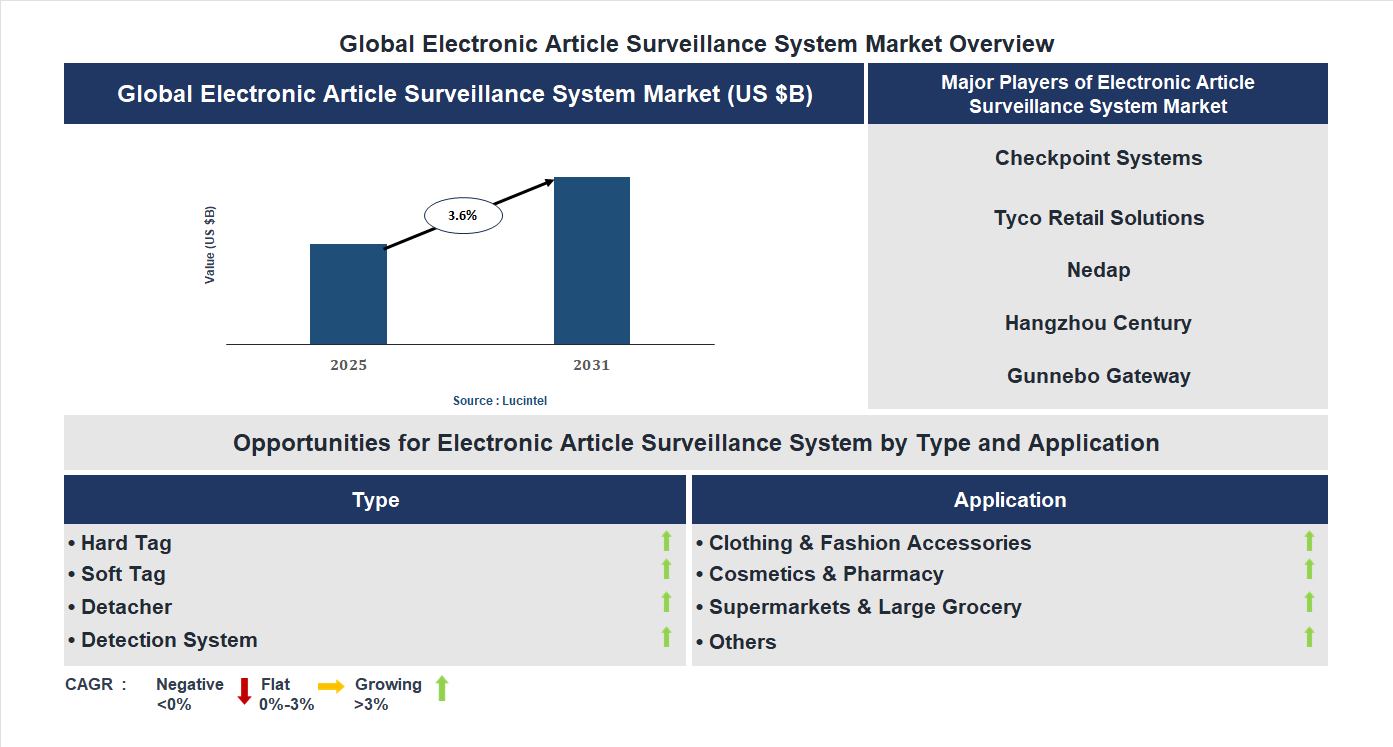
Key data points: The growth forecast = 3.6% annually for the next 7 years. Scroll below to get more insights. This market report covers trends, opportunities and forecasts in electronic article surveillance system market to 2031 by type (hard tag, soft tag, detacher, and detection system), application (clothing & fashion accessories, cosmetics & pharmacy, supermarkets & large grocery, and others), and region (North America, Europe, Asia Pacific, and the Rest of the World)
We'll send your sample report shortly.
• Lucintel forecasts that, within the type category, detection system is expected to witness the highest growth over the forecast period.
• Within the application category, clothing & fashion accessory is expected to witness the highest growth.
• In terms of region, APAC is expected to witness the highest growth over the forecast period. Gain valuable insights for your business decisions with our comprehensive 150+ page report. Sample figures with some insights are shown below.
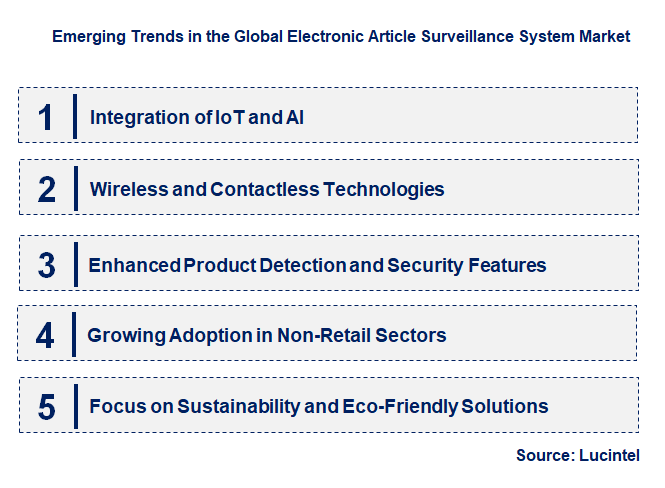
• Integration of IoT and AI: The adoption of Internet of Things (IoT) and Artificial Intelligence (AI) is transforming EAS systems by enabling real-time monitoring, predictive analytics, and automated alerts. These technologies improve theft detection accuracy, reduce false alarms, and facilitate seamless integration with inventory management systems. Retailers benefit from enhanced security and operational efficiency, while manufacturers can offer smarter, more adaptable solutions. This trend signifies a move toward more intelligent, connected security ecosystems that provide comprehensive insights and proactive responses.
• Wireless and Contactless Technologies: The shift toward wireless and contactless EAS systems is driven by the need for flexible installation, ease of use, and hygiene considerations. Wireless systems eliminate the need for extensive wiring, reducing installation costs and time. Contactless solutions, such as RFID-based tags, enable faster checkout processes and improved customer experience. These technologies also support inventory tracking and loss prevention across multiple channels, including online and brick-and-mortar stores. The trend enhances operational agility and aligns with modern retail environments emphasizing convenience and safety.
• Enhanced Product Detection and Security Features: Advances in sensor technology and anti-theft mechanisms are improving the accuracy and reliability of EAS systems. Features like multi-layer detection, anti-removal tags, and tamper-proof designs help prevent theft more effectively. Enhanced security features also include better detection of counterfeit or deactivated tags, reducing false alarms and improving customer satisfaction. These improvements bolster retailers' confidence in EAS solutions, leading to wider adoption and more comprehensive loss prevention strategies.
• Growing Adoption in Non-Retail Sectors: Beyond retail, sectors such as libraries, museums, logistics, and healthcare are increasingly adopting EAS systems for asset protection and inventory control. In libraries and museums, EAS helps prevent theft of valuable items, while in logistics, it ensures the security of high-value shipments. Healthcare facilities use EAS to track equipment and pharmaceuticals. This diversification expands the market scope, creating new revenue streams and driving innovation tailored to sector-specific needs.
• Focus on Sustainability and Eco-Friendly Solutions: Environmental concerns are prompting manufacturers to develop sustainable EAS systems with reduced energy consumption and recyclable components. Energy-efficient tags, eco-friendly materials, and systems designed for minimal waste are gaining popularity. Retailers are increasingly prioritizing sustainability in their procurement decisions, aligning security investments with corporate social responsibility goals. This trend not only reduces environmental impact but also enhances brand reputation and customer loyalty, influencing market growth and product development. In summary, these emerging trends are fundamentally reshaping the electronic article surveillance system market by integrating advanced technologies, expanding applications, and emphasizing sustainability. They are driving innovation, improving security effectiveness, and enabling more flexible, customer-centric retail environments. As these trends continue to evolve, the market is poised for significant growth, with smarter, more sustainable solutions leading the way.
• Adoption of RFID Technology: Enhanced security and inventory management RFID-based EAS systems are gaining popularity due to their ability to provide real-time tracking and improved theft prevention. These systems allow for seamless integration with inventory management, reducing shrinkage and increasing operational efficiency. Retailers benefit from faster checkout processes and better stock control, which ultimately boosts profitability. The adoption of RFID technology is expected to continue rising, driven by decreasing costs and technological improvements.
• Integration of IoT and Cloud Computing: Improved system management and data analytics The integration of Internet of Things (IoT) and cloud computing into EAS systems enables remote monitoring and management. Retailers can access real-time data, receive alerts, and analyze theft patterns through cloud platforms. This connectivity enhances system responsiveness and allows for predictive analytics, helping retailers proactively address security issues. The shift towards IoT-enabled systems is transforming traditional security setups into intelligent, data-driven solutions.
• Development of Wireless and Portable EAS Systems: Increased flexibility and ease of installation Wireless EAS systems are becoming more prevalent, offering retailers greater flexibility in store layout and easier installation. Portable systems facilitate temporary security setups for events or pop-up stores, expanding the market reach. These systems reduce infrastructure costs and enable quick deployment, making them ideal for diverse retail environments. The trend towards wireless technology is expected to accelerate, driven by demand for adaptable and cost-effective security solutions.
• Use of Artificial Intelligence (AI) and Machine Learning: Enhanced detection accuracy AI and machine learning algorithms are being integrated into EAS systems to improve detection accuracy and reduce false alarms. These intelligent systems can distinguish between genuine theft attempts and benign activities, minimizing disruptions. AI-driven analytics also help identify theft patterns and optimize security personnel deployment. The incorporation of AI is making EAS systems smarter, more reliable, and capable of adapting to evolving retail security challenges.
• Focus on Sustainability and Eco-Friendly Solutions: Reducing environmental impact Manufacturers are developing eco-friendly EAS systems that consume less power and use sustainable materials. Energy-efficient designs and recyclable components are gaining importance as retailers prioritize sustainability. These environmentally conscious solutions not only reduce carbon footprints but also appeal to eco-aware consumers. The emphasis on sustainability is shaping product development and influencing purchasing decisions within the market. In summary, these recent developments are significantly transforming the electronic article surveillance system market by enhancing system capabilities, improving operational efficiency, and aligning with sustainability goals. The integration of advanced technologies like RFID, IoT, AI, and eco-friendly designs is making EAS systems more intelligent, flexible, and sustainable. As a result, retailers are better equipped to prevent theft, manage inventory, and meet evolving consumer expectations, driving continued growth and innovation in this market.
• Retail Stores: Enhanced Loss Prevention : The retail sector remains the largest application for EAS systems. Growing concerns over shoplifting and organized retail crime are prompting retailers to adopt advanced EAS solutions. Integration with RFID technology and real-time monitoring enhances security, reduces theft, and improves inventory management. This drives increased adoption, especially in large-format stores and supermarkets, boosting overall market growth.
• Apparel and Fashion: Protecting High-Value Goods : The apparel industry benefits significantly from EAS systems due to the high value and theft susceptibility of clothing items. Implementing sophisticated EAS tags and sensors helps prevent theft and shrinkage. As fashion retailers expand online and offline channels, the demand for seamless, tamper-proof security solutions increases, creating a substantial growth opportunity in this segment.
• Pharmacies and Healthcare: Securing Sensitive Items : The healthcare sector is increasingly adopting EAS systems to safeguard pharmaceuticals and medical devices. Stringent regulations and the high cost of stolen items drive the need for reliable security solutions. Advanced EAS systems with integrated alarm and tracking features are being deployed, offering significant growth prospects in this application, especially in large hospital chains and pharmacy outlets.
• Libraries and Educational Institutions: Asset Protection : Educational institutions are utilizing EAS systems to protect valuable assets such as books, electronic devices, and equipment. The need for cost-effective, easy-to-install security solutions is fueling growth in this segment. As institutions modernize their security infrastructure, EAS systems are becoming essential for asset management and theft prevention.
• Industrial and Logistics: Asset and Inventory Security : The industrial and logistics sectors are adopting EAS systems to monitor and secure high-value equipment, tools, and inventory. The rise of e-commerce and supply chain complexity necessitates robust security measures. EAS solutions integrated with IoT and automation are expected to see increased deployment, offering significant growth opportunities in these sectors. In summary, these growth opportunities across key applications are significantly impacting the electronic article surveillance system market by expanding its scope, enhancing security capabilities, and driving technological innovation. As industries recognize the importance of theft prevention and asset protection, the market is poised for sustained growth and diversification.
• Technological Innovation: The continuous development of smarter, more efficient EAS systems, including RFID and sensor-based solutions, enhances security effectiveness and operational efficiency. These innovations reduce false alarms and improve inventory management, making them attractive to retailers seeking reliable security measures. As technology advances, costs decrease, and integration with other security systems becomes seamless, further boosting adoption. The increasing demand for real-time monitoring and data analytics also propels innovation, creating a competitive edge for market players and expanding market reach.
• Rising Retail Crime and Theft: The surge in retail theft and shoplifting incidents globally has significantly increased the need for effective security solutions. EAS systems act as a deterrent and help in quick theft detection, reducing losses for retailers. As retail stores expand and e-commerce grows, the need for comprehensive security measures intensifies. This trend is particularly prominent in developing regions where retail infrastructure is rapidly expanding, creating a substantial market opportunity for EAS providers to offer scalable and adaptable solutions.
• Regulatory and Compliance Standards: Governments and industry bodies are implementing stricter security regulations to combat theft and ensure consumer safety. These standards often mandate the installation of EAS systems in retail outlets, airports, and other high-security zones. Compliance with these regulations not only helps organizations avoid penalties but also enhances their reputation. As regulatory frameworks become more stringent, the demand for compliant and certified EAS solutions increases, encouraging manufacturers to innovate and upgrade their offerings to meet evolving standards.
• Growing Adoption of RFID Technology: Radio Frequency Identification (RFID) integration with traditional EAS systems offers enhanced tracking, inventory management, and theft prevention capabilities. RFID-enabled systems provide real-time data, reduce manual errors, and improve supply chain efficiency. Retailers are increasingly adopting RFID to streamline operations and improve customer experience. The declining costs of RFID tags and readers, coupled with technological advancements, are making RFID-based EAS systems more accessible, thereby expanding their market penetration across various sectors.
• Expansion in Emerging Markets: Rapid economic growth and urbanization in regions such as Asia-Pacific and Latin America are driving demand for advanced security solutions. Retail chains and logistics companies in these markets seek reliable EAS systems to protect assets and ensure safety. Local manufacturers are also entering the market, offering cost-effective solutions tailored to regional needs. This expansion presents significant growth opportunities for global EAS providers, fostering increased competition and innovation within the industry. The challenges facing this electronic article surveillance system market include:-
• High Implementation and Maintenance Costs: The initial investment for installing advanced EAS systems can be substantial, especially for small and medium-sized enterprises. Ongoing maintenance, upgrades, and staff training add to operational expenses, potentially limiting adoption among budget-constrained organizations. These costs can hinder market growth, particularly in developing regions where budget allocations for security are limited. Overcoming cost barriers requires innovative pricing strategies and scalable solutions to make EAS systems accessible to a broader customer base.
• Technological Obsolescence and Compatibility Issues: Rapid technological advancements can render existing EAS systems outdated quickly. Compatibility issues between new and legacy systems pose integration challenges, leading to increased costs and operational disruptions. Retailers and security providers must continuously upgrade their infrastructure, which can be resource-intensive. Staying ahead of technological trends while ensuring seamless integration remains a significant challenge for market players aiming to maintain competitive advantage and customer satisfaction.
• Privacy and Data Security Concerns: The deployment of RFID and sensor-based EAS systems raises concerns over consumer privacy and data security. Unauthorized data collection or breaches can lead to legal liabilities and damage brand reputation. Regulatory scrutiny regarding data protection is intensifying, requiring companies to implement robust security measures. Balancing effective security with privacy rights is complex, and failure to address these concerns can impede market growth and acceptance of advanced EAS solutions. In summary, the electronic article surveillance system market is driven by technological innovations, increasing retail crime, regulatory mandates, RFID adoption, and emerging market expansion. However, high costs, rapid technological changes, and privacy issues pose significant challenges. These factors collectively influence market growth, requiring stakeholders to innovate, adapt, and address concerns proactively. The market's future will depend on balancing technological advancements with cost-effectiveness and privacy considerations, ensuring sustainable growth and widespread adoption.
• Checkpoint Systems
• Tyco Retail Solutions
• Nedap
• Hangzhou Century
• Gunnebo Gateway
• Sentry Technology
• Ketec
• Hard Tag
• Soft Tag
• Detacher
• Detection System
• Clothing & Fashion Accessories
• Cosmetics & Pharmacy
• Supermarkets & Large Grocery
• Others
• North America
• Europe
• Asia Pacific
• The Rest of the World
• United States: The US market has seen rapid adoption of RFID-enabled EAS systems, driven by major retail chains investing in advanced loss prevention solutions. Innovations include AI-powered surveillance and real-time analytics, improving detection accuracy. The integration of EAS with inventory management systems enhances operational efficiency. Regulatory standards and data privacy concerns are shaping product development, with a focus on secure, compliant solutions. The growth of omnichannel retailing has further propelled demand for seamless security systems across physical and digital platforms.
• China: China’s EAS market is expanding swiftly, fueled by the booming retail sector and increasing e-commerce integration. Companies are adopting IoT-enabled RFID tags and smart sensors to prevent theft and streamline inventory management. Government initiatives promoting retail modernization and smart city projects are supporting technological upgrades. Local manufacturers are innovating with cost-effective, scalable solutions tailored to domestic retail chains. The rise of unmanned stores and automated checkout systems is also driving demand for sophisticated EAS technologies that support these new retail formats.
• Germany: The German market emphasizes high-quality, reliable EAS systems with a focus on sustainability and energy efficiency. There is a growing trend toward integrating EAS with other security measures such as CCTV and access control. German retailers are adopting RFID and sensor-based systems to enhance security while maintaining customer convenience. Regulatory compliance with EU data protection laws influences product features, emphasizing privacy and security. The market also benefits from technological collaborations within Europe, fostering innovation in smart retail security solutions.
• India: India’s EAS market is witnessing rapid growth due to expanding retail infrastructure and increasing awareness of loss prevention. Retailers are adopting RFID and sensor-based systems to combat theft and improve inventory accuracy. The government’s push for digitalization and smart retail initiatives is encouraging technological adoption. Local vendors are developing affordable, scalable solutions suitable for diverse retail formats, from small stores to large malls. The rise of organized retail and e-commerce integration is further boosting demand for advanced security systems that can adapt to varied retail environments.
• Japan: Japan’s EAS market is characterized by the integration of advanced technologies such as RFID, AI, and IoT to enhance security and operational efficiency. Retailers are focusing on contactless and automated systems to improve customer experience and reduce labor costs. The adoption of smart sensors and data analytics enables real-time theft detection and inventory management. Regulatory standards and consumer privacy concerns influence product development, emphasizing secure and compliant solutions. The market also benefits from collaborations between technology providers and retail chains, fostering innovation in smart retail security systems.


• Checkpoint Systems
• Tyco Retail Solutions
• Nedap
• Hangzhou Century
• Gunnebo Gateway
• Sentry Technology
• Ketec Q5. Which electronic article surveillance system market segment will be the largest in future? Answer: Lucintel forecasts that, within the type category, detection system is expected to witness the highest growth over the forecast period. Q6. In electronic article surveillance system market, which region is expected to be the largest in next 5 years? Answer: In terms of region, APAC is expected to witness the highest growth over the forecast period. Q7. Do we receive customization in this report? Answer: Yes, Lucintel provides 10% customization without any additional cost.


Choose a license that fits your team. Instant PDF delivery.
Prices exclude taxes. Instant delivery. Custom licensing available on request.
Market Report · July 15, 2026
Market Report · June 26, 2026
Market Report · June 24, 2026
Trusted partner for strategic intelligence and business growth


Receive a complimentary market analysis tailored to your industry. Our analysts will identify key growth opportunities and competitive dynamics specific to your business.

Market size, growth rate, and key trend analysis for your specific sector.

Top competitor positioning and market share analysis.

Strategic recommendations backed by data-driven insights.
Get curated market intelligence and competitive moves straight to your inbox.
By subscribing, you agree to receive our monthly insights. Unsubscribe anytime.
Receive a complimentary market analysis tailored to your industry. Our analysts will identify key growth opportunities and competitive dynamics specific to your business.
Market size, growth rate, and key trend analysis for your specific sector.
Top competitor positioning and market share analysis.
Strategic recommendations backed by data-driven insights.
Get curated market intelligence, emerging trends, and competitive moves straight to your inbox each month.
By subscribing, you agree to receive our monthly insights. Unsubscribe anytime.
We'll send your sample report shortly.