
Market Report · July 29, 2026

Key data points: The growth forecast = 9.2% annually for the next 7 years. Scroll below to get more insights. This market report covers trends, opportunities and forecasts in electron beam lithography system market to 2031 by type (gaussian beam EBL systems, shaped beam EBL systems, and multi-beam EBL systems), application (academic field, industrial field, and others), and region (North America, Europe, Asia Pacific, and the Rest of the World)
We'll send your sample report shortly.
• Lucintel forecasts that, within the type category, multi-beam EBL system is expected to witness the highest growth over the forecast period.
• Within the application category, industrial field is expected to witness higher growth.
• In terms of region, APAC is expected to witness the highest growth over the forecast period. Gain valuable insights for your business decisions with our comprehensive 150+ page report. Sample figures with some insights are shown below.
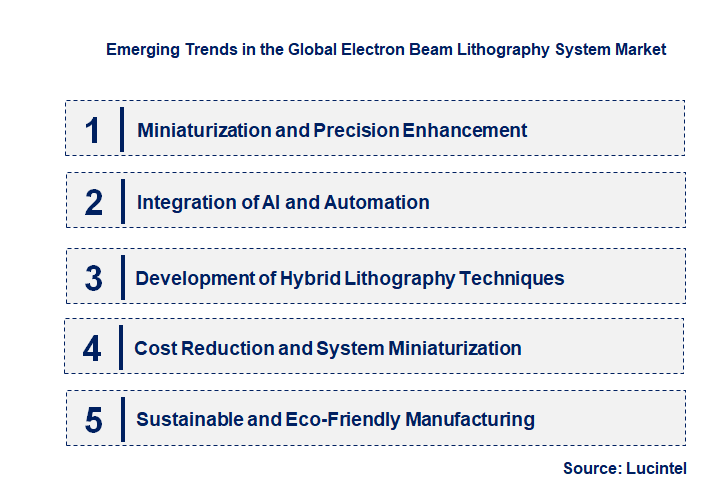
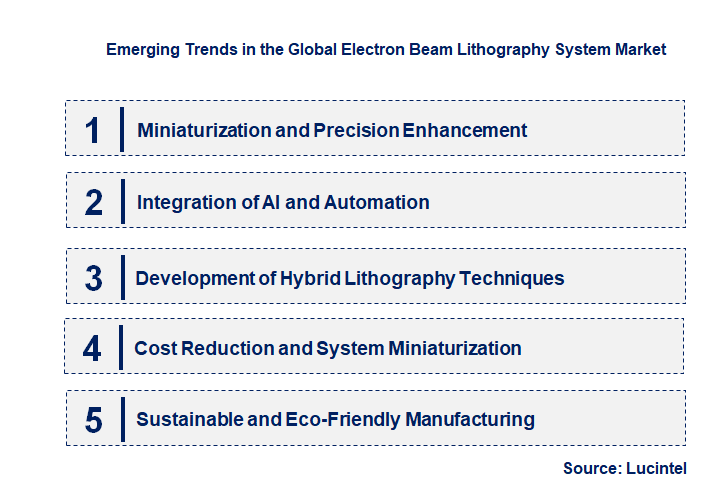
• Miniaturization and Precision Enhancement: The market is focusing on improving the resolution and accuracy of electron beam systems. Advances in electron optics and control systems allow for finer patterning at nanometer scales, essential for semiconductor and nanotechnology applications. This trend enables manufacturers to produce smaller, more powerful devices with higher performance, meeting the increasing demand for miniaturized electronics. The enhanced precision also reduces defects and improves yield, making EBL systems more reliable and cost-effective for high-end applications.
• Integration of AI and Automation: Incorporating artificial intelligence and automation into EBL systems is transforming operational efficiency. AI algorithms optimize beam control, pattern recognition, and defect detection, reducing manual intervention and increasing throughput. Automation streamlines workflows, minimizes human error, and accelerates production cycles. This integration is particularly impactful in research and high-volume manufacturing, where speed and accuracy are critical. As AI technology advances, EBL systems become smarter, more adaptable, and capable of handling complex, multi-layered patterning tasks with minimal oversight.
• Development of Hybrid Lithography Techniques: Combining electron beam lithography with other lithography methods, such as nanoimprint or photolithography, is gaining traction. Hybrid approaches leverage the strengths of each technique—EBL’s high resolution with the speed of other methods—to overcome limitations like throughput and cost. These integrated systems enable scalable manufacturing of nanostructures and complex devices, broadening application possibilities. The trend fosters innovation in fields like photonics, quantum computing, and biomedical devices, where precise patterning at various scales is essential.
• Cost Reduction and System Miniaturization: Efforts to make EBL systems more affordable and compact are accelerating. Innovations in hardware design, such as modular components and energy-efficient electronics, reduce manufacturing and maintenance costs. Miniaturized systems are easier to integrate into existing production lines and laboratories, expanding accessibility for smaller companies and research institutions. Cost-effective and portable EBL solutions democratize advanced nanofabrication, fostering broader adoption and enabling new research and commercial applications that were previously limited by high costs.
• Sustainable and Eco-Friendly Manufacturing: Environmental considerations are influencing EBL system development. Manufacturers are adopting energy-efficient components, reducing waste, and utilizing eco-friendly materials. These efforts aim to lower the carbon footprint of nanofabrication processes and comply with stricter environmental regulations. Sustainable practices also include recycling and reusing system components, as well as optimizing processes to minimize resource consumption. This trend aligns the market with global sustainability goals, appealing to environmentally conscious consumers and organizations, and ensuring long-term viability of advanced lithography technologies. In summary, these emerging trends are significantly reshaping the electron beam lithography system market by enhancing precision, integrating intelligent automation, enabling hybrid techniques, reducing costs, and promoting sustainability. Collectively, they are expanding the market’s capabilities, accessibility, and environmental responsibility, positioning it for sustained growth and innovation in the coming years.
• Enhanced Resolution Capabilities: The latest EBL systems now achieve sub-10 nanometer resolution, enabling ultra-fine patterning essential for advanced semiconductor devices and nanotechnology applications. This improvement significantly boosts the market by allowing manufacturers to produce smaller, more powerful electronic components, thus meeting the growing demand for miniaturized devices.
• Increased Throughput and Speed: Innovations in system design, such as multi-beam technology and faster electron sources, have substantially increased processing speeds. This development reduces production time and costs, making EBL more viable for commercial manufacturing and broadening its application scope, especially in high-volume industries.
• Integration of AI and Automation: The incorporation of artificial intelligence and automation into EBL systems has enhanced precision, reduced human error, and optimized patterning processes. This advancement improves overall efficiency and consistency, attracting more users from research institutions and industry sectors seeking reliable, high-quality lithography solutions.
• Development of Cost-Effective Systems: Newer EBL systems are now more affordable due to advancements in component manufacturing and system design. Cost reduction broadens market accessibility, enabling smaller companies and startups to adopt EBL technology, thereby expanding the market base and fostering innovation.
• Expansion into New Application Areas: EBL technology is increasingly being applied in areas such as quantum computing, bio-nanotechnology, and flexible electronics. This diversification opens new revenue streams and market segments, driving overall growth and encouraging further technological development. In summary, these recent developments are transforming the electron beam lithography system market by enhancing performance, reducing costs, and broadening application horizons. The market is becoming more competitive, accessible, and capable of supporting cutting-edge technological innovations, which collectively are propelling its growth and expanding its influence across multiple high-tech industries.
• Semiconductor Industry: Enhanced device miniaturization : The demand for smaller, more powerful chips drives the adoption of EBL systems for advanced patterning, enabling the creation of nanoscale features essential for next-generation semiconductors.
• Nanotechnology: Development of novel nanostructures : EBLs high precision facilitates the fabrication of complex nanostructures, impacting fields like quantum computing, sensors, and advanced materials, thus expanding market applications.
• Biotechnology: Precision bio-patterning : EBL enables the creation of intricate biochips and biosensors with high accuracy, supporting innovations in diagnostics, drug delivery, and personalized medicine.
• Data Storage: High-density data devices : The ability of EBL to produce ultra-fine patterns enhances the development of high-capacity data storage solutions, meeting the rising demand for data management and security.
• Aerospace & Defense: Microfabrication for advanced components : EBL systems are used to develop lightweight, high-performance components with precise microstructures, crucial for aerospace and defense applications. In summary, these growth opportunities across key applications are significantly impacting the electron beam lithography system market by driving innovation, expanding application scope, and increasing demand for high-precision manufacturing solutions. This evolution is positioning the market for sustained growth and technological leadership in the coming years.
• Technological Innovation: Rapid advancements in electron beam technology enable higher resolution, faster processing, and greater precision in nanofabrication, fueling demand for advanced lithography systems. As industries such as semiconductors, photonics, and biotechnology require increasingly intricate patterns, the need for cutting-edge electron beam systems grows. Continuous R&D efforts lead to improved system capabilities, making them more attractive for high-end applications. This technological evolution not only enhances performance but also opens new avenues for applications, thereby expanding the market scope and encouraging investments from key industry players.
• Growing Semiconductor Industry: The expanding semiconductor industry is a significant driver, driven by the rising demand for electronic devices, IoT, and 5G technology. Electron beam lithography offers the high precision needed for manufacturing next-generation chips with smaller nodes and complex architectures. As chip designs become more sophisticated, traditional photolithography faces limitations, positioning electron beam systems as a vital alternative. Increased investments by semiconductor manufacturers in advanced fabrication facilities further boost demand. This growth directly correlates with the need for high-resolution patterning, making electron beam lithography systems indispensable for future semiconductor innovations.
• Increasing Adoption in Nanotechnology and Biotechnology: The burgeoning fields of nanotechnology and biotechnology are increasingly adopting electron beam lithography for applications such as nano-patterning, biosensors, and drug delivery systems. The ability to create extremely precise nanoscale features makes these systems essential for research and development in these sectors. As these industries expand, the demand for high-precision lithography tools rises, encouraging manufacturers to develop more versatile and user-friendly systems. This trend not only broadens the market but also fosters cross-industry collaborations, accelerating technological advancements and market penetration.
• Rising Investments and Funding: Governments, private investors, and research institutions are significantly investing in electron beam lithography technology to foster innovation and maintain competitive advantage. Funding supports the development of more efficient, cost-effective systems and the exploration of new applications. Increased financial backing accelerates product commercialization and adoption across various sectors, including electronics, healthcare, and materials science. This influx of capital also promotes R&D activities, leading to technological breakthroughs that can redefine market standards and expand the application landscape, ultimately driving market growth.
• Environmental and Regulatory Compliance: Stringent environmental regulations concerning hazardous materials and waste management influence the development and deployment of electron beam lithography systems. Manufacturers are compelled to innovate eco-friendly processes and materials, which can increase R&D costs but also lead to safer, more sustainable systems. Compliance with international standards ensures market access and acceptance, especially in highly regulated sectors like healthcare and aerospace. Navigating these regulatory landscapes requires strategic planning, but ultimately, adherence enhances credibility and opens up new markets, fostering sustainable growth. The challenges facing this electron beam lithography system market include:-
• High Capital and Operational Costs: Electron beam lithography systems involve significant initial investment and high operational expenses, including maintenance and skilled labor. These costs can limit adoption among smaller enterprises and restrict market expansion. The expensive equipment and complex operation processes also pose barriers for widespread deployment, especially in developing regions. While technological improvements aim to reduce costs, the current financial burden remains a critical challenge, potentially slowing down innovation and limiting accessibility for emerging markets.
• Technological Complexity and Skill Gap: The sophisticated nature of electron beam lithography requires specialized knowledge and highly skilled personnel for operation and maintenance. The complexity of system calibration, process optimization, and troubleshooting creates a steep learning curve, which can hinder adoption. The shortage of trained professionals further exacerbates this issue, impacting productivity and increasing costs. Bridging this skill gap through training and education is essential but time-consuming, posing a significant challenge to rapid market growth and technological dissemination.
• Stringent Regulatory Environment: Compliance with strict environmental, safety, and industry-specific regulations can delay product development and deployment. Regulatory approval processes are often lengthy and costly, requiring extensive testing and documentation. These hurdles can restrict market entry for new players and slow down innovation cycles. Additionally, evolving standards necessitate continuous updates to systems and processes, increasing operational complexity. Navigating this regulatory landscape demands significant resources, which can be a barrier for smaller companies and startups, impacting overall market dynamism. In summary, the electron beam lithography system market is driven by rapid technological advancements, expanding industries such as semiconductors and nanotechnology, increased investments, and regulatory compliance efforts. However, high costs, technological complexity, and regulatory hurdles pose substantial challenges. These factors collectively influence the pace of market growth, with innovation and strategic adaptation being crucial for stakeholders. While opportunities for growth are significant, addressing the challenges effectively will determine the market’s long-term sustainability and competitive edge.
• IMS Nanofabrication
• Nuflare
• Raith
• JEOL
• Elionix
• Vistec
• Crestec
• Gaussian Beam EBL Systems
• Shaped Beam EBL Systems
• Multi-Beam EBL Systems
• Academic Field
• Industrial Field
• Others
• North America
• Europe
• Asia Pacific
• The Rest of the World
• United States: The US market is characterized by significant investments in research and development, with leading companies and universities pioneering new EBL techniques. The government’s focus on advanced manufacturing and nanotechnology has spurred innovation, especially in semiconductor and biotech sectors. The adoption of EBL in aerospace and defense applications is also increasing, supported by strong industrial infrastructure and technological expertise. Additionally, collaborations between academia and industry are accelerating the commercialization of novel EBL solutions, making the US a key player in the global market.
• China: China is rapidly expanding its EBL capabilities through substantial government funding and strategic initiatives aimed at becoming a global leader in nanotechnology. The country is focusing on developing cost-effective and high-throughput EBL systems to support its electronics and semiconductor industries. Domestic companies are investing heavily in research to improve resolution and throughput, aiming to reduce reliance on foreign technology. China’s growing industrial base and emphasis on innovation are driving the adoption of EBL in manufacturing, research, and development, positioning it as a major emerging market.
• Germany: Germany remains a leader in precision engineering and nanofabrication, with a strong focus on integrating EBL into industrial processes. The country’s emphasis on high-quality manufacturing and innovation has led to advancements in EBL system accuracy and efficiency. German research institutions are actively exploring applications in healthcare, microelectronics, and materials science. The country’s robust industrial ecosystem and collaborations between academia and industry are fostering the development of next-generation EBL systems, maintaining Germany’s competitive edge in the European market.
• India: India is witnessing a growing interest in EBL technology driven by government initiatives to boost nanotechnology and advanced manufacturing. The country is investing in research infrastructure and skill development to support EBL applications in electronics, healthcare, and defense. Indian startups and research labs are working on developing affordable and scalable EBL solutions to meet domestic demand. The focus on innovation and technology transfer is helping India establish a foothold in the global EBL market, with increasing adoption in academic and industrial sectors.
• Japan: Japan continues to advance its EBL technology through cutting-edge research and development efforts. The country’s focus on semiconductor manufacturing and microfabrication has led to improvements in system resolution and throughput. Japanese companies are integrating EBL with other nanofabrication techniques to enhance versatility and performance. The government’s support for innovation and collaboration with international partners is fostering new applications in electronics, healthcare, and environmental monitoring. Japan’s expertise in precision engineering ensures its position as a key contributor to the global EBL market.


• IMS Nanofabrication
• Nuflare
• Raith
• JEOL
• Elionix
• Vistec
• Crestec Q5. Which electron beam lithography system market segment will be the largest in future? Answer: Lucintel forecasts that, within the type category, multi-beam EBL system is expected to witness the highest growth over the forecast period. Q6. In electron beam lithography system market, which region is expected to be the largest in next 5 years? Answer: In terms of region, APAC is expected to witness the highest growth over the forecast period. Q7. Do we receive customization in this report? Answer: Yes, Lucintel provides 10% customization without any additional cost.


Choose a license that fits your team. Instant PDF delivery.
Prices exclude taxes. Instant delivery. Custom licensing available on request.
Market Report · July 29, 2026
Market Report · July 20, 2026
Market Report · July 20, 2026
Trusted partner for strategic intelligence and business growth


Receive a complimentary market analysis tailored to your industry. Our analysts will identify key growth opportunities and competitive dynamics specific to your business.

Market size, growth rate, and key trend analysis for your specific sector.

Top competitor positioning and market share analysis.

Strategic recommendations backed by data-driven insights.
Get curated market intelligence and competitive moves straight to your inbox.
By subscribing, you agree to receive our monthly insights. Unsubscribe anytime.
Receive a complimentary market analysis tailored to your industry. Our analysts will identify key growth opportunities and competitive dynamics specific to your business.
Market size, growth rate, and key trend analysis for your specific sector.
Top competitor positioning and market share analysis.
Strategic recommendations backed by data-driven insights.
Get curated market intelligence, emerging trends, and competitive moves straight to your inbox each month.
By subscribing, you agree to receive our monthly insights. Unsubscribe anytime.
We'll send your sample report shortly.