
Report Feature
Electrical Contactor Market Trends and Forecast
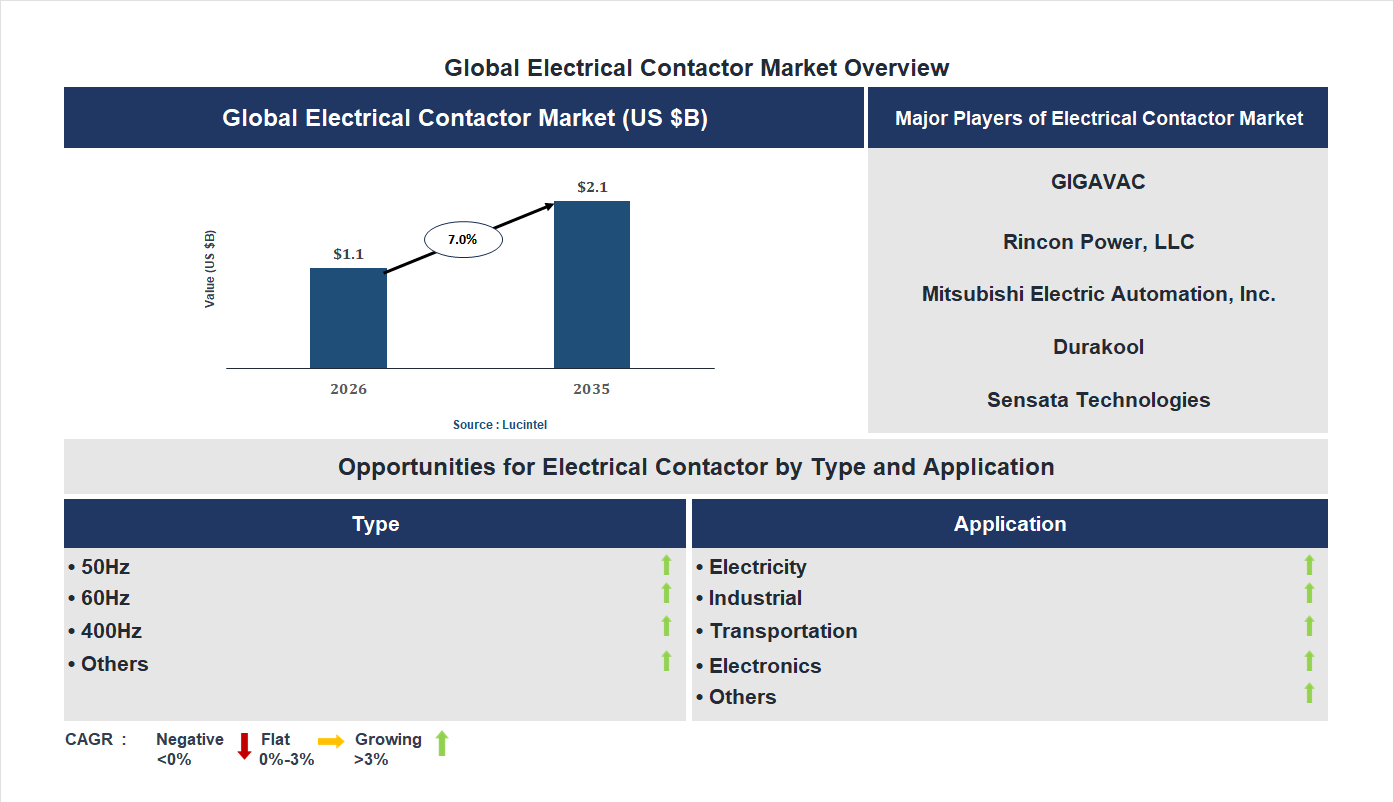
The future of the global electrical contactor market looks promising with opportunities in the electricity, industrial, transportation, and electronics markets. The global electrical contactor market is expected to reach an estimated $2.1 billion by 2035 with a CAGR of 7% from 2026 to 2035. The major drivers for this market are the increasing demand for power automation, the rising adoption of industrial control systems, and the growing expansion of renewable energy installations.• Lucintel forecasts that, within the type category, 60hz is expected to witness the highest growth over the forecast period.
• Within the application category, electricity is expected to witness the highest growth.
• In terms of region, APAC is expected to witness the highest growth over the forecast period. Gain valuable insights for your business decisions with our comprehensive 150+ page report. Sample figures with some insights are shown below.
Emerging Trends in the Electrical Contactor Market
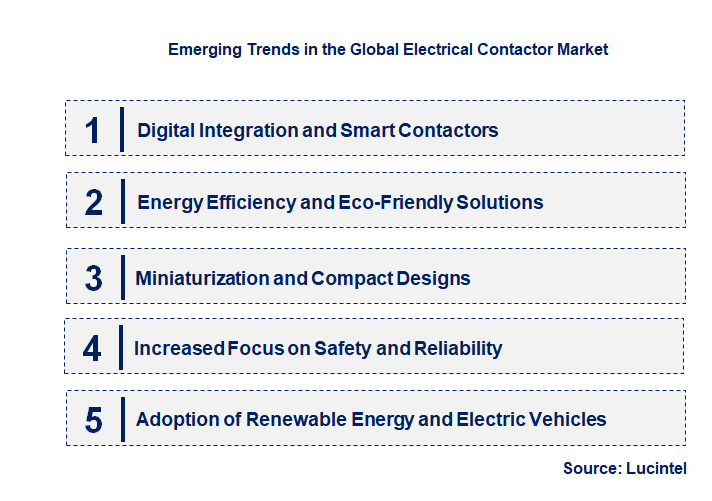
The electrical contactor market is experiencing rapid evolution driven by technological advancements, increasing automation, and the demand for energy efficiency across various industries. As industries modernize, the need for smarter, more reliable, and energy-efficient switching solutions is growing. Innovations in materials, integration with digital systems, and the push towards sustainable energy sources are shaping the future of this market. These developments are not only enhancing product performance but also expanding application scopes, making electrical contactors more versatile and integral to modern electrical infrastructure. Understanding these emerging trends is crucial for stakeholders aiming to stay competitive and innovative in this dynamic landscape.• Digital Integration and Smart Contactors: The integration of digital technology into contactors is transforming their functionality. Smart contactors equipped with IoT capabilities enable remote monitoring, predictive maintenance, and real-time data analysis. This trend improves operational efficiency, reduces downtime, and enhances safety. Industries are increasingly adopting these intelligent devices to optimize energy consumption and streamline automation processes. The rise of digital contactors signifies a shift towards more connected and automated electrical systems, aligning with Industry 4.0 principles and fostering smarter infrastructure.
• Energy Efficiency and Eco-Friendly Solutions: Growing environmental concerns and energy regulations are driving demand for energy-efficient contactors. Manufacturers are developing low-power consumption devices with improved switching capabilities and reduced energy losses. These eco-friendly solutions help industries lower their carbon footprint and comply with sustainability standards. The focus on energy efficiency is also leading to innovations in coil design and materials that minimize power usage without compromising performance, making contactors more sustainable and cost-effective over their lifecycle.
• Miniaturization and Compact Designs: The trend towards miniaturization is enabling contactors to be more space-efficient, which is critical for applications with limited space, such as residential, HVAC, and compact industrial systems. Smaller contactors facilitate easier installation and integration into complex systems, reducing overall equipment size and weight. Advances in materials and manufacturing techniques are supporting this trend, allowing for high performance in a smaller footprint. This evolution is expanding the application scope of contactors, especially in emerging markets and compact electronic devices.
• Increased Focus on Safety and Reliability: Safety standards and reliability requirements are becoming more stringent across industries. Contactors are now designed with enhanced insulation, arc suppression, and fail-safe features to prevent electrical faults and ensure user safety. Improved durability and lifespan are also prioritized to reduce maintenance costs and downtime. These safety enhancements are critical in critical applications such as industrial automation, transportation, and energy sectors, where failure can have severe consequences. The emphasis on safety and reliability is driving innovation and higher quality standards in the market.
• Adoption of Renewable Energy and Electric Vehicles: The shift towards renewable energy sources and electric vehicles (EVs) is significantly impacting the contactor market. Contactors are essential components in solar inverters, EV charging stations, and energy storage systems. The demand for high-capacity, fast-switching contactors capable of handling high voltages and currents is increasing. This trend is fostering the development of specialized contactors tailored for renewable and EV applications, promoting cleaner energy solutions and supporting the global transition to sustainable transportation and power generation. These emerging trends are fundamentally reshaping the electrical contactor market by making devices smarter, more efficient, compact, safe, and aligned with sustainable energy initiatives. These developments are expanding application possibilities, improving operational performance, and driving market growth in a rapidly evolving electrical landscape.
Recent Development in the Electrical Contactor Market
The electrical contactor market is experiencing rapid growth driven by increasing industrial automation, renewable energy integration, and smart building technologies. Innovations in contactor design and materials are enhancing efficiency, durability, and safety. As industries shift towards digitalization and sustainable solutions, the demand for reliable switching devices like contactors is surging. These developments are transforming the market landscape, creating new opportunities for manufacturers and stakeholders to meet evolving customer needs and regulatory standards.• Growing Industrial Automation: The rise in automation across manufacturing and processing industries is boosting demand for electrical contactors. These devices are essential for controlling electric motors, lighting, and heating systems, enabling efficient and safe operations. As industries adopt Industry 4.0 technologies, the need for smart, reliable contactors increases, leading to expanded market opportunities. This growth is driven by the push for increased productivity, safety standards, and energy efficiency, making contactors a critical component in modern industrial setups.
• Renewable Energy Integration: The expansion of renewable energy sources like solar and wind power is significantly impacting the contractor market. Contactors are vital for switching and controlling high-voltage systems in solar farms and wind turbines. Advances in contactor technology are improving their ability to handle higher voltages and frequencies, ensuring system reliability and safety. This trend supports the global shift towards sustainable energy, opening new markets and increasing demand for specialized, durable contactors capable of operating in harsh environments.
• Smart and Digital Contactors: The development of smart contactors with IoT connectivity is revolutionizing the market. These devices enable remote monitoring, diagnostics, and predictive maintenance, reducing downtime and operational costs. Integration with building management systems enhances automation and energy management in commercial and industrial facilities. The adoption of digital contactors is driven by the need for enhanced control, safety, and efficiency, making them a key component in the transition towards intelligent electrical systems.
• Material and Design Innovations: Innovations in contactor materials and design are improving performance and lifespan. The use of advanced composites and contact materials reduces wear and arcing, increasing durability. Compact and modular designs facilitate easier installation and maintenance. These improvements help meet stringent safety and environmental standards while reducing operational costs. As a result, manufacturers can offer more reliable, efficient, and eco-friendly contactors, expanding their application scope across various sectors.
• Regulatory and Safety Standards: Evolving safety regulations and standards are shaping the contactor market. Compliance with international standards such as IEC and UL ensures product safety and reliability, boosting market confidence. Enhanced safety features like arc suppression and overload protection are becoming standard, driving innovation. These regulatory pressures encourage manufacturers to develop higher-quality, safer contactors, which in turn fosters market growth by meeting the increasing demand for compliant and secure electrical switching solutions. The overall impact of these developments is a dynamic, expanding market characterized by technological innovation, increased safety, and sustainability. The integration of smart technologies and renewable energy solutions is opening new avenues for growth, while material advancements and regulatory compliance are ensuring product reliability. These factors collectively enhance market competitiveness, meet rising customer expectations, and support the global shift towards smarter, greener electrical systems.
Strategic Growth Opportunities in the Electrical Contactor Market
The electrical contactor market is experiencing significant growth driven by increasing automation, industrial expansion, and the need for efficient power management. Technological advancements and the rising adoption of smart systems are further fueling demand across various sectors. Companies are focusing on innovation, sustainability, and expanding their product portfolios to capture emerging opportunities. This dynamic environment presents numerous avenues for strategic growth, enabling market players to enhance their competitiveness and meet evolving customer needs effectively.• Expansion in Industrial Automation and Manufacturing Sectors: The rise of industrial automation and manufacturing industries worldwide is a key driver for electrical contactor demand. As factories adopt smart and automated systems to improve efficiency, safety, and productivity, the need for reliable switching devices like contactors increases. This growth is supported by government initiatives promoting Industry 4.0 and smart manufacturing, creating substantial opportunities for contactor manufacturers to develop advanced, energy-efficient, and durable products tailored for industrial applications.
• Growing Adoption of Smart and IoT-Enabled Contactors: The integration of Internet of Things (IoT) technology into electrical contactors is transforming traditional devices into smart, connected systems. These IoT-enabled contactors offer real-time monitoring, predictive maintenance, and remote control capabilities, reducing downtime and operational costs. As industries seek smarter solutions for energy management and automation, the demand for intelligent contactors is expected to surge, opening avenues for innovation and differentiation in the market.
• Increasing Demand for Energy-Efficient and Eco-Friendly Solutions: Environmental concerns and energy regulations are pushing industries toward sustainable practices. Electrical contactors that are energy-efficient, have low power consumption, and comply with environmental standards are gaining popularity. Manufacturers are investing in developing eco-friendly contactors with reduced carbon footprint, recyclable materials, and enhanced durability. This trend presents opportunities to capture environmentally conscious customers and expand market share in green building and renewable energy sectors.
• Rising Infrastructure Development and Urbanization: Rapid urbanization and infrastructure projects worldwide are fueling the need for reliable electrical systems. Contactors are essential components in power distribution, HVAC, and lighting systems in commercial, residential, and infrastructure projects. The increasing demand for smart grids, renewable energy integration, and modernized electrical infrastructure offers growth prospects for contactor manufacturers to supply innovative, high-capacity, and compliant products suitable for large-scale projects.
• Focus on Safety and Compliance Standards: Stringent safety regulations and industry standards are compelling manufacturers to develop contactors that meet high safety, reliability, and compliance criteria. This focus drives innovation in design, materials, and testing processes to ensure product safety and performance. Companies that can quickly adapt to evolving standards and offer certified, high-quality contactors will gain a competitive advantage, especially in critical sectors like healthcare, data centers, and transportation, where safety is paramount. These strategic growth opportunities are poised to significantly influence the electrical contactor market by fostering innovation, expanding applications, and enhancing sustainability. Companies that capitalize on these trends through technological advancements, compliance, and customer-centric solutions will strengthen their market position and drive long-term growth in this evolving landscape.
Electrical Contactor Market Driver and Challenges
The electrical contactor market is influenced by a variety of technological, economic, and regulatory factors that shape its growth and development. Rapid advancements in automation and smart technology are driving demand for more efficient and reliable switching solutions. Economic factors such as infrastructure development and industrial expansion contribute significantly to market growth, while regulatory standards ensure safety and environmental compliance. Additionally, the increasing adoption of renewable energy sources and the need for energy management systems are further propelling the market forward. However, the market also faces challenges related to high costs, technological complexities, and evolving regulatory landscapes that could hinder growth. Understanding these drivers and challenges is essential for stakeholders to navigate the market effectively. The factors responsible for driving the electrical contactor market include:-• Technological Innovation: The continuous development of smart and IoT-enabled contactors enhances operational efficiency, remote monitoring, and predictive maintenance, which are highly valued in automation and industrial applications. These innovations reduce downtime and improve safety, making contactors more attractive to end-users. As industries increasingly adopt Industry 4.0 practices, the demand for technologically advanced contactors is expected to rise, fueling market growth.
• Industrial Expansion: Rapid industrialization across emerging economies and ongoing infrastructure projects in developed regions are boosting demand for electrical contactors. These devices are essential for controlling electrical circuits in manufacturing plants, power distribution, and automation systems. The expansion of sectors such as automotive, oil & gas, and construction directly correlates with increased consumption of contactors, supporting market growth.
• Renewable Energy Integration: The shift towards renewable energy sources like solar and wind power necessitates sophisticated electrical switching solutions. Contactors play a crucial role in managing and protecting renewable energy systems, ensuring efficient power flow and safety. As governments and industries invest heavily in clean energy projects, the demand for specialized contactors tailored for renewable applications is expected to surge.
• Regulatory Standards and Safety Norms: Stringent safety regulations and standards worldwide compel manufacturers to develop compliant contactors that meet specific performance and safety criteria. These regulations drive innovation and quality improvements, ensuring market players invest in R&D. Compliance also opens up new markets and customer segments, fostering growth in the electrical contactor industry. The challenges facing the electrical contactor market include:-
• High Cost of Advanced Technologies: While innovative contactors offer enhanced features, their development and manufacturing costs are high. This results in elevated prices, which can limit adoption among cost-sensitive customers, especially in developing regions. The high cost can slow down market penetration and restrict the growth of advanced contactor solutions.
• Technological Complexity and Integration Issues: The increasing sophistication of contactors, especially those integrated with IoT and automation features, introduces complexity in installation, maintenance, and compatibility with existing systems. This can lead to operational challenges and require specialized skills, potentially deterring some end-users from adopting new technologies.
• Evolving Regulatory Landscape: Rapid changes in safety, environmental, and energy efficiency standards pose compliance challenges for manufacturers. Keeping up with diverse and evolving regulations across different regions requires continuous R&D investment and adaptation, which can increase costs and delay product launches, impacting overall market growth. The electrical contactor market is driven by technological advancements, industrial growth, renewable energy integration, and regulatory compliance, which collectively foster innovation and expansion. However, high costs, technological complexities, and regulatory challenges pose significant hurdles. Balancing these drivers and challenges will be crucial for market participants to capitalize on emerging opportunities while mitigating risks. Overall, the market is poised for growth, provided stakeholders effectively navigate the evolving technological and regulatory landscape.
List of Electrical Contactor Companies
Companies in the market compete on the basis of product quality offered. Major players in this market focus on expanding their manufacturing facilities, R&D investments, infrastructural development, and leverage integration opportunities across the value chain. With these strategies electrical contactor companies cater increasing demand, ensure competitive effectiveness, develop innovative products & technologies, reduce production costs, and expand their customer base. Some of the electrical contactor companies profiled in this report include-• GIGAVAC
• Rincon Power, LLC
• Mitsubishi Electric Automation, Inc.
• Durakool
• Sensata Technologies
• Specialty Product Technologies
• Honeywell International, Inc.
• Panel Components & Systems, Inc.
• Eaton Corporation
• Produtos Eletrônicos Metaltex
Electrical Contactor Market by Segment
The study includes a forecast for the global electrical contactor market by type, application, and region.Electrical Contactor Market by Type [Value from 2019 to 2035]:
• 50Hz
• 60Hz
• 400Hz
• Others
Electrical Contactor Market by Application [Value from 2019 to 2035]:
• Electricity
• Industrial
• Transportation
• Electronics
• Others
Electrical Contactor Market by Region [Value from 2019 to 2035]:
• North America
• Europe
• Asia Pacific
• The Rest of the World
Country Wise Outlook for the Electrical Contactor Market
The electrical contactor market has experienced significant growth driven by increasing automation, renewable energy integration, and industrial modernization worldwide. Technological advancements, such as smart contactors with IoT capabilities, are transforming the industry. Governments focus on sustainable energy policies and infrastructure upgrades further propel market expansion. The COVID-19 pandemic initially disrupted supply chains but also accelerated digital transformation and energy efficiency initiatives. As countries aim for greener and more efficient power systems, the demand for reliable, intelligent contactors continues to rise. This evolving landscape presents opportunities for innovation and strategic investments across key regions.• United States: The US market has seen rapid adoption of smart contactors integrated with IoT for industrial automation and energy management. The focus on renewable energy projects, especially solar and wind, has increased demand for reliable switching devices. Regulatory incentives for energy efficiency and infrastructure modernization have further boosted market growth. Major players are investing in R&D to develop advanced, energy-efficient contactors, aligning with the country’s push toward sustainable development. The US also emphasizes smart grid integration, which enhances the need for intelligent contactor solutions.
• China: China remains the largest market for electrical contactors, driven by rapid industrialization and urbanization. The government’s emphasis on renewable energy, electric vehicles, and smart manufacturing has increased demand for advanced contactor solutions. Local manufacturers are expanding their product portfolios with innovative, cost-effective options to meet domestic and export needs. The adoption of automation in manufacturing sectors and infrastructure projects has accelerated market growth. Additionally, China’s focus on energy conservation and emission reduction policies supports the expansion of the electrical contactor market.
• Germany: Germany’s market is characterized by high-quality, energy-efficient contactors tailored for industrial automation and renewable energy systems. The country’s strong emphasis on Industry 4.0 and smart manufacturing has driven demand for intelligent contactors with enhanced connectivity features. Germany’s commitment to renewable energy, especially wind and solar, has increased the need for reliable switching devices. The presence of leading engineering firms and a focus on sustainable infrastructure development further bolsters the market. Regulatory standards for energy efficiency and safety are also shaping product innovation and adoption.
• India: India’s electrical contactor market is expanding rapidly due to increasing industrial activity, urbanization, and government initiatives like Make in India and Smart Cities. The rising adoption of automation and renewable energy projects, such as solar parks, has created new opportunities. Cost-effective, durable contactors are in high demand to cater to the price-sensitive market. The government’s push for electrification and infrastructure development is expected to sustain growth. Local manufacturers are focusing on developing affordable, energy-efficient contactors to meet domestic needs and export opportunities.
• Japan: Japan’s market is driven by advanced manufacturing, robotics, and renewable energy integration. The country emphasizes high-performance, energy-efficient contactors that support automation and smart grid applications. Japan’s focus on sustainability and energy conservation has led to innovations in contactor technology, including IoT-enabled devices. The aging infrastructure is being upgraded with modern, reliable contactors to improve efficiency and safety. Domestic companies are investing in R&D to develop cutting-edge solutions that meet strict quality and environmental standards, maintaining Japan’s leadership in industrial automation technology.

Features of the Global Electrical Contactor Market
Market Size Estimates: Electrical contactor market size estimation in terms of value ($B). Trend and Forecast Analysis: Market trends (2019 to 2025) and forecast (2026 to 2035) by various segments and regions. Segmentation Analysis: Electrical contactor market size by type, application, and region in terms of value ($B). Regional Analysis: Electrical contactor market breakdown by North America, Europe, Asia Pacific, and Rest of the World. Growth Opportunities: Analysis of growth opportunities in different types, applications, and regions for the electrical contactor market. Strategic Analysis: This includes M&A, new product development, and competitive landscape of the electrical contactor market. Analysis of competitive intensity of the industry based on Porter’s Five Forces model.
FAQ
Q1. What is the market size and growth forecast for electrical contactor market? Answer: The global electrical contactor market is expected to reach an estimated $2.1 billion by 2035 and grow with a CAGR of 7% from 2026 to 2035. Q2. What are the major drivers influencing the growth of the electrical contactor market? Answer: The major drivers for this market are the increasing demand for power automation, the rising adoption of industrial control systems, and the growing expansion of renewable energy installations. Q3. What are the major segments for electrical contactor market? Answer: The future of the electrical contactor market looks promising with opportunities in the electricity, industrial, transportation, and electronics markets. Q4. Who are the key electrical contactor market companies? Answer: Some of the key electrical contactor companies are as follows:• GIGAVAC
• Rincon Power, LLC
• Mitsubishi Electric Automation, Inc.
• Durakool
• Sensata Technologies
• Specialty Product Technologies
• Honeywell International, Inc.
• Panel Components & Systems, Inc.
• Eaton Corporation
• Produtos Eletrônicos Metaltex Ltda. Q5. Which electrical contactor market segment will be the largest in future? Answer: Lucintel forecasts that, within the type category, 60hz is expected to witness the highest growth over the forecast period. Q6. In electrical contactor market, which region is expected to be the largest in next 5 years? Answer: In terms of region, APAC is expected to witness the highest growth over the forecast period. Q7. Do we receive customization in this report? Answer: Yes, Lucintel provides 10% customization without any additional cost.
Table of Contents
List of Figures
List of Tables
Methodology
- In-depth interviews of the major players in this market
- Detailed secondary research from competitors’ financial statements and published data
- Extensive searches of published works, market, and database information pertaining to industry news, company press releases, and customer intentions
- A compilation of the experiences, judgments, and insights of Lucintel’s professionals, who have analyzed and tracked this market over the years.


Buy Now
Choose a license that fits your team. Instant PDF delivery.
Prices exclude taxes. Instant delivery. Custom licensing available on request.
Key Questions
- • What are some of the most promising, high-growth opportunities for the electrical contactor market by type (50hz, 60hz, 400hz, and others), application (electricity, industrial, transportation, electronics, and others), and region (North America, Europe, Asia Pacific, and the Rest of the World)?
- • Which segments will grow at a faster pace and why?
- • Which region will grow at a faster pace and why?
- • What are the key factors affecting market dynamics? What are the key challenges and business risks in this market?
- • What are the business risks and competitive threats in this market?
- • What are the emerging trends in this market and the reasons behind them?
- • What are some of the changing demands of customers in the market?
- • What are the new developments in the market? Which companies are leading these developments?
- • Who are the major players in this market? What strategic initiatives are key players pursuing for business growth?
- • What are some of the competing products in this market and how big of a threat do they pose for loss of market share by material or product substitution?
- • What M&A activity has occurred in the last 7 years and what has its impact been on the industry? For any questions related to Electrical Contactor Market, Electrical Contactor Market Size, Electrical Contactor Market Growth, Electrical Contactor Market Analysis, Electrical Contactor Market Report, Electrical Contactor Market Share, Electrical Contactor Market Trends, Electrical Contactor Market Forecast, Electrical Contactor Companies, write Lucintel analyst at email: helpdesk@lucintel.com. We will be glad to get back to you soon.


