
Market Report · July 29, 2026

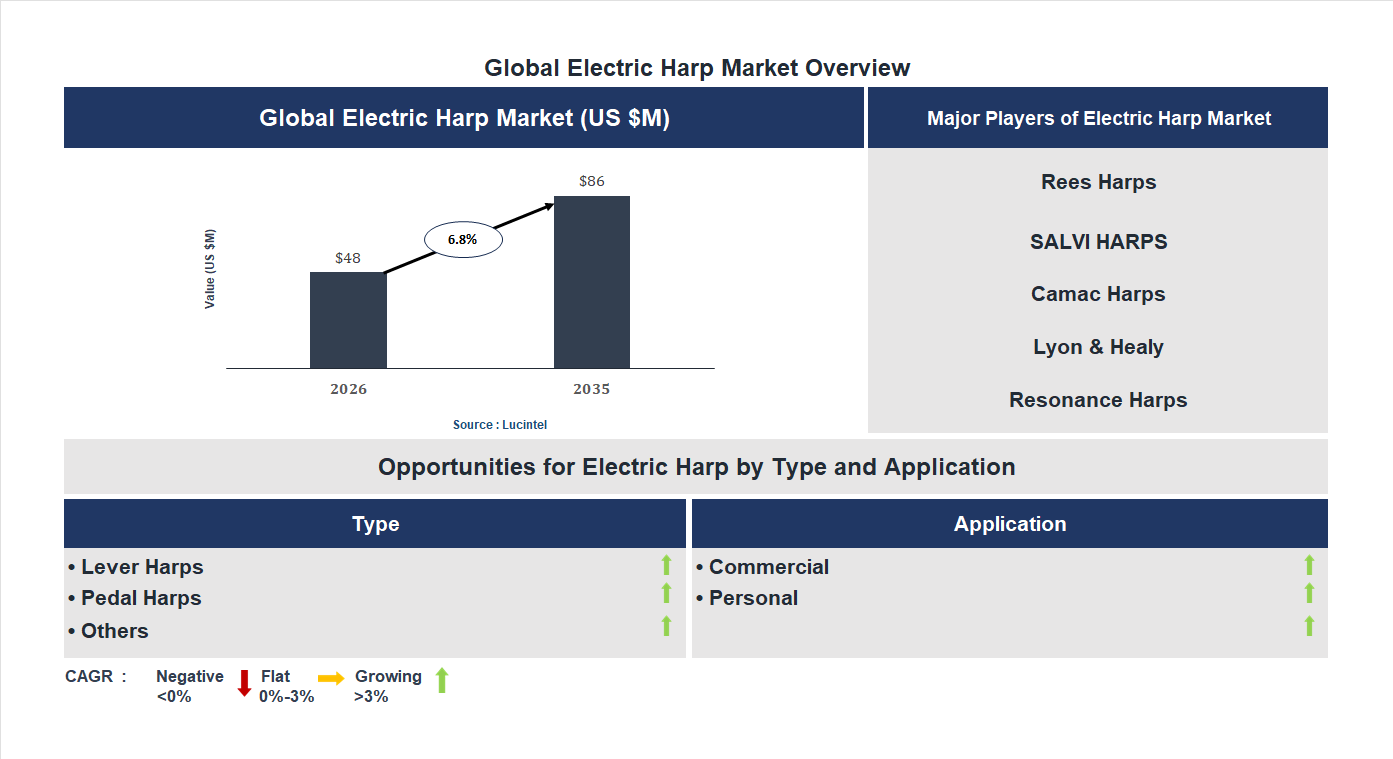
Key data points: The market size in 2035 = $86 million, growth forecast = 6.8% annually for the next 8 years. Scroll below to get more insights. This market report covers trends, opportunities and forecasts in electric harp market to 2035 by type (lever harps, pedal harps, and others), application (commercial and personal), and region (North America, Europe, Asia Pacific, and the Rest of the World)
We'll send your sample report shortly.
• Lucintel forecasts that, within the type category, lever harp is expected to witness higher growth over the forecast period.
• Within the application category, personal is expected to witness higher growth.
• In terms of region, APAC is expected to witness the highest growth over the forecast period. Gain valuable insights for your business decisions with our comprehensive 150+ page report. Sample figures with some insights are shown below.
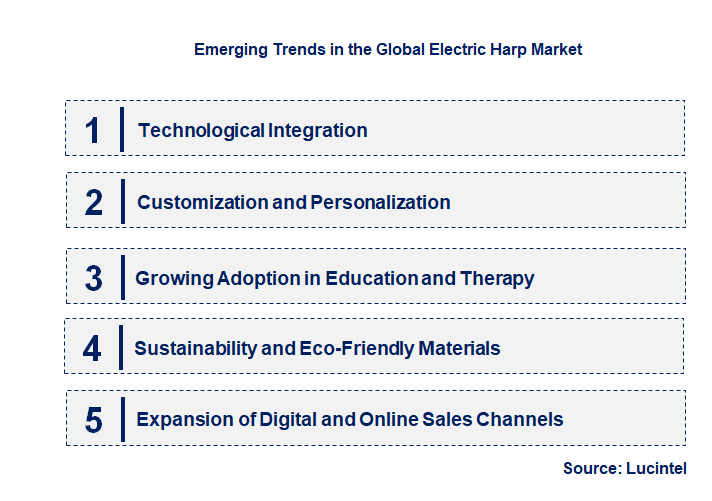
• Technological Integration: The integration of digital technology into electric harps is transforming the market by enabling enhanced sound customization, connectivity, and performance features. Modern electric harps now include MIDI compatibility, Bluetooth connectivity, and digital effects, allowing musicians to experiment with a wide range of sounds and integrate with other electronic instruments. This trend improves user experience, broadens creative possibilities, and appeals to tech-savvy musicians, thereby expanding the market’s reach and versatility.
• Customization and Personalization: Consumers increasingly seek personalized instruments that reflect their unique style and sound preferences. Electric harp manufacturers are offering customizable options such as adjustable sound settings, interchangeable pickups, and bespoke designs. This trend enhances customer satisfaction and loyalty by providing tailored products that meet individual needs, thereby driving demand and encouraging innovation within the market.
• Growing Adoption in Education and Therapy: Electric harps are gaining popularity in educational settings and therapeutic applications due to their portability, ease of use, and versatility. Schools and therapy centers utilize electric harps for music education, stress relief, and therapeutic interventions. This expanding application base is fueling market growth by opening new revenue streams and increasing the instrument’s accessibility to a broader audience.
• Sustainability and Eco-Friendly Materials: The market is witnessing a shift towards sustainable manufacturing practices, with companies adopting eco-friendly materials and processes. Use of recycled woods, biodegradable components, and energy-efficient production methods appeal to environmentally conscious consumers. This trend not only enhances brand reputation but also aligns with global sustainability goals, influencing purchasing decisions and encouraging industry-wide innovation.
• Expansion of Digital and Online Sales Channels: The rise of e-commerce platforms and online music stores is significantly impacting the electric harp market by providing wider access to products and facilitating direct consumer engagement. Virtual demonstrations, online tutorials, and digital marketing strategies are making it easier for customers to explore and purchase electric harps. This trend broadens market reach, reduces distribution costs, and accelerates product adoption across diverse geographic regions. These emerging trends are reshaping the electric harp market by fostering innovation, expanding application areas, and aligning products with modern consumer values. The integration of technology, customization options, and sustainable practices are driving growth, while digital sales channels are broadening access and market penetration. Collectively, these developments are positioning the electric harp industry for sustained expansion and increased relevance in the evolving musical landscape.
• Growing Adoption of Digital and Hybrid Harps: The integration of digital technology with traditional harps has created hybrid instruments that offer enhanced sound quality, portability, and connectivity. This development allows musicians to access a broader range of sounds and effects, making the instrument more versatile for live performances and studio recordings. The increased adoption is driven by technological innovation and consumer demand for modernized instruments, expanding market reach and creating new revenue streams for manufacturers.
• Expansion of E-Commerce and Online Platforms: The rise of online retail channels has made electric harps more accessible to a global audience. E-commerce platforms enable direct sales, virtual demonstrations, and customer reviews, which influence purchasing decisions. This shift reduces reliance on physical stores and broadens market penetration, especially in emerging markets. The convenience and reach of online platforms are expected to accelerate market growth, foster brand recognition, and facilitate faster adoption of new models.
• Increasing Investment in Music Education and Digital Learning: Governments, educational institutions, and private organizations are investing heavily in music education, incorporating electric harps into curricula. Digital learning platforms and virtual tutorials are making harp education more accessible, encouraging new players to enter the market. This trend boosts demand for beginner-friendly and affordable electric harps, fostering a new generation of musicians and expanding the market base.
• Rising Popularity of Live Performances and Music Festivals: The growing number of live music events and festivals worldwide has increased demand for portable, high-quality instruments like electric harps. Musicians seek reliable, easy-to-transport instruments that deliver professional sound. This trend enhances market opportunities for manufacturers to develop durable, performance-oriented models, and encourages innovation in design and features tailored for live settings, ultimately expanding the market’s scope and consumer base.
• Technological Innovations in Sound Quality and Connectivity: Advances in sound processing, wireless connectivity, and user interface design have significantly improved electric harp performance. These innovations enable seamless integration with other digital instruments and sound systems, enhancing live and studio applications. Improved sound quality and connectivity features attract professional musicians and enthusiasts, driving market growth. Continuous technological progress ensures the electric harp remains relevant in a competitive musical instrument landscape, fostering sustained industry expansion. The overall impact of these developments is a robust, expanding market characterized by increased accessibility, technological sophistication, and diverse consumer engagement. These opportunities are driving innovation, broadening customer bases, and fostering global growth, positioning the electric harp market for sustained success and diversification in the coming years.
• Growing Adoption in Music Education and Therapy: The increasing use of electric harps in educational institutions and therapy centers offers substantial growth potential. Electric harps provide portability, adjustable sound settings, and ease of use, making them ideal for beginners and therapeutic applications. The demand for accessible, versatile instruments in these sectors is rising, encouraging manufacturers to develop affordable, user-friendly models. This trend is expected to expand the market as more institutions recognize the benefits of electric harps for learning and healing purposes.
• Technological Innovations Enhancing Sound Quality and Functionality: Advances in digital sound processing, wireless connectivity, and customizable sound profiles are transforming the electric harp market. These innovations enable musicians to achieve a broader range of tones and effects, enhancing performance versatility. Manufacturers are integrating features like MIDI compatibility and app-controlled settings, attracting professional and amateur players alike. As technology continues to evolve, the market will see increased adoption of high-end, feature-rich electric harps catering to diverse musical styles and performance environments.
• Expansion of Sub-segments such as Portable and Stage-Ready Electric Harps: The development of lightweight, portable electric harps designed for live performances and touring is a key growth driver. These models offer durability, ease of transport, and quick setup, appealing to professional musicians and performers. Additionally, specialized stage-ready harps with enhanced sound systems and aesthetic appeal are gaining popularity. The expansion of these sub-segments caters to the needs of performers seeking reliable, high-quality instruments for various performance settings, thereby broadening market reach.
• Rising Demand in Entertainment and Recording Industries: The entertainment sectors increasing reliance on electric harps for studio recordings, live shows, and multimedia productions presents significant opportunities. Electric harps provide rich, customizable sounds that blend seamlessly with other instruments and digital effects. The ability to record directly into digital audio workstations (DAWs) and integrate with virtual instruments makes them attractive to producers and artists. This demand is expected to drive innovation and sales, especially among professional musicians seeking high-fidelity, versatile instruments.
• Increasing Focus on Customization and Aesthetic Appeal: Consumers are seeking personalized electric harps that reflect their unique style and preferences. Manufacturers are offering customizable options such as color choices, decorative inlays, and adjustable features. Aesthetic appeal combined with functional versatility enhances user experience and market differentiation. This trend attracts a broader customer base, including collectors and enthusiasts, and encourages brand loyalty. As customization options expand, the market will benefit from increased sales and a more diverse product portfolio. These growth opportunities collectively position the electric harp market for sustained expansion by addressing diverse customer needs, integrating innovative technologies, and expanding application areas. As manufacturers capitalize on these trends, the market is poised for increased adoption across educational, therapeutic, entertainment, and professional sectors. The evolving landscape promises a dynamic future, fostering innovation, diversification, and global market penetration, ultimately driving long-term growth and industry competitiveness.
• Technological Innovation: The rapid development of electronic components and digital sound processing has revolutionized the electric harp industry. Modern electric harps incorporate advanced features such as MIDI compatibility, customizable sound profiles, and wireless connectivity, enhancing user experience. These innovations make electric harps more versatile and appealing to both professional musicians and hobbyists. As technology continues to evolve, manufacturers can offer more sophisticated instruments, expanding market reach and encouraging adoption across diverse musical genres. This ongoing innovation sustains consumer interest and drives sales growth, positioning electric harps as a modern alternative to traditional acoustic harps.
• Rising Popularity of Digital and Electronic Instruments: The global shift towards digital music production and electronic instruments has significantly impacted the electric harp market. Musicians increasingly prefer electronic instruments for their portability, sound versatility, and integration with digital audio workstations. Electric harps are now used in live performances, recording studios, and educational settings, broadening their application scope. The trend is supported by the growth of music education and the increasing number of music festivals emphasizing electronic music. This rising popularity fuels demand, encourages manufacturers to develop new models, and fosters a vibrant market environment for electric harps.
• Increasing Investment in Music Education and Performance: Governments, educational institutions, and private organizations are investing more in music education and performance arts, which positively influences the electric harp market. Schools and conservatories are incorporating electronic instruments into their curricula, recognizing their benefits in teaching and performance. Additionally, the rise of online music tutorials and workshops has made learning electric harp more accessible. These investments lead to a larger base of skilled players and enthusiasts, creating sustained demand for electric harps. As the market expands through educational initiatives, manufacturers benefit from increased sales and brand recognition.
• Growing Demand for Customization and Unique Sound Profiles: Musicians seek instruments that reflect their individual style and offer unique sound capabilities. Electric harps provide extensive customization options, including different pickups, sound effects, and digital presets. This demand for personalized instruments encourages manufacturers to develop customizable models, catering to professional performers and serious hobbyists. The ability to modify sound profiles and integrate with digital effects makes electric harps more attractive, fostering innovation and product differentiation. This trend enhances customer satisfaction and loyalty, further propelling market growth.
• Expansion into Emerging Markets: Emerging economies with growing middle-class populations and increasing disposable incomes present new opportunities for electric harp manufacturers. As musical tastes diversify and access to musical education improves, demand for electronic instruments rises. Market expansion strategies, including localized marketing and affordable product lines, enable companies to tap into these regions. The expansion into emerging markets not only broadens the customer base but also stimulates industry growth, encouraging innovation tailored to diverse cultural preferences. This geographic diversification is vital for sustaining long-term market development. The challenges facing the electric harp market include:-
• High Manufacturing and Import Costs: Producing electric harps involves sophisticated electronic components and precision craftsmanship, leading to high manufacturing costs. Import tariffs and logistical expenses further inflate retail prices, making electric harps less accessible to price-sensitive consumers. These costs can limit market penetration, especially in developing regions, and hinder competitive pricing strategies. Manufacturers must balance quality with affordability, which can be challenging given the specialized nature of the product. Overcoming cost barriers is essential for expanding market reach and increasing adoption among a broader audience.
• Limited Awareness and Knowledge: Despite technological advancements, many potential users remain unaware of electric harps or lack sufficient knowledge about their benefits and usage. This limited awareness hampers market growth, particularly in regions where traditional acoustic harps dominate. Educating consumers about the advantages of electric harps, such as portability, sound versatility, and integration with digital tools, is crucial. Without effective marketing and educational initiatives, the market may struggle to reach its full potential, especially among novice musicians and educational institutions.
• Regulatory Restrictions and Standards: Electronic instruments are subject to various regulatory standards concerning safety, electromagnetic interference, and environmental impact. Navigating these regulations can be complex and costly, especially for manufacturers aiming to enter multiple markets. Non-compliance can lead to product recalls, legal issues, and reputational damage. Additionally, evolving standards require continuous product updates and testing, increasing development costs. Regulatory hurdles can slow down product launches and limit market accessibility, posing significant challenges for industry players seeking rapid growth. A comprehensive understanding of these drivers and challenges reveals a dynamic market landscape. Technological advancements and rising demand for digital instruments propel growth, while high costs, limited awareness, and regulatory complexities pose obstacles. Strategic innovation, targeted marketing, and regulatory compliance are essential for market players to capitalize on opportunities and mitigate risks. Overall, the electric harp market is poised for growth, driven by technological progress and expanding musical landscapes, provided challenges are effectively managed to sustain industry development.
• Rees Harps
• SALVI HARPS
• Camac Harps
• Lyon & Healy
• Resonance Harps
• Dusty Strings
• Triplet Harps
• Pilgrim Harps
• Stoney End
• Musicmaker
• Lever Harps
• Pedal Harps
• Others
• Commercial
• Personal
• North America
• Europe
• Asia Pacific
• The Rest of the World
• United States: The US market has seen increased adoption of electric harps in professional orchestras and music schools. Major manufacturers are launching advanced models with improved sound quality and digital connectivity features. The rise of online music platforms has also boosted sales, with more musicians exploring electric harps for live performances and recordings. Additionally, government grants for arts and music education are supporting market growth. The US remains a key hub for innovation, with startups developing portable and affordable electric harps to cater to a broader audience.
• China: China’s electric harp market is rapidly expanding due to a growing interest in Western musical instruments and increasing investment in cultural industries. Local companies are focusing on cost-effective manufacturing and innovative designs to capture domestic and international markets. The government’s support for music education and cultural exports has further propelled growth. E-commerce platforms have made electric harps more accessible to consumers across urban and rural areas. Moreover, collaborations with international brands are enhancing product quality and technological features, positioning China as a significant player in the global electric harp market.
• Germany: Germany’s market is characterized by a strong presence of high-end, handcrafted electric harps favored by professional musicians and conservatories. The country’s emphasis on quality craftsmanship and technological innovation has led to the development of sophisticated models with enhanced sound and durability. German companies are also investing in sustainable manufacturing practices and eco-friendly materials. The market benefits from a robust classical music scene and a high level of music education, which drives demand for premium instruments. International collaborations and trade fairs further boost Germany’s influence in the global electric harp industry.
• India: The electric harp market in India is emerging, driven by a rising number of music schools and a growing interest in Western musical genres. Local manufacturers are focusing on affordable, entry-level models to attract students and amateur musicians. The increasing penetration of digital marketing and e-commerce platforms has expanded reach across the country. Additionally, Bollywood and independent music scenes are incorporating electric harps into their compositions, increasing visibility. Government initiatives promoting arts and culture are also contributing to market development. As awareness and affordability improve, India is poised for steady growth in the electric harp segment.
• Japan: Japan’s electric harp market is characterized by technological innovation and a strong consumer base of professional musicians and enthusiasts. Leading Japanese brands are developing high-quality, feature-rich models with advanced sound modulation and connectivity options. The country’s focus on integrating traditional music elements with modern technology has led to unique product offerings. The popularity of electronic music and live performances continues to drive demand. Additionally, Japan’s active participation in international trade shows and collaborations with global brands enhances its market position. The country’s emphasis on precision craftsmanship and innovation sustains its role as a key player in the electric harp industry.


• Rees Harps
• SALVI HARPS
• Camac Harps
• Lyon & Healy
• Resonance Harps
• Dusty Strings
• Triplet Harps
• Pilgrim Harps
• Stoney End
• Musicmaker Q6. Which electric harp market segment will be the largest in future? Answer: Lucintel forecasts that, within the type category, lever harp is expected to witness higher growth over the forecast period. Q7. In electric harp market, which region is expected to be the largest in next 5 years? Answer: In terms of region, APAC is expected to witness the highest growth over the forecast period. Q8. Do we receive customization in this report? Answer: Yes, Lucintel provides 10% customization without any additional cost.


Choose a license that fits your team. Instant PDF delivery.
Prices exclude taxes. Instant delivery. Custom licensing available on request.
Market Report · July 29, 2026
Market Report · July 15, 2026
Market Report · July 13, 2026
Trusted partner for strategic intelligence and business growth


Receive a complimentary market analysis tailored to your industry. Our analysts will identify key growth opportunities and competitive dynamics specific to your business.

Market size, growth rate, and key trend analysis for your specific sector.

Top competitor positioning and market share analysis.

Strategic recommendations backed by data-driven insights.
Get curated market intelligence and competitive moves straight to your inbox.
By subscribing, you agree to receive our monthly insights. Unsubscribe anytime.
Receive a complimentary market analysis tailored to your industry. Our analysts will identify key growth opportunities and competitive dynamics specific to your business.
Market size, growth rate, and key trend analysis for your specific sector.
Top competitor positioning and market share analysis.
Strategic recommendations backed by data-driven insights.
Get curated market intelligence, emerging trends, and competitive moves straight to your inbox each month.
By subscribing, you agree to receive our monthly insights. Unsubscribe anytime.
We'll send your sample report shortly.