
Report Feature
Elderly Care Product Market Trends and Forecast
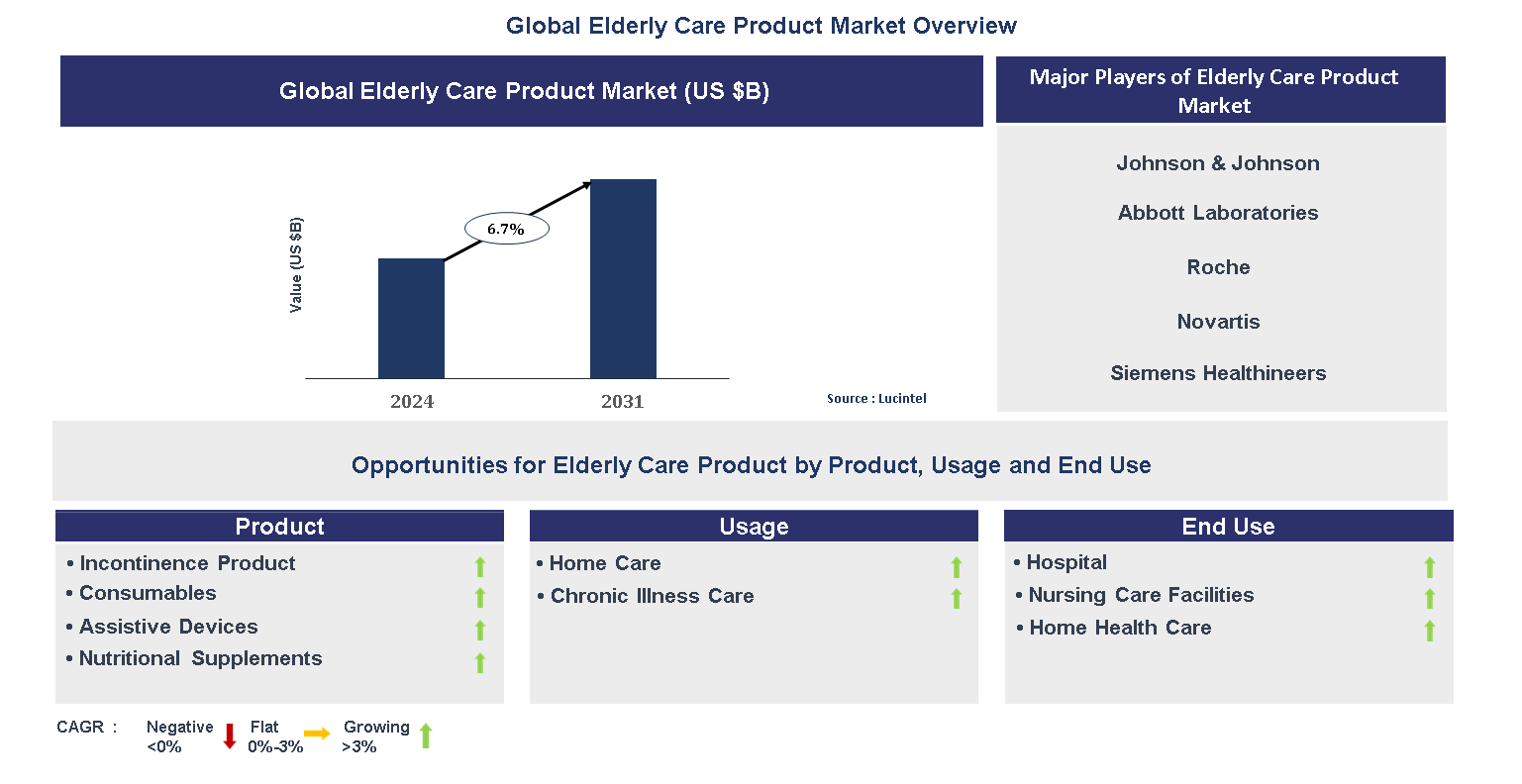
The future of the global elderly care product market looks promising with opportunities in the hospital, nursing care facility, and home health care markets. The global elderly care product market is expected to grow with a CAGR of 6.7% from 2025 to 2031. The major drivers for this market are the increasing aging population requiring specialized care, the rising demand for home healthcare solutions, and the growing focus on elderly independence & comfort.• Lucintel forecasts that, within the product category, incontinence product is expected to witness the highest growth over the forecast period.
• Within the end use category, home health care is expected to witness the highest growth.
• In terms of region, APAC is expected to witness the highest growth over the forecast period. Gain valuable insights for your business decisions with our comprehensive 150+ page report. Sample figures with some insights are shown below.
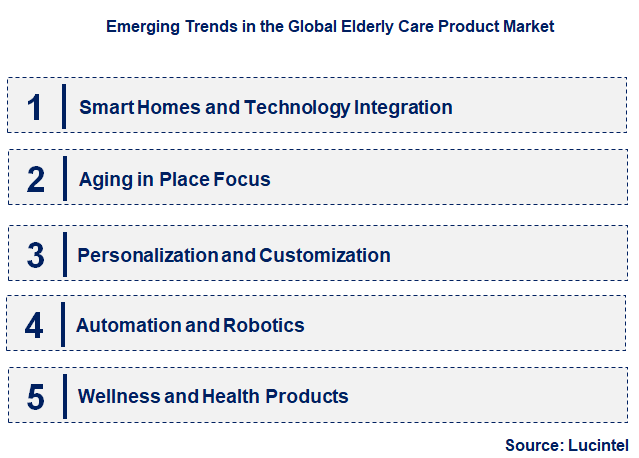
Emerging Trends in the Elderly Care Product Market
The elderly care product market is being redefined by a few central emerging trends that are shifting the industry from a reactive to proactive, consumer-driven model. These trends are fueled by a worldwide demographic shift, technical innovation, and a cultural shift away from negative attitudes toward aging. The industry is shifting away from simple medical supplies and into an arena where the goal is to improve seniors’ overall quality of life, autonomy, and social integration. The industry is growing more responsive and innovative in addressing the changing needs and wants of the older population.• Smart Homes and Technology Integration: Integration of technology in elderly care products is becoming very prominent. This ranges from smart home technology that has fall detection, AI-based medication reminders, and wearable health trackers. The result is a more preventative and proactive care approach. These products give real-time information to both seniors and caregivers, allowing them to intervene early and minimize the use of emergency services. This trend not only enhances safety but also enables seniors to live independently for longer.
• Aging in Place Focus: The "aging in place" trend, under which seniors prefer living in their own homes and not residing in assisted living facilities, is a strong market driver. This is creating a market for products that increase home safety and accessibility, like stair lifts, bathroom aids, and non-slip flooring. The effect is a major growth opportunity for firms dealing in home modification products and services, as this aligns with consumer preference for convenience and independence.
• Personalization and Customization: One of the trends rising is personalization of elderly care products. This breaks with a single-solution-for-all approach to solutions that are uniquely sized to fit individual needs and preferences. This ranges from custom-fit mobility aids, adjustable beds, and nutrition supplements for specific medical conditions. The payoff is an enhanced and more rewarding user experience. Personalization does not only enhance product effectiveness but also makes seniors feel more respected and understood, which builds brand loyalty and market standing.
• Automation and Robotics: Automation is one of the emerging trends, particularly in nations with a severe caregiver shortage. This encompasses robots that aid with physical activities, such as transfer and lifting, and also companion robots with the capability of social interaction. The effect is a fix for an acute labor shortage and a new form of support for elderly. Though there are ethical issues involved, the robots are becoming more advanced, providing both physical assistance and emotional comfort, redefining the definition of care.
• Wellness and Health Products: The marketplace is experiencing a trend toward products that promote well-being overall, not only sickness. These include dietary supplements, exercise monitors, and brain function games. The effect is a more active and health-aware older marketplace. The trend is rebranding the market’s image from one that is just for the frail to one that enables seniors to live more active and fulfilling lives, offering new growth opportunities for active-lifestyle support products. These trends together are redefining the market by making care products for the elderly more advanced, customized, and a part of daily life for seniors, setting the industry up for tremendous future growth.
Recent Development in the Elderly Care Product Market
The market for elderly care product is experiencing dynamic development with a combination of technological advancements and demographic change. These trends are revolutionizing the sector from a pure provider of medical products to a strategic collaborator in senior independence and wellbeing. The trend has moved to developing holistic solutions that combine technology, convenience, and improved user experience. These technologies are essential for a care market that is growing dramatically as a result of an aging population worldwide and a shift in attitudes towards care in society.• AI and IoT Adoption in Care Products: A key trend is the adoption of artificial intelligence (AI) and the Internet of Things (IoT) in care products. This consists of intelligent fall detection mats, voice-operated medication reminder assistants, and wearable sensors that monitor important vital signs. The effect is a more robust safety and surveillance system for elderly patients. These technologies offer real-time notifications to caregivers and relatives, allowing for early reaction to possible emergencies and the alleviation of pressures on professional care services.
• Remote Patient Monitoring and Telehealth: One significant innovation is the extensive use of telehealth systems and remote patient monitoring devices. With this, health workers can remotely track patients, provide virtual consultations, and treat chronic diseases without the necessity of constant office visits. The effect is a more affordable and accessible healthcare model. This growth is especially helpful for elderly persons with mobility complications or those living in remote locations since it remarkably enhances their quality of medical advice and care.
• Expansion in Incontinence and Personal Hygiene Products: There has been considerable advancement in the quality and style of incontinence and personal hygiene products. Companies are currently making better products using better materials that are more discreet, absorbent, and comfortable in nature, enhancing quality of life. The effect is decreased social stigma and improved senior confidence. This change is important as it directly attacks the universal and frequently taboo problem, enabling seniors to retain their dignity and engage in social interaction without fear or embarrassment.
• Assistive and Mobility Robotics Development: A new development is the utilization of robotics in the provision of physical support. This encompasses robot exoskeletons to assist in walking, as well as robotic devices to lift and transfer patients. The effect is an answer to increasing caregiver shortages and a lessening of the physical workload on human caregivers. Although early on, the technologies are gaining heavy investment and can transform the way physical care is provided in the future.
• Growth of Easy-to-Use Smart Devices: Another new trend is the development of a variety of easy-to-use smart devices specifically targeted at older adults. These are tablets with easy-to-use interfaces, simple-button phones, and voice-optimized smart speakers. The effect is an enhanced digital accessibility for the elderly. By democratizing technology and making it less threatening, these products enable elderly individuals to remain engaged with family and friends, which is a central element in sustaining mental and emotional health. These innovations are all working together to transform the market by making elderly care more innovative, accessible, and pursuant of a philosophy of independence and quality of life.
Strategic Growth Opportunities in the Elderly Care Product Market
The market for elderly care product presents many strategic opportunities for growth in key applications, fueled by the demands of a rapidly aging population. Those companies that are best at pursuing these opportunities will be poised for future success. Opportunities move beyond traditional healthcare and into lifestyle-oriented applications that add value to seniors’ everyday lives. Strategic growth will emanate from being able to innovate in product design, technology, and business models to address these changing demands.• Home Safety and Monitoring Systems: One strong strategic growth potential exists in offering integrated home safety and remote monitoring systems. These are fall detection sensors, smart lighting, and motion detectors that can notify caregivers of possible problems. The benefit is to gain access to a high-growth market addressing the single most concern for seniors and their families. Offering integrated, simple installation solutions can build a strong market position and long-term customer relationships.
• Mobility and Assistive Technology: The increasing demand for mobility assistive devices is a principal strategic growth opportunity. Businesses can focus on creating sophisticated and light mobility products, including ergonomically engineered walkers, intelligent powered wheelchairs, and stair lifts. The payoff is the potential to address a huge and varied market segment that desires autonomy and mobility freedom. To create a competitive edge, innovating in this area by harmonizing functionality and aesthetics can pay off.
• Incontinence and Personal Hygiene Solutions: The incontinence and personal hygiene products market is a stable, expanding opportunity. A company can look at creating next-generation products that are more absorbent, comfortable, and discreet. The effect is a beachhead in a non-discretionary market with high repeat purchase. With investments in research and development to make products better and eliminate the stigma surrounding these products, a company can create a loyal customer base.
• Health and Wellness Lifestyle Products: There is a strategic potential to expand beyond illness focus into products that enable a healthy and active senior lifestyle. This can include subscription boxes for custom nutritional supplements, exercise trackers suitable for seniors, and devices for cognitive well-being, including memory games. The effect is a larger market targeting a demographic that is increasingly interested in preventative health and wellness.
• Personalized Care and Concierge Services: One of the greatest growth opportunities is in the creation of technology platforms and services that provide personalized care and assistance. This means apps that provide seniors with caregivers, meal delivery services that are customized to individual dietary requirements, and platforms that oversee multiple health points of data. The result is a shift toward a high-value, service-based business model that offers end-to-end support and targets the needs of today’s nuclear family. These growth opportunities are making a dent in the market by making organizations more innovative and customer-focused, shifting from a product-driven model to a solution-driven one offering more comprehensive and integrated care.
Elderly Care Product Market Driver and Challenges
The elderly care product industry is driven by a group of strong drivers and held back by serious challenges. The drivers are mainly a reaction to worldwide demographic shifts and technological innovation, whereas the challenges base themselves on economic limitations, talent shortages, and regulatory intricacies. The future of the market will rely on its capacity to ride its growth drivers while efficiently dealing with its in-built challenges. The factors responsible for driving the elderly care product market include: 1. Aging Global Population: The largest driver by far is the fast-aging population globally. With longer life expectancy and declining birth rates, the ratio of elderly people is growing exponentially. This population movement is generating a large and long-term demand for aged care products and services ranging from simple medical aids to complex assistive technologies. 2. Aging in Place Preference: One of the prime drivers is the robust and increasing consumer desire to age in place, whereby older adults wish to stay in their own homes as long as possible. This is propelling considerable demand for products enhancing home safety, mobility, and independence, including smart home systems, stair lifts, and bathroom safety aids. 3. Technology Advancements: Blending emerging technologies, including AI, IoT, and telehealth, is a potent trend driver. These innovations are creating care that is more accessible, proactive, and efficient. They are facilitating remote patient monitoring, enhancing medication adherence, and delivering essential support to seniors and their caregivers. 4. Growing Disposable Income: Older people in most geographies have growing disposable income and a growing appetite to spend on items that enhance their lifestyles. That is driving demand for higher classes of products, ranging from high-end mobility aids to dietary supplements and lifestyle-driven products, which is increasing the market beyond generic medical supplies. 5. Family Structure Changes: The world’s move toward smaller, nuclear families and the growing number of working caregivers are primary movers. This is driving demand for products and services that can augment family care, including remote monitoring equipment, meal kit delivery services, and on-demand caregiving apps. Challenges in the elderly care product market are: 1. Costly Price of Advanced Products: One of the biggest issues is the high price of most advanced elderly care products, including robotics, smart home systems, and specialized medical devices. This will render them unaffordable to a significant percentage of the population, particularly in developing countries or for those without extensive insurance. 2. Lack of Skilled Caregivers: The worldwide deficit of skilled and trained caregivers is one of the key challenges. This deficit fills a gap in the market, as numerous products have an element of technical skill or personal help that is not consistently there. This can restrict the uptake and effectiveness of even the best innovations. 3. Data Privacy and Security Issues: Growing in use are networked devices and telehealth platforms, which present significant issues with regard to data privacy and security. Older adults and their caregivers are wary of adopting devices that capture personal health information, and this can be a significant obstacle to industry expansion and necessitates that firms spend inordinate sums on strong security systems and open data practices. In summary, the elderly care product market is spurred by powerful demographic and technological forces that are opening up immense growth opportunities. Yet, the industry needs to address critical challenges on the fronts of high cost, dearth of skilled manpower, and data privacy issues to realize its full potential and fulfill the complex needs of the world’s aging population.List of Elderly Care Product Companies
Companies in the market compete on the basis of product quality offered. Major players in this market focus on expanding their manufacturing facilities, R&D investments, infrastructural development, and leverage integration opportunities across the value chain. With these strategies elderly care product companies cater increasing demand, ensure competitive effectiveness, develop innovative products & technologies, reduce production costs, and expand their customer base. Some of the elderly care product companies profiled in this report include-• Johnson & Johnson
• Abbott Laboratories
• Roche
• Novartis
• Siemens Healthineers
• Philips Healthcare
• Cardinal Health
• McKesson Corporation
• Medtronic
• Stryker
Elderly Care Product Market by Segment
The study includes a forecast for the global elderly care product market by product, usage, end use, and region.Elderly Care Product Market by Product [Value from 2019 to 2031]:
• Incontinence Product
• Consumables
• Assistive Devices
• Nutritional Supplements
Elderly Care Product Market by Usage [Value from 2019 to 2031]:
• Home Care
• Chronic Illness Care
Elderly Care Product Market by End Use [Value from 2019 to 2031]:
• Hospital
• Nursing Care Facilities
• Home Health Care
Elderly Care Product Market by Region [Value from 2019 to 2031]:
• North America
• Europe
• Asia Pacific
• The Rest of the World
Country Wise Outlook for the Elderly Care Product Market
The elderly care product market is undergoing a profound change, fueled by an aging world population and increased focus on "aging in place." This demographic force, allied with technological innovation, is propelling the market away from conventional medical devices toward a more holistic range of products that enable independence, comfort, and well-being. Current innovation is all about embedding smart technologies in daily products and designing personalized, easy-to-use solutions. This is transforming the industry from a reactive, disease-based to a proactive, wellness-based model that empowers seniors and their caregivers.• United States: In the United States, current innovations are being led by a very high consumer demand for home care. There is great emphasis placed on technology-enabled products like smart home systems, wearable health monitors, and telehealth platforms that enable older adults to age in place safely and independently. One notable development is the presence of artificial intelligence (AI) incorporated into fall detection and medication management devices. The trend is further boosted by federal and state programs that promote the use of remote patient monitoring, broadening the market for these products.
• China: China’s market for elderly care products is booming, driven by a huge and aging population and policies favoring the "silver economy." The latest trends are in the direction of mass-market and high-tech products. Smart devices are highly promoted by the government, such as remote health monitoring and intelligent robots to help with daily living. The market is also witnessing growth in chronic disease management specialty products that mirror the country’s demand for affordable and accessible healthcare solutions for its huge aging population.
• Germany: The market in Germany is a quality and innovative aged care leader with emphasis on high-technology as well as social care. The current developments stem from a well-established long-term care insurance system and a culture that focuses on dignity and independence. A robust market exists for high-end assistive technology products, including powered mobility exoskeletons and state-of-the-art home automation systems. German companies are also creating ergonomically designed, long-lasting products that are frequently part of an integrated system of professional home care services.
• India: The Indian elderly care product market is a high-growth market fueled by urbanization and the dissolution of traditional joint family systems. Recent innovations are directed at developing affordable and scalable solutions. Affordable mobility devices, incontinence products, and simple-to-operate home healthcare appliances are in increasing demand. The market also witnesses new business models, including senior-specific subscription services and platforms to match seniors with screened caregivers, evidence of the shift toward formalized care industry.
• Japan: Japan boasts the world’s most developed and advanced elderly care market, with innovations fueled by its high seniority ratio. Recent innovations are focused on robotics and advanced assistive technology to fill the gap in caregivers. Japan is a leader in creating care robots that help in lifting, bathing, and companionship. There is also an emphasis placed on product design that is user-friendly and minimalist, so products are not only practical but also smoothly integrated into everyday life and minimize the stigma that is regularly attached to elderly care.

Features of the Global Elderly Care Product Market
Market Size Estimates: Elderly care product market size estimation in terms of value ($B). Trend and Forecast Analysis: Market trends (2019 to 2024) and forecast (2025 to 2031) by various segments and regions. Segmentation Analysis: Elderly care product market size by product, usage, end use, and region in terms of value ($B). Regional Analysis: Elderly care product market breakdown by North America, Europe, Asia Pacific, and Rest of the World. Growth Opportunities: Analysis of growth opportunities in different products, usage, end uses, and regions for the elderly care product market. Strategic Analysis: This includes M&A, new product development, and competitive landscape of the elderly care product market. Analysis of competitive intensity of the industry based on Porter’s Five Forces model.
FAQ
Q1. What is the growth forecast for elderly care product market? Answer: The global elderly care product market is expected to grow with a CAGR of 6.7% from 2025 to 2031. Q2. What are the major drivers influencing the growth of the elderly care product market? Answer: The major drivers for this market are the increasing aging population requiring specialized care, the rising demand for home healthcare solutions, and the growing focus on elderly independence & comfort. Q3. What are the major segments for elderly care product market? Answer: The future of the elderly care product market looks promising with opportunities in the hospital, nursing care facility, and home health care markets. Q4. Who are the key elderly care product market companies? Answer: Some of the key elderly care product companies are as follows:• Johnson & Johnson
• Abbott Laboratories
• Roche
• Novartis
• Siemens Healthineers
• Philips Healthcare
• Cardinal Health
• McKesson Corporation
• Medtronic
• Stryker Q5. Which elderly care product market segment will be the largest in future? Answer: Lucintel forecasts that, within the product category, incontinence product is expected to witness the highest growth over the forecast period. Q6. In elderly care product market, which region is expected to be the largest in next 5 years? Answer: In terms of region, APAC is expected to witness the highest growth over the forecast period. Q7. Do we receive customization in this report? Answer: Yes, Lucintel provides 10% customization without any additional cost.
Table of Contents
List of Figures
List of Tables
Methodology
- In-depth interviews of the major players in this market
- Detailed secondary research from competitors’ financial statements and published data
- Extensive searches of published works, market, and database information pertaining to industry news, company press releases, and customer intentions
- A compilation of the experiences, judgments, and insights of Lucintel’s professionals, who have analyzed and tracked this market over the years.


Key Questions
- • What are some of the most promising, high-growth opportunities for the elderly care product market by product (incontinence product, consumables, assistive devices, and nutritional supplements), usage (home care and chronic illness care), end use (hospital, nursing care facilities, and home health care), and region (North America, Europe, Asia Pacific, and the Rest of the World)?
- • Which segments will grow at a faster pace and why?
- • Which region will grow at a faster pace and why?
- • What are the key factors affecting market dynamics? What are the key challenges and business risks in this market?
- • What are the business risks and competitive threats in this market?
- • What are the emerging trends in this market and the reasons behind them?
- • What are some of the changing demands of customers in the market?
- • What are the new developments in the market? Which companies are leading these developments?
- • Who are the major players in this market? What strategic initiatives are key players pursuing for business growth?
- • What are some of the competing products in this market and how big of a threat do they pose for loss of market share by material or product substitution?
- • What M&A activity has occurred in the last 5 years and what has its impact been on the industry? For any questions related to Elderly Care Product Market, Elderly Care Product Market Size, Elderly Care Product Market Growth, Elderly Care Product Market Analysis, Elderly Care Product Market Report, Elderly Care Product Market Share, Elderly Care Product Market Trends, Elderly Care Product Market Forecast, Elderly Care Product Companies, write Lucintel analyst at email: helpdesk@lucintel.com. We will be glad to get back to you soon.


