Educational Market Trends and Forecast
The technologies in the educational technology market have experienced significant changes over the past few years as more traditional tools used for in-person learning have transitioned to digital platforms and cloud-based solutions. Whereas early educational technology was solely based on basic hardware like projectors and whiteboards, now it includes advanced tools such as learning management systems (LMS), AI-powered systems for personalized learning, and interactive software applications. There has also been a shift from on-premises solutions to cloud-based platforms, bringing greater scalability and flexibility and enabling access from remote locations. Advanced analytics, mobile apps, and other immersive technologies like augmented reality (AR) and virtual reality (VR) are transforming the way education is consumed and delivered at various academic institutions and government organizations.
Emerging Trends in the Educational Market
The educational technology market is experiencing dynamic growth, propelled by innovation and a changed demand for a more interactive, accessible, and personalized learning experience. Key trends shaping the market are as follows:
• Cloud-Based Learning Platforms: Cloud-based learning platforms have gained significant popularity, allowing users to access material anytime and from any location. These platforms scale operations for schools and institutions while reducing the costs and complexities of on-premise hardware.
• Artificial Intelligence and Adaptive Learning: The emergence of AI-driven learning technologies is revolutionizing education by offering personalized learning experiences tailored to individual needs. The incorporation of AI-powered tutoring systems and adaptive learning algorithms ensures that lessons and assessments are adjusted according to students’ performance, thus increasing engagement and results.
• Gamification and Active Learning: Education is now incorporating gamification to increase and extend student engagement. Interactive tools—such as quizzes, simulations, and even VR experiences—encourage learning through practical, hands-on activities.
• Mobile Learning Solutions and BYOD: The widespread use of smartphones and tablets has led to mobile learning solutions, providing access to learning content on the go for students. The BYOD (Bring Your Device) policy implemented in institutions allows learners to connect their devices, making learning flexible and personalized.
• Expansion of Online and Remote Learning: Online and hybrid learning models continue to grow as people demand accessible education. EdTech companies are expanding their offerings in terms of MOOCs, certifications, and degree programs, enabling learners to learn at their own pace from anywhere in the world.
These trends are reshaping the educational technology market, driving the transformation of traditional classrooms into dynamic, digital learning environments. The integration of AI, cloud solutions, mobile learning, and gamification is making education more personalized, engaging, and accessible to a global student base.
Educational Market : Industry Potential, Technological Development, and Compliance Considerations
The EdTech market includes various technologies designed to improve teaching and learning processes. These technologies include digital classroom tools, e-learning platforms, virtual reality, and augmented reality for immersive learning, AI for personalized learning, and learning management systems. The rapid digital transformation in education has reshaped the way content is delivered, assessed, and consumed in K-12, higher education, and corporate training environments.
• Technology Potential: EdTech has massive potential, driven by the demand for personalized, scalable, and accessible learning. AI enables a customized learning path, while VR/AR provides immersive, hands-on simulations. Moreover, analytics can help teachers track their students’ progress and improve learning outcomes. As educational institutions increasingly adopt digital tools, EdTech technologies will help bridge gaps in learning, especially for remote and underserved communities.
• Degree of Disruption: The level of disruption is high. EdTech is transforming traditional learning models with flexible, online, and hybrid learning environments. This transformation is forcing educational institutions to rethink classroom setups and how to engage students and collaborate globally.
• Current Maturity of Technology: EdTech technologies are at different stages of maturity. E-learning platforms and LMS are well-established, while advanced technologies such as AI-driven adaptive learning and VR/AR are emerging and still developing.
• Regulatory Compliance: EdTech solutions must comply with regulations, particularly those related to GDPR, FERPA, and COPPA, to ensure data privacy and security. Accessibility standards must also be met to include all learners.
Recent Technological development in Educational Market by Key Players
Key innovators in the field of educational technology continue to pave the way for transformation by introducing their approaches to learning solutions. Some of the key new developments from leading companies in the sector are summarized below:
• BYJU’S: BYJU’S has seen rapid growth by providing online, personalized learning experiences. Through the acquisition of Aakash Educational Services and several product offerings, such as interactive video lessons and live tutoring, the company is now a leader in the online education sector.
• Blackboard Inc.: Blackboard has significantly improved its LMS by integrating AI and cloud-based tools to enhance the user experience. The company is working on improving its capabilities in K-12 schools and universities with tools that help enhance student engagement, collaboration, and administrative efficiency.
• Chegg, Inc.: Chegg has evolved from just an e-textbook rental company into a comprehensive education service provider, offering online tutoring, career counseling, and academic support. Its focus on subscription-based homework help continues to attract students seeking low-cost educational services.
• Coursera Inc.: With a strong presence in the online learning space, Coursera, through its collaborations with universities and other organizations, offers accredited, quality online courses and degrees to learners. Flexibility, accessibility, and career-oriented learning are core areas Coursera focuses on to assist adult learners who wish to upskill.
• Edutech: Edutech companies have developed innovative solutions that integrate AI, gamification, and immersive learning environments. These companies are enhancing educational experiences for teaching and learning in schools, universities, and corporate training, offering products such as AR/VR-based classrooms and AI-driven assessments.
• edX LLC: edX, in collaboration with a majority of top universities, provides both free and paid online courses, professional certifications, and degree programs. It is a leader in offering high-quality, accessible education to millions of learners globally.
• Google LLC: Google has taken a significant position in the educational sector with its G Suite for Education, featuring tools that enable effective collaboration, communication, and learning on digital platforms. Google’s focus on integrating AI and cloud technologies has ensured smooth transitions to online learning for schools.
• Instructure, Inc.: Instructure’s Canvas LMS platform continues to evolve with new AI features that enhance its capabilities in data analytics, personalized learning, and content delivery. Its cloud-based architecture and user-friendly design make it popular among K-12 schools and higher education institutions.
• Microsoft: Microsoft has expanded its education-related services, including Microsoft Teams, OneNote, and Microsoft Education products, which support collaboration and remote learning. Cloud-based tools and AI integration help educators and students engage in hybrid learning environments.
• Udacity, Inc.: Udacity has revolutionized the world of online learning with specialized "Nanodegrees" in AI, data science, and programming, among other fields. The company’s emphasis on career-ready skills and its partnerships with leading technology companies have positioned it as a top institution for learners aiming to acquire new skills for the job market.
These developments highlight the growth and diversification of the educational technology market, where key players continue to innovate and provide solutions tailored to the needs of learners and educators in a changing world.
Educational Market Driver and Challenges
The educational technology market is growing rapidly, driven by technological advancements, shifting learning needs, and increasing demand for flexible, personalized learning experiences. However, the market also faces several challenges that must be addressed to realize its full potential.
The factors responsible for driving the educational market include:
• Increased Adoption of Online and Hybrid Learning Models: The demand for online and hybrid learning models continues to rise as educational institutions and organizations move toward offering more flexible and accessible learning options. This shift is driving the growth of LMS platforms, digital content delivery, and remote learning technologies.
• Technological Advancements in AI and Cloud Computing: Innovations in artificial intelligence, cloud computing, and data analytics are enabling the creation of smarter learning platforms that personalize the educational experience for each student. AI-driven tools, in particular, are improving learning outcomes and administrative efficiency.
• Digital Education Infrastructure Investment by Governments: Governments worldwide are investing in digital education infrastructure to increase access to quality education. Public and private partnerships and policies promoting digital literacy are creating an environment conducive to the expansion of the educational technology market.
• Increased Demand for Lifelong Learning: With the rapid pace of technological change, more adults need to continually update their skills. EdTech companies providing professional development courses and skills-based learning with certifications are meeting this demand, thus boosting growth in the online education market.
Challenges in the educational market include:
• Digital Divide and Inequality in Access: Despite the rise of online learning, the digital divide remains a significant challenge. Many students from low-income or rural settings lack adequate internet and device access, limiting their participation in digital educational programs.
• Data Privacy and Security Issues: With increased reliance on digital platforms, concerns about the security and privacy of student data are growing. Educational institutions must invest in robust cybersecurity measures to protect sensitive information and comply with data privacy regulations.
• Technology Integration Resistance: Some educators and institutions may resist adopting new technologies due to issues such as cost, lack of training, or traditional teaching methods. Addressing these barriers is crucial for the wider application of educational technologies.
The educational technology market is driven by significant trends such as the growing demand for online learning, AI-powered tools, and government investments. However, challenges related to access, data privacy, and resistance to change continue to impact the market. Addressing these challenges will be essential for the future success of the sector.
List of Educational Companies
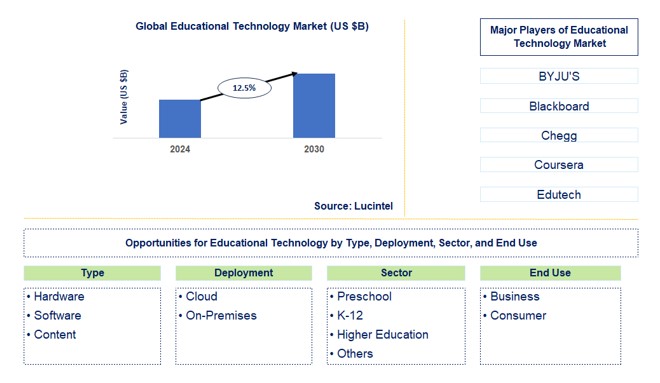
Companies in the market compete based on product quality offered. Major players in this market focus on expanding their manufacturing facilities, R&D investments, and infrastructural development, as well as leveraging integration opportunities across the value chain. With these strategies, educational companies cater to increasing demand, ensure competitive effectiveness, develop innovative products & technologies, reduce production costs, and expand their customer base. Some of the educational companies profiled in this report include.
• BYJU’S
• Blackboard Inc.
• Chegg, Inc.
• Coursera Inc.
• Edutech
• edX LLC
Educational Market by Technology
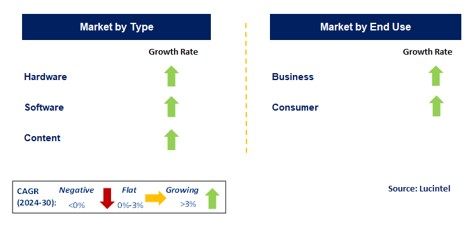
• Technology Readiness by Technology Type of Hardware, Software, and Services for the Educational Technology Market: Software technologies are highly mature, with well-established platforms for e-learning, collaboration, and content delivery ready for large-scale deployment in schools and universities. Hardware, such as laptops, tablets, and interactive displays, is also mature but still faces challenges related to affordability and integration in lower-budget educational systems. VR and AR hardware are growing but remain in an experimental phase, with high costs and limited adoption in mainstream education. Educational services are well-established, offering professional development, content creation, and consulting, although their innovation cycle is slower than that of software and hardware. Regulatory compliance is essential for all technologies, with software needing to meet privacy standards, hardware complying with safety regulations, and services ensuring equitable access and meeting educational guidelines. Competitive intensity is highest in software, followed by hardware, with services remaining essential but less competitive.
• Competitive Intensity and Regulatory Compliance of Hardware, Software, and Services for the Educational Technology Market: The competitive intensity is highest in the software segment, where a wide array of e-learning platforms, LMS solutions, and EdTech startups compete for market share. Hardware companies are competing in the device space, including manufacturers of laptops, tablets, and VR tools, but face challenges related to cost and affordability in schools. Educational services have relatively low competition, but the demand for content creation, training, and consulting is increasing as schools embrace digital tools. Regulatory compliance, especially in software, must follow data privacy laws like FERPA and GDPR. Hardware must meet safety and durability standards, while educational services must adhere to accessibility, equity, and educational guidelines to ensure inclusive learning.
• Disruption Potential of Hardware, Software, and Services for the Educational Technology Market: Software has the highest disruption potential in the educational technology market due to the rapid rise of digital learning platforms, AI-driven personalized education tools, and virtual classrooms, making education more accessible and engaging. Cloud-based LMS and collaboration tools are enabling remote and hybrid learning at scale. Hardware, such as interactive whiteboards, tablets, and VR/AR devices, is transforming in-class experiences but faces higher adoption barriers due to costs. Educational services, including teacher training, content creation, and educational consulting, complement both hardware and software but will have a more incremental impact. These technologies are reshaping education by providing scalable, flexible, and personalized learning solutions.
Educational Market Trend and Forecast by Technology [Value from 2019 to 2031]:
• Hardware
• Software
• Services
Educational Market Trend and Forecast by Application [Value from 2019 to 2031]:
• Government Organization
• Academic Institution
Educational Market by Region [Value from 2019 to 2031]:
• North America
• Europe
• Asia Pacific
• The Rest of the World
• Latest Developments and Innovations in the Educational Technologies
• Companies / Ecosystems
• Strategic Opportunities by Technology Type
Features of the Global Educational Market
Market Size Estimates: Educational market size estimation in terms of ($B).
Trend and Forecast Analysis: Market trends (2019 to 2024) and forecast (2025 to 2031) by various segments and regions.
Segmentation Analysis: Technology trends in the global educational market size by various segments, such as application and technology in terms of value and volume shipments.
Regional Analysis: Technology trends in the global educational market breakdown by North America, Europe, Asia Pacific, and the Rest of the World.
Growth Opportunities: Analysis of growth opportunities in different applications, technologies, and regions for technology trends in the global educational market.
Strategic Analysis: This includes M&A, new product development, and competitive landscape for technology trends in the global educational market.
Analysis of competitive intensity of the industry based on Porter’s Five Forces model.
This report answers following 11 key questions
Q.1. What are some of the most promising potential, high-growth opportunities for the technology trends in the global educational market by technology (hardware, software, and services), application (government organization and academic institution), and region (North America, Europe, Asia Pacific, and the Rest of the World)?
Q.2. Which technology segments will grow at a faster pace and why?
Q.3. Which regions will grow at a faster pace and why?
Q.4. What are the key factors affecting dynamics of different technology? What are the drivers and challenges of these technologies in the global educational market?
Q.5. What are the business risks and threats to the technology trends in the global educational market?
Q.6. What are the emerging trends in these technologies in the global educational market and the reasons behind them?
Q.7. Which technologies have potential of disruption in this market?
Q.8. What are the new developments in the technology trends in the global educational market? Which companies are leading these developments?
Q.9. Who are the major players in technology trends in the global educational market? What strategic initiatives are being implemented by key players for business growth?
Q.10. What are strategic growth opportunities in this educational technology space?
Q.11. What M & A activities did take place in the last five years in technology trends in the global educational market?