
Market Report · July 31, 2026

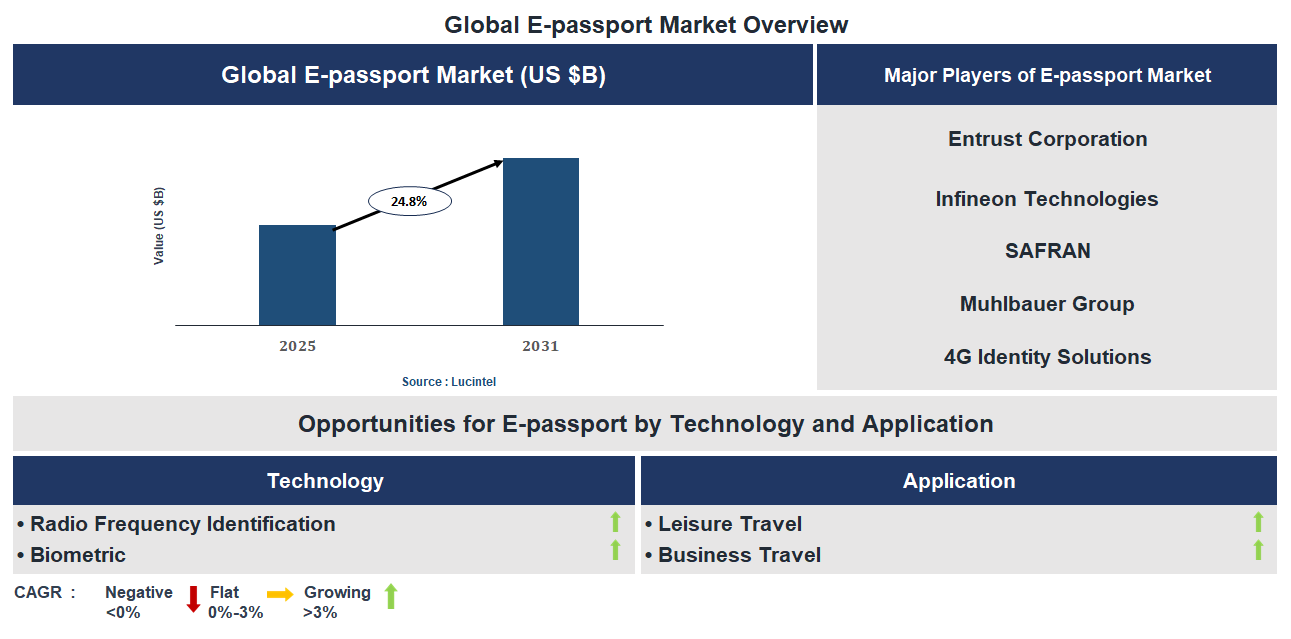
Key data points: The growth forecast = 24.8% annually for the next 7 years. Scroll below to get more insights. This market report covers trends, opportunities and forecasts in e-passport market to 2031 by technology (radio frequency identification and biometric), application (leisure travel and business travel), and region (North America, Europe, Asia Pacific, and the Rest of the World)
We'll send your sample report shortly.
• Lucintel forecasts that, within the technology category, radio frequency identification is expected to witness higher growth over the forecast period.
• Within the application category, business travel is expected to witness higher growth.
• In terms of region, APAC is expected to witness the highest growth over the forecast period. Gain valuable insights for your business decisions with our comprehensive 150+ page report. Sample figures with some insights are shown below.
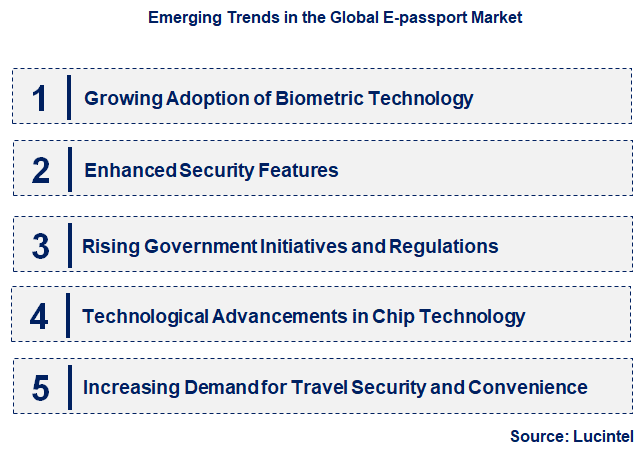
• Growing Adoption of Biometric Technology: Biometric data such as fingerprints and facial recognition are increasingly embedded in e-passports, significantly enhancing security and reducing identity fraud. This trend improves border control efficiency and traveler verification accuracy, making travel safer and more streamlined. Governments are investing heavily in biometric infrastructure, which is expected to drive market growth and set new standards for identity verification worldwide.
• Enhanced Security Features: Advanced encryption and anti-counterfeiting measures are being integrated into e-passports to prevent forgery and tampering. These security features protect sensitive personal data and ensure the integrity of travel documents. As cyber threats evolve, continuous innovation in security technology is crucial, influencing market dynamics and increasing demand for highly secure passports.
• Rising Government Initiatives and Regulations: Governments are increasingly mandating e-passports for international travelers to improve security and facilitate border management. Regulatory frameworks are evolving to standardize biometric data collection and data sharing across borders. These policies boost market growth by encouraging adoption and fostering international cooperation, while also creating compliance challenges for manufacturers.
• Technological Advancements in Chip Technology: The development of more sophisticated, durable, and energy-efficient chip technology is enabling better data storage and faster processing. These innovations improve user experience and reduce costs for issuing authorities. As chip technology advances, e-passports become more reliable and versatile, expanding their application scope and market penetration.
• Increasing Demand for Travel Security and Convenience: Travelers and governments prioritize secure, quick, and hassle-free border crossings. E-passports offer a seamless experience with faster processing times and enhanced security, meeting the needs of modern travelers. This demand is driving market expansion, encouraging innovation, and fostering global adoption of electronic travel documents. In summary, these trends are fundamentally reshaping the e-passport market by emphasizing security, technological innovation, and regulatory support. They are fostering a more secure, efficient, and user-friendly travel environment, which benefits governments, travelers, and industry stakeholders. As these developments continue, the market is poised for sustained growth and increased global integration.
• Adoption of biometric technology: The integration of fingerprint, facial recognition, and iris scans in e-passports has enhanced security and reduced identity fraud, leading to increased trust and adoption by governments worldwide.
• Regulatory enhancements and standards: International organizations like ICAO have established standards for e-passports, prompting countries to update their systems to comply, which accelerates market growth and interoperability.
• Rising government investments: Governments are investing heavily in e-passport infrastructure and technology to improve border security and streamline immigration processes, boosting market expansion.
• Technological innovations: Advances in chip technology, data encryption, and contactless interfaces have improved passport durability, security, and user convenience, fostering market competitiveness.
• Increasing global travel and security concerns: The surge in international travel and heightened security threats have driven demand for more secure, reliable identification methods, propelling the e-passport market forward. These developments collectively are transforming the E-passport market by enhancing security, efficiency, and user experience. They are fostering greater adoption across nations, encouraging technological innovation, and supporting global travel and security initiatives, ultimately leading to a more integrated and secure international travel environment.
• Border Security Enhancement: The integration of biometric data in e-passports significantly improves border security by enabling quick and accurate identity verification, reducing fraud, and preventing illegal crossings. This development enhances national security and facilitates smoother border crossings, encouraging governments to adopt advanced e-passport solutions.
• Tourism Industry Growth: E-passports streamline the travel process, reducing wait times and improving traveler experience. This convenience encourages more international travel, boosting tourism sectors globally. The ease of secure travel documentation attracts tourists and supports economic growth in popular destinations.
• International Business Travel: The adoption of e-passports facilitates faster and more secure business travel by enabling seamless border crossings. This efficiency benefits multinational companies and frequent travelers, fostering global commerce and strengthening international business relationships.
• Immigration and Visa Processing: E-passports enable faster and more accurate visa issuance and processing through digital verification systems. This reduces administrative burdens, shortens processing times, and enhances overall immigration management, making countries more attractive to travelers and investors.
• Digital Security and Data Management: The use of embedded chips in e-passports enhances data security through encryption and biometric authentication. This reduces identity theft and fraud risks, ensuring the integrity of travel documents and building trust among users and authorities. In summary, these growth opportunities are transforming the e-passport market by improving security, efficiency, and traveler experience. They are driving increased adoption across borders, boosting tourism, facilitating international business, and strengthening global security measures. As these applications evolve, the market is poised for sustained expansion, reflecting the increasing importance of secure, digital travel documentation worldwide.
• Technological Advancements: The rapid development of biometric authentication and secure digital storage solutions has significantly enhanced the security and efficiency of e-passports. These innovations facilitate faster processing at borders, reduce fraud, and improve traveler convenience. Governments worldwide are adopting these technologies to meet international security standards, which accelerates market growth. Continuous improvements in chip technology and encryption methods further bolster confidence in e-passports, making them a preferred choice over traditional passports.
• Increasing International Travel and Tourism: The global rise in travel and tourism has created a substantial demand for secure and efficient identification documents. E-passports streamline border control processes, reduce wait times, and enhance security, making them attractive to travelers and governments alike. Emerging economies with expanding tourism sectors are adopting e-passports to support their growth. This surge in international mobility directly correlates with increased market demand, encouraging governments to upgrade their passport systems to meet traveler expectations and security requirements.
• Government Initiatives and Regulatory Support: Governments worldwide are actively promoting the adoption of e-passports through policies and regulations aligned with international standards set by organizations like ICAO. Funding and strategic initiatives aimed at digital transformation in border security are accelerating market penetration. Regulatory frameworks ensure interoperability and data security, fostering trust among users and authorities. These initiatives also facilitate cross-border recognition of e-passports, further boosting their adoption and market expansion.
• Rising Security Concerns and Fraud Prevention: The increasing prevalence of identity theft, document forgery, and terrorism threats has heightened the need for secure identification methods. E-passports incorporate biometric data and advanced encryption, significantly reducing the risk of fraud. Governments are prioritizing security enhancements to protect citizens and maintain international travel integrity. This focus on security features drives technological innovation and adoption, positioning e-passports as a vital tool in modern border management and identity verification systems.
• Technological Integration and Digital Infrastructure Development: The integration of e-passports with broader digital infrastructure, such as biometric databases and border management systems, enhances operational efficiency. Investments in digital infrastructure by governments facilitate seamless data sharing and real-time verification. This integration supports the development of automated border control systems, reducing manual intervention and processing times. As countries upgrade their digital capabilities, the market for e-passports expands, driven by the need for interconnected, secure, and efficient border security solutions. The challenges facing E-passport market include:-
• Data Security and Privacy Concerns: The widespread use of biometric and personal data in e-passports raises significant security and privacy issues. Cyberattacks, data breaches, and unauthorized access threaten the integrity of sensitive information, undermining user trust. Governments and organizations must invest heavily in robust cybersecurity measures, which can be costly and complex. Ensuring compliance with data protection regulations adds further complexity, potentially slowing adoption and increasing operational risks within the market.
• High Implementation and Maintenance Costs: Developing, deploying, and maintaining e-passport systems require substantial financial investment. Costs include hardware, software, staff training, and ongoing system updates to address emerging security threats. For many governments, especially in developing regions, these expenses pose significant barriers. Budget constraints can delay or limit the adoption of e-passport technology, hindering market growth and creating disparities between regions.
• Regulatory and Standardization Challenges: The lack of uniform international standards and regulatory frameworks complicates the deployment of e-passports across borders. Variations in security protocols, data sharing agreements, and legal requirements can lead to interoperability issues. This fragmentation hampers seamless cross-border travel and can deter countries from adopting e-passports. Harmonizing standards and establishing clear regulations are essential but challenging tasks that impact the market’s expansion and global acceptance. In summary, the E-passport market is driven by technological innovations, increasing global travel, supportive government policies, and heightened security needs. However, challenges such as data security risks, high costs, and regulatory inconsistencies pose significant hurdles. These factors collectively influence the pace and scope of market growth. While technological and regulatory advancements promise substantial opportunities, addressing security concerns and cost barriers is crucial for sustainable expansion. Overall, the market’s future depends on balancing innovation with robust security and standardization efforts to foster trust and widespread adoption.
• Entrust Corporation
• Infineon Technologies
• SAFRAN
• Muhlbauer Group
• 4G Identity Solutions
• Thales Group
• Eastcompeace Technology
• CARDLOGIX CORPORATION
• HID Global Corporation
• 3M
• Radio Frequency Identification
• Biometric
• Leisure Travel
• Business Travel
• North America
• Europe
• Asia Pacific
• The Rest of the World
• United States: The US has upgraded its e-passport system with advanced biometric features, including facial recognition and fingerprint data, to enhance security. The Department of Homeland Security continues to modernize border control processes, and there is a focus on integrating e-passports with other digital identity systems to facilitate smoother travel experiences. The US also emphasizes data privacy and cybersecurity measures to protect travelers information.
• China: China has rapidly expanded its e-passport program, incorporating biometric chips and facial recognition technology. The government has streamlined application processes and increased the issuance of biometric passports to support international travel and security. China is also investing in national biometric databases to improve identity verification and border control efficiency.
• Germany: Germany has been proactive in updating its e-passport technology, including the integration of contactless chip technology and biometric data. The country emphasizes compliance with EU regulations and standards for data security and privacy. Germany is also exploring the use of e-passports to facilitate digital travel documents and enhance cross-border cooperation within the Schengen Area.
• India: India has made significant strides in deploying biometric e-passports with embedded chips containing facial and fingerprint data. The government aims to improve travel security and reduce document forgery. Initiatives include digitizing passport issuance processes and integrating e-passports with other national ID systems like Aadhaar to streamline verification and reduce processing times.
• Japan: Japan has adopted advanced biometric e-passports with contactless chips and facial recognition features. The country focuses on enhancing border security and facilitating international travel, especially with its participation in global standards for e-passport technology. Japan is also exploring the use of e-passports for secure access to government services and international events.


• Entrust Corporation
• Infineon Technologies
• SAFRAN
• Muhlbauer Group
• 4G Identity Solutions
• Thales Group
• Eastcompeace Technology
• CARDLOGIX CORPORATION
• HID Global Corporation
• 3M Q5. Which e-passport market segment will be the largest in future? Answer: Lucintel forecasts that, within the technology category, radio frequency identification is expected to witness higher growth over the forecast period. Q6. In e-passport market, which region is expected to be the largest in next 5 years? Answer: In terms of region, APAC is expected to witness the highest growth over the forecast period. Q7. Do we receive customization in this report? Answer: Yes, Lucintel provides 10% customization without any additional cost.


Choose a license that fits your team. Instant PDF delivery.
Prices exclude taxes. Instant delivery. Custom licensing available on request.
Market Report · July 31, 2026
Market Report · July 31, 2026
Market Report · July 31, 2026
Trusted partner for strategic intelligence and business growth


Receive a complimentary market analysis tailored to your industry. Our analysts will identify key growth opportunities and competitive dynamics specific to your business.

Market size, growth rate, and key trend analysis for your specific sector.

Top competitor positioning and market share analysis.

Strategic recommendations backed by data-driven insights.
Get curated market intelligence and competitive moves straight to your inbox.
By subscribing, you agree to receive our monthly insights. Unsubscribe anytime.
Receive a complimentary market analysis tailored to your industry. Our analysts will identify key growth opportunities and competitive dynamics specific to your business.
Market size, growth rate, and key trend analysis for your specific sector.
Top competitor positioning and market share analysis.
Strategic recommendations backed by data-driven insights.
Get curated market intelligence, emerging trends, and competitive moves straight to your inbox each month.
By subscribing, you agree to receive our monthly insights. Unsubscribe anytime.
We'll send your sample report shortly.