
Report Feature
Duty-Free Liquor Market Trends and Forecast
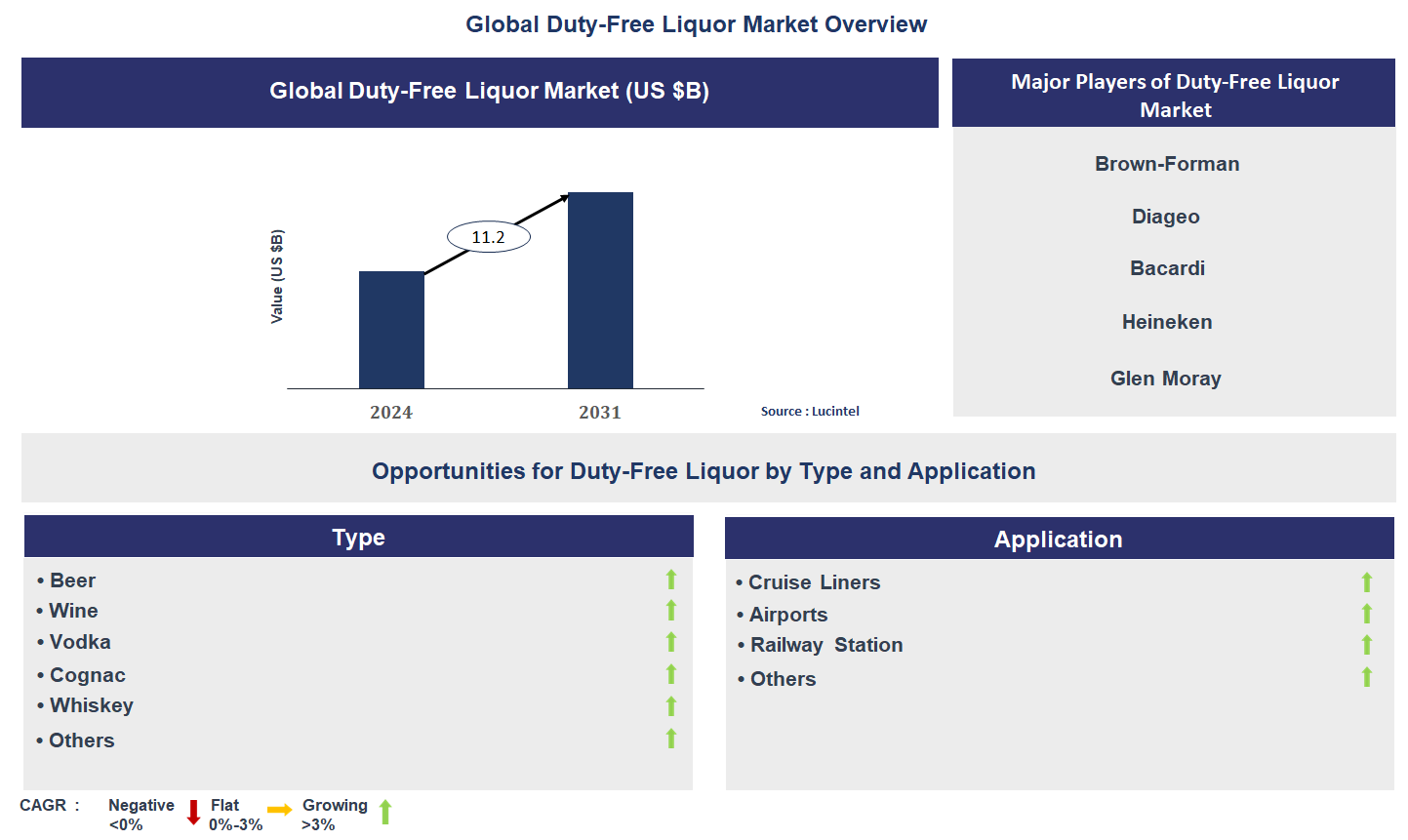
The future of the global duty-free liquor market looks promising with opportunities in the cruise liner, airport, and railway station markets. The global duty-free liquor market is expected to grow with a CAGR of 11.2% from 2025 to 2031. The major drivers for this market are the increasing demand for luxury beverages, the rising number of international travelers, and the growing preference for premium liquor options.• Lucintel forecasts that, within the type category, whiskey is expected to witness the highest growth over the forecast period.
• Within the application category, airport is expected to witness the highest growth.
• In terms of region, APAC is expected to witness the highest growth over the forecast period. Gain valuable insights for your business decisions with our comprehensive 150+ page report. Sample figures with some insights are shown below.
Emerging Trends in the Duty-Free Liquor Market
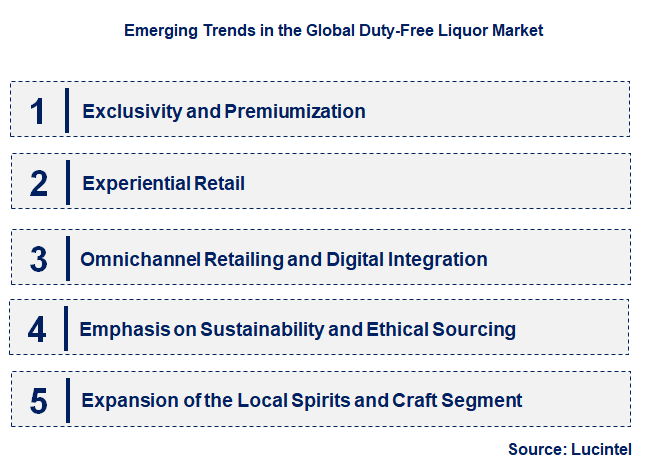
The duty-free liquor market is undergoing explosive transformation, and a number of key trends are molding its future. These trends indicate a return to core values of experience, personalization, and brand storytelling among consumers. The sector is shifting away from mere transactions to provide products that not only serve a purpose but are also attuned to a consumer’s lifestyle and identity. Increasing popularity of travel retail as a destination and emergence of a more sophisticated consumer are the main drivers behind these trends.• Exclusivity and Premiumization: One of the key trends is consumer desire for premium and travel-exclusive brands. This encompasses limited releases, special gift packs, and premium spirits that are not found in domestic markets. The effect is the redevelopment of a basic discount channel into one for luxury and specialty merchandise. This trend is compelling brands to provide innovative and collectible products, which adds value to the product to the consumer and invites impulse purchase behavior.
• Experiential Retail: The industry is witnessing a new trend where duty free areas are being converted into experiential retail destinations. This encompasses in-store tasting, pop-up stores for the brand, and interactive exhibitions that help customers experience the product before they buy. The effect is a transition from a transactional to a memorable experience that increases brand loyalty and stimulates enhanced spending.
• Omnichannel Retailing and Digital Integration: The increasing consumer behavior of doing online research and shopping through digital channels before traveling is the key driver. Examples include pre-booking through e-commerce platforms and "click and collect" options. The effect is the establishment of a seamless shopping experience that unifies offline and online platforms. Such digital integration enables brands to target more customers and enable personalized recommendations and promotions.
• Emphasis on Sustainability and Ethical Sourcing: With an increasing international focus on sustainability, there is an increase in eco-friendly packaging and sourcing of ingredients in duty free liquor. Companies are experimenting with the use of recycled materials and highlighting their sustainable production processes. The result is a new and profitable market niche that resonates with green-conscious tourists. Brands that practice these methods are gaining a competitive edge.
• Expansion of the Local Spirits and Craft Segment: One of the major trends is the demand for craft spirits and local brands. Visitors are looking to buy something unique to their destination as a reminder of their visit. The effect is a more segmented product portfolio in duty free outlets, which are now presenting a greater assortment of craft gins, local whiskeys, and small batches. This trend is opening up opportunities for smaller regional producers to access the world market. Together, these trends are collectively transforming the duty free spirits sector to become more consumer-friendly, technology-driven, and eco-friendly. Premiumization and experience as a focus are elevating the user experience, while digital integration and sustainability as a focus are building a more mature, sophisticated market. In the end, these trends are evolving the market from a mere utility to a contemporary, lifestyle-engaged product representing a consumer’s values and aspirations.
Recent Development in the Duty-Free Liquor Market
The duty-free liquor industry has seen some recent important developments that are essentially changing its operational and strategic environment. They are prompted by a coming together of technological advancement, changing shopper behavior, and an increased focus on the overall consumer experience. The sector is reacting to the demand for improved methods of distribution, new uses for liquor sales, and an integrated approach to travel retail.• Growth of Online and E-commerce Platforms: One of the most remarkable advances is the fast growth of e-commerce platforms and direct-to-consumer sales mode in the duty-free industry. Online shopping websites enable customers to shop and buy products prior to their flight, and pick them up at the airport. This development is affecting the market by opening up products to a world market and lowering the entry hurdles for new brands. It also allows brands to provide customization and personalization services to the end consumer.
• Rollout of Travel-Exclusive and Limited-Edition Products: One of the major developments is the ongoing rollout of travel-exclusive and limited-edition spirit products. These products are created solely for the duty-free sector and are not stocked in domestic retail channels. The result is a more attractive product that generates a perception of exclusivity and scarcity for the consumer. This trend is leading to innovation in the design of products and packaging and to impulse buying.
• Expansion in the Corporate Gifting and B2B Segment: The trend of business travel and corporate gifting has introduced a new and active consumer segment that is actively looking for premium and distinct gifts, including premium spirits. The result is a large new revenue opportunity and an active customer base. This has also motivated brands to create products that not only have a decorative aspect but are also appropriate as a corporate gift, for example, those with unique packaging.
• Brand Alliances and Strategic Partnerships: The duty free spirits sector has witnessed an increase in brand and travel retail operator strategic partnerships and alliances. This involves collaborations with airlines, airports, and cruise lines to develop special product ranges or promotion campaigns. The effect is a strong network effect that propagates the brand and its offerings to a very targeted market.
• Experiential Retail and In-Store Activations: As retail establishments aim to make the shopping experience more engaging, one recent trend is the greater emphasis on experiential retail and in-store activations. These consist of product sampling, brand activations, and temporary retail. The effect is increased link between the consumer and the brand that can result in increased sales and an enhanced shopping experience that is remembered. These innovations are all cumulatively influencing the duty free liquor industry by creating a more innovative, consumer-focused, and progressive industry. They are not just enhancing the quality of the products but also making them an increasingly intrinsic aspect of a contemporary travel experience. By adopting these innovations, the industry is securing its future growth and pertinence in a world that is increasingly focused on personalization, exclusivity, and visual attractiveness.
Strategic Growth Opportunities in the Duty-Free Liquor Market
The duty-free liquor market offers various strategic growth opportunities through key applications due to changing consumer needs, developments in technology, and the growth of the travel and tourism sectors. These opportunities are allowing market players to diversify product portfolios, target new consumer groups, and establish themselves in a competitive environment. By concentrating efforts in these high-growth categories, companies can capitalize on the inherent value of duty free liquor as a high-demand, premium, and necessary product.• Growth into Cruise Line and Seaport Channels: One significant growth opportunity is in the cruise line and seaport retail channels. The plan is to expand the number of duty free liquor shops and onboard sales on cruise lines and primary seaports. The effect is a stable, high-volume revenue source that is less sensitive to seasonal air travel patterns. This market also offers a strong platform for brand visibility, as onboard sales are an ongoing advertisement to a captive pool of travelers.
• Niche and Craft Spirits Diversification: The business can expand by serving specific niche consumer groups. The approach is to increase the product portfolio to encompass a broader variety of craft spirits, local artisanal brands, and non-alcoholic beverages. The effect is a more diversified product lineup that can cover a larger market share. This strategy enables brands to become a niche provider in an oversaturated market, servicing each segment’s distinctive needs and tastes and targeting a more experienced consumer base.
• Strategic Partnerships with Airlines and Frequent Flyer Programs: An important growth opportunity is in creating partnerships with flagship airlines and their frequent flyer programs. The idea is to provide special offers and promotions to regular flyers and enable them to use loyalty points for duty free shopping. The effect is a potent network effect that enhances the brand and products to a highly focused consumer base.
• Target the High-Growth Asia-Pacific Market: The Asia-Pacific market, especially China and India, is a huge growth opportunity. The plan is to localize products and promotional activities to local tastes and distribution channels in these markets. The effect is access to a fast-growing consumer base with increasing disposable incomes and an interest in Western-style spirits. This regional emphasis needs to have local trends, including demand for low-cost and multi-purpose products, in order to establish a good presence.
• Establishing a Strong E-commerce and Personalization Platform: The trend towards online shopping is a key growth potential. The approach is to create a solid e-commerce platform that offers an extensive variety of products, extensive product information, and an integrated buying process. The effect is a leaner distribution system with less overhead and room for more direct customer relationship. This also provides an opportunity for the company to provide customization and personalized service, e.g., engraving on the bottle, which can further foster brand loyalty. These strategic opportunities for growth are collectively transforming the duty free liquor industry to create a more dynamic, diversified, and consumer-focused industry. They are allowing companies to break away from the conventional retail and to realize new, high-growth uses, such as on cruise lines and in corporate gifting. By concentrating on these opportunities, industry players are not only guaranteeing the long-term sustainability of their businesses but are also projecting themselves as innovators in a fast-evolving global environment.
Duty-Free Liquor Market Driver and Challenges
The duty-free liquor market is driven by a multifaceted combination of drivers that stimulate its growth and challenges that may hinder its advancement. The main drivers lie mainly in the post-pandemic global travel recovery, growing demand for premium and luxury brands, and the growing disposable income in emerging markets. On the contrary, the key problems usually have to do with a high level of competition within the market, varying government policies on imports and baggage, and the uncertainties of the tourism and travel industry. Understanding these dynamics in an extensive manner is key to analyzing the market in any way. The factors responsible for driving the duty-free liquor market include: 1. Global Travel Post-Pandemic Recovery: The duty free liquor market’s main driver is international air travel and tourism’s robust post-pandemic recovery. As more people travel by air, so does the captive shopper for duty free stores in airports and other transport terminals. The effect is a structural rebound in sales and a long-term demand for duty free items. This driver is buoyed by a build-up of consumers’ aspiration to travel and explore new places. 2. Increasing Demand for Premium and Luxury Spirits: Market demand is fueled by a growing worldwide consumer base looking for premium and luxury spirits. International tourists are likely to make an aspirational buy or purchase a high-end product in a duty-free shop, where they can save tax. The effect is a drastic rise in the size of the average transaction and a movement of the market towards higher-end merchandise. The driver has also motivated brands to create prestige products. 3. Disposable Income Growth: Growth in disposable incomes in emerging economies is a key driver. As discretionary income rises, consumers are more likely to spend on non-essential goods such as premium alcoholic drinks. The effect is an expansion of the market beyond the traditional wealthy markets into a wider, global consumer pool. This driver also fuels the premiumization of the market, where consumers are willing to pay for high-quality, branded goods. 4. Development of E-commerce and Omnichannel Retailing: The industry is fueled by the increasing trend of e-commerce and omnichannel retailing. Travelers are now in a position to shop and buy online prior to their travel and collect the same at the airport, which enhances the shopping experience. The result is an increased value proposition for the product, which leads to consumer buying. This driver has resulted in the construction of smooth digital platforms that improve the general customer experience. 5. Experiential Retail Shift: The trend towards experiential retail is driving the market. More immersive and interactive shopping experiences, such as tastings and interactive displays, are being developed by duty free retailers. The effect is increased brand loyalty and a stronger chance of an impulse buy. This driver has made duty free areas a more attractive destination for travelers. Challenges in the duty-free liquor market are: 1. High Market Competition: The duty free alcohol business is very competitive with a high number of both foreign and local participants. Such high competition may hinder entry by new brands and incumbent brands’ ability to retain market share. This problem results in price wars, decreased profit margins, and a necessity for continuous innovation and differentiation to be noticed in a busy market. 2. Strict Rules and Baggage Limitations: The market is controlled by numerous regional and national rules about how much liquor can be imported and brought into baggage. These can put limits on the quantity of purchases, particularly for customers with connecting flights. This issue can lower the average transaction value and can be a major disincentive to consumers who want to buy multiple bottles. 3. Travel and Tourism Industry Volatility: The duty free liquor business is greatly reliant on the stability of the travel and tourism sector, which is vulnerable to geopolitical incidents, economic recessions, and global pandemics. Any adjustment in international travel can have a direct and harsh effect on market sales. This challenge demands that the players of the market be nimble and expand their retail channels to avoid risk. The combined effect of these drivers and challenges is a market in dynamic transformation. The drivers, particularly the revival in travel and premium product demand, are driving the market towards a more consumer and diversified future. Nevertheless, the challenges, especially competition and regulatory barriers, necessitate the industry to be strategic and proactive. The market is becoming more concentrated on a balanced strategy that aims to maximize profitability while reducing risks and responding to consumer issues of practicability and longevity.List of Duty-Free Liquor Companies
Companies in the market compete on the basis of product quality offered. Major players in this market focus on expanding their manufacturing facilities, R&D investments, infrastructural development, and leverage integration opportunities across the value chain. With these strategies duty-free liquor companies cater increasing demand, ensure competitive effectiveness, develop innovative products & technologies, reduce production costs, and expand their customer base. Some of the duty-free liquor companies profiled in this report include-• Brown-Forman
• Diageo
• Bacardi
• Heineken
• Glen Moray
• Accolade Wines
• Constellation Brands
Duty-Free Liquor Market by Segment
The study includes a forecast for the global duty-free liquor market by type, application, and region.Duty-Free Liquor Market by Type [Value from 2019 to 2031]:
• Beer
• Wine
• Vodka
• Cognac
• Whiskey
• Others
Duty-Free Liquor Market by Application [Value from 2019 to 2031]:
• Cruise Liners
• Airports
• Railway Station
• Others
Duty-Free Liquor Market by Region [Value from 2019 to 2031]:
• North America
• Europe
• Asia Pacific
• The Rest of the World
Country Wise Outlook for the Duty-Free Liquor Market
The duty-free liquor market is going through a major revolution, leaving its historic positioning as just a discount channel behind and evolving into a central component of the travel experience. It is being fueled by the post-pandemic recovery of international travel, evolving consumer desires for luxury and premium products, and the incorporation of digital technology into the shopping experience. People are no longer only looking for a value; they are seeking an experience, a sense of location, and products that cannot be found in their domestic markets.• United States: The US market is a global leader both in consumer trends and in product diversity. The most recent trends feature a high emphasis on premiumization and travel-exclusive offerings, as consumers are generally looking for unique and high-quality spirits. Brands are creating limited-series releases and bespoke packaging to resonate with travelers. The market is experiencing increased digital engagement, with the majority of duty free operators now providing online pre-ordering and "click and collect" to create a better customer experience.
• China: China’s duty free liquor sector is growing extremely fast, as a rising middle class and increasing demand for Western-style spirits, such as whiskey and gin, drive the market. Recent trends revolve around the development of offshore duty free areas, such as those found in Hainan Island, that serve as a primary shopping hub for local tourists. The market also is experiencing a firm drive towards digital innovation, with retailers employing e-commerce platforms and social media as channels to consumers.
• Germany: In Germany, the duty free spirits industry is defined by a high drive for brand loyalty and popularity for high-profile, high-quality spirit brands. Current trends are powered by a highly embedded travel culture and the need for products that are not just tax free but also of high reputation for quality. The market is witnessing a trend towards sustainability, with companies launching environmentally friendly packaging and production techniques to attract the sustainable German consumer.
• India: India’s duty-free liquor business is a high-growth market, driven by a fast-expanding outbound travel market and a growing consumer interest in international and premium liquor brands. The recent trends are characterized by a shift from customary purchases to more experiential buying behavior, with several Indian travelers ready to try out new and niche products. The market is witnessing an increase in the use of in-store experiences, including tastings and brand activities, that are aimed at educating and involving the consumer.
• Japan: Japan’s duty-free spirit market has a reputation for a mix of upscale, premium products and an emphasis on differentiated, localized products. Recent trends are centered around a seamless and elegant retail experience, with numerous airports and retailers providing a carefully curated assortment of international and domestic brands. The market is also witnessing increased interest in Japanese craft spirits, like whiskey and sake, which are being marketed more and more as high-end, upscale products for Japanese as well as international visitors.

Features of the Global Duty-Free Liquor Market
Market Size Estimates: Duty-free liquor market size estimation in terms of value ($B). Trend and Forecast Analysis: Market trends (2019 to 2024) and forecast (2025 to 2031) by various segments and regions. Segmentation Analysis: Duty-free liquor market size by type, application, and region in terms of value ($B). Regional Analysis: Duty-free liquor market breakdown by North America, Europe, Asia Pacific, and Rest of the World. Growth Opportunities: Analysis of growth opportunities in different types, applications, and regions for the duty-free liquor market. Strategic Analysis: This includes M&A, new product development, and competitive landscape of the duty-free liquor market. Analysis of competitive intensity of the industry based on Porter’s Five Forces model.
FAQ
Q1. What is the growth forecast for duty-free liquor market? Answer: The global duty-free liquor market is expected to grow with a CAGR of 11.2% from 2025 to 2031. Q2. What are the major drivers influencing the growth of the duty-free liquor market? Answer: The major drivers for this market are the increasing demand for luxury beverages, the rising number of international travelers, and the growing preference for premium liquor options. Q3. What are the major segments for duty-free liquor market? Answer: The future of the duty-free liquor market looks promising with opportunities in the cruise liner, airport, and railway station markets. Q4. Who are the key duty-free liquor market companies? Answer: Some of the key duty-free liquor companies are as follows:• Brown-Forman
• Diageo
• Bacardi
• Heineken
• Glen Moray
• Accolade Wines
• Constellation Brands Q5. Which duty-free liquor market segment will be the largest in future? Answer: Lucintel forecasts that, within the type category, whiskey is expected to witness the highest growth over the forecast period. Q6. In duty-free liquor market, which region is expected to be the largest in next 5 years? Answer: In terms of region, APAC is expected to witness the highest growth over the forecast period. Q7. Do we receive customization in this report? Answer: Yes, Lucintel provides 10% customization without any additional cost.
Table of Contents
List of Figures
List of Tables
Methodology
- In-depth interviews of the major players in this market
- Detailed secondary research from competitors’ financial statements and published data
- Extensive searches of published works, market, and database information pertaining to industry news, company press releases, and customer intentions
- A compilation of the experiences, judgments, and insights of Lucintel’s professionals, who have analyzed and tracked this market over the years.


Buy Now
Choose a license that fits your team. Instant PDF delivery.
Prices exclude taxes. Instant delivery. Custom licensing available on request.
Key Questions
- • What are some of the most promising, high-growth opportunities for the duty-free liquor market by type (beer, wine, vodka, cognac, whiskey, and others), application (cruise liners, airports, railway station, and others), and region (North America, Europe, Asia Pacific, and the Rest of the World)?
- • Which segments will grow at a faster pace and why?
- • Which region will grow at a faster pace and why?
- • What are the key factors affecting market dynamics? What are the key challenges and business risks in this market?
- • What are the business risks and competitive threats in this market?
- • What are the emerging trends in this market and the reasons behind them?
- • What are some of the changing demands of customers in the market?
- • What are the new developments in the market? Which companies are leading these developments?
- • Who are the major players in this market? What strategic initiatives are key players pursuing for business growth?
- • What are some of the competing products in this market and how big of a threat do they pose for loss of market share by material or product substitution?
- • What M&A activity has occurred in the last 5 years and what has its impact been on the industry? For any questions related to Duty-Free Liquor Market, Duty-Free Liquor Market Size, Duty-Free Liquor Market Growth, Duty-Free Liquor Market Analysis, Duty-Free Liquor Market Report, Duty-Free Liquor Market Share, Duty-Free Liquor Market Trends, Duty-Free Liquor Market Forecast, Duty-Free Liquor Companies, write Lucintel analyst at email: helpdesk@lucintel.com. We will be glad to get back to you soon.


