
Market Report · July 16, 2026

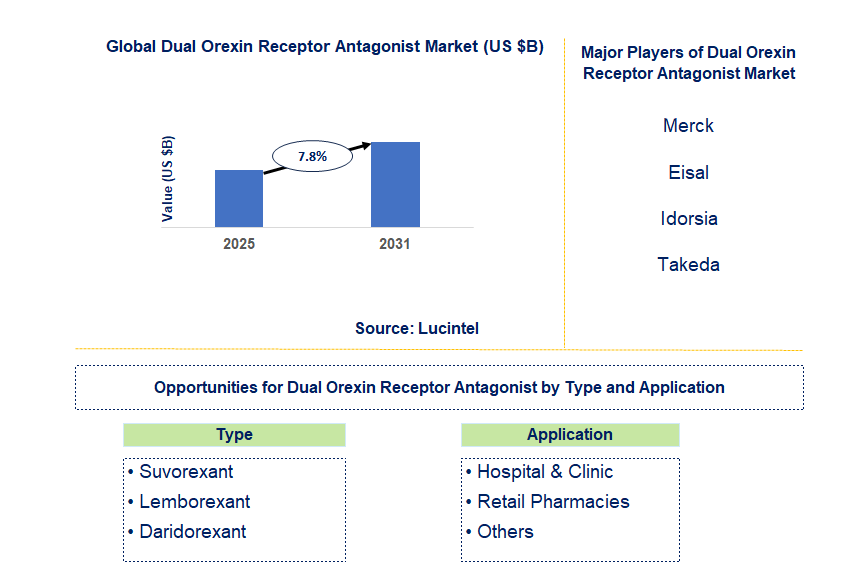
Key data points: The growth forecast = 7.8% annually for the next 7 years. Scroll below to get more insights. This market report covers Trends, opportunities and forecasts in dual orexin receptor antagonist market to 2031 by type (suvorexant, lemborexant, and daridorexant), application (hospital & clinic, retail pharmacies, and others), and region (North America, Europe, Asia Pacific, and the Rest of the World)
We'll send your sample report shortly.
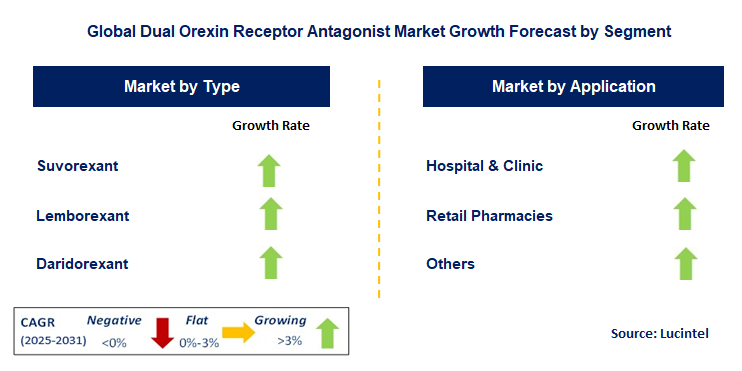
• Lucintel forecasts that, within the type category, daridorexant is expected to witness the highest growth over the forecast period.
• Within the application category, hospital & clinic is expected to witness higher growth.
• In terms of region, North America is expected to witness the highest growth over the forecast period.
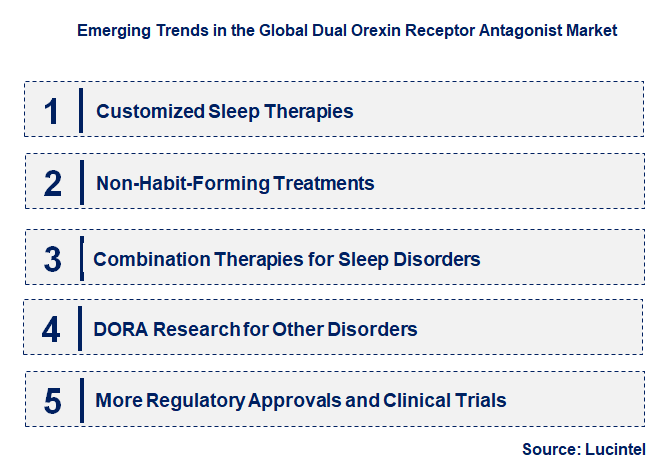
• Customized Sleep Therapies: A trend in DORA's direction is seen to move toward customized sleep therapies. With growing advancements in research, more medicines are being made personalized to fit patients' requirements specifically, considering their genetic structure, sleep behaviors, and predisposition to various medical conditions. This trend is making it possible to have more efficient and personalized treatments that address the underlying causes of sleep disorders, making DORA-based medicines more effective and safer. Consequently, personalized therapies will be a major component of the DORA market, providing patient-specific solutions.
• Non-Habit-Forming Treatments: Rising demand for non-habit-forming sleep medications is creating a drive in the DORA market. Unlike sedatives and benzodiazepines, DORAs have no risk of dependence or withdrawal symptoms associated with them. This has rendered DORAs increasingly appealing to patients who desire long-term remedies for sleep disorders without the risk of addiction. As people become more aware of the risks associated with the use of conventional sleep medicines, demand for DORAs will increase, particularly in countries where there is high concern about dependency on medications.
• Combination Therapies for Sleep Disorders: There is increasing interest in combining dual orexin receptor antagonists with other drug classes to treat complicated sleep disorders, such as insomnia and narcolepsy. By combining DORAs with other therapeutic drugs, such as antidepressants or antipsychotics, scientists are hoping to enhance the overall effectiveness of treatments and treat multiple underlying conditions at once. This trend will lead to new opportunities for therapy in the DORA market and give patients with more severe health problems complete solutions.
• DORA Research for Other Disorders: Even though DORAs are utilized mostly for sleep disorders, a trend is observed towards exploring their therapeutic potential in other neurological diseases. Studies are in progress to discover how to use DORAs in the treatment of diseases such as anxiety, depression, and even Alzheimer's. Since DORAs can modulate orexin receptors, which are involved in wakefulness and arousal, they are a strong contender for a broader therapy. This trend could make the market for DORAs much larger and position them as multi-purpose drugs within the neurological arena.
• More Regulatory Approvals and Clinical Trials: As DORAs continue to show their efficacy in the treatment of sleep disorders, more clinical trials are being undertaken and regulatory agencies are approving more DORA drugs. The growing interest in bettering the quality of sleep and tackling the worldwide surge in sleep disorders is causing more pharmaceutical firms to invest in DORA-based therapy. This trend should result in an increase in treatment options, fueling further market growth as new products emerge and clinical data continue to accrue. The new trends in the dual orexin receptor antagonist market, including personalized sleep treatments, non-addictive treatments, and studies on combination treatments, are greatly transforming the industry landscape. These trends are indicative of a continued move towards more efficient, safer, and personalized treatments for sleep disorders, setting the DORA market up for future growth and innovation over the next few years.
• FDA Approval of Suvorexant: The US FDA approval of Suvorexant (Balsara) in 2014 was a major benchmark for the DORA market. As the inaugural drug of this category, Balsara is now one of the largest treatment options available to patients of insomnia. This endorsement has opened the door to additional development of DORAs and has highlighted further the effectiveness of orexin receptor antagonism in inducing sleep. The success of Balsara has encouraged further research into other promising DORA drugs, increasing the treatments available for insomnia and sleep disorders.
• Pipeline DORA Drugs in Development: A number of pharmaceutical firms are developing novel Dual Orexin Receptor Antagonists to meet the increasing demand for sleep medicines. The drugs are being tested in clinical trials to determine their safety and effectiveness in the treatment of diseases such as insomnia, narcolepsy, and other sleep-related disorders. With constant research aimed at enhancing the efficacy of DORAs and reducing side effects, these new drugs have the promise to make a significant impact on the market and offer more treatment alternatives for patients.
• DORA Availability Widening Globally: With increased countries approving DORA drugs, the global market for these drugs is widening. Suvorexant has already been licensed in some countries, and more DORA-based medications are likely to be licensed as clinical data continue to accumulate. This growth is assisting in meeting increasing global demand for safe and effective sleep medications. Greater availability of DORA medications will be expected to enhance market competitiveness and make for improved treatment for consumers globally.
• Emphasis on Non-Habit-Forming Therapies: As concerns about the dangers of conventional sedatives continue to grow, efforts are focused on creating non-habit-forming sleep aids. DORAs, which pose no risk of dependence like other sleeping medications, lead the charge. Patients and healthcare professionals alike are increasingly looking for safer long-term cures for insomnia and other sleep disorders, and recognizing this, demand for DORA-based therapies is increasing.
• Expanded Indications Research for DORAs: Research on the application of DORAs for indications other than sleep disorders is picking up speed. Investigations are looking into the possibility of these drugs being used to treat neurological and psychiatric diseases like anxiety, depression, and neurodegenerative conditions like Alzheimer's. If successful, these studies can drastically expand the therapeutic horizon for DORAs and result in new paradigms for the treatment of several diseases. This broadened application would fuel market expansion and innovation. The major advancements in the dual orexin receptor antagonist market, such as regulatory approval, new drug development, and expanded global access, are leading the way towards additional growth and innovation in treating sleep disorders. With more drugs coming to the market and further research into more indications, the DORA market is set for dramatic expansion, to the advantage of both patients and pharmaceutical firms.
• Growth in Emerging Markets: Emerging markets in Asia, Latin America, and Africa provide ample growth opportunities for the DORA market. With growing awareness of sleep disorders and increasing disposable incomes, demand for effective sleep aids is on the rise. Companies can customize their products to suit the particular requirements of these markets, increasing their reach through localized marketing channels and distribution networks.
• Expansion in Sleep Disorder Treatment: With the increasing incidence of sleep disorders such as insomnia, narcolepsy, and sleep apnea across the world, the market for dual orexin receptor antagonists is likely to grow. By targeting the enhancement of availability and affordability of DORA drugs for the treatment of sleep disorders, pharmaceutical companies can capitalize on this expanding market, particularly as more people look for non-habit-forming, effective treatments.
• Targeting Mental Health Disorders: Investigations into the potential application of DORAs in treating mental health disorders, including depression and anxiety, are creating new opportunities for market expansion. With the increasing demand for treatments that target both sleep disorders and psychiatric disorders, DORAs may provide a two-pronged approach to patient treatment. This potential makes DORAs central drugs for the treatment of sleep and mental health disorders.
• Emphasis on Personalized Medicine: Personalized medicine is taking center stage in the healthcare sector, and the DORA market is no different. By creating customized treatments that take into consideration patient-specific factors, including genetic factors and lifestyle, firms are able to maximize the safety and effectiveness of DORA-based medicines. This trend will propel market growth as patients are increasingly looking for customized treatment solutions that meet their specific needs.
• Combination Therapies with Wider Market Opportunities: Combination therapies of DORAs and other drug types, like antidepressants or antipsychotics, have considerable growth opportunities. These therapies have the goal to treat multiple basic conditions, for example, sleep disorders, anxiety, and depression, within one treatment protocol. Through the presentation of comprehensive remedies, combination therapies of DORAs have a wider market scope and can create new therapeutic avenues for complex diseased patients. Strategic opportunities for growth in the dual orexin receptor antagonist market, fueled by emerging markets, mental health uses, personalized medicine, and combination therapies, will dramatically reshape the market landscape. Companies that target these opportunities will be well-positioned to succeed in this dynamic and fast-growing market.
• Merck
• Eisal
• Idorsia
• Takeda
• Suvorexant
• Lemborexant
• Daridorexant
• Hospital & Clinic
• Retail Pharmacies
• Others
• North America
• Europe
• Asia Pacific
• The Rest of the World
• United States: In the United States, the market for dual orexin receptor antagonist has experienced considerable growth, especially with the regulatory approval of products such as Suvorexant (Balsara), the first DORA to be approved by the FDA for the treatment of insomnia. An increased need for effective treatments, fueled by the rising incidence of sleep disorders, has driven further interest in DORAs. U.S. market is marked by swift uptake of novel sleep aids, with continuous research aimed at enhancing the safety and effectiveness of the drugs. The regulatory environment is favorable, offering a clear line for further DORA drugs to come into the market.
• China: China is experiencing swift growth in the market for DORA as awareness about sleep disorders rises and more attention is being focused on mental health. The Chinese government has been investing in healthcare infrastructure, and increasing numbers of people are looking for treatments for insomnia and associated conditions. Although DORAs are relatively new to the market, consumers are increasingly interested in innovative sleep aids. Clinical trials and research are ongoing, and the market is likely to grow as the demand for safe and effective treatment for sleep disorders grows nationwide.
• Germany: Germany's DORA market is expanding steadily, with growing awareness of sleep disorders such as insomnia and narcolepsy. With the healthcare system providing significant support for mental health conditions, Germany has emerged as a leading market for the uptake of new treatments. Regulatory approvals for DORAs like Suvorexant and other upcoming drugs have improved treatment options for patients. Germany is targeting the betterment of sleeping quality and encouragement of safer alternatives to conventional sedatives. Having robust pharmaceutical corporations in Germany enhances ongoing research and development in this sector.
• India: In India, the DORA market remains nascent with very limited presence of orexin receptor-targeted drugs for sleeping disorders. Nonetheless, with the rising prevalence of insomnia and increased awareness of mental illness, there is a growing demand for successful treatments. The market is dominated by the embracement of Western medicine, yet there is a desire for cheaper drugs. Regulatory authorities in India are considering the approval of DORAs, and the market is expected to expand as knowledge of the advantages of DORA-based therapies spreads among the healthcare community and consumers.
• Japan: Japan has experienced strong growth in the DORA market, especially with the rising incidence of sleep disorders due to lifestyle and aging populations. Japanese pharmaceutical firms are at the forefront of creating DORA-based treatments, including the approval of Suvorexant. The need for safe and non-habit-forming sleep aids is increasing, and DORAs are a very promising treatment option. Japan's strong healthcare system and regulatory environment facilitate the ongoing development of this market. The emphasis is on providing effective treatments that ensure healthy sleep without the threat of dependence.


• Merck
• Eisal
• Idorsia
• Takeda Q5. Which dual orexin receptor antagonist market segment will be the largest in future? Answer: Lucintel forecasts that, within the type category, daridorexant is expected to witness the highest growth over the forecast period. Q6. In dual orexin receptor antagonist market, which region is expected to be the largest in next 5 years? Answer: In terms of region, North America is expected to witness the highest growth over the forecast period. Q7. Do we receive customization in this report? Answer: Yes, Lucintel provides 10% customization without any additional cost.


Choose a license that fits your team. Instant PDF delivery.
Prices exclude taxes. Instant delivery. Custom licensing available on request.
Market Report · July 16, 2026
Market Report · July 15, 2026
Market Report · July 15, 2026
Trusted partner for strategic intelligence and business growth


Receive a complimentary market analysis tailored to your industry. Our analysts will identify key growth opportunities and competitive dynamics specific to your business.

Market size, growth rate, and key trend analysis for your specific sector.

Top competitor positioning and market share analysis.

Strategic recommendations backed by data-driven insights.
Get curated market intelligence and competitive moves straight to your inbox.
By subscribing, you agree to receive our monthly insights. Unsubscribe anytime.
Receive a complimentary market analysis tailored to your industry. Our analysts will identify key growth opportunities and competitive dynamics specific to your business.
Market size, growth rate, and key trend analysis for your specific sector.
Top competitor positioning and market share analysis.
Strategic recommendations backed by data-driven insights.
Get curated market intelligence, emerging trends, and competitive moves straight to your inbox each month.
By subscribing, you agree to receive our monthly insights. Unsubscribe anytime.
We'll send your sample report shortly.