
Report Feature
Drugstore Chain Retail Solution Market Trends and Forecast
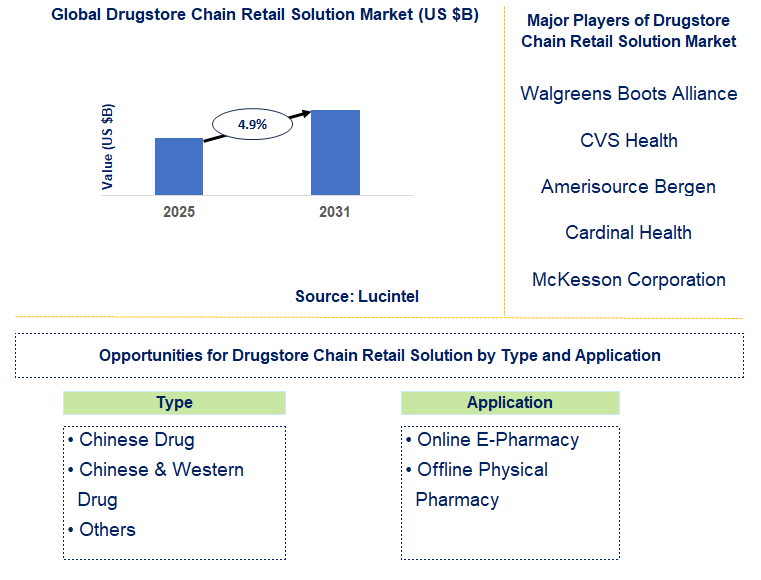
The future of the global drugstore chain retail solution market looks promising with opportunities in the online E-pharmacy and offline physical pharmacy markets. The global drugstore chain retail solution market is expected to grow with a CAGR of 4.9% from 2025 to 2031. The major drivers for this market are the increasing demand for convenience shopping, the rising adoption of digital solutions, and the growing preference for personalized healthcare services.• Lucintel forecasts that, within the type category, chinese & western drug is expected to witness higher growth over the forecast period.
• Within the application category, online E-pharmacy is expected to witness higher growth.
• In terms of region, APAC is expected to witness the highest growth over the forecast period. Gain valuable insights for your business decisions with our comprehensive 150+ page report. Sample figures with some insights are shown below.

Emerging Trends in the Drugstore Chain Retail Solution Market
The retail solution market for drugstore chains is undergoing a transformation at an unprecedented pace, fueled by technology advancements and shifting customer preferences. Such trends are taking the industry from the traditional transactional model of product selling to a service model built around patient care and convenience. The new focus is on delivering a frictionless experience to customers, whether they shop in a store or interact with an online platform. This transition is important for drugstore chains to remain competitive with e-commerce giants and to brand themselves as central components of the healthcare system.• Omnichannel Retailing and Digital Integration: Drugstore chains are becoming more and more omnichannel-friendly to bring a unified experience to the shopper. This means tying together physical stores with websites, mobile apps, and loyalty systems. Patients can now have prescriptions filled online and picked up in the store or delivered to their homes. This is essential to fulfilling shoppers' requirements for convenience and flexibility and enable chains to contend with online-only pharmacies and other e-commerce sites.
• Expansion into Health and Wellness Services: Drugstore chains are positioning themselves as neighborhood health centers, providing expanded services beyond filling prescriptions. These include on-site clinics for vaccinations, screenings, and minor procedures. By becoming MultiCare facilities, drugstores are offering a convenient and accessible service alternative to more traditional healthcare providers. This trend boosts customer loyalty and creates drugstores as an important first point of contact for many types of health issues.
• Sophisticated Technology for Increased Efficiency: Increased adoption of sophisticated technologies such as artificial intelligence, machine learning, and automation is emerging as a prominent trend. AI is utilized for predictive analytics to enhance inventory management and avoid stockouts. Automation, including robotic dispensing systems, enhances accuracy and allows pharmacists to dedicate more time to patient consultations. The effect of this trend is enhanced operational efficiency, cost reduction, and increased patient safety.
• Personalized Patient Engagement and Data Analytics: Drugstore chains are using data analytics to deliver personalized service and recommendations. Through the analysis of customer health and purchase history data, chains can offer customized health counsel, medication reminders, and relevant offers. This targeted approach builds stronger customer relationships and enhances patient compliance with their medication regimens. This trend enables drugstores to break away from a one-size-fits-all model to a more patient-focused model.
• Emphasis on Sustainability and Social Responsibility: As consumers become increasingly inclined to prefer socially responsible brands, drugstore chains are turning towards sustainability and corporate social responsibility. This involves adopting environmentally friendly practices within their operations, providing sustainable products, and undertaking community health efforts. This trend affects the market by enhancing brand reputation, establishing customer trust, and generating a more favorable public image of the sector. Overall, these emerging trends are reshaping the drugstore chain retail solution industry from a transactional business into a value-driven, service-based industry. The implementation of omnichannel tactics and cutting-edge technology is improving efficiency and convenience. The expansion into health services and application of personalized data analytics are making drugstores focal points for health. Through these evolutions, drugstore chain retailers are effectively evolving to meet new market conditions and establishing a more durable and patient-centered business model well-suited for ongoing expansion.

Recent Development in the Drugstore Chain Retail Solution Market
The market for drugstore chain retail solution is undergoing a phase of major development, fueled by demands to adjust to changing consumer trends and advances in technology. These developments target better management of operations, improving the experience of customers, and increasing the role played by drugstores in the health environment. Critical developments are aimed at combining digital and physical channels, using data to deliver personalized care, and automating processes to enhance efficiency. This evolution is enabling drugstore chains to stay competitive and current in an environment that is constantly being redefined by new technologies and market forces.• Integration of Telehealth Services: A major trend is the mass integration of telehealth services into drugstore platforms. Chains are collaborating with telehealth vendors to provide virtual consultations with physicians and pharmacists. This enables customers to get medical guidance and prescriptions without an in-person visit. This innovation greatly increases accessibility and convenience, positioning drugstores as prominent players in the expanding digital health market and drawing a new wave of tech-influenced consumers.
• Expansion of In-Store Medical Clinics: Drugstore retailers are expanding their in-store medical clinic services, which now offer more than flu shots and simple health tests. The clinics are now offering a wider array of primary care treatments, including the management of chronic diseases and wellness checkups. This evolution offers an affordable alternative for individuals who reside in communities with a lack of primary care doctors, driving more traffic to the stores and creating new revenue streams.
• Implementation of AI and Automation in Pharmacy Operations: Artificial intelligence and automation implementation is a major advancement for enhancing the efficiency of operations. AI is utilized to forecast demand and optimize inventory, while robotic dispensing systems are being used to dispense prescriptions faster and more accurately. This diminishes human error and enables the pharmacist to spend more time on consultation with patients. The effect is a leaner and safer pharmacy operation.
• Introduction of Sophisticated Mobile Applications: The drugstore chains are introducing sophisticated mobile applications that extend beyond mere prescription refills. These applications now include medication reminders, health tracking capabilities, and tailored wellness recommendations. They are also a platform for aggregated loyalty programs and tailored promotions. This evolution offers greater customer engagement and an integrated brand experience, whether a customer shops from their phone or in their store.
• Strategic Collaborations and Partnerships: Another recent trend is the growth in strategic collaborations and partnerships. Drugstore chains are getting into partnership with technology companies, health insurers, and other healthcare companies to provide end-to-end solutions. For instance, a collaboration with a health insurer can provide members with special discounts and services. Such collaborations add more value for customers and create more holistic healthcare ecosystems. These five trends are revolutionizing the drugstore chain retail solution space by revolutionizing the traditional retail model. The use of telehealth and in-store clinics is realigning the drugstore role towards becoming full-service health centers. The implementation of AI and sophisticated mobile applications is enhancing operational efficiency and user interaction. Lastly, collaborative strategic partnerships are leading to more integrated and valuable consumer services. These shifts are critical to the survival and growth of the industry, enabling it to be responsive to contemporary consumer needs and solidify its role as a fundamental part of the healthcare system.
Strategic Growth Opportunities in the Drugstore Chain Retail Solution Market
The drugstore chain retail solution market, despite being highly competitive, offers multiple strategic growth opportunities through major application segments. These opportunities are fueled by a confluence of technological innovation, changing consumer trends, and a movement toward new healthcare delivery models. By concentrating on these particular applications, drugstore chains are able to differentiate themselves from their competitors and establish a more robust, sustainable business model.• Digital Health and Tele pharmacy: The digital health segment, encompassing tele pharmacy, is a significant growth area. Through the provision of tele pharmacy services, chains of drugstores are able to reach rural and underserved populations. This comprises virtual doctor/pharmacist consultations for medication therapy management and remote monitoring of chronic diseases. Strong digital platforms and mobile apps can fuel strong growth by delivering easy, accessible, and personalized care.
• Personalized Wellness and Preventative Care: There is a great chance to venture into personalized wellness and preventative care programs. This involves providing health screenings for diseases such as diabetes and hypertension, personal nutrition and lifestyle counseling, and selling handpicked health and wellness products. With a focus on preventative care, drugstore chains are able to tackle the needs of health-oriented consumers and be the go-to partners in their wellness agendas.
• Specialty Pharmacy Services: The specialty pharmacy segment is a high-growth category. Specialty drugs, used to treat complicated and long-term diseases, need specialized handling and patient support. By creating stand-alone specialty pharmacy services, drugstore chains can serve this profitable and expanding business. This includes offering extensive patient counseling, handling complicated insurance claims, and providing specialized delivery of drugs.
• Community-Based Healthcare Partnerships: Partnerships with local healthcare providers like hospitals and physicians present a major opportunity for growth. By developing integrated care models, drugstores can be integrated into the patient's care team. This may involve managing medication synchronization programs, delivering medication therapy management, and being a convenient point of care for follow-up services. These partnerships enhance patient outcomes and make drugstores an important healthcare partner.
• Data-Driven Customer Engagement and Loyalty Programs: Utilizing big data and analytics to develop highly targeted customer engagement and loyalty programs is a prime opportunity. By studying purchasing habits and health data, chains can provide personalized discounts, health information, and product recommendations. This data-driven strategy boosts customer loyalty, raises sales of high-margin products, and enhances patient compliance with their prescribed regimens. These strategic growth prospects are significantly influencing the drugstore chain retail solution market by revolutionizing its underlying business model. By emphasizing digital health, individualized wellness, and specialty care, chains are shifting away from a solely retail orientation. The focus on community-based collaborations and data-driven engagement is cementing their position as one-stop healthcare providers. This strategic shift is imperative to long-term viability, enabling drugstores to build differentiated value propositions that are difficult for mass retailers or online behemoths to copy.
Drugstore Chain Retail Solution Market Driver and Challenges
The drugstore chain retail solution market may be shaped by a complicated mix of principal drivers that facilitate its growth and serious challenges that pose a threat to its stability. These drivers, such as technological advancements and economic pressures, influence market players' strategic choices. While opportunities such as the increasing demand for convenience and demographic aging exist, issues like stiff competition from online shopping and a strict regulatory framework pose major challenges. The factors responsible for driving the drugstore chain retail solution market include: 1. Aging Population and Chronic Diseases: The rising global aging population is a key driver. As individuals grow older, chronic diseases such as diabetes and cardiovascular disease become more common, and this increases the need for prescription and over-the-counter drugs. This population trend offers a solid and increasing customer base for chain drugstores. This driver provides a steady demand for medication management services and healthcare products. 2. Increasing Consumer Demand for Convenience: Consumers are demanding convenience in every area of their lives, and healthcare is no exception. Retail chain drugstores have responded by providing longer operating hours, drive-thru services, home delivery, and online ordering. Convenience, particularly for refills of medication and consultations, is a major driver of customer retention and market expansion. 3. Technological Developments and Digitalization: The fast rate of technological development is one of the key drivers. Increased use of e-prescriptions, mobile applications, and artificial intelligence in management of inventory and analysis of customer data is revolutionizing the sector. The technologies enhance operational efficiency, facilitate better customer service, and allow for personalized services, which are central to maintaining competitiveness. 4. Expansion of Health Services: Expansion of health services, including in-store clinics, vaccinations, and health screening, is a major impetus. This movement makes drugstores convenient and inexpensive healthcare locations, especially in communities that lack primary care physicians. This approach generates traffic and makes drugstores an important part of the healthcare network in the community. 5. Expansion in the Over-the-Counter and Wellness Categories: The increasing consumer interest in wellness and self-care is a key driver. Retail drugstore chains are broadening their product ranges to embrace a broad selection of over-the-counter drugs, vitamins, supplements, and cosmetics. Such expansion of products broadens revenue streams and brings a wider customer base with an interest in active health management. Challenges in the drugstore chain retail solution market are: 1. Stringent Competition from Online Pharmacies and E-commerce: The greatest challenge is the intense competition from e-commerce behemoths and niche online pharmacies. Chains like Amazon Pharmacy provide convenience and competitive prices, which can beat up traditional drugstore chains. This compels chains to spend big on their own digital presence and how to make their in-store experience stand out. 2. Regulatory and Reimbursement Pressures: The industry is highly regulated, with evolving rules surrounding prescription pharmaceuticals, data privacy, and pricing. Furthermore, reimbursement rates declining from insurers and pharmacy benefit managers also exert pressure on profit margins. Drugstore chains face a tremendous challenge in trying to navigate the highly complex regulatory and economic environment. 3. Staffing Shortages and Burnout: Staff recruitment and retention of competent pharmacists and pharmacy technicians is a big challenge. Burnout may result due to high workload, long working hours, and pressure to achieve performance measures. Staff shortage may affect the quality of services, operational performance, and drugstores' capacity to extend clinical services. The overall effect of these drivers and challenges is a market in a state of change. The drivers, largely the aging population and technology, are compelling the market towards an integrated and service-led model. But the compelling threats from e-commerce and regulatory forces are compelling a painful and speedy change. The end result is a market in which there are conventional drugstore chains that need to innovate to survive, using their presence and credible brand name to establish a niche value proposition that balances convenience, technology, and full healthcare services.List of Drugstore Chain Retail Solution Companies
Companies in the market compete on the basis of product quality offered. Major players in this market focus on expanding their manufacturing facilities, R&D investments, infrastructural development, and leverage integration opportunities across the value chain. With these strategies drugstore chain retail solution companies cater increasing demand, ensure competitive effectiveness, develop innovative products & technologies, reduce production costs, and expand their customer base. Some of the drugstore chain retail solution companies profiled in this report include-• Walgreens Boots Alliance
• CVS Health
• Amerisource Bergen
• Cardinal Health
• McKesson Corporation
• Welcia
• Tsuruha
• Kroger
• Target
• Albertsons
Drugstore Chain Retail Solution Market by Segment
The study includes a forecast for the global drugstore chain retail solution market by type, application, and region.Drugstore Chain Retail Solution Market by Type [Value from 2019 to 2031]:
• Chinese Drug
• Chinese & Western Drug
• Others
Drugstore Chain Retail Solution Market by Application [Value from 2019 to 2031]:
• Online E-Pharmacy
• Offline Physical Pharmacy
Drugstore Chain Retail Solution Market by Region [Value from 2019 to 2031]:
• North America
• Europe
• Asia Pacific
• The Rest of the World
Country Wise Outlook for the Drugstore Chain Retail Solution Market
The drugstore chain retail solution market is undergoing a dramatic shift, expanding beyond a historical dispensing role to take its place as a hub for health and wellness. This is being fueled by a number of factors, including the growing rate of chronic disease, an aging population, and the desire for increased convenience. Current innovations are aimed at using technology to develop omnichannel experiences, improve patient care with in-store clinics, and maximize supply chains. Such a move helps drugstore chains remain competitive and relevant in an environment increasingly dominated by e-commerce and a challenging consumer base.• United States: The US market features a significant transformation towards a "health hub" model. Top chains such as CVS and Walgreens are growing their offerings beyond pill dispensing to include in-store clinics, telehealth, and holistic wellness programs. The purpose of these efforts is to make more accessible and convenient healthcare services available to consumers. The market is also witnessing high investment in technology for personalized customer interaction and data-driven stock management.
• China: China's economy is expanding fast, fueled by a rising middle class, urbanization, and a heavy emphasis on digital penetration. E-pharmacy platforms and online-to-offline business models are in vogue. Large players are putting significant capital into technology to facilitate online prescriptions, home delivery, and mobile health services. This movement is an answer to the demand for increased accessibility and ease of use in a vast, populous nation.
• Germany: Germany's market for retailing drugstores is marked by a quality, reliability, and regulatory compliance focus. The market is stable, with a professional consultation and high-quality product focus. Recent trends involve the incremental introduction of digital services such as e-prescriptions and electronic patient records, but the market is hesitant to adopt revolutionary changes, with a focus on patient privacy and data security.
• India: India's market is extremely fragmented but is witnessing tremendous growth in the organized sector. Online delivery platforms and e-pharmacy are picking up pace, primarily in urban India. The market is price-sensitive, resulting in demand for generic drugs and competitive pricing. Major developments involve the application of AI for inventory management and the growth of telemedicine services to meet the enormous and diverse healthcare demands of the population.
• Japan: Japan's market is dominated by an advanced and elderly population, and there is high demand for cutting-edge healthcare solutions. Recent trends involve alliances between technology firms and drugstore chains to develop online medication services and streamline supply chain functions. The focus is intense on customized medicine and premium loyalty programs designed to suit the health requirements of seniors.

Features of the Global Drugstore Chain Retail Solution Market
Market Size Estimates: Drugstore chain retail solution market size estimation in terms of value ($B). Trend and Forecast Analysis: Market trends (2019 to 2024) and forecast (2025 to 2031) by various segments and regions. Segmentation Analysis: Drugstore chain retail solution market size by type, application, and region in terms of value ($B). Regional Analysis: Drugstore chain retail solution market breakdown by North America, Europe, Asia Pacific, and Rest of the World. Growth Opportunities: Analysis of growth opportunities in different types, applications, and regions for the drugstore chain retail solution market. Strategic Analysis: This includes M&A, new product development, and competitive landscape of the drugstore chain retail solution market. Analysis of competitive intensity of the industry based on Porter’s Five Forces model.
FAQ
Q1. What is the growth forecast for drugstore chain retail solution market? Answer: The global drugstore chain retail solution market is expected to grow with a CAGR of 4.9% from 2025 to 2031. Q2. What are the major drivers influencing the growth of the drugstore chain retail solution market? Answer: The major drivers for this market are the increasing demand for convenience shopping, the rising adoption of digital solutions, and the growing preference for personalized healthcare services. Q3. What are the major segments for drugstore chain retail solution market? Answer: The future of the drugstore chain retail solution market looks promising with opportunities in the online E-pharmacy and offline physical pharmacy markets. Q4. Who are the key drugstore chain retail solution market companies? Answer: Some of the key drugstore chain retail solution companies are as follows:• Walgreens Boots Alliance
• CVS Health
• Amerisource Bergen
• Cardinal Health
• McKesson Corporation
• Welcia
• Tsuruha
• Kroger
• Target
• Albertsons Q5. Which drugstore chain retail solution market segment will be the largest in future? Answer: Lucintel forecasts that, within the type category, chinese & western drug is expected to witness higher growth over the forecast period. Q6. In drugstore chain retail solution market, which region is expected to be the largest in next 5 years? Answer: In terms of region, APAC is expected to witness the highest growth over the forecast period. Q7. Do we receive customization in this report? Answer: Yes, Lucintel provides 10% customization without any additional cost.
Table of Contents
Methodology
- In-depth interviews of the major players in this market
- Detailed secondary research from competitors’ financial statements and published data
- Extensive searches of published works, market, and database information pertaining to industry news, company press releases, and customer intentions
- A compilation of the experiences, judgments, and insights of Lucintel’s professionals, who have analyzed and tracked this market over the years.


Buy Now
Choose a license that fits your team. Instant PDF delivery.
Prices exclude taxes. Instant delivery. Custom licensing available on request.
Key Questions
- • What are some of the most promising, high-growth opportunities for the drugstore chain retail solution market by type (chinese drug, chinese & western drug, and others), application (online E-pharmacy and offline physical pharmacy), and region (North America, Europe, Asia Pacific, and the Rest of the World)?
- • Which segments will grow at a faster pace and why?
- • Which region will grow at a faster pace and why?
- • What are the key factors affecting market dynamics? What are the key challenges and business risks in this market?
- • What are the business risks and competitive threats in this market?
- • What are the emerging trends in this market and the reasons behind them?
- • What are some of the changing demands of customers in the market?
- • What are the new developments in the market? Which companies are leading these developments?
- • Who are the major players in this market? What strategic initiatives are key players pursuing for business growth?
- • What are some of the competing products in this market and how big of a threat do they pose for loss of market share by material or product substitution?
- • What M&A activity has occurred in the last 5 years and what has its impact been on the industry? For any questions related to Drugstore Chain Retail Solution Market, Drugstore Chain Retail Solution Market Size, Drugstore Chain Retail Solution Market Growth, Drugstore Chain Retail Solution Market Analysis, Drugstore Chain Retail Solution Market Report, Drugstore Chain Retail Solution Market Share, Drugstore Chain Retail Solution Market Trends, Drugstore Chain Retail Solution Market Forecast, Drugstore Chain Retail Solution Companies, write Lucintel analyst at email: helpdesk@lucintel.com. We will be glad to get back to you soon.


