
Market Report · July 16, 2026

Key data points: The growth forecast = 10.3% annually for the next 7 years. Scroll below to get more insights. This market report covers trends, opportunities, and forecasts in the global drug layering pellet market to 2031 by type (particle size below 500μm, particle size 500-1000μm, and particle size above 1000μm), application (tablets, capsules, and others), and region (North America, Europe, Asia Pacific, and the Rest of the World)
We'll send your sample report shortly.
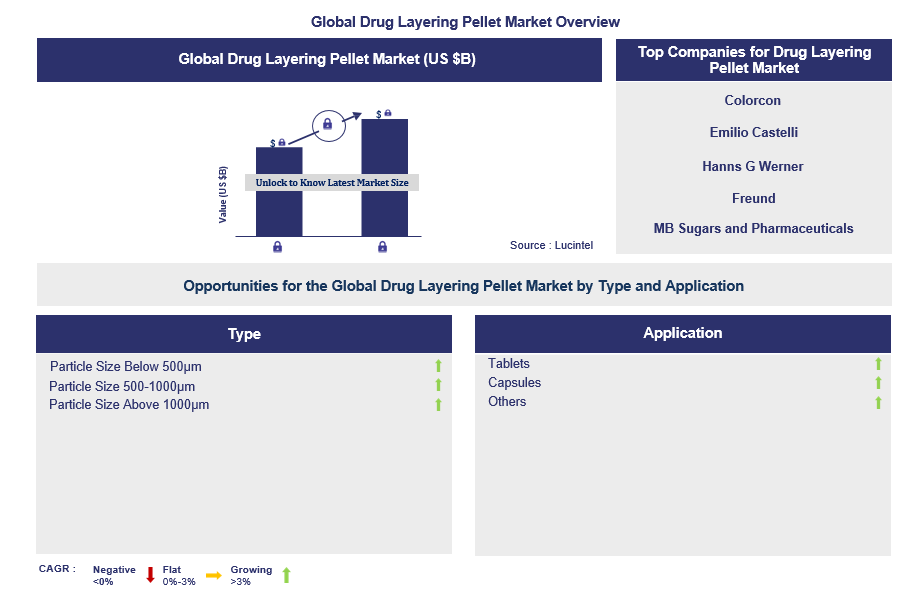
• Lucintel forecasts that, within the type category, particle size below 500μm is expected to witness the highest growth over the forecast period.
• Within the application category, tablet is expected to witness the higher growth.
• In terms of regions, North America is expected to witness the highest growth over the forecast period. Gain valuable insights for your business decisions with our comprehensive 150+ page report.
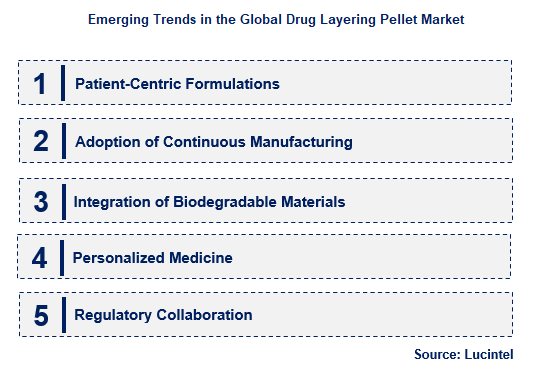
• Patient-Centric Formulations: The demand for patient-oriented formulations is driving the creation of new drug layering pellets that make administration easier and improve patient compliance. Manufacturers are formulating pellets for taste masking and targeted release, which is especially useful for pediatric and geriatric patients. The goal of these formulations is to improve patient outcomes, presenting great revenue opportunities in the market.
• Adoption of Continuous Manufacturing: The transition from batch to continuous manufacturing is one of the emerging trends in the drug layering pellet market. This transition increases production efficiency, ensures more stable quality, reduces batch-to-batch variations, and enhances the scalability of production. Pharmaceutical companies are increasingly using this approach to meet growing demand and regulatory requirements, offering shorter time-to-market and lower costs.
• Integration of Biodegradable Materials: Biodegradable materials are being increasingly used in drug layering pellet manufacturing to support eco-friendly principles. In addition to improving drug delivery, they also reduce environmental impact. This trend is especially growing in European countries and Japan, where sustainability is a key factor in drug manufacturing. It appeals to consumers and regulatory bodies concerned with the environment.
• Personalized Medicine: The concept of personalized medicine is influencing the development of drug layering pellets. These pellets are being designed to meet the specific needs of individual patients, including their precise dosage and timing. Advances in genomics and targeted therapy are enabling pharmaceutical companies to focus on the development of pellets that can be effective for specific clinical populations while minimizing side effects.
• Regulatory Collaboration: Another emerging trend is the increasing regulatory collaboration between regions. Government agencies such as the FDA and EMA have partnered with manufacturers to streamline the approval process for complex drug delivery forms such as pellets. This collaboration reduces the time needed to introduce new products to the market, promotes innovation in pellet development, and strengthens market expansion and penetration strategies. These trends are contributing to the growth of the drug layering pellet sector, as there is growing demand for patient-focused and personalized medication, alongside regulatory cooperation and continuous manufacturing. Together, these factors are driving faster growth in the market.
• 3D Printing in Pellet Production: The introduction of 3D printing in the production of drug layering pellets has revolutionized the production process, allowing for greater precision in creating different structures for drug release systems and tailored medicine. The adoption of 3D printing is expected to increase, as pharmaceutical industries continue to develop new technologies in controlled release systems.
• Biodegradable Materials: The use of biodegradable materials in drug layering pellet technology is crucial, especially for promoting patient adherence and protecting the environment. More companies are researching the development of biodegradable carriers for drug-delivery systems, which improve drug release efficacy and minimize pollution, especially in regions with strict environmental policies such as the EU.
• Regulatory Advancements: Regulatory authorities have significantly contributed to the growth of the drug layering pellet market. Recent changes in regulations have expedited the approval processes for complex drug delivery systems, reducing the time it takes to bring new pellet formulations to market. This has created favorable conditions for the introduction of new designs in both the USA and Europe.
• Patient-Centric Innovations: Pharmaceutical companies are increasingly focusing on patient-centric innovations in the development of drug layering pellets. Advances such as taste masking, targeted release profiles, and ease of delivery have been designed to promote patient compliance, particularly for children and elderly patients. This focus on patient needs is driving demand for more advanced pellet formulations, fueling market growth.
• Use of Automation in the Pharmaceutical Market: Automation in the manufacture of drug layering pellets is one of the most important technological advancements in the industry. The application of automated systems has streamlined production, reduced costs, and ensured uniform product quality. This trend is particularly pronounced in developed markets such as Germany, where pharmaceutical companies embrace smart manufacturing technologies. These developments are positively contributing to the reliability, availability, and structure of drug layering pellets. From regulatory improvements to modern manufacturing processes, these changes are part of an evolving market that enables companies to produce complex, consumer-oriented products. These advancements are improving global competition and leading to market growth.
• Controlled-release formulations: The growing demand for drug layering pellets has identified controlled-release formulations as a key opportunity for future growth. These formulations increase treatment adherence and improve therapeutic effects, as drugs are released over an extended period. As the use of these medications, especially for chronic diseases like hypertension and diabetes, increases, companies should position themselves to capitalize on this trend by designing pellets with specific release profiles.
• Pediatric and geriatric applications: The growing demand for pediatric and geriatric applications is opening new markets within the drug layering pellet market. Such patients require specially designed drug products, such as taste-masking or clinically validated pellets that are easy to take. Pharmaceutical manufacturers are seeking to create novel dosage forms that enhance patient compliance, especially among populations with swallowing difficulties.
• Combination therapies: The expanding market for combination therapies presents another major opportunity. Drug layering pellets can be used in combination therapies, as they facilitate the incorporation of multiple active pharmaceutical ingredients (APIs) into a capsule dosage form, thereby providing synergistic treatment effects. This is particularly useful in treating diseases that are difficult to manage, such as HIV, cancer, and heart disease.
• Oncology treatments: Cancer therapies represent a new area in the growing drug layering pellet market, as the treatment of cancer continues to advance and requires more localized drug delivery. Pellets reduce side effects through targeted delivery, thus improving patient treatment outcomes. Pellets suitable for oncology formulations are being developed by pharmaceutical companies, presenting a significant growth opportunity in this therapeutic area.
• Pain management: Pain management remains an important area where drug layering pellets can create strategic growth opportunities. These pellets are particularly useful for patients suffering from chronic pain, such as arthritis, or pain following surgery, ensuring that pain is managed for prolonged periods. Companies are well-positioned to address this development by creating new pellets for pain management therapies, particularly in response to the growing demand for non-opioid pain treatments. These growth strategies are driving the development of the drug layering pellet market. By addressing therapeutic and patient volume constraints, pharmaceutical companies have the opportunity to work on complex developments and meet the increasing demand for advanced drug delivery systems.
• Innovations in controlled release: The innovation of controlled drug delivery systems is a major driver of the favorable growth of the drug layering pellet market. These systems deliver complex multisymptomatic treatments for patients with chronic conditions while improving compliance and therapeutic effects through optimally controlled administration schedules. There is a growing trend in the pharmaceutical industry to focus on innovations in this area due to commercialization.
• Emergence of precision medicine: The rise of precision medicine is fueling the development of advanced drug layering pellets. These pellets can be applied in a pharmaceutical target zone where, based on specific patient characteristics, a tailored mixture of drugs can be effectively targeted for better results. The growth of precision medicine is expected to provide pharmaceutical companies with a promising increase in business opportunities.
• Regulatory support: Regulatory support is a key factor influencing the growth of the drug layering pellet market. Agencies like the FDA or EMA play a significant role in developing complex drug delivery systems by proposing simplified approval procedures and assisting with the use of novel technologies. This support helps to launch products faster and accelerates progress in this area.
• Rising chronic disease prevalence: The rising prevalence of chronic diseases such as diabetes, hypertension, and cardiovascular disease has increased the demand for controlled-release formulations, including drug layering pellets. These pellets provide a consistent and predictable bioavailability of the drug, improving patient compliance and fueling market growth.
• Growing pharmaceutical R&D investments: There has been a substantial increase in pharmaceutical companies’ spending on research and development, particularly focused on creating new drug delivery systems, including drug layering pellets. This is driven by the need to create more efficient and user-friendly formulations, especially in fast-growing therapeutic areas such as oncology and pain management. Challenges in the drug layering pellet market include:
• High production costs: A primary barrier to growth in the drug layering pellet market is the high production cost of products, due to the sophisticated manufacturing technologies involved. Manufacturers need to procure highly specialized machines and processes, which increases costs and creates barriers for smaller players in the market.
• Stringent regulatory requirements: Stringent regulatory requirements present challenges for the drug layering pellet market. Pharmaceutical companies must adhere to numerous regulations, which can lead to delays in product approval and increase the time and costs associated with launching new formulations. The major drivers are pushing the market toward innovations in patient care and growth, while the challenges, such as high production costs and compliance with regulations, create limitations. These factors define the strategic approach, as market players will need to find optimal technological solutions without significantly increasing production costs.
• Colorcon
• Emilio Castelli
• Hanns G Werner
• Freund
• MB Sugars and Pharmaceuticals
• Anhui Sunhere Pharmaceutical Excipients
• International Products & Services
• Meenaxy Pharma
• Jiangsu Dongsheng Pharmaceutical
• Pharmatrans-Sanaq
• Particle Size Below 500μm
• Particle Size 500-1000μm
• Particle Size Above 1000μm
• Tablets
• Capsules
• Others
• North America
• Europe
• Asia Pacific
• The Rest of the World
• United States: The United States is leading in the technological development of drug layering pellet technologies and their subsequent manufacturing and formulation. The market has seen increased penetration of 3D printer production technology and enhanced coating methodologies, leading to timeliness in the release of drugs. Apart from this, the favorable policies placed by the FDA regarding complex drug delivery systems fuel more creativity and faster implementation of new products in the market, contributing to revenue growth.
• China: China is concentrating its resources on enhancing the domestic production of drug layering pellets. The current government’s efforts to enhance the healthcare system and build local pharmaceutical manufacturing capacity have contributed to this growth. These factors will push the growth of the drug layering pellet market, as Chinese drug companies are actively working on long-acting pellet dosage forms for chronic illnesses such as diabetes and hypertension, which are common in the country.
• Germany: Pharmaceutical and technology companies are working in synergy in the development of drug layering pellets in Germany. This has been achieved by introducing modern manufacturing technologies aimed at increasing the efficiency of pellet production. The move towards automation and continuous manufacturing systems gives German firms the opportunity to improve product quality, reduce production costs, and remain competitive in the global market.
• India: The Indian drug layering pellet market is showing promise due to the growing need for economical and repeatable compensable drug delivery systems. Indian firms have focused their efforts on producing inexpensive drug layering pellets for both domestic and international markets. The unprecedented promotion of generics and government initiatives to increase health access are catalyzing the market, as many companies leverage these opportunities to ramp up output and develop new products.
• Japan: The drug layering pellet market in Japan is advancing toward personalized medicine. With the growing proportion of elderly persons in Japan, there is a strong demand for extended-release dosage forms, promising creativity in pellet formulation and design. Companies in Japan have also been using biodegradable polymers in pellet design to improve compliance while reducing pollution, in line with the global eco-friendly movement.


• Colorcon
• Emilio Castelli
• Hanns G Werner
• Freund
• MB Sugars and Pharmaceuticals
• Anhui Sunhere Pharmaceutical Excipients
• International Products & Services
• Meenaxy Pharma
• Jiangsu Dongsheng Pharmaceutical
• Pharmatrans-Sanaq Q5. Which drug layering pellet market segment will be the largest in future? Answer: Lucintel forecasts that particle size below 500μm is expected to witness the highest growth over the forecast period. Q6. In drug layering pellet market, which region is expected to be the largest in next 5 years? Answer: North America is expected to witness the highest growth over the forecast period. Q.7 Do we receive customization in this report? Answer: Yes, Lucintel provides 10% customization without any additional cost.


Choose a license that fits your team. Instant PDF delivery.
Prices exclude taxes. Instant delivery. Custom licensing available on request.
Market Report · July 16, 2026
Market Report · July 15, 2026
Market Report · July 15, 2026
Trusted partner for strategic intelligence and business growth


Receive a complimentary market analysis tailored to your industry. Our analysts will identify key growth opportunities and competitive dynamics specific to your business.

Market size, growth rate, and key trend analysis for your specific sector.

Top competitor positioning and market share analysis.

Strategic recommendations backed by data-driven insights.
Get curated market intelligence and competitive moves straight to your inbox.
By subscribing, you agree to receive our monthly insights. Unsubscribe anytime.
Receive a complimentary market analysis tailored to your industry. Our analysts will identify key growth opportunities and competitive dynamics specific to your business.
Market size, growth rate, and key trend analysis for your specific sector.
Top competitor positioning and market share analysis.
Strategic recommendations backed by data-driven insights.
Get curated market intelligence, emerging trends, and competitive moves straight to your inbox each month.
By subscribing, you agree to receive our monthly insights. Unsubscribe anytime.
We'll send your sample report shortly.