
Market Report · July 22, 2026

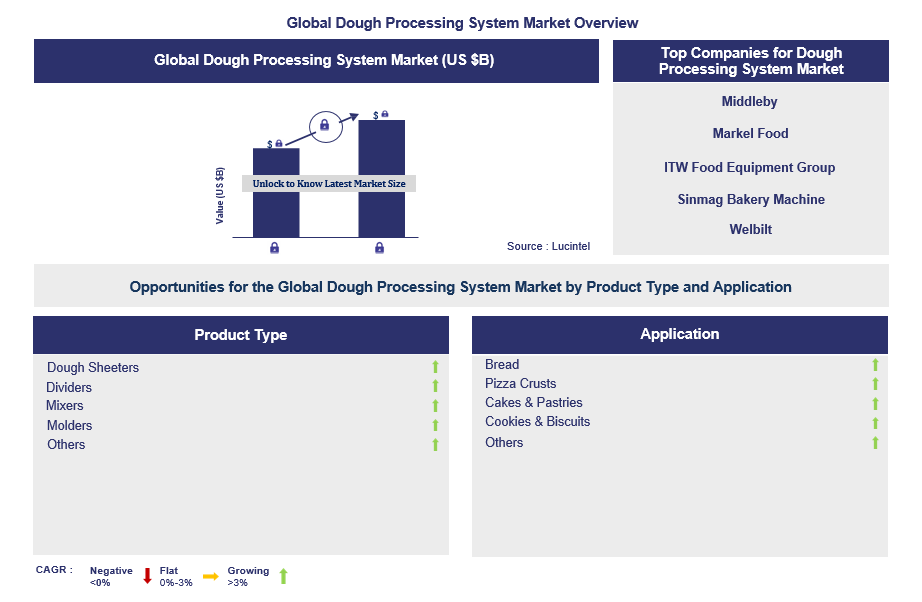
Key data points: The market size in 2031 = $6.8 billion, growth forecast = 4.3% annually for the next 7 years. Scroll below to get more insights. This market report covers trends, opportunities, and forecasts in the global dough processing system market to 2031 by product type (dough sheeters, dividers, mixers, molders, and others), application (bread, pizza crusts, cakes & pastries, cookies & biscuits, and others), and region (North America, Europe, Asia Pacific, and the Rest of the World)
We'll send your sample report shortly.
• Lucintel forecasts that, within the product type category, mixer will remain the largest segment over the forecast period.
• In terms of regions, North America will remain the largest region over the forecast period due to increased demand for processed meals and rising wheat yields nationwide. Gain valuable insights for your business decisions with our comprehensive 150+ page report.
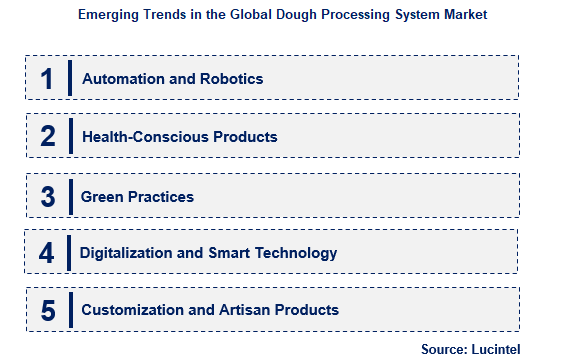
• Automation and Robotics: Automation is transforming the dough processing industry by increasing efficiency and lowering labor costs. Activities such as mixing, dough shaping, and packaging contribute to fast production while maintaining consistency. This is crucial for bakeries that aim to scale up while reducing human errors.
• Health-Conscious Products: As health and wellness trends shape consumer preferences, demand for whole-grain, gluten-free, and organic dough products is rising. Manufacturers are changing recipes and investing in specialized processing technologies to meet this trend. This not only addresses health concerns but also opens doors to new markets where product diversification can be explored.
• Green Practices: The trend toward sustainable dough processing is gaining traction, with companies focusing on reducing environmental impacts. From biodegradable packaging to energy-efficient machinery, this trend appeals to eco-conscious consumers and helps enhance brand reputation, providing a competitive edge in a crowded market.
• Digitalization and Smart Technology: Production processes are being transformed by digital tools and smart technology. Manufacturers now rely on quality control, predictive maintenance, and inventory management through data analytics. This trend allows companies to operate more efficiently and gain a competitive advantage by responding quickly to market needs.
• Customization and Artisan Products: Customization is becoming a significant trend as customers demand unique tastes and artisanal qualities in baked goods. Dough processing systems are evolving to accommodate small-batch production and recipes based on specific customer requirements. This trend is fueling niche markets and inspiring innovation in new products. Trends resurfacing in the dough processing system market include automation, health-conscious products, and sustainability. These trends are repositioning the competitive landscape for manufacturers striving to be innovative and improve. Companies that adapt will be in a better position to enhance their product offerings and operational efficiency, meeting consumer demands and maintaining a competitive edge in the market.
• Advanced Automation Technologies: Advanced automation technologies are set to transform the dough processing landscape. Manufacturers are investing heavily in modernized and state-of-the-art equipment that minimizes manual labor and maximizes efficiency. This shift reduces production costs and enhances product consistency, which is increasingly demanded by consumers in an industry where competition is dominated by quality.
• Clean Label Products: Clean label products are in high demand, with consumers advocating for transparency about the source of ingredients. Dough processors are reworking their recipes to eliminate artificial additives and preservatives. This trend reflects consumers’ growing focus on healthy choices, increasing brand loyalty, and creating opportunities for differentiation in the marketplace.
• Rise of E-commerce Platforms: E-commerce is quickly becoming a critical sales channel for dough products. Companies are using online channels to reach more customers and offer direct-to-consumer sales. This is particularly important for small and medium enterprises that can now compete with the larger players who have traditionally dominated the market.
• Incorporation of Artificial Intelligence: The integration of artificial intelligence is improving production process efficiency in dough processing. AI tools are being used for predictive analytics and reducing downtime through optimized production schedules. These technologies help companies respond efficiently to market changes, gaining a competitive advantage through better decision-making.
• Investment in Sustainable Technologies: Investments in renewable and green technologies are redefining the dough processing market. Companies are adopting energy-efficient equipment and sourcing materials sustainably. Sustainability not only alleviates regulatory pressures but also resonates with eco-conscious consumers, helping brands gain market share in an increasingly environmentally aware market. Recent developments in the dough processing system market illustrate a trend of transformation, driven by technological advances and changing consumer preferences. Innovations in automation, clean labeling, and e-commerce are enhancing operational efficiency and expanding access to larger markets. Aligning with these transformations will position businesses for long-term growth and success in a competitive market.
• Growing Demand for Gluten-Free Products: The increase in demand for gluten-free products presents another growth opportunity. As more consumers turn to gluten-free alternatives, manufacturers have opportunities to invest in specialized processing technologies that ensure the production of quality gluten-free dough. This expansion captures a niche market and aligns with broader health trends.
• Artisanal and Specialty Baked Goods: The demand for specialty bakery items is growing, opening up opportunities for small-scale bakers. Similarly, dough processing systems can be designed to provide unique flavors and textures that cater to local and gourmet markets. Craftsmanship products help businesses stand out in a competitive marketplace.
• Healthy Snacking Trends: The demand for healthier dough products is increasing as consumers look for alternatives to traditional snack foods. Companies can innovate by introducing whole grain, seed, and legume-based healthy snack lines. This trend allows manufacturers to enhance their product lines by being responsive to what health-conscious consumers want—more personalized products.
• Bakery Products Customization: There is promise for growth in this area. As people seek more tailored products to suit their preferences, such as flavors and types of food, dough processing systems can be built for small-batch production. This allows manufacturers to offer mass-produced units that can be customized to meet the needs and wants of specific customers.
• Technology-Driven Efficiency: Investment in technology-based solutions increases both efficiency and product quality. Producers can consider high-tech processing systems that incorporate automation and data analytics. In this way, waste is reduced, profitability is increased, and companies can grow over time. The dough processing system market offers strategic growth opportunities across various applications. If the trends of gluten-free products, artisanal goods, and customization continue, manufacturers can easily exploit consumer preferences. By capitalizing on these opportunities, companies can foster innovation, consolidate their market positions, and prepare for a dynamic, competitive future.
• Technological Advances: The continuous advancement of processing technology increases both the efficiency and quality of products. Key developments in automation and AI are making businesses more streamlined and cutting labor costs significantly.
• Health and Wellness Trends: Increased consumer health education has led to a higher demand for healthier dough products. The growing demand for gluten-free and organic products encourages manufacturers to reformulate recipes and invest in specific processing techniques.
• Rising E-commerce: E-commerce has expanded distribution channels, allowing companies to reach larger audiences. This creates opportunities for small and medium-sized enterprises to market themselves alongside larger ventures.
• Sustainability: Sustainable practices have become one of the biggest drivers in the market. Companies that embrace sustainability are not only complying with regulatory demands but also appealing to environmentally conscious consumers, strengthening their client focus. Challenges in the dough processing system market include:
• Rising Raw Material Costs: Price fluctuations in key ingredients are affecting producers. This can hinder profitability and increase the need for strategic procurement and pricing.
• Regulatory Compliance: Strict food safety rules create significant cost and complexity for companies. To operate within these regulations, businesses must stay informed about changes to avoid penalties and ensure product safety.
• Intensive Competition: The industry is highly competitive, with numerous players vying for market share. Companies need to innovate and differentiate their offerings to maintain a competitive edge. A healthy mix of technological advancements and health-conscious trends characterizes the dough processing system market. While there are major growth drivers, rising costs and complex regulations require careful management for long-term success. Companies that effectively manage these dynamics will be well-equipped to thrive in this shifting market.
• Middleby
• Markel Food
• ITW Food Equipment Group
• Sinmag Bakery Machine
• Welbilt
• JBT
• Wiesheu
• WPBakery
• RATIONAL
• Mono Equipment
• Dough Sheeters
• Dividers
• Mixers
• Molders
• Others
• Bread
• Pizza Crusts
• Cakes & Pastries
• Cookies & Biscuits
• Others
• North America
• Europe
• Asia Pacific
• The Rest of the World
• United States: The US market for dough processing is at the adoption level for automation and AI integration, which reduces variability and increases efficiency. Suppliers are creating advanced smart technologies that make processes easier, generate fewer waste products, and increase the quality levels of the final product. Other demands include artisanal and gluten-free products, triggering innovation in procurement and ingredient processing methods.
• China: The dough processing industry in China is slowly picking up as Western baked goods become trendy. With such growth in demand, investment is rapidly increasing to adopt advanced machinery and technology. Local manufacturers are expected to increase their production volume and efficiency in an effort to supply their markets as well as feed the international market.
• Germany: Germany leads dough processing technology, with most investments in capital coming in the form of research and development. Sustainability is the foundation of this country’s interests, using eco-friendly materials and minimizing energy usage at all steps. Innovations in greater capacities for mixers, automated systems, and so on enhance production volume without compromising on quality.
• India: India’s dough processing market is changing due to increasing urbanization and evolving dietary habits. With more bakery-related products becoming popular, there is a huge demand for processing machinery, resulting in higher sales. Domestic players are seeking affordable yet effective solutions, particularly for small and medium enterprises, contributing to growth in the segment.
• Japan: The current trend in Japan is automation in dough processing, with an emphasis on accuracy and quality. The application of robotics for executing highly sophisticated operations integrates to ensure consistency in production. Traditional baked products peculiar to Japan are also gaining popularity, which catalyzes innovation through the fusion of modern technology with traditional cultural practices.


• Middleby
• Markel Food
• ITW Food Equipment Group
• Sinmag Bakery Machine
• Welbilt
• JBT
• Wiesheu
• WPBakery
• RATIONAL
• Mono Equipment Q6. Which dough processing system market segment will be the largest in future? Answer: Lucintel forecasts that mixer will remain the largest segment over the forecast period. Q7. In dough processing system market, which region is expected to be the largest in next 5 years? Answer: North America will remain the largest region over the forecast period due to increased demand for processed meals and rising wheat yields nationwide. Q.8 Do we receive customization in this report? Answer: Yes, Lucintel provides 10% customization without any additional cost.


Choose a license that fits your team. Instant PDF delivery.
Prices exclude taxes. Instant delivery. Custom licensing available on request.
Market Report · July 22, 2026
Market Report · July 16, 2026
Market Report · May 18, 2026
Trusted partner for strategic intelligence and business growth


Receive a complimentary market analysis tailored to your industry. Our analysts will identify key growth opportunities and competitive dynamics specific to your business.

Market size, growth rate, and key trend analysis for your specific sector.

Top competitor positioning and market share analysis.

Strategic recommendations backed by data-driven insights.
Get curated market intelligence and competitive moves straight to your inbox.
By subscribing, you agree to receive our monthly insights. Unsubscribe anytime.
Receive a complimentary market analysis tailored to your industry. Our analysts will identify key growth opportunities and competitive dynamics specific to your business.
Market size, growth rate, and key trend analysis for your specific sector.
Top competitor positioning and market share analysis.
Strategic recommendations backed by data-driven insights.
Get curated market intelligence, emerging trends, and competitive moves straight to your inbox each month.
By subscribing, you agree to receive our monthly insights. Unsubscribe anytime.
We'll send your sample report shortly.