
Report Feature
Door Closer Market Trends and Forecast
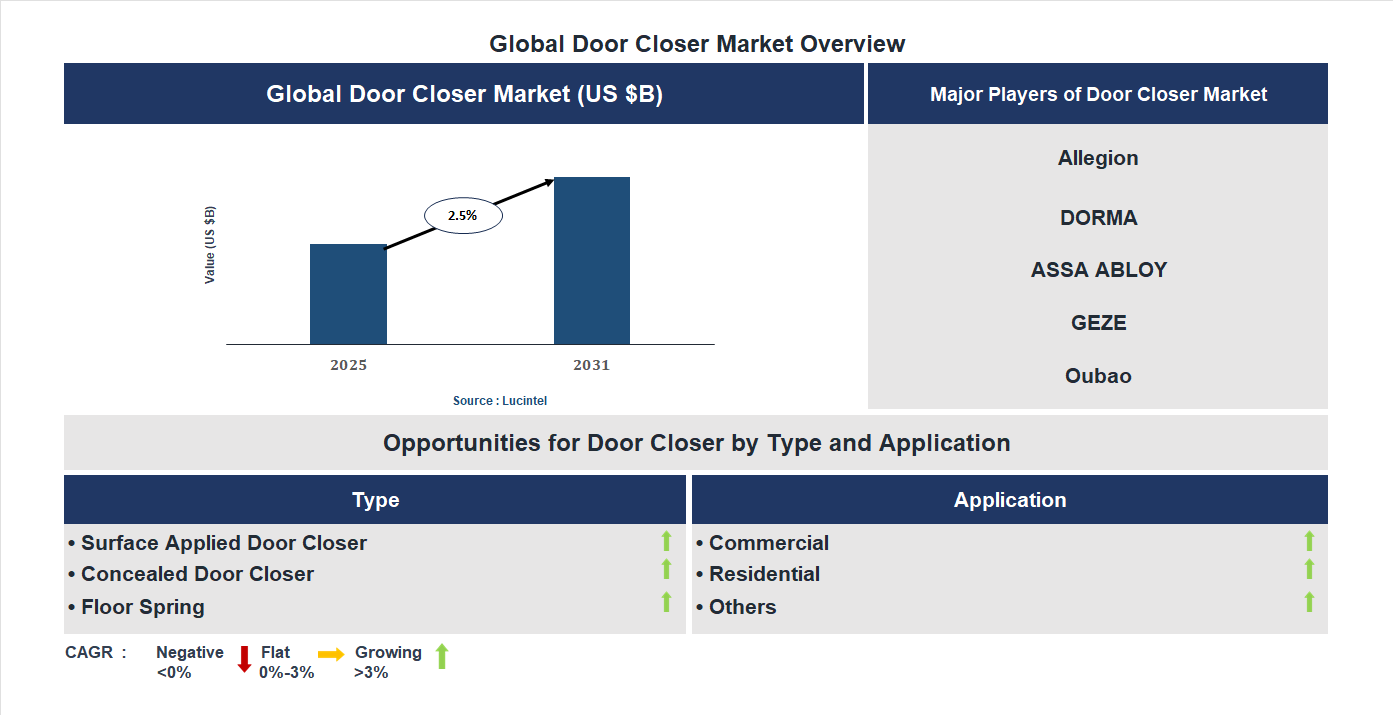
The future of the global door closer market looks promising with opportunities in the commercial and residential markets. The global door closer market is expected to grow with a CAGR of 2.5% from 2025 to 2031. The major drivers for this market are the increasing demand for controlled door movement, the rising installations in commercial infrastructure projects, and the growing focus on building safety compliance.• Lucintel forecasts that, within the type category, concealed door closer is expected to witness the highest growth over the forecast period.
• Within the application category, commercial is expected to witness the highest growth.
• In terms of region, APAC is expected to witness the highest growth over the forecast period. Gain valuable insights for your business decisions with our comprehensive 150+ page report. Sample figures with some insights are shown below.
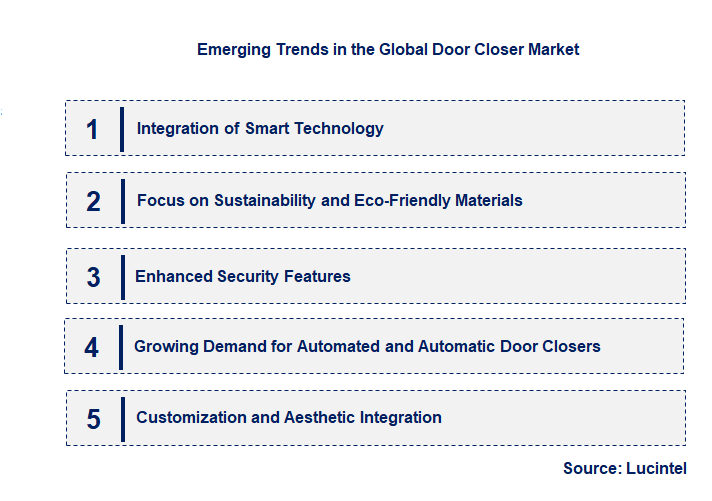
Emerging Trends in the Door Closer Market
The door closer market is experiencing significant transformation driven by technological advancements, changing consumer preferences, and increasing safety regulations. As buildings become smarter and more energy-efficient, the demand for innovative door closing solutions is rising. Market players are focusing on sustainability, automation, and enhanced security features to meet evolving needs. These trends are not only shaping product development but also influencing market dynamics, competitive strategies, and customer expectations. Understanding these emerging trends is crucial for stakeholders aiming to capitalize on growth opportunities and stay ahead in this competitive landscape.• Integration of Smart Technology: The adoption of IoT-enabled door closers allows for remote monitoring, automated adjustments, and enhanced security. This trend improves user convenience and operational efficiency, making door closers more adaptable to modern building management systems. Smart features also enable predictive maintenance, reducing downtime and repair costs, which appeals to commercial and high-end residential markets.
• Focus on Sustainability and Eco-Friendly Materials: Increasing environmental awareness is driving the shift towards energy-efficient and eco-friendly door closers. Manufacturers are using recyclable materials and designing products that minimize energy consumption. This trend aligns with green building certifications and regulatory standards, appealing to environmentally conscious consumers and developers committed to sustainability.
• Enhanced Security Features: The market is witnessing a rise in door closers equipped with advanced security features such as fire-rated mechanisms, tamper-proof designs, and integration with access control systems. These developments are critical for commercial buildings, healthcare facilities, and government institutions, where safety and security are paramount. Enhanced security features also help meet stringent safety regulations and standards.
• Growing Demand for Automated and Automatic Door Closers: Automation is transforming the market by providing hands-free operation, especially in healthcare, hospitality, and commercial sectors. Automatic door closers improve hygiene, accessibility, and convenience, particularly in the context of health safety concerns. This trend is driven by the need for touchless solutions and compliance with accessibility standards.
• Customization and Aesthetic Integration: Consumers and architects are seeking door closers that blend seamlessly with building aesthetics. Manufacturers are offering customizable options, including various finishes, colors, and design styles. This trend enhances the visual appeal of buildings while maintaining functionality, catering to the premium segment and modern architectural designs. In summary, these emerging trends are reshaping the door closer market by emphasizing smart integration, sustainability, security, automation, and aesthetic appeal. They are driving innovation, expanding application areas, and influencing customer preferences, ultimately leading to a more dynamic and competitive market landscape.
Recent Development in the Door Closer Market
The door closer market has experienced significant evolution driven by technological advancements, changing safety standards, and increasing construction activities worldwide. As buildings become smarter and more energy-efficient, the demand for innovative door closing solutions has surged. Market players are focusing on developing more durable, energy-efficient, and user-friendly products to meet diverse customer needs. Additionally, regulatory standards and safety protocols are influencing product design and adoption rates. The markets growth is also propelled by urbanization and infrastructure development projects across emerging economies. These developments collectively shape the competitive landscape, offering new opportunities and challenges for manufacturers, suppliers, and consumers alike.• Technological Innovations: Integration of smart sensors and automation features has enhanced door closer functionality, improving user convenience and safety. These advancements have led to increased adoption in commercial and residential buildings, boosting market growth and expanding product applications.
• Regulatory and Safety Standards: Stricter building codes and safety regulations worldwide have mandated the use of certified door closers, ensuring safety and compliance. This has driven manufacturers to innovate and upgrade their product lines, fostering market credibility and consumer trust.
• Eco-friendly and Energy-efficient Products: Growing environmental concerns have prompted the development of energy-efficient door closers with reduced power consumption and sustainable materials. These eco-friendly solutions appeal to environmentally conscious consumers and comply with green building standards, expanding market reach.
• Expansion in Emerging Markets: Rapid urbanization and infrastructure development in Asia-Pacific and Africa have created new opportunities for door closer manufacturers. Increased construction activities and modernization projects are fueling demand, leading to market expansion in these regions.
• Customization and Design Flexibility: The demand for aesthetically appealing and customizable door closers has increased, especially in high-end residential and commercial projects. Manufacturers are offering a variety of designs, finishes, and sizes, enhancing product appeal and market competitiveness. In summary, recent developments in the door closer market—spanning technological innovations, regulatory compliance, eco-friendly products, regional expansion, and customization—are driving growth and diversification. These trends are making door closers more efficient, safe, and adaptable, thereby expanding market opportunities and shaping future industry directions.
Strategic Growth Opportunities in the Door Closer Market
The door closer market is experiencing significant growth driven by increasing safety regulations, urbanization, and the need for enhanced security across various sectors. As buildings become smarter and more automated, the demand for reliable, efficient, and technologically advanced door closing solutions is rising. Key applications such as commercial buildings, residential complexes, healthcare facilities, hospitality, and industrial sectors are pivotal in shaping market dynamics. These applications are adopting innovative door closer technologies to improve safety, energy efficiency, and user convenience. The following are five key growth opportunities across these applications, each contributing to the markets expansion and technological evolution.• Commercial Buildings: Market expansion is driven by stringent safety standards and the need for automated access control. Advanced door closers with smart features are increasingly adopted to ensure safety, energy efficiency, and compliance with regulations, boosting overall market growth.
• Residential Complexes: Rising urbanization and modernization of housing infrastructure create demand for durable, easy-to-use door closers. Innovations in aesthetic design and automation are attracting homeowners and developers, expanding the residential segment significantly.
• Healthcare Facilities: The need for hygiene, safety, and accessibility in hospitals and clinics fuels demand for touchless and automatic door closers. These solutions improve infection control and ease of access, making healthcare a rapidly growing application area.
• Hospitality Industry: Hotels and resorts seek stylish, reliable door closers to enhance guest experience and security. The integration of smart and energy-efficient door closing systems is a key trend, driving growth in this sector.
• Industrial Sector: Heavy-duty, durable door closers are essential for factories and warehouses to ensure safety and operational efficiency. The focus on safety standards and automation in industrial environments presents substantial growth opportunities. In summary, these growth opportunities across key applications are significantly impacting the door closer market by fostering innovation, increasing adoption of smart and energy-efficient solutions, and expanding market reach. The integration of advanced technologies and compliance with safety standards are driving sustained growth and shaping the future landscape of the industry.
Door Closer Market Driver and Challenges
The door closer market is influenced by a variety of technological, economic, and regulatory factors that shape its growth and development. Advances in automation and smart technology are driving innovation, while economic conditions such as construction activity and real estate development impact demand. Regulatory standards related to safety and energy efficiency also play a crucial role in shaping product features and market compliance. Additionally, consumer preferences for security and convenience are influencing product design and adoption. Navigating these diverse factors is essential for market players to capitalize on opportunities and address challenges effectively, ensuring sustainable growth in a competitive environment. The factors responsible for driving the door closer market include:-• Technological Innovation: The integration of smart technology and automation in door closers enhances functionality, security, and user convenience. Innovations such as sensor-based closers and IoT-enabled devices allow for better control, energy efficiency, and maintenance. These advancements attract commercial and residential sectors seeking modern, efficient solutions, thereby expanding market reach. Continuous R&D efforts are expected to further improve product features, reduce costs, and open new application areas, fueling overall market growth.
• Construction and Infrastructure Development: Rapid urbanization and infrastructure projects worldwide significantly boost demand for door closers. Commercial buildings, hospitals, airports, and educational institutions require reliable, durable door closing solutions to meet safety standards. The growth in new construction activities, especially in emerging economies, directly correlates with increased sales. Moreover, renovation and retrofitting of existing buildings also contribute to market expansion, as upgrading safety and security features becomes a priority.
• Regulatory Standards and Safety Norms: Stringent safety regulations and building codes mandate the use of certified door closers to ensure occupant safety and energy efficiency. Compliance with standards such as fire safety and accessibility requirements influences product design and manufacturing. Market players investing in meeting these standards gain a competitive edge, while non-compliance can lead to legal issues and market restrictions. Evolving regulations are expected to further shape product specifications and market dynamics.
• Growing Security Concerns: Increasing awareness of security threats and the need for controlled access drive demand for advanced door closers with enhanced locking and monitoring features. Commercial and institutional sectors prioritize security solutions that integrate with access control systems. This trend encourages manufacturers to develop innovative, high-performance products that address these concerns, thereby expanding market opportunities in security-sensitive environments.
• Cost-Effective and Energy-Efficient Solutions: Rising energy costs and sustainability initiatives motivate consumers and businesses to opt for energy-efficient door closers that minimize power consumption and reduce operational costs. Cost-effective products with long-term durability appeal to a broad customer base, including budget-conscious buyers. Market growth is driven by the demand for affordable, eco-friendly solutions that align with green building standards and reduce overall lifecycle costs. The challenges facing this door closer market include:-
• Fluctuating Raw Material Prices: The door closer market heavily depends on raw materials such as metals and plastics, which are subject to price volatility due to global supply chain disruptions and economic fluctuations. Rising material costs can increase manufacturing expenses, leading to higher product prices and potential loss of competitiveness. Manufacturers may face difficulties in maintaining profit margins while keeping products affordable, which could hinder market growth and innovation.
• Stringent Regulatory Compliance: While regulations promote safety and quality, they also pose challenges for manufacturers to meet evolving standards across different regions. Achieving compliance often requires significant investment in R&D, testing, and certification processes, increasing time-to-market and costs. Non-compliance risks legal penalties and market restrictions, making it essential for companies to stay updated with changing regulations, which can be resource-intensive.
• Market Saturation and Intense Competition: The door closer market is highly competitive with numerous established players and new entrants vying for market share. Saturation in mature markets limits growth opportunities, forcing companies to innovate and differentiate their products. Price wars and marketing battles can erode profit margins, while the need for continuous innovation demands substantial investment. Navigating this competitive landscape requires strategic planning and resource allocation to sustain growth. In summary, the door closer market is shaped by technological advancements, infrastructure development, regulatory standards, security concerns, and sustainability trends. While these drivers present significant growth opportunities, challenges such as raw material price fluctuations, regulatory compliance costs, and market saturation pose risks. Overall, the markets future depends on how effectively companies can leverage innovations and adapt to regulatory and economic shifts, ensuring resilience and sustained expansion in a dynamic environment.
List of Door Closer Companies
Companies in the market compete on the basis of product quality offered. Major players in this market focus on expanding their manufacturing facilities, R&D investments, infrastructural development, and leverage integration opportunities across the value chain. With these strategies door closer companies cater increasing demand, ensure competitive effectiveness, develop innovative products & technologies, reduce production costs, and expand their customer base. Some of the door closer companies profiled in this report include-• Allegion
• DORMA
• ASSA ABLOY
• GEZE
• Oubao
• FRD
• Stanley
• Ryobi
• Hutlon
• Archie
Door Closer Market by Segment
The study includes a forecast for the global door closer market by type, application, and region.Door Closer Market by Type [Value from 2019 to 2031]:
• Surface Applied Door Closer
• Concealed Door Closer
• Floor Spring
Door Closer Market by Application [Value from 2019 to 2031]:
• Commercial
• Residential
• Others
Door Closer Market by Region [Value from 2019 to 2031]:
• North America
• Europe
• Asia Pacific
• The Rest of the World
Country Wise Outlook for the Door Closer Market
The door closer market has experienced significant shifts driven by technological innovation, increasing safety regulations, and growing construction activities worldwide. Countries are adopting smarter, more energy-efficient, and environmentally friendly solutions to meet evolving standards and consumer preferences. The integration of IoT technology and automation features is also transforming the market landscape, offering enhanced security and convenience. As urbanization accelerates and infrastructure projects expand, these developments are expected to influence market growth and product offerings across key regions.• United States: The US market has seen a surge in demand for smart door closers with IoT connectivity, enabling remote monitoring and maintenance. Regulatory standards for fire safety and energy efficiency are driving innovation, with manufacturers focusing on eco-friendly materials and automation features. The residential sector remains a major contributor, alongside commercial and institutional projects emphasizing security and accessibility. Additionally, the adoption of touchless and sensor-based door closers has increased due to health concerns, further boosting market growth.
• China: China’s door closer market is rapidly expanding, fueled by urban development and infrastructure projects. The government’s emphasis on building energy-efficient and sustainable buildings has led to increased adoption of advanced, durable, and eco-friendly door closers. Local manufacturers are investing in R&D to develop smart solutions integrated with building management systems. The commercial sector, especially in shopping malls and office complexes, is a key driver, alongside rising demand in residential developments. Price competitiveness and technological innovation are central to China’s market growth.
• Germany: Germany’s market is characterized by a focus on high-quality, durable, and energy-efficient door closers, driven by strict EU regulations on safety and sustainability. The adoption of automation and smart features is increasing, especially in commercial buildings and public infrastructure. The emphasis on eco-friendly manufacturing processes and materials aligns with Germany’s sustainability goals. The market also benefits from a strong demand for customized solutions tailored to architectural requirements, with a growing trend toward integrating door closers with building automation systems for enhanced security and efficiency.
• India: The Indian door closer market is witnessing rapid growth due to expanding urban infrastructure, commercial real estate, and government initiatives for smart cities. Cost-effective and durable products are preferred, with a rising interest in automated and sensor-based door closers to improve hygiene and security. Local manufacturers are expanding their product portfolios to include smart features, catering to the increasing demand for modern, energy-efficient solutions. The residential sector, especially high-rise apartments and commercial complexes, is a significant growth driver, supported by government initiatives promoting sustainable construction practices.
• Japan: Japan’s market is characterized by a focus on innovation, safety, and energy efficiency, driven by stringent safety standards and aging population needs. The adoption of automated, sensor-based, and touchless door closers is increasing, especially in healthcare, public transportation, and commercial sectors. Japanese manufacturers emphasize high-quality, reliable, and environmentally friendly products, integrating advanced technologies such as IoT and automation. The market also sees a trend toward customized solutions that meet specific architectural and safety requirements, with a strong emphasis on sustainability and energy conservation.

Features of the Global Door Closer Market
Market Size Estimates: Door closer market size estimation in terms of value ($B). Trend and Forecast Analysis: Market trends (2019 to 2024) and forecast (2025 to 2031) by various segments and regions. Segmentation Analysis: Door closer market size by type, application, and region in terms of value ($B). Regional Analysis: Door closer market breakdown by North America, Europe, Asia Pacific, and Rest of the World. Growth Opportunities: Analysis of growth opportunities in different types, applications, and regions for the door closer market. Strategic Analysis: This includes M&A, new product development, and competitive landscape of the door closer market. Analysis of competitive intensity of the industry based on Porter’s Five Forces model.
FAQ
Q1. What is the growth forecast for door closer market? Answer: The global door closer market is expected to grow with a CAGR of 2.5% from 2025 to 2031. Q2. What are the major drivers influencing the growth of the door closer market? Answer: The major drivers for this market are the increasing demand for controlled door movement, the rising installations in commercial infrastructure projects, and the growing focus on building safety compliance. Q3. What are the major segments for door closer market? Answer: The future of the door closer market looks promising with opportunities in the commercial and residential markets. Q4. Who are the key door closer market companies? Answer: Some of the key door closer companies are as follows:• Allegion
• DORMA
• ASSA ABLOY
• GEZE
• Oubao
• FRD
• Stanley
• Ryobi
• Hutlon
• Archie Q5. Which door closer market segment will be the largest in future? Answer: Lucintel forecasts that, within the type category, concealed door closer is expected to witness the highest growth over the forecast period. Q6. In door closer market, which region is expected to be the largest in next 5 years? Answer: In terms of region, APAC is expected to witness the highest growth over the forecast period. Q7. Do we receive customization in this report? Answer: Yes, Lucintel provides 10% customization without any additional cost.
Table of Contents
List of Figures
List of Tables
Methodology
- In-depth interviews of the major players in this market
- Detailed secondary research from competitors’ financial statements and published data
- Extensive searches of published works, market, and database information pertaining to industry news, company press releases, and customer intentions
- A compilation of the experiences, judgments, and insights of Lucintel’s professionals, who have analyzed and tracked this market over the years.


Buy Now
Choose a license that fits your team. Instant PDF delivery.
Prices exclude taxes. Instant delivery. Custom licensing available on request.
Key Questions
- • What are some of the most promising, high-growth opportunities for the door closer market by type (surface applied door closer, concealed door closer, and floor spring), application (commercial, residential, and others), and region (North America, Europe, Asia Pacific, and the Rest of the World)?
- • Which segments will grow at a faster pace and why?
- • Which region will grow at a faster pace and why?
- • What are the key factors affecting market dynamics? What are the key challenges and business risks in this market?
- • What are the business risks and competitive threats in this market?
- • What are the emerging trends in this market and the reasons behind them?
- • What are some of the changing demands of customers in the market?
- • What are the new developments in the market? Which companies are leading these developments?
- • Who are the major players in this market? What strategic initiatives are key players pursuing for business growth?
- • What are some of the competing products in this market and how big of a threat do they pose for loss of market share by material or product substitution?
- • What M&A activity has occurred in the last 5 years and what has its impact been on the industry? For any questions related to Door Closer Market, Door Closer Market Size, Door Closer Market Growth, Door Closer Market Analysis, Door Closer Market Report, Door Closer Market Share, Door Closer Market Trends, Door Closer Market Forecast, Door Closer Companies, write Lucintel analyst at email: helpdesk@lucintel.com. We will be glad to get back to you soon.


