
Report Feature
Dog Food Market Trends and Forecast
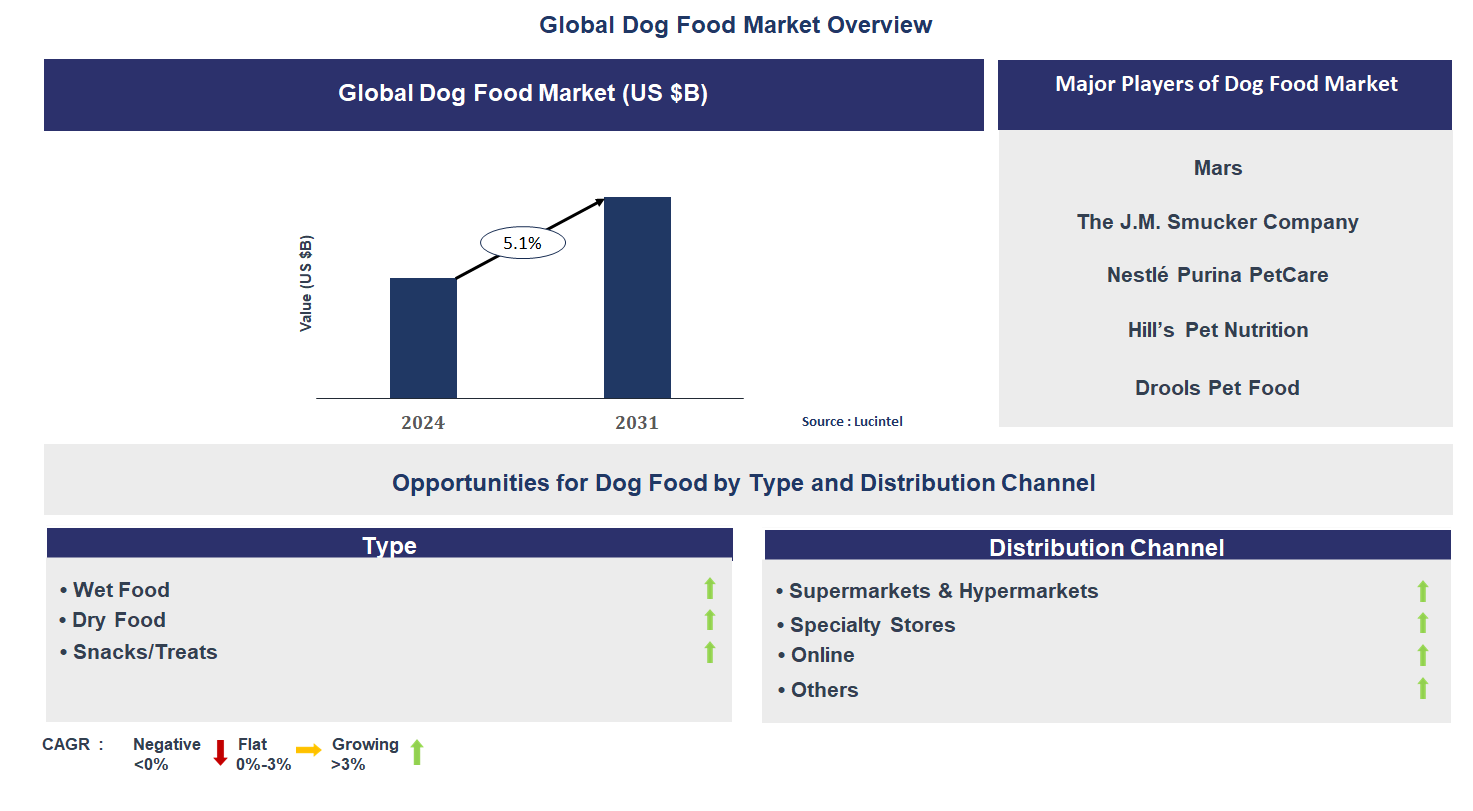
The future of the global dog food market looks promising with opportunities in the supermarket & hypermarket, specialty store, and online markets. The global dog food market is expected to grow with a CAGR of 5.1% from 2025 to 2031. The major drivers for this market are the increasing pet humanization, the rising awareness about dog health & nutrition, and the growing demand for organic & natural ingredients.• Lucintel forecasts that, within the type category, dry food is expected to witness the highest growth over the forecast period.
• Within the distribution channel category, specialty store is expected to witness the highest growth.
• In terms of region, APAC is expected to witness the highest growth over the forecast period. Gain valuable insights for your business decisions with our comprehensive 150+ page report. Sample figures with some insights are shown below.
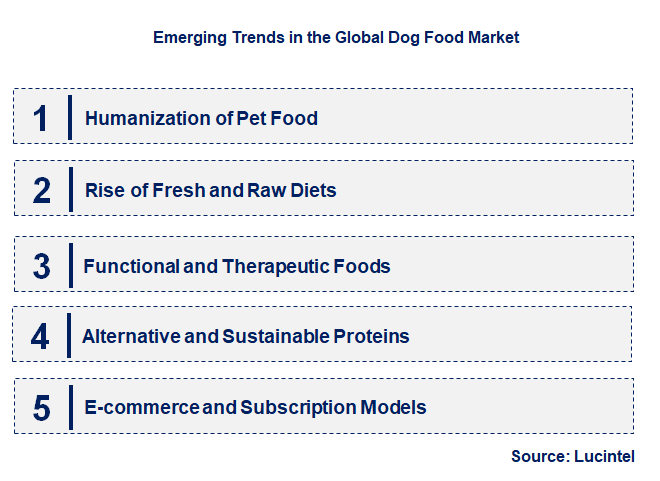
Emerging Trends in the Dog Food Market
The dog food market is being reshaped by several key trends, which are pushing the industry toward greater innovation and specialization. These trends are driven by a convergence of humanization, a focus on health and wellness, and technological advancements, all of which are influencing product development and consumer behavior.• Humanization of Pet Food: Pet owners are increasingly treating their dogs as family members, leading to a demand for food that mirrors human food standards. This includes human-grade ingredients, clean labels, and specialized formulations. This trend is driving the premiumization of the market, with owners willing to pay more for high-quality, nutritious food.
• Rise of Fresh and Raw Diets: There is a significant trend toward fresh and raw food diets, which are often prepared with whole-food ingredients and minimal processing. This is a direct response to consumer desire for natural and less-processed food. The emergence of subscription-based services has made these diets more convenient and accessible to a wider audience.
• Functional and Therapeutic Foods: Pet owners are increasingly seeking dog food with added functional benefits, such as ingredients that support joint health, digestive wellness, or skin and coat condition. This trend is driven by a greater awareness of canine health and a desire to address specific health issues through diet, leading to a new category of therapeutic food.
• Alternative and Sustainable Proteins: The market is seeing a growing trend toward alternative protein sources, such as insects, plant-based proteins, and cultured meat. This is driven by sustainability concerns, as traditional meat production has a large environmental footprint. These new proteins are also a solution for dogs with food allergies or sensitivities.
• E-commerce and Subscription Models: E-commerce has become a dominant channel for dog food sales, offering a wider variety of products and a high degree of convenience. Subscription models are particularly popular, as they ensure a regular supply of food and allow for personalized, auto-replenished feeding plans based on a dog’s specific needs. These emerging trends are fundamentally reshaping the dog food market by prioritizing health, wellness, and convenience. The humanization of pets is driving the demand for premium and specialized products, while sustainability concerns are pushing for alternative proteins. The growth of e-commerce and subscription services is making these innovative products more accessible to consumers, creating a more dynamic and personalized market.
Recent Development in the Dog Food Market
The dog food market is experiencing a period of significant development, marked by a surge in innovation and a strategic focus on specific end-user needs. These changes are influencing product offerings, manufacturing processes, and market growth, with a clear emphasis on enhancing product performance and meeting the evolving demands of pet owners.• Expansion of Fresh Food Offerings: A key recent development is the rapid expansion of fresh food products. Brands are offering minimally processed, refrigerated meals that are often delivered directly to consumers through subscription services. This addresses the demand for high-quality, human-grade food and is reshaping the traditional retail landscape.
• Introduction of Breed-Specific Formulas: Manufacturers are increasingly developing breed-specific dog food formulas tailored to the unique nutritional needs and health predispositions of different dog breeds. This development reflects a deeper understanding of canine genetics and health, providing owners with specialized products to support their dog’s specific requirements.
• Focus on Gut Health and Probiotics: There has been a significant development in products focusing on gut health. Brands are introducing dog food fortified with probiotics, prebiotics, and high-fiber ingredients to improve digestive wellness and support the immune system. This trend aligns with the growing human focus on gut health.
• Sustainable Packaging Innovations: In response to environmental concerns, dog food brands are developing sustainable packaging solutions. This includes recyclable, compostable, and biodegradable bags and pouches. This development is not only meeting consumer demand for eco-friendly products but also helping companies reduce their environmental footprint.
• Digital Integration with Smart Feeders: The integration of digital technologies, such as smart feeders and apps, is a recent development. These devices can monitor a dog’s food intake, track eating habits, and automatically re-order food. This provides convenience for pet owners and a data-driven approach to a dog’s dietary health. These recent developments are profoundly impacting the dog food market by elevating the standards of product quality and convenience. The shift toward fresh food, specialized formulas, and gut health-focused products is enhancing canine wellness, while innovations in sustainable packaging and digital integration are aligning the industry with modern consumer values and technological advancements.
Strategic Growth Opportunities in the Dog Food Market
The dog food market presents numerous strategic growth opportunities across various key applications. These opportunities are driven by the need for enhanced product quality, health, and convenience in a wide range of products. Companies can leverage these trends to innovate and expand their market presence.• E-commerce and Direct-to-Consumer Sales: The e-commerce channel offers a prime growth opportunity. Brands can bypass traditional retail by selling directly to consumers through their own websites or marketplaces. The DTC model allows for greater control over branding and customer relationships, and enables the use of subscription services for recurring revenue.
• Functional and Medicated Diets: The functional and therapeutic diet segment is a major growth area. As pet owners become more proactive about their dog’s health, there is an increasing demand for food that addresses specific health conditions like allergies, weight management, and joint issues. This high-value segment offers strong margins and brand loyalty.
• Niche Market for Senior and Puppy Food: The life-stage-specific segment, particularly for puppies and senior dogs, offers a significant opportunity. Products for these age groups require specialized nutritional profiles to support growth and development or to manage age-related health issues. This niche market is a key area for targeted marketing and product innovation.
• Specialty and Gourmet Treats: The treats and snacks segment is a high-growth area, driven by the humanization trend. Dog owners are increasingly purchasing gourmet, natural, and specialized treats that offer both a reward and a functional benefit, such as dental hygiene or joint support. This segment offers a great opportunity for product diversification.
• Sustainability and Ethical Sourcing: A strategic growth opportunity lies in capitalizing on the growing consumer demand for sustainable and ethically sourced products. Brands can differentiate themselves by using alternative proteins, transparent sourcing practices, and eco-friendly packaging, appealing to environmentally conscious consumers and building a strong brand reputation. Strategic growth opportunities in the dog food market are concentrated in high-value, consumer-centric segments. By focusing on e-commerce, functional diets, life-stage-specific products, gourmet treats, and sustainability, companies can align their strategies with the most dynamic parts of the market. This targeted approach will drive product innovation and market leadership, ensuring sustained growth and profitability.
Dog Food Market Driver and Challenges
The dog food market is influenced by a dynamic interplay of technological, economic, and regulatory factors. The major drivers are creating a strong demand for high-quality and convenient solutions, pushing the industry forward. However, several challenges related to costs, regulations, and market competition must be addressed for sustained growth. The factors responsible for driving the dog food market include: 1. Pet Humanization and Premiumization: The trend of treating dogs as family members is a major driver. This emotional bond leads owners to prioritize their dog’s health, leading to a willingness to spend more on premium, high-quality, and specialized food products, thereby expanding the market value. 2. Increased Pet Adoption Rates: A growing global pet population, particularly in urban areas, is a fundamental market driver. As more households adopt dogs, the demand for commercial dog food increases. This trend is especially prominent in emerging economies, where pet ownership is rising with economic development. 3. E-commerce and Online Retail Growth: The proliferation of e-commerce platforms has revolutionized the dog food market. Online channels offer unparalleled convenience, a vast selection of products, and subscription services, making it easier for consumers to access and purchase a wide variety of dog food brands. 4. Growing Awareness of Pet Health: Pet owners are becoming more educated about the link between nutrition and their dog’s long-term health. This heightened awareness is driving demand for functional ingredients and specialized diets that address specific health concerns, from weight management to food allergies, thereby pushing product innovation. 5. Rise in Disposable Incomes: Increasing disposable incomes in developing countries and a generally higher standard of living globally are enabling pet owners to spend more on their dogs. This economic factor is a key driver for the premium and super-premium segments of the dog food market. Challenges in the dog food market are: 1. Volatile Raw Material Prices: The primary challenge is the fluctuation in the prices of key raw materials, such as meat, grains, and specialty proteins. This volatility can significantly impact production costs and profit margins for manufacturers, making it difficult to maintain stable product pricing. 2. Stringent Regulatory Frameworks: The dog food market is subject to strict regulations regarding product safety, labeling, and ingredient sourcing. Compliance with these complex and evolving frameworks can be a significant financial burden for manufacturers, especially for new market entrants or smaller companies. 3. Intense Competition and Market Saturation: The market is highly competitive, with a large number of global and local players. This can lead to price wars, making it difficult for new brands to gain a foothold. Differentiating products and building brand loyalty in a saturated market is a major challenge. The dog food market is experiencing significant growth, primarily driven by the powerful trend of pet humanization, rising disposable incomes, and the convenience of e-commerce. However, this growth is tempered by challenges such as volatile raw material costs, the complexities of regulatory compliance, and intense market competition. The ability of industry players to innovate and build strong brands will be crucial for navigating these challenges and ensuring sustained market growth.List of Dog Food Companies
Companies in the market compete on the basis of product quality offered. Major players in this market focus on expanding their manufacturing facilities, R&D investments, infrastructural development, and leverage integration opportunities across the value chain. With these strategies dog food companies cater increasing demand, ensure competitive effectiveness, develop innovative products & technologies, reduce production costs, and expand their customer base. Some of the dog food companies profiled in this report include-• Mars
• The J.M. Smucker Company
• Nestlé Purina PetCare
• Hill’s Pet Nutrition
• Drools Pet Food
• CANIN
• Nulo
• SCHELL & KAMPETER
• Ainsworth Pet Nutrition
• Agro Food Industries
Dog Food Market by Segment
The study includes a forecast for the global dog food market by type, distribution channel, and region.Dog Food Market by Type [Value from 2019 to 2031]:
• Wet Food
• Dry Food
• Snacks/Treats
Dog Food Market by Distribution Channel [Value from 2019 to 2031]:
• Supermarkets & Hypermarkets
• Specialty Stores
• Online
• Others
Dog Food Market by Region [Value from 2019 to 2031]:
• North America
• Europe
• Asia Pacific
• The Rest of the World
Country Wise Outlook for the Dog Food Market
The global dog food market is experiencing a significant shift, driven by the "humanization of pets" trend. This has led to a surge in demand for premium, natural, and specialized dog food options that mirror human dietary trends. Recent developments are focused on product innovation, sustainability, and expanded distribution channels across major global markets.• United States: The U.S. market is a leader in premiumization and specialization. Pet owners are increasingly willing to spend more on high-quality, human-grade, and limited-ingredient foods. Recent developments include a rise in subscription-based services for fresh and raw food diets, as well as the introduction of functional foods targeting specific health issues.
• China: China’s dog food market is rapidly expanding, fueled by rising disposable incomes and a growing urban pet-owning population. The market is increasingly adopting premium foreign brands and products that emphasize health and nutrition. E-commerce platforms are a primary growth driver, making a wide variety of domestic and international products accessible to consumers.
• Germany: Germany’s market is characterized by a strong focus on natural, organic, and ethically sourced ingredients. Recent developments show a preference for eco-friendly packaging and locally produced food. The market is also seeing an increase in specialty retail and online channels, catering to consumers who prioritize sustainability and quality.
• India: India’s dog food market is in a phase of robust growth, driven by a surge in pet adoption and increasing awareness of pet nutrition. The market is shifting from home-cooked food to commercial dog food. Recent developments include the entry of new international brands and a focus on providing breed-specific and life-stage-specific diets to meet diverse needs.
• Japan: Japan’s dog food market is highly sophisticated, focusing on specialized and high-quality products for smaller dog breeds common in urban settings. Developments include a move towards functional foods that address common health issues in senior dogs. The market also emphasizes innovative packaging and convenience for busy pet owners.

Features of the Global Dog Food Market
Market Size Estimates: Dog food market size estimation in terms of value ($B). Trend and Forecast Analysis: Market trends (2019 to 2024) and forecast (2025 to 2031) by various segments and regions. Segmentation Analysis: Dog food market size by type, distribution channel, and region in terms of value ($B). Regional Analysis: Dog food market breakdown by North America, Europe, Asia Pacific, and Rest of the World. Growth Opportunities: Analysis of growth opportunities in different types, distribution channels, and regions for the dog food market. Strategic Analysis: This includes M&A, new product development, and competitive landscape of the dog food market. Analysis of competitive intensity of the industry based on Porter’s Five Forces model.
FAQ
Q1. What is the growth forecast for dog food market? Answer: The global dog food market is expected to grow with a CAGR of 5.1% from 2025 to 2031. Q2. What are the major drivers influencing the growth of the dog food market? Answer: The major drivers for this market are the increasing pet humanization, the rising awareness about dog health & nutrition, and the growing demand for organic & natural ingredients. Q3. What are the major segments for dog food market? Answer: The future of the dog food market looks promising with opportunities in the supermarket & hypermarket, specialty store, and online markets. Q4. Who are the key dog food market companies? Answer: Some of the key dog food companies are as follows:• Mars
• The J.M. Smucker Company
• Nestlé Purina PetCare
• Hill’s Pet Nutrition
• Drools Pet Food
• CANIN
• Nulo
• SCHELL & KAMPETER
• Ainsworth Pet Nutrition
• Agro Food Industries Q5. Which dog food market segment will be the largest in future? Answer: Lucintel forecasts that, within the type category, dry food is expected to witness the highest growth over the forecast period. Q6. In dog food market, which region is expected to be the largest in next 5 years? Answer: In terms of region, APAC is expected to witness the highest growth over the forecast period. Q7. Do we receive customization in this report? Answer: Yes, Lucintel provides 10% customization without any additional cost.
Table of Contents
List of Figures
List of Tables
Methodology
- In-depth interviews of the major players in this market
- Detailed secondary research from competitors’ financial statements and published data
- Extensive searches of published works, market, and database information pertaining to industry news, company press releases, and customer intentions
- A compilation of the experiences, judgments, and insights of Lucintel’s professionals, who have analyzed and tracked this market over the years.


Buy Now
Choose a license that fits your team. Instant PDF delivery.
Prices exclude taxes. Instant delivery. Custom licensing available on request.
Key Questions
- • What are some of the most promising, high-growth opportunities for the dog food market by type (wet food, dry food, and snacks/treats), distribution channel (supermarkets & hypermarkets, specialty stores, online, and others), and region (North America, Europe, Asia Pacific, and the Rest of the World)?
- • Which segments will grow at a faster pace and why?
- • Which region will grow at a faster pace and why?
- • What are the key factors affecting market dynamics? What are the key challenges and business risks in this market?
- • What are the business risks and competitive threats in this market?
- • What are the emerging trends in this market and the reasons behind them?
- • What are some of the changing demands of customers in the market?
- • What are the new developments in the market? Which companies are leading these developments?
- • Who are the major players in this market? What strategic initiatives are key players pursuing for business growth?
- • What are some of the competing products in this market and how big of a threat do they pose for loss of market share by material or product substitution?
- • What M&A activity has occurred in the last 5 years and what has its impact been on the industry? For any questions related to Dog Food Market, Dog Food Market Size, Dog Food Market Growth, Dog Food Market Analysis, Dog Food Market Report, Dog Food Market Share, Dog Food Market Trends, Dog Food Market Forecast, Dog Food Companies, write Lucintel analyst at email: helpdesk@lucintel.com. We will be glad to get back to you soon.


