
Report Feature
DNA Microarray Market Trends and Forecast
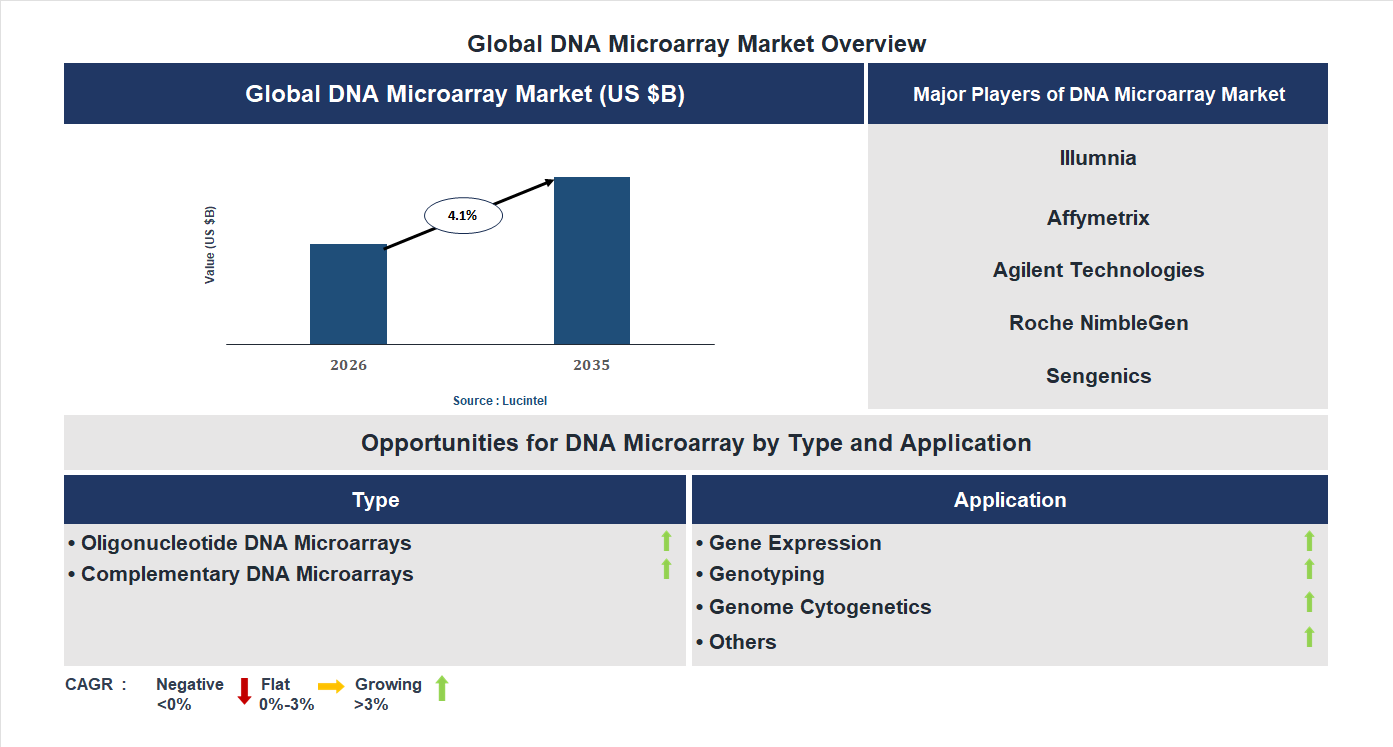
The future of the global DNA microarray market looks promising with opportunities in the gene expression, genotyping, and genome cytogenetics markets. The global DNA microarray market is expected to reach an estimated $6 billion by 2035 with a CAGR of 8.4% from 2026 to 2035. The major drivers for this market are the increasing demand for genomic research, the rising adoption in disease diagnostics, and the growing use in drug discovery.• Lucintel forecasts that, within the type category, oligonucleotide DNA microarray is expected to witness higher growth over the forecast period.
• Within the application category, gene expression is expected to witness the highest growth.
• In terms of region, APAC is expected to witness the highest growth over the forecast period. Gain valuable insights for your business decisions with our comprehensive 150+ page report. Sample figures with some insights are shown below.
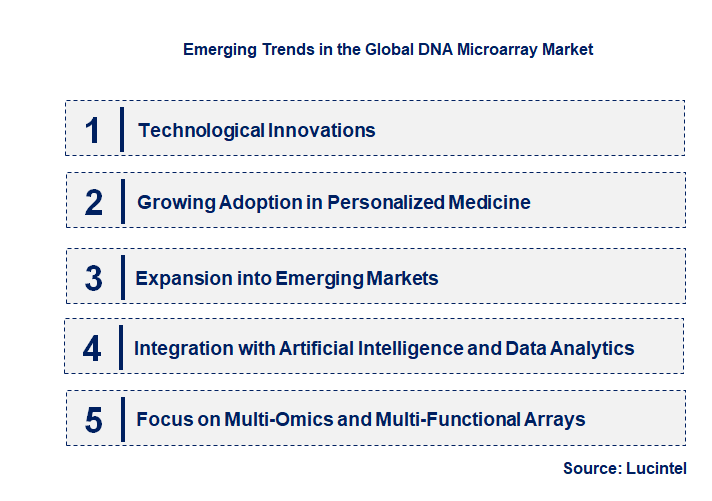
Emerging Trends in the DNA Microarray Market
The DNA microarray market is experiencing rapid evolution driven by technological advancements, increasing demand for personalized medicine, and expanding applications across research and clinical diagnostics. As genomic research accelerates, the market is adapting to new challenges and opportunities, leading to innovative solutions and strategic collaborations. These developments are transforming how genetic information is analyzed, interpreted, and applied, ultimately impacting healthcare, agriculture, and biotechnology sectors. Understanding these emerging trends is crucial for stakeholders aiming to stay competitive and leverage new growth avenues in this dynamic landscape.• Technological Innovations: Advancements in microarray design and manufacturing are enhancing sensitivity, accuracy, and throughput. New materials and miniaturization techniques enable higher-density arrays, allowing for more comprehensive genetic analysis. These innovations reduce costs and improve data quality, making microarrays more accessible for diverse applications. As technology progresses, integration with other genomic tools like next-generation sequencing is expected to further expand capabilities, driving market growth and opening new research and diagnostic opportunities.
• Growing Adoption in Personalized Medicine: The shift towards personalized healthcare is fueling demand for DNA microarrays capable of detailed genetic profiling. These tools facilitate the identification of genetic variants linked to diseases, enabling tailored treatment plans. The increasing prevalence of chronic diseases and cancer is accelerating adoption in clinical settings. This trend is supported by regulatory approvals and reimbursement policies, which are making microarray-based diagnostics more mainstream. As a result, the market is witnessing a surge in clinical applications, transforming patient care and treatment outcomes.
• Expansion into Emerging Markets: Developing regions are increasingly adopting DNA microarray technologies due to rising investments in healthcare infrastructure and research. Governments and private organizations are funding genomics initiatives, creating new opportunities for market players. Local manufacturing and cost-effective solutions are making microarrays more affordable and accessible. This expansion not only broadens the market base but also fosters regional innovation and research collaborations, contributing to a more globalized and inclusive DNA microarray industry.
• Integration with Artificial Intelligence and Data Analytics: The vast amount of data generated by microarrays necessitates advanced analytical tools. Incorporating AI and machine learning algorithms enhances data interpretation, enabling more accurate and faster insights. These technologies facilitate biomarker discovery, disease prediction, and treatment optimization. The integration is also improving the development of diagnostic panels and personalized therapies. As AI-driven analytics become more sophisticated, they are revolutionizing data management and decision-making processes within the DNA microarray market, leading to more precise and efficient outcomes.
• Focus on Multi-Omics and Multi-Functional Arrays: The trend towards multi-omics approaches combines genomics, transcriptomics, proteomics, and metabolomics data for comprehensive biological insights. Multi-functional microarrays capable of analyzing multiple data types simultaneously are gaining popularity. This holistic approach enhances understanding of complex diseases and biological systems. It also accelerates biomarker discovery and drug development. The market is witnessing increased R&D investments in multi-omics platforms, which are expected to drive innovation and expand the scope of applications, making microarrays more versatile and impactful. These emerging trends are reshaping the DNA microarray market by fostering technological innovation, expanding clinical and geographical reach, and integrating advanced data analytics. These developments are not only enhancing the efficiency and scope of genetic analysis but also paving the way for more personalized, precise, and accessible genomic solutions across various sectors.
Recent Development in the DNA Microarray Market
The DNA microarray market is experiencing rapid growth driven by technological advancements, increasing demand for personalized medicine, and expanding applications in genomics research. These developments are transforming diagnostics, drug discovery, and genetic analysis, creating new opportunities for stakeholders. As the market evolves, innovative solutions and strategic collaborations are expected to further accelerate growth, making DNA microarrays a vital tool in modern biotechnology and healthcare sectors.• Growing Adoption in Personalized Medicine: The increasing use of DNA microarrays for personalized treatment plans is revolutionizing healthcare. By enabling precise genetic profiling, these tools help tailor therapies to individual genetic makeup, improving outcomes and reducing adverse effects. This trend is driven by advancements in genomics and a rising prevalence of genetic disorders. The market benefits from expanded applications in oncology, pharmacogenomics, and rare disease diagnostics, fostering significant growth opportunities for biotech companies and healthcare providers.
• Technological Innovations Enhancing Accuracy: Recent developments in microarray technology, such as higher-density arrays and improved detection methods, have significantly increased accuracy and sensitivity. These innovations allow for more comprehensive genetic analysis, including rare mutation detection and gene expression profiling. Enhanced reliability and resolution are attracting more research institutions and clinical laboratories, expanding the market scope. The improved technology also reduces costs and turnaround times, making DNA microarrays more accessible and boosting adoption across various sectors.
• Expansion of Applications in Genomics Research: DNA microarrays are increasingly used in genomics research to study gene functions, interactions, and variations. Their ability to analyze thousands of genes simultaneously accelerates discoveries in disease mechanisms and drug targets. The expanding scope includes epigenetics, transcriptomics, and microbiome studies. This broad application base is driving market growth, supported by government funding and collaborations between academia and industry, which foster innovation and commercialization of new microarray-based solutions.
• Rising Demand in Clinical Diagnostics: The clinical diagnostics sector is rapidly adopting DNA microarrays for detecting genetic mutations, infectious diseases, and cancer biomarkers. Their high-throughput capability and accuracy make them ideal for early diagnosis and disease monitoring. The increasing prevalence of genetic disorders and infectious diseases globally fuels demand. Regulatory approvals and technological improvements are further facilitating market penetration. This trend is expected to significantly contribute to the market’s expansion, especially in developed healthcare systems.
• Strategic Collaborations and Market Expansion: Companies are forming strategic alliances to develop advanced microarray platforms and expand their market reach. Collaborations with research institutions and healthcare providers are fostering innovation and commercialization. Geographic expansion into emerging markets is also a key focus, driven by rising healthcare infrastructure and genetic testing awareness. These strategic moves are enhancing product portfolios, increasing market penetration, and driving overall growth, positioning DNA microarray technology as a cornerstone in genomics and personalized medicine. These recent developments are significantly impacting the DNA microarray market by enhancing technological capabilities, expanding application areas, and increasing adoption in clinical and research settings. Strategic collaborations and market expansion efforts are further fueling growth, making DNA microarrays more accessible and versatile. Overall, these opportunities are driving innovation, improving diagnostic accuracy, and supporting personalized medicine, which collectively are propelling the market toward sustained growth and broader adoption worldwide.
Strategic Growth Opportunities in the DNA Microarray Market
The DNA microarray market is experiencing rapid expansion driven by advancements in genomics, personalized medicine, and biotechnology. Increasing demand for high-throughput genetic analysis, cancer research, and drug development is fueling growth. Technological innovations and decreasing costs are making microarrays more accessible across various sectors. Strategic investments and collaborations are further accelerating market penetration. This dynamic environment presents numerous opportunities for stakeholders to innovate, expand applications, and capture new markets, ultimately transforming healthcare and research landscapes globally.• Expanding Applications in Personalized Medicine: The growing need for tailored treatments is driving the adoption of DNA microarrays in personalized medicine. These tools enable precise genetic profiling, helping clinicians identify genetic predispositions and optimize therapies. As healthcare shifts toward individualized approaches, microarrays will play a crucial role in diagnostics, treatment planning, and monitoring, creating significant growth opportunities for biotech firms and healthcare providers.
• Increasing Adoption in Cancer Research and Diagnostics: DNA microarrays are vital for understanding cancer genomics, identifying mutations, and developing targeted therapies. Their ability to analyze gene expression patterns rapidly makes them indispensable in oncology research and diagnostics. The rising prevalence of cancer and the demand for early detection and personalized treatment options are expected to boost microarray usage, fostering innovation and expanding market share in this segment.
• Technological Innovations Enhancing Microarray Capabilities: Advances in nanotechnology, automation, and data analysis are improving microarray performance, sensitivity, and throughput. These innovations reduce costs and increase accuracy, making microarrays more attractive for research and clinical applications. Continuous technological development will open new avenues for complex genetic studies, drug discovery, and biomarker identification, fueling market growth and broadening application scope.
• Growing Demand in Agricultural Genomics and Food Safety: DNA microarrays are increasingly used in crop improvement, pest resistance, and food safety testing. They enable rapid screening of genetic traits and pathogen detection, supporting sustainable agriculture and food security. The expanding global population and need for resilient crops and safe food supply chains present significant opportunities for microarray technology deployment in agriculture and the food industries.
• Strategic Collaborations and Market Expansion Initiatives: Partnerships between biotech firms, research institutions, and pharmaceutical companies are accelerating innovation and market penetration. These collaborations facilitate technology sharing, funding, and access to new markets. Additionally, expanding geographic presence in emerging economies offers growth potential. Such strategic initiatives will enhance product offerings, drive adoption, and solidify market position, ensuring sustained growth in the DNA microarray industry. The overall impact of these opportunities is set to significantly enhance the DNA microarray market, fostering innovation, expanding applications, and increasing accessibility. This growth will support advancements in healthcare, agriculture, and research, ultimately contributing to improved diagnostics, personalized treatments, and sustainable practices worldwide.
DNA Microarray Market Driver and Challenges
The DNA microarray market is influenced by a complex interplay of technological advancements, economic factors, and regulatory frameworks. Rapid innovations in genomics and personalized medicine are fueling demand for high-throughput genetic analysis tools. Economic growth in healthcare sectors worldwide and increased funding for biotech research further propel market expansion. However, regulatory challenges related to data privacy, standardization, and approval processes pose significant hurdles. Additionally, technological challenges such as data management and assay accuracy impact market growth. Understanding these drivers and challenges is essential for stakeholders to navigate the evolving landscape and capitalize on emerging opportunities. The factors responsible for driving the DNA microarray market include:• Technological Innovation: Rapid advancements in microarray technology, including higher resolution and multiplexing capabilities, enable more precise genetic analysis. These innovations improve diagnostic accuracy, facilitate personalized medicine, and expand research applications. As technology becomes more affordable and accessible, adoption rates increase across clinical and research settings, driving market growth. Continuous R&D efforts ensure the development of novel microarray platforms, further fueling demand and expanding the market scope.
• Growing Prevalence of Genetic Disorders: The rising incidence of genetic disorders and hereditary diseases worldwide increases the need for early diagnosis and personalized treatment options. DNA microarrays enable comprehensive genetic screening, making them essential tools in clinical diagnostics. As awareness about genetic testing grows among healthcare providers and patients, the demand for microarray-based solutions surges, contributing significantly to market expansion.
• Increasing Adoption in Oncology and Infectious Disease Diagnostics: DNA microarrays are increasingly used for cancer profiling and infectious disease detection due to their ability to analyze multiple genetic markers simultaneously. This multiplexing capability accelerates diagnosis and treatment planning, especially in personalized oncology. The expanding application in these critical areas boosts market revenue and encourages further technological development tailored to these fields.
• Rising Investment in Genomics Research: Governments, private organizations, and academic institutions are investing heavily in genomics research to understand complex diseases and develop targeted therapies. DNA microarrays are vital tools in large-scale genomic studies, enabling high-throughput analysis at reduced costs. This influx of funding accelerates innovation, expands research capabilities, and broadens the market’s scope, fostering long-term growth.
• Increasing Focus on Precision Medicine: The shift towards personalized treatment approaches necessitates detailed genetic information, which DNA microarrays provide efficiently. The demand for tailored therapies in oncology, rare diseases, and pharmacogenomics drives the adoption of microarray technology. As healthcare systems prioritize precision medicine, the market experiences sustained growth driven by the need for accurate, rapid genetic analysis. The challenges facing the DNA microarray market include:
• Data Privacy and Ethical Concerns: The extensive genetic data generated by DNA microarrays raises significant privacy issues. Ensuring data security and addressing ethical concerns related to genetic information sharing are critical hurdles. Regulatory bodies are implementing stricter guidelines, which can delay product approvals and market entry. Companies must invest in secure data management systems and navigate complex legal landscapes, potentially increasing costs and slowing innovation.
• Standardization and Validation Issues: Lack of uniform standards and validation protocols for microarray platforms hampers widespread adoption. Variability in assay performance and data interpretation can lead to inconsistent results, affecting clinical reliability. Regulatory agencies require rigorous validation, which can be time-consuming and costly. Overcoming these standardization challenges is essential for gaining regulatory approval and building trust among healthcare providers.
• High Cost and Limited Accessibility: Despite technological advancements, the high cost of microarray platforms and associated consumables limits accessibility, especially in low-resource settings. This restricts market growth in emerging economies and hampers widespread clinical implementation. Additionally, the need for specialized infrastructure and trained personnel further elevates costs, creating barriers for smaller laboratories and clinics to adopt microarray technologies. The DNA microarray market is driven by technological progress, increasing genetic disease prevalence, and expanding research investments, which collectively foster growth and innovation. However, challenges such as data privacy concerns, standardization issues, and high costs pose significant barriers. Addressing these challenges through regulatory clarity, technological standardization, and cost reduction strategies will be crucial for sustainable market expansion. Overall, the markets future hinges on balancing innovation with regulatory and economic considerations to meet the growing demand for genetic analysis solutions.
List of DNA Microarray Companies
Companies in the market compete on the basis of product quality offered. Major players in this market focus on expanding their manufacturing facilities, R&D investments, infrastructural development, and leverage integration opportunities across the value chain. With these strategies DNA microarray companies cater increasing demand, ensure competitive effectiveness, develop innovative products & technologies, reduce production costs, and expand their customer base. Some of the DNA microarray companies profiled in this report include-• Illumina
• Affymetrix
• Agilent Technologies
• Roche NimbleGen
• Sengenics
• Arrayit
• Applied Microarrays
• Biometrix Technology
• Savyon Diagnostics
• Scienion
DNA Microarray Market by Segment
The study includes a forecast for the global DNA microarray market by type, application, and region.DNA Microarray Market by Type [Value from 2019 to 2035]:
• Oligonucleotide DNA Microarrays
• Complementary DNA Microarrays
DNA Microarray Market by Application [Value from 2019 to 2035]:
• Gene Expression
• Genotyping
• Genome Cytogenetics
• Others
DNA Microarray Market by Region [Value from 2019 to 2035]:
• North America
• Europe
• Asia Pacific
• The Rest of the World
Country Wise Outlook for the DNA Microarray Market
The DNA microarray market has experienced significant growth driven by advancements in genomics, personalized medicine, and biotechnology. As technology becomes more accessible and affordable, countries are investing heavily in research and development to enhance diagnostic capabilities, drug discovery, and agricultural applications. The markets evolution is also influenced by regulatory changes, increasing collaborations, and innovations in microarray technology, such as higher throughput and improved accuracy. These developments reflect a global shift towards precision medicine and molecular diagnostics, with each country contributing uniquely based on its research infrastructure, healthcare priorities, and technological investments.• United States: The DNA microarray market is expanding rapidly due to a strong biotech industry, increased R&D funding, and adoption in personalized medicine. Key advancements include integration with next-generation sequencing and development of high-density arrays, boosting diagnostic and research applications.
• China: China is witnessing rapid growth driven by government initiatives, increasing investments in biotech, and expanding healthcare infrastructure. The focus is on developing affordable microarray solutions and expanding applications in agriculture and disease diagnostics.
• Germany: Germanys market is characterized by technological innovation and a focus on clinical diagnostics and research. The country emphasizes quality and regulatory compliance, with collaborations between academia and industry fostering new microarray platforms.
• India: India is experiencing growth through rising healthcare awareness, government support, and increasing adoption of molecular diagnostics. The market is also driven by affordability and expanding applications in infectious diseases and genetic testing.
• Japan: Japan's DNA microarray market is driven by advanced research institutions and a focus on precision medicine. Innovations include integration with other omics technologies and development of specialized arrays for cancer and rare diseases, supported by strong regulatory frameworks.

Features of the Global DNA Microarray Market
Market Size Estimates: DNA microarray market size estimation in terms of value ($B). Trend and Forecast Analysis: Market trends (2019 to 2025) and forecast (2026 to 2035) by various segments and regions. Segmentation Analysis: DNA microarray market size by type, application, and region in terms of value ($B). Regional Analysis: DNA microarray market breakdown by North America, Europe, Asia Pacific, and Rest of the World. Growth Opportunities: Analysis of growth opportunities in different types, applications, and regions for the DNA microarray market. Strategic Analysis: This includes M&A, new product development, and competitive landscape of the DNA microarray market. Analysis of competitive intensity of the industry based on Porter’s Five Forces model.
FAQ
Q1. What is the market size and growth forecast for DNA microarray market? Answer: The global DNA microarray market is expected to reach an estimated $6 billion by 2035 and grow with a CAGR of 8.4% from 2026 to 2035. Q2. What are the major drivers influencing the growth of the DNA microarray market? Answer: The major drivers for this market are the increasing demand for genomic research, the rising adoption in disease diagnostics, and the growing use in drug discovery. Q3. What are the major segments for DNA microarray market? Answer: The future of the DNA microarray market looks promising with opportunities in the gene expression, genotyping, and genome cytogenetics markets. Q4. Who are the key DNA microarray market companies? Answer: Some of the key DNA microarray companies are as follows:• Illumina
• Affymetrix
• Agilent Technologies
• Roche NimbleGen
• Sengenics
• Arrayit
• Applied Microarrays
• Biometrix Technology
• Savyon Diagnostics
• Scienion Q5. Which DNA microarray market segment will be the largest in future? Answer: Lucintel forecasts that, within the type category, oligonucleotide DNA microarray is expected to witness higher growth over the forecast period. Q6. In DNA microarray market, which region is expected to be the largest in next 5 years? Answer: In terms of region, APAC is expected to witness the highest growth over the forecast period. Q7. Do we receive customization in this report? Answer: Yes, Lucintel provides 10% customization without any additional cost.
Table of Contents
List of Figures
List of Tables
Methodology
- In-depth interviews of the major players in this market
- Detailed secondary research from competitors’ financial statements and published data
- Extensive searches of published works, market, and database information pertaining to industry news, company press releases, and customer intentions
- A compilation of the experiences, judgments, and insights of Lucintel’s professionals, who have analyzed and tracked this market over the years.


Buy Now
Choose a license that fits your team. Instant PDF delivery.
Prices exclude taxes. Instant delivery. Custom licensing available on request.
Key Questions
- • What are some of the most promising, high-growth opportunities for the DNA microarray market by type (oligonucleotide DNA microarrays and complementary DNA microarrays), application (gene expression, genotyping, genome cytogenetics, and others), and region (North America, Europe, Asia Pacific, and the Rest of the World)?
- • Which segments will grow at a faster pace and why?
- • Which region will grow at a faster pace and why?
- • What are the key factors affecting market dynamics? What are the key challenges and business risks in this market?
- • What are the business risks and competitive threats in this market?
- • What are the emerging trends in this market and the reasons behind them?
- • What are some of the changing demands of customers in the market?
- • What are the new developments in the market? Which companies are leading these developments?
- • Who are the major players in this market? What strategic initiatives are key players pursuing for business growth?
- • What are some of the competing products in this market and how big of a threat do they pose for loss of market share by material or product substitution?
- • What M&A activity has occurred in the last 7 years and what has its impact been on the industry? For any questions related to DNA Microarray Market, DNA Microarray Market Size, DNA Microarray Market Growth, DNA Microarray Market Analysis, DNA Microarray Market Report, DNA Microarray Market Share, DNA Microarray Market Trends, DNA Microarray Market Forecast, DNA Microarray Companies, write Lucintel analyst at email: helpdesk@lucintel.com. We will be glad to get back to you soon.


