Diode Heat Pipe Market Trends and Forecast
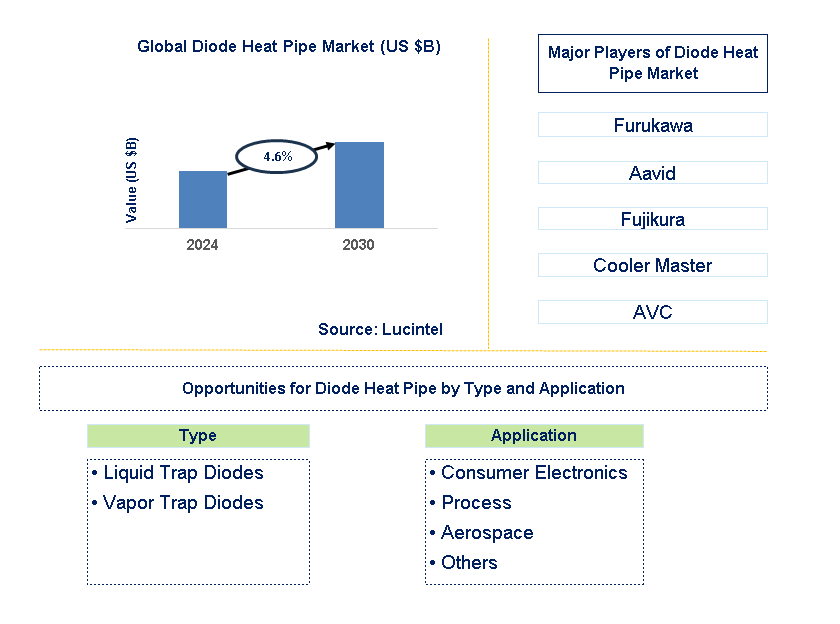
The future of the global diode heat pipe market looks promising with opportunities in the consumer electronics, process industry, and aerospace markets. The global diode heat pipe market is expected to grow with a CAGR of 8.4% from 2025 to 2031. The major drivers for this market are the rising focus on energy-efficient systems and the increasing need for space-saving designs.
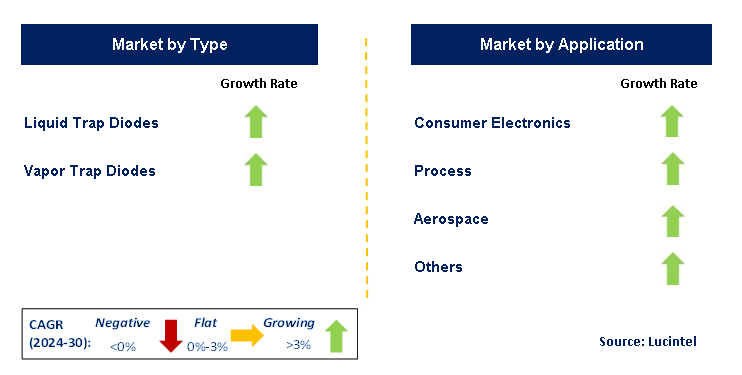
• Lucintel forecasts that, within the type category, the vapor trap diode is expected to witness higher growth over the forecast period.
• Within the application category, consumer electronics is expected to witness the highest growth.
• In terms of region, APAC is expected to witness the highest growth over the forecast period.
Gain valuable insights for your business decisions with our comprehensive 150+ page report. Sample figures with some insights are shown below.
Emerging Trends in the Diode Heat Pipe Market
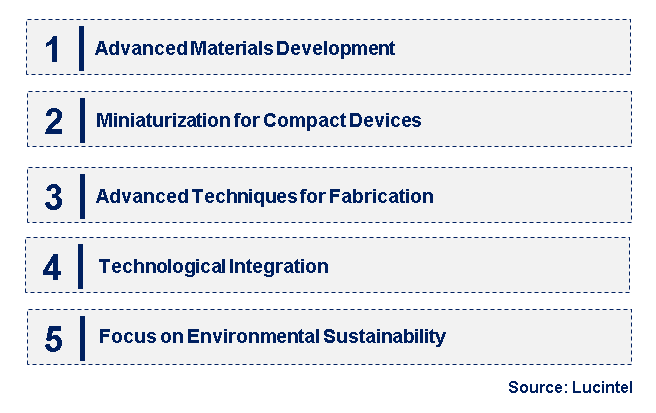
The diode heat pipe market is evolving rapidly due to a combination of technological innovations, increased demand for energy-efficient systems, and the need for better thermal management solutions. As industries seek more compact, efficient, and sustainable solutions, several key trends are emerging. These trends are reshaping the market, pushing manufacturers to adopt new materials, designs, and applications to meet the growing demand.
• Use of Advanced Materials: One of the key trends in the diode heat pipe market is the increasing use of advanced materials, such as graphene, carbon nanotubes, and high-thermal-conductivity composites. These materials are being integrated into the design of diode heat pipes to enhance heat dissipation capabilities while maintaining lightweight structures. The use of these materials enables manufacturers to create more efficient and compact heat pipes, which are essential for next-generation electronics, electric vehicles, and aerospace applications. The incorporation of these advanced materials is driving innovation and improving overall system performance.
• Integration in Electric Vehicles (EVs): The growing demand for electric vehicles is a significant trend driving the adoption of diode heat pipes in the automotive sector. EVs require efficient thermal management to optimize battery performance, improve safety, and extend battery life. Diode heat pipes are being integrated into electric vehicles to provide cooling solutions for power electronics, batteries, and electric motors. As the global electric vehicle market expands, the need for reliable and efficient thermal management systems will continue to grow, creating opportunities for the diode heat pipe market to thrive.
• Miniaturization of Heat Management Systems: As electronic devices become smaller and more powerful, the demand for miniaturized heat management systems is rising. Diode heat pipes play a key role in meeting these requirements, as they can be designed to fit into compact spaces while providing effective heat dissipation. The trend toward miniaturization is particularly evident in the smartphone, wearable, and consumer electronics industries, where thermal management is becoming increasingly critical to ensure device longevity and performance. The ability to integrate diode heat pipes into smaller, more energy-efficient devices will continue to drive the market’s growth.
• Sustainability and Environmental Concerns: Sustainability is a growing focus across various industries, and the diode heat pipe market is no exception. Manufacturers are increasingly focusing on creating heat pipes made from environmentally friendly and sustainable materials. The use of recyclable and non-toxic materials is gaining traction, particularly in the automotive and electronics sectors. In addition to improving the efficiency of thermal management systems, these environmentally conscious innovations help reduce the carbon footprint of products and contribute to the circular economy. This trend is reshaping the market by pushing manufacturers to prioritize sustainability in their designs.
• Expansion in Aerospace and Space Exploration: The aerospace and space exploration industries are increasingly adopting diode heat pipes for their ability to manage heat in extreme environments. Diode heat pipes are essential for thermal control in spacecraft, satellites, and other aerospace components, where managing heat is critical to ensure the reliability of electronic systems and equipment. As space exploration missions continue to expand and evolve, the demand for advanced thermal management solutions will increase, providing significant opportunities for the diode heat pipe market to grow in this sector.
Emerging trends such as the use of advanced materials, the integration of diode heat pipes in electric vehicles, the miniaturization of heat management systems, sustainability efforts, and the expansion of aerospace applications are reshaping the diode heat pipe market. These trends are driving innovation, enhancing performance, and increasing the adoption of diode heat pipes in various industries.
Recent Development in the Diode Heat Pipe Market
Recent developments in the diode heat pipe market highlight the increasing need for more efficient thermal management solutions across various industries. Technological advancements, along with growing demand for high-performance devices in electronics, automotive, and aerospace, are driving these developments. Below are five key developments that are significantly shaping the market.
• Development of High-Efficiency Diode Heat Pipes: Manufacturers are focusing on improving the efficiency of diode heat pipes by using advanced materials and innovative designs. The development of high-thermal-conductivity composites, such as graphene and carbon nanotubes, has significantly improved heat dissipation rates. These advancements are making diode heat pipes more effective in managing the thermal demands of high-power electronic devices, such as semiconductors, LEDs, and processors. As these technologies evolve, diode heat pipes are becoming increasingly efficient, enabling more compact designs for high-performance applications.
• Enhanced Integration with Electric Vehicle Battery Systems: The growing adoption of electric vehicles has led to the integration of diode heat pipes in electric vehicle (EV) battery systems. Diode heat pipes help maintain optimal battery temperature by efficiently dissipating heat generated during charging and discharging cycles. This improves the performance, safety, and lifespan of EV batteries. Several companies are now incorporating these heat pipes into their EV designs, which is driving the demand for high-performance thermal management systems in the automotive industry.
• Expansion into Aerospace and Space Applications: Aerospace and space industries increasingly rely on diode heat pipes to manage the heat produced by sensitive electronic equipment in spacecraft, satellites, and space probes. The ability of diode heat pipes to operate in extreme conditions, such as high radiation levels and temperature fluctuations, makes them ideal for these applications. Innovations in radiation-hardened diode heat pipes enable space agencies to use these systems for long-duration missions, leading to growth in the aerospace and space exploration sectors.
• Miniaturization of Diode Heat Pipe Designs: With the continued trend toward miniaturization in consumer electronics, manufacturers are focusing on developing smaller diode heat pipes that can provide effective heat management in compact devices. Diode heat pipes are being designed to fit into tight spaces in smartphones, laptops, and wearable devices, where efficient heat dissipation is crucial to maintaining performance and longevity. This miniaturization is helping drive the growth of the diode heat pipe market in consumer electronics and portable devices.
• Sustainability and Eco-Friendly Diode Heat Pipes: Sustainability is becoming a significant factor in the development of diode heat pipes. Manufacturers are increasingly focusing on creating heat pipes that use environmentally friendly materials, such as recyclable metals and non-toxic compounds. This trend is being driven by both consumer demand for green products and regulatory pressures for sustainable production. The use of eco-friendly materials in diode heat pipes is not only helping to reduce environmental impact but also enhancing the market’s appeal in industries focused on reducing their carbon footprints.
Key developments in the diode heat pipe market, including improvements in efficiency, integration with electric vehicles, expansion into aerospace, miniaturization, and sustainability efforts, are driving the market forward. These innovations are enabling diode heat pipes to meet the growing thermal management demands of various high-performance applications.
Strategic Growth Opportunities in the Diode Heat Pipe Market
The diode heat pipe market offers various strategic growth opportunities across key applications, such as automotive, aerospace, consumer electronics, and industrial sectors. By targeting these opportunities, manufacturers can capitalize on increasing demand for energy-efficient thermal management solutions. Below are five key growth opportunities by application that are shaping the future of the diode heat pipe market.
• Automotive Industry and Electric Vehicles: The automotive industry’s shift toward electric vehicles presents a significant growth opportunity for the diode heat pipe market. With the increasing adoption of EVs, there is a growing need for advanced thermal management systems, especially in battery cooling and power electronics. Diode heat pipes can offer effective solutions for temperature regulation in these systems, making them an essential component in next-generation EV designs.
• Aerospace and Space Exploration: Aerospace and space exploration industries present a high-growth opportunity for diode heat pipes due to their ability to operate in extreme conditions. The growing number of space missions, satellite launches, and aerospace applications requiring advanced thermal management systems is boosting demand for diode heat pipes. As space exploration continues to expand, this application offers significant opportunities for the market.
• Consumer Electronics and Mobile Devices: With the miniaturization of consumer electronics, including smartphones, laptops, and wearable devices, the demand for efficient heat management is rising. Diode heat pipes are becoming crucial components in these devices to ensure optimal performance, prevent overheating, and enhance device longevity. Manufacturers focusing on integrating diode heat pipes into these products can benefit from a growing market.
• Industrial Automation and Robotics: In industrial automation, diode heat pipes are increasingly being used to maintain the temperature stability of machinery, robotics, and sensors. As industries move toward automation and smart manufacturing, the demand for advanced thermal management solutions will rise. The use of diode heat pipes in industrial applications provides a growth opportunity in sectors such as manufacturing, robotics, and process control.
• LED Lighting Systems: The LED lighting industry is another key application driving the demand for diode heat pipes. As LEDs become more widely adopted in various sectors, managing their thermal load is critical for ensuring longer lifespans and efficiency. Diode heat pipes can be integrated into LED systems to provide optimal heat dissipation, offering manufacturers a significant growth opportunity in this application.
The diode heat pipe market offers substantial growth opportunities in key applications such as automotive, aerospace, consumer electronics, industrial automation, and LED lighting. By targeting these growing sectors, manufacturers can expand their market presence and take advantage of the increasing demand for efficient thermal management solutions.
Diode Heat Pipe Market Driver and Challenges
The diode heat pipe market is shaped by various technological, economic, and regulatory factors. Technologically, innovations in heat transfer mechanisms, miniaturization of electronic devices, and energy efficiency improvements drive the demand for diode heat pipes. Economically, the growing adoption of compact and high-performance electronics boosts market growth. However, regulatory challenges related to environmental sustainability, cost pressures, and the complexity of integrating diode heat pipes into existing systems pose obstacles to the market’s expansion. This analysis explores the key drivers and challenges impacting the diode heat pipe market, highlighting their implications for growth and development.
The factors responsible for driving the diode heat pipe market include:
1. Technological Advancements in Heat Transfer Efficiency: Technological improvements in heat transfer mechanisms have significantly enhanced the performance of diode heat pipes. These pipes efficiently manage heat in high-performance electronics, including computers, communication devices, and power electronics. With the increasing miniaturization of electronic devices, efficient thermal management has become crucial to ensure device reliability and longevity. As advancements continue in materials, thermal conductivity, and manufacturing processes, diode heat pipes are evolving to offer better heat dissipation, which increases their adoption in industries demanding compact and high-performance cooling solutions, such as telecommunications, aerospace, and consumer electronics.
2. Rising Demand for High-Performance Electronics: The increasing demand for compact, high-performance electronic devices drives the need for efficient thermal management systems. As devices become smaller, their power density increases, generating more heat that must be effectively managed. Diode heat pipes offer a solution by providing efficient heat transfer without requiring bulky or complex cooling systems. The rise of applications such as 5G communication, high-performance computing, and electric vehicles has led to a surge in demand for effective thermal management solutions. As these markets continue to grow, the demand for diode heat pipes is expected to increase, further fueling market expansion.
3. Miniaturization of Electronic Components: As electronic components continue to shrink in size and increase in power output, there is a growing need for compact, efficient cooling solutions. Due to their high thermal conductivity and ability to manage heat without significant volume increases, Diode heat pipes are well-suited to address this challenge. Their small form factor makes them ideal for integration into space-constrained environments such as smartphones, laptops, and wearable devices. As industries continue to push the boundaries of miniaturization, diode heat pipes offer a practical and effective solution to thermal management challenges, thereby driving their adoption across various applications.
4. Energy Efficiency and Environmental Sustainability: There is a growing emphasis on energy-efficient and environmentally sustainable technologies in the electronics industry. Diode heat pipes offer improved thermal performance while reducing the energy consumption associated with traditional cooling methods. The use of passive heat transfer systems in diode heat pipes reduces the need for power-hungry fans and compressors, contributing to overall energy efficiency. Furthermore, these systems are typically made from materials that are environmentally friendly, reducing their carbon footprint. As environmental regulations become stricter and companies prioritize sustainability, the demand for energy-efficient solutions like diode heat pipes is expected to grow, driving the market forward.
5. Cost-Effectiveness and Scalability: Diode heat pipes are considered cost-effective compared to other advanced cooling solutions, such as liquid cooling or thermoelectric systems. Their simple design and scalable manufacturing processes make them an attractive option for both large-scale industrial applications and small consumer electronics. As the demand for high-performance electronics continues to rise, companies are looking for cost-efficient ways to address thermal management. The affordability of diode heat pipes, combined with their ability to manage heat effectively, makes them a preferred choice in a wide range of applications, from consumer electronics to industrial machinery, further driving the growth of the market.
Challenges in the diode heat pipe market are:
1. Integration into Existing Systems: One of the main challenges for the diode heat pipe market is integrating these systems into existing electronics. While diode heat pipes offer excellent thermal management, they may require design modifications or additional space to accommodate the heat pipes in compact devices. Integrating these cooling solutions into existing systems without compromising performance or design integrity can be complex and costly. Manufacturers need to balance the advantages of diode heat pipes with the potential redesigns required for their adoption. This challenge is particularly pronounced in legacy systems where upgrading thermal solutions might not be feasible or cost-effective.
2. High Manufacturing Costs for Advanced Materials: While diode heat pipes are cost-effective in terms of operation, the use of advanced materials such as copper, graphite, and other high-thermal conductivity materials can increase the manufacturing cost. The production of high-quality diode heat pipes requires precision manufacturing, which adds to the overall cost. This could be a barrier to their widespread adoption, especially in price-sensitive markets. While economies of scale may eventually reduce costs, the high material costs associated with diode heat pipes could limit their accessibility in certain industries, particularly in lower-cost consumer electronics and entry-level applications.
3. Performance Variability Across Different Applications: Another challenge facing the diode heat pipe market is the variability in performance across different applications. While diode heat pipes are highly effective in certain settings, their performance can be influenced by factors such as device design, thermal load, and ambient temperature conditions. In some high-power or high-temperature applications, diode heat pipes may not provide optimal performance without additional cooling systems. This limitation could restrict their use in some industries or applications that demand extremely high cooling efficiency. Manufacturers need to ensure that diode heat pipes are tailored to meet the specific thermal management requirements of diverse applications.
The diode heat pipe market is influenced by several drivers and challenges that shape its growth. Technological advancements in heat transfer efficiency, the rise of high-performance electronics, and the miniaturization of components are major drivers, while the push for energy efficiency and cost-effectiveness further fuels demand. However, challenges such as integration complexities, high manufacturing costs, and performance variability across applications could hinder market expansion. Despite these obstacles, the growing demand for compact, efficient, and sustainable thermal management solutions positions diode heat pipes as a critical component in the future of electronics, offering significant growth potential as industries evolve.
List of Diode Heat Pipe Companies
Companies in the market compete on the basis of product quality offered. Major players in this market focus on expanding their manufacturing facilities, R&D investments, infrastructural development, and leverage integration opportunities across the value chain. With these strategies diode heat pipe companies cater increasing demand, ensure competitive effectiveness, develop innovative products & technologies, reduce production costs, and expand their customer base. Some of the diode heat pipe companies profiled in this report include-
• Furukawa
• Aavid
• Fujikura
• Cooler Master
• AVC
• Yen Ching
• Auras
• CCI
• Forcecon Tech
• Foxconn
Diode Heat Pipe Market by Segment
The study includes a forecast for the global diode heat pipe market by type, application, and region.
Diode Heat Pipe Market by Type [Value from 2019 to 2031]:
• Liquid Trap Diodes
• Vapor Trap Diodes
Diode Heat Pipe Market by Application [Value from 2019 to 2031]:
• Consumer Electronics
• Process Industry
• Aerospace
Diode Heat Pipe Market by Region [Value from 2019 to 2031]:
• North America
• Europe
• Asia Pacific
• The Rest of the World
Country Wise Outlook for the Diode Heat Pipe Market
The diode heat pipe market has been witnessing significant advancements across key global markets like the United States, China, Germany, India, and Japan. These developments are largely driven by the growing demand for efficient thermal management solutions in various sectors, including electronics, automotive, aerospace, and industrial applications. Diode heat pipes, which use a combination of thermal conductivity and heat transfer mechanisms, are ideal for managing heat in compact and high-performance devices. As the need for energy-efficient systems grows, these countries are investing in innovative technologies and designs to improve the performance, cost-effectiveness, and reliability of diode heat pipes.
• United States: In the United States, the diode heat pipe market has experienced rapid growth, particularly within the electronics and aerospace sectors. Leading technology firms and research institutions are focusing on enhancing the performance of diode heat pipes to meet the thermal demands of next-generation devices, such as high-power semiconductors, 5G communication systems, and space exploration equipment. Innovations include the development of advanced materials, such as high-thermal-conductivity composites, and more efficient heat transfer mechanisms. Additionally, the increasing emphasis on electric vehicles (EVs) has accelerated the need for efficient thermal management solutions, further boosting demand for diode heat pipes.
• China: China is making significant strides in the diode heat pipe market, driven by its massive electronics manufacturing industry and investments in renewable energy technologies. The country has been focused on integrating advanced thermal management systems into consumer electronics, renewable energy products, and electric vehicles. Chinese companies have been improving the efficiency of diode heat pipes by using innovative designs and new materials, such as graphene and carbon nanotubes, to enhance heat dissipation capabilities. Government initiatives to reduce energy consumption and promote electric vehicles are expected to provide long-term growth opportunities for the market.
• Germany: Germany is a leader in thermal management technology, and the diode heat pipe market is no exception. The country’s automotive and aerospace industries are the primary drivers of market demand, with a growing emphasis on high-performance electric vehicles and energy-efficient aircraft. German companies are developing diode heat pipes that offer superior heat dissipation, lightweight materials, and reduced environmental impact. The integration of diode heat pipes in electronic components, like microprocessors and LED systems, has also seen substantial growth. Germany’s strong focus on sustainability and energy-efficient solutions is fostering innovations in this field, positioning the country as a global leader in thermal management technologies.
• India: India is witnessing a growing demand for diode heat pipes, particularly within the telecommunications and consumer electronics sectors. The need for efficient cooling solutions for smartphones, laptops, and communication devices is pushing manufacturers to adopt advanced thermal management techniques. Local companies are exploring cost-effective solutions for heat dissipation, with diode heat pipes being integrated into mid-range and high-end electronic devices. The Indian government’s push for "Make in India" initiatives and the expansion of domestic manufacturing capabilities are expected to drive the adoption of diode heat pipes in the coming years.
• Japan: Japan has a well-established semiconductor and electronics industry, which continues to drive the growth of the diode heat pipe market. The country’s focus on high-end technologies, including robotics, artificial intelligence (AI), and autonomous vehicles, has led to the development of more advanced thermal management solutions. Japanese manufacturers are improving the design of diode heat pipes to manage the thermal loads of compact electronic devices, LED lighting, and power electronics. The integration of diode heat pipes into these sectors is expected to see significant growth due to Japan’s strong research and development ecosystem and its commitment to innovation.
Features of the Global Diode Heat Pipe Market
Market Size Estimates: Diode heat pipe market size estimation in terms of value ($B).
Trend and Forecast Analysis: Market trends (2019 to 2024) and forecast (2025 to 2031) by various segments and regions.
Segmentation Analysis: Diode heat pipe market size by type, application, and region in terms of value ($B).
Regional Analysis: Diode heat pipe market breakdown by North America, Europe, Asia Pacific, and Rest of the World.
Growth Opportunities: Analysis of growth opportunities in different types, applications, and regions for the diode heat pipe market.
Strategic Analysis: This includes M&A, new product development, and competitive landscape of the diode heat pipe market.
Analysis of competitive intensity of the industry based on Porter’s Five Forces model.
FAQ
Q1. What is the growth forecast for diode heat pipe market?
Answer: The global diode heat pipe market is expected to grow with a CAGR of 8.4% from 2025 to 2031.
Q2. What are the major drivers influencing the growth of the diode heat pipe market?
Answer: The major drivers for this market are the rising focus on energy-efficient systems and the increasing need for space-saving designs.
Q3. What are the major segments for diode heat pipe market?
Answer: The future of the diode heat pipe market looks promising with opportunities in the consumer electronics, process industry, and aerospace markets.
Q4. Who are the key diode heat pipe market companies?
Answer: Some of the key diode heat pipe companies are as follows:
• Furukawa
• Aavid
• Fujikura
• Cooler Master
• AVC
• Yen Ching
• Auras
• CCI
• Forcecon Tech
• Foxconn
Q5. Which diode heat pipe market segment will be the largest in future?
Answer: Lucintel forecasts that, within the type category, vapor trap diode is expected to witness higher growth over the forecast period.
Q6. In diode heat pipe market, which region is expected to be the largest in next 5 years?
Answer: In terms of region, APAC is expected to witness the highest growth over the forecast period.
Q7. Do we receive customization in this report?
Answer: Yes, Lucintel provides 10% customization without any additional cost.
This report answers following 11 key questions:
Q.1. What are some of the most promising, high-growth opportunities for the diode heat pipe market by type (liquid trap diodes and vapor trap diodes), application (consumer electronics, process industry, and aerospace), and region (North America, Europe, Asia Pacific, and the Rest of the World)?
Q.2. Which segments will grow at a faster pace and why?
Q.3. Which region will grow at a faster pace and why?
Q.4. What are the key factors affecting market dynamics? What are the key challenges and business risks in this market?
Q.5. What are the business risks and competitive threats in this market?
Q.6. What are the emerging trends in this market and the reasons behind them?
Q.7. What are some of the changing demands of customers in the market?
Q.8. What are the new developments in the market? Which companies are leading these developments?
Q.9. Who are the major players in this market? What strategic initiatives are key players pursuing for business growth?
Q.10. What are some of the competing products in this market and how big of a threat do they pose for loss of market share by material or product substitution?
Q.11. What M&A activity has occurred in the last 5 years and what has its impact been on the industry?
For any questions related to Diode Heat Pipe Market, Diode Heat Pipe Market Size, Diode Heat Pipe Market Growth, Diode Heat Pipe Market Analysis, Diode Heat Pipe Market Report, Diode Heat Pipe Market Share, Diode Heat Pipe Market Trends, Diode Heat Pipe Market Forecast, Diode Heat Pipe Companies, write Lucintel analyst at email: helpdesk@lucintel.com. We will be glad to get back to you soon.