
Report Feature
Dermocosmetics Market Trends and Forecast
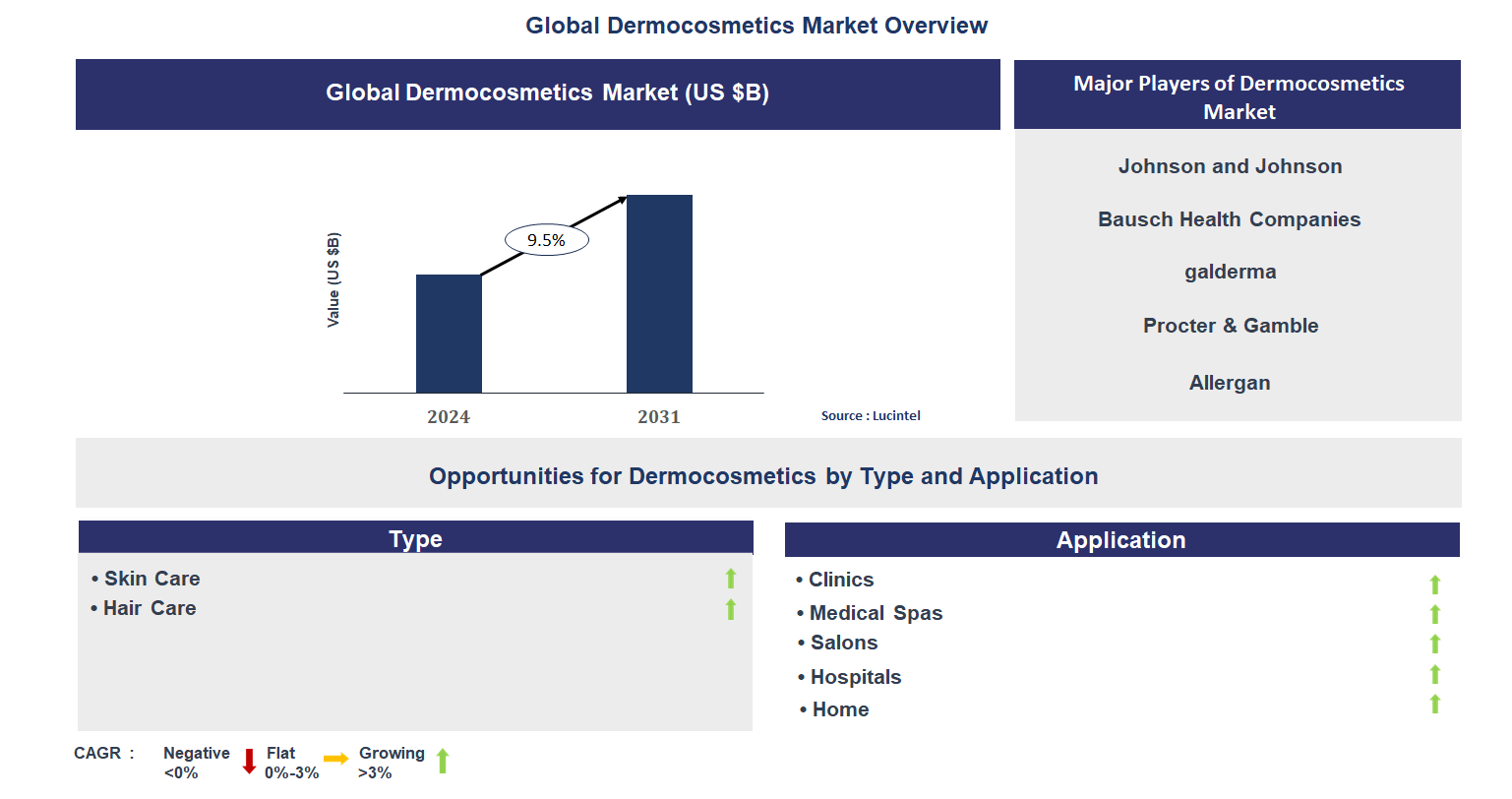
The future of the global dermocosmetics market looks promising with opportunities in the clinic, medical spa, salon, hospital, and home markets. The global dermocosmetics market is expected to grow with a CAGR of 9.5% from 2025 to 2031. The major drivers for this market are the increasing focus on skincare & anti-aging solutions, the rising consumer preference for dermatologically tested products, and the growing awareness of natural & organic ingredients.• Lucintel forecasts that, within the type category, skin care is expected to witness higher growth over the forecast period.
• Within the application category, clinic is expected to witness the highest growth.
• In terms of region, APAC is expected to witness the highest growth over the forecast period. Gain valuable insights for your business decisions with our comprehensive 150+ page report. Sample figures with some insights are shown below.
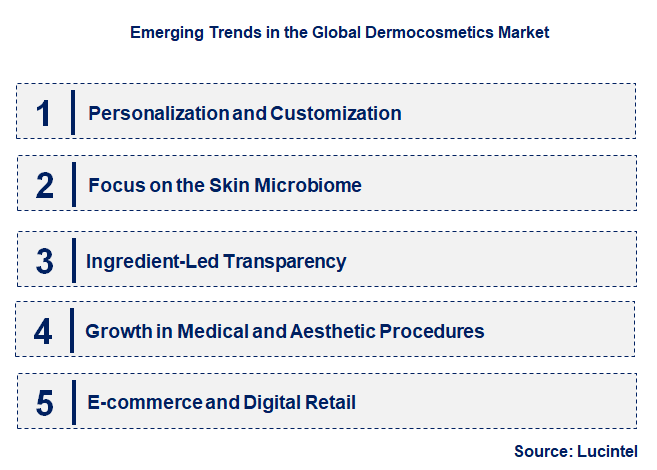
Emerging Trends in the Dermocosmetics Market
The dermocosmetics market is being reshaped by several key trends that are pushing the industry toward greater innovation and specialization. These trends are driven by a convergence of human health, a focus on scientific efficacy, and technological advancements, all of which are influencing product development and consumer behavior.• Personalization and Customization: A significant trend is the move toward personalized skincare solutions. Companies are using AI-driven skin analysis and online questionnaires to recommend customized products tailored to an individual’s specific skin type and concerns. This trend is empowering consumers and providing them with more effective, targeted treatment for their unique needs.
• Focus on the Skin Microbiome: There is a growing trend toward products that support the skin’s natural microbiome. Brands are developing formulations with prebiotics, probiotics, and postbiotics to balance the skin’s ecosystem, which is seen as crucial for maintaining healthy and resilient skin. This is a scientific advancement that blurs the line between skincare and medicine.
• Ingredient-Led Transparency: Consumers are increasingly demanding transparency about the ingredients in their products. This trend is pushing brands to use "clean" labels and provide clear, science-backed explanations for their formulations. The rise of brands like The Ordinary, which champions single, active ingredients, highlights this shift in consumer behavior and trust.
• Growth in Medical and Aesthetic Procedures: The growing popularity of in-clinic procedures like chemical peels and laser treatments is a major trend. This has created a demand for complementary dermocosmetic products that are used both before and after these procedures to prepare the skin and enhance the results, thereby linking the market directly to professional services.
• E-commerce and Digital Retail: E-commerce has become a dominant channel for dermocosmetics, offering a wide variety of products and access to online dermatological advice. This trend is particularly impactful in emerging markets where consumers are increasingly turning to online platforms for product discovery and purchase, driving market expansion and accessibility. These emerging trends are fundamentally reshaping the dermocosmetics market by prioritizing scientific efficacy, personalization, and transparency. The focus on the skin microbiome and ingredient-led formulations is elevating product standards, while the integration with medical procedures and the growth of e-commerce are expanding market reach and consumer engagement. This is creating a more sophisticated and consumer-centric industry.
Recent Development in the Dermocosmetics Market
The dermocosmetics market is experiencing a period of significant development, marked by a surge in innovation and a strategic focus on specific end-user needs. These changes are influencing product offerings, manufacturing processes, and market growth, with a clear emphasis on enhancing product performance and meeting the evolving demands of consumers.• Innovation in Sun Protection: There has been a significant development in sun protection products. Brands are introducing multi-functional sunscreens that not only protect against UV radiation but also offer anti-aging benefits, hydration, and defense against blue light. This innovation addresses the growing consumer awareness of skin aging caused by sun exposure.
• Rise of Clean and Sustainable Formulations: A key recent development is the move toward "clean" and sustainable formulations. Brands are reformulating products to be free of parabens, sulfates, and other controversial ingredients. This trend is accompanied by the adoption of eco-friendly packaging, reflecting a broader industry commitment to environmental responsibility.
• Expansion into Men’s Skincare: The dermocosmetics market is witnessing a notable development in its focus on men’s skincare. Companies are creating targeted product lines that address men’s specific skin concerns, such as oiliness and irritation from shaving. This is broadening the market and tapping into a previously underserved consumer segment.
• Development of Medicated Hair and Scalp Care: Recent developments include the creation of medicated hair and scalp care products. These products are formulated with active ingredients to address conditions like dandruff, hair loss, and sensitive scalp. This extends the dermocosmetics concept beyond facial skincare to a more holistic approach to personal care.
• Strategic Acquisitions and Partnerships: The market is seeing a wave of strategic acquisitions and partnerships. Major pharmaceutical companies are acquiring smaller, innovative dermocosmetics brands, while beauty giants are partnering with dermatologists and clinics. These collaborations help to strengthen brand credibility and accelerate the development of new, scientifically-backed products. These recent developments are profoundly impacting the dermocosmetics market by elevating the standards of product quality and expanding its application base. The shift toward sustainable formulations and specialized products for men and scalp care is enhancing consumer appeal, while strategic collaborations are strengthening the market’s scientific credibility and reach.
Strategic Growth Opportunities in the Dermocosmetics Market
The dermocosmetics market presents numerous strategic growth opportunities across various key applications. These opportunities are driven by the need for enhanced product quality, health, and efficacy in a wide range of products. Companies can leverage these trends to innovate and expand their market presence.• Anti-Aging and Skin Brightening: The anti-aging and skin brightening segments offer a prime growth opportunity. The global aging population and a growing desire for youthful appearance are driving demand for products with powerful active ingredients like retinol, vitamin C, and hyaluronic acid. This high-value segment offers strong margins and brand loyalty.
• Acne and Blemish Treatment: The acne and blemish treatment market is a major growth area. With a rising prevalence of acne among both adolescents and adults, there is a strong demand for scientifically-backed, non-irritating solutions. Providing effective and gentle dermocosmetic products for acne treatment is key to capturing this significant consumer base.
• Sensitive and Allergenic Skin: The sensitive skin segment offers a significant opportunity. Consumers with skin conditions like eczema and rosacea require gentle, hypoallergenic, and clinically tested products. Focusing on developing and marketing specialized lines for sensitive skin will enable companies to build a reputation for trustworthiness and expertise.
• Sun Care and Post-Procedure Products: The sun care and post-procedure product segments are high-growth areas. With increasing awareness of UV damage, multi-functional sunscreens are in high demand. Similarly, products that soothe and repair skin after aesthetic procedures, such as chemical peels and microdermabrasion, represent a lucrative and high-margin niche.
• Hair and Scalp Health: The hair and scalp health market is an emerging opportunity. Consumers are increasingly recognizing the link between scalp health and hair quality. Developing dermocosmetic products like pH-balanced shampoos and scalp serums to treat conditions such as dandruff and hair thinning is a key area for product diversification and market expansion. Strategic growth opportunities in the dermocosmetics market are concentrated in high-value, consumer-centric segments. By focusing on anti-aging, acne treatment, sensitive skin, sun care, and hair health, companies can align their strategies with the most dynamic parts of the market. This targeted approach will drive product innovation and market leadership, ensuring sustained growth and profitability.
Dermocosmetics Market Driver and Challenges
The dermocosmetics market is influenced by a dynamic interplay of technological, economic, and regulatory factors. The major drivers are creating a strong demand for clinically-backed and effective solutions, pushing the industry forward. However, several challenges related to costs, regulations, and market competition must be addressed for sustained growth. The factors responsible for driving the dermocosmetics market include: 1. Increasing Skin Health Awareness: A major driver is the growing consumer awareness about skin health. Consumers are becoming more educated about skin conditions and the importance of using products that are scientifically tested and recommended by dermatologists, moving away from traditional cosmetics toward more functional solutions. 2. Rising Prevalence of Skin Disorders: The increasing prevalence of skin conditions such as acne, eczema, and hyperpigmentation is a fundamental market driver. This has led a growing number of consumers to seek dermocosmetic products that can effectively treat and manage these issues, boosting demand for therapeutic and medically-backed solutions. 3. Growth in E-commerce and Social Media: The proliferation of e-commerce platforms and the influence of social media are major drivers. Online channels offer unparalleled product accessibility and allow brands to directly engage with consumers, while influencers and dermatologists use social media to educate and promote products, thereby shaping consumer choices. 4. Growing Aging Population: The global aging population is a significant driver. As people live longer, there is an increased desire to address signs of aging like wrinkles and fine lines. This demographic is a key consumer base for anti-aging dermocosmetics, driving innovation in ingredients and formulations. 5. Consumer Demand for Safe Products: Consumers are increasingly concerned about the potential side effects of harsh chemicals in traditional cosmetics. This is driving demand for "clean," hypoallergenic, and fragrance-free dermocosmetics that are seen as safer and gentler on the skin, aligning with a broader wellness trend. Challenges in the dermocosmetics market are: 1. High Product Costs: The high cost of specialized ingredients and the extensive research and development required for dermocosmetic products are a significant challenge. This makes the final products expensive, potentially limiting their accessibility to a broad consumer base, especially in price-sensitive markets. 2. Stringent Regulatory Compliance: The dermocosmetics market is subject to complex and evolving regulations. Companies must adhere to strict rules regarding product claims, ingredient safety, and labeling, which can be a financial and operational burden, particularly for smaller businesses and those seeking to enter new international markets. 3. Counterfeit Products and Misinformation: The rise of e-commerce has led to a challenge with counterfeit products. These fake products can harm consumers and damage a brand’s reputation. Additionally, misinformation on social media can mislead consumers and create confusion about the efficacy and safety of certain ingredients. The dermocosmetics market is experiencing robust growth driven by the powerful trends of health awareness and an aging population, supported by the reach of digital platforms. However, this growth is tempered by significant challenges, including the high cost of products, the complexities of regulatory compliance, and the prevalence of counterfeit goods and misinformation. The ability of industry players to build trust and ensure product safety will be crucial for navigating these challenges and sustaining market growth.List of Dermocosmetics Companies
Companies in the market compete on the basis of product quality offered. Major players in this market focus on expanding their manufacturing facilities, R&D investments, infrastructural development, and leverage integration opportunities across the value chain. With these strategies dermocosmetics companies cater increasing demand, ensure competitive effectiveness, develop innovative products & technologies, reduce production costs, and expand their customer base. Some of the dermocosmetics companies profiled in this report include-• Johnson and Johnson
• Bausch Health Companies
• galderma
• Procter & Gamble
• Allergan
• L’Oreal
• beiersdorf
• Kanebo Cosmetics
• Estee Lauder Companies
• Shiseido Company
Dermocosmetics Market by Segment
The study includes a forecast for the global dermocosmetics market by type, application, and region.Dermocosmetics Market by Type [Value from 2019 to 2031]:
• Skin Care
• Hair Care
Dermocosmetics Market by Application [Value from 2019 to 2031]:
• Clinics
• Medical Spas
• Salons
• Hospitals
• Home
Dermocosmetics Market by Region [Value from 2019 to 2031]:
• North America
• Europe
• Asia Pacific
• The Rest of the World
Country Wise Outlook for the Dermocosmetics Market
The global dermocosmetics market is witnessing a significant evolution, driven by a convergence of healthcare and beauty. Consumers are increasingly seeking products that offer both cosmetic and therapeutic benefits, backed by scientific research and dermatologist recommendations. This shift is reshaping product innovation and distribution channels across major global markets.• United States: The U.S. market is a leader in clinical-backed skincare and "medical-grade" products. Recent developments include a surge in demand for products addressing specific skin concerns like acne and hyperpigmentation, with a strong emphasis on active ingredients like retinol and peptides. The market is also seeing a rise in online platforms and specialty retail for professional-grade products.
• China: China’s dermocosmetics market is experiencing robust growth fueled by a rising middle class and increasing skin health awareness. The market is increasingly dominated by e-commerce, with a strong focus on products that offer solutions for sensitive skin and anti-aging. Local brands are gaining traction, but international brands with a strong scientific reputation are highly sought after.
• Germany: Germany’s market is mature and highly regulated, with a strong consumer preference for clinically proven and pharmaceutical-grade products. Recent developments are centered on sustainable and "clean" formulations, with a focus on natural and hypoallergenic ingredients. The market is dominated by pharmacy and drugstore channels, which are considered trustworthy sources for dermocosmetic products.
• India: India’s dermocosmetics market is in a rapid growth phase, driven by increasing disposable incomes and a growing awareness of skin health. The market is moving toward products that address issues like UV damage and pollution-related skin problems. Recent developments include the entry of major international brands and a focus on both traditional Ayurvedic and modern scientific formulations.
• Japan: Japan’s dermocosmetics market is highly sophisticated, driven by an aging population and a cultural focus on preventative skincare. Recent developments include innovations in anti-aging and skin brightening products. Japanese consumers are also showing a growing preference for products with minimalist ingredient lists and those that are gentle on sensitive skin.

Features of the Global Dermocosmetics Market
Market Size Estimates: Dermocosmetics market size estimation in terms of value ($B). Trend and Forecast Analysis: Market trends (2019 to 2024) and forecast (2025 to 2031) by various segments and regions. Segmentation Analysis: Dermocosmetics market size by type, application, and region in terms of value ($B). Regional Analysis: Dermocosmetics market breakdown by North America, Europe, Asia Pacific, and Rest of the World. Growth Opportunities: Analysis of growth opportunities in different types, applications, and regions for the dermocosmetics market. Strategic Analysis: This includes M&A, new product development, and competitive landscape of the dermocosmetics market. Analysis of competitive intensity of the industry based on Porter’s Five Forces model.
FAQ
Q1. What is the growth forecast for dermocosmetics market? Answer: The global dermocosmetics market is expected to grow with a CAGR of 9.5% from 2025 to 2031. Q2. What are the major drivers influencing the growth of the dermocosmetics market? Answer: The major drivers for this market are the increasing focus on skincare & anti-aging solutions, the rising consumer preference for dermatologically tested products, and the growing awareness of natural & organic ingredients. Q3. What are the major segments for dermocosmetics market? Answer: The future of the dermocosmetics market looks promising with opportunities in the clinic, medical spa, salon, hospital, and home markets. Q4. Who are the key dermocosmetics market companies? Answer: Some of the key dermocosmetics companies are as follows:• Johnson and Johnson
• Bausch Health Companies
• galderma
• Procter & Gamble
• Allergan
• L’Oreal
• beiersdorf
• Kanebo Cosmetics
• Estee Lauder Companies
• Shiseido Company Q5. Which dermocosmetics market segment will be the largest in future? Answer: Lucintel forecasts that, within the type category, skin care is expected to witness higher growth over the forecast period. Q6. In dermocosmetics market, which region is expected to be the largest in next 5 years? Answer: In terms of region, APAC is expected to witness the highest growth over the forecast period. Q7. Do we receive customization in this report? Answer: Yes, Lucintel provides 10% customization without any additional cost.
Table of Contents
List of Figures
List of Tables
Methodology
- In-depth interviews of the major players in this market
- Detailed secondary research from competitors’ financial statements and published data
- Extensive searches of published works, market, and database information pertaining to industry news, company press releases, and customer intentions
- A compilation of the experiences, judgments, and insights of Lucintel’s professionals, who have analyzed and tracked this market over the years.


Buy Now
Choose a license that fits your team. Instant PDF delivery.
Prices exclude taxes. Instant delivery. Custom licensing available on request.
Key Questions
- • What are some of the most promising, high-growth opportunities for the dermocosmetics market by type (skin care and hair care), application (clinics, medical spas, salons, hospitals, and home), and region (North America, Europe, Asia Pacific, and the Rest of the World)?
- • Which segments will grow at a faster pace and why?
- • Which region will grow at a faster pace and why?
- • What are the key factors affecting market dynamics? What are the key challenges and business risks in this market?
- • What are the business risks and competitive threats in this market?
- • What are the emerging trends in this market and the reasons behind them?
- • What are some of the changing demands of customers in the market?
- • What are the new developments in the market? Which companies are leading these developments?
- • Who are the major players in this market? What strategic initiatives are key players pursuing for business growth?
- • What are some of the competing products in this market and how big of a threat do they pose for loss of market share by material or product substitution?
- • What M&A activity has occurred in the last 5 years and what has its impact been on the industry? For any questions related to Dermocosmetics Market, Dermocosmetics Market Size, Dermocosmetics Market Growth, Dermocosmetics Market Analysis, Dermocosmetics Market Report, Dermocosmetics Market Share, Dermocosmetics Market Trends, Dermocosmetics Market Forecast, Dermocosmetics Companies, write Lucintel analyst at email: helpdesk@lucintel.com. We will be glad to get back to you soon.


