
Report Feature
Dental Veneer Market Trends and Forecast
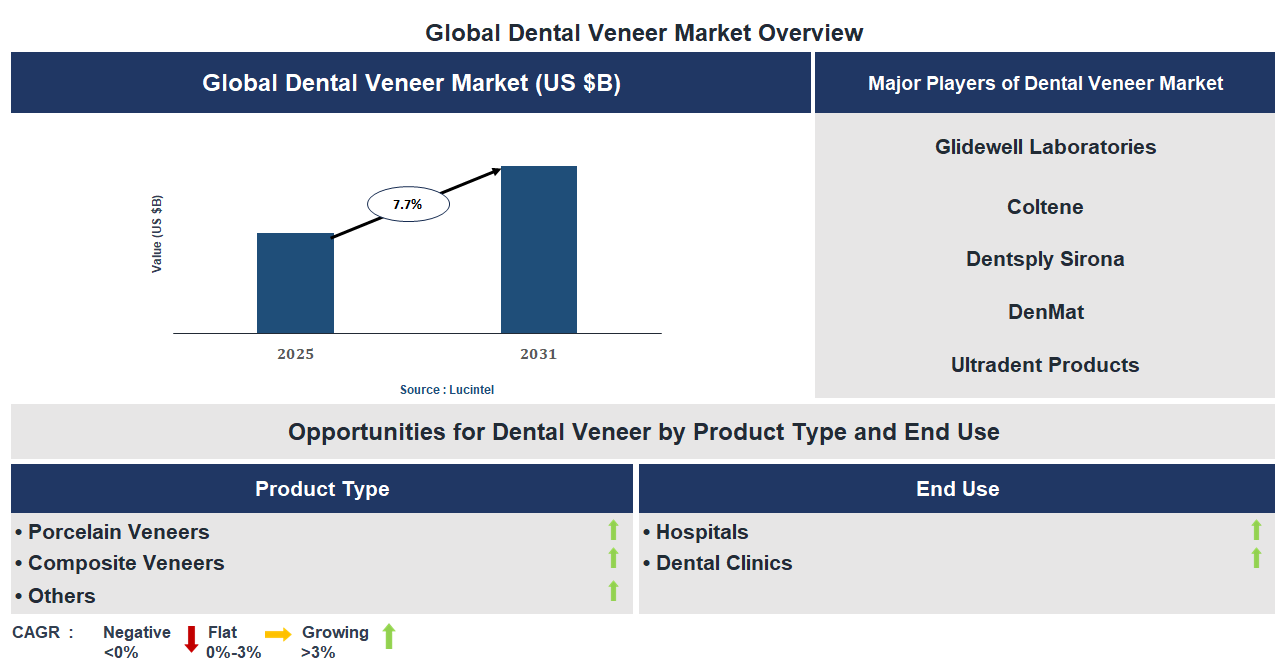
The future of the global dental veneer market looks promising with opportunities in the hospital and dental clinic markets. The global dental veneer market is expected to grow with a CAGR of 7.7% from 2025 to 2031. The major drivers for this market are the increasing demand for aesthetic dental procedures, the rising popularity of cosmetic dentistry, and the growing awareness of dental appearance.• Lucintel forecasts that, within the product type category, porcelain veneer is expected to witness higher growth over the forecast period.
• Within the end use category, dental clinic is expected to witness higher growth.
• In terms of region, North America is expected to witness the highest growth over the forecast period. Gain valuable insights for your business decisions with our comprehensive 150+ page report. Sample figures with some insights are shown below.
Emerging Trends in the Dental Veneer Market
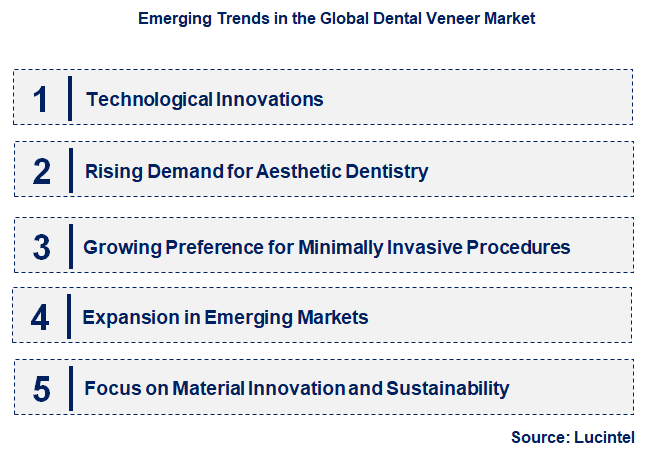
The dental veneer market is experiencing rapid growth driven by technological advancements, increasing aesthetic awareness, and a rising demand for minimally invasive cosmetic procedures. As consumers seek more natural-looking and durable solutions, manufacturers are innovating to meet these needs. The market is also influenced by demographic shifts, such as aging populations and rising disposable incomes in emerging economies. These factors are fostering a competitive landscape with new product launches and improved treatment options. Understanding these emerging trends is crucial for stakeholders aiming to capitalize on the market’s potential and adapt to evolving consumer preferences and technological innovations.• Technological Innovations: The integration of digital dentistry, CAD/CAM technology, and 3D printing is revolutionizing veneer fabrication. These advancements enable precise, faster, and more cost-effective production, improving patient outcomes and satisfaction. Digital workflows reduce chair time and enhance customization, making treatments more accessible and appealing. As technology continues to evolve, the market will see increased adoption of chairside veneer procedures, reducing reliance on traditional laboratory processes and expanding the scope of cosmetic dentistry.
• Rising Demand for Aesthetic Dentistry: Increasing awareness about dental aesthetics and the desire for a perfect smile are driving consumers toward veneers. Millennials and Gen Z populations prioritize appearance, fueling demand for minimally invasive, natural-looking solutions. This trend is supported by social media influence and celebrity endorsements, which boost consumer confidence in cosmetic procedures. As a result, dental clinics are expanding their aesthetic services, and manufacturers are developing more natural, translucent veneer options to meet these aesthetic expectations.
• Growing Preference for Minimally Invasive Procedures: Patients prefer less invasive treatments with quicker recovery times. Veneers, being minimally invasive, align with this trend, offering a less painful alternative to crowns or orthodontics. Innovations in adhesive technology and material strength have enhanced the durability and ease of application of veneers. This shift is encouraging more clinics to adopt veneer procedures, broadening access and increasing market penetration, especially among younger demographics seeking quick cosmetic fixes.
• Expansion in Emerging Markets: Rapid economic growth and increasing disposable incomes in countries like China, India, and Brazil are expanding the market. Awareness about cosmetic dentistry is rising, and local clinics are adopting advanced veneer solutions. This expansion is supported by improved healthcare infrastructure and a growing middle class seeking aesthetic improvements. Market players are entering these regions through partnerships and localized product offerings, which are expected to significantly boost global market size and diversify consumer bases.
• Focus on Material Innovation and Sustainability: The development of new veneer materials that mimic natural enamel and offer enhanced durability is a key trend. Biocompatible, stain-resistant, and environmentally friendly materials are gaining popularity. Manufacturers are investing in sustainable production processes to reduce environmental impact. These innovations improve patient satisfaction by providing longer-lasting, more natural-looking veneers while aligning with global sustainability goals, thus appealing to eco-conscious consumers and expanding market appeal. In summary, these emerging trends are transforming the dental veneer market by enhancing technological capabilities, expanding aesthetic options, and broadening geographic reach. They are fostering innovation, increasing accessibility, and aligning with consumer preferences for natural, minimally invasive, and sustainable solutions. As a result, the market is poised for sustained growth, with increased competition and diverse offerings meeting the evolving needs of global consumers.
Recent Development in the Dental Veneer Market
The dental veneer market has experienced significant growth driven by technological advancements, increasing aesthetic awareness, and rising demand for minimally invasive procedures. As consumers seek durable and natural-looking solutions for dental imperfections, manufacturers are innovating to meet these needs. The market’s evolution is also influenced by expanding dental tourism and rising disposable incomes in emerging economies. Regulatory changes and the adoption of digital dentistry are further shaping the landscape. These developments collectively contribute to a dynamic environment where innovation and consumer preferences are driving market expansion and competitive strategies.• Technological Innovations: Introduction of CAD/CAM technology has revolutionized veneer fabrication, enabling precise, faster, and more cost-effective production. This enhances patient satisfaction through improved fit and aesthetics, boosting market growth. Digital workflows also reduce chair time and improve customization, making veneers more accessible and appealing.
• Material Advancements: Development of new composite and porcelain materials with enhanced durability, translucency, and biocompatibility has improved veneer longevity and appearance. These innovations meet increasing consumer demand for natural-looking, long-lasting results, thereby expanding market options and consumer confidence.
• Rising Aesthetic Awareness: Growing emphasis on personal appearance and social media influence has heightened demand for cosmetic dental procedures, including veneers. This trend has expanded the customer base beyond traditional demographics, driving market growth and encouraging providers to offer more advanced, aesthetic solutions.
• Expansion in Emerging Markets: Increasing disposable incomes and growing awareness of cosmetic dentistry in regions like Asia-Pacific and Latin America have opened new opportunities. Market players are expanding their presence through local partnerships and tailored marketing strategies, fueling regional growth and diversifying the market.
• Regulatory and Digital Adoption: Stricter regulations regarding material safety and quality standards are ensuring higher product reliability. Simultaneously, the adoption of digital dentistry tools like 3D imaging and virtual planning enhances treatment precision and patient engagement, fostering trust and expanding market reach. In summary, these developments are collectively propelling the dental veneer market toward greater innovation, improved product quality, and broader consumer adoption. The integration of advanced technologies and materials, coupled with expanding geographic reach and heightened aesthetic consciousness, is creating a robust growth trajectory for the industry.
Strategic Growth Opportunities in the Dental Veneer Market
The dental veneer market is experiencing rapid growth driven by increasing aesthetic consciousness, technological advancements, and rising dental health awareness worldwide. As patients seek minimally invasive solutions for smile enhancement, manufacturers are innovating to meet these demands. Key applications such as cosmetic dentistry, restorative procedures, and orthodontics are expanding, creating numerous opportunities for market players. These developments are shaping the future landscape of dental veneers, making them more accessible, affordable, and effective. The following are five key growth opportunities across different applications that are poised to significantly influence the market trajectory.• Cosmetic Dentistry: Growing demand for aesthetic improvements is driving the adoption of dental veneers. Patients increasingly seek natural-looking, minimally invasive solutions to enhance their smile, boosting market sales and innovation in veneer materials and techniques.
• Restorative Dentistry: Dental veneers are increasingly used for restoring damaged or discolored teeth. Advances in durable, biocompatible materials are expanding their application in restorative procedures, offering long-lasting solutions and attracting more patients.
• Orthodontics: Integration of veneers with orthodontic treatments provides comprehensive smile makeovers. This synergy enhances patient outcomes, especially for minor misalignments, and opens new avenues for combined treatment plans.
• Digital Dentistry: Adoption of digital workflows, including CAD/CAM technology, streamlines veneer fabrication, reduces turnaround times, and improves precision. This technological shift enhances patient satisfaction and market competitiveness.
• Material Innovation: Development of advanced composite and porcelain materials with improved strength, translucency, and aesthetics is expanding veneer applications. These innovations increase durability and natural appearance, attracting a broader customer base. In summary, these growth opportunities are significantly impacting the dental veneer market by expanding application scope, improving product quality, and enhancing patient outcomes. They are fostering innovation, increasing market penetration, and driving overall industry growth.
Dental Veneer Market Driver and Challenges
The dental veneer market is influenced by a variety of technological, economic, and regulatory factors that shape its growth trajectory. Advances in dental materials and techniques have made veneers more accessible and appealing to a broader demographic. Economic factors such as rising disposable incomes and increased awareness of cosmetic dentistry contribute to market expansion. Regulatory standards ensure safety and quality, fostering consumer confidence. However, challenges like high costs, regulatory hurdles, and technological limitations can impede growth. Understanding these drivers and challenges is essential for stakeholders to navigate the evolving landscape effectively and capitalize on emerging opportunities. The factors responsible for driving the dental veneer market include:-• Technological Innovations: The development of advanced materials like porcelain and composite resins has significantly improved veneer durability, aesthetics, and ease of application. Innovations such as CAD/CAM technology enable precise customization, reducing chair time and enhancing patient satisfaction. These technological advancements make veneers more accessible and appealing, encouraging both practitioners and patients to opt for cosmetic enhancements. As technology continues to evolve, the market is expected to see increased adoption driven by improved outcomes and efficiency.
• Rising Cosmetic Dentistry Demand: Increasing awareness about dental aesthetics and the desire for a perfect smile are major factors fueling market growth. Social media influence and celebrity culture have heightened the importance of appearance, prompting more individuals to seek veneers for smile correction and enhancement. The expanding middle class and disposable income levels further support this trend, making cosmetic procedures more affordable and popular across diverse demographics.
• Economic Growth and Disposable Income: Economic stability and growth in emerging and developed markets have increased consumers’ purchasing power. As disposable incomes rise, more individuals can afford elective cosmetic procedures like veneers. This economic upliftment reduces financial barriers, leading to higher adoption rates. Additionally, insurance coverage and financing options are making veneers more accessible, contributing to sustained market expansion.
• Increasing Awareness and Education: Enhanced marketing efforts, dental tourism, and educational campaigns have improved awareness about the benefits of veneers. Patients are more informed about options, procedures, and outcomes, which influences their decision-making process. Dental practitioners are also more proactive in recommending veneers for aesthetic and functional reasons, further driving market growth through increased patient demand.
• Growing Geriatric Population: The aging population seeks cosmetic solutions to address age-related dental issues, such as discoloration, wear, and missing teeth. Veneers offer a minimally invasive option to restore appearance and function, making them attractive to older adults. As the global population ages, the demand for aesthetic dental solutions like veneers is expected to rise, supporting market expansion. The challenges in the dental veneer market are:-
• High Costs and Limited Insurance Coverage: The cost of dental veneers can be substantial, often ranging from several hundred to thousands of dollars per tooth. This high expense limits accessibility for many potential patients, especially in regions with limited insurance coverage or where cosmetic procedures are not covered. The financial barrier restricts market growth and reduces the number of patients opting for veneers, particularly in lower-income groups.
• Regulatory and Certification Hurdles: Stringent regulatory standards and certification requirements vary across regions, complicating market entry and product approval processes. Compliance with safety, material, and procedural standards can be time-consuming and costly for manufacturers. These regulatory challenges can delay product launches, increase costs, and hinder innovation, ultimately impacting market growth and competitiveness.
• Technological Limitations and Skill Gap: Despite advancements, certain technological limitations persist, such as the need for precise application techniques and material limitations in mimicking natural teeth. Additionally, a skill gap among dental practitioners regarding the latest veneer procedures can affect treatment quality and outcomes. This can lead to patient dissatisfaction and reluctance to opt for veneers, thereby restraining market expansion. In summary, the dental veneer market is driven by technological innovations, rising aesthetic awareness, economic growth, and demographic shifts, which collectively foster growth opportunities. However, high costs, regulatory complexities, and technological limitations pose significant challenges. These factors collectively influence market dynamics, requiring stakeholders to innovate, adapt, and strategize effectively. The overall impact suggests a promising yet cautious growth trajectory, emphasizing the need for addressing barriers to maximize market potential and ensure sustainable development.
List of Dental Veneer Companies
Companies in the market compete on the basis of product quality offered. Major players in this market focus on expanding their manufacturing facilities, R&D investments, infrastructural development, and leverage integration opportunities across the value chain. With these strategies dental veneer companies cater increasing demand, ensure competitive effectiveness, develop innovative products & technologies, reduce production costs, and expand their customer base. Some of the dental veneer companies profiled in this report include-• Glidewell Laboratories
• Coltene
• Dentsply Sirona
• DenMat
• Ultradent Products
Dental Veneer Market by Segment
The study includes a forecast for the global dental veneer market by product type, end use, and region.Dental Veneer Market by Product Type [Value from 2019 to 2031]:
• Porcelain Veneers
• Composite Veneers
• Others
Dental Veneer Market by End Use [Value from 2019 to 2031]:
• Hospitals
• Dental Clinics
Dental Veneer Market by Region [Value from 2019 to 2031]:
• North America
• Europe
• Asia Pacific
• The Rest of the World
Country Wise Outlook for the Dental Veneer Market
The dental veneer market has experienced significant growth driven by technological advancements, increasing aesthetic awareness, and rising demand for minimally invasive cosmetic procedures worldwide. As consumers seek durable, natural-looking solutions for dental imperfections, countries are adopting innovative materials and techniques to meet these needs. Regulatory changes and increased investment in dental research further propel market expansion. The following summaries highlight recent developments in the United States, China, Germany, India, and Japan, reflecting their unique contributions and trends in this evolving industry.• United States: The US market has seen rapid adoption of porcelain and composite veneers, with a focus on digital dentistry and CAD/CAM technology for precise customization. Growing awareness of cosmetic dentistry and insurance coverage improvements have boosted demand. Key players are investing in research to develop more durable, stain-resistant materials, and there is an increasing trend toward minimally invasive procedures. Telehealth consultations and at-home whitening combined with veneers are also gaining popularity, enhancing patient convenience and satisfaction.
• China: China’s dental veneer market is expanding due to rising disposable incomes and increasing aesthetic consciousness among consumers. Local manufacturers are adopting advanced manufacturing techniques and importing high-quality materials to improve product offerings. Government initiatives to improve dental healthcare infrastructure and the presence of a large, young population seeking cosmetic solutions are driving growth. Additionally, the integration of digital workflows and the rise of dental tourism contribute to market expansion, with a focus on affordable yet high-quality veneer options.
• Germany: Germany’s market is characterized by high standards of dental care and technological innovation. The country emphasizes the use of biocompatible and environmentally friendly materials for veneers. Advances in laser technology and digital imaging have improved procedural accuracy and patient outcomes. The German market also benefits from a well-established dental industry, with a focus on minimally invasive techniques and long-lasting results. Regulatory frameworks ensure high safety standards, fostering consumer confidence and steady market growth.
• India: The Indian dental veneer market is witnessing rapid growth driven by increasing awareness of cosmetic dentistry and affordability. Local clinics are adopting advanced CAD/CAM systems and high-quality materials to cater to a growing middle-class population. The rise of dental tourism and collaborations with international brands are expanding access to innovative veneer solutions. Additionally, government initiatives to improve healthcare infrastructure and the proliferation of dental colleges are contributing to a skilled workforce capable of delivering advanced veneer procedures.
• Japan: Japan’s market is characterized by a focus on aesthetic perfection and technological innovation. The adoption of cutting-edge materials such as ultra-thin porcelain veneers and digital smile design is prevalent. Japanese consumers prefer minimally invasive procedures with quick recovery times, prompting clinics to adopt laser and digital imaging technologies. The market also emphasizes long-term durability and biocompatibility, with ongoing research into new materials. Aging population trends are increasing demand for restorative and cosmetic solutions, supporting sustained market growth.

Features of the Global Dental Veneer Market
Market Size Estimates: Dental veneer market size estimation in terms of value ($B). Trend and Forecast Analysis: Market trends (2019 to 2024) and forecast (2025 to 2031) by various segments and regions. Segmentation Analysis: Dental veneer market size by product type, end use, and region in terms of value ($B). Regional Analysis: Dental veneer market breakdown by North America, Europe, Asia Pacific, and Rest of the World. Growth Opportunities: Analysis of growth opportunities in different product types, end uses, and regions for the dental veneer market. Strategic Analysis: This includes M&A, new product development, and competitive landscape of the dental veneer market. Analysis of competitive intensity of the industry based on Porter’s Five Forces model.
FAQ
Q1. What is the growth forecast for dental veneer market? Answer: The global dental veneer market is expected to grow with a CAGR of 7.7% from 2025 to 2031. Q2. What are the major drivers influencing the growth of the dental veneer market? Answer: The major drivers for this market are the increasing demand for aesthetic dental procedures, the rising popularity of cosmetic dentistry, and the growing awareness of dental appearance. Q3. What are the major segments for dental veneer market? Answer: The future of the dental veneer market looks promising with opportunities in the hospital and dental clinic markets. Q4. Who are the key dental veneer market companies? Answer: Some of the key dental veneer companies are as follows:• Glidewell Laboratories
• Coltene
• Dentsply Sirona
• DenMat
• Ultradent Products Q5. Which dental veneer market segment will be the largest in future? Answer: Lucintel forecasts that, within the product type category, porcelain veneer is expected to witness higher growth over the forecast period. Q6. In dental veneer market, which region is expected to be the largest in next 5 years? Answer: In terms of region, North America is expected to witness the highest growth over the forecast period. Q7. Do we receive customization in this report? Answer: Yes, Lucintel provides 10% customization without any additional cost.
Table of Contents
List of Figures
List of Tables
Methodology
- In-depth interviews of the major players in this market
- Detailed secondary research from competitors’ financial statements and published data
- Extensive searches of published works, market, and database information pertaining to industry news, company press releases, and customer intentions
- A compilation of the experiences, judgments, and insights of Lucintel’s professionals, who have analyzed and tracked this market over the years.


Buy Now
Choose a license that fits your team. Instant PDF delivery.
Prices exclude taxes. Instant delivery. Custom licensing available on request.
Key Questions
- • What are some of the most promising, high-growth opportunities for the dental veneer market by product type (porcelain veneers, composite veneers, and others), end use (hospitals and dental clinics), and region (North America, Europe, Asia Pacific, and the Rest of the World)?
- • Which segments will grow at a faster pace and why?
- • Which region will grow at a faster pace and why?
- • What are the key factors affecting market dynamics? What are the key challenges and business risks in this market?
- • What are the business risks and competitive threats in this market?
- • What are the emerging trends in this market and the reasons behind them?
- • What are some of the changing demands of customers in the market?
- • What are the new developments in the market? Which companies are leading these developments?
- • Who are the major players in this market? What strategic initiatives are key players pursuing for business growth?
- • What are some of the competing products in this market and how big of a threat do they pose for loss of market share by material or product substitution?
- • What M&A activity has occurred in the last 5 years and what has its impact been on the industry? For any questions related to Dental Veneer Market, Dental Veneer Market Size, Dental Veneer Market Growth, Dental Veneer Market Analysis, Dental Veneer Market Report, Dental Veneer Market Share, Dental Veneer Market Trends, Dental Veneer Market Forecast, Dental Veneer Companies, write Lucintel analyst at email: helpdesk@lucintel.com. We will be glad to get back to you soon.


